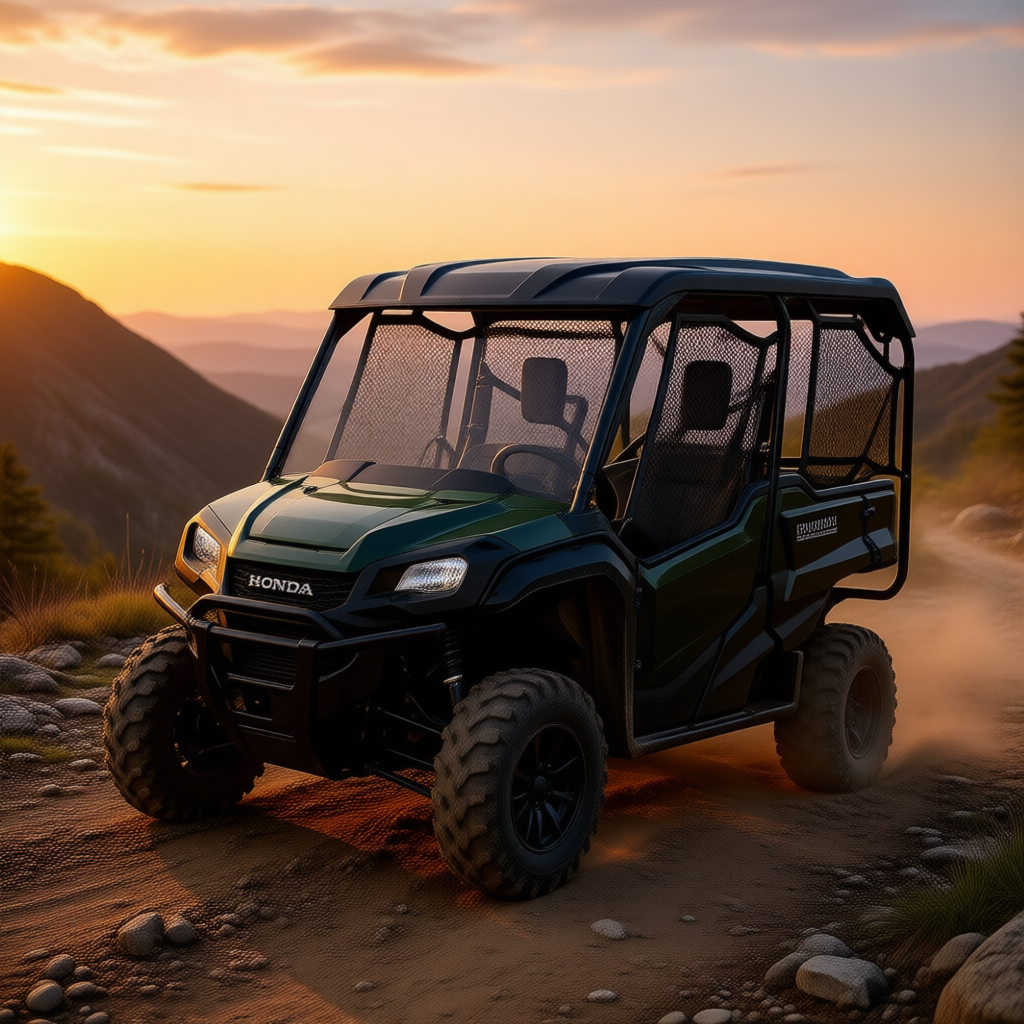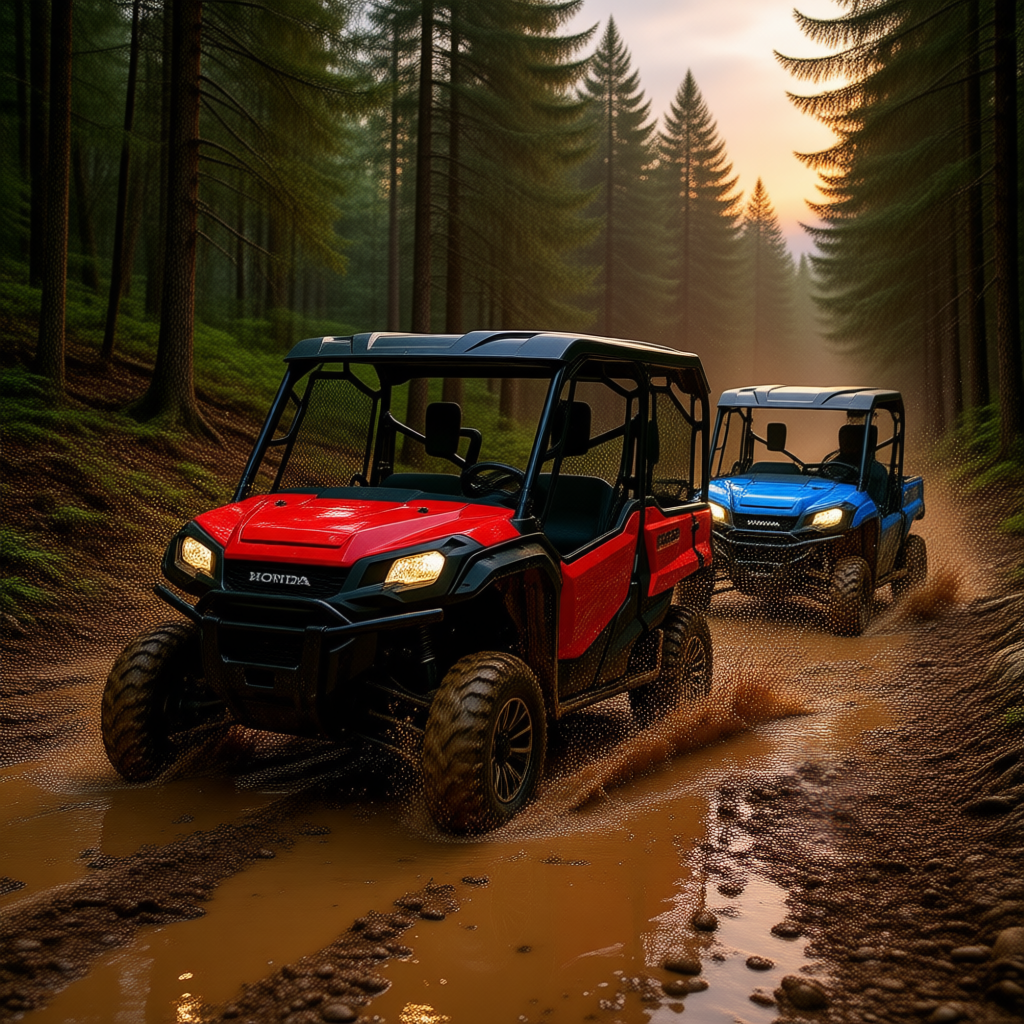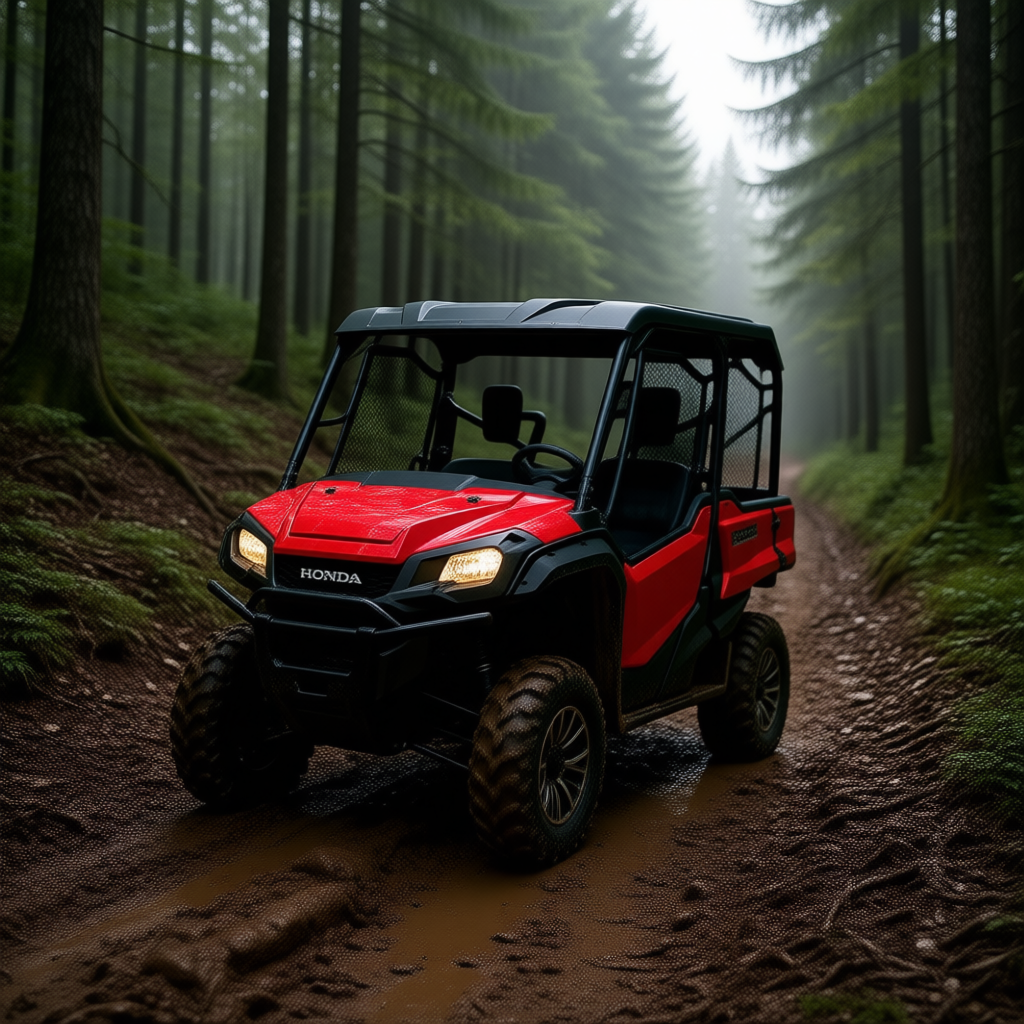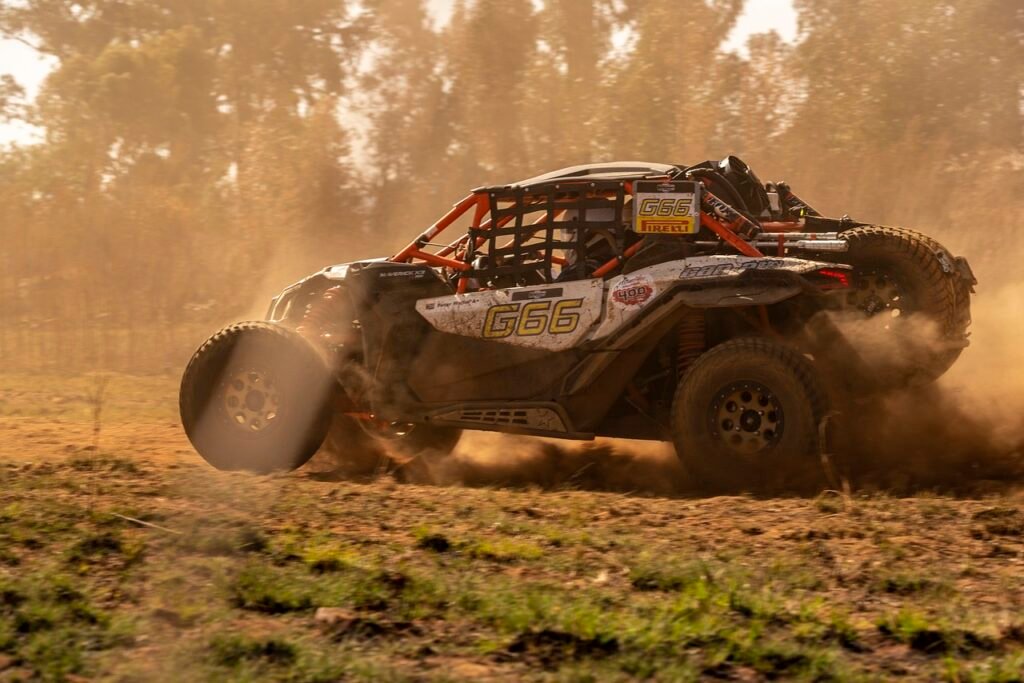
The Honda Pioneer and Polaris Ranger series represent two of the most esteemed and fiercely competitive names in the Utility Task Vehicle (UTV) market today. As we navigate through 2026, the battle for off-road supremacy between these two manufacturing giants has never been more intense, pushing both brands to innovate at a rapid pace. Both manufacturers have cultivated a remarkably strong reputation over the years, thanks to their unwavering commitment to quality, cutting-edge innovation, and relentless performance testing.
Interestingly, because these two brands are so dominant in the side-by-side world, it is incredibly common for beginners and seasoned enthusiasts alike to accidentally mix up the names online, frequently searching for a “polaris pioneer” or a “Honda Ranger.” However, these are distinct machines from separate companies, each bringing a completely unique engineering philosophy to the dirt. Understanding the core differences in the broader “honda vs polaris utv” debate is the first step toward making an informed purchasing decision.
The Honda Pioneer, launched by the renowned Japanese automaker Honda, has been an absolute staple in the utility segment since its initial introduction. Known for its robust automotive-style engineering, legendary reliability, and revolutionary Dual Clutch Transmission (DCT), the Pioneer series has garnered a fiercely loyal following among UTV enthusiasts, farmers, ranchers, and industrial professionals who require dependable performance in versatile and unforgiving terrains.
On the other hand, Polaris has long been a key player and trendsetter in the powersports industry, with the Ranger series standing out for its versatility, aggressive styling, and highly customizable rugged design. Polaris introduced the Ranger series to cater to a broad spectrum of users, from recreational trail riders to those needing a heavy-duty workhorse for demanding agricultural and industrial applications. The Ranger’s reputation is built on its impressive blend of raw power, plush comfort, and advanced technological features, making it a formidable competitor in the premium UTV market.
Both the Honda Pioneer and Polaris Ranger series are designed with specific, contrasting philosophies in mind. Honda’s approach focuses heavily on creating ultra-durable, user-friendly vehicles that deliver consistent performance, automotive-grade reliability, and ease of long-term maintenance. The Pioneer series is often praised for its straightforward design, which emphasizes pure functionality over flashy gimmicks. Conversely, Polaris takes a more aggressive and innovative stance, integrating cutting-edge technology, high-horsepower engines, and highly customizable options into the Ranger series. This approach allows users to tailor their vehicles to meet highly specific needs, whether for weekend leisure or labor-intensive commercial tasks.
Understanding these overarching design philosophies and historical contexts is crucial for a comprehensive comparison of the Honda Pioneer and Polaris Ranger models. Both brands bring unique strengths to the table, setting the stage for an in-depth exploration of their various versions, mechanical layouts, and off-road capabilities.
Design and Build Quality: Engineering Excellence
The design and build quality of the Honda Pioneer and Polaris Ranger are critical factors that often heavily influence a buyer’s final decision. When you are investing thousands of dollars into a piece of heavy machinery, the structural integrity, material composition, and ergonomic design must be flawless.
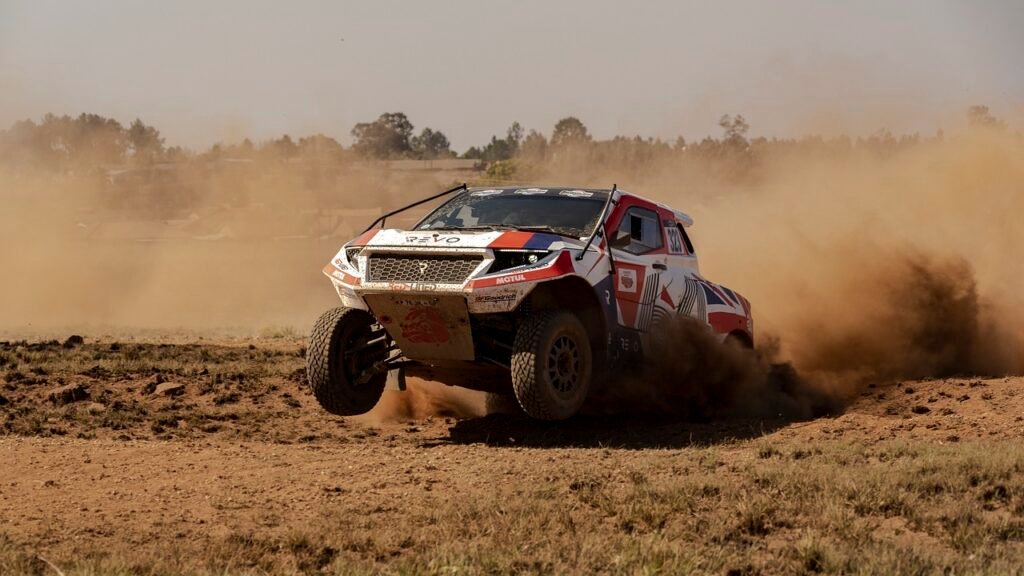
Both models are renowned for their robust construction, but there are distinct differences in their design philosophy, chassis geometry, and material choices that set them apart in the 2026 lineup.
The Honda Pioneer is often praised for its rugged, utilitarian build. Utilizing high-strength steel tubing, automotive-grade wiring harnesses, and incredibly durable plastics, the Pioneer contributes to its long-term reliability. The seating arrangements in the Pioneer are designed to offer maximum comfort, with ergonomically crafted, high-bolster seats that can accommodate multiple passengers without compromising on shoulder or legroom. Honda’s use of a steel dump bed provides immense durability when hauling jagged rocks or heavy steel equipment, though it does add to the overall curb weight. This makes the Pioneer an excellent choice for both rigorous work and recreational purposes.
On the other hand, the Polaris Ranger is equally impressive in terms of build quality, but it approaches durability from a slightly different angle. Featuring a reinforced high-clearance chassis, integrated skid plates, and high-grade composite materials, the Ranger ensures durability under extreme conditions while keeping overall weight manageable. The Ranger’s design emphasizes versatility, with modular seating that can be easily adjusted, folded, or removed to suit different needs. This adaptability is particularly beneficial for users who require a utility vehicle that can transition seamlessly from a six-passenger weekend cruiser to a two-passenger work machine during the week.
Additionally, the Polaris Ranger’s cargo space is thoughtfully designed to maximize utility. Featuring the innovative Lock & Ride system, multiple under-seat storage compartments, and a spacious composite bed that can handle substantial loads without rusting, the Ranger is a master of cargo management. When it comes to aesthetics, both the Honda Pioneer and Polaris Ranger offer visually appealing designs that cater to different tastes. The Pioneer typically showcases a more traditional, rugged, and squared-off look, appealing to those who prioritize functionality and industrial durability. Conversely, the Ranger often features a more modern, sleek, and aggressive design, aimed at users who desire both style and substance in their utility vehicle.
Engine Performance and Powertrain Options
The engine performance and powertrain options are arguably the most critical factors when comparing the Honda Pioneer and Polaris Ranger. Both manufacturers offer various engine configurations tailored to differing needs, providing a wide range of options that cater to different preferences, budgets, and workload requirements.
Honda Pioneer 520 vs Polaris Ranger 500: The Entry-Level Battle
A highly searched comparison in 2026 is the “honda pioneer 520 vs polaris ranger 500”. The Honda Pioneer lineup includes engines ranging from 500cc to 1000cc. The Pioneer 500 (now updated with a 520cc displacement in recent iterations) is equipped with a fuel-injected single-cylinder engine, delivering modest but highly reliable power suitable for light-duty tasks, property management, and flat terrain. The defining feature here is Honda’s revolutionary automatic DCT, which eliminates the need for a drive belt.
When looking at the reverse search of “polaris ranger 500 vs honda pioneer 520”, the Polaris Ranger 500 comes with a 499cc single-cylinder engine utilizing a traditional Continuously Variable Transmission (CVT). While comparable in raw displacement, the delivery is vastly different. The Polaris CVT provides a smooth, stepless acceleration that feels peppy off the line, whereas the Honda’s DCT provides distinct, physical gear shifts that offer superior engine braking on downhills and virtually zero belt-slip when submerged in deep mud or water.
The Mid-Size Contenders: 700 Class
Moving up the ladder, the Honda Pioneer 700 features a 675cc single-cylinder engine, providing an excellent balance of power, torque, and fuel efficiency. It is widely considered one of the most reliable workhorses on the market. Polaris counters this segment with the Ranger 570 and the highly popular Ranger Crew 570, featuring a 567cc single-cylinder engine. While slightly smaller in displacement, the ProStar 570 engine is tuned for aggressive low-end torque, offering a slight increase in perceived power and faster acceleration across open fields.
The Flagship Heavyweights: 1000 Class
The flagship model, the Honda Pioneer 1000, boasts a 999cc twin-cylinder engine, generating substantial horsepower and torque. Paired with a 6-speed DCT, it is ideal for heavy-duty applications, steep mountain climbing, and challenging terrains. In contrast, the Polaris Ranger 1000 and Ranger XP 1000 models are powered by a 999cc twin-cylinder ProStar engine. Delivering an impressive 82 horsepower compared to the Honda’s 72 horsepower, the Polaris offers superior top-end speed and raw horsepower for demanding tasks and rough terrains.
Check out our off-road collection Amazon products
When it comes to overall mechanical performance, the larger engines in the Pioneer 1000 and Ranger XP 1000 provide superior towing capacities (up to 2,000 lbs for both) and massive payload capabilities. Fuel efficiency is another critical aspect of engine performance. Generally, the smaller engines in both lineups tend to be more fuel-efficient, making them ideal for longer rides and extended agricultural use. The larger engines, while consuming more fuel, offer unmatched power for heavy-duty activities.
Suspension and Handling Dynamics
The suspension and handling of a utility task vehicle (UTV) are critical factors that determine its performance, driver fatigue levels, and capability across various terrains and weather conditions. When comparing the Honda Pioneer and Polaris Ranger, both models exhibit unique strengths in their suspension geometry, spring rates, and handling characteristics.
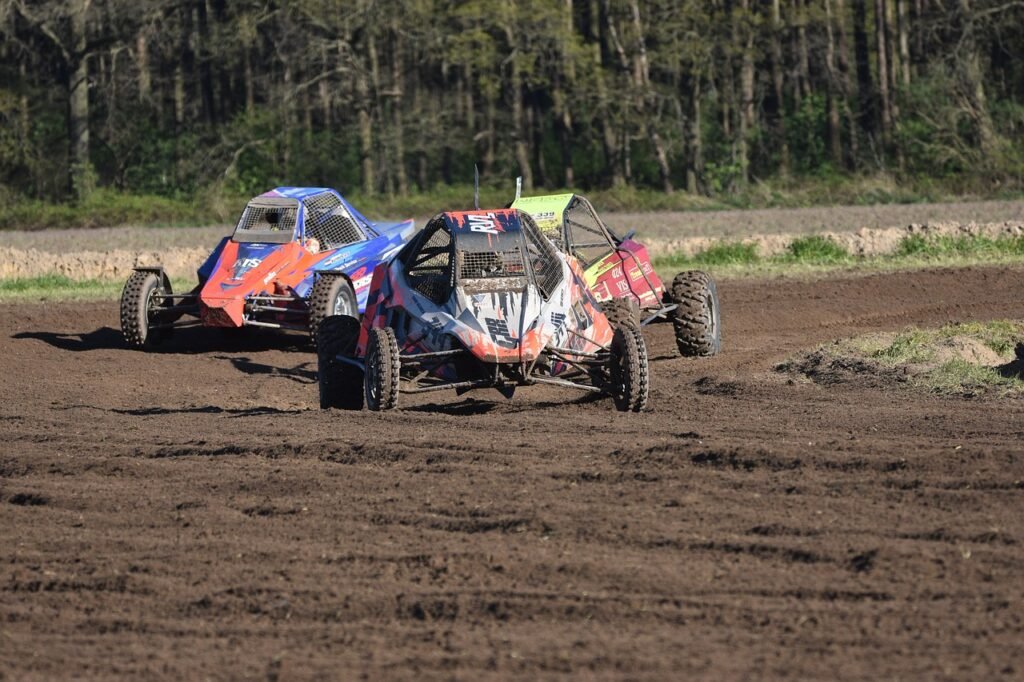
The Honda Pioneer boasts a well-engineered suspension system that includes independent double-wishbone front and rear suspension. This setup allows for an impressive ground clearance, typically ranging between 10 to 12 inches depending on the specific model and tire configuration. The Pioneer’s suspension is complemented by high-quality, valved shock absorbers that prioritize a plush ride. Honda engineers specifically tuned these shocks to absorb high-frequency bumps—like washboards and small rocks—which significantly enhance ride comfort, even on rough trails and rocky terrain.
This specific tuning feature ensures that the vehicle maintains stability and control, providing a smoother ride experience under diverse conditions. Furthermore, the suspension system’s robustness plays a crucial role when the Pioneer is fully loaded or towing maximum capacity. By utilizing heavy-duty springs, the Pioneer prevents excessive sagging, maintaining optimal performance without compromising on steering geometry or handling.
Conversely, the Polaris Ranger is equipped with an advanced, long-travel suspension system. That includes dual A-arm front suspension and an independent rear suspension (IRS) setup that often features a stabilizer bar to reduce body roll. The Ranger’s ground clearance is also noteworthy, with premium models offering an industry-leading 13 inches. This high ground clearance, combined with well-tuned, larger shock absorbers, ensures that the Ranger can tackle highly challenging terrains such as deep mud ruts, large boulders, and rocky paths with absolute ease.
The Ranger’s suspension system is explicitly designed to handle heavy loads and towing efficiently, maintaining a balanced and stable ride regardless of the cargo weight. Polaris achieves this through a slightly stiffer initial spring rate, which prevents the machine from bottoming out harshly when carrying 1,000 lbs of gravel in the dump bed.
When it comes to handling, both the Honda Pioneer and Polaris Ranger excel in providing responsive and predictable control. The Pioneer’s steering is incredibly precise, allowing for confident maneuvering through tight wooded trails and difficult, technical terrain. The turning radius on the Pioneer is notably tight, making it a favorite for navigating dense forests or tight barns.
Recommended Insights From Our Guide Library:
- Honda Pioneer 500 vs Polaris Ranger 500: The Ultimate Size Comparison
- Honda Pioneer vs Kawasaki Mule vs Polaris Ranger: Ultimate UTV Comparison (2026 Update)
- Polaris Ranger 570 vs Honda Pioneer 700 Value: Which UTV Offers Better Bang for Your Buck?
- Polaris Ranger 500 Archives – Pioneer Honda Lovers
- Honda vs Polaris Archives
Similarly, the Ranger’s handling is agile and highly responsive, thanks to its sophisticated suspension design, larger wheelbase, and advanced steering mechanisms. Both UTVs offer a high degree of ride comfort, ensuring that operators and passengers experience minimal jolts, harsh vibrations, or steering wheel feedback. Whether it’s the Pioneer’s focus on plush ride comfort and stability or the Ranger’s prowess in handling heavy loads and conquering tough, uneven terrains, each model brings a unique set of mechanical strengths to the table.
Tech Features and Innovations
When it comes to technological advancements in 2026, both the Honda Pioneer and Polaris Ranger demonstrate significant strides in enhancing user experience, diagnostics, and overall vehicle functionality. These modern side-by-sides are no longer just mechanical tools; they are equipped with a range of digital features that cater to modern-day demands, ensuring a perfect blend of performance, connectivity, and convenience.
The Honda Pioneer series incorporates a variety of technological elements designed to elevate the riding experience without overwhelming the user with fragile electronics. Among these is the advanced, fully digital instrument cluster. Which provides seamless connectivity and vital engine diagnostics at a glance. This allows users to easily monitor fuel levels, gear selection (crucial for the DCT models), and maintenance intervals while on the go. Additionally, Honda has integrated an intuitive approach to driver information that offers real-time vehicle tracking, helping riders navigate even the most challenging terrains with ease.
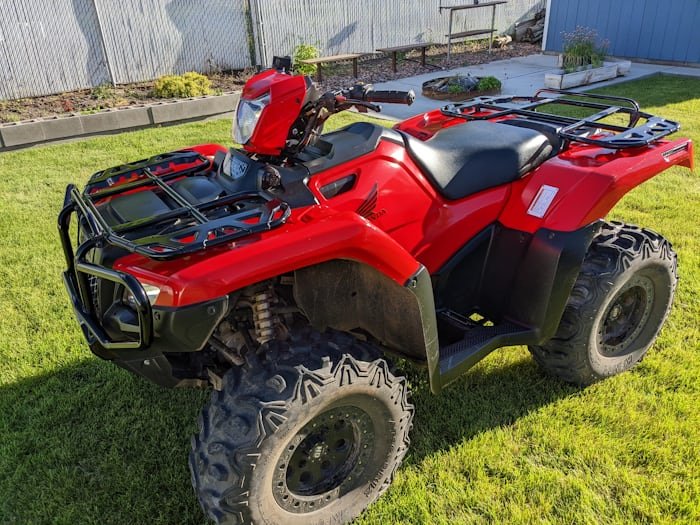
Driver assistance features in the Honda Pioneer include a robust set of sensors that monitor engine temperature and oil pressure, providing comprehensive visibility of the machine’s health. This is particularly beneficial when working the vehicle hard in extreme heat or steep elevations. The inclusion of electronic power steering (EPS) further enhances control, reducing driver fatigue during extended, eight-hour workdays. Unique technological advancements such as Hill Start Assist, fail-safe sub-maps, and Intelligent 4WD systems showcase Honda’s absolute commitment to safety and mechanical performance.
On the other hand, the Polaris Ranger equally impresses—and often leads the pack—with its massive suite of technological features. The infotainment system, branded as Polaris Ride Command, is a marvel of modern UTV engineering. It offers a stunning 7-inch touchscreen display that integrates seamlessly with smartphone connectivity via Bluetooth, Apple CarPlay, advanced GPS navigation, and real-time vehicle diagnostics. This system stands out for its highly user-friendly interface and ability to provide valuable insights into vehicle performance, trail mapping, and maintenance needs.
Polaris also heavily emphasizes driver assistance through features like Active Descent Control (ADC) and class-leading Electronic Power Steering (EPS). These technologies are crucial for maintaining stability, preventing brake fade, and ensuring control on uneven or slippery terrains. Moreover, Polaris has implemented a range of innovative mechanical solutions such as the ProStar engine platform, which optimizes power delivery and fuel efficiency through advanced electronic fuel injection mapping, and the highly versatile Lock & Ride cargo system, drastically enhancing the overall utility of the vehicle.
Safety Features and Long-Term Reliability
When assessing the safety features and long-term dependability of the Honda Pioneer and Polaris Ranger, several key elements come to the forefront for commercial and recreational buyers alike. Both models are equipped with robust, fully integrated roll cages designed to safeguard occupants in the unfortunate event of a rollover.
The Honda Pioneer features a highly engineered Occupant Protection Structure (OPS) that strictly meets and often exceeds OSHA and ISO standards, ensuring the highest levels of safety for farm and industrial workers. Similarly, the Polaris Ranger is equipped with a certified Rollover Protection Structure (ROPS), providing comparable, top-tier safety assurances.
Seat belts are another critical safety component in both vehicles. The Honda Pioneer includes automotive-style three-point seat belts for both the driver and passengers, enhancing occupant security and keeping riders firmly planted during aggressive cornering. The Polaris Ranger also incorporates heavy-duty three-point seat belts, but they are uniquely complemented by seat belt interlock systems. This innovative system electronically limits the vehicle’s top speed to 15 mph if the seat belts are not fastened, offering an additional, active layer of protection.
Braking systems play a vital role in the overall safety profile of heavy UTVs. The Honda Pioneer is equipped with dual hydraulic disc brakes on all four wheels, utilizing automotive-style brake pads that ensure highly effective, fade-free stopping power under various loaded conditions. The Polaris Ranger features an equally advanced braking system with four-wheel hydraulic disc brakes, providing reliable, responsive, and aggressive braking performance. Both braking systems contribute significantly to the overall safety and performance of these vehicles.
Reliability is another crucial factor for UTV users, directly impacting both safety and long-term vehicle operating costs. User reviews and mechanic reports consistently highlight the Honda Pioneer for its unmatched dependability, noting minimal maintenance requirements, the absence of a CVT belt to snap, and robust engine performance that routinely surpasses thousands of hours of use. The Pioneer’s automotive-grade components contribute heavily to its reputation for bulletproof durability.
On the other hand, the Polaris Ranger is also widely praised for its reliability, with users appreciating its rugged build, easily serviceable parts, and consistent performance. However, some reviews indicate that the Ranger may require more frequent routine maintenance compared to the Pioneer—particularly regarding CVT belt replacements, clutch cleanings, and air filter changes in demanding, dusty environments. Overall, both models are renowned for their dependability, but the Honda Pioneer may offer a slight edge in terms of lower long-term maintenance needs.
Customization and Aftermarket Accessories
The customization and accessory options available for both the Honda Pioneer and Polaris Ranger are incredibly extensive, catering to a wide array of user preferences, work requirements, and aesthetic desires. Factory options and aftermarket solutions provide ample opportunities to enhance performance, aesthetics, and functionality, making these versatile vehicles even more adaptable to your specific lifestyle.
Starting with the Honda Pioneer, the factory offers a robust selection of accessories designed to improve the vehicle’s performance and usability right off the dealer floor. Performance upgrades such as heavy-duty suspension kits, high-flow exhaust systems, and upgraded air intake filters are readily available for those looking to squeeze more out of their machine.
For those looking to enhance the visual appeal, Honda provides various aesthetic modifications including custom graphic kits, machined aluminum wheels, and premium interior trim kits. Practical accessories are not overlooked either, with options like heavy-duty winches, additional lockable storage compartments, specialized LED lighting systems, and full cab enclosures available to meet the demands of various tasks and extreme weather environments.
On the other hand, the Polaris Ranger is globally renowned for its virtually limitless customization capabilities. Polaris provides a comprehensive range of factory accessories, from performance-enhancing parts like ECU tuners and long-travel suspension upgrades to aesthetic modifications such as custom paint jobs, color-matched panels, and massive LED light bars. Practical accessories for the Polaris Ranger include versatile storage solutions, heavy-duty winches, and advanced lighting options, all designed to optimize the vehicle’s utility in entirely different scenarios.
When comparing the two ecosystems, both the Honda Pioneer and Polaris Ranger excel in offering a wide variety of customization options. The Polaris Ranger, however, definitely holds a slight edge due to its broader selection of factory accessories, the genius of the Lock & Ride mounting system, and a massively extensive aftermarket support network. This makes the Ranger particularly appealing for users who prioritize extensive personalization, DIY modifications, and adaptability.
Pricing, Cost of Ownership, and Value for Money
Check out our off-road collection Amazon products
When evaluating the pricing and overall value for money of the Honda Pioneer and Polaris Ranger, it is absolutely essential to consider not just the initial purchase price, but also the included features, long-term performance, maintenance costs, and the overall package each model offers over a 5 to 10-year ownership period.
The Honda Pioneer lineup typically starts at a lower, highly competitive base price compared to the Polaris Ranger series. For instance, the entry-level Honda Pioneer 500 is often more affordable than the comparable Polaris Ranger 500. However, as you move up the range into the 1000cc territory, the price difference becomes much less pronounced, with both brands offering premium models that cater to various needs and commercial budgets.
The Honda Pioneer is universally known for its mechanical reliability and durability, which directly translates into significantly lower maintenance and repair costs over time. The brilliant simplicity of the Honda Pioneer’s design—especially the elimination of the CVT drive belt in favor of the DCT—contributes to drastically reduced long-term expenses, making it a highly cost-effective choice for budget-conscious buyers and large fleet managers.
On the other hand, the Polaris Ranger is renowned for its advanced technology, superior horsepower, and premium ride capabilities. Which can easily justify its higher price point for those seeking enhanced digital features, better high-speed off-road capabilities, and greater cargo versatility.
When it comes to the higher-end models, such as the Honda Pioneer 1000 and the Polaris Ranger XP 1000, both offer a robust set of premium features. The Honda Pioneer 1000 boasts a highly efficient engine, impressive towing capacity, and a versatile seating arrangement, making it a strong contender in its class. Meanwhile, the Polaris Ranger XP 1000 comes with a more sophisticated long-travel suspension system, superior handling dynamics, and a range of customizable options that appeal to enthusiasts looking for a tailored experience.
Considering the total cost of ownership, including routine maintenance, unexpected repairs, and eventual resale value, the Honda Pioneer often emerges as the more economical choice in the long run. Honda’s legendary reputation for longevity and lower maintenance costs is a massive financial advantage. However, the Polaris Ranger’s advanced features, aggressive styling, and high-end performance might easily justify the higher initial investment for some buyers, particularly those who prioritize cutting-edge technology and superior off-road dominance.
Final Verdict: Which UTV is Right for You?
Community Reference & Authority Resources:
Ultimately, the choice between the Honda Pioneer and Polaris Ranger will depend entirely on individual preferences, budget constraints, and specific operational requirements. If you want a machine that starts every single morning, requires minimal maintenance, and offers automotive-style shifting, the Honda Pioneer is your ultimate workhorse. If you prefer higher top speeds, a plush long-travel suspension, cutting-edge touchscreens, and endless customization options, the Polaris Ranger is the undisputed king.
Both offer exceptional value for money in their respective ways, ensuring that potential buyers can easily find a model that perfectly aligns with their needs, expectations, and off-road ambitions for 2026 and beyond.
🔍 Explore More: See all guides for Honda Pioneer.