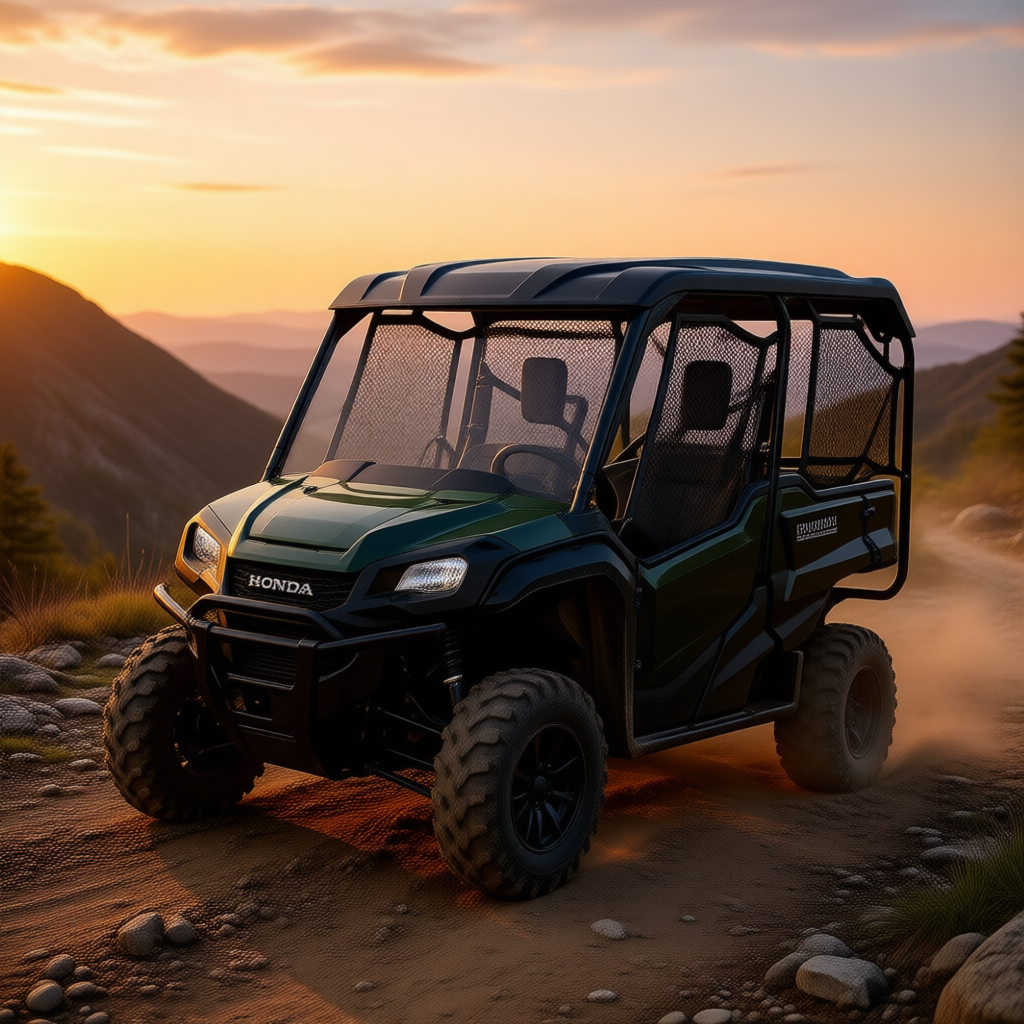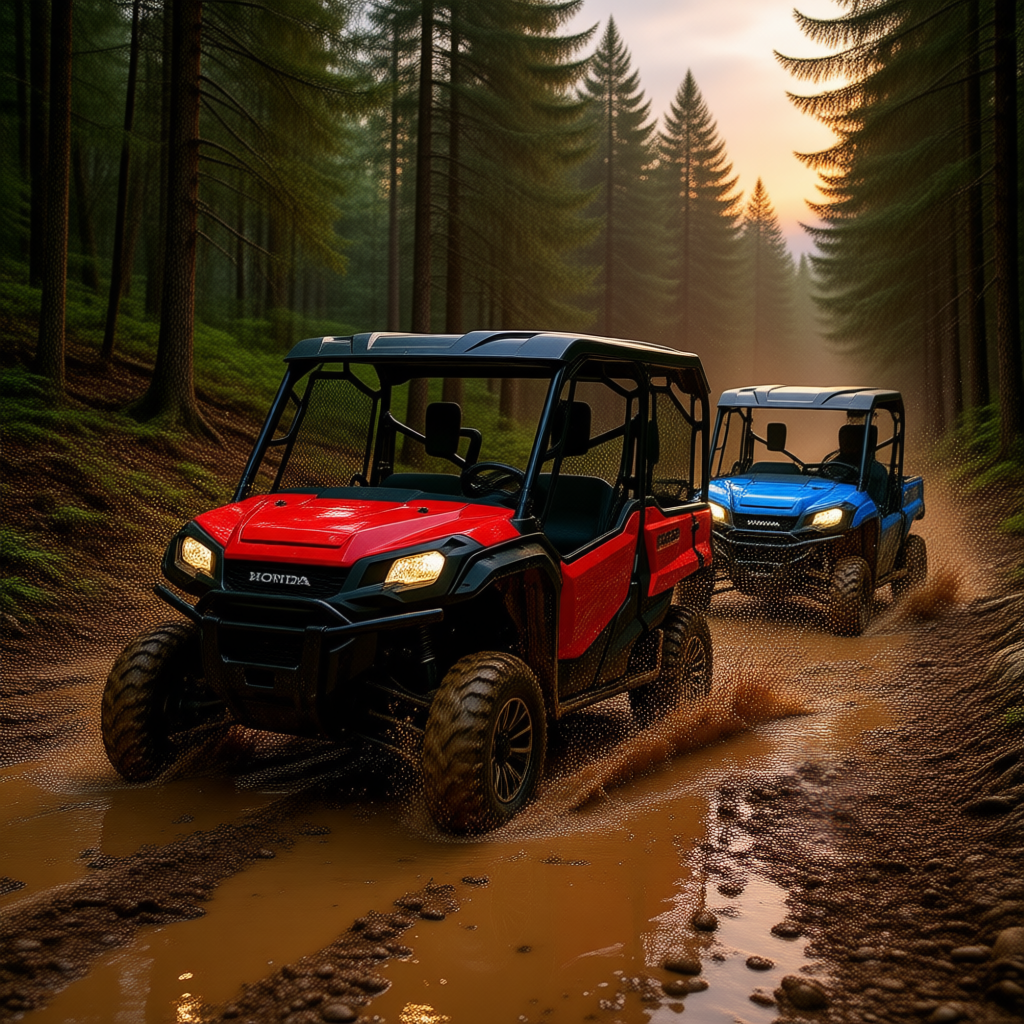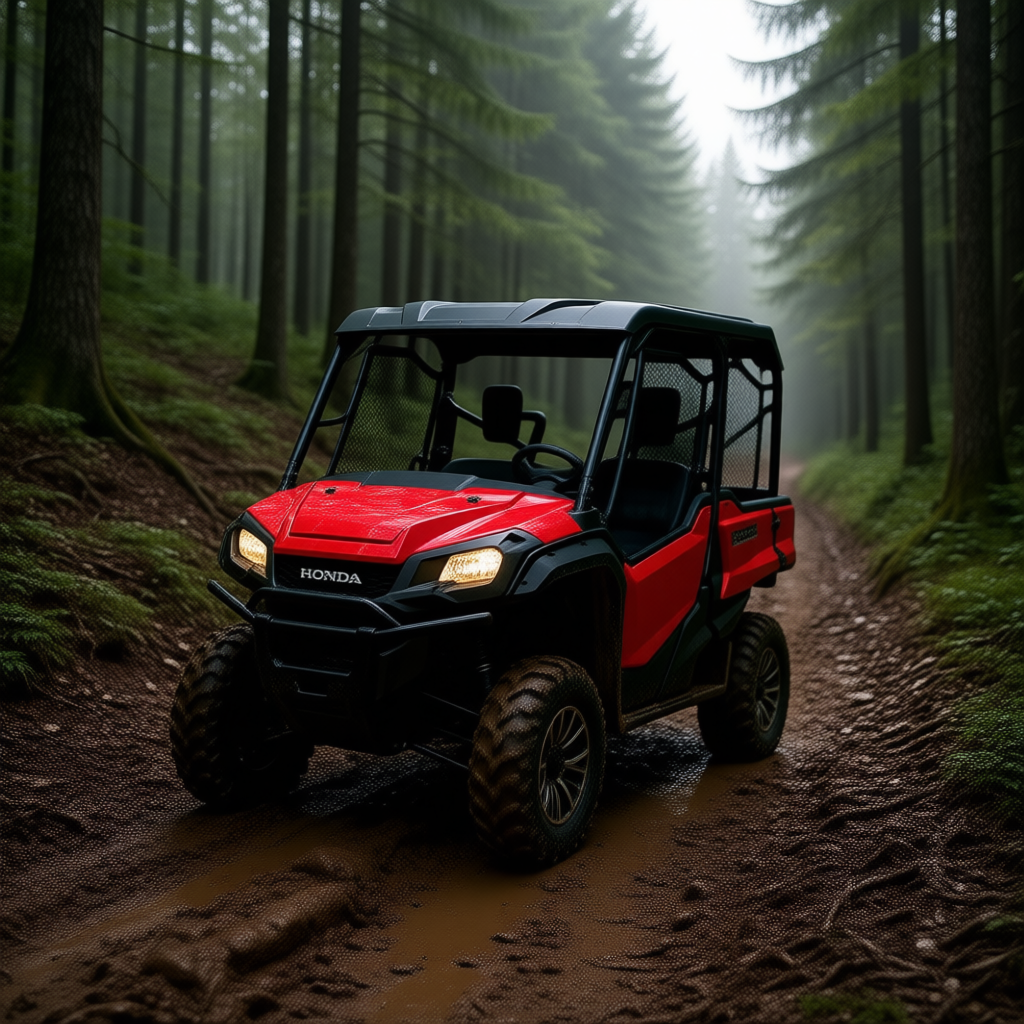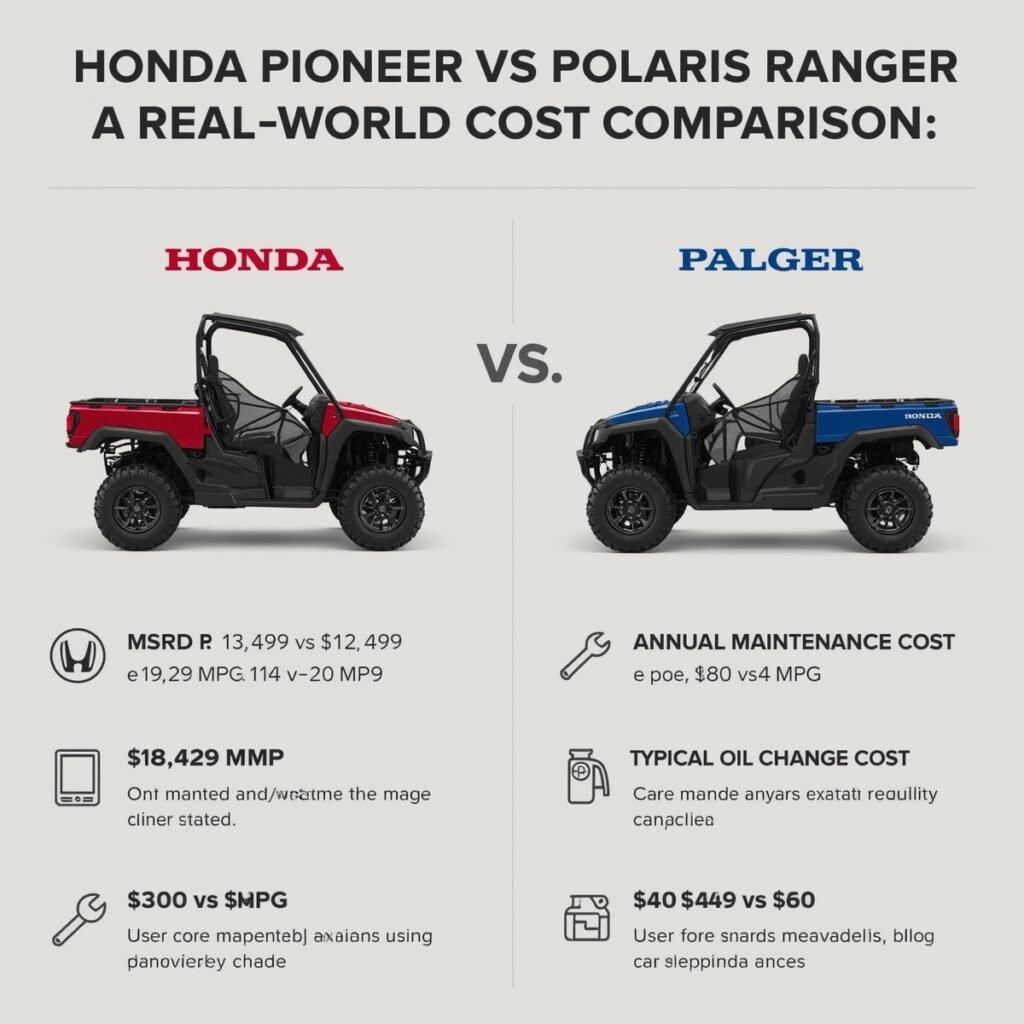



Choosing a UTV is a significant investment, and for many off-road enthusiasts, the decision often comes down to two titans of the industry in the ultimate Honda Pioneer vs Polaris Ranger debate.
Both are incredibly capable machines, designed to tackle tough terrain, assist with work, and provide endless recreational fun. But when you are comparing a Honda vs Polaris UTV, which one truly reigns supreme?
However, beyond the initial sticker price, the true cost of ownership can vary significantly between these two popular brands. As someone who has spent countless hours researching and experiencing the nuances of UTV ownership, I know that understanding these real-world costs is crucial for making an informed decision that fits your budget and lifestyle.
In this comprehensive guide, we’ll delve deep into a real-world cost comparison between the Polaris Ranger vs Honda Pioneer.
We’ll go beyond the MSRP to examine factors like purchase price variations, ongoing maintenance expenses, the cost and availability of parts, fuel efficiency, and even insurance considerations. We will also look at updated technical specs to see how these machines stack up on paper and in the dirt.
My aim is to provide you with a clear, unbiased look at what it truly costs to own and operate each of these UTVs, helping you decide which one offers the best value for your hard-earned money.
Let’s break down the numbers and see which side-by-side comes out ahead in the long run.
Initial Purchase Price: Beyond the MSRP
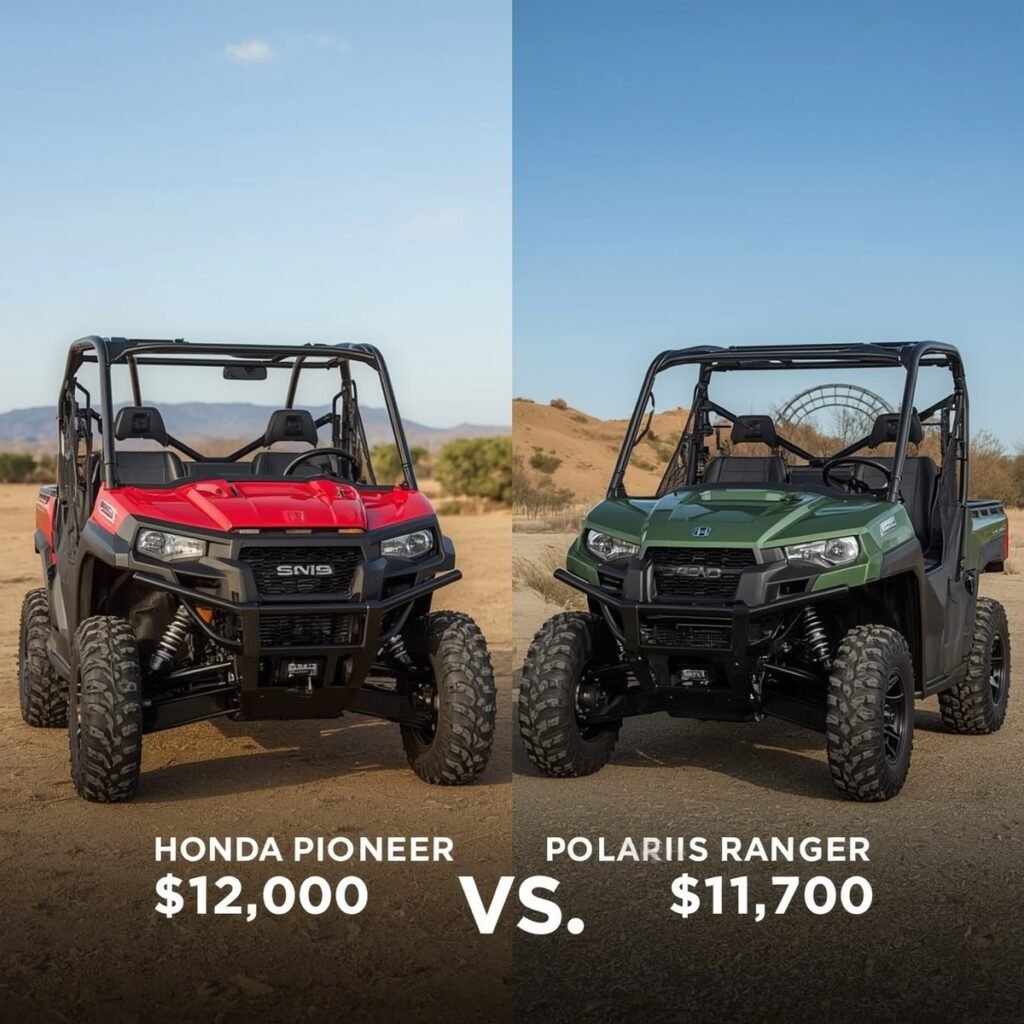
The sticker price is often the first thing potential buyers look at, and both Honda Pioneer and Polaris Ranger offer a wide range of models and trims, from basic utility vehicles to feature-packed luxury machines. When evaluating a Polaris vs Honda UTV purchase, the entry costs can be surprisingly similar, but the top-end trims tell a different story.
Generally, Polaris Ranger models tend to have a slightly higher starting MSRP compared to similarly equipped Honda Pioneer models, especially at the higher end of the spectrum.
- Honda Pioneer: Known for its value, Honda Pioneers often come with a competitive price point, especially for their robust build quality and reliability. The Pioneer 520, 700, and 1000 series offer various configurations (2-seat, 4-seat, 5-seat) with different trim levels that affect the price.
- Polaris Ranger: Polaris offers an extensive lineup, from the mid-size Ranger 500 to the powerful Ranger XP 1000 and the new Ranger XD 1500. Their pricing can escalate quickly with premium features, larger engines, and specialized editions (e.g., NorthStar Edition with enclosed cabs and HVAC).
Real-World Considerations:
- Dealer Discounts and Incentives: Both brands frequently offer promotions, financing deals, or rebates that can significantly impact the final purchase price. It’s always worth shopping around and negotiating.
- Used Market Value: While not an initial cost, the strong resale value of Honda models can offset some of the initial investment in the long run. Polaris also holds its value well, particularly the popular XP 1000 models.
- Accessories and Customization: Many buyers immediately add accessories. While not part of the base price, these can add thousands to the overall initial outlay. Both brands have extensive aftermarket support, but prices for OEM accessories can vary.
Updated Technical Specs: Pioneer vs Ranger
To truly understand the Pioneer vs Ranger rivalry, we have to look under the hood. Both brands offer distinct engineering philosophies. Honda leans heavily on automotive-style durability, while Polaris focuses on aggressive power delivery and class-leading suspension.
Mid-Size Matchup: Honda Pioneer 520 vs Polaris Ranger 500
When comparing the Honda Pioneer 520 vs Polaris Ranger 500, you are looking at two entry-level workhorses. The Ranger 500 boasts a 570cc engine producing around 32 horsepower, whereas the Pioneer 520 uses a 518cc engine making about 25 horsepower. While the Polaris has more top-end speed, the Honda compensates with its legendary automatic DCT (Dual Clutch Transmission), giving it superior low-end grunt for towing without burning up a CVT belt. If you are debating the Polaris Ranger 500 vs Honda Pioneer 520 for farm chores, the Honda’s drivetrain often requires less babysitting.
Heavyweights: Polaris Ranger vs Honda Pioneer 1000
Stepping up to the 1000cc class, the Polaris Ranger vs Honda Pioneer 1000 comparison gets fierce. The Honda Pioneer 1000 features a 999cc parallel-twin engine (approx. 72 HP) mated to a 6-speed DCT with paddle shifters and a 2,500 lb towing capacity. On the other side, the Polaris Ranger XP 1000 packs a 999cc twin producing 82 HP, paired with a high-performance CVT, and can tow up to 2,500 lbs. The Polaris generally offers more ground clearance (13 inches vs Honda’s 11.4 inches) and a smoother suspension ride out of the box, while the Honda offers distinct gear ratios and unmatched transmission reliability.
Maintenance and Parts Costs: The Ongoing Investment
Beyond the initial purchase, ongoing maintenance and the cost of replacement parts are significant factors in the real-world cost of ownership. This is where the differences between Honda and Polaris can become more apparent.
Honda Pioneer: Renowned for Reliability and Lower Maintenance
Check out our off-road collection Amazon products
SHOP THE COLLECTION
Honda has a long-standing reputation for reliability and durability, and the Pioneer lineup generally lives up to this. Owners often report lower routine maintenance costs and fewer unexpected repairs.
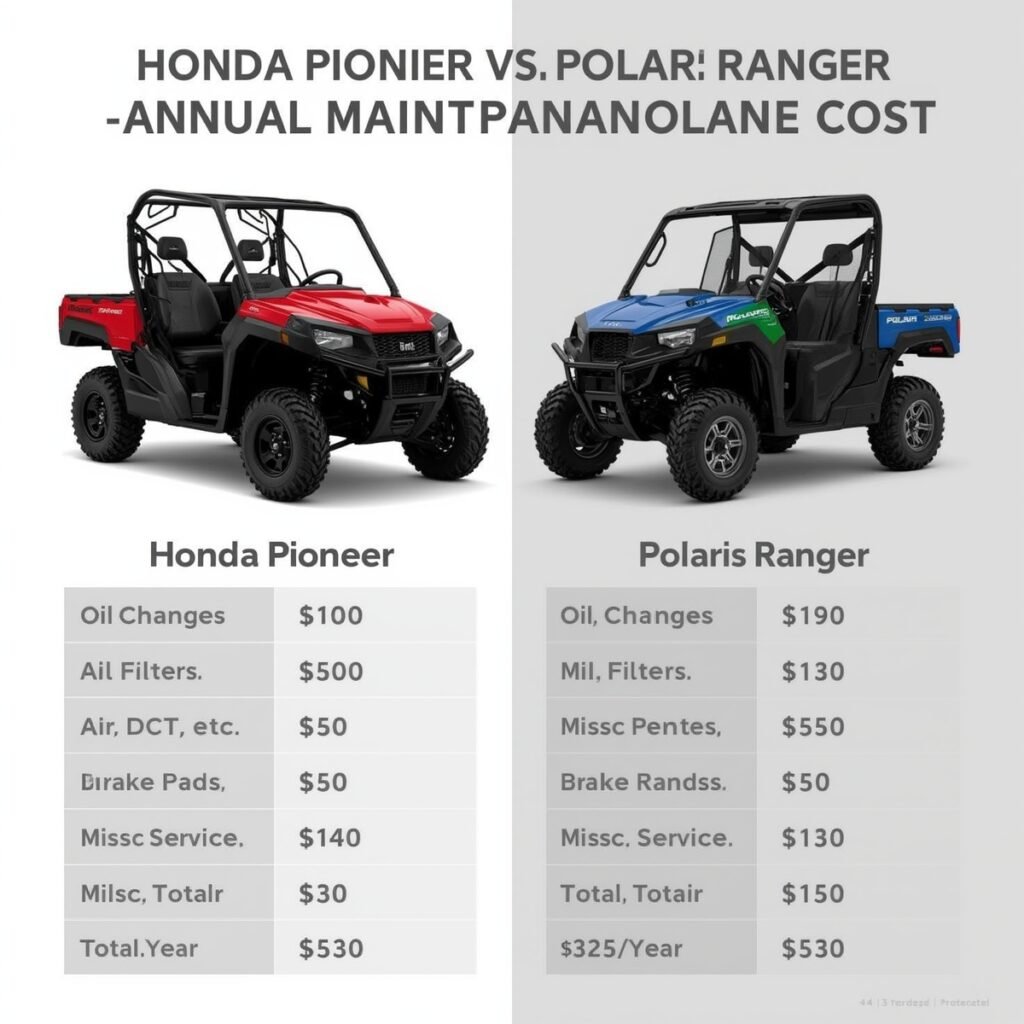
- Routine Maintenance: Honda Pioneers typically have straightforward maintenance schedules. Oil changes, filter replacements, and basic checks are often manageable for DIY enthusiasts, saving on labor costs. Dealer service costs for routine maintenance (e.g., 100-hour or 600-mile service) can range from $300-$600, but many owners find these intervals to be longer or the tasks simpler than some competitors.
- Parts Cost and Availability: OEM Honda parts are generally readily available, and while not always the cheapest, they are known for their quality and fit. The aftermarket for Honda Pioneer parts is also growing, offering competitive pricing for common wear items.
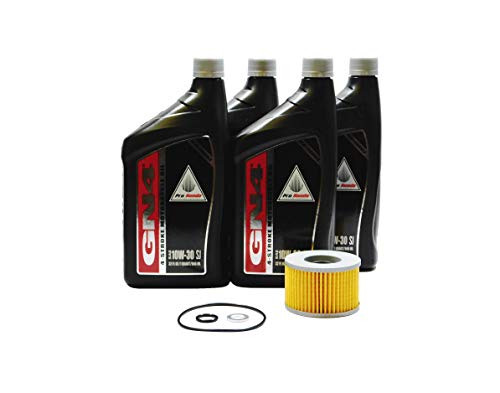
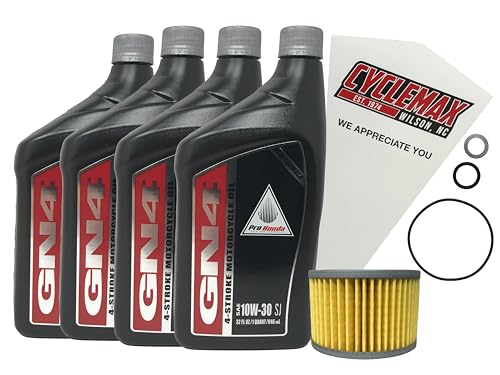
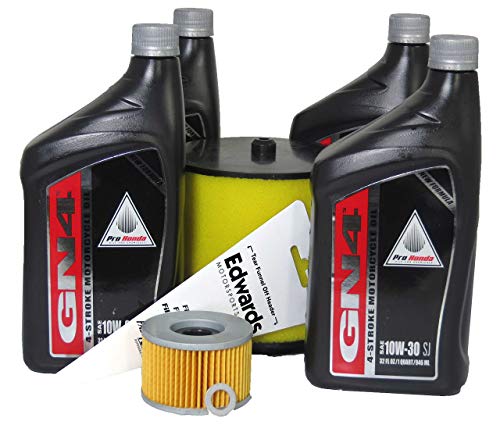
- Wet Clutch System: Honda’s unique automatic dual-clutch transmission (DCT) with a wet clutch system is known for its durability. However, it requires specific JASO MA/MA2 certified oil, which might be slightly more expensive than generic oils, but this is a small price to pay for protecting such a critical component.
Polaris Ranger: More Frequent Maintenance, Wider Part Options
Polaris Rangers are powerful and popular, but some owners report more frequent maintenance needs and potentially higher costs, especially for models pushed hard or used in extreme conditions. However, their widespread popularity means a vast aftermarket for parts.
- Routine Maintenance: Polaris Ranger models often have more frequent recommended service intervals, particularly for fluid changes in various components (engine, transmission, front/rear differentials). Dealer service costs can range from $400-$800 or more for comprehensive services. DIY maintenance is certainly possible, but there are more fluid types and components to manage.
- Parts Cost and Availability: Polaris OEM parts can be on the higher side, but the sheer volume of Polaris Rangers sold means the aftermarket is flooded with options. This competition can drive down prices for many common replacement parts, from belts and brakes to suspension components.
- Belt-Driven CVT: Most Polaris Rangers utilize a Continuously Variable Transmission (CVT) with a drive belt. While efficient, these belts are wear items and can require replacement, especially if the UTV is used for heavy hauling, towing, or aggressive riding. Belt replacement costs can range from $150-$300+ for the belt alone, plus labor if done by a dealer.
Real-World Considerations:
- DIY vs. Dealer Service: For both brands, performing routine maintenance yourself can significantly reduce costs. However, some tasks, like valve adjustments on a Honda or complex transmission work on a Polaris, might require specialized tools or expertise.
- Driving Style and Usage: Aggressive driving, heavy loads, and frequent use in harsh conditions will naturally increase wear and tear, leading to higher maintenance and repair costs for both UTVs.
Recommended Insights From Our Guide Library:
- Honda Pioneer vs Kawasaki Mule vs Polaris Ranger: Ultimate UTV Comparison (2026 Update)
- Honda Pioneer 1000 vs Polaris Ranger XP 1000 Reliability: The Ultimate Showdown
- Polaris Ranger 570 vs Honda Pioneer 700 Value: Which UTV Offers Better Bang for Your Buck?
- Honda Pioneer 500 vs Polaris Ranger 500: The Ultimate Size Comparison
- Honda Pioneer vs Polaris Ranger: A Real-World Cost Comparison
Fuel Efficiency and Insurance Costs: Hidden Expenses
Beyond the upfront and maintenance costs, fuel consumption and insurance premiums contribute significantly to the overall cost of UTV ownership. These can vary based on model, usage, and location.
Fuel Efficiency
Both Honda Pioneer and Polaris Ranger models offer varying fuel efficiencies depending on engine size, driving style, and terrain. Generally, smaller engine models will be more fuel-efficient.
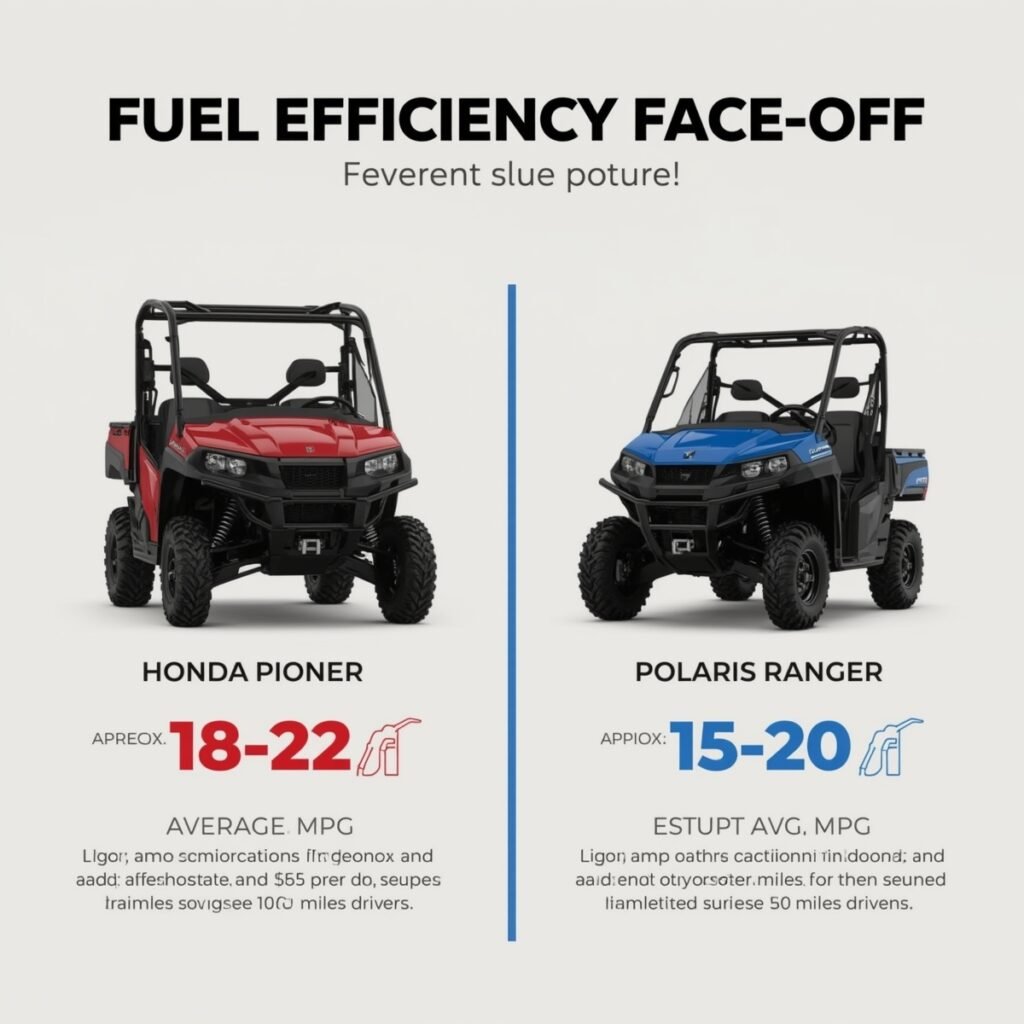
- Honda Pioneer: Known for their efficient engine designs, Honda Pioneers often boast competitive fuel economy. Owners of Pioneer 700 models report averages around 15-20 MPG, while Pioneer 1000 models typically range from 12-18 MPG, depending heavily on how and where they are driven. The DCT transmission in the Pioneer can contribute to better fuel efficiency compared to some CVT systems.
- Polaris Ranger: Polaris Rangers also offer a range of fuel efficiencies. The Ranger 570 models can achieve around 15-20 MPG, while the larger Ranger XP 1000 models generally fall into the 10-15 MPG range. Factors like heavy loads, aggressive driving, and continuous low-range use will decrease fuel economy for both brands.
Real-World Considerations:
- Fuel Tank Size: Consider the fuel tank capacity in conjunction with MPG to understand the effective range of each model. A larger tank might mean fewer fill-ups, but not necessarily better efficiency.
- Driving Habits: Your personal driving style, the type of terrain you ride on, and whether you primarily use your UTV for work or recreation will have the biggest impact on actual fuel consumption.
Insurance Costs
Insuring a UTV is a necessary expense, and premiums can vary widely based on several factors, including the vehicle’s value, your location, your driving record, and the type of coverage you choose. Generally, more expensive and higher-performance models will have higher insurance costs.
- Vehicle Value: Since Polaris Rangers often have higher MSRPs, especially for their premium models, their insurance premiums might be slightly higher than comparable Honda Pioneer models.
- Usage: Insurers will often ask about your UTV’s primary use (recreational, farm, commercial). Recreational use might have different rates than commercial use.
- Coverage Type: Comprehensive, collision, and liability coverage will all impact your premium. Some owners opt for basic liability, while others prefer full coverage to protect their investment.
Real-World Considerations:
- Bundling: Many insurance companies offer discounts if you bundle your UTV insurance with other policies (e.g., auto, home).
- Safety Features: Adding certain safety features (like a reinforced roll cage or GPS tracking) might qualify you for discounts with some insurers.
Polaris vs Honda Side by Side: Which is Better for Your Needs?
When looking at a Polaris vs Honda side by side, it often comes down to what you value most in a machine. Are you looking for a plush, high-horsepower trail cruiser, or a utilitarian tractor that will start every morning for the next twenty years?
If you are comparing a Honda side by side vs Polaris, consider the ride quality. Polaris is famous for its plush suspension setups, particularly in the XP and Crew models. They absorb bumps incredibly well, making them a favorite for long trail rides. Honda, on the other hand, has a slightly stiffer, more utilitarian ride, though their newer models have improved suspension travel significantly.
Furthermore, a Pioneer Ranger hybrid debate often happens among owners who put Honda reliability in their Polaris frames, though you have to pick one brand when buying new. Ultimately, a Honda UTV vs Polaris UTV decision boils down to transmission preference: Honda’s geared DCT versus Polaris’s belt-driven CVT.
Conclusion: Which UTV Offers the Best Real-World Value?
When comparing the real-world costs of the Honda Pioneer vs Polaris Ranger, it becomes clear that there isn’t a single answer that fits everyone. Both brands offer compelling reasons for ownership, and the “best value” ultimately depends on your priorities, usage, and budget.
- If reliability, lower long-term maintenance costs, and a strong resale value are your top priorities, the Honda Pioneer often emerges as the more economical choice. Its robust engineering and shared engine/transmission system, while requiring specific oil, generally lead to fewer unexpected repairs and a simpler maintenance regimen.
- If you prioritize a wider range of models, cutting-edge features, and extensive aftermarket customization options, the Polaris Ranger might be more appealing. While its maintenance can be more frequent and parts potentially pricier, the sheer variety and performance capabilities might outweigh these factors for some users.
Ultimately, the best approach is to consider your specific needs. How often will you ride? What kind of terrain will you tackle? How much DIY maintenance are you comfortable with?
Check out our off-road collection Amazon products
SHOP THE COLLECTIONBy carefully evaluating the initial purchase price, ongoing maintenance, parts availability and cost, fuel efficiency, and insurance premiums, you can make an informed decision that ensures your UTV ownership experience is both enjoyable and financially sustainable.
Whichever you choose, whether you decide on a Honda Pioneer or Polaris Ranger, both the Honda Pioneer and Polaris Ranger are formidable machines ready to take on your next off-road adventure.
Frequently Asked Questions (FAQ)
Is the Honda Pioneer or Polaris Ranger better for heavy towing?
Both machines are highly capable. The Honda Pioneer 1000 and Polaris Ranger XP 1000 both boast a 2,500 lb towing capacity. However, the Honda’s DCT transmission is often preferred for constant heavy towing because it doesn’t rely on a CVT belt that can overheat or slip under extreme loads.
Which is more reliable: Honda vs Polaris UTV?
Honda generally holds a slight edge in long-term, bulletproof reliability due to its automotive-style engineering and lack of a traditional CVT belt. Polaris is also very reliable but requires more frequent maintenance, particularly regarding belt replacements and fluid changes, to keep it running optimally.
How do the Honda Pioneer 520 and Polaris Ranger 500 compare in price?
The Polaris Ranger 500 usually has a slightly lower starting MSRP than the Honda Pioneer 520, but the Honda offers the Dual Clutch Transmission (DCT) as standard, which provides better low-end torque for work applications compared to the Polaris’s standard CVT.
Are parts easier to find for a Pioneer Ranger or other UTVs?
Polaris has a massive dealer network and an incredibly saturated aftermarket, making Polaris parts available almost anywhere, including local dealerships and big-box stores. Honda parts are also widely available online and through dealers, but you may have to order them slightly more often rather than picking them up off the shelf locally.
Happy riding! ☺️
Community Reference & Authority Resources:
🔍 Explore More: See all guides for Honda Pioneer.