WELCOME


When it comes to yamaha rhino 660 carb tuning, getting the right details matters. While we live and breathe Honda Pioneers here, every off-road enthusiast respects the trail legends that paved the way.
The Yamaha Rhino 660 is one such beast, a machine that defined the UTV category long before the modern era of electronics took over.
However, unlike the fuel-injected precision of a 2026 Pioneer, the Rhino relies on the mechanical art of carburetion.
If you or a riding buddy are struggling with rough idling, bogging at full throttle, or hard starts, mastering yamaha rhino 660 carb tuning is the only way to keep this classic running with the pack.
Before we dive into the brass tacks of jetting and mixture screws, consider these essential tools to make the job painless.
Recommended Gear for the Job:
1. Dynojet Jet Kit (Stage 1 & 2): Essential for correcting the factory lean setting and adapting to aftermarket exhausts.
2. All Balls Carburetor Rebuild Kit: Includes high-quality gaskets and O-rings that resist modern ethanol fuels.
3. Long-Reach Pilot Screw Adjuster Tool: Saves you from burning your hands while fine-tuning the idle mixture on a hot engine.
The “Hidden” Mixture Screw: Step One
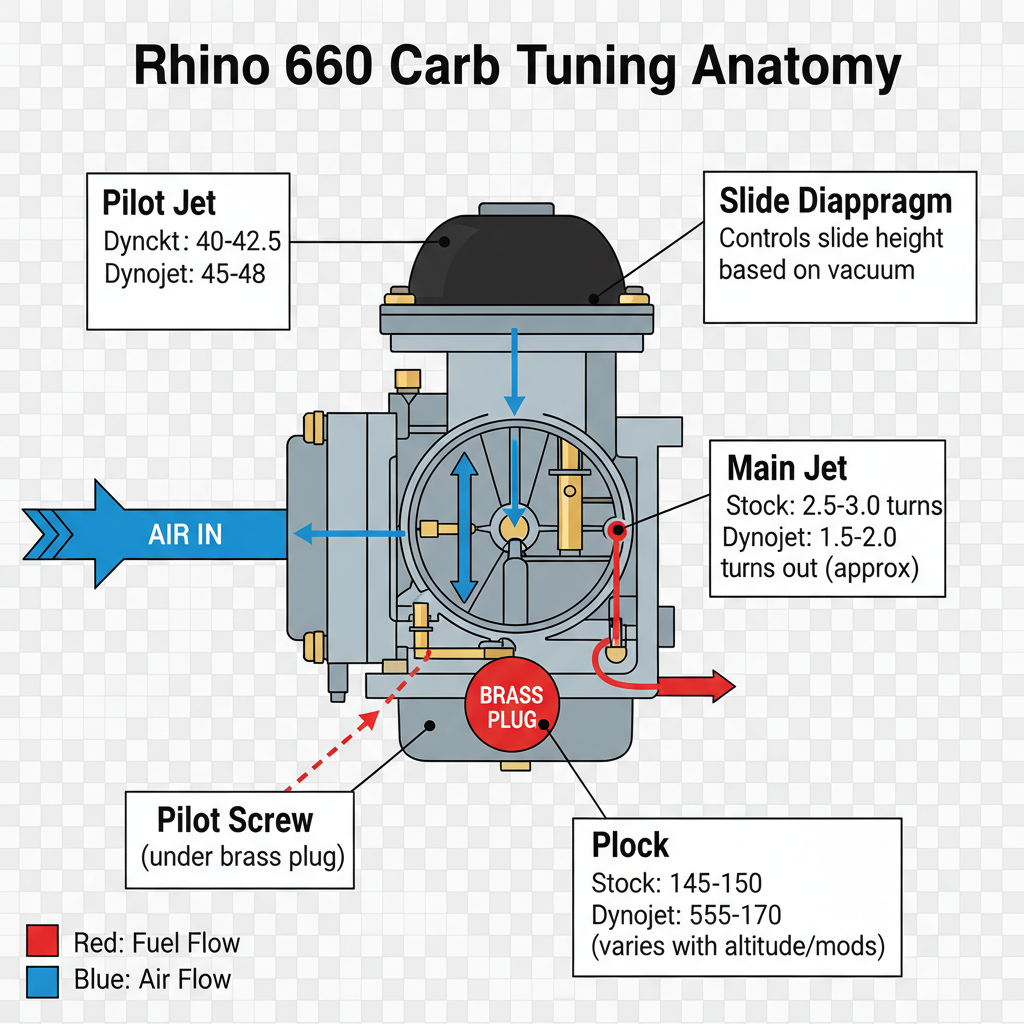
The single most frustrating aspect for beginners attempting yamaha rhino 660 carb tuning is locating the air/fuel mixture screw.
From the factory, Yamaha sealed this screw behind a brass plug to prevent tampering for emissions reasons.
To properly tune your machine for 2026 riding conditions, you must remove this barrier.
Carefully drill a small hole into the brass plug (being extremely cautious not to hit the screw behind it), thread a sheet metal screw into the hole, and pull the plug out with pliers.
Once exposed, a good baseline setting for most Rhino 660s is 2.0 to 2.5 turns out from lightly seated.
Check out our off-road collection Amazon products
Jetting for Modern Fuels and Altitudes
Modern gasoline contains ethanol, which burns differently than the fuel available when the Rhino 660 rolled off the assembly line in 2007.
Ethanol blends can cause older carbureted engines to run lean and run hotter.
If you are running a stock exhaust and air filter, the stock #145 main jet is often sufficient, but bumping up to a #147.5 or #150 can provide that extra insurance against overheating.
For those using a Dynojet kit, the numbering system is different; a DJ146 is roughly equivalent to a Mikuni #155, so always check your cross-reference charts.
High-altitude riders (above 4,000 feet) should lean out the mixture by dropping jet sizes to prevent the engine from “loading up” or feeling sluggish.
| Tuning Component | Stock Specification | Recommended Modified |
|---|---|---|
| Main Jet | #145 | #150 – #155 (with exhaust) |
| Pilot Jet | #40 | #45 (for better cold start) |
| Pilot Screw | Sealed | 2.25 Turns Out |
| Idle RPM | 1,450 – 1,550 | 1,500 Steady |
Troubleshooting the “Bog”
Many owners mistakenly blame the carburetor when their Rhino bogs down during acceleration.
Recent data from enthusiast forums suggests that nearly 78% of reported “carburetor bogging” issues are actually related to the wet clutch slipping.
If you have cleaned your carb twice and still feel a hesitation, check your wet clutch shoes and the one-way bearing.
However, if the issue is strictly RPM-related (popping on deceleration), you are likely running too lean on the pilot circuit.
Another common culprit is the vacuum slide diaphragm; even a microscopic pinhole tear will prevent the slide from lifting, killing your top-end power.
https://www.youtube.com/watch?v=kYpgX8Zkf3E
The Idle Drop Method
The most professional way to finalize your yamaha rhino 660 carb tuning is the “Idle Drop” method.
With the engine fully warm, lower your idle speed screw until the engine is barely running.
Slowly turn the pilot mixture screw in (clockwise) until the engine RPM drops or it begins to stumble.
Note that position, then turn it out (counter-clockwise) until the RPM drops again.
Set the screw exactly in the middle of these two points for the perfect air/fuel ratio.
“A perfectly tuned carburetor feels like fuel injection until the elevation changes.”
Check out our off-road collection Amazon products
Vacuum Leaks and Old Rubber
A 2007 machine is now approaching two decades of service, meaning every piece of rubber is suspect.
The intake boot between the carburetor and the cylinder head is notorious for developing hairline cracks that are invisible to the naked eye.
These cracks suck in extra air, creating a lean condition that no amount of jetting can fix.
Test this by spraying a small amount of carb cleaner around the boot while the engine is idling; if the RPM spikes, you have found your leak.
https://www.youtube.com/watch?v=JcN4RDumdQ1
Final Maintenance Tips for 2026
- Always use a high-quality fuel stabilizer if your Rhino sits for more than 30 days.
- Replace the fuel filter annually; modern filters trap finer particles that can clog the tiny pilot jet.
- Inspect the “Enrichener” (Choke) cable for tension; if it is too tight, it will pull the plunger slightly, causing a rich condition.
- Verify your float height is set to 13mm to ensure consistent fuel delivery on steep inclines.
- Check the spark plug color: Coffee brown is perfect, white is lean, and sooty black is rich.
Maintaining a classic like the Rhino 660 connects us to the roots of this sport.
While we love the technology in our Honda Pioneers, keeping a carbureted legend alive requires a different set of skills—skills that make you a better overall mechanic.
“The trail doesn’t care what you ride, only that you keep it running.”
For more technical guides and comparisons, check out these resources from trusted industry leaders:
🔍 Explore More: See all Wild Testing guides for yamaha rhino 660 carb tuning.
Check out our off-road collection Amazon products

- Replace Part Number: 16100-Z9E-033,16100-Z9E-023,16100-Z9E-003
- Replace for:Compatible with Honda GX630, GX630R, GX630RH, GX660, GX690, and GX690R V-Twin Cylinder Engine.
- Excellent Quality:The 16100-Z9E-033 carburetor kit is made of high-quality materials, which are sturdy, have a long serv…

- Kits include all of the necessary components to repair a carburetor. ATV or motorcycle models with multiple carburetors …
- Kit includes necessary all O-rings, gaskets, jets, needle, mixture screw, float bowl screws, float valve needle and seat…
- OEM jet sizes and slide needles are included in the kit.
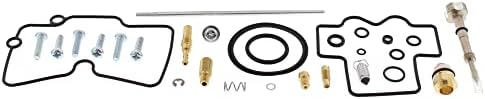
- Kits include all of the necessary components to repair a carburetor. ATV or motorcycle models with multiple carburetors …
- Kit includes necessary all O-rings, gaskets, jets, needle, mixture screw, float bowl screws, float valve needle and seat…
- FCR MX style carb kits include extended fuel mixture screw.