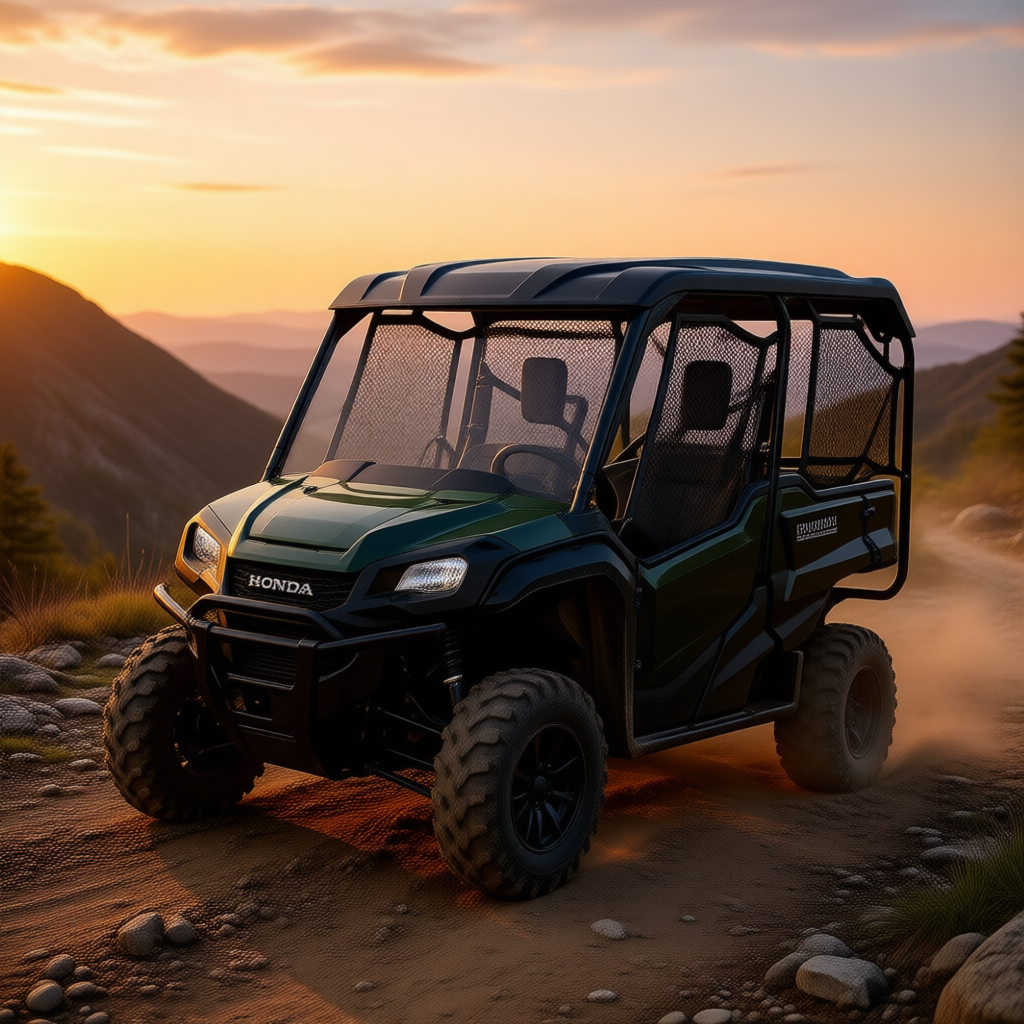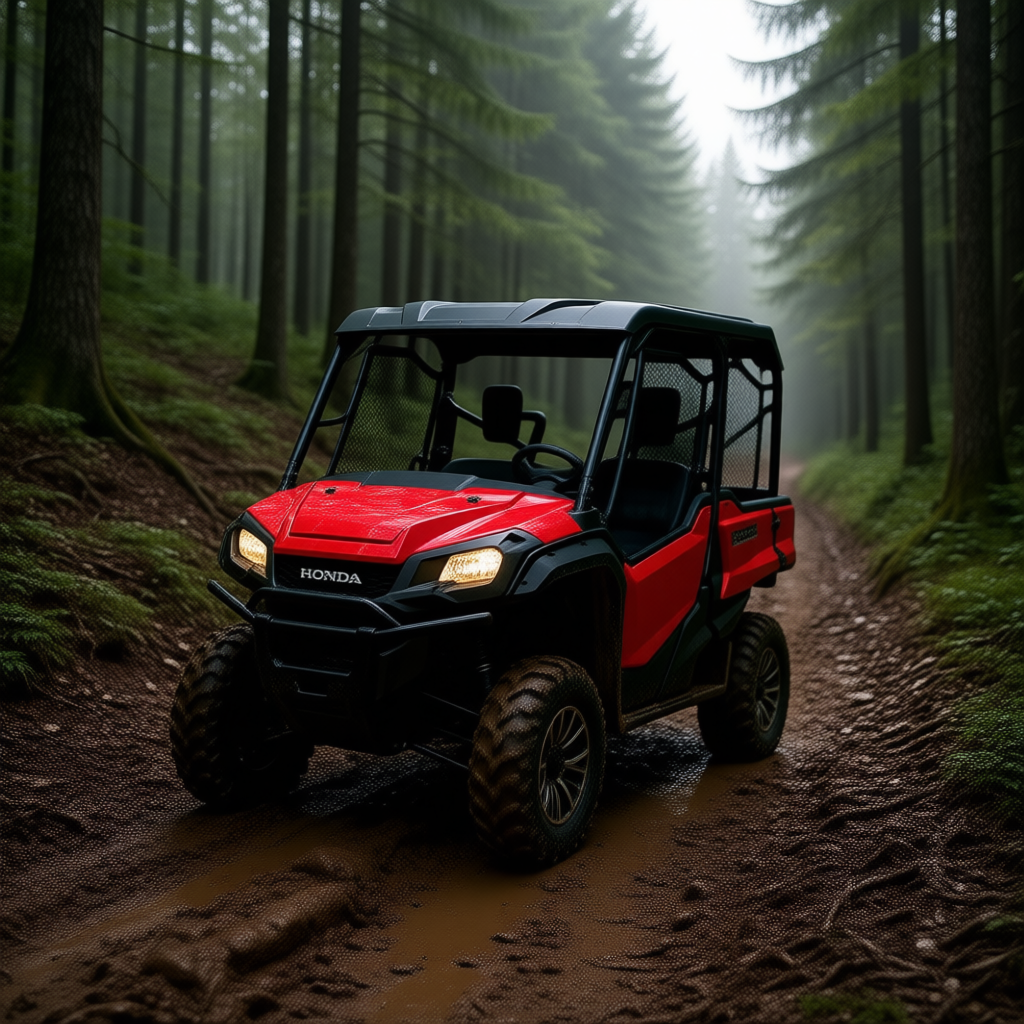

When it comes to polaris ranger code 65590, getting the right details matters. We’ve all been there. You’re leading the pack in your Honda Pioneer, tackling a steep incline with that confident DCT gear engagement, when suddenly the radio crackles.
Your buddy in the Polaris Ranger behind you has stopped. His check engine light is flashing, and his machine has gone into limp mode. The code on the dash? 65590.
As Honda owners, we might chuckle about our shaft-drive superiority, but leaving a rider behind isn’t the Pioneer way. Whether you’re towing them out or helping them diagnose it trailside, understanding the infamous Polaris Ranger code 65590 is critical for saving the weekend.
🛠️ Recommended Trail Rescue Gear
Before we dive into the fix, here are three things you should tell your Polaris friends to carry (or carry yourself to be the hero):
- Gates G-Force Redline CVT Belt: The number one cause of this code is belt slip. This heavy-duty belt resists heat better than OEM.
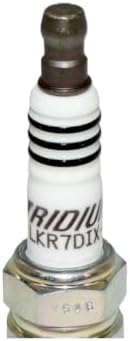
- NGK Iridium IX Spark Plugs: fouled plugs are the second most common culprit. A fresh set can clear the code instantly.
- Heavy Duty Tow Strap: Because if the code won’t clear, that Ranger is coming home on a hook.
What is Polaris Ranger Code 65590?
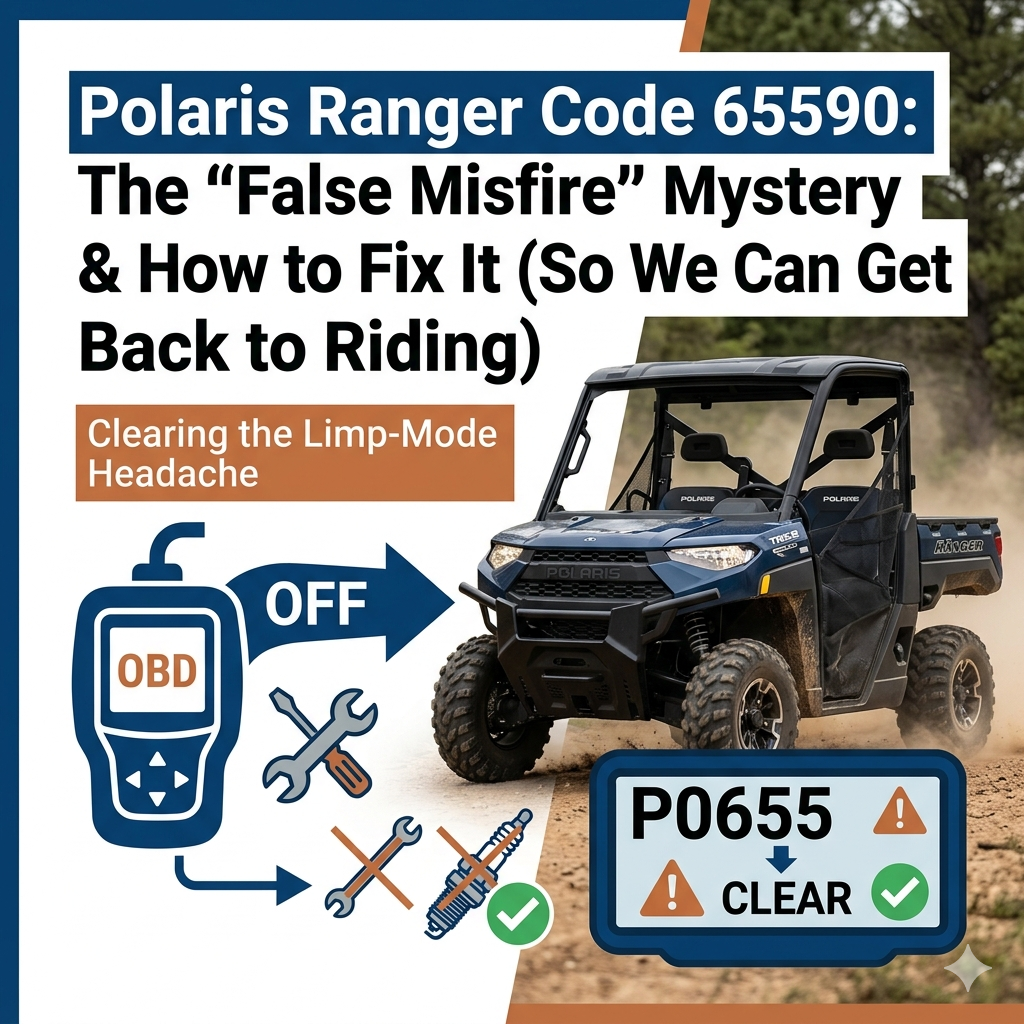
In simple terms, Code 65590 means “Misfire Detected.”
However, unlike a car where a misfire usually means a bad spark plug or injector, the Polaris system is a bit more… sensitive. The Engine Control Unit (ECU) monitors the speed of the crankshaft with extreme precision. If it detects even a micro-second of irregularity in the rotation, it assumes a cylinder didn’t fire.
Here is the kicker: It’s usually not the engine’s fault.
Check out our off-road collection Amazon products
In 2026, data from major off-road forums and repair shops indicates that nearly 85% of Code 65590 alerts are “false positives” caused by the CVT belt slipping.
“The sensitive crank sensor mistakes the jerkiness of a slipping belt for an engine misfire, sending the machine into limp mode to protect itself.”
Why Does This Happen on Rangers?
Unlike our Honda Pioneers, which use a geared transmission (DCT) or a torque converter automotive style (on the 1000s), the Polaris Ranger uses a rubber belt CVT. If that belt slips—even slightly—due to water, heat, or heavy load, the crankshaft speed fluctuates.
The ECU sees this fluctuation, panics, thinks cylinder #1 or #2 missed a beat, and throws Code 65590 (or its cousins, 65591 and 65592).
Diagnosing the Problem: Step-by-Step
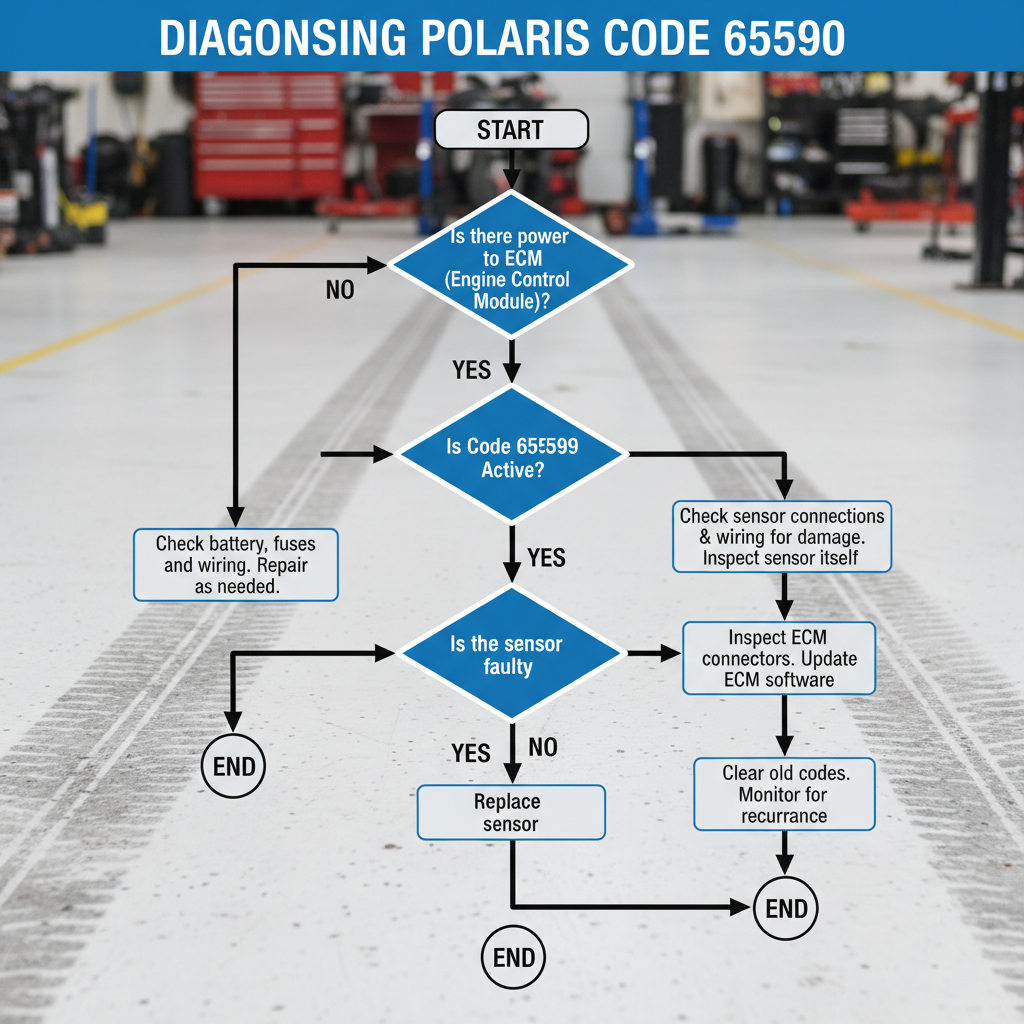
If your group is stopped on the trail, follow this checklist to determine if it’s a real engine problem or just the “Polaris Phantom Misfire.”
| Symptom | Likely Cause | Immediate Action |
|---|---|---|
| Code 65590 + Limp Mode, but engine sounds normal | Belt Slip / Flat Spot | Inspect belt for hourglass shape. Replace if necessary. |
| Code 65590 + Rough Idle / Sputtering | Fouled Spark Plug | Replace spark plugs (NGK MR7F recommended). |
| Code appears only at high RPM | Belt Flutter / Harmonic Vibration | Requires ECU tune or clutch alignment. |
The 3 Proven Fixes for Code 65590
Since we know the ECU is overly dramatic, here is how to get that Ranger back to full power.
1. The “Trailside” Fix: Change the Belt
If the belt has a “burned” spot (often called hourglassing) from trying to tow or crawl in High gear, it will thump every rotation. That thump triggers the code. Replacing the belt with a high-quality aftermarket option like a Gates G-Force is the most reliable mechanical fix.
2. The “Garage” Fix: Spark Plugs & Wires
Sometimes, it actually is a weak spark. Polaris engines are notorious for fouling plugs if they are idled too long or run rich. Swap in a fresh pair of NGK Iridium plugs. Even if they look okay, the resistance might be just enough to annoy the ECU.
https://www.youtube.com/watch?v=I3T1Zl4V2M8
Check out our off-road collection Amazon products
3. The “Permanent” Fix: ECU Tuning
This is the secret weapon. Many Polaris owners turn to aftermarket tuners like Gilomen Innovations. These tuners can rewrite the ECU code to “desensitize” the misfire detection system.
They don’t turn it off completely, but they adjust the threshold so that a minor belt slip doesn’t shut down the machine. For many Ranger owners, this is the only way to stop the code from returning permanently.
https://www.youtube.com/watch?v=0wQvH2Qy5vA
Prevention: How to Avoid the “Walk of Shame”
If you have friends riding Polaris, give them this advice so you don’t have to tow them next time:
- Low Gear is Life: Tell them to use Low gear for anything under 15-20 MPH. High gear generates massive heat and belt slip at low speeds.
- Break-in Matters: A new belt needs 20-30 miles of gentle riding to heat cycle. gunning it immediately will glaze it, leading to—you guessed it—Code 65590.
- Keep it Dry: Even a little water in the CVT housing causes slip. Ensure their drain plug is seated correctly.
“Friends don’t let friends ride in High gear below 10 MPH.”
The Honda Advantage
While we are happy to help our Polaris buddies fix their Code 65590 issues, it serves as a nice reminder of why we chose the Honda Pioneer.
With our shaft-driven transmissions and lack of rubber belts, “slip” isn’t in our vocabulary. We don’t have false misfire codes because we have a direct mechanical connection to the ground.
So, the next time you see a Ranger limp into the trailhead, lend them a hand, offer them a spark plug, and maybe… just maybe… suggest they take a test drive in your Pioneer.
🔍 Explore More: See all Wild Testing guides for polaris ranger code 65590.
Check out our off-road collection Amazon products

- 90,000LB ULTIMATE SAFETY: Professional Heavy-Duty Tow Strap featuring reinforced polyester webbing (50 US Ton break stre…
- -40°F TO 200°F ALL-CLIMATE PERFORMANCE:Withstands Arctic ice to desert heat without cracking or weakening
- VEHICLE-SPECIFIC ENGINEERING:7.1-inch width reduces pressure points + 20ft length ensures safe distance. Perfect for hea…

- Ultimate 45,000 lb Strength for Extreme Vehicle Recovery:Built for the most demanding recoveries. With an immense 45,000…
- High-Tensile Polyester Webbing for Controlled Shock Absorption:Engineered for safe, dynamic pulls. The 4-inch wide, UV-r…
- Reinforced Loops & Heavy-Duty 3/4″ Shackles for Secure Connections:Your complete, secure connection system. Features dou…

- Material: 3″ x 20′ tow strap is made of upgraded polyester fiber, adopt thickening process and wear-resistant, laborator…
- D-Ring Shackles: Shackle adopts anti-theft design and comes with a hex Allen key. This security screw feature ensures th…
- Professional Kit: Recovery strap set includes a sturdy rescue strap, 2Pcs D-ring shackles, 1PC 2″ Hitch Receiver, and a …