

When the Trail Fights Back: Understanding UTV Steering Failure
We all have that one friend in the riding group. You know the one—they bought the “other” brand, and now you are waiting on the side of the trail while they wrestle with a steering wheel that feels like it is stuck in concrete.
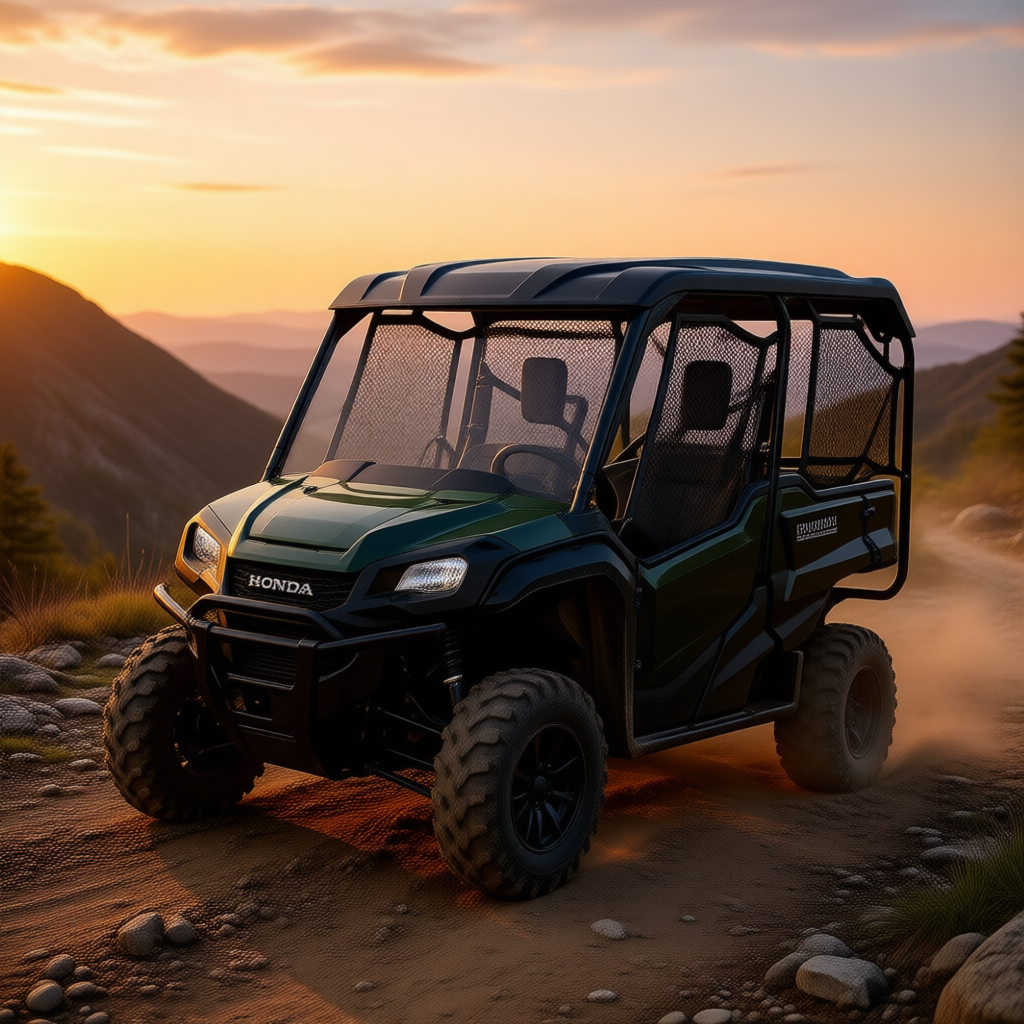
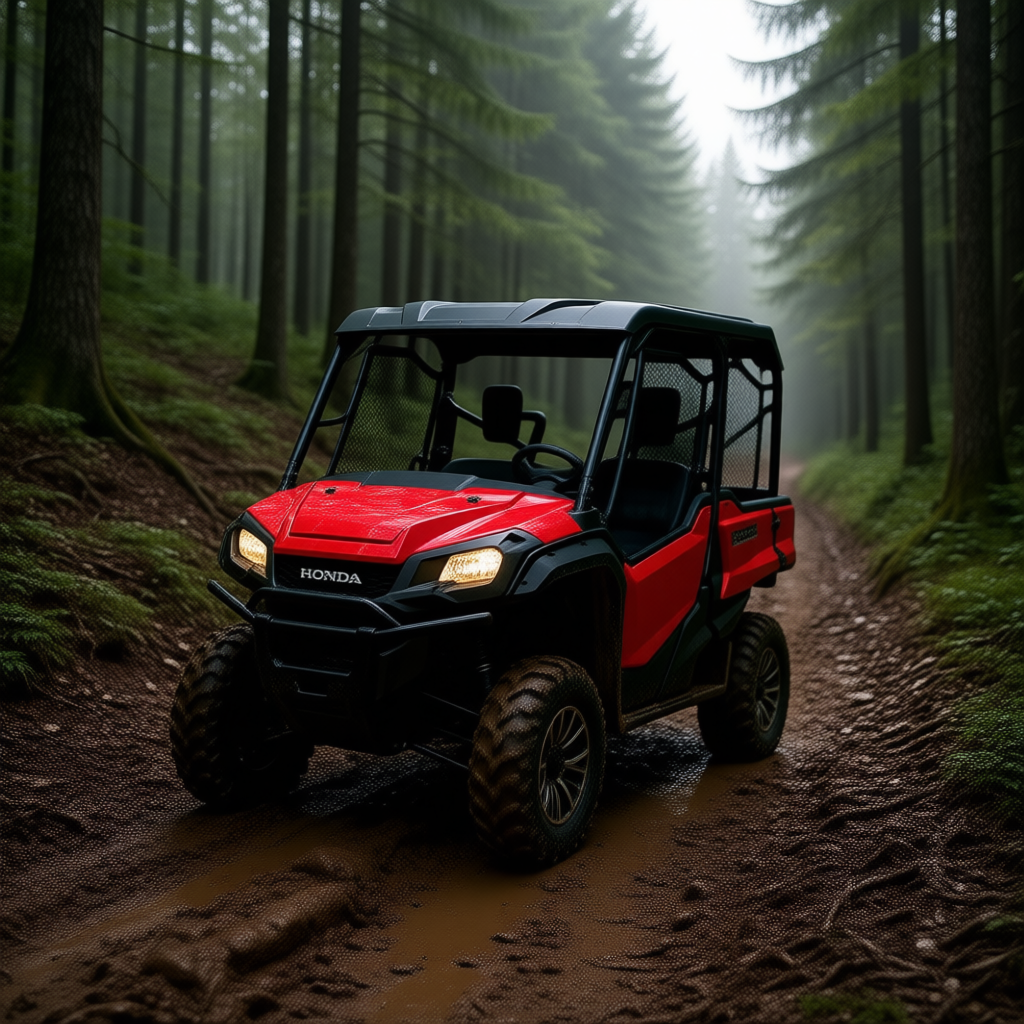
While we love our Honda Pioneers for their legendary reliability, being a good trail leader means knowing how to help everyone in the convoy.
Electric Power Steering (EPS) failure is one of the most common buzzkills on modern UTVs, turning a fun weekend into an upper-body workout from hell.
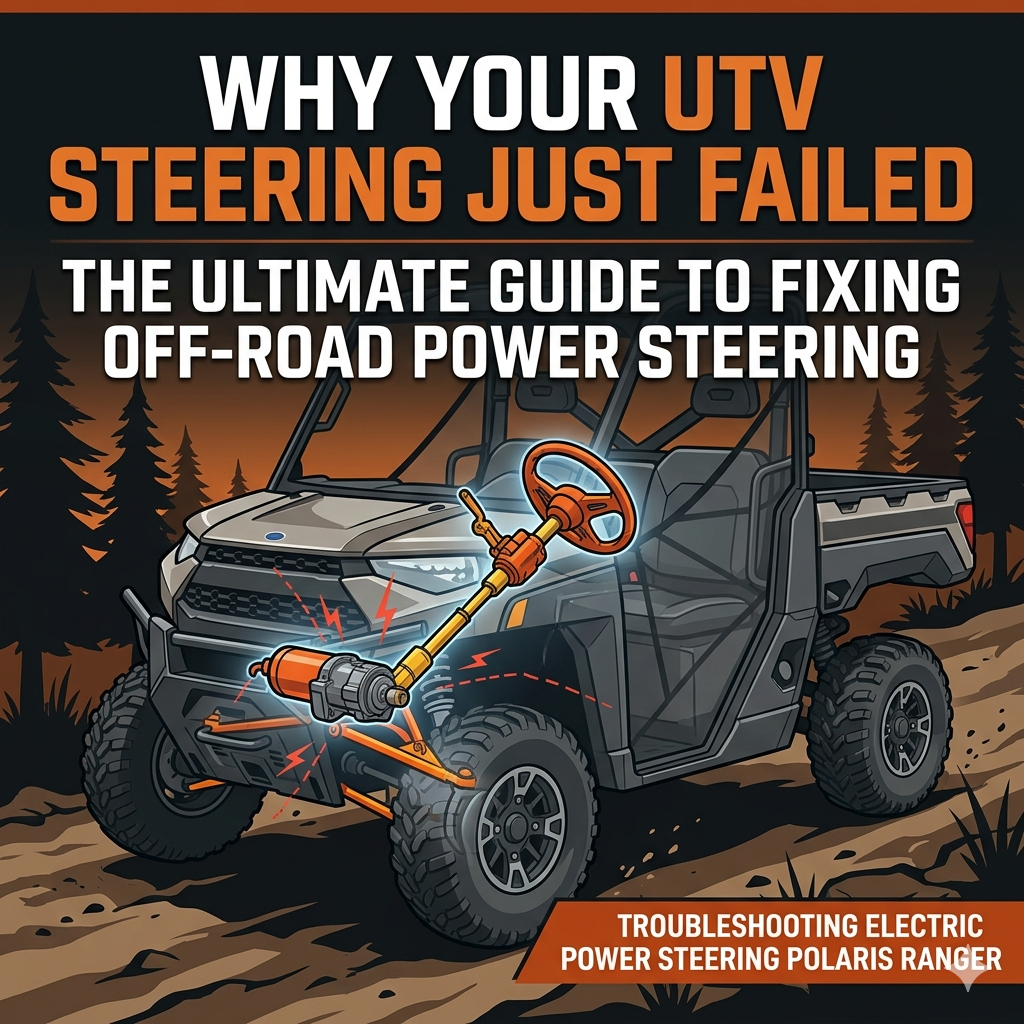
If you are searching for troubleshooting electric power steering polaris ranger solutions, you have likely encountered the dreaded “EPS” warning light or a sudden loss of assist mid-turn.
In 2026, the off-road community is seeing a surge in electronic-related steering issues as manufacturers pack more technology into these machines.
The good news is that 90% of these problems are not catastrophic failures but simple electrical gremlins you can fix with a basic tool kit.
Whether you are piloting a 2026 Ranger XD 1500 or helping a buddy with an older XP 1000, the principles of diagnosing these systems remain surprisingly consistent.
The “Check Engine” of Steering: Decoding the EPS Light
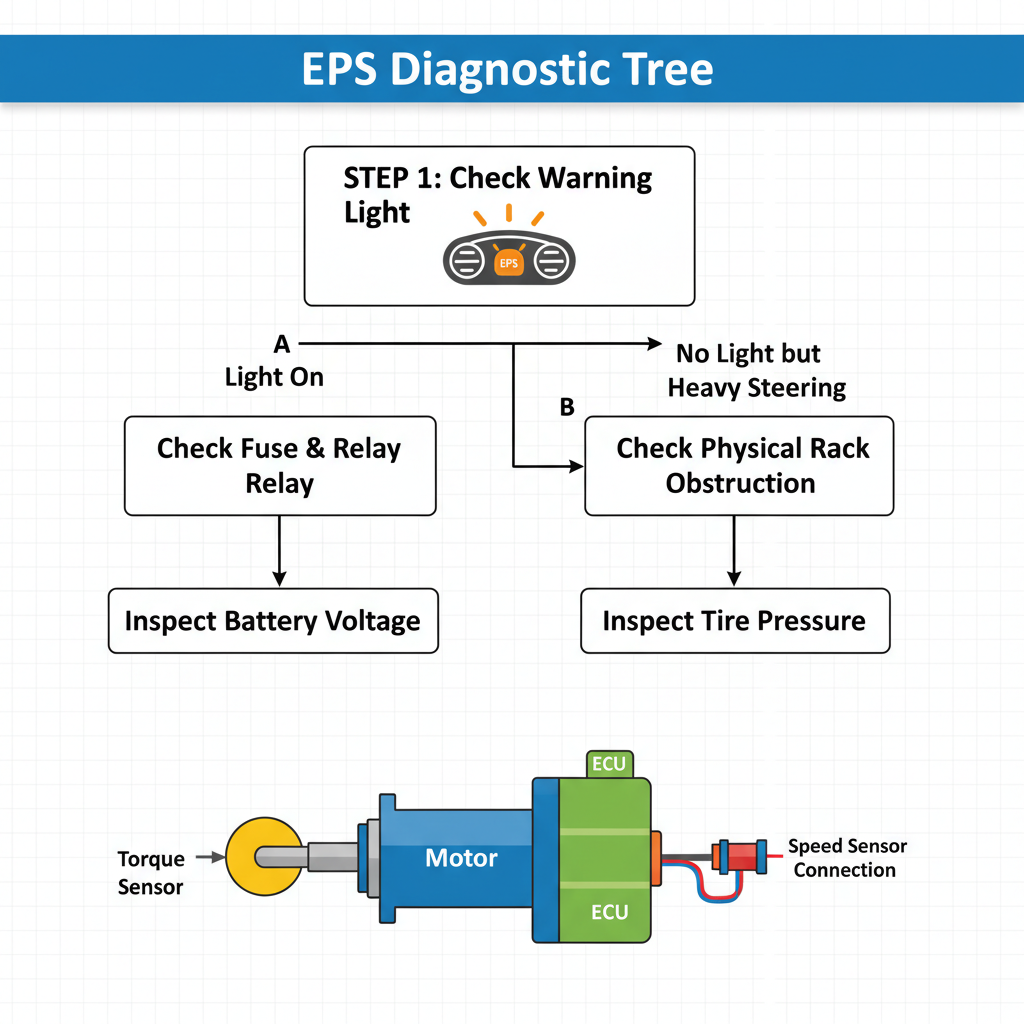
The first sign of trouble is usually the amber EPS indicator on the dashboard.
Unlike a hydraulic system that leaks fluid when it fails, an electric system often fails silently, simply cutting power to protect itself.
The Polaris EPS system is heavily dependent on data from the vehicle’s speed sensor and a stable power supply from the battery.
“Electronics hate mud, but they hate low voltage even more.”
Check out our off-road collection Amazon products
If the system detects a voltage drop below 11.0 volts, it will disable the power steering motor to prioritize the engine’s ignition and fuel injection.
This is often why the steering gets heavy when you are idling with the winch, stereo, and light bar all running at once.
Recent data from 2025 service bulletins indicates that nearly 40% of EPS warranty claims were actually due to weak batteries or loose terminal connections, not faulty steering racks.
Before you start tearing apart the front end, grab your multimeter and check the resting voltage of the battery.
| Symptom | Likely Culprit | Quick Fix |
|---|---|---|
| EPS Light On + No Assist | Blown 30A Fuse or Relay | Check fuse box under the seat; swap EPS relay with fan relay to test. |
| Intermittent Assist at Speed | Dirty Speed Sensor | Clean the speed sensor on the transmission; check for debris. |
| Heavy Steering + Low Volts | Weak Battery / Loose Ground | Tighten battery terminals; load test the battery. |
| Steering Jerks to One Side | Torque Sensor Malfunction | Requires dealer calibration or rack replacement. |
Step-by-Step Troubleshooting Guide
If the battery checks out, it is time to dig deeper into the system’s physical connections.
The EPS unit on most Ranger models is located high under the dash, theoretically protecting it from water, but we all know how deep these machines actually go.
Corrosion in the main harness connector is a silent killer of power steering performance.
- Check the 30-Amp Fuse: Located in the fuse box (usually under the driver’s seat or front hood), this is the gatekeeper for the high-current draw of the steering motor.
- Inspect the Relay: Many models use a relay to power the EPS only when the key is on; if this relay sticks, you get no power.
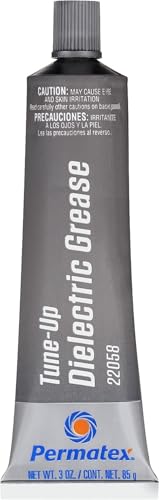
- Clean the Connectors: Unplug the large connector on the EPS motor, spray it liberally with contact cleaner, and apply dielectric grease before reconnecting.
- Verify Speed Sensor Data: If your speedometer is acting erratically (jumping around or reading zero), your EPS will shut down because it doesn’t know how much assist to provide.
- Reset the System: Sometimes the ECU just needs a hard reboot; disconnect the negative battery cable for 15 minutes to clear temporary fault codes.
https://www.youtube.com/watch?v=Fj2F7k_X5s0
One specific issue plaguing the 2024-2026 models involves the torque sensor calibration drifting off-center.
If the steering wheel tries to turn itself when you let go, or if it turns easily one way but fights you the other, the internal torque sensor is likely the issue.
While Honda Pioneers use a slightly different rack design that is less prone to this specific drift, it is a known weak point in the Polaris design architecture.
For those of you who push your machines to the limit with 35-inch tires and portals, you are putting massive stress on the electric motor.
Advanced Diagnostics: When to Call the Dealer
Sometimes, the problem goes beyond a loose wire or a blown fuse.
Modern UTVs are essentially rolling computers, and the EPS system is integrated into the vehicle’s CAN-bus network.
If you have checked the basics and the light is still staring at you, you might need the “Digital Wrench” software to read specific chassis codes.
https://www.youtube.com/watch?v=HuWjjGguwOI
Codes like C1024 or C1043 point directly to internal circuit failures inside the EPS unit itself.
Unfortunately, these units are typically “non-serviceable,” meaning you can’t just replace a $5 sensor inside the housing—you have to buy the whole assembly.
Before dropping $1,500 on a new OEM unit, consider aftermarket options like SuperATV or Wicked Bilt, which often offer stronger motors and better waterproofing for a fraction of the price.
Check out our off-road collection Amazon products
“A bad day of fishing is better than a good day at work, but a bad day of steering is just a workout.”
For more detailed technical specifications on these systems, you can refer to the official Polaris Owner Resources page.
Prevention: Bulletproofing Your Steering
The best fix is always prevention, especially when you are miles from the nearest paved road.
If you ride in deep water or mud, take the time to waterproofing your electrical connections *before* they corrode.
Adding a secondary battery system with an isolator can ensure that your accessories don’t starve your power steering of the voltage it needs.
Regularly inspect your CV boots and tie rods as well; a binding suspension component can mimic the feeling of power steering failure.
https://www.youtube.com/watch?v=7M7wN_1lKk0
It is also worth noting that tire pressure plays a huge role in how hard your EPS has to work.
Running extremely low pressure for rock crawling increases the friction patch significantly, causing the EPS motor to heat up faster.
For those interested in how these systems compare to automotive standards, check out this article on Bosch Mobility’s Steering Systems.
We also recommend reading up on Honda’s approach to EPS to see why many enthusiasts prefer the feedback-driven design of the Pioneer series.
If you are constantly burning up belts or steering motors, it might be time to look at your driving style or vehicle setup.
Check out RZR Forums for a massive community database of rider-tested solutions that often apply to the Ranger lineup as well.
Finally, always carry a basic tool kit that includes spare fuses and a multimeter—it can be the difference between riding home and walking home.
For a broader look at off-road maintenance, RevZilla’s Common Tread offers excellent general advice for all UTV owners.
🔍 Explore More: See all Wild Testing guides for troubleshooting electric power steering polaris ranger.
Check out our off-road collection Amazon products

- Protects electrical connections and wiring from salt, dirt and corrosion
- Prevents voltage leaks around any electrical connection
- Extends the life of bulb sockets