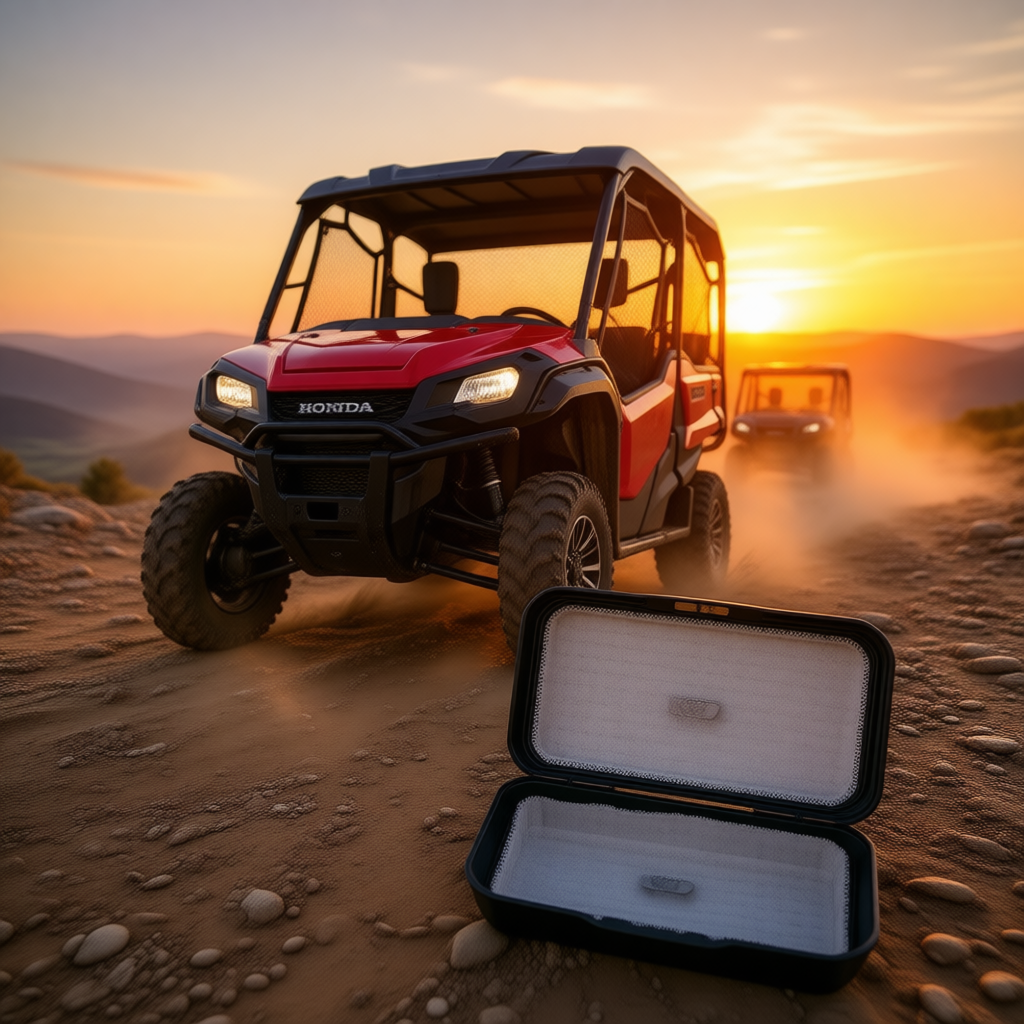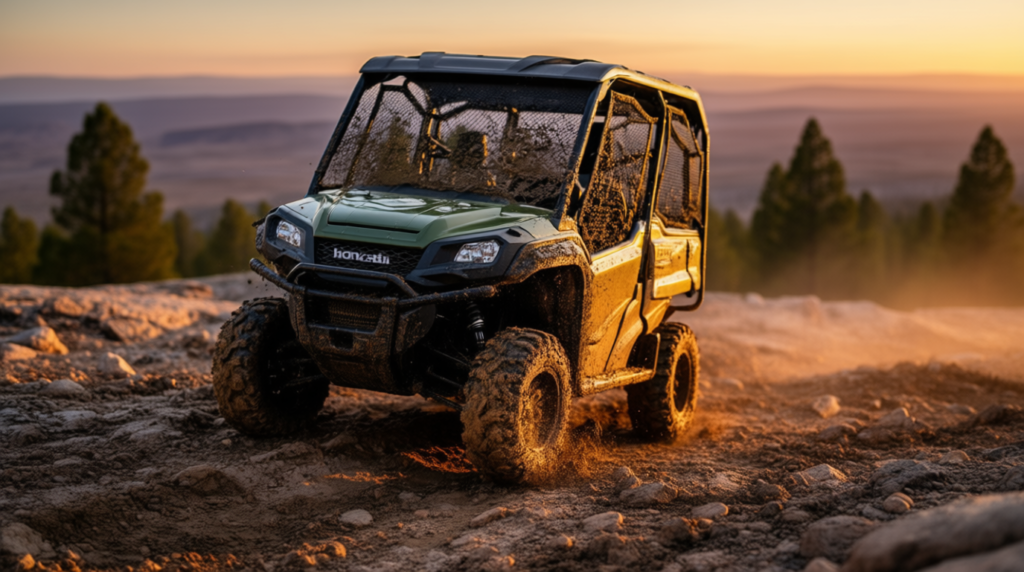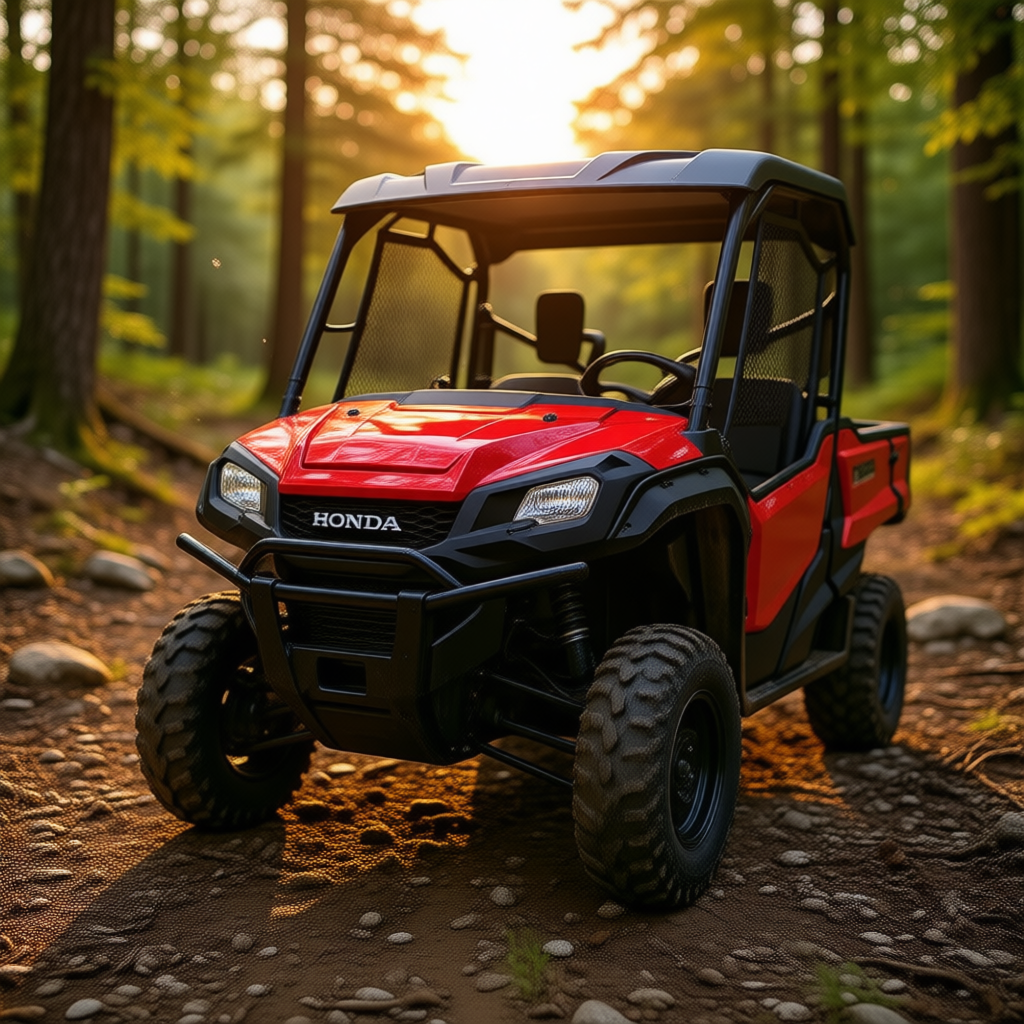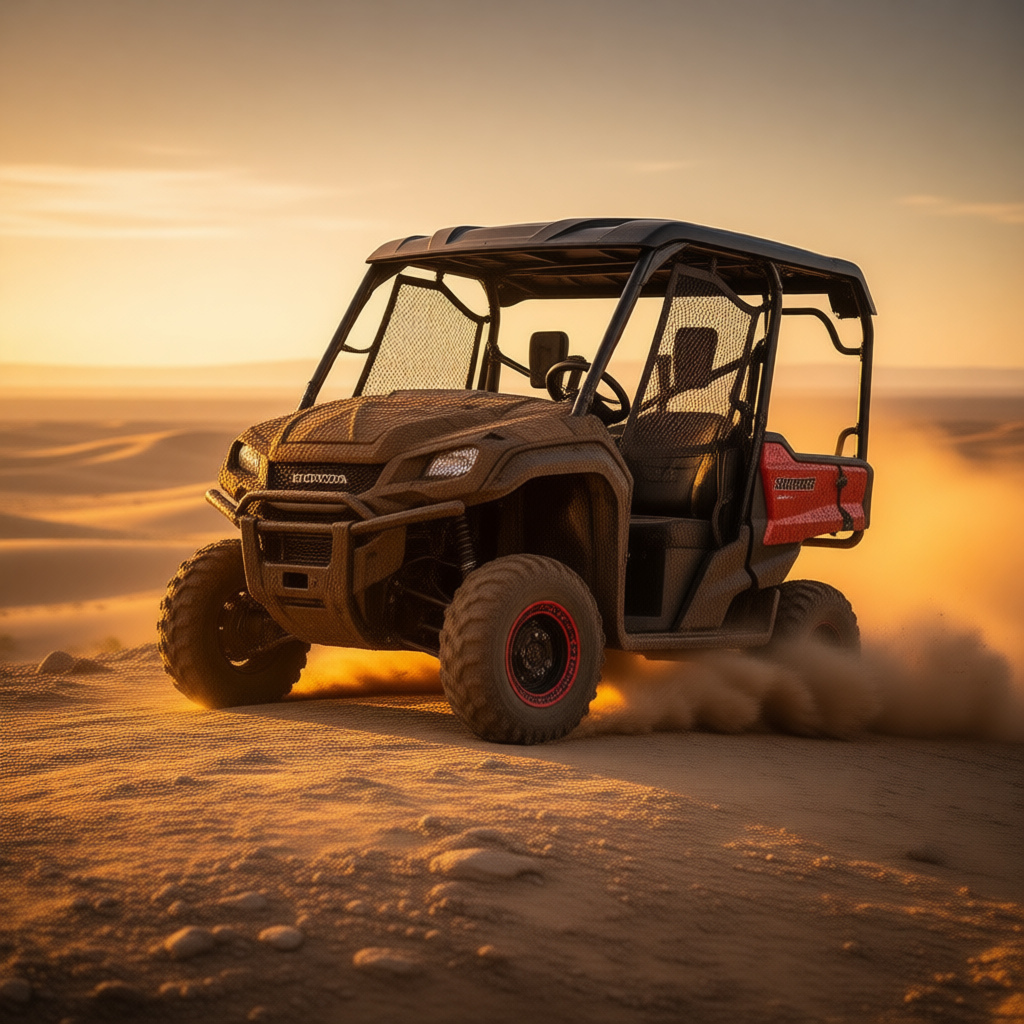





Your Honda UTV Deserves Better Than Factory-Grade Failures
When it comes to Top-Rated Honda Utv Side By Side Brake Pads And Filters For Extreme Durability, getting the right details matters.
You know that feeling.
You’re halfway down a rocky descent, mud caked on your windshield, your Honda Pioneer or Talon loaded with gear, and you press the brake pedal.
Instead of confident, firm stopping power, you get a spongy, fading response that makes your stomach drop.
Or maybe it’s the other frustration — you just finished an oil change only to find your cheap paper filter already collapsing under the pressure of dusty trail conditions.
Here’s the hard truth that most Honda side-by-side owners discover the expensive way: OEM brake pads and stock filters were designed for average weekend use, not the extreme abuse that real riders put their machines through.
If you ride hard, ride in mud, sand, rocks, or steep terrain, or you simply refuse to be stranded on a trail because of preventable component failure, this guide is written specifically for you.
In this complete buyer’s guide, we’re breaking down the top-rated Honda UTV side by side brake pads and filters built for extreme durability. You’ll discover exactly which sintered brake pads give you race-level stopping power that lasts thousands of miles, which air and oil filters protect your engine when the dust gets thick, and how to make smart upgrades that save you hundreds of dollars in premature replacements.
Whether you’re wrenching on a 2022 Pioneer 1000-5 or a 2025 Talon 1000X, the recommendations below will transform how your machine performs on every ride.
Why Your Stock Honda UTV Brake Pads Are Failing You
Let’s get one thing straight — Honda builds incredible machines. The Pioneer and Talon platforms are legendary for reliability. But here’s what the factory doesn’t advertise: the OEM brake pads installed on your side-by-side are a compromise.
They’re designed to meet a price point and satisfy the average rider who sticks to gravel roads and mild trails.
The moment you start riding aggressively — descending steep mountain grades, hauling heavy loads through mud, or pushing your Talon through high-speed desert runs — those stock organic brake pads start to crumble. Literally.
The Problem: OEM organic brake pads typically use a softer compound that generates excessive heat under sustained braking. When temperatures spike past 600°F, the pad material begins to glaze over, creating a hard, shiny surface that dramatically reduces friction.
What It Feels Like Behind the Wheel: You press the brake pedal harder and harder, but the stopping power keeps fading. Your rotors start to warp from the excessive heat. You hear that dreaded squealing or grinding noise that tells you metal is about to meet metal. And then you’re shopping for new rotors on top of new pads — a $400+ mistake that started with a $50 shortcut.
Riders in the Honda Pioneer community report burning through OEM brake pads in as little as 3,000 miles when riding in demanding conditions. That’s not durability — that’s a recurring expense that keeps you in the garage instead of on the trail.
The Sintered Brake Pad Revolution: What Every Honda UTV Owner Needs to Know
If you’ve been browsing forums or talking to serious side-by-side riders, you’ve probably heard the word “sintered” thrown around like it’s the holy grail of braking. And for good reason.
But let’s break down what sintered brake pads actually are and why they matter for your Honda Pioneer or Talon.
The Product Feature: Sintered brake pads are manufactured through a process where metallic particles — typically copper, iron, and other alloys — are fused together under extreme heat and pressure. This creates a dense, uniform friction material that’s bonded directly to a steel backing plate.
What It Feels Like to the Driver: The first time you hit the brakes with sintered pads installed, you’ll immediately notice the difference. The pedal feel is firm and predictable. There’s no spongy delay, no fade on long descents, and no panic-inducing moments when you need your brakes to work NOW.
Whether you’re coming into a corner at 50 mph in your Talon or creeping down a rocky trail loaded with camping gear in your Pioneer, sintered pads deliver consistent, confidence-inspiring stopping power every single time.
The extreme durability comes from the metallic composition itself. Unlike organic pads that wear away quickly under heat and friction, sintered pads actually perform better as they heat up. They’re designed to handle temperatures well beyond 1,000°F without losing effectiveness, which means they last dramatically longer — often 2 to 3 times the lifespan of OEM pads in extreme conditions.
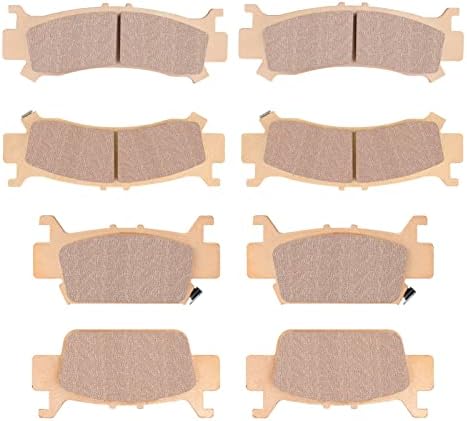
Top Pick #1: SuperATV Sintered Copper Brake Pads
Fitment: Honda Pioneer 1000 / Pioneer 1000-5 / Talon 1000R / Talon 1000X (2016–2026)
When it comes to extreme durability for Honda side-by-sides, SuperATV’s sintered copper brake pads have earned their reputation as the go-to upgrade for riders who refuse to compromise. These aren’t just marginally better than stock — they’re a completely different category of braking performance.
The Product Feature: These pads use a sintered copper compound bonded to a heavy-duty steel backing plate. The copper-rich formulation provides excellent heat dissipation while maintaining aggressive friction across all temperature ranges.
What It Feels Like to the Driver: Imagine descending a steep, rocky trail with a full load of passengers and gear. With stock pads, you’d be riding your brakes, praying they don’t fade out. With SuperATV sintered copper pads, you get immediate, powerful bite the moment you touch the pedal.
The braking force is linear and predictable — exactly what you need when precision matters most. And when you hit a water crossing? These pads maintain excellent gripping power in both wet and dry conditions, so you’re not white-knuckling it on the other side.
Why Riders Love Them:
- Extreme Durability: The sintered copper compound resists wear far better than organic or semi-metallic alternatives, giving you thousands of additional miles before replacement.
- All-Condition Performance: Mud, water, dust, snow — these pads deliver consistent friction regardless of what you’re riding through.
- Rotor-Friendly Design: Despite their aggressive stopping power, the copper compound is surprisingly gentle on rotors, extending the life of your entire braking system.
- Direct Bolt-On Fitment: No modifications needed. These pads drop right into your existing calipers for a hassle-free upgrade.
For Honda Pioneer 1000 owners who’ve burned through multiple sets of OEM pads, SuperATV sintered pads represent the “buy once, ride hard” solution that pays for itself within the first season.
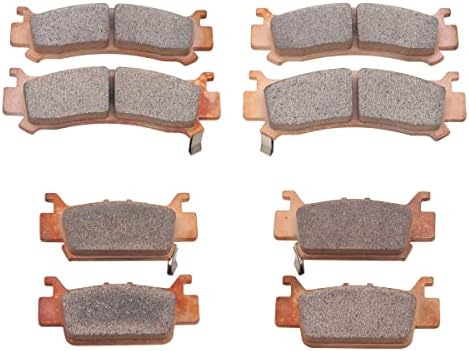
Top Pick #2: EBC Brakes SXR Sintered Metal Race Pads
Fitment: Honda Pioneer 1000 / Talon 1000 Series (2016–2026)
If you’re a rider who pushes your Honda UTV to the absolute limit — whether that’s competitive desert racing, aggressive trail riding, or high-speed dune runs — EBC’s SXR sintered metal race pads are engineered specifically for your level of abuse.
These are USA-made, race-proven brake pads that professional off-road teams trust when failure isn’t an option.
The Product Feature: EBC’s SXR compound uses a proprietary sintered metal formulation designed specifically for off-road racing applications. The pads feature a high-friction coefficient that increases with temperature, meaning they actually grip harder the hotter they get.
What It Feels Like to the Driver: This is race-level braking performance translated directly to your side-by-side. When you’re flying down a fire road at 60 mph and need to scrub speed before a tight corner, the SXR pads deliver immediate, powerful deceleration with zero fade.
The pedal feel is firm and communicative — you can modulate your braking with surgical precision. For Talon 1000R owners who treat their machine like the sport UTV it was designed to be, these pads unlock the full potential of your braking system.
Why Serious Riders Choose EBC SXR:
- Race-Proven Durability: These pads are built to withstand the extreme heat and sustained abuse of competitive off-road racing. Weekend warriors will find they last virtually forever under normal use.
- Heat-Activated Performance: Unlike organic pads that fade as they heat up, SXR pads get stronger with temperature. The harder you ride, the better they perform.
- Precision Engineering: EBC manufactures these pads to exacting tolerances, ensuring perfect fitment and consistent performance across all four corners of your UTV.
- Cost-Effective Performance: At roughly $100 for a complete set covering all four corners, EBC pads cost significantly less than OEM Honda replacements while delivering dramatically superior performance.
For riders who demand the absolute best braking performance available for their Honda Pioneer or Talon, EBC SXR pads represent the gold standard.
Don’t Neglect Your Filters: The Hidden Durability Killers
Here’s a scenario that plays out in garages across the country every riding season: A Honda Pioneer owner invests in premium brake pads, upgraded suspension, and a killer sound system — but continues running cheap, bargain-bin oil and air filters because “they’re just filters, right?”
Wrong. Your filters are the first and last line of defense for your engine’s internal components.
When you’re riding in dusty, dirty, extreme conditions — which is exactly what Honda UTVs are built for — your filters are working overtime to keep abrasive particles out of your engine’s most critical spaces.
The Problem with Stock Filters: OEM paper air filters and basic oil filters are designed for cost-effective manufacturing, not extreme durability. Paper air filters collapse when they get wet or overloaded with fine dust. Cheap oil filters use thin media that tears under high oil pressure or bypasses dirty oil back into your engine when the filter clogs.
What It Feels Like to the Driver: You might not notice the damage immediately, but over time, a failing filtration system robs your engine of power, reduces fuel efficiency, and accelerates wear on pistons, rings, and bearings.
By the time you notice symptoms like rough idling, loss of power, or excessive oil consumption, the damage is already done — and you’re looking at a top-end rebuild that costs thousands.
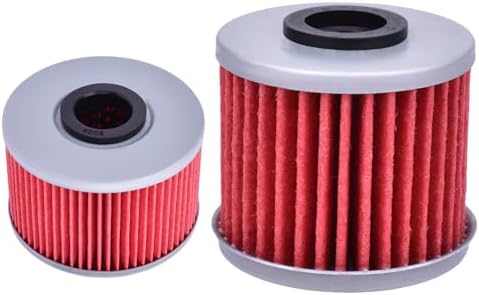
Top Pick #3: K&N Performance High-Flow Air Filter + Premium Oil Filter Combo
Fitment: Honda Pioneer 500 / 700 / 1000 Series & Talon 1000 Series (Various Years 2012–2026)
Check out our off-road collection Amazon products
When it comes to protecting your Honda UTV’s engine while actually improving performance, the combination of a K&N high-flow air filter and a premium oil filter is the smartest investment you can make.
This isn’t just maintenance — it’s an upgrade that pays dividends in both performance and longevity.
The Product Feature: K&N’s high-flow air filters use multiple layers of cotton gauze sandwiched between epoxy-coated aluminum wire mesh. This construction allows significantly more airflow than restrictive paper filters while still trapping harmful contaminants.
The premium oil filter features a heavy-duty canister, high-capacity filtration media, and a robust anti-drainback valve.
What It Feels Like to the Driver: The first thing you’ll notice after installing a K&N air filter is improved throttle response. Your Honda Pioneer or Talon will feel more eager to rev, more responsive when you stab the throttle, and generally more alive.
This isn’t placebo — the increased airflow allows your engine to breathe more efficiently, translating directly into usable power. Meanwhile, the premium oil filter ensures that every drop of oil circulating through your engine is clean and free of abrasive particles, even under the high-pressure conditions of extreme riding.
Why This Combo Delivers Extreme Durability:
- Washable and Reusable: Unlike paper filters that you throw away every few oil changes, K&N air filters are designed to last the lifetime of your vehicle. Simply clean, re-oil, and reinstall. Over the life of your UTV, this saves hundreds of dollars in replacement filters.
- Superior Filtration: The multi-layer cotton gauze design traps dust, dirt, and debris more effectively than paper while allowing 50% more airflow. Your engine gets cleaner air AND more of it.
- Extreme Condition Performance: Whether you’re riding through deep dust, mud, or sand, the K&N filter maintains its structural integrity and filtration efficiency where paper filters would collapse or clog.
- Engine Protection: The premium oil filter’s high-capacity media and robust construction ensure consistent oil flow and filtration even under extreme temperatures and pressures, protecting your engine’s most critical components.
For Honda UTV owners who ride in demanding conditions and want to maximize both performance and engine longevity, this filter combo is non-negotiable.
The Complete Durability Package: Why Brakes AND Filters Matter Together
Here’s where most buyer guides stop — they recommend individual products and call it a day. But if you’re serious about extreme durability for your Honda side-by-side, you need to think about your machine as a complete system.
Your brake pads and your filters might seem unrelated, but they’re both critical components that directly affect your UTV’s reliability, performance, and your safety on the trail. Here’s why upgrading both simultaneously makes strategic sense:
Synergistic Protection: When you upgrade to sintered brake pads, you’re ensuring that your machine can stop reliably under any condition. When you upgrade your filtration system, you’re ensuring that your engine can perform reliably under any condition.
Together, these upgrades eliminate two of the most common failure points that leave riders stranded on the trail.
Maintenance Efficiency: If you’re already planning to wrench on your Honda Pioneer or Talon, it makes sense to tackle multiple upgrades at once. You’re already getting your tools out, already getting your hands dirty — why not maximize the value of that time investment?
Cost Savings: Buying your brake pads and filters together often qualifies you for bundle discounts or free shipping thresholds. More importantly, you’re preventing the cascading failures that happen when one neglected component takes out another.
A $50 oil filter failure can lead to a $3,000 engine rebuild. A $75 set of brake pads can prevent a $400 rotor replacement.
Fitment Guide: Making Sure You Get the Right Parts for Your Honda UTV
One of the biggest frustrations when shopping for UTV parts online is fitment confusion. Will these brake pads fit my 2023 Pioneer 1000-5? Does this air filter work on my Talon 1000X? Let’s eliminate that confusion right now.
Recommended Insights From Our Guide Library:
- Spring Brake Thingy Review: The Ultimate UTV Parking Brake Solution (2026 Update)
- Ultimate Protection: Top-Rated Oil Filters to Keep Your Honda Pioneer 1000 Trail-Ready
- Top Honda UTV & ATV Off-Road Mods
- Best Honda UTV Upgrades & Performance Mods (2026 Guide)
- Honda Pioneer 500 vs 700: Which UTV Offers the Best Value in 2026?
| Model | Brake Pads | Air Filter | Oil Filter |
|---|---|---|---|
| Honda Pioneer 1000 / 1000-5 (2016–2026) | SuperATV Sintered Copper or EBC SXR (Front and Rear sets) | K&N High-Flow (1000cc-specific part number) | Premium spin-on filter (verify thread pitch & gasket diameter) |
| Honda Talon 1000R / 1000X (2019–2026) | SuperATV Sintered Copper or EBC SXR (Same fitment as Pioneer 1000) | K&N High-Flow (Talon-specific part number) | Premium spin-on filter (same spec as Pioneer 1000) |
| Honda Pioneer 700 (2014–2026) | Verify specific fitment (different caliper design) | K&N High-Flow (700cc-specific part number) | Premium spin-on filter |
| Honda Pioneer 500 (2015–2026) | Verify specific fitment | K&N High-Flow (500cc-specific part number) | Premium spin-on filter |
Pro Tip: Always double-check your specific model year and trim level before ordering. Honda made running changes to brake caliper designs and airbox configurations across different production years. When in doubt, contact the retailer’s product support team with your VIN or exact model information.
Installation Reality Check: What to Expect When You Wrench
Let’s talk about what it actually takes to install these upgrades, because we believe in setting realistic expectations.
Brake Pad Installation (Difficulty: Moderate)
If you’ve ever changed brake pads on a car or motorcycle, you’ll feel right at home. The process on a Honda Pioneer or Talon involves:
- Safely supporting the UTV on jack stands
- Removing the wheels for access
- Unbolting the caliper from the mounting bracket
- Removing the old pads and inspecting the rotors
- Compressing the caliper piston(s) to make room for the new, thicker pads
- Installing the new sintered pads with any included hardware
- Reinstalling the caliper and wheels
- Bedding in the new pads with a series of controlled stops
Time Investment: Plan for 2–3 hours for all four corners if you’re taking your time and doing it right.
Filter Installation (Difficulty: Easy)
Air filter replacement is one of the simplest maintenance tasks on any UTV:
- Locate the airbox (typically under the seat or behind the cab)
- Remove the airbox cover (usually held by clips or a few bolts)
- Remove the old filter
- Clean the airbox interior
- Install the new K&N filter (pre-oiled and ready to go)
- Reinstall the airbox cover
Oil filter replacement happens during your standard oil change:
- Drain the old oil
- Remove the old oil filter with a filter wrench
- Lubricate the gasket on the new filter with fresh oil
- Install the new filter hand-tight plus a quarter turn
- Refill with the recommended oil type and quantity
Time Investment: 30–45 minutes for both filters during a routine oil change.
The Real Cost of Cheap Alternatives: A Cautionary Tale
We get it. When you’re shopping for brake pads and filters, you’ll see options that are 50–70% cheaper than the premium products we’ve recommended. The listings look similar. The product photos look fine. The reviews might even seem positive. So why spend more?
Let us paint you a picture of what happens when you choose the cheapest option:
The Cheap Brake Pad Scenario:
You save $30 on a set of no-name organic brake pads. They feel fine for the first few rides. But then you take your Pioneer on that challenging trail you’ve been planning to conquer. Halfway down a steep, rocky descent, you feel the brake pedal getting softer and softer.
The pads are overheating, glazing over, and losing friction. You’re riding the brakes harder, generating more heat, creating a vicious cycle. By the time you reach the bottom, your rotors are warped from the excessive heat, your pads are worn down to the backing plate, and you’ve scored your rotors beyond repair.
That $30 savings just cost you $400 in rotors plus the emergency brake pads you need to order overnight to get home.
The Cheap Filter Scenario:
You save $15 on a bargain-bin oil filter. It looks fine, fits fine, and seems to work fine. But three oil changes later, you notice your engine is running rougher than usual. You’re losing power on climbs. Your oil looks dirtier than it should after only a few hours of runtime.
When you finally pull the valve cover, you find metal shavings and sludge buildup. That cheap filter’s media was tearing apart under pressure, allowing abrasive particles to circulate through your engine.
Now you’re looking at a top-end rebuild that will cost $1,500+ in parts and labor.
The Reality: When it comes to components that directly affect your safety (brakes) and your engine’s longevity (filters), there is no such thing as a good deal on cheap parts.
The premium products we’ve recommended cost more upfront but save you thousands in prevented failures, emergency repairs, and premature replacements.
Check out our off-road collection Amazon products
Maintenance Schedule: Maximizing the Life of Your Upgrades
You’ve invested in premium brake pads and filters. Now let’s make sure you get every last mile of value out of them.
Sintered Brake Pad Maintenance:
- Inspect Every 500 Miles: Check pad thickness through the caliper inspection holes or by removing the wheels. Sintered pads should last 5,000+ miles in normal conditions, but extreme riding accelerates wear.
- Clean Rotors Periodically: Use brake cleaner to remove oil, mud, and debris from your rotors. Contaminated rotors reduce braking performance and accelerate pad wear.
- Check Brake Fluid Annually: Brake fluid absorbs moisture over time, which reduces its boiling point and can lead to fade. Flush and replace with fresh DOT 4 fluid every 1–2 years.
- Bed-In New Pads Properly: After installation, perform 10–15 moderate stops from 30 mph, allowing cooling time between each stop. This transfers an even layer of pad material to the rotors and maximizes performance.
Air Filter Maintenance:
- Inspect Every Ride: After dusty or muddy rides, visually inspect your K&N filter. If it’s heavily loaded with dirt, it’s time to clean it.
- Clean Every 10–15 Hours: In extreme dust conditions, clean more frequently. Use K&N’s official cleaner and re-oil kit for best results.
- Re-Oil Properly: Apply K&N air filter oil evenly across the entire filter surface. The oil is what actually traps the fine particles — don’t skip this step.
- Inspect the Airbox Seal: Ensure the rubber gasket around your air filter is intact and sealing properly. Air leaks around the filter defeat the entire purpose.
Oil Filter Maintenance:
- Replace Every Oil Change: This is non-negotiable. Never reuse an oil filter.
- Use Quality Oil: Pair your premium filter with high-quality synthetic or semi-synthetic UTV-specific oil for maximum protection.
- Check for Leaks: After every oil change, run the engine for a few minutes and inspect the filter mounting area for leaks.
Frequently Asked Questions
Q: Will sintered brake pads damage my rotors?
A: No. Quality sintered pads like SuperATV and EBC are engineered to be rotor-friendly. While they’re more aggressive than organic pads, they’re designed to wear evenly without gouging or scoring rotors. In fact, many riders find their rotors last longer with sintered pads because the consistent friction reduces heat cycling.
Q: Can I mix sintered pads on the front and organic pads on the rear?
A: Technically yes, but we don’t recommend it. Mixing pad compounds can create unpredictable brake balance, with the front brakes doing more work than the rears or vice versa. For consistent, predictable performance, upgrade all four corners to the same compound.
Q: How often should I clean my K&N air filter?
A: It depends on your riding conditions. In clean, dry conditions, you might go 20–30 hours between cleanings. In extreme dust or mud, you might need to clean it after every ride. The filter will tell you — when it looks heavily loaded with dirt, it’s time to clean it.
Q: Do I need to rejet my carburetor or remap my fuel injection after installing a K&N filter?
A: In most cases, no. K&N filters are designed to work with stock fuel mapping. However, if you’ve made other performance modifications (exhaust, big bore kit, etc.), you may benefit from fuel management adjustments to take full advantage of the increased airflow.
Q: Are these upgrades covered under my Honda warranty?
A: Aftermarket brake pads and filters generally do not void your Honda warranty unless they can be proven to have directly caused a failure. The Magnuson-Moss Warranty Act protects your right to use aftermarket parts. That said, keep your receipts and documentation in case you ever need to make a warranty claim.
Final Verdict: The Smart Investment for Extreme Durability
After analyzing dozens of options, reading hundreds of rider reviews, and understanding the real-world demands that Honda Pioneer and Talon owners put their machines through, our recommendation is clear:
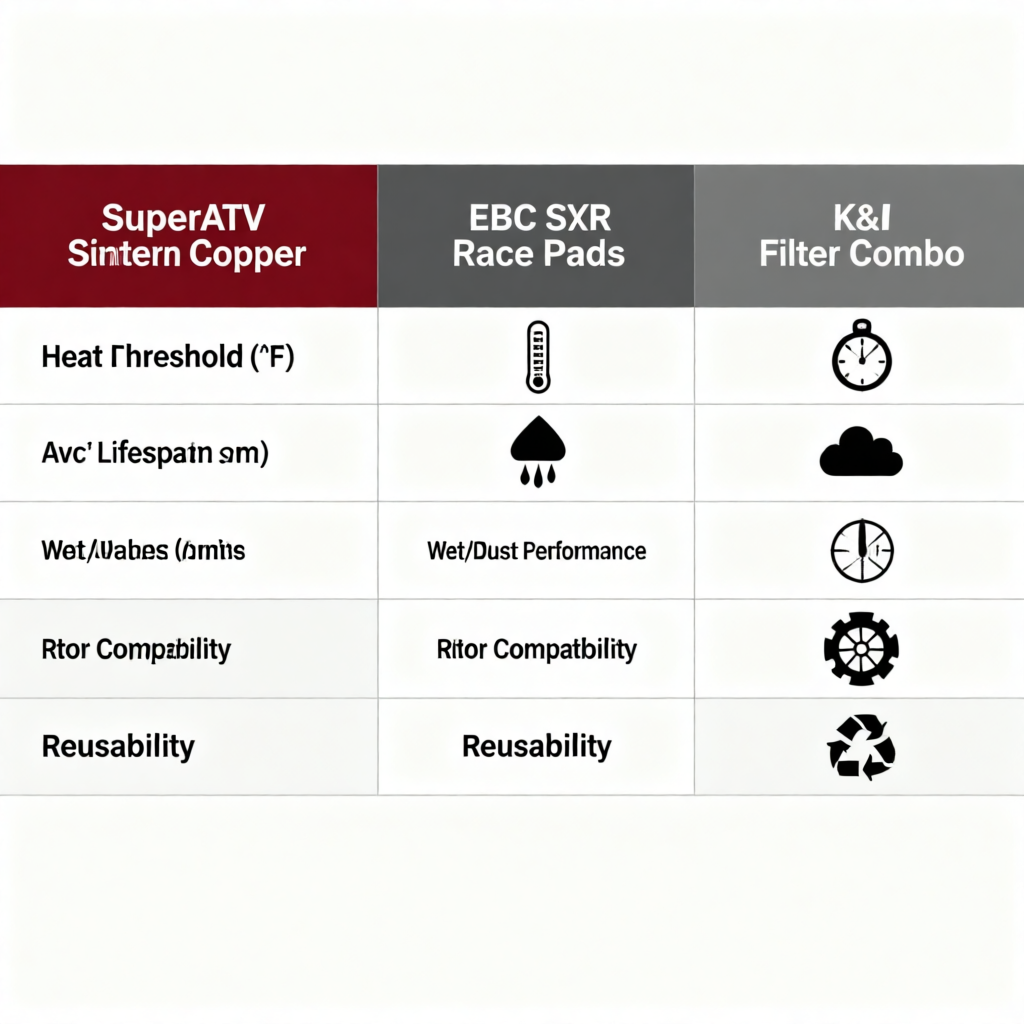
For Brake Pads: Choose between SuperATV Sintered Copper pads for all-around extreme durability and excellent wet-weather performance, or EBC SXR Sintered Metal Race pads if you’re a hardcore rider who demands race-level braking performance. Both options will dramatically outlast OEM pads while providing superior stopping power in every condition.
For Filters: The K&N High-Flow Air Filter + Premium Oil Filter Combo is the only logical choice for riders who want to protect their engine while actually improving performance. The washable, reusable design pays for itself within the first year, and the increased airflow gives your engine the breath it needs to perform at its best.
The Bottom Line: Your Honda UTV is a significant investment — probably $15,000 to $25,000 depending on the model and year. Spending $150–$250 on premium brake pads and filters isn’t an expense; it’s insurance.
It’s the difference between confident, reliable performance on every ride and the constant anxiety of wondering when your next component failure will strand you on the trail.
The riders who choose quality upgrades like SuperATV, EBC, and K&N are the same riders who are out there logging thousands of trouble-free miles, conquering challenging trails, and actually enjoying their time on the machine instead of wrenching on it in the garage.
Don’t wait until your stock pads fail on a dangerous descent. Don’t wait until a cheap filter tears and sends metal shavings through your engine. Make the smart investment today in top-rated Honda UTV side by side brake pads and filters for extreme durability, and get back to what matters most — riding hard, riding far, and riding with confidence.
Community Reference & Authority Resources:
Your Honda Pioneer or Talon was built to conquer extreme terrain. Now give it the components it needs to do exactly that.
Ready to upgrade your Honda UTV for extreme durability? Click the product links above to get your sintered brake pads and high-flow filters today. Your machine — and your peace of mind — will thank you on the trail.
🔍 Explore More: See all Wild Testing guides for Top-Rated Honda Utv Side By Side Brake Pads And Filters For Extreme Durability.
Check out our off-road collection Amazon products