

We’ve all been there – you park your UTV on a slight incline, put it in “Park,” and hear that unsettling creak as the weight of the vehicle strains against the tiny metal pawl in your transmission. Or worse, you return to your machine after a short break only to find it has rolled several feet despite being “in park.” These moments aren’t just unnerving; they’re warning signs that your UTV’s factory parking system has serious limitations. When it comes to reliable utv parking brakes, the factory setup often falls short, especially on rugged, uneven terrain.
Enter the Spring Brake Thingy parking brake – a deceptively simple yet incredibly effective solution that’s rapidly becoming a must-have accessory for UTV enthusiasts in 2026. This American-made device addresses one of the most overlooked aspects of UTV ownership: properly securing your vehicle when parked. In this comprehensive review, we’ll explore what the spring brake thingy is, how it works, why it’s superior to relying solely on your transmission’s “Park” setting, and how easily you can install one on your own UTV. Whether you’re a weekend warrior or a serious off-roader, this small investment could save you from costly transmission repairs and dangerous roll-away incidents.
What Exactly Is the Spring Brake Thingy?
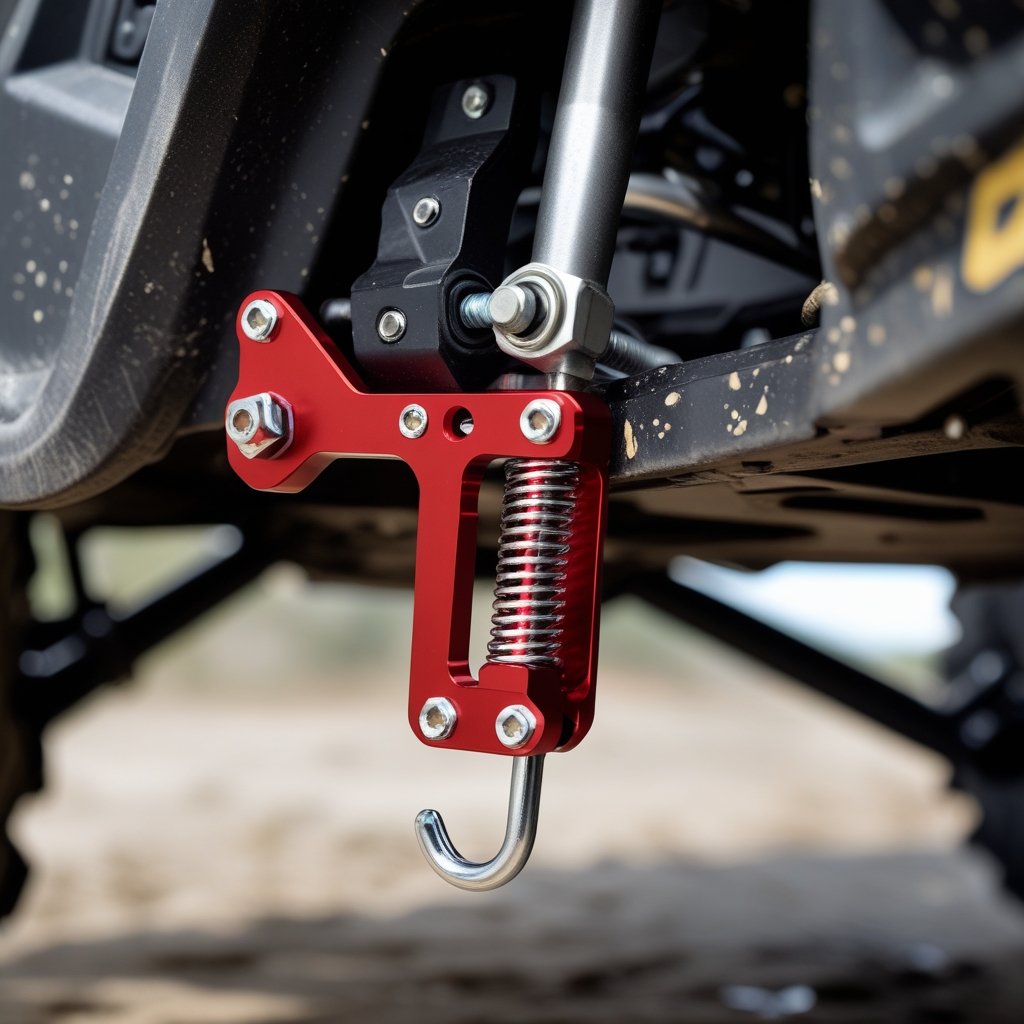
Despite its playful name, the Spring Brake Thingy parking brake addresses a serious mechanical issue. It’s a heavy-duty mechanical device designed specifically for side-by-sides that creates a true parking brake by physically holding your utv brake pedals in the depressed position. Made in America and available for various UTV brands including Polaris, Can-Am, Honda, and CF Moto, this device consists of a spring-loaded lever mechanism that mounts directly to your UTV’s firewall.
The genius of the design lies in its absolute simplicity. There are no electrical components to fail, no complex hydraulic lines to bleed, and no permanent modifications required to your UTV’s existing braking systems. It’s a purely mechanical solution that works seamlessly with your vehicle’s existing brake system to provide a level of security that the factory “Park” setting simply cannot match. Often referred to by the community simply as the brake thingy or the spring thingy, this accessory has gained massive popularity across off-road forums. By physically locking the brake pedal down, it ensures that the hydraulic pressure remains engaged at the calipers, effectively turning your standard foot brake into a highly reliable, heavy-duty parking brake.
Why Your UTV Needs More Than Just “Park”
To understand why upgrading your utv parking brakes is so valuable, it’s important to understand the severe limitations of your UTV’s factory parking system. Most modern side-by-sides rely on a transmission park pawl rather than a dedicated mechanical brake for the rear wheels.
The Park Pawl Problem
When you shift your UTV into “Park,” you’re engaging a small metal component called a park pawl – essentially a pin about the size of your pinky finger that locks into a notch on your transmission’s output shaft. This tiny piece of metal becomes the only thing preventing your multi-thousand-pound machine from rolling away. On flat ground, this system works adequately. But on any kind of incline, the entire weight of your UTV strains against this small component. Over time, this creates immense wear that can lead to catastrophic, expensive transmission repairs. In extreme cases, the pawl can shear off entirely, allowing your UTV to roll freely despite being “in park.”
The Hill Safety Factor
If you’ve ever parked on a hill and felt your UTV “settle” with an unsettling clunk when you release the brake, you’ve experienced the park pawl taking the vehicle’s full weight. This isn’t just disconcerting – it’s potentially dangerous. A UTV rolling away can cause serious injury or property damage, not to mention the damage to your machine if it rolls into an obstacle or tips over. Upgrading to a dedicated mechanical solution like the spring brake thingy eliminates this risk entirely by securing the wheels directly via the brake calipers.
The Transmission Wear Issue
Even if your park pawl never catastrophically fails, the constant strain from parking on inclines accelerates wear on your transmission components. This wear manifests as increasingly difficult shifting, that notorious “clunk” when moving from Park to Drive, and eventually, massive repair bills. Protecting your drivetrain starts with taking the load off the transmission.
How the Spring Brake Thingy Works
The Spring Brake Thingy parking brake tackles these drivetrain issues with elegant, mechanical simplicity.
The Mechanical Advantage
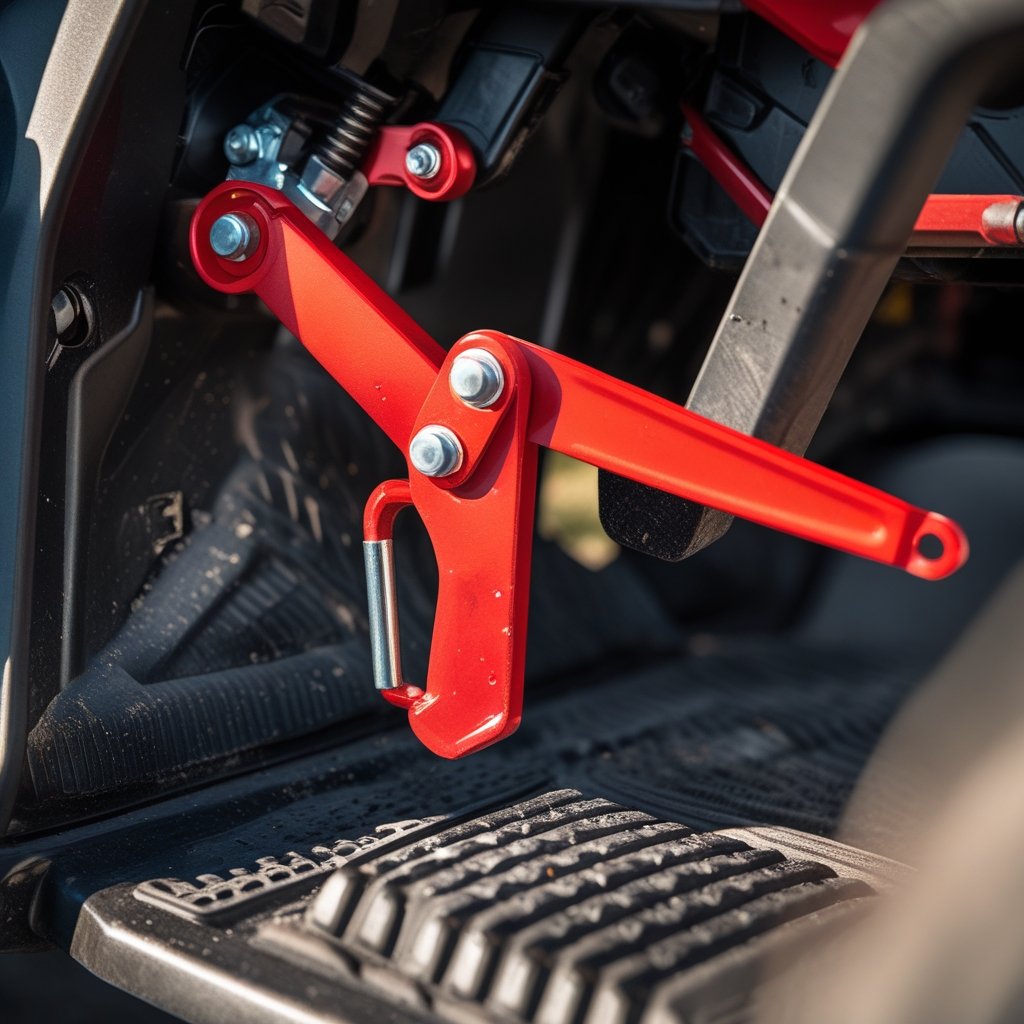
The device mounts to your UTV’s firewall near the brake pedal assembly. When engaged, a bright red lever hooks onto your utv brake pedals arm, physically holding the pedal in the depressed position. This maintains hydraulic pressure in your brake system, keeping the actual brakes applied at the rotors rather than relying on the transmission’s fragile park pawl. What makes it particularly clever is the spring-loaded design. When you press the brake pedal again to drive off, the device automatically disengages, allowing normal brake operation. There’s no separate lever to release, no complex procedure to remember – it works intuitively with your normal driving habits.
Operation in Practice
Using the brake thingy becomes second nature after just a few tries. Here is the standard operating procedure:
- Press the brake pedal firmly with your right foot (or left, depending on your UTV’s configuration).
- While holding the brake down, use your other foot to slide the red lever over until it catches on the brake pedal arm.
- Slowly release the brake pedal, allowing the red lever to take over holding the pedal down.
- Shift into Park as an additional safety measure and turn off the ignition.
To disengage, simply press the brake pedal again. The spring mechanism automatically pulls the red lever back, freeing the pedal for normal operation. The beauty of this system is that it holds the actual brakes applied, distributing the holding force across all braking surfaces instead of concentrating it on one small transmission part.
Installation Guide: Surprisingly Simple
One of the most appealing aspects of the spring thingy is how easy it is to install. Most UTV owners can complete the installation in 10-15 minutes with basic hand tools, making it one of the most accessible performance and safety upgrades on the market in 2026.
What You’ll Need
Check out our off-road collection Amazon products
SHOP THE COLLECTION- Socket wrench set (typically 10mm, 12mm, or 13mm, depending on your specific UTV model)
- The included mounting hardware from your Spring Brake Thingy kit
- Threadlocker (optional but recommended for high-vibration environments)
- About 15 minutes of free time
Step-by-Step Installation
- Locate the mounting points: The Spring Brake Thingy mounts to existing bolts on your UTV’s firewall. These are typically located near the brake pedal assembly and master cylinder.
- Remove the factory bolts: Using your socket wrench, carefully remove the specified factory bolts as indicated in the included model-specific instructions.
- Position the Spring Brake Thingy: Place the device onto the mounting points, ensuring the red lever has a clear path to the brake pedal arm.
- Replace and tighten the bolts: Use either the factory bolts or the included longer bolts (if required for your model) to secure the device to the firewall. Apply a drop of blue threadlocker to prevent vibration from loosening the hardware over time.
- Test the operation: Press the brake pedal and practice engaging and disengaging the device several times to get comfortable with the foot motion.
Common Installation Tips
Some UTV models may require slightly longer bolts than the factory ones. If the included bolts don’t work, a quick trip to the hardware store for bolts that are 3/8″ longer than stock usually solves the issue. Make sure the device is positioned so the red lever can freely engage and disengage without binding. After installation, test the device by parking on a slight incline. You should notice significantly less “settling” or movement when shifting between Park and Drive.
Real Benefits of the Spring Brake Thingy
The Spring Brake Thingy parking brake delivers several tangible benefits that make it worth far more than its modest price tag.
Transmission Protection
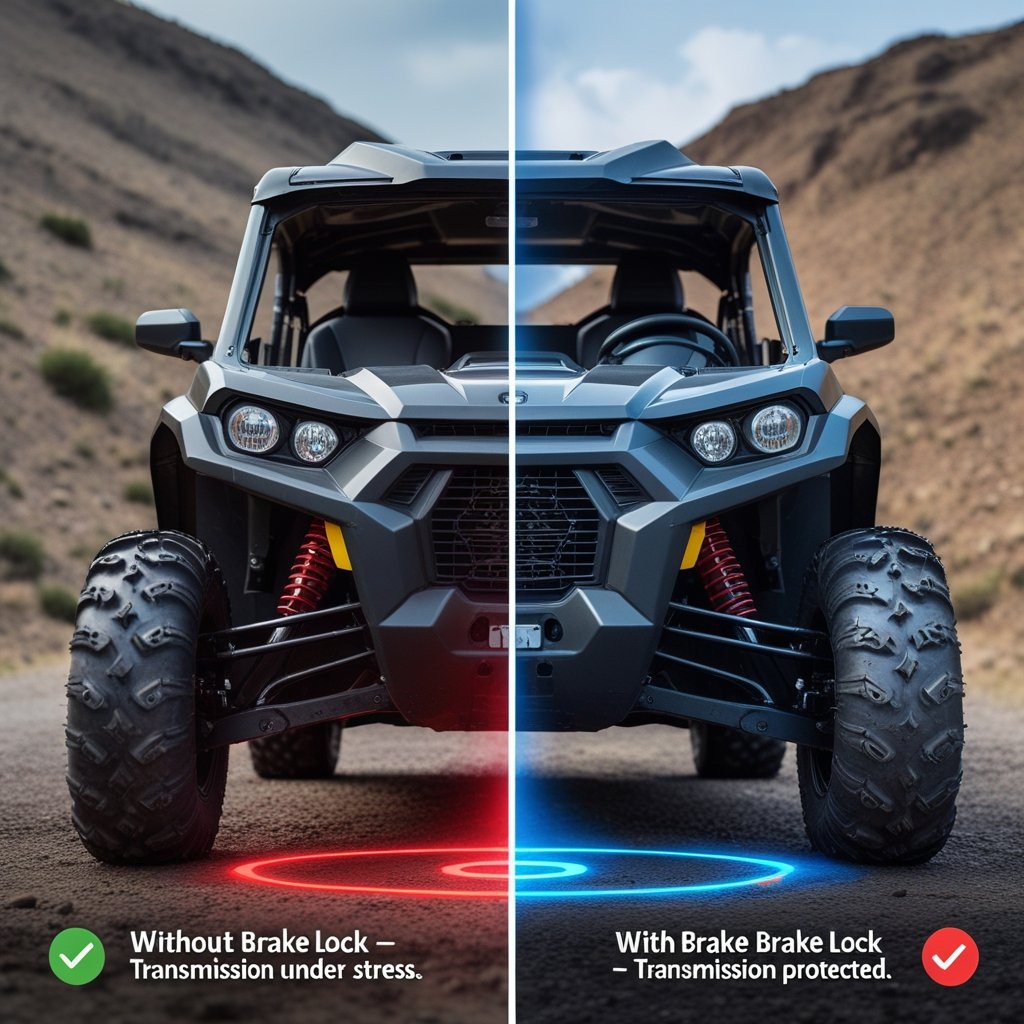
By taking the strain off your transmission’s park pawl, you’re potentially saving yourself from expensive repairs down the road. UTV transmission work isn’t cheap, and preventing wear is always more economical than fixing damage after it occurs. Users consistently report smoother shifting between Park and Drive after installing the spring brake thingy, particularly when parked on inclines. That harsh “clunk” is noticeably reduced or eliminated entirely because the vehicle’s weight isn’t resting on the transmission components.
Recommended Insights From Our Guide Library:
- UTV Parking Brake Lock Guide: Secure Your Ride on Any Terrain (2026 Update)
- Spring Brake Thingy Review: The Ultimate UTV Parking Brake Solution – Pioneer Honda Lovers
- Master the Slope: Essential UTV Hill Parking Safety Guide – Pioneer Honda Lovers
- utv parking brake adjustment Archives – Pioneer Honda Lovers
- utv parking brake issues Archives – Pioneer Honda Lovers
Enhanced Safety
The primary safety benefit is obvious – preventing your UTV from rolling away when parked on hills. This is particularly important in scenarios like parking at scenic overlooks or on mountain trails, loading and unloading from trailers, stopping on inclines to take photos, or parking at camp when the only available spot isn’t perfectly level. The peace of mind that comes from knowing your UTV is securely held in place by dedicated utv parking brakes is invaluable, especially if you frequently ride in hilly or mountainous terrain.
Convenience Factors
Despite adding an extra step to parking, most users report that using the device quickly becomes second nature. The motion is intuitive – press the brake, slide the lever, release. The automatic disengagement when you press the brake again means there’s no complex procedure to remember when starting off.
Compatibility and Alternatives: Kioti, Polaris, and Honda
How does the spring brake thingy stack up against factory alternatives and other brands? When reading through any comprehensive kioti utv review or Polaris Ranger forum, you’ll notice that factory parking brakes vary wildly in effectiveness.
Factory Parking Brakes vs. The Brake Thingy
Some UTV models, like certain Honda Pioneer or Kioti Mechron models, come with factory parking brakes or transmission locks. However, these vary widely in effectiveness. Many are separate hand levers that require a distinct action to engage and disengage, making them easy to forget in the heat of a trail ride. The brake thingy integrates more naturally with your normal braking action, ensuring you never forget to set the brake because it’s right at your foot. In many a kioti utv review, owners note that while the machine is robust, adding an aftermarket mechanical brake lock provides an extra layer of security on steep logging roads.
Other Aftermarket Solutions
There are competing products, such as hydraulic line locks or electronic caliper locks, but few match the Spring Brake Thingy’s combination of simplicity, effectiveness, and ease of installation. Hydraulic line locks can bleed down over time, losing pressure and allowing the vehicle to roll. Electronic systems introduce wiring that can fail in muddy, wet conditions. The spring thingy relies purely on mechanical leverage, which is immune to fluid leaks and electrical gremlins.
DIY Options
Some riders attempt DIY solutions like brake pedal blocks, bungee cords, or homemade levers. While creative, these lack the refined engineering and testing of the Spring Brake Thingy, and may not disengage as reliably in an emergency situation. Relying on makeshift utv parking brakes is a safety hazard that simply isn’t worth the risk.
Maintenance and Care for Your UTV Braking System
While the spring brake thingy is virtually maintenance-free, your UTV’s underlying hydraulic brake system still requires regular attention to ensure maximum holding power. When you rely on utv parking brakes that utilize hydraulic pressure, the health of your brake fluid, pads, and rotors becomes paramount.
Checking Brake Fluid and Lines
Hydraulic brake fluid is hygroscopic, meaning it absorbs moisture from the air over time. This moisture lowers the boiling point of the fluid and can lead to internal corrosion within your brake calipers and master cylinder. For optimal performance from your brake thingy, flush and replace your UTV’s brake fluid every two years or according to your manufacturer’s severe service schedule. Inspect all rubber brake lines for cracking, bulging, or weeping, as a slow fluid leak will cause the spring thingy to lose holding pressure over several hours.
Inspecting Pads and Rotors
The holding force of the spring brake thingy is only as strong as the friction material pressing against your rotors. If your brake pads are worn down to the backing plate, or if your rotors are severely glazed or warped, the vehicle may still creep on steep inclines even with the pedal locked down. Regularly inspect your brake pads and replace them with high-quality, sintered metal or carbon-ceramic compounds designed for heavy-duty off-road use. Keeping your braking system in peak condition ensures that your mechanical parking lock performs flawlessly every single time. When outfitting your machine for the trails, combining reliable stopping power with undercarriage protection like Honda UTV skid plates ensures total vehicle security.
Frequently Asked Questions About UTV Parking Brakes
Will the Spring Brake Thingy drain my battery?
No. The spring brake thingy is a 100% mechanical device. It uses a physical spring and lever system to hold the utv brake pedals down. It requires no wiring, no switches, and no battery power, making it completely immune to electrical failures.
Does it fit all UTV brands?
Check out our off-road collection Amazon products
SHOP THE COLLECTIONThe manufacturer produces specific kits for a wide variety of side-by-sides, including Polaris RZR and Ranger, Can-Am Maverick and Defender, Honda Pioneer, Kawasaki Teryx, and CF Moto. Always check the fitment guide to ensure you order the correct brake thingy for your specific make, model, and year.
Can I still use my factory park setting?
Absolutely. In fact, it is highly recommended to use the spring thingy in conjunction with your factory “Park” setting. Engaging the mechanical brake lock takes the physical load off the transmission park pawl, while shifting into “Park” provides a secondary failsafe. This dual-method approach is the gold standard for off-road safety in 2026.
Will it interfere with my foot placement while driving?
The device is designed to mount high on the firewall, tucked closely against the dash and away from your natural foot resting position. During normal acceleration and braking, your foot will not come into contact with the spring thingy lever. It only comes into play when you intentionally slide it over to lock the pedal.
How long do the springs last?
The heavy-duty steel springs used in the spring brake thingy are rated for tens of thousands of cycles. Under normal use, the spring mechanism will easily outlast the lifespan of the UTV itself. If you ever do need a replacement spring, the manufacturer provides excellent customer support and replacement parts.
Conclusion: Simple Solution, Significant Impact
The Spring Brake Thingy parking brake exemplifies great engineering – it solves a real, expensive problem with elegant simplicity. By addressing the fundamental limitation of relying solely on your transmission for parking, it provides enhanced safety, mechanical protection, and total peace of mind. Installation is straightforward enough for most owners to handle themselves in minutes, and operation quickly becomes second nature.
Community Reference & Authority Resources:
The all-mechanical design means there’s little to go wrong, and the benefits are immediately noticeable, especially when mastering UTV hill parking safety. If you’ve ever felt that moment of uncertainty when parking your UTV on a hill, or winced at the “clunk” when shifting out of Park, the spring brake thingy deserves a place on your must-have accessories list. Your transmission will thank you, and you’ll enjoy your rides with one less worry on your mind. Upgrade your utv parking brakes today and conquer the trails with confidence.

- Vehicle Specific Fit: Suitable for Polaris RZR all models: for Polaris RZR 570 2012-2020, for Polaris RZR 800 2008-2014,…
- Feature: The parking brake thingy Kit will protect your transmission so that it will not be damaged when parked on a hil…
- Product Characteristic: The for Polaris parking brake is made of metal material, with black and red glossy finish, which…

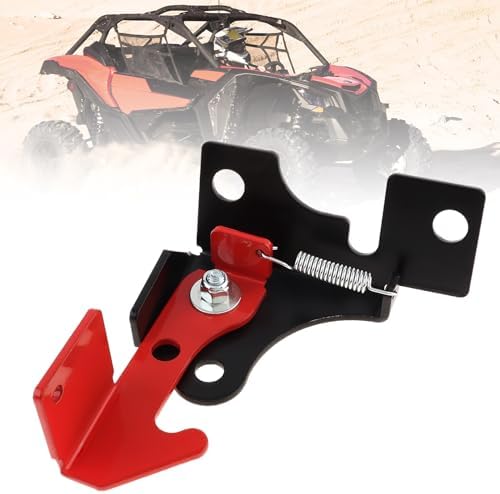
- The spring parking brake fit for Polaris RZR Ranger 800 900 1000 all models, fit for Ranger Turbo Turbo S all models.
- The heavy duty parking brake kit is designed to protect your expensive transmission. It will keep your transmission from…
- The brake assist protector kit made of superior premium metal, and the spring after quenching process, wear and corrosio…

- TIME SAVER TOOL: The LT890 is designed for rear drum brake return springs. It offer a comprehensive, efficient, and safe…
- EFFORTLESS CONNECTION: Allows one-handed operation with slotted ends that hold the spring at the perfect working angle, …
- UNIVERSAL AND VERSATILE: With adjustable 3 hold design, Chelhead truck brake spring tool is suitable for a wide range of…

- 【Compatible with】This polaris parking brake compatible with Polaris RZR All Models 800, 900, 1000, XP900, XP1000, Turbo,…
- 【High Quality】The emergency brake is made of high quality metal material,Metal brake more faster response, In particular…
- 【Function】When you park on a hill or on a slope, use the parking brake, which can prevent your gearbox from changing gea…
🔍 Explore More: See all guides for Honda Pioneer.