






When it comes to ProEagle 2 Ton Talon Jack mounting guide and trailside recovery tips, getting the right details matters.
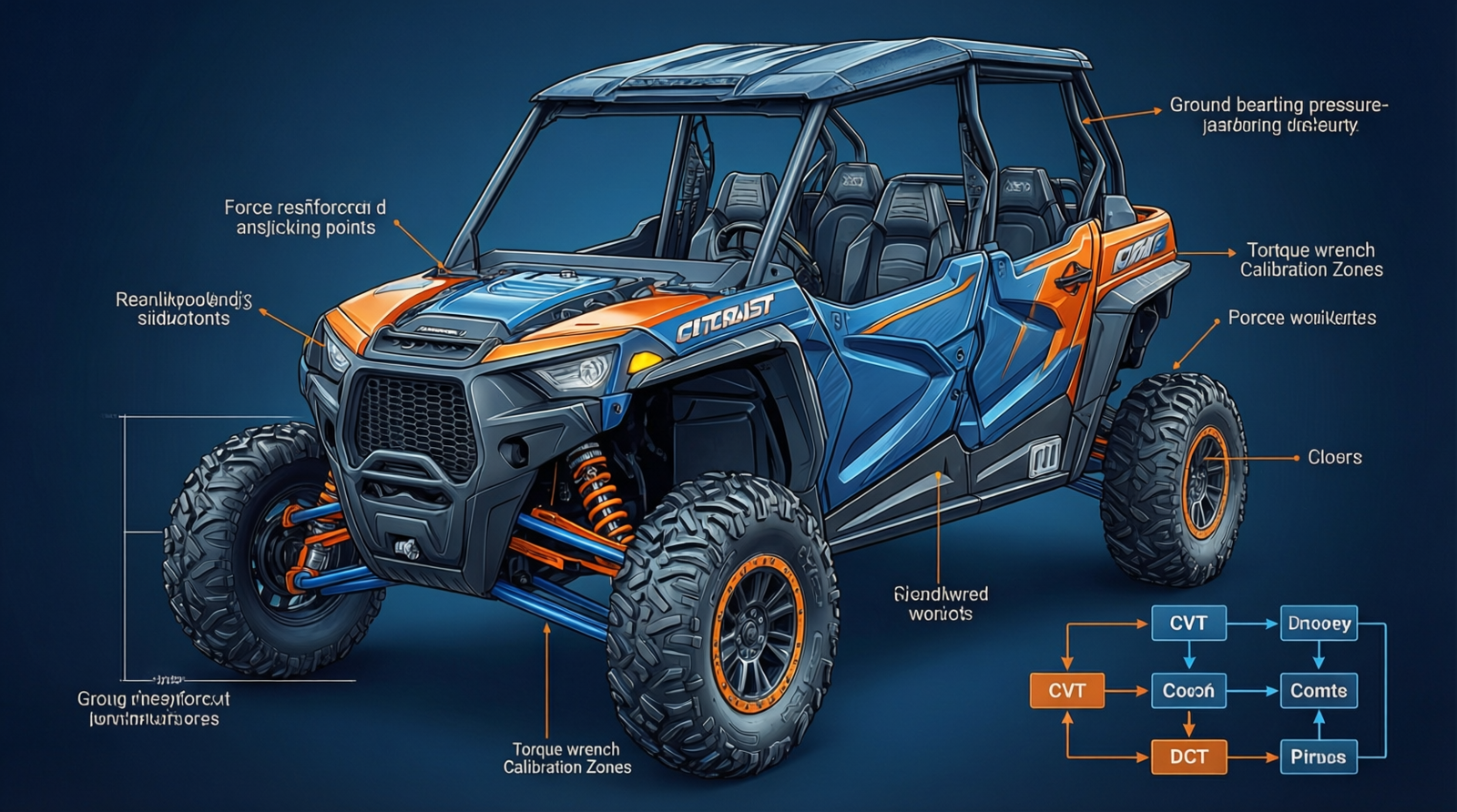
When you are miles from pavement, the sun is dropping, and your UTV is high-sided on a rock, a standard automotive jack is not just useless—it is a liability. This guide strips away the guesswork of trailside recovery. You will learn the exact physics of why cheap jacks fail in the dirt, the precise hardware ecosystem required to fix it, and the exact torque specs and chassis zoning rules to keep your rig intact. The problem is that factory jacks and generic mounting solutions ignore off-road physics. The solution is the ProEagle 2 Ton Talon ecosystem, paired with master-technician installation and recovery protocols. Read this to ensure your next trailside repair ends with a running UTV, not a crushed chassis or a rolled vehicle.
The Technical Reality: Why Standard Jacks Cause Catastrophic Trailside Failures
Ground Bearing Pressure & Base Sink: The <15 Sq In Shear Failure Sequence
Standard automotive jacks have a base area of less than 15 square inches. When lifting a 1,500+ lb UTV on soft loam, sand, or mud, the ground bearing pressure easily exceeds the soil’s shear strength.
This means the base sinks deep into the dirt, altering the jack’s vertical plumb line. The resulting lateral side-loading induces catastrophic structural buckling on the hydraulic ram, dropping your rig back into the mud while you are working on it.
Chassis Point Crushing & Honda DCT Interference: Yield Strength Breaches
UTV chassis utilize tubular steel or extruded aluminum. Applying 2 tons of point-load force to non-reinforced jacking points like plastic skid plates, lower A-arm tubing, or differential covers exceeds the yield strength of the material.
For the driver, this results in crushed tubes, punctured fluid pans, or bent control arms. This is especially critical for Honda Pioneer 1000 and Talon owners. The massive DCT transmission pan and exhaust headers eliminate flat jacking points. Using a generic jack on these models will crush the DCT pan or slip right off the rounded differential housing.
Ram Scoring & Seal Blowout: The Silt-Induced “Bleed Down” Death Trap
The consensus across RZRForums and Reddit r/UTV is clear: cheap $30 to $50 hydraulic jacks fail rapidly off-road. Fine trail silt and mud adhere to the exposed hydraulic ram.
When you retract the jack, that grit scores the cylinder wall and shreds the internal O-rings. This causes a lethal, slow bleed down, dropping the vehicle directly onto the rider working underneath it.
Static Rollover Threshold (SRT) Breach & Side-Hill Base Slip
Jacking a UTV on a lateral slope greater than 10 degrees shifts the Center of Gravity (CoG) laterally. If the jack height exceeds the suspension’s droop limit without opposing wheel chocks, the CoG crosses the roll axis.
This breaches the Static Rollover Threshold (SRT), causing a lateral rollover. Furthermore, narrow jack bases easily slip out from under the chassis on 15+ degree side-hills when they hit a buried root or rock, dropping the rig instantly.
High-Frequency Vibration Mount Shear & Factory Bed Flex
UTVs generate 10Hz to 20Hz high-frequency vibrations and high-amplitude low-frequency impacts. Standard zinc-plated hardware without threadlocker experiences rapid metal fatigue and fastener back-out.
This turns a 40-lb steel jack into a lethal cabin projectile. Additionally, Maverick and Polaris General owners know that factory plastic and composite beds flex severely under this concentrated weight. Standard bungee cords fail under 15Hz trail vibrations, allowing the jack to jump, smash coolers, and crack the bed floor.
The 2026 Core Gear Architecture: Validated High-Ticket Recovery Stack
ComponentMaterial / RatingCritical Function
ProEagle 2-Ton Talon4000 lbs WLL / 40 sq in BasePrevents sinkage and shear failure via expanded contact area.
SuperATV Heavy-Duty Mount5052-T6 Aluminum / 11-Gauge Steel
Check out our off-road collection Amazon products
Vibration dampening and bed flex isolation with polyurethane pads.
Factor 55 ProLink Shackle Mount7075-T6 Aluminum / 16000 lbs WLLEliminates strap cutting during high-angle winch recoveries.
Warn AXON 45-S PowersportsAll-Metal Sealed ContactorPrevents melt-down under sustained loads by replacing plastic solenoids.
X-BULL Gen3 / ARB BoardsCarbon-Fiber Reinforcing RibsPrevents board snap under 4000 lbs concentrated axle load.
Core Lifting: ProEagle 2-Ton Talon Off-Road Jack
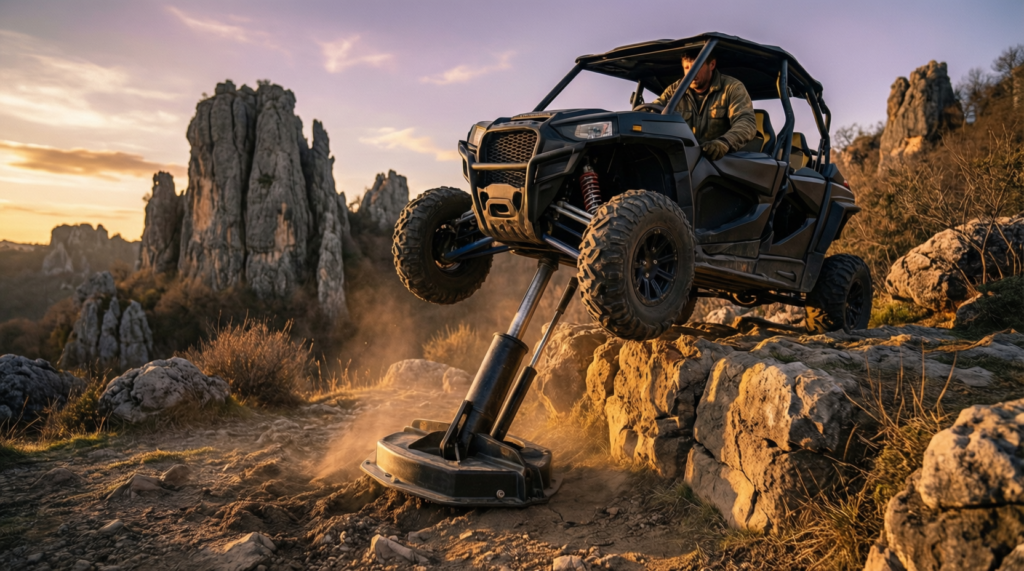
The ProEagle 2-Ton Talon features a 4,000 lbs Working Load Limit and an 8.5″ to 20″ lift range. This specific range accommodates 30″+ aftermarket UTV tires and long-travel suspension droop.
The “Big Wheel” all-terrain base plate expands ground contact to over 40 square inches, reducing ground bearing pressure by more than 60% so you don’t sink in mud. The coarse-thread release valve prevents fine trail silt and mud from binding the threads, solving the exact failure point of fine-thread standard jacks.
Hard-Mounting Ecosystem: SuperATV & Official Bed Mounts
These mounts are CNC-machined from 5052-T6 aluminum or 11-gauge steel. They feature integrated polyurethane vibration-dampening pads to eliminate bed-rattle and counter 15Hz trail vibrations.
To bypass factory composite bed flex, hard-mounting this system to a steel bed rack, like a TUWA PRO or Shiprock, is strictly mandatory to prevent cracking your UTV’s bed floor.
High-Angle Rigging & Winching: Factor 55 & Warn Upgrades
The Factor 55 ProLink Shackle Mount is forged from 7075-T6 Aluminum with a 16,000 lbs WLL. This explicitly eliminates sharp edge strap-cutting during high-angle winch recoveries.
For pulling power, the Warn AXON 45-S Powersports Winch features digital load-sensing, Bluetooth telemetry, and an all-metal sealed contactor. This all-metal design replaces legacy plastic solenoids, preventing winch melt-downs under heavy, sustained loads.
Axle-Load Traction: X-BULL Gen3 & ARB Boards
Recommended Insights From Our Guide Library:
- Must-Have Off-Road Jacks for Your UTV
- Exhaust Jack Review: The Fastest Way to Lift Your Off-Road Rig
- UTV Recovery Systems: Essential Gear for Off-Road Expeditions – Pioneer Honda Lovers
- Recovery Strap vs Tow Strap Guide 2026 – Pioneer Honda Lovers
- Ultimate Pioneer Expedition: Trail Routes & Rig Prep Guide
These recovery boards feature integrated carbon-fiber reinforcing ribs. This specific architectural upgrade prevents the board from snapping in half under 4,000 lbs of concentrated axle load during jacked, high-torque recoveries.
The Technical Setup Blueprint: Exact Torque Specs, Zoning Rules, and Drivetrain Protocols
Jack Mounting Hardware & Vibration-Damping Torque Protocols
You must use 5/16″-18 or 3/8″-16 Grade 8 or Stainless Steel flange bolts to secure the mount to your UTV bed or rack.
Apply Blue Loctite 242 to all mount fasteners; this is strictly mandatory to prevent vibration-induced back-out. The 3/8″ mounting bolts must be torqued exactly to 25-30 ft-lbs. This precise torque keeps the mount locked down without stripping the threads.
CVT Architecture Trailside Protocol (Polaris RZR / Can-Am Maverick X3)
Jacking is frequently required to drop the rear suspension to access the CVT clutch housing for a broken drive belt. You will need a model-specific Primary Clutch Puller and a Clutch Spreading Tool.
The CVT outer cover is secured by T30 Torx or 8mm/10mm hex bolts, and axle nuts require a 30mm or 32mm deep socket. The procedure is strict: Jack the vehicle, remove the wheel, remove the cover, use the spreader tool on the secondary clutch, and extract the belt. You must clean all rubber debris from the clutch sheaves with brake cleaner. If you skip this, the new belt will slip and glaze immediately.
DCT Architecture Constraints (Honda Pioneer 1000 / Talon)
No CVT belt or clutch tools apply here. Jacking a Honda is strictly for half-shaft replacement, wheel bearing failure, or brake service.
Because the central DCT transmission oil pan and exhaust routing prohibit central jacking, you must place the ProEagle jack only on reinforced jacking pads near the front or rear differential housings, or the thick steel mounting brackets of the lower A-arms. Never jack on the DCT pan, steering rack, or radius rods. Honda half-shaft nuts require a 32mm or 34mm socket, and lower ball joint removal requires 19mm/21mm wrenches and a dedicated puller.
Suspension & Wheel Fastener Breakaway: 1/2″ Drive Mandates
Polaris, Can-Am, and Honda wheel lugs typically use 17mm or 19mm sockets. The torque spec is 70-80 ft-lbs, though heavy-duty aftermarket Honda wheels require 90 ft-lbs.
Suspension pivot bolts for A-arms and shocks require 18mm, 19mm, or 21mm sockets, with torque specs ranging from 100 to 150 ft-lbs. Trailside removal strictly requires a 1/2″ drive heavy-duty breaker bar. A standard 3/8″ ratchet will simply shear under the required breakaway torque, leaving you stranded.
ApplicationSocket SizeTorque SpecDrive Requirement
Wheel Lugs (Standard)17mm / 19mm
https://www.youtube.com/watch?v=dzI0DvP5Zqw70-80 ft-lbs1/2″ Drive
Heavy-Duty Honda Wheels
Check out our off-road collection Amazon products
17mm / 19mm90 ft-lbs1/2″ Drive
Suspension Pivot Bolts18mm – 21mm100-150 ft-lbs1/2″ Drive
Mount Fasteners3/8″-1625-30 ft-lbsN/A
Field Verdict & Operational ROI: The Cost of Compromise vs. The Survival Stack
Building the ProEagle ecosystem is not an expense; it is critical operational insurance. Compare the upfront cost of the ProEagle Talon, a SuperATV Mount, and Grade 8 hardware against the catastrophic cost of replacing a crushed Honda DCT pan, a sheared Polaris A-arm, or a blown hydraulic seal that drops a chassis on a rider.
In high-stakes off-road environments, proper load distribution via a 40+ sq in base, vibration isolation through polyurethane pads and Loctite 242, and precise chassis zoning are the only variables separating a successful trailside recovery from a fatal rollover or catastrophic mechanical failure.
Conclusion
Community Reference & Authority Resources:
The exact moment of truth arrives when your UTV is fully suspended in the air, the suspension is at maximum droop, and you are sliding underneath the chassis to pull a shattered CV joint or clear a blown belt. In that precise second, the physics of ground bearing pressure, yield strength, and vibration damping are no longer abstract concepts—they are the only things keeping thousands of pounds of steel from crushing you.
This guide has mapped out the exact mechanical failures of standard jacks, detailed the hardware solutions, and provided the master-technician torque specs and drivetrain protocols required to execute a flawless repair. By respecting the engineering limits of your chassis and utilizing the validated survival stack, you ensure that when the trail pushes back, your recovery gear pushes harder. Keep your torque specs exact, your threadlocker fresh, and your rig ready for whatever the dirt throws at it next.
🔍 Explore More: See all Wild Testing guides for ProEagle 2 Ton Talon Jack mounting guide and trailside recovery tips.
Check out our off-road collection Amazon products