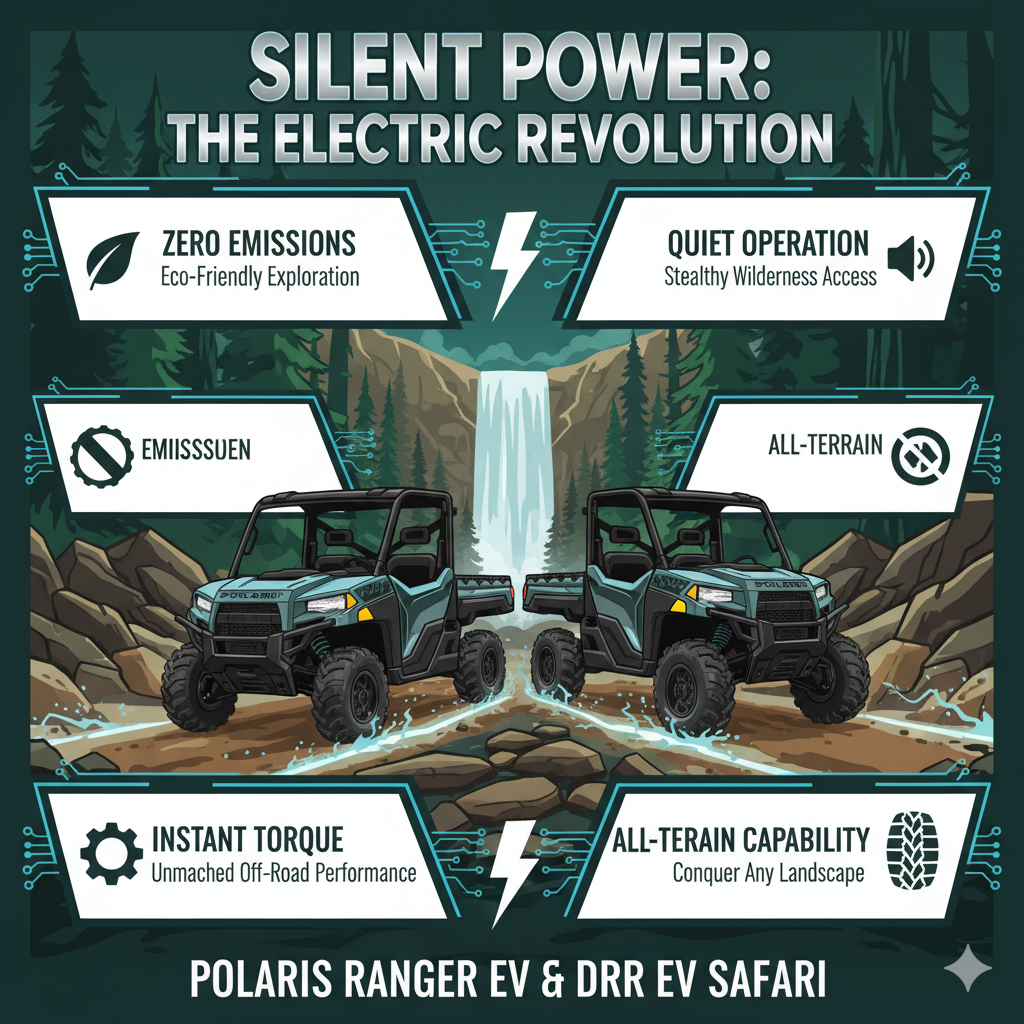



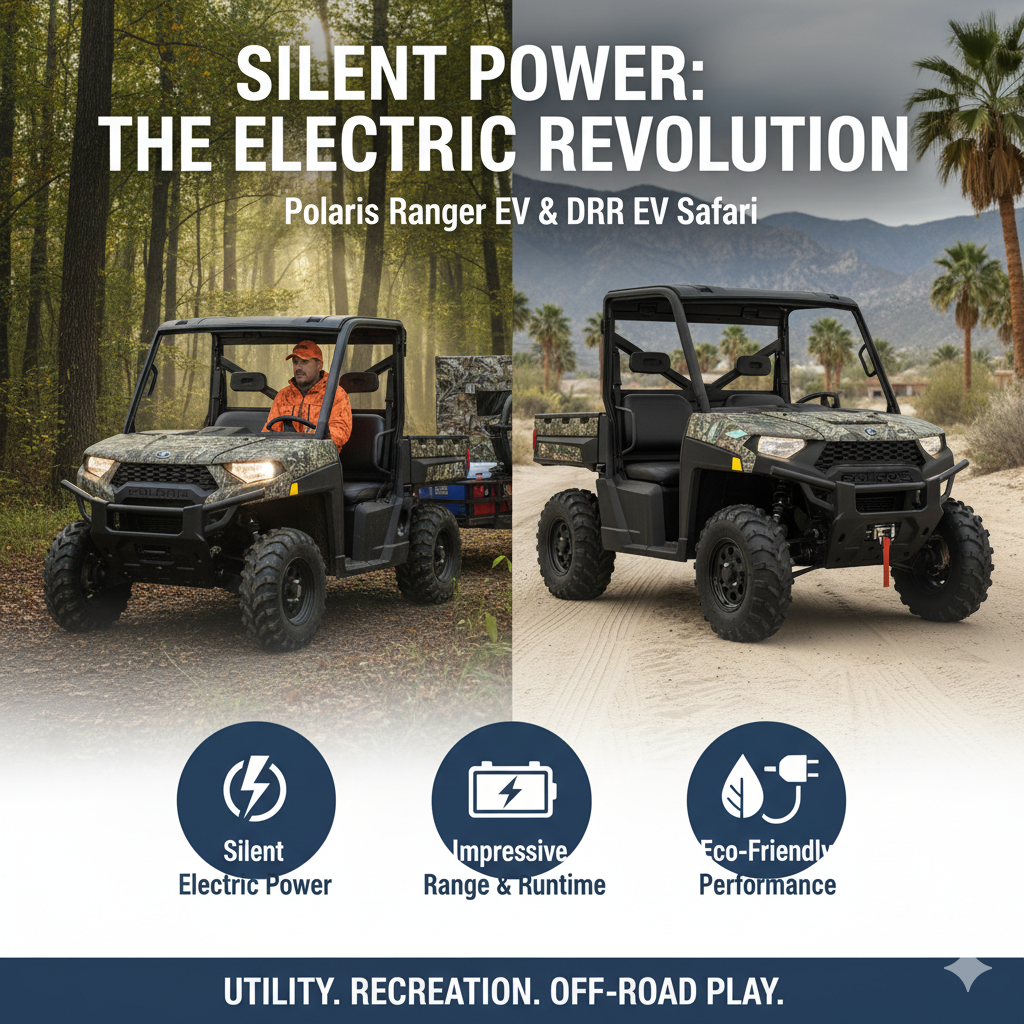
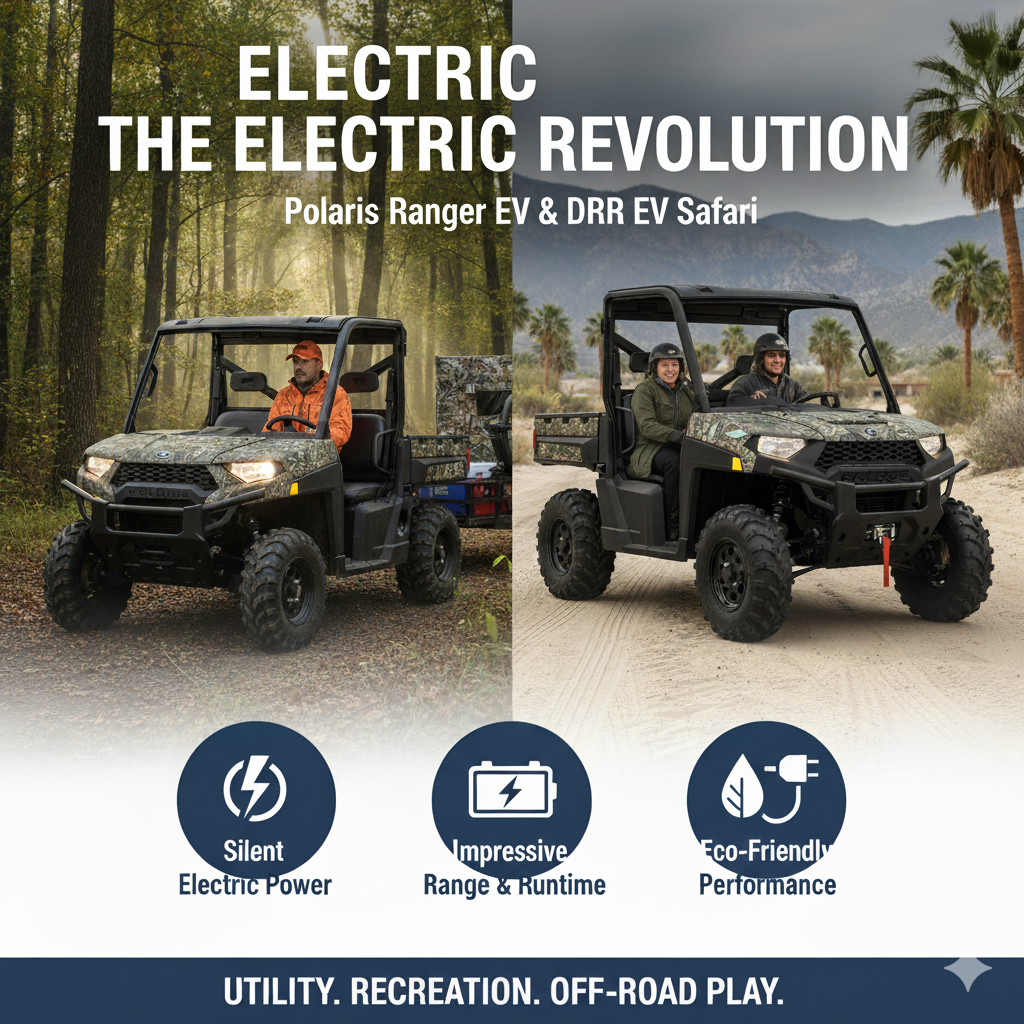
The off-road world is undergoing a silent revolution. For decades, the roar of a gasoline engine was synonymous with adventure, but a new wave of electric vehicles (EVs) is proving that you don’t need noise to conquer the wilderness. Leading this charge are two distinct, yet equally compelling, machines: the utility-focused Polaris Ranger EV and the recreational DRR EV Safari. Together, they embody the Electric Revolution: Polaris Ranger EV and DRR EV Safari in Off-Road Play, offering a glimpse into a cleaner, quieter, and surprisingly powerful future for off-roading in 2026.
The shift to electric power in the off-road segment is driven by more than just environmental concerns. The instant torque, reduced maintenance, and silent operation of EVs offer tangible benefits for hunters, land managers, and recreational riders who value stealth and simplicity. When evaluating the modern polaris ev landscape, it becomes clear that battery technology and motor efficiency have reached a tipping point, making these machines viable alternatives to their internal combustion counterparts. I’ve spent extensive time testing both the Polaris Ranger EV and the DRR EV Safari, and the experience is nothing short of transformative.
This comprehensive guide will explore the unique strengths of each machine, compare their performance and range, and detail how they are changing the way we work and play in the great outdoors. Whether you are looking to upgrade your fleet or simply curious about the best electric UTVs of 2026, this deep dive covers the mechanical realities, diagnostic workflows, and aftermarket modifications required to maximize your electric off-road experience.

Phase 1: The Utility Workhorse—Polaris Ranger EV Deep Dive
The Polaris Ranger has long been the benchmark for utility UTVs, and its electric counterpart, the Ranger EV, carries that legacy forward with a focus on quiet operation and robust work capability. In 2026, the shift toward electrification in the utility sector is no longer just a niche experiment; it is a dominant force reshaping how land managers, hunters, and agricultural professionals approach their daily tasks. When you examine the broader polairs ev ecosystem, the Ranger stands out as a masterclass in translating raw electrical energy into usable, low-end traction. The architecture of these machines prioritizes continuous duty cycles over peak horsepower, ensuring that hauling heavy loads up steep inclines does not result in thermal throttling or premature battery depletion.
The transition from legacy lead-acid battery setups to advanced lithium-ion platforms, particularly in the Ranger XP Kinetic, has fundamentally altered the performance envelope. Modern lithium iron phosphate (LiFePO4) and nickel manganese cobalt (NMC) cells offer vastly superior energy density, faster charging profiles, and significantly longer cycle life. This evolution means that the modern Polaris EV owner spends less time tethered to a wall outlet and more time executing demanding jobs in the field. Furthermore, the integration of sophisticated Battery Management Systems (BMS) actively monitors cell voltage, temperature, and state of health (SOH), providing real-time telemetry to the driver’s digital dash.
Performance and Utility Mechanics
At the heart of the Ranger EV is a high-performance 3-phase AC induction motor, paired with a high-voltage inverter that dictates the switching frequencies and torque delivery. Unlike brushed DC motors found in older electric carts, the AC induction motor is virtually maintenance-free and capable of sustained high-RPM operation without overheating. The inverter translates the DC current from the battery pack into the precise AC waveforms required by the motor, allowing for incredibly smooth acceleration and dynamic engine braking. For those interested in the mechanical differences between brands, our Honda Pioneer vs Polaris Ranger comparison highlights how drivetrain philosophies diverge even in the electric space.
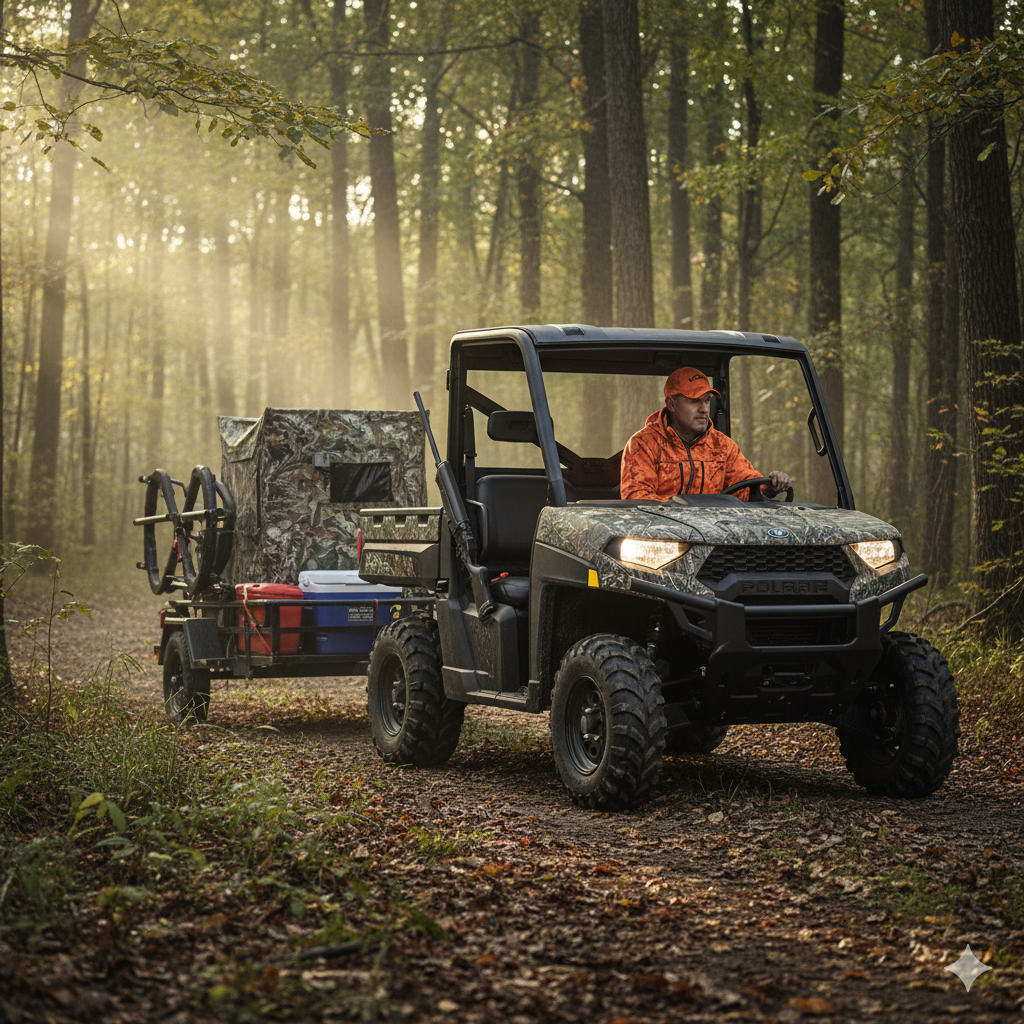
Towing and hauling dynamics remain a core strength of the Ranger EV. The chassis is reinforced to handle the substantial curb weight of the battery packs, while the cargo bed retains its hydraulic dump functionality and high payload capacity. The instant torque delivery means that pulling a heavy trailer out of a muddy ditch or up a steep logging road requires no clutch slipping or belt engagement revs—just immediate, predictable traction. This makes it an indispensable tool for farm work, property maintenance, and silent hunting expeditions where spooking game is a primary concern.
Range, Charging, and Battery Management
The range of the Ranger EV is highly dependent on terrain, ambient temperature, and driving style. Older lead-acid models typically offered a modest range of around 45 miles, while the more advanced XP Kinetic can achieve up to 90 miles on a single charge under optimal conditions, as noted by Field & Stream. However, aggressive trail riding, heavy towing, and cold weather can reduce these figures by 20% to 30%. To mitigate range anxiety, modern EV UTVs employ aggressive regenerative braking profiles. By capturing kinetic energy during deceleration and feeding it back into the battery pack, riders can extend their range significantly, especially when navigating hilly or mountainous terrain. For more tips on maximizing your battery life, check out our guide on off-road EV charging solutions.
| Model | Vehicle Type | Motor Type | Estimated Range (Miles) | Primary Use Case |
|---|---|---|---|---|
| Polaris Ranger EV | UTV (Side-by-Side) | AC Induction | 45 – 90 (depending on model) | Utility, Hunting, Land Management |
| DRR EV Safari | ATV (Quad) | 11 kW Electric | Up to 50 | Recreation, Trail Riding, Light Utility |
Phase 2: The Recreational ATV—DRR EV Safari Technical Breakdown
The DRR EV Safari represents the electric future of the traditional ATV, offering a powerful, single-rider experience with a focus on recreational trail riding and technical agility. While UTVs dominate the utility space, the ATV format remains king for narrow, single-track trails where maneuverability and rider involvement are paramount. The EV Safari 4×4 bridges the gap between legacy quad designs and modern electric performance, utilizing a compact footprint to deliver an exhilarating ride that gas-powered quads struggle to match in terms of low-end grunt.
Check out our off-road collection Amazon products
SHOP THE COLLECTIONPower Delivery and Agility
The EV Safari 4×4 is equipped with a powerful 11 kW electric motor, which translates to roughly 15 horsepower. While that number might seem modest compared to a 1000cc gas engine, the power delivery is where the electric motor shines. An 11 kW BLDC (Brushless DC) motor delivers peak torque instantly from zero RPM, eliminating the need for a complex transmission or CVT clutch system. This direct-drive or single-speed reduction gear setup ensures that 100% of the motor’s twisting force is sent directly to the wheels the millisecond the throttle is cracked. This makes the EV Safari exceptionally capable when tackling rock gardens, steep hill climbs, and technical log crossings, a fact corroborated by DRR USA.
As an ATV, the EV Safari is inherently more agile and maneuverable than a UTV. The narrow track width and lightweight chassis allow it to slip through tight tree lines and navigate switchbacks with ease. The suspension geometry is tuned to handle the unique weight distribution of an electric powertrain, ensuring that the front end remains planted during aggressive cornering while the rear squats predictably under hard acceleration.
Innovative Chassis and Motor Design
One of the most defining features of the EV Safari is its patented single swing-arm motor design. This innovative engineering choice enhances stability and allows the ATV to glide smoothly over rough terrain and debris. By integrating the motor directly into the swing-arm assembly, the designers reduced unsprung weight and minimized the number of drivetrain components exposed to the elements. This design also contributes to the vehicle’s impressive ground clearance, a critical metric for any serious off-road machine, as detailed by Tropical Mobility.
Furthermore, the battery enclosure and motor housing are built to rigorous IP67 waterproofing standards. This means the core electrical components can withstand temporary submersion in water, mud, and dust, making the EV Safari a viable option for wetland exploration and deep mud bogging. The manufacturer claims a range of up to 50 miles, which is a strong figure for an electric ATV and sufficient for a full day of recreational trail riding. If you are considering making the switch, our article on 10 reasons why to buy electric ATVs breaks down the long-term ownership benefits.
Recommended Insights From Our Guide Library:
- Silent Power: The Electric Revolution of Polaris Ranger EV and DRR EV Safari – Pioneer Honda Lovers
- Polaris Ranger EV Archives – Pioneer Honda Lovers
- Polaris Ranger Kinetic vs. Electric UTV Competitors: The Ultimate Showdown ⚡ – Pioneer Honda Lovers
- The Electric ATV Showdown: 2025 vs. 2026 Models – Pioneer Honda Lovers
- Electric Vehicles Archives – Pioneer Honda Lovers
Phase 3: The Electric Advantage in Off-Road Play
The Electric Revolution: Polaris Ranger EV and DRR EV Safari in Off-Road Play is defined by three key advantages that electric power brings to the trail. These advantages are not merely theoretical; they fundamentally alter the rider’s interaction with the machine and the environment. From precise throttle control to the elimination of routine engine maintenance, the shift to electric power is a paradigm shift for off-road enthusiasts.
Instant Torque and Electronic Throttle Control
Electric motors deliver 100% of their torque instantly from a standstill. This is a massive advantage in off-road situations, providing immediate power for rock crawling, hill climbing, and pulling out of mud holes. There is no powerband to wait for, no clutch to feather, and no CVT belt to engage. The electronic throttle allows for incredibly precise, low-speed control, which is often smoother and more predictable than a gas engine, especially when feathering the throttle over technical obstacles. Riders can modulate the power delivery with millimeter precision, allowing the tires to grip rather than spin.
Reduced Maintenance and Drivetrain Simplicity
Electric drivetrains have significantly fewer moving parts than internal combustion engines. There are no oil changes, spark plugs, air filters, or valves to adjust. More importantly, the elimination of the traditional CVT transmission removes the most common failure point on gas-powered UTVs and ATVs. There are no drive belts to snap, no clutch weights to wear out, and no primary sheaves to grease. This simplicity translates to lower long-term maintenance costs and less downtime. For a detailed breakdown of what to expect, refer to our Polaris Ranger maintenance schedules guide. The durability of the electric motor also contributes to greater reliability in harsh off-road environments, where dust and water routinely destroy gas engine internals.
Environmental Impact and Stealth Operation
The silent operation is a game-changer for recreational riders who want to enjoy the sounds of nature without the constant drone of an engine. It also allows for riding in areas with strict noise ordinances or private land where noise complaints are a concern. For hunters, the stealth factor is unparalleled; you can approach a stand or navigate through elk country without alerting wildlife from miles away. Additionally, for environmentally sensitive areas, the zero-emission operation of these EVs makes them the responsible choice for exploring the wilderness, leaving no exhaust fumes or fuel spills in pristine ecosystems. Gas engines waste up to 70% of their energy as heat, requiring heavy radiators and coolant, whereas electric motors operate at 85-95% efficiency, meaning almost all the energy goes directly to the wheels without the risk of starting dry brush fires from a hot exhaust pipe.

Phase 4: Considerations, Diagnostics, and the Future of Electric Off-Roading
While the electric revolution is exciting and highly capable, there are still a few mechanical and logistical considerations for potential buyers in 2026. Understanding the limitations of current battery technology and the unique weight dynamics of EV UTVs is crucial for setting realistic expectations and planning successful trail rides, as discussed in SuperATV Off-Road Atlas.
Weight Distribution and Suspension Tuning
Electric UTVs and ATVs tend to weigh significantly more than their gas-powered counterparts due to the heavy battery packs. This added curb weight can affect handling, braking distances, and flotation in deep mud or snow. The low-slung placement of the batteries does provide an incredibly low center of gravity, which enhances rollover resistance and cornering stability. However, the sheer mass requires upgraded suspension components. Many owners find that installing stiffer aftermarket spring rates and high-flow shock valving is necessary to prevent the suspension from bottoming out under heavy loads or during aggressive whoop sections.
Step-by-Step EV Battery Diagnostics and Care
Proper battery care is the single most important aspect of EV ownership. To ensure longevity, follow this diagnostic and care workflow:
- Monitor State of Charge (SOC): Never store the vehicle at 100% or 0% SOC for extended periods. The ideal storage voltage is between 40% and 60%.
- Check Cell Balancing: Use the onboard BMS diagnostics or an OBD2 EV scanner to verify that individual cell groups are within 0.05V of each other. Large discrepancies indicate a failing module.
- Thermal Management: Avoid fast-charging the battery immediately after a grueling, high-amp trail ride. Allow the pack to cool to ambient temperature to prevent thermal degradation of the lithium cells.
- Terminal Inspection: Periodically inspect the high-voltage cable terminals for corrosion or looseness, as vibration from off-road use can compromise connections over time.
Essential Modifications for EV Off-Roading
Check out our off-road collection Amazon products
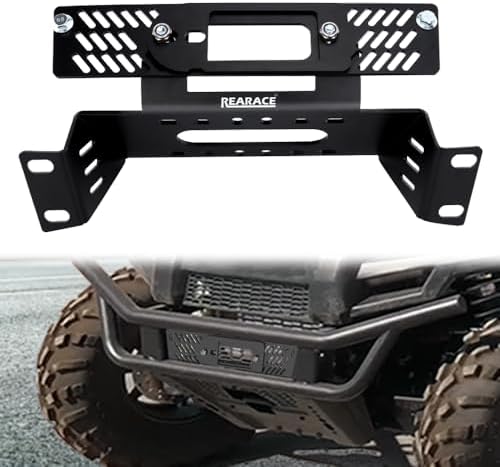
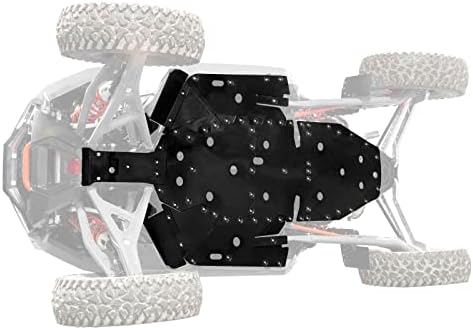
SHOP THE COLLECTIONGiven the weight and cost of the battery pack, a heavy-duty aftermarket skid plate is a crucial modification for any serious EV off-roader. While UHMW plastic is lightweight and slick, 1/2-inch thick UHMW or marine-grade aluminum offers the best protection against sharp rocks that could puncture the battery casing. For a complete buyer’s guide, check out our ultimate UTV skid plate guide. Additionally, upgrading to a high-quality, lightweight tire with an aggressive tread pattern can help offset some of the vehicle’s added weight, improve flotation, and reduce the rotational mass that the electric motor must spin. While home charging on a standard 110V outlet is convenient, upgrading to a 240V Level 2 EV charger cuts recharge times down significantly, and portable solar generators are becoming popular among overlanders for opportunistic midday charging.
Conclusion: The Quiet Trail Ahead in 2026
The Electric Revolution: Polaris Ranger EV and DRR EV Safari in Off-Road Play is here, and it offers a compelling, high-performance alternative to traditional gas-powered machines. The Polaris Ranger EV provides a silent, powerful platform for utility and work, while the DRR EV Safari delivers an agile, torque-filled experience for the recreational ATV enthusiast. The instant torque, low maintenance, and quiet operation of these vehicles are not just novelties; they are genuine performance advantages that are redefining what it means to be an off-road enthusiast. As battery chemistry continues to advance and solid-state batteries loom on the horizon, the range and power of these electric beasts will only grow, ensuring a bright and quiet future for off-road play. Embrace the silence, feel the torque, and join the electric revolution.
References
Community Reference & Authority Resources:
- [1] Field & Stream – Polaris Ranger XP Kinetic UTV, Tested and Reviewed
- [2] The Drive – 2024 Polaris Ranger XP Kinetic Review
- [3] DRR USA – EV Safari 4×4 | Adult Electric ATV
- [4] Tropical Mobility – EV Safari 4×4
- [5] SuperATV Off-Road Atlas – The Problem with Electric UTVs (and Why You Should Get One Anyway)
- [6] Polaris Ranger XP Kinetic Official Specs


🔍 Explore More: See all guides for Honda Pioneer.