
- 2026 NEW-UNIVERSAL TRAILER TONGUE LOCK – Most returns are due to the coupler not fitting properly. Most locks only fit s…
- MAXIMUM THEFT PROTECTION & HEAVY-DUTY STEEL CONSTRUCTION – Engineered for ultimate security, our trailer hitch lock fea…
- SUPERIOR LOCKING & WEATHER-RESISTANT DESIGN– Equipped with a reliable and pick-resistant puck lock that uses durable cur…
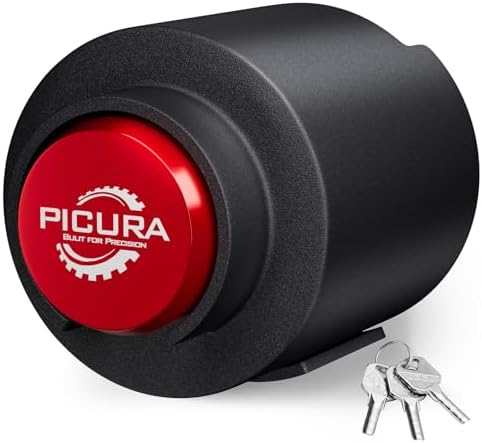
- PERFECT FIT FOR 2‑5/16″ COUPLERS: Before you park your boat, RV, or cargo trailer for the night, make sure your lock fit…
- HIGH-SECURITY BRASS CORE: Worried about someone picking your lock or using a bump key? Inside this 2‑5/16 trailer lock l…
- HEAVY‑DUTY HARDENED STEEL: Imagine a thief with a crowbar or a grinder going after your trailer hitch. With this trailer…
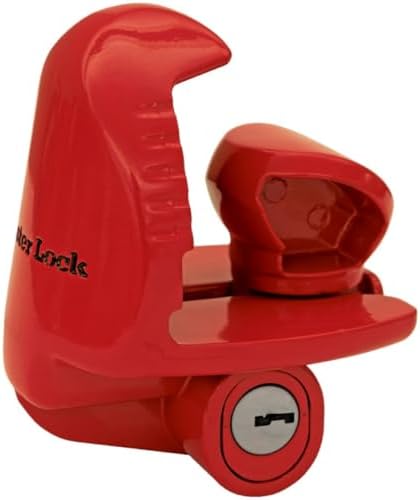
- Coupler Lock,Universal
- Bright red finish discourages thief’s from messing with your trailer
- Advanced locking mechanism resists picking and prying
Choosing the right trailer is just as critical as choosing the right side-by-side. Whether you are hauling a compact two-seater to a local trail or towing a beastly four-seater across state lines, the debate of single axle vs tandem axle trailer for side by side is one every enthusiast faces. In 2026, trailer technology has advanced, offering better suspension and braking systems, but the core physics remain the same. Your decision will impact your safety, your wallet, and your peace of mind on the road.
For many, the allure of a cheaper, lighter single axle trailer is strong. However, experienced haulers often swear by the stability of a tandem setup. This guide digs deep into the data, real-world performance, and safety statistics to help you make an informed decision that protects your expensive off-road investment.
Single Axle Trailers: The Agile Contender
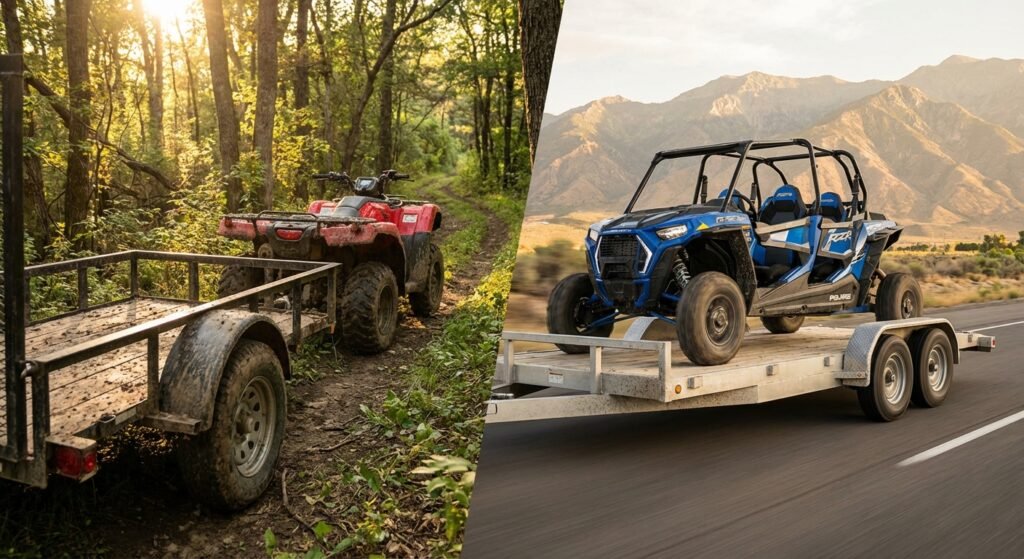
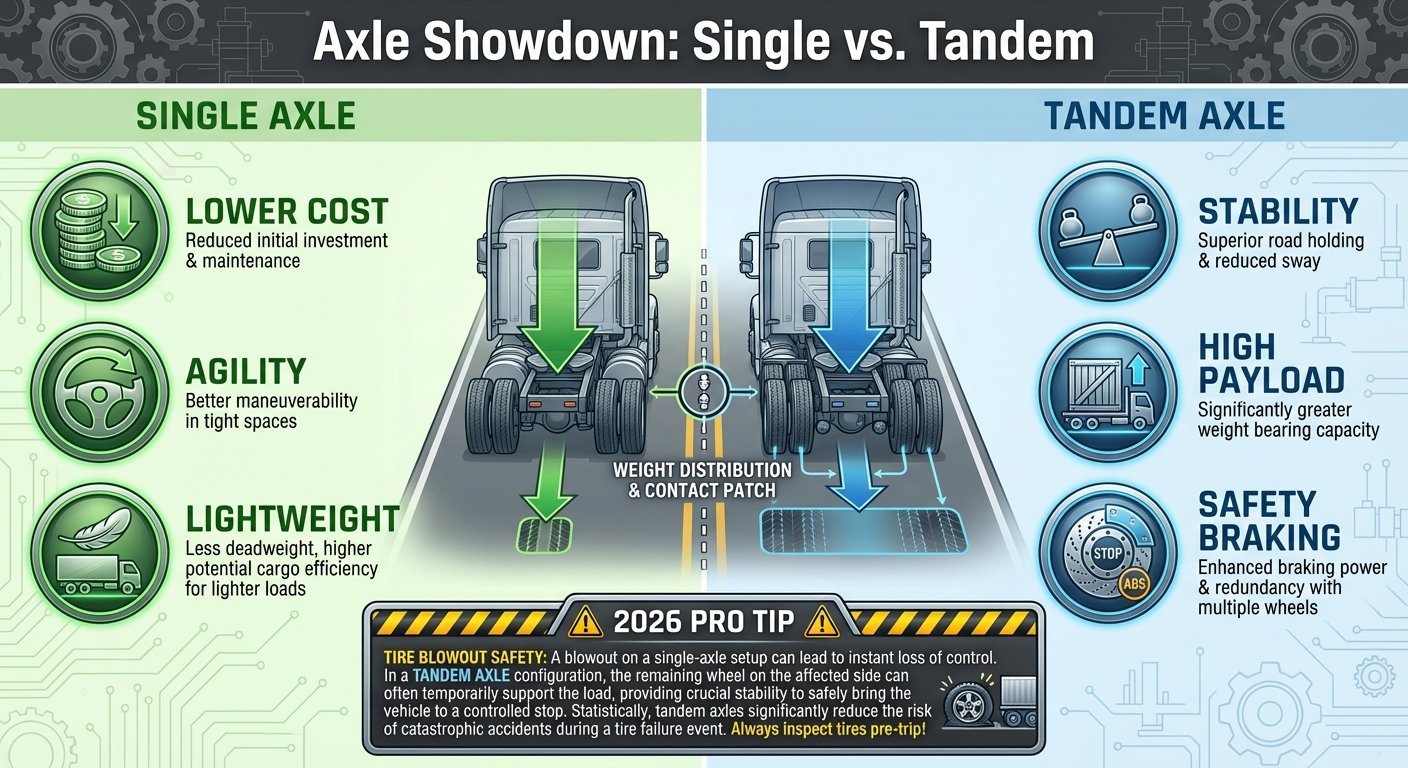
Single axle trailers are the most common entry point for new UTV owners. They typically feature one set of wheels centered on the frame. These trailers are lightweight, easy to maneuver by hand, and significantly cheaper to purchase and maintain.
Check out our off-road collection Amazon products
The primary advantage of a single axle is its agility. If you have a tight driveway or need to navigate a small parking area at a trailhead, a single axle trailer turns on a dime. For owners of smaller machines like the Honda Pioneer 500, a single axle is often perfectly sufficient and helps keep fuel economy high.
However, they come with limitations. The most glaring issue is safety during a tire failure. If a tire blows out on a single axle trailer, you lose stability instantly, which can lead to a dangerous sway or a complete loss of control. Additionally, they tend to bounce more on rough roads, transferring that shock directly to your side-by-side.
https://www.youtube.com/watch?v=AvcoOv24Eek
Pros and Cons of Single Axle Trailers
When weighing your options, consider these key factors:
- Cost Efficiency: Lower upfront price and only two tires to replace.
- Maneuverability: Easier to back up and move by hand in the garage.
- Weight: Lighter curb weight allows for towing with smaller SUVs.
- Payload Limit: Generally capped at 2,990 lbs GVWR (Gross Vehicle Weight Rating).
- Bounce Factor: A rougher ride for your cargo on uneven terrain.
Tandem Axle Trailers: The Stability King
Tandem axle trailers utilize two axles placed close together, offering four wheels on the ground. This design drastically changes the towing experience. The weight of your side-by-side is distributed across four tires, which reduces the load on each individual tire and improves tracking on the highway.
The standout feature of a tandem axle trailer is its resistance to sway. When a large semi-truck passes you on the interstate, a tandem trailer tracks straight, whereas a single axle might dance around behind you. This stability is crucial for long-distance hauls or when towing heavier four-seat UTV models.
Furthermore, tandem axles almost always come equipped with trailer brakes on at least one axle (and often both in 2026 models). This additional stopping power is a massive safety upgrade, saving wear on your truck’s brakes and preventing jackknife situations during panic stops.
https://www.youtube.com/watch?v=5op2vU0nVhC
| Feature | Single Axle Trailer | Tandem Axle Trailer |
|---|---|---|
| Stability | Low (Prone to sway) | High (Tracks straight) |
| Payload Capacity | ~1,500 – 2,000 lbs | ~3,500 – 5,500 lbs+ |
| Tire Safety | High Risk (Blowout = Crisis) | Safe (Can limp on 3 tires) |
| Brakes | Rarely included | Standard equipment |
| Cost | $1,500 – $3,000 | $4,000 – $7,000+ |
Safety Statistics and 2026 Insights
Recent data from 2025 towing safety reports indicates that tandem axle trailers reduce the risk of sway-related accidents by over 45% compared to single axle setups when towing loads exceeding 2,500 lbs. For side-by-side owners, this is a critical statistic because modern UTVs are getting heavier, with many accessorized 4-seaters pushing past the 2,000 lb mark.
Check out our off-road collection Amazon products
“You never regret buying too much trailer, but you will always regret buying too little when you’re white-knuckling it down the highway in a crosswind.”
Another factor often overlooked is the redundancy factor. If you are 50 miles from civilization on a dirt road and you blow a tire on a single axle trailer, you are stranded until you change it. On a tandem axle, you can often limp the trailer to a safe spot or a service station on the remaining three tires. This peace of mind is worth the extra cost for many serious off-roaders who venture deep into remote areas.
https://www.youtube.com/watch?v=Srz7O7uLT04
Which One Should You Buy?
The decision ultimately comes down to your specific needs. If you own a smaller machine like a Polaris RZR Trail or a Honda Pioneer 500, and you mostly tow short distances (under 50 miles) on back roads, a single axle trailer is a practical and economical choice. It saves space in your driveway and money in your bank account.
However, if you own a larger machine like a Can-Am Maverick X3 Max or a Honda Pioneer 1000-5, a tandem axle is virtually mandatory. The weight of these machines often nears the max capacity of a single axle trailer, leaving no room for error. If you plan to drive on interstates, haul extra gear like fuel and camping supplies, or travel long distances to ride, the stability and braking power of a tandem axle trailer are non-negotiable necessities.
Remember to always check your tow vehicle’s rating. A tandem trailer is heavier, so ensure your truck or SUV can handle the combined weight of the trailer and the UTV.
Useful Resources
For more information on vehicle specs and towing guides, reliable sources are key to safety.
- Honda Powersports Official Site
- Polaris Off-Road Official Site
- NHTSA Towing Safety Guide
- Can-Am Off-Road Official Site
- TrailersPlus Towing Education
🔍 Explore More: See all Wild Testing guides for single axle vs tandem axle trailer for side by side.
Check out our off-road collection Amazon products

- 【PROFESSIONAL 10,000LB BREAKING STRENGTH】 – Engineered for the toughest hauling jobs, this 4-pack of 2″ x 27ft ratchet t…
- 【HIGH-VISIBILITY FLUORESCENT GREEN WEBBING】 – Features bright fluorescent green polyester webbing that provides excellen…
- 【CORROSION-RESISTANT ZINC-PLATED RATCHET】 – The heavy-duty ratchet mechanism is zinc-plated, providing superior protecti…
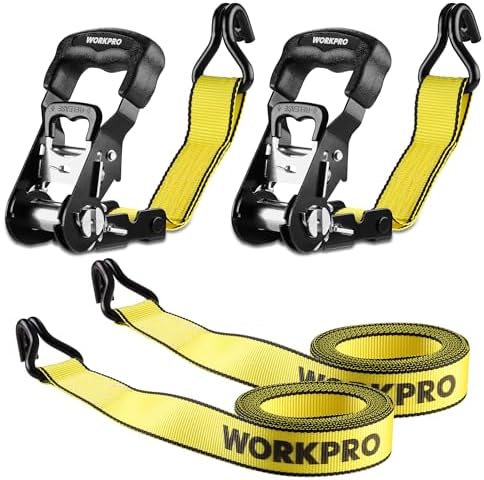
- Heavy-Duty Ratchet Tie Down Straps You Can Trust – Ratchet Tie Down Straps are built from premium polyester webbing and …
- Secure, Stable & Safe Cargo Control – These Ratchet Straps feature locking J-hooks with PVC coating to prevent slipping …
- Easy One-Handed Operation – Ergonomic rubber-coated ratchet handle provides smooth tightening and fast release. Simple t…

- [SPECS]: Package included:4 Pack 2 Inch x 10 Feet Car Tie Down Straps For Trailers With Safety J-Hooks & Clips & 2″ x 38…
- [Heavy duty & Safty]: The heavy duty car tie down straps kit come with a breaking strength of up to 10,000 pounds, it pr…
- [Wide Application]: This multi-functional & Professional car hauler straps features buckles and is ideal for transportin…