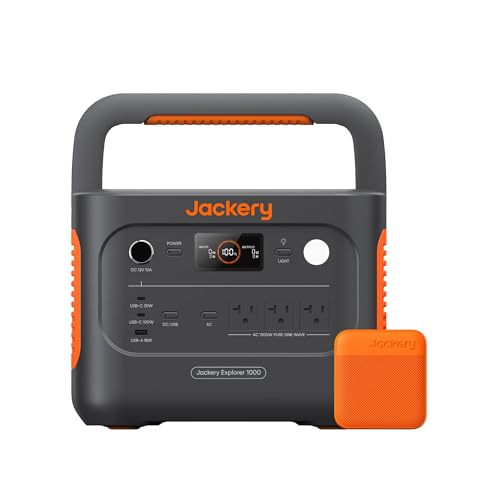






When it comes to Jackery Explorer 1000 v2 portable power station for multi day UTV trips, getting the right details matters. Jackery Explorer 1000 v2 Portable Power Station
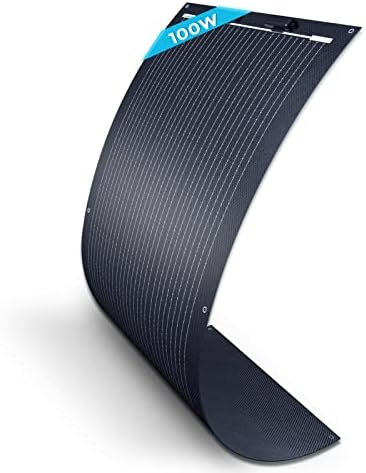
Jackery SolarSaga 100W v3 Solar Panel
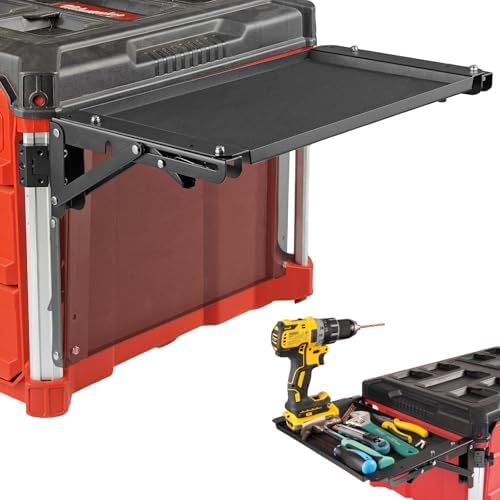
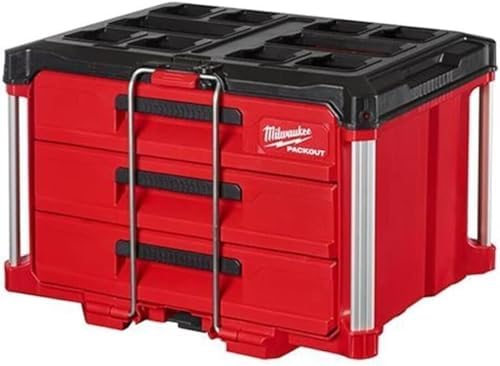
Milwaukee PACKOUT 2-Drawer Tool Box
Multi-day UTV expeditions push gear to its absolute mechanical limits. Standard portable power stations fail under violent off-road travel due to internal weld shearing, catastrophic rollover physics, and micro-silt electrical arcing. This guide delivers the exact mechanical failure points, the precise hardware stack required to solve them, and the specific torque specs and drivetrain zoning rules needed to integrate a purpose-built power architecture without compromising vehicle performance.
Engineering the Trail-Validated Power Architecture for Extended Off-Road Autonomy
The Technical Reality: Trail-Induced Failure Sequences & Environmental Breaches
High-Frequency Vibration & The NMC Cell Tab Shear
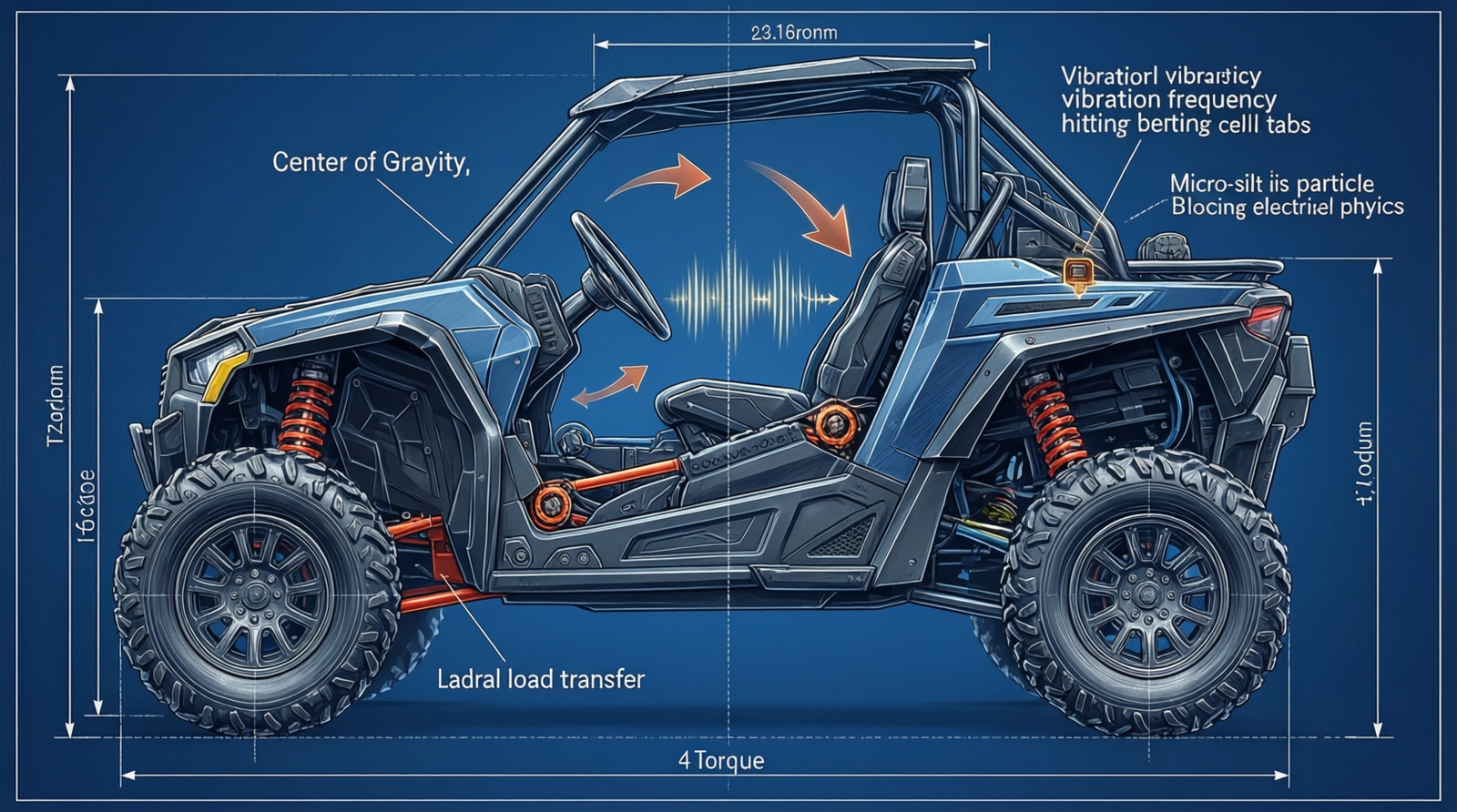
UTVs traversing washboard roads generate sustained vertical oscillations in the 10Hz–25Hz range. This resonant frequency induces metal fatigue at internal cell tab welds, physically shearing nickel connecting strips and creating open circuits or massive internal resistance spikes.
The violent chatter of a washboard road literally shakes cheaper batteries to death. Your battery management system might show a full charge on the screen, but the internal welds will snap, leaving you with a completely dead brick when you need to power your camp.
Lateral Load Transfer & The 25-Degree Rollover Breach
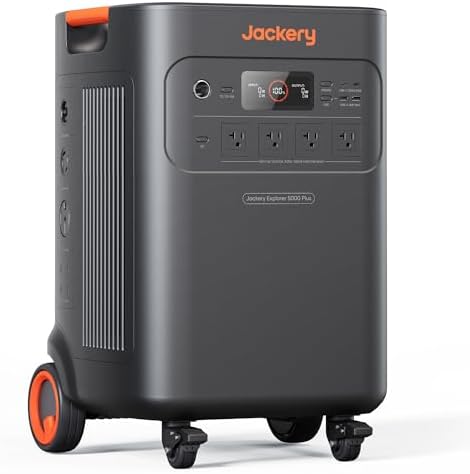
A 1000Wh power station weighs approximately 23.8 lbs. When stacked high in a UTV bed, it raises the vehicle’s overall Center of Gravity by 2.5 to 4 inches. According to lateral load transfer formulas, increasing height directly increases weight transfer to outside wheels during cornering or side-hilling. On a 25-degree slope, this elevated CoG breaches the static rollover threshold of narrow-track UTVs.
Stacking heavy gear high up makes your rig dangerously top-heavy. When you hit a steep side-hill or take a corner too fast, that extra elevated weight shifts to the outside wheels and can cause a catastrophic lateral tip-over.
Micro-Silt Ingress & Creepage Distance Arcing
Check out our off-road collection Amazon products
Off-road environments contain fine silica silt smaller than 0.05mm. When silt infiltrates unsealed AC/DC inverter ports, it compromises the dielectric strength of the air gap. Under high-draw conditions pulling 1200W+, the silt creates a conductive path, reducing creepage distance and resulting in micro-arcing, melted port housing, and permanently shorted inverter boards.
Fine desert dust gets inside open AC outlets and conducts electricity when you plug in a high-draw appliance. That spark will permanently melt your power station’s internal motherboard before you even reach camp.
The Core Gear Architecture: Validated Overland Solution Stack
Core Power: LiFePO4 Prismatic Architecture
The unit utilizes Lithium Iron Phosphate Prismatic Cells, offering vastly superior mechanical rigidity and vibration resistance compared to cylindrical cells, alongside a 4,000+ cycle life to 80% capacity. It delivers 1070Wh capacity with 1500W continuous pure sine wave output and features a V-0 flame retardant PC+ABS shell with internal potting and UN38.3 drop certification.
Prismatic cells are solid blocks that don’t shake apart on rocky trails. It provides enough clean power to run your fridge and cooktop simultaneously without tripping, and the tough, fire-retardant shell survives being bounced around in the back of your rig.
Shatterproof Solar Integration
This panel features ETFE-coated semi-flexible construction, a shatterproof polycarbonate front, and an IP68 waterproof rating. Cheap glass-fronted solar panels shatter the first time your front tires throw a rock at them, creating dangerous glass shards. This flexible panel bends and survives rock strikes, keeping your battery charged without turning into a laceration hazard.
Silt-Proof Storage & Securement
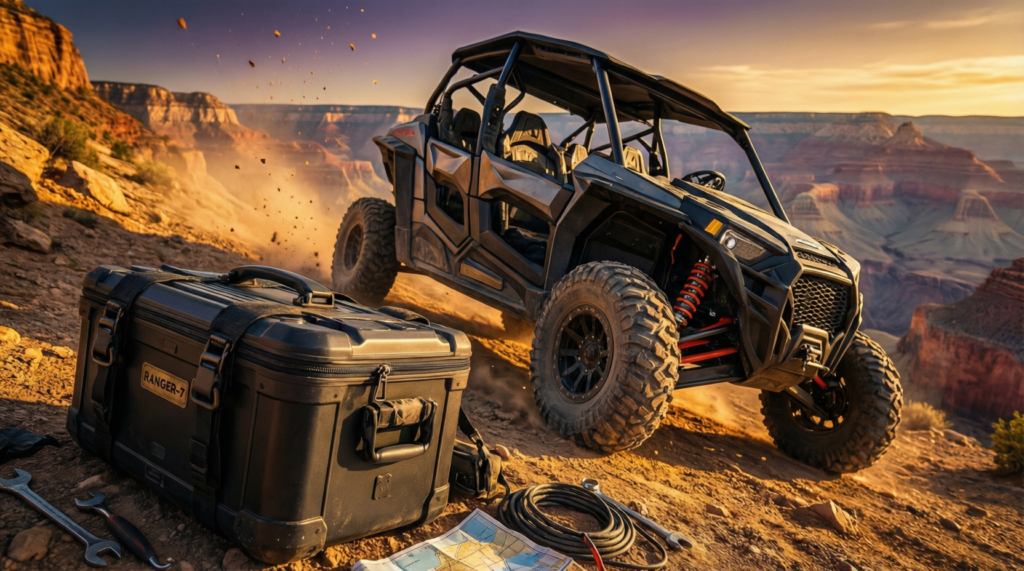
This system features integrated weather seals equivalent to IP65 when closed, paired with 500 lbs WLL retractable ratchet straps. Dropping a hard 24lb battery directly onto a plastic UTV bed will crack the bed’s mounting ribs after a few hundred miles of bouncing. This heavy-duty case seals out fine dust and spreads the impact load so your bed floor stays intact.
Navigation & Comms Ecosystem Upgrades
Navigation relies on a sunlight-readable multi-band GNSS display preloaded with OHV routing. Satellite comms utilize a lightweight two-way texting messenger with improved satellite acquisition. The upgraded screen cuts through harsh sun glare so you can actually read your maps, and the lighter satellite messenger keeps you connected in deep canyons without adding unnecessary bulk to your dash.
Recommended Insights From Our Guide Library:
- Honda Pioneer Over landing Guide: UTV Setup, Gear for outdoor
- UTV Glamping Accommodations: Elevate Your Off-Road Adventures – Pioneer Honda Lovers
- Portable Power: Keeping Your Gadgets Charged on Remote ATV Trips – Pioneer Honda Lovers
- Unleash the Power: Seamless Portable Power Station Integration for Your UTV – Pioneer Honda Lovers
- Outdoor Movie Setup with UTV Power: Your Portable Cinema Under the Stars – Pioneer Honda Lovers
The Technical Setup Blueprint: Mounting, Zoning & Drivetrain Constraints
Universal Bed Securement: Fasteners, Torque & Vibration Isolation
Use stainless steel shoulder bolts through the bed floor, backed by large fender washers and Nyloc lock nuts. Mandatory vibration isolation requires a half-inch thick closed-cell neoprene pad between the storage case and the UTV bed.
| Fastener Size | Thread Pitch | Exact Torque Specification |
|---|---|---|
| 1/4″-20 UNC | Metric/Imperial Hybrid | 7–9 ft-lbs |
| 5/16″-18 UNC | Metric/Imperial Hybrid | 15–18 ft-lbs |
Standard nuts vibrate loose on the trail, but Nyloc nuts stay tight. However, if you crank your torque wrench too hard, you will strip the thin aluminum or tear the plastic bed. The rubber neoprene pad acts as a shock absorber, stopping the battery case from hammering and cracking your bed floor over high-frequency trail chatter.
CVT Architecture Zoning: Polaris RZR Pro XP & Can-Am Maverick X3
The power station must be mounted at least six inches away from CVT intake ducting to maintain belt temperatures below 180°F. Trailside tooling requires a CVT Clutch Spreader Tool to compress the primary clutch spring force, utilizing 8mm/10mm flange bolts or T30/T40 Torx fasteners.
CVTs need massive airflow to keep the drive belt from melting. If you block the vent with your battery, the belt glazes and snaps under heavy load. If it does snap, you need the proper spreader tool to fight the heavy clutch spring, because prying it with a screwdriver will destroy the clutch sheave and strand you.
Check out our off-road collection Amazon products
DCT Architecture Zoning: Honda Pioneer 1000 & Talon
The compact bed footprint requires securement via integrated D-rings. Solar charging cables must never route near the DCT wiring harness. Trailside work focuses on 10mm, 12mm, and 14mm flange bolts, plus 8mm Allen fasteners for skid plates.
DCTs rely on sensitive electronics rather than belts. Because the bed is tiny, you must strap the battery down tight to the D-rings so it doesn’t slide. More importantly, keep your charging cables away from the transmission wires, or electrical interference will cause your UTV to mis-shift or throw sensor codes.
Forum-Validated Dust & Port Mitigation Protocols
If the unit lacks built-in silicone flaps, seal all unused ports with high-temp silicone caps or heavy-duty tape before trail deployment. Fine Moab or Glamis dust will grind into open 110V contacts and cause an electrical short when you plug in a device. Taping them up or using silicone caps takes two minutes and saves your inverter board from melting down in the desert.
Field Verdict & Operational ROI
Preventing Catastrophic Trailside Failures
The validated stack directly neutralizes the physical threats of the trail. Prismatic cells eliminate tab shear from washboard vibrations. Low-profile mounting keeps the Center of Gravity low, preventing lateral rollover breaches. Sealed storage and port-taping protocols completely block the micro-silt ingress that causes inverter arcing.
By respecting the physics of your UTV and the electrical realities of the trail, this setup protects your vehicle’s physical architecture and ensures uninterrupted multi-day expedition viability.
The Exact Moment of Truth
You are three days deep into the backcountry, parked on a 15-degree incline, and the sun has just dropped behind the canyon rim. The temperature is plummeting. You reach over, plug your appliances into the Jackery Explorer 1000 v2 Portable Power Station, and hit the power button. The pure sine wave inverter hums to life instantly—no arcing, no error codes, no dead cells. In that exact moment, you aren’t just camping; you are reaping the reward of engineered preparation. This post was about transforming a fragile consumer battery into a rugged, trail-proof power plant, ensuring that when the trail gets violent, your power stays perfectly still.
🔍 Explore More: See all Wild Testing guides for Jackery Explorer 1000 v2 portable power station for multi day UTV trips.
Check out our off-road collection Amazon products