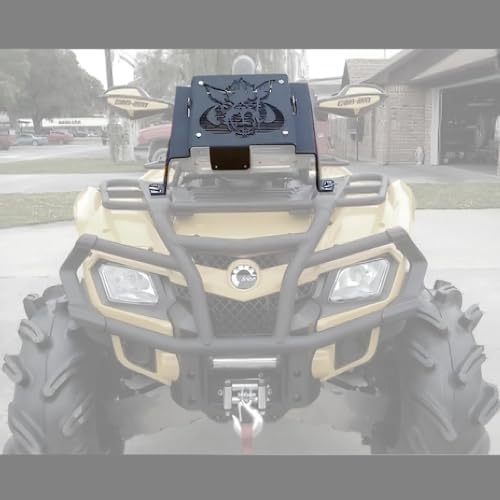
- Black powder coat finish.
- Kits include additional hose, mounting brackets, and all hardware.
- Keeps radiator out of the mud.

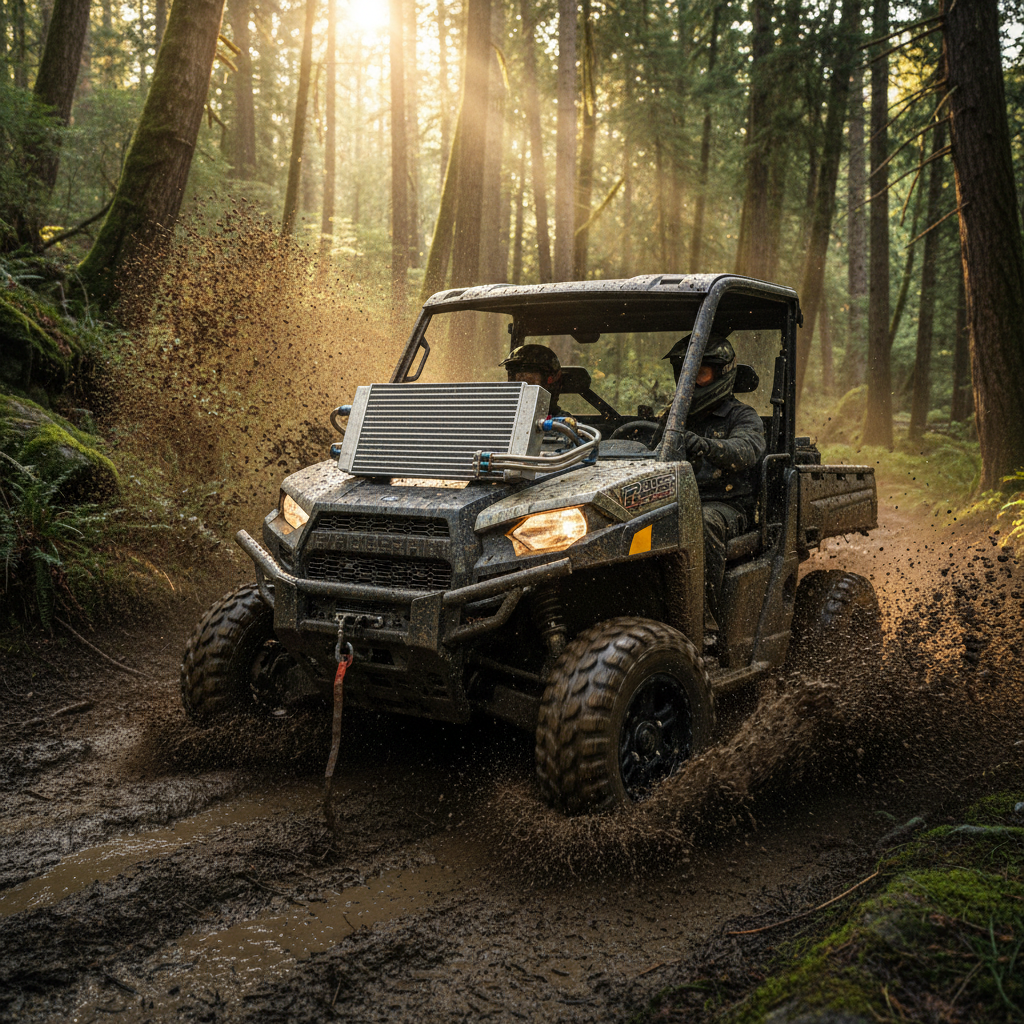
- Relocates radiator to in front of your handlebars
- Protects radiator with 1/8” steel grille and plating
- Maintains excellent airflow for your radiator

- Relocates radiator to in front of your handlebars
- Protects radiator with 1/8” steel grille and plating
- Maintains excellent airflow for your radiator
Alright folks, let’s talk shop. 🤠
As a die-hard Honda Pioneer owner, I’ll be the first to admit our machines are tough as nails.
But my guiding principle has always been “respect all rigs,” and I know a ton of you in our off-road family swear by the Polaris Ranger.
We see you out there on the trails, and we see the common issues you face.
One of the biggest conversations that comes up around the campfire is engine temperature and that pesky stock radiator placement. 🔥
So, today, we’re putting brand loyalty aside and diving into one of the most vital upgrades you can make for your Ranger: relocating the radiator.
The Root of the Problem: Why Your Ranger Gets Hot Headed
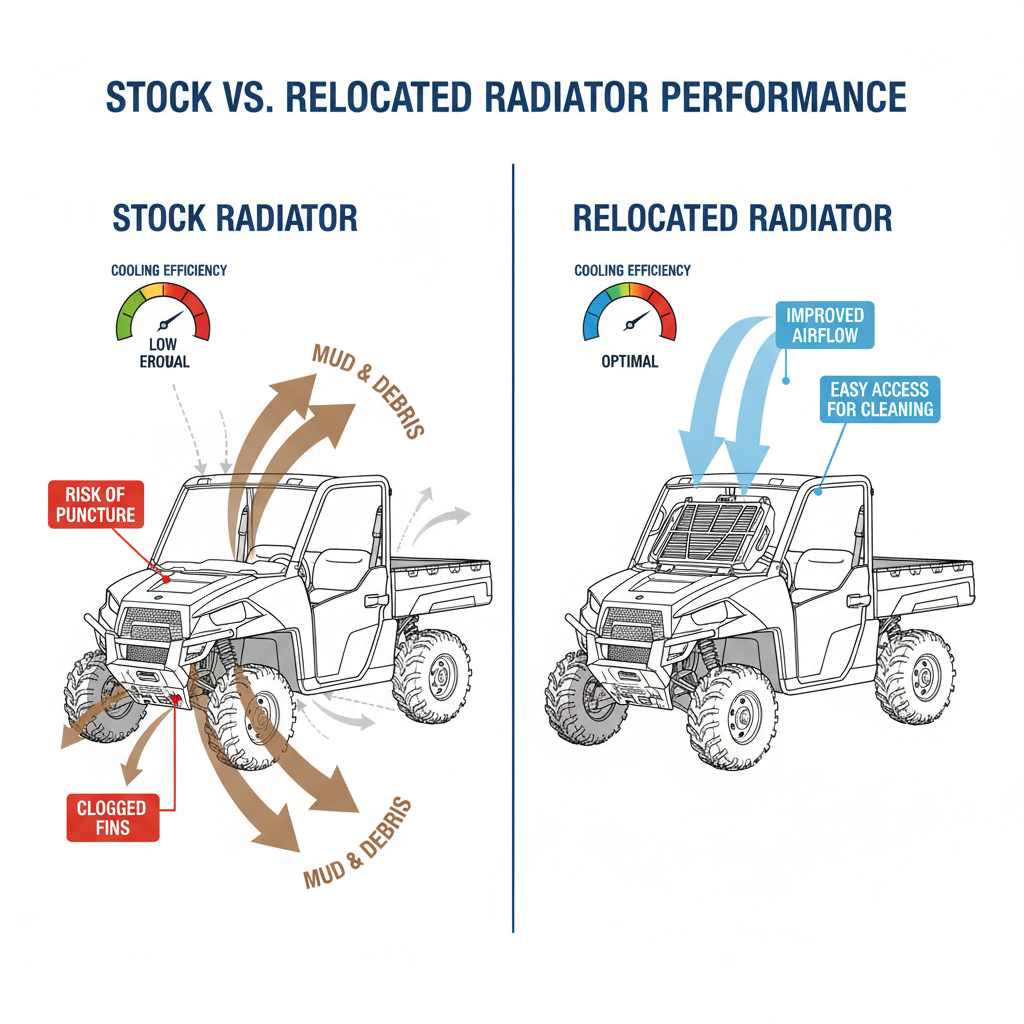
The Polaris Ranger is a workhorse, but its Achilles’ heel for mud enthusiasts is the low-mounted factory radiator.
It’s positioned right in the line of fire for everything your front tires kick up: mud, water, sticks, and rocks. 😬
This creates a perfect storm for disaster.
Research from off-road engineers suggests that a radiator even partially clogged with mud can lose up to 60% of its cooling efficiency.
Once those delicate cooling fins are packed with thick, wet mud, airflow essentially stops.
The mud then bakes on, turning into a solid brick that’s nearly impossible to clean out on the trail.
This leads to the engine overheating, which can cause limp mode, catastrophic engine damage, and a very short ride back to the truck. 🚚
“An ounce of prevention is worth a pound of cure, especially when that cure involves a new engine.”
It’s not just about mud, either.
The low position makes the radiator highly susceptible to punctures from sticks and debris, a risk that increases tenfold when you’re navigating dense woods or rocky terrain.
Check out our off-road collection Amazon products
The Ultimate Solution: Moving On Up!
The fix is both elegant and effective: move the radiator higher up and out of the muck!
A radiator relocation kit moves the unit to a higher position, often under the hood or onto the front hood area itself.
This simple change has a massive impact on performance and reliability.
First, it guarantees a steady supply of clean, cool air instead of recirculated hot air from under the hood.
Second, it keeps it almost completely free from mud and water, allowing it to work as intended.
Third, cleaning becomes a breeze; a quick spray with a hose is all it takes to keep the fins clear. 💧
Finally, it protects your investment from costly trail damage.
It’s one of the most functional and logical upgrades for anyone who plans on tackling more than a gravel road.
Many kits available in 2026 are built from heavy-duty 12-gauge steel and are powder-coated for extreme durability against the elements.
https://youtube.com/watch?v=5O18FTSkQyM
Choosing Your Relocation Kit: Not All Steel is Created Equal
When you start shopping, you’ll see a few key players in the market, with brands like High Lifter and SuperATV dominating the space.
While most kits achieve the same goal, they differ in materials, design, and included hardware.
It’s crucial to pick one that is specifically designed for your Polaris Ranger model and year to ensure a proper fit.
Here’s a quick-glance table to help you compare your options.
| Feature | Standard Duty Kit | Heavy Duty Kit | Premium Custom Kit |
|---|---|---|---|
| Material | 14-Gauge Steel | 12-Gauge Steel | Aluminum or Stainless Steel |
| Key Feature | Basic Relocation | Wrinkle Black Powder Coat | Integrated LED Light Bar Mounts |
| Price Point | $$ | $$$ | $$$$ |
| Best For | Casual Trail/Mud Rider | Serious Mud Bogger | The Show & Go Rider |
Consider how hard you ride when making your choice.
For most users, a heavy-duty steel kit offers the perfect balance of strength and value.
The Big Question: DIY or Call a Pro? 🛠️
This is a common crossroads for UTV owners.
The good news is that most radiator relocation kits are designed for user-friendly installation with detailed instructions.
If you’re comfortable with basic hand tools and turning a wrench, this is a very achievable weekend project.
Doing it yourself can save you hundreds in labor costs and gives you intimate knowledge of your machine’s cooling system.
“There’s no greater satisfaction than installing an upgrade yourself and feeling the difference on the next ride.”
However, it’s not just a simple bolt-on job.
Be prepared, as installation requires draining coolant, disconnecting hoses, and sometimes cutting into the factory plastics under the hood for a proper fit—a step that is permanent.
Check out our off-road collection Amazon products
If you’re not confident in your abilities, or if the thought of cutting into your Ranger’s bodywork makes you sweat, there’s no shame in taking it to a trusted power sports shop.
Your DIY Toolkit Essentials
If you’re tackling this yourself, you’ll want to have a solid set of tools ready to go.
- Socket and Wrench Set
- Coolant Drain Pan
- Hose Clamp Pliers
- Rotary Tool or Jigsaw (for plastic trimming)
- Drill and Bits
- Funnel for refilling coolant
Pro tip: Get a friend to help! An extra set of hands makes wrestling the radiator and brackets into place much easier. 🤝
https://www.youtube.com/watch?v=kYI2B5z4I5Y
https://www.youtube.com/watch?v=sO70y54hwjA
Heads-Up: Potential Downsides & Considerations
While a radiator relocation is overwhelmingly positive, there are a couple of things to keep in mind.
Some kits, by design, move the radiator into a position that can slightly obstruct your forward view.
It’s usually not a major issue, but it’s something to be aware of.
Furthermore, some users on forums like RangerForums.net report slightly higher temps during sustained high-speed runs due to altered aerodynamics, but this is rare and usually less of an issue than a clogged radiator.
Finally, the most critical part of the installation is properly refilling and bleeding the coolant system.
Trapped air in the longer hoses can create an airlock and cause the exact overheating issue you’re trying to prevent, so take your time with this step! 📌
I can’t stress this enough: protecting your cooling system is paramount to the health of your UTV’s engine, a sentiment echoed by experts at publications like ATV Rider.
Investing in a quality kit from a retailer like Everything Polaris Ranger or checking out the official options on the Polaris website is your first step.
The Final Verdict
For any Polaris Ranger owner who loves mudding, works on a dusty farm, or simply demands the most from their machine, a radiator relocation kit isn’t just an accessory; it’s essential insurance.
It solves a core design vulnerability and unlocks the full potential of your Ranger in the harshest conditions.
So, take it from a Honda guy—this is one upgrade you won’t regret.💡
Stay safe, ride hard, and keep it cool out there!
🔍 Explore More: See all Wild Testing guides for relocating radiator polaris ranger.
Check out our off-road collection Amazon products
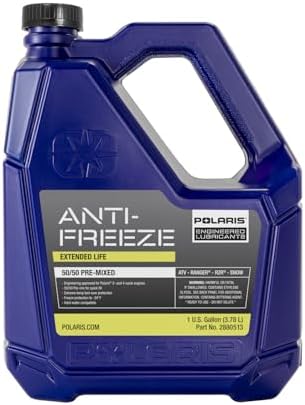
- Advanced Formula: Polaris 50/50 Premix Extended Life Antifreeze is specifically formulated for Polaris snowmobile and of…
- Outstanding Protection: Our 50/50 Premix Extended Life Antifreeze is specifically engineered for Polaris 2- and 4-cycle …
- Quick Fill: The 50/50 Premix formula is safe for use with hard water and allows for quick fill so you can spend less tim…

- OUR CYCLEMAX PACK CONTAINS: Four Quarts for Yamaha Yamalube Pre-Diluted Anti-FreezeACC-YAMAC-BL-32 along with a Convenie…
- QUALITY YOU CAN COUNT ON: Includes premium quality products to provide exceptional performance and protection for your Y…
- COMPATIBILITY AND CONVENIENCE: A specially-formulated ethylene glycol based antifreeze, with a 60/40 ratio coolant/water…

- Antifreeze/Coolant contains the correct dilution and the necessary additives to prevent corrosion and inhibit cavitation…
- Long-life, 5-year formula specially formulated for BRP
- Superior heat transfer