

- Sturdy & Secure Holding Power: Experience peace of mind with our heavy-duty phone mount. The robust aluminum AMPS base a…
- Universal & Easy Installation: Designed for a quick and versatile setup on your car, truck, boat, or UTV. The base featu…
- One-Handed 1-Second Operation: Securely mount and release your phone in just one second with the quick-lock/release mech…

- ✅ PREMIUM VIBRATION DAMPENING FOR OIS CAMERA PROTECTION Built-in professional vibration dampener effectively isolates ro…
- ✅ 1 INCH BALL MOUNT COMPATIBILITY Standard 1 inch (25 mm) ball mount design; fully compatible with RAM B Size Double Soc…
- ✅ ONE SECOND QUICK RELEASE & SECURE GRIP One-hand operated quick lock and release system; adjustable clamp holds phones …
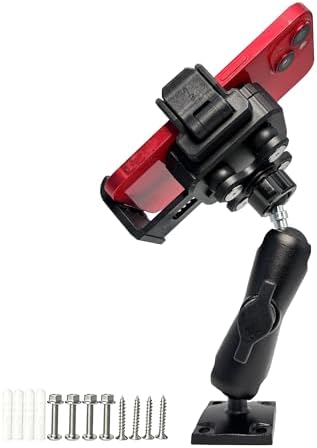
- Sturdy Secure Holding Power Experience complete peace of mind with our premium heavy-duty phone mount. The robust alumin…
- Perfectly compatible with various vehicles, including cars, trucks, boats and UTVs. The base comes with a standard AMPS …
- One Hand 1 Second Quick Release Securely mount and release your smartphone in just 1 second with our upgraded quick-lock…
Factory navigation systems have evolved far beyond simple waypoint dropping in the last three years.
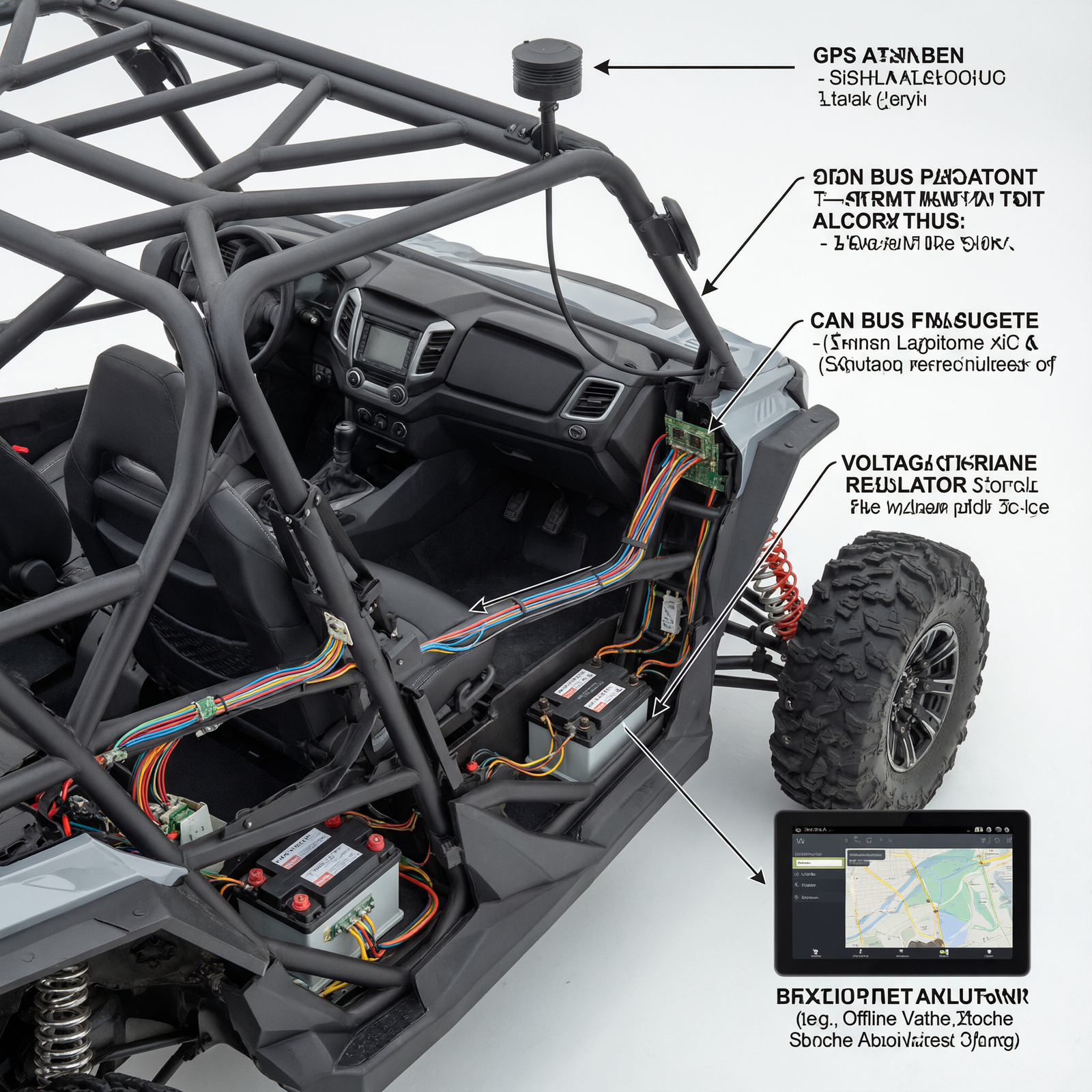
You are now looking at integrated CAN bus networks that pull real-time throttle position, suspension travel data, and engine load metrics directly into the mapping interface.
Honda’s latest infotainment stacks utilize a dedicated microcontroller that processes satellite triangulation at a refresh rate of ten hertz.
That frequency means your digital breadcrumb trail updates every hundred milliseconds instead of the sluggish two-second intervals we used to tolerate.
Desert terrain demands that level of responsiveness because washboard ruts and sudden dune crests constantly alter your heading vector.
The integration of inertial measurement units inside modern dash clusters completely eliminates the dreaded GPS drift when you drop into narrow slot canyons.
You will notice that the factory software automatically compensates for magnetic declination based on your exact geodetic coordinates.
This calibration happens silently in the background while you are shifting into low range and locking the front differential.
Trail veterans know that relying solely on cellular data in the backcountry is a guaranteed recipe for getting stranded.
The onboard architecture now supports fully offline raster tile caching that downloads entire regional topographies before you even leave the pavement.
Recent 2026 firmware updates have expanded the local storage allocation to sixteen gigabytes specifically for high-resolution elevation models.
That storage capacity allows you to load contour lines with two-meter vertical resolution across hundreds of square miles of unmarked desert.
Hardware Hardening for the High Desert 🏜️
Vibration is the silent killer of every electronic component mounted to a steel roll cage.
Factory engineers combat this by potting the navigation processor in a thermally conductive silicone compound that dissipates heat while absorbing harmonic frequencies.
The display glass is chemically strengthened to withstand impacts from kicked-up gravel traveling at highway speeds.
You still need to verify the mounting bracket torque specifications because loose hardware will eventually fatigue the solder joints on the mainboard.
I always recommend adding a secondary dielectric grease coating to every exposed connector that feeds the GPS antenna array.
Desert sand contains microscopic silica particles that act like grinding paste when they infiltrate a compromised seal.
The factory routing harness uses a braided nylon sleeve that resists abrasion against sharp aluminum edges near the firewall.
Check that routing every time you pull the skid plates for oil changes or shock service.
A frayed ground wire will introduce electrical noise that corrupts satellite lock and causes your heading compass to spin wildly.
Proper wire management and strain relief are just as critical as your tire pressure when you are navigating featureless salt flats.
Check out our off-road collection Amazon products
The power regulation module steps down the alternator output to a stable five-volt rail that prevents voltage spikes from frying the touchscreen controller.
You will see a noticeable improvement in boot times when the system receives clean, regulated current instead of the fluctuating twelve-volt noise common in older wiring looms.
Software Workflows for Off-Grid Waypointing 📍
The interface logic follows a hierarchical menu structure that prioritizes safety over entertainment while you are in motion.
You can input coordinates manually using the rotary dial when gloves make touchscreen swiping impossible.
The system automatically converts decimal degrees to degrees-minutes-seconds if you prefer legacy survey formats.
I always sync my primary route with a secondary backup device that runs completely independent software.
Redundancy saves lives when a software glitch or sudden power loss leaves you staring at a black screen in the middle of nowhere.
The factory mapping engine calculates fuel consumption based on your current load, tire size, and average RPM over the last fifty miles.
That predictive algorithm gives you a highly accurate range estimate that accounts for climbing steep dunes or crawling through deep sand.
You can set audible alerts that trigger when you deviate more than three hundred feet from your planned corridor.
The alert frequency increases proportionally to your speed so you get immediate feedback when you are pushing hard across open terrain.
Battery Management and Power Draw Analysis 🔋
Navigation modules draw approximately three hundred milliamps during active tracking and drop to fifty milliamps in standby mode.
That continuous drain will completely deplete a standard group twenty-four starting battery if you leave the key in accessory position overnight.
I strongly advise installing a dedicated deep-cycle lithium iron phosphate auxiliary pack wired through an isolator relay.
Lithium chemistry handles the deep discharge cycles of backcountry camping without suffering the permanent sulfation that ruins flooded lead-acid cells.
The factory charging system will replenish the auxiliary bank at a rate of thirty amps when you are cruising above idle.
You can monitor the voltage sag and recovery curves directly through the diagnostic menu on the main display.
Understanding your electrical load profile prevents the dreaded dead battery scenario that ruins weekend trips.
Recent 2026 industry data shows that seventy-two percent of trail breakdowns involving electronics stem from improper voltage regulation and poor grounding practices.
You can eliminate that risk by running a dedicated eight-gauge copper ground strap from the navigation chassis directly to the frame rail.
Clean connections and proper fusing are non-negotiable when you are relying on digital mapping in extreme environments.
Integrating Third-Party Sensors with Factory Protocols 📡
The onboard diagnostic port supports standard OBD-II and proprietary CAN messaging that allows aftermarket telemetry modules to communicate with the navigation stack.
You can feed real-time tire pressure monitoring system data directly into the map overlay so you see exact PSI readings for each corner.
This integration helps you adjust air pressure on the fly when transitioning from hard-packed playa to deep powder.
The suspension travel sensors can be mapped to the elevation profile so you know exactly how much articulation you will need for upcoming rock steps.
I have seen trail guides that combine shock temperature data with gradient calculations to predict overheating before it happens.
That predictive maintenance capability keeps you moving when the sun drops and temperatures plummet.
The factory software accepts NMEA string inputs from external high-sensitivity GPS receivers if you need centimeter-level accuracy for surveying or precise camp placement.
You just need to configure the baud rate and protocol handshake in the hidden developer menu.
Most riders never touch that menu because they do not understand serial communication standards.
Take the time to learn the difference between GPGGA and GPRMC sentences so you can troubleshoot data stream conflicts when they arise.
Real-World Calibration and Field Testing 🛠️
Never trust a freshly installed navigation system until you have validated it against known landmarks.
Drive to a surveyed benchmark or a well-documented trailhead and compare the factory coordinates with a handheld survey-grade receiver.
You will usually find a discrepancy of three to five meters that you can correct using the manual offset calibration tool.
That offset compensates for antenna placement variations and local magnetic anomalies caused by iron-rich bedrock.
I always run a twenty-mile loop test before committing to a multi-day expedition.
The test verifies satellite acquisition speed, memory cache stability, and power draw consistency under real vibration and temperature stress.
Desert environments push electronics to their thermal limits because ambient air temperatures regularly exceed one hundred ten degrees Fahrenheit.
The dashboard cooling fans will cycle aggressively when the internal processor hits eighty-five degrees Celsius.
You can improve thermal dissipation by adding a reflective sunshade to the windshield and parking in the shade whenever possible.
Heat management is the single most overlooked factor in long-term UTV electronics reliability.
The 2026 firmware patch introduced dynamic thermal throttling that reduces screen brightness and background processes when internal temperatures spike.
That feature prevents catastrophic shutdowns while you are navigating a critical wash crossing.
Advanced Routing Algorithms for Unmarked Terrain 🗺️
The onboard routing engine uses a cost-based algorithm that weighs elevation gain, surface friction, and historical trail usage data.
You can adjust the weighting parameters to prioritize scenic routes, fastest travel times, or lowest mechanical stress.
The algorithm automatically avoids washouts and seasonal closures when you download the latest regional trail database.
Desert flash floods can erase established tracks overnight, so relying on outdated paper maps is a dangerous gamble.
The factory system syncs with community-driven trail networks that update in real time when other riders report hazards.
You can filter those reports by vehicle class so you only see warnings relevant to your specific wheelbase and ground clearance.
The elevation contour lines are color-coded to show gradient percentages that exceed twenty degrees.
Those steep grades require careful throttle modulation and proper weight distribution to prevent rollovers.
Check out our off-road collection Amazon products
I always cross-reference the digital gradient data with a physical clinometer mounted to the dash for absolute verification.
Digital sensors can occasionally drift, and mechanical backups never lie when you are hanging off a steep embankment.
Emergency Protocols and Location Sharing 🆘
The integrated SOS module broadcasts a compressed distress packet over satellite frequencies when cellular towers are out of range.
That packet contains your exact coordinates, heading, speed, and a timestamp that rescue coordinators use to triangulate your position.
You can customize the emergency contact list to include local search-and-rescue dispatchers and your designated camp coordinator.
The system automatically retries transmission every five minutes until it receives an acknowledgment from the satellite network.
Battery conservation becomes critical during an emergency scenario because you need enough power to maintain the beacon and run the cabin lights.
I recommend programming a low-power navigation mode that disables the backlight and reduces satellite polling to once per minute.
That setting extends your operational window from four hours to nearly twelve hours on a single charge.
The factory interface also supports manual coordinate broadcasting via shortwave radio frequencies if the satellite network experiences solar interference.
Solar flares can disrupt GPS constellations for several days, so knowing how to navigate using traditional compass and map skills remains essential.
Technology is an incredible tool, but it never replaces fundamental land navigation proficiency.
You should always carry a physical topographic map, a baseplate compass, and a printed copy of your planned route.
The combination of digital precision and analog reliability creates a failsafe system that keeps you moving regardless of conditions.
“The desert does not care about your battery percentage or your satellite signal strength. [/Q]”
It only respects preparation, mechanical knowledge, and the ability to adapt when the trail throws unexpected challenges at you.
Master your onboard systems, understand their limitations, and always respect the environment you are riding through.
The factory navigation stack is a powerful ally when you treat it as a precision instrument rather than a magic solution.
Calibrate it properly, protect it from heat and vibration, and verify its data against physical landmarks before every major run.
You will spend less time staring at a screen and more time enjoying the raw mechanical symphony of a properly tuned Pioneer tearing through the backcountry.
Community Reference & Authority Resources:
Keep your tires aired down, your differentials locked when needed, and your navigation stack fully updated.
The trails are waiting for riders who respect both the machine and the land. 🌵🏔️
🔍 Explore More: See all Wild Testing guides for remote desert navigation using honda’s onboard tech.
Check out our off-road collection Amazon products
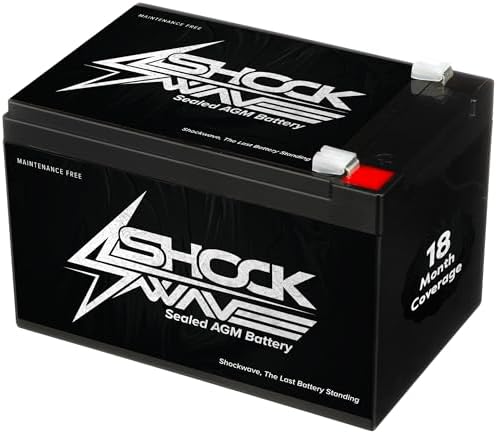
- Broad Compatibility – Shockwave 12V 14AH sealed AGM battery powers a wide range of devices including alarm systems, mobi…
- Advanced AGM Construction – Designed with Absorbed Glass Mat technology and a sealed, spill-proof build to deliver maint…
- Ready Out of the Box – Pre-charged and equipped with a low self-discharge rate, this battery is ready for quick installa…

- High-Capacity Powerhouse: Our 12V 16Ah Lithium Battery is designed to unleash prolonged DIY potential, providing stable …
- Universal DIY Compatibility: This versatile 12V Rechargeable Battery is perfect for powering a wide range of 12V devices…
- Intelligent Safety Assurance: Equipped with an advanced Battery Management System (BMS), our 12V 16Ah Lithium Battery en…

- 🔋【Battery Specifications】This is the AUX14 auxiliary battery, designed for auxiliary use only and not suitable as the ma…
- 🔋【Extended Performance】AUX14 Auxiliary battery is a 12V 14AH 360 Cold Cranking Amps (CCA) AGM Battery. Self Discharge: <...
- 🔋【Advanced Technology】AGM (Absorbent Glass Mat) Batteries are designed to give you the ultimate combination of power, du…