




When it comes to reducing intense trail vibration damage to UTV overland gear, getting the right details matters. Milwaukee PACKOUT System
Garmin Tread 2 SxS Edition
EcoFlow DELTA 2 Max
When your rig hits a washboard road at 40 mph, the chassis doesn’t just bounce; it acts as a high-frequency destructive hammer. If your overland gear isn’t engineered to absorb and deflect these specific kinetic forces, you will return to camp with shattered coolers, detached roof racks, and dead electronics. This guide breaks down the exact physics of trail-induced mechanical failure and provides the hardware blueprint to stop it. You will learn how to eliminate resonance shear, defeat silica ingress, and torque your drivetrain components to survive the harshest multi-axis vibrations on earth, effectively reducing intense trail vibration damage to UTV overland gear.
Engineering the Ultimate Rig: Reducing Intense Trail Vibration Damage to UTV Overland Gear
The Technical Reality: Structural Dynamics and Washboard-Induced Failure Sequences
Random Vibration Fatigue & Yield Strength Breaches
UTVs traversing washboard roads or rocky terrain generate high-frequency, multi-axis random vibrations, typically ranging from 10Hz to 25Hz.
Under these continuous impact loads, the maximum equivalent stress on rigid storage mounts and polymer bed liners frequently exceeds the material’s yield strength, meaning plastic hinges and latches will develop micro-cracks and snap off, spilling your gear onto the trail.
Resonance-Induced Shear Failure & Harmonic Amplification
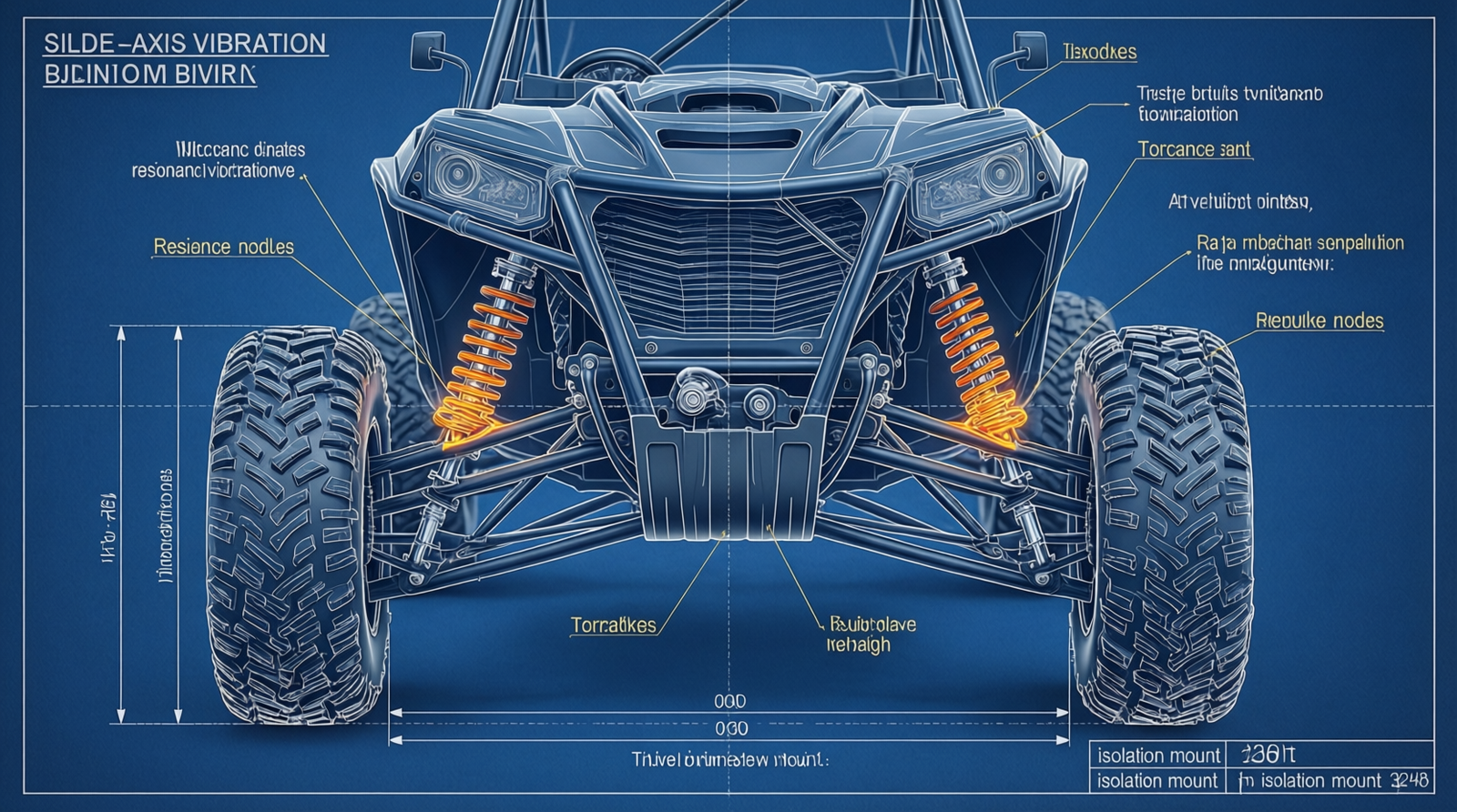
Harmonic resonance occurs when the natural frequency of poorly mounted overland gear perfectly aligns with your UTV’s chassis excitation frequencies.
This alignment amplifies vibrational amplitude, creating extreme shear stress at mounting brackets that literally rips bolt holes out of your rig’s frame or rack during aggressive cornering maneuvers.
Fretting Wear, Abrasive Ingress, and the Baja Flour Zipper Nightmare
High-frequency micro-movements between your gear and the UTV bed, combined with silica-based trail dust intrusion, create a severe abrasive environment.
This accelerates fretting wear on polymer surfaces and seizes standard zipper teeth with fine silt, forcing you to abandon soft duffels for gasket-sealed hard cases on extended expeditions.
Fastener Back-Off (Preload Loss) & Cam Buckle Creep
Continuous transverse vibrations cause microscopic slip at thread interfaces, leading to a total loss of clamp load and preload.
Your heavy gear will catastrophically detach during lateral load transfers, while cheap cam-buckle tie-downs stretch and fail after short distances, shifting your center-of-gravity and smashing coolers against bed walls.
The Core Gear Architecture: High-Ticket Vibration-Resistant Stack
Check out our off-road collection Amazon products
Weatherproof & Vibration-Proof Storage Systems
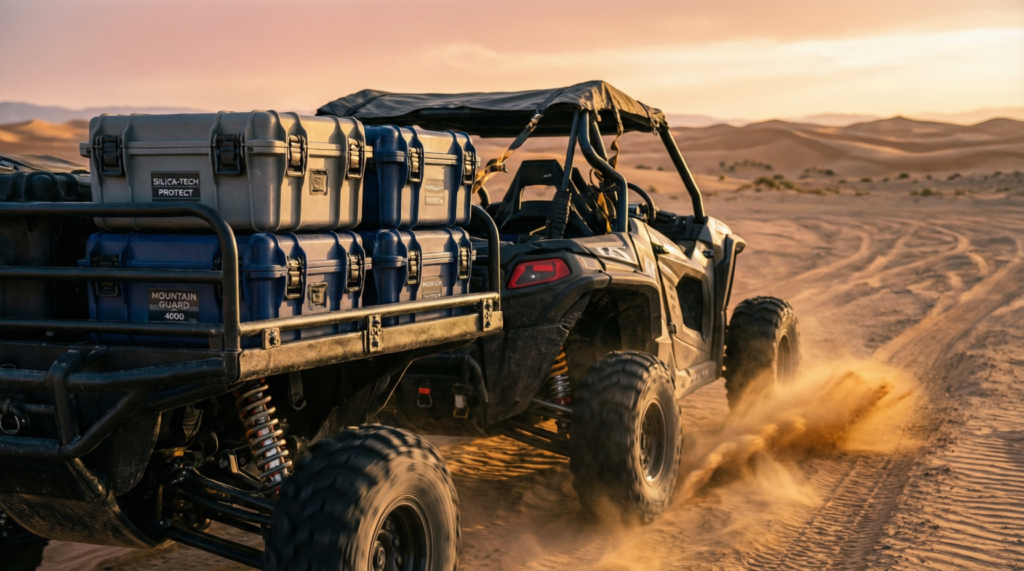
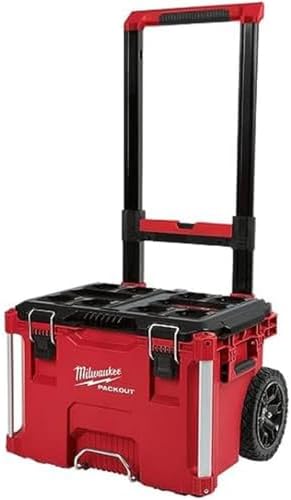
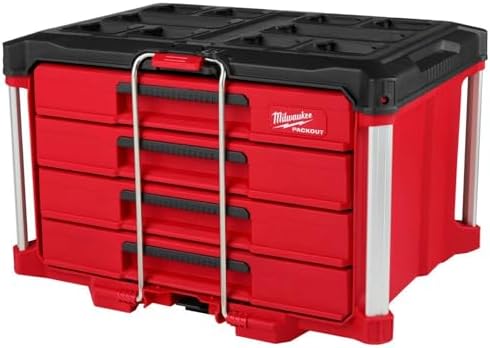
The Milwaukee PACKOUT System utilizes an impact-resistant modified copolymer construction with integrated metal lock-latches replacing legacy plastic components.
These upgraded latches resist harmonic resonance snapping, while IP65 ratings and stacking capacities over 250 lbs ensure structural integrity under extreme trail loads. For altitude passes, Pelican Air and Storm Cases feature automated purge valves that equalize internal pressure to prevent vacuum-sealed lids.
Internal Organization: Defeating the Rattle and Resonance Echo Chamber
Metal toolboxes without internal organization turn into destructive echo chambers where heavy tools smash into each other under vibration.
This repeated impact destroys calibration accuracy and dents box interiors, requiring high-density pick-and-pluck or custom shadow foam to completely immobilize payloads.
Navigation & Comms: Shock-Mounted Telemetry
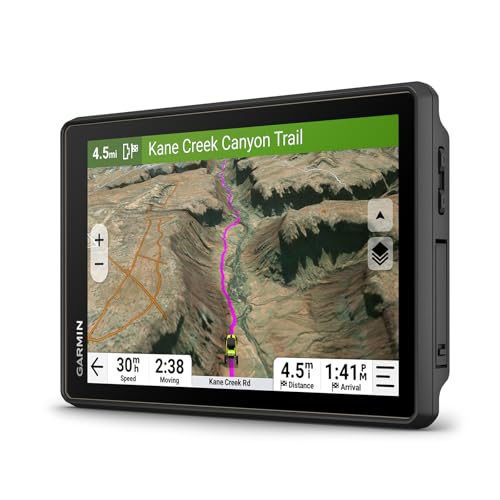
The Garmin Tread 2 SxS Edition features a reinforced magnesium-alloy chassis engineered to withstand 15G shock and high-frequency vibration.
Mounting satellite communicators like the Garmin inReach Mini 2 requires a RAM Mounts X-Grip paired with a vibration-dampening rubber isolator to prevent internal solder joint fatigue from shaking the unit apart.
Vibration-Dampening Tie-Downs & Load Securing
ShockStrap and Rhino-Rack Retractable Ratchet Straps are engineered with elastomeric shock-absorbing cores carrying 500 lbs WLL and 1,500 lbs break strength.
The polyurethane-coated webbing prevents fine silt from embedding in the fibers, ensuring ratchet mechanisms remain functional during critical dust-storm unloads.
Portable Power: Potted LiFePO4 Architecture
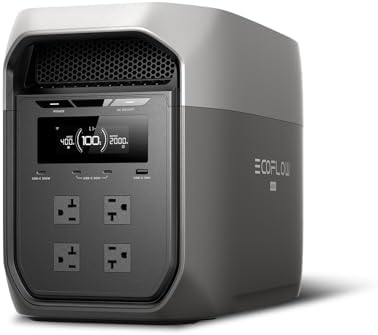
The EcoFlow DELTA 2 Max and Jackery Explorer 1000 v2 utilize potted LiFePO4 battery architecture with cells secured by high-density EVA foam.
This specific potting prevents internal busbar shearing under 15Hz trail vibrations, guaranteeing your power supply avoids catastrophic short circuits when hitting deep whoops.
The Technical Setup Blueprint: Zoning, Tooling, and Drivetrain-Specific Architecture
Universal Fastener Upgrades & Torque Specifications
Recommended Insights From Our Guide Library:
All aftermarket rack, box, and anchor bolts must utilize nylon-insert lock nuts or be secured with Blue Loctite to prevent backing off within five miles.
Standard hex nuts will fail under washboard conditions, so applying exactly 18–22 ft-lbs of torque to M8 bed anchors preserves OEM mounting inserts and prevents stripped threads.
| Component | Fastener Type | Torque Value | Sealing Method | Heavy-Duty Bed Anchors (M8) | Nylon-Insert Lock Nut | 18–22 ft-lbs | Blue Loctite 242/243 | CVT Outer Cover Bolts | T30 Torx / 8mm Hex | 8–10 ft-lbs | Crisscross Pattern Application |
|---|
CVT Architecture Prep: Polaris RZR Pro R & Can-Am Maverick X3
High vibration and heavy loads on CVT architectures drastically increase belt heat and slip risk, requiring primary clutch pullers and clutch spreader tools for tension relief.
Reinstalling outer clutch covers demands exactly 8–10 ft-lbs of torque applied in a crisscross pattern, otherwise warped covers will allow destructive dust ingestion into the transmission housing.
DCT Architecture Prep: Honda Pioneer 1000 & Talon
Intense trail vibration on DCT platforms frequently causes standard blade relays to vibrate out of sockets and chafes wiring harnesses against the chassis.
This electrical interference triggers limp mode, necessitating spare OEM relays, dielectric grease application, and split-loom tubing wrapping to protect critical control modules.
Check out our off-road collection Amazon products
| Platform Architecture | Key Components | Torque Specification | Mandatory Trail Tools | CVT (Polaris RZR Pro R / Can-Am Maverick X3) | Drive Belt, Primary Clutch, Outer Covers | 8–10 ft-lbs (Crisscross Pattern) | Primary Clutch Puller (M8x1.25), Clutch Spreader Tool | DCT (Honda Pioneer 1000 / Talon) | Blade Relays, Wiring Harness, Exhaust Hump | N/A (Electrical Focus) | Spare OEM Relays, Dielectric Grease, Split-Loom Tubing |
|---|
Bed Zoning & Defeating Factory Plastic Bed Flex
OEM plastic beds flex significantly under heavy loads, causing rigid hard-shell cases to bottom out and crack upon direct contact.
Installing aluminum bed stiffeners or closed-cell foam mats like BedRug distributes the weight evenly and dampens high-frequency transfer before it reaches your protective cases.
Field Verdict & Operational ROI: The True Cost of Washboard Road Failures
Calculating the Cost of Catastrophic Detachment and Gear Loss
Ignoring preload loss, resonance shear, and plastic bed flex represents an operational risk that quickly escalates beyond simple gear replacement costs.
The complete hardware stack must function as mandatory insurance for high-ticket overland equipment, preventing expedition-ending failures on remote trails.
Final Loadout Validation & Expedition Readiness
Run a rapid-fire validation checklist verifying gasketed latch seals, immobilized internal payloads, torqued bed anchors, and shock-mounted telemetry.
Cross-referencing these mechanical safeguards ensures your rig survives multi-axis vibrations and keeps every system fully operational until shutdown.
Conclusion
Community Reference & Authority Resources:
Understanding the brutal physics of random vibrations and harmonic resonance transitions your approach from passive strapping to active engineering.
Deploying precise torque specifications, potted power stations, and elastomeric tie-downs directly neutralizes specific failure points, keeping your gear locked and sealed through any terrain.
🔍 Explore More: See all Wild Testing guides for reducing intense trail vibration damage to UTV overland gear.
Check out our off-road collection Amazon products