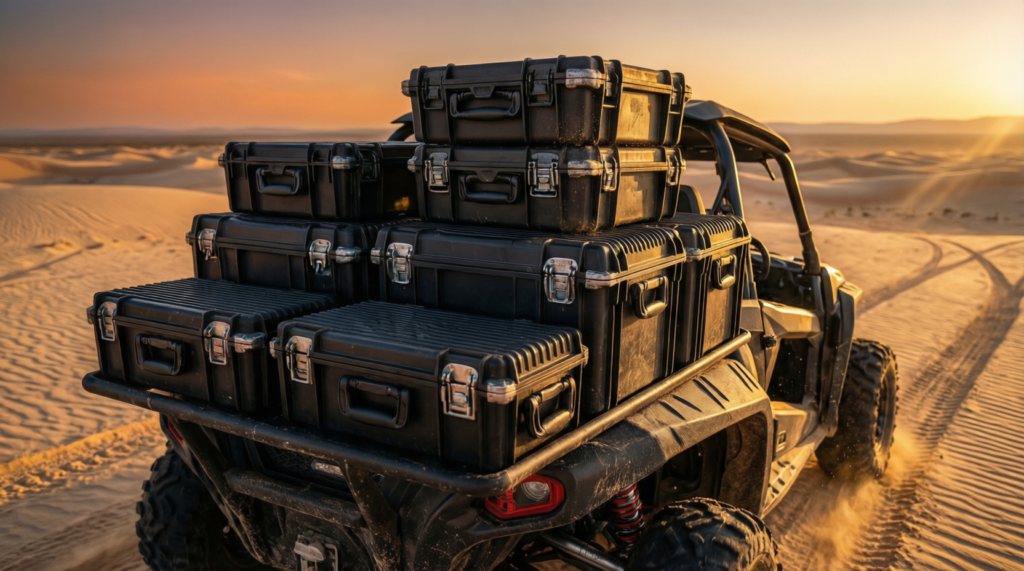





When it comes to how to prevent UTV trail luggage zipper failures from fine dust, getting the right details matters. ROKBOX 60L Roto-Molded Gear Case (Overland Spec)
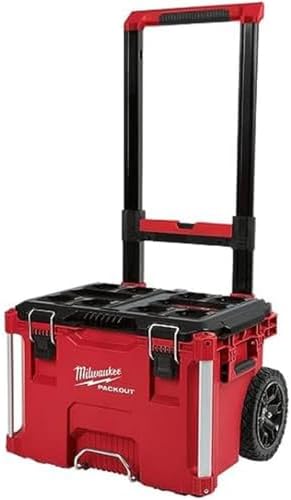
Milwaukee PACKOUT 22.5″ Rolling Tool Box & 16″ Crate (IP65 Sealed Variants)
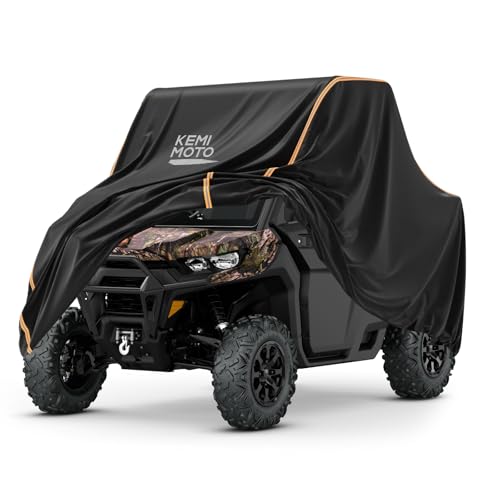
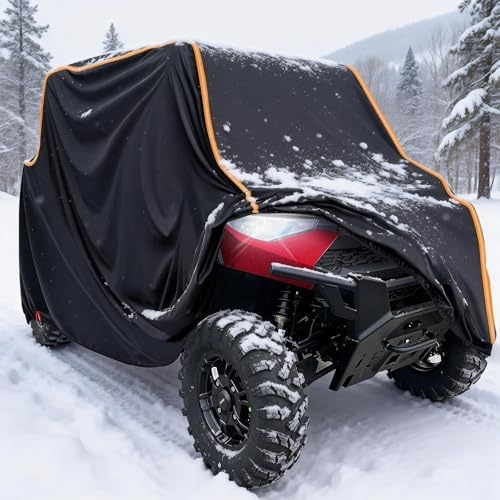
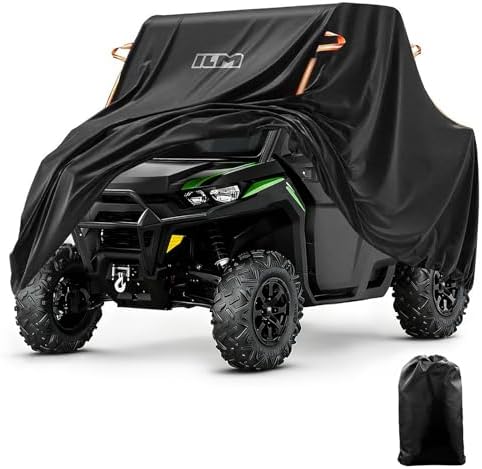
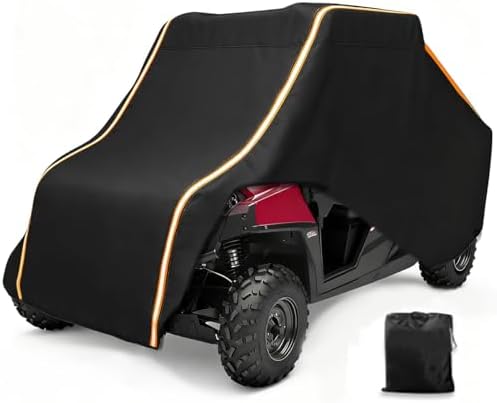
MESOROCK 420D Oxford Cloth UTV Weather Cover (Edition)
The Technical Reality: Why Waterproof Zippers Catastrophically Fail in Fine Silt
You bought the expensive waterproof soft duffel, yet your gear is still coated in grit and your zippers are jammed solid. Fine trail dust is the ultimate enemy of off-road cargo, and standard soft-sided luggage is a critical liability that will leave you stranded or force you to cut your bags open. In this guide, you will learn the exact mechanical reasons why zippers catastrophically fail in silt, the specific roto-molded hard storage gear that eliminates this vulnerability, and the precise torque specs and trailside tools required to mount and maintain your rig. We are bypassing the fluff and diving straight into the engineering reality of dust intrusion, providing you with the ultimate No-Zipper Hard Storage Blueprint to keep your gear safe and your UTV running.
Three-Body Abrasion & Mechanical Jamming (10–50 Micron Silica vs. YKK #8/#10)
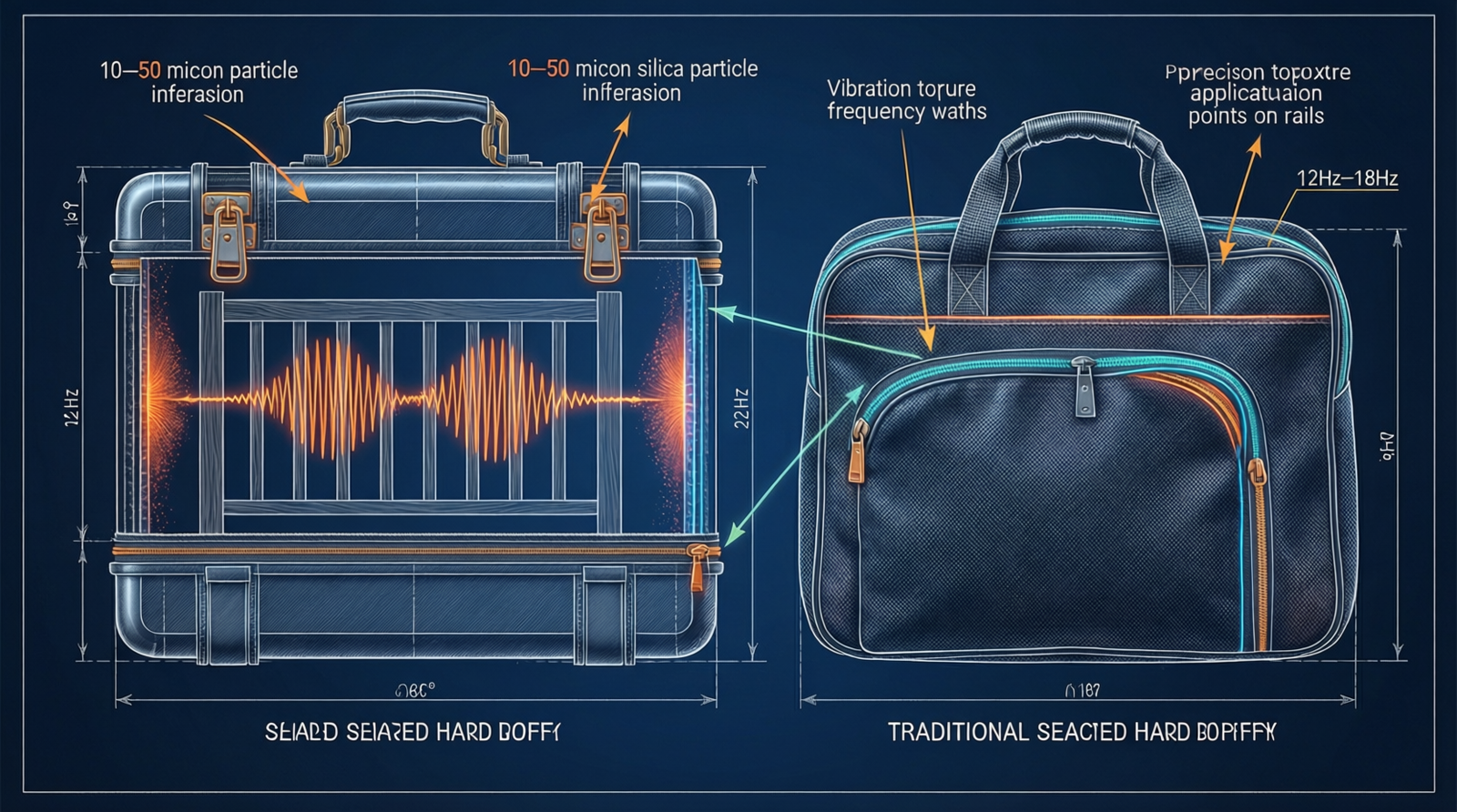
Fine trail silt, specifically measuring 10–50 microns in particle size, easily infiltrates the slider cavity of standard YKK #8 or #10 coil and molded zippers.
For the driver, this means the dust acts like liquid sandpaper inside the zipper track. Under the tensile load of a stuffed bag, these silica particles become an abrasive grinding medium between the slider body and the zipper teeth. This rapidly destroys the slider’s internal spring plates and diamond-shaped guide pins, leading to total mechanical jamming. When you inevitably try to force a jammed slider with brute strength, it causes immediate shear failure of the nylon or plastic zipper teeth, permanently ruining the bag.
Galvanic & Chemical Corrosion in High-Humidity Trail Environments (>60% RH)
Metal zipper components, typically made from brass or aluminum alloys, are highly susceptible to fine dust containing hygroscopic minerals and salts.
When the ambient relative humidity exceeds 60%, or immediately after a water crossing, this mineral-heavy dust turns into an active electrolyte. To the trail rider, this means a chemical reaction is happening right in front of you. The moisture triggers accelerated galvanic and pitting corrosion on the zipper teeth and slider. The mechanism literally rusts and fuses together into a solid block of metal, making the bag impossible to open without angle grinders or heavy pry bars.
Cyclic Stress Fatigue & Seam Blowout from 12Hz–18Hz Washboard Vibrations
UTVs traversing washboard roads generate high-frequency vertical vibrations measuring exactly 12Hz–18Hz.
Behind the wheel, this feels like a rapid-fire jackhammer that turns your soft-sided luggage into a pneumatic bladder. Because soft bags lack rigid structural support, they rapidly expand and contract with these vibration-induced pressure changes. This places continuous, violent cyclic stress on the zipper tape stitching. The direct mechanical consequence is a total seam separation within exactly 4–8 hours of operation. The stitching rips apart, completely bypassing the zipper’s dust seal and filling your gear with dirt.
Check out our off-road collection Amazon products
The Silt Creep & Electrical Gremlin Paranoia (Forum-Validated Pain Points)
Standard PVC tarpaulin waterproof duffels fail to stop talcum-powder fine silt from migrating through microscopic gaps in the zipper coils.
For the overlander, this Silt Creep means your sleeping bags and expensive electronics will be coated in abrasive grit after just a single day on the trail. But the threat matrix goes far beyond ruined camping gear. Fine conductive dust infiltrates exposed UTV electrical relays and ignition switches. This causes phantom stalling and DCT shifting failures mid-trail. Dust-proofing your luggage is not just about clean clothes; it is an ecosystem-wide necessity to prevent your UTV’s sensitive electronics from shorting out.
The Core Gear Architecture: Gasket-Sealed & Roto-Molded Solutions
Primary Containment: ROKBOX 60L Roto-Molded Gear Case (Overland Spec)
To completely eliminate Three-Body Abrasion and Silt Creep, you must remove the zipper from the equation. The ROKBOX 60L Roto-Molded Gear Case (Overland Spec) features LLDPE roto-molded construction with integrated UV inhibitors.
Instead of a zipper, it utilizes a continuous EPDM O-ring gasket that is compressed tight by 4-point cam-latch hinges. For the driver, this creates an impenetrable physical wall against 10-micron dust. It carries an IP67 rating, meaning it is entirely dust-tight and protected against temporary immersion. Furthermore, it boasts a 250 lbs Working Load Limit for stacking and tying down, alongside >500 lbs of interlocking shear strength, ensuring the box won’t crush when you pile heavy recovery gear on top of it.
Modular Tool & Recovery Storage: Milwaukee PACKOUT 22.5″ & 16″ (IP65 Sealed Variants)
To prevent the Cyclic Stress Fatigue blowouts that destroy soft tool rolls, the Milwaukee PACKOUT 22.5″ Rolling Tool Box & 16″ Crate (IP65 Sealed Variants) feature upgraded integrated IP65 weather seals on the lid perimeter.
Crucially, these variants feature reinforced metal latch hinges engineered specifically to withstand 15Hz trail vibrations without popping open. When you hit high-speed washboards, your heavy wrenches and recovery straps stay locked inside. The boxes carry an IK08 impact rating and utilize structural ribbing to prevent crushing under the immense weight of heavy recovery gear loads.
Secondary Dust Shield: MESOROCK 420D Oxford Cloth UTV Weather Cover (Edition)
While hard cases stop dust intrusion, they are still vulnerable to physical trail damage. The MESOROCK 420D Oxford Cloth UTV Weather Cover (Edition) is deployed as a secondary wrap or bed-cover over your hard cases during transit.
Made from 420D high-density fabric with a PU waterproof coating, it acts as your primary sacrificial layer against high-velocity abrasive dust. For the driver, this means the cover takes the brutal sandblasting of the trail, preventing micro-scratches and UV degradation on your expensive roto-molded shells, keeping your primary containment looking and functioning like new.
Recommended Insights From Our Guide Library:
- Trail-Ready Gear That Actually Survives the Mud and Rocks – Pioneer Honda Lovers
- How to Prevent Trail Dust Intrusion in UTV Cargo – Pioneer Honda Lovers
- how to prevent trail dust intrusion in UTV cargo Archives – Pioneer Honda Lovers
- why standard zippered luggage fails on UTV trails Archives – Pioneer Honda Lovers
- trail dust prevention Archives – Pioneer Honda Lovers
The Technical Setup Blueprint: Bed Mounting, Zoning, and Torque Specifications
Mitigating Washboard Vibration & Bed Flex (Honda Pioneer 1000 Constraints)
The Honda Pioneer 1000 rear bed experiences slight torsional flex under heavy, uneven loads. If you rigidly bolt hard cases directly to the bed floor, the flex will cause stress fractures in your roto-molded boxes or crack the OEM bed plastic.
To solve this, you must use polyurethane isolator pads to absorb the chassis twist. Additionally, the Pioneer 1000 has a strict 600 lbs rear bed payload capacity. You must maintain a minimum 2-inch clearance using raised racks or pads to protect the bed floor ventilation channels. This 2-inch gap is critical for the rear differential and exhaust routing; without it, you will trap heat and cause catastrophic differential overheating. Finally, replace cheap cam-straps—which stretch at 15Hz and turn your hard cases into battering rams that smash taillights—with high-quality ratchet straps featuring integrated soft-loops and anti-vibration dampeners.
Heavy-Duty Tie-Down Anchors & Fastener Torque Matrix
When installing aftermarket bed tie-down points, you must use 3/8″ or 1/2″ Grade 8 zinc-plated or stainless bolts.
If you do not torque these correctly, the high-frequency trail vibrations will shake them loose. Below is the exact torque specification matrix for secure mounting:
| Fastener Size & Grade | Torque Specification | Required Locking Hardware | 3/8″ Grade 8 | 35–40 ft-lbs | Nylon-insert lock nuts (Nyloc) or Flange nuts + blue Loctite (242) | 1/2″ Grade 8 | 80–90 ft-lbs | Nylon-insert lock nuts (Nyloc) or Flange nuts + blue Loctite (242) |
|---|
Check out our off-road collection Amazon products
Drivetrain-Specific Trailside Tooling (CVT vs. DCT Architecture)
Your trailside tool kit must be tailored to your specific drivetrain to combat dust-related failures. Below is the precise tooling breakdown:
| Drivetrain Type | Vulnerability Profile | Mandatory Trailside Tools & Specs | CVT Systems (Polaris RZR Pro R / Can-Am Maverick X3) | Dust ingress into clutch housing kills drive belts | OEM Clutch Spreading Tool; T30 Torx or 8mm/10mm sockets; E10/E12 Torx for secondary clutches; Torque covers to 8–10 ft-lbs (11–14 Nm) | DCT Systems (Honda Pioneer/Talon 1000X) | Contact corrosion on shift solenoids & relays | Dielectric grease, DeoxIT D5 Contact Cleaner, spare OEM ignition/kill switch relays | Universal Fastener Kit | Covers 95% of OEM body panels, skid plates, rack mounts | T25, T30, T40 Torx bits; 10mm, 12mm, 13mm, 15mm deep/shallow sockets |
|---|
Field Verdict & Operational ROI: Eliminating the Zipper Liability
Community Reference & Authority Resources:
At the exact moment your soft duffel’s zipper jams shut in the middle of a dusty canyon, the true cost of cheap luggage becomes painfully clear. This post was about eliminating the zipper liability from your off-road cargo system.
The hard storage and precision tooling stack outlined above is not just an accessory upgrade; it is a mandatory operational investment. When you contrast the high upfront cost of IP67 roto-molded gear like the ROKBOX 60L Roto-Molded Gear Case (Overland Spec) and Milwaukee PACKOUT 22.5″ Rolling Tool Box & 16″ Crate (IP65 Sealed Variants) against the catastrophic costs of trailside stranding, destroyed electronics, and sheared CVT/DCT components caused by fine dust intrusion, the choice is obvious. By adopting the No-Zipper Blueprint, securing your load with exact torque specifications, and carrying drivetrain-specific trailside tools, you ensure that your gear stays clean, your UTV keeps running, and your focus remains exactly where it belongs: on the trail ahead.
🔍 Explore More: See all Wild Testing guides for how to prevent UTV trail luggage zipper failures from fine dust.
Check out our off-road collection Amazon products