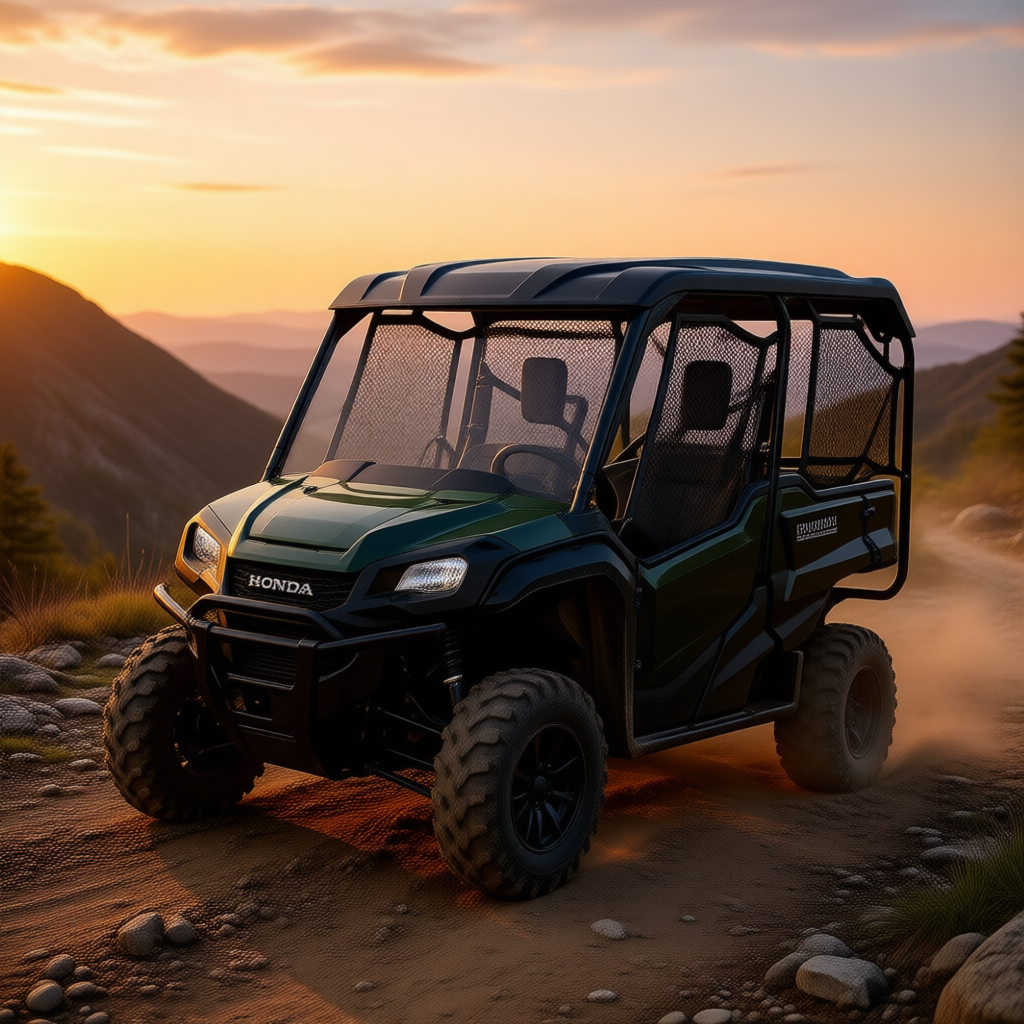
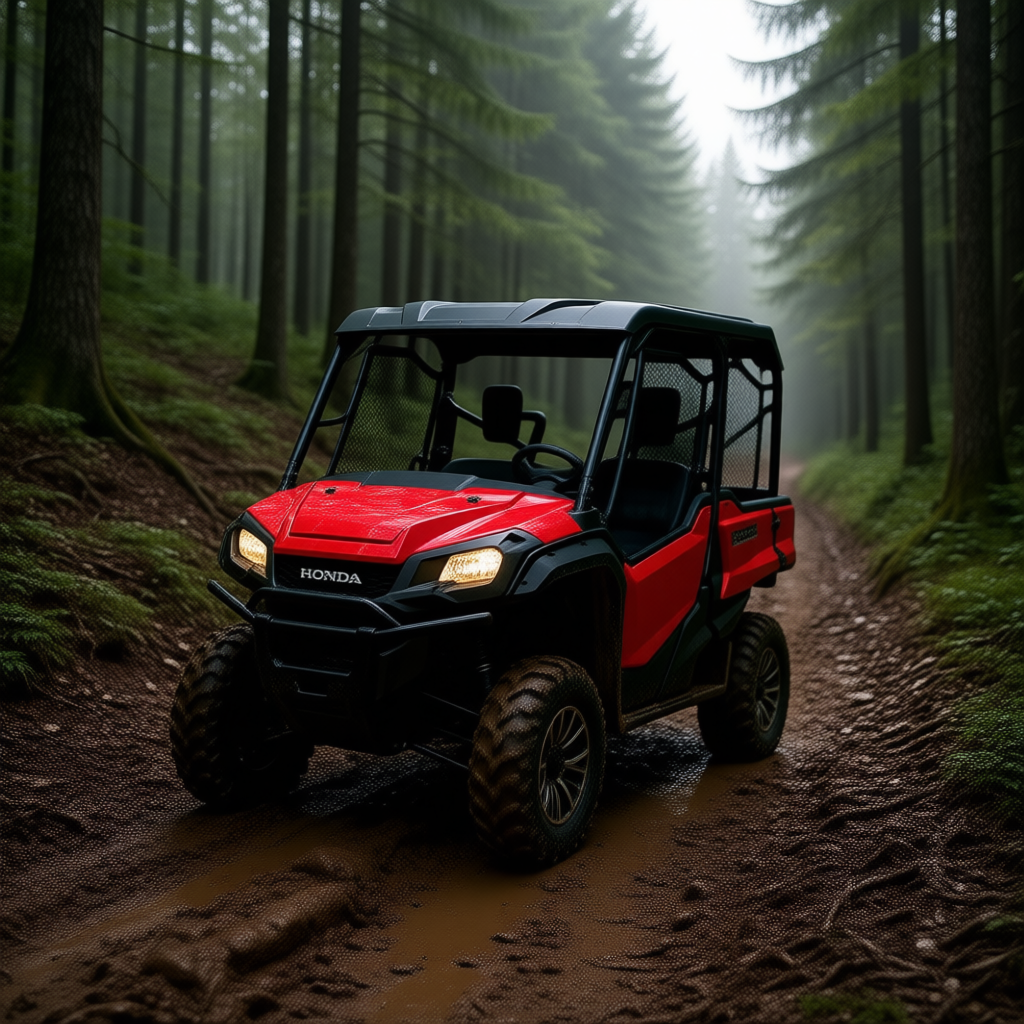
Honda Pioneer 500 Dimensions: The Complete 2026 Specifications Breakdown
Understanding the exact Honda Pioneer 500 dimensions is essential whether you’re planning trail rides, evaluating garage storage, or comparing side-by-side UTVs for your next purchase. The Pioneer 500 has earned its reputation as one of the most trail-friendly compact UTVs on the market, and much of that capability traces directly back to its carefully engineered physical proportions.
In this comprehensive guide, we break down every critical measurement—from overall length and Honda Pioneer 500 width to wheelbase, ground clearance, and cargo capacity. Whether you own a 2015–2023 model or are considering the updated 2026 Honda Pioneer 520 variant, these specifications will help you make informed decisions about accessories, trailers, and trail compatibility.
Complete Honda Pioneer 500 Dimensions Chart
Before diving into each measurement individually, here is the full dimensional specification chart for the Honda Pioneer 500. These numbers represent the factory-standard configuration across most model years, with minor variations noted where applicable.
| Specification | Measurement |
|---|---|
| Overall Length | 102.6 inches (105.0 in on select years) |
| Overall Width | 50.0 inches |
| Overall Height | 71.2–71.3 inches |
| Wheelbase | 73.0 inches |
| Ground Clearance | 8.5 inches |
| Seat Height | 27.7 inches |
| Turning Radius | 12.8 feet |
| Curb Weight | 1,060 lbs (approx.) |
| Fuel Capacity | 4.1 gallons |
| Bed Capacity | 450 lbs |
| Towing Capacity | 1,000 lbs |
These Honda Pioneer 500 dimensions place it squarely in the compact utility UTV category—small enough to navigate tight wooded trails yet capable enough to handle real work around the farm or job site.
Honda Pioneer 500 Width: Why 50 Inches Matters on the Trail
The Honda Pioneer 500 width of exactly 50.0 inches is one of its most strategically important measurements. This dimension was deliberately chosen by Honda engineers to allow the Pioneer 500 to fit on standard 50-inch ATV trails, which are common throughout national forests and off-road park systems across North America.
Many wider side-by-sides—such as the Pioneer 1000 or Polaris Ranger—measure 60 inches or more in width, which restricts them from trails with width limitations. The 50-inch Honda Pioneer 500 width means you can access trails that larger UTVs simply cannot enter, giving you significantly more riding options without needing to trailer your machine to a different location.
This compact width also makes the Pioneer 500 exceptionally easy to load onto standard utility trailers and fits comfortably inside most single-bay garages. For riders who frequently transport their UTV to different riding areas, the 50-inch width eliminates the need for oversized trailers or specialized hauling equipment. If you’re comparing models, check out our detailed Honda Pioneer 700 specifications guide to see how width differences affect trail access.
Additionally, the narrow profile contributes to the Pioneer 500’s nimble handling characteristics. On tight, technical trails with trees, rocks, and switchbacks, the 50-inch width allows riders to thread through obstacles with confidence rather than constantly worrying about body panel clearance.
Honda Pioneer 500 Wheelbase: Stability and Ride Quality Explained
The Honda Pioneer 500 wheelbase measures 73.0 inches (approximately 6 feet, 1 inch). This wheelbase length represents a carefully balanced compromise between stability at speed and maneuverability in tight terrain. Understanding how wheelbase affects ride quality helps explain why the Pioneer 500 performs so well across diverse trail conditions.
A longer wheelbase generally provides better straight-line stability and a smoother ride over rough terrain because the front and rear axles are spaced further apart, reducing the pitch angle when crossing obstacles. However, longer wheelbases sacrifice turning radius and make the vehicle feel less agile in tight woods riding. The 73-inch Honda Pioneer 500 wheelbase hits a sweet spot that delivers confident stability without feeling cumbersome on technical trails.
Compared to the Pioneer 700 (which has a slightly longer wheelbase for its larger chassis), the Pioneer 500’s 73-inch measurement gives it a noticeably tighter turning circle. The 12.8-foot turning radius means you can execute U-turns on narrow forest roads and navigate switchbacks without excessive multi-point turns. This agility is particularly valuable when trail conditions force unexpected route changes.
The wheelbase also directly affects weight distribution and center of gravity. With the engine mounted centrally between the axles and the 73-inch wheelbase providing adequate longitudinal spacing, the Pioneer 500 maintains balanced weight distribution that contributes to predictable handling whether you’re climbing hills, descending steep grades, or traversing side slopes. For more on chassis dynamics, explore our Honda Pioneer 1000 review which covers how wheelbase scales with larger displacement models.
Ground Clearance and Suspension Travel
The Honda Pioneer 500 provides 8.5 inches of ground clearance, which is adequate for most recreational trail riding and light utility work. While this measurement may seem modest compared to high-clearance sport UTVs that boast 12+ inches, it’s important to understand ground clearance in the context of the Pioneer 500’s intended use case.
For maintained trail systems, fire roads, and farm paths, 8.5 inches of clearance is more than sufficient to clear typical obstacles like roots, small rocks, and moderate ruts. The independent front and rear suspension systems absorb impacts effectively, and the chassis design protects critical components like the engine and transmission from direct contact with trail debris.
Check out our off-road collection Amazon products
Riders who frequently encounter deep mud, large boulder fields, or extreme rock crawling scenarios may find the 8.5-inch ground clearance limiting. In these situations, aftermarket lift kits and larger tires can increase clearance, though such modifications may affect the vehicle’s center of gravity and handling characteristics. Always consult with a qualified dealer before making suspension modifications that could void your warranty or compromise safety.
The suspension system itself features independent double-wishbone front suspension and a swing-arm rear setup, providing approximately 5.9 inches of front wheel travel and 7.1 inches of rear wheel travel. This combination delivers a compliant ride that soaks up trail chatter while maintaining enough stiffness to handle loaded cargo bed duties. For riders interested in upgraded suspension options, our Pioneer 500 accessories guide covers popular aftermarket solutions.
Overall Length and Height: Storage and Transport Considerations
At 102.6 inches long (8 feet, 6.6 inches), the Honda Pioneer 500 fits comfortably on standard 8-foot utility trailers with room to spare for tie-down straps and additional gear. Some model years measure slightly longer at 105.0 inches due to bumper or hitch receiver variations, but the difference is negligible for transport planning purposes.
The overall height of 71.2–71.3 inches (just under 6 feet) means the Pioneer 500 will clear most standard garage door openings, which typically measure 7 feet or higher. However, if you’ve installed a roof, windshield, or light bar, you’ll need to account for the additional height. A full roof can add 2–4 inches, and a light bar mounted on top can push total height beyond 75 inches, which may require measuring your specific garage or storage building before committing to a parking spot.
When planning transport, remember that the 1,060-pound curb weight means you’ll need a trailer rated for at least 1,500 pounds to provide adequate safety margin. Most half-ton pickup trucks can tow this weight without issue, but always verify your vehicle’s towing capacity and ensure proper tongue weight distribution. The Pioneer 500’s compact dimensions make it one of the easiest side-by-sides to transport, which is a significant advantage for riders who don’t live adjacent to their favorite trails.
For those considering enclosed trailers, a standard 6×10 or 7×12 enclosed trailer provides ample room for the Pioneer 500 plus helmets, tools, and spare parts. The 50-inch width means you won’t need an extra-wide trailer, which can save hundreds of dollars on trailer purchase costs. Check our Honda Pioneer comparison article to see how transport requirements differ across the full Pioneer lineup.
Cargo Capacity and Towing Specifications
Recommended Insights From Our Guide Library:
The Honda Pioneer 500 features a rear cargo bed rated for 450 pounds of payload capacity. This bed is constructed from durable composite material that resists dents, scratches, and corrosion—making it ideal for hauling firewood, tools, feed bags, or camping gear. The bed dimensions accommodate standard-sized cargo boxes and coolers, and the low load height makes lifting heavy items into the bed manageable for most adults.
When combined with the 1,000-pound towing capacity, the Pioneer 500 becomes a genuinely capable work machine despite its compact size. The standard 2-inch receiver hitch accepts common trailer couplers, and the automatic transmission with engine braking provides confident control when towing loads on inclines. For perspective, the Pioneer 500 can comfortably tow a small utility trailer loaded with mulch, a compact boat, or a lightweight camping trailer.
It’s important to note that payload and towing capacities are not additive—you cannot simultaneously max out both the cargo bed and the tow rating. Honda’s engineering accounts for the combined stress on the chassis, suspension, and drivetrain, so always consult the owner’s manual for specific loading guidelines that account for passenger weight, cargo, and towed load combined.
The 4.1-gallon fuel tank provides approximately 100–130 miles of range depending on terrain, load, and riding style. When towing heavy loads or navigating technical terrain at low speeds, fuel consumption increases noticeably, so plan refueling stops accordingly on extended work days or trail rides. For extended range options, explore our Pioneer 500 maintenance and upgrade tips.
How the Pioneer 500 Dimensions Compare to Other Honda Pioneers
To put the Honda Pioneer 500 dimensions in proper context, it’s helpful to compare them against other models in the Honda Pioneer family. The Pioneer 500 sits at the compact end of the lineup, with the Pioneer 700 occupying the mid-size category and the Pioneer 1000 representing the full-size, high-performance segment.
The Pioneer 700 measures approximately 56 inches wide with a longer wheelbase and higher ground clearance, making it better suited for riders who prioritize passenger comfort and cargo capacity over tight-trail agility. The Pioneer 1000 pushes width to 60+ inches and offers significantly more power, but sacrifices the ability to access 50-inch trails entirely.
For 2026, Honda has introduced the Pioneer 520 as an updated variant that maintains the same 50-inch width and similar overall dimensions while offering a slightly larger 518cc engine and updated features. If you’re shopping for a new compact UTV, the Pioneer 520 represents the current evolution of the platform while retaining the trail-friendly dimensions that made the Pioneer 500 popular.
Choosing between these models ultimately depends on your primary use case. If tight woods trails, easy transport, and garage storage are your top priorities, the 50-inch Pioneer 500 or 520 is the clear winner. If you need more passenger space, cargo capacity, and don’t mind wider trails, stepping up to the Pioneer 700 or 1000 makes sense. Visit Honda Powersports official site for the latest model specifications and dealer inventory.
Why Dimensions Matter for Trail Selection and Riding Strategy
Understanding your Honda Pioneer 500 dimensions isn’t just academic—it directly affects which trails you can legally and safely access. Many public land management agencies, including the U.S. Forest Service and Bureau of Land Management, post width restrictions at trailheads. Trails marked for “ATV only” or “50-inch maximum width” are perfectly suited to the Pioneer 500, while trails restricted to vehicles under 50 inches may technically exclude it depending on how strictly the restriction is enforced.
Before heading to a new riding area, research trail specifications online or contact the managing agency directly. Websites like ATV.com and trail-specific forums often provide detailed width restrictions, surface conditions, and obstacle descriptions that help you determine whether the Pioneer 500 is appropriate for your planned route.
On the trail itself, knowing your exact width and wheelbase helps you make split-second decisions when encountering unexpected obstacles. If you know your Pioneer 500 is exactly 50 inches wide, you can quickly assess whether a gap between trees or rocks is passable without stopping to measure. This confidence translates to smoother, more enjoyable riding and reduces the likelihood of getting stuck or damaging body panels on tight obstacles.
Frequently Asked Questions About Honda Pioneer 500 Dimensions
What is the exact width of a Honda Pioneer 500?
The Honda Pioneer 500 width is exactly 50.0 inches from the outside of the left tire to the outside of the right tire. This measurement remains consistent across all model years from 2015 through 2023, and the updated Pioneer 520 maintains the same 50-inch width for 2026.
How long is the Honda Pioneer 500 wheelbase?
The Honda Pioneer 500 wheelbase measures 73.0 inches (6 feet, 1 inch). This wheelbase provides an excellent balance between straight-line stability and tight-trail maneuverability, contributing to the vehicle’s reputation as one of the most trail-friendly compact UTVs available.
Will a Honda Pioneer 500 fit in a standard garage?
Check out our off-road collection Amazon products
Yes, the Honda Pioneer 500 will fit in most standard single-car garages. At 102.6 inches long and 71.3 inches tall, it requires less space than many full-size pickup trucks. However, if you’ve added a roof or light bar, measure your garage door height to ensure adequate clearance.
What is the ground clearance on a Honda Pioneer 500?
The Honda Pioneer 500 provides 8.5 inches of ground clearance, which is sufficient for most maintained trail systems, fire roads, and farm use. Riders who frequently encounter extreme rock crawling or deep mud may want to consider aftermarket lift options.
How much weight can the Honda Pioneer 500 tow?
The Honda Pioneer 500 has a maximum towing capacity of 1,000 pounds when properly equipped with the standard 2-inch receiver hitch. The cargo bed can carry an additional 450 pounds, though payload and towing capacities should not be maxed out simultaneously.
Final Thoughts: Making the Most of Your Pioneer 500’s Compact Design
The Honda Pioneer 500 dimensions represent a masterclass in purposeful engineering. Every measurement—from the trail-friendly 50-inch width to the balanced 73-inch wheelbase—was chosen to deliver maximum capability in a compact, easy-to-transport package. Whether you’re navigating tight eastern hardwood trails, hauling equipment around your property, or exploring remote forest roads, the Pioneer 500’s proportions work in your favor.
Community Reference & Authority Resources:
As you plan your next adventure or work project, keep these specifications in mind. Understanding your machine’s physical limits and capabilities helps you make better decisions about trail selection, cargo loading, and transport logistics. The Pioneer 500 may be compact, but its thoughtfully engineered dimensions make it one of the most versatile side-by-sides Honda has ever produced.
For the latest updates on the 2026 Pioneer 520 and other Honda side-by-side models, bookmark our blog and check back regularly for in-depth reviews, maintenance guides, and trail recommendations tailored specifically to compact UTV riders.
🔍 Explore More: See all guides for Honda Pioneer.