
- Reduces friction by approximately 60% compared to conventional engines, by forming an ultra-low friction film on top of …
- Treats up to 10 Gallons of your regular engine oil. Use for any type of vehicle, gasoline and diesel engines. Use in mot…
- More Concentrated High-Pressure Diamond Nano Engine Treatment Formula. Helps to reduce oil changes and engine noise. Ret…
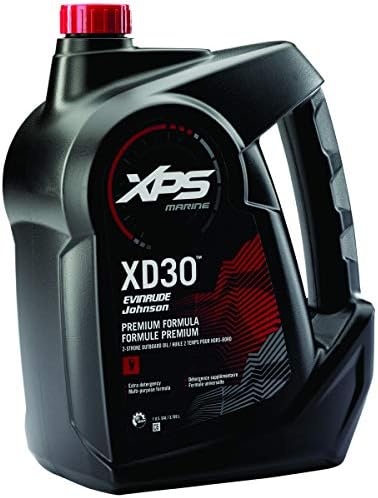
- Genuine Johnson/Evinrude XPS Marine XD30 Premium Formula PN: 779725
- Formulated for water-cooled 2-Stroke outboards and other 2-Stroke engines that specify NMMA TC-W3, API TC, JASO FB certi…
- Minimizes carbon and deposit buildup

- Genuine Husqvarna replacement part.
- New, Bulk Packaged.
- Consult owners manual for proper part number identification and proper installation
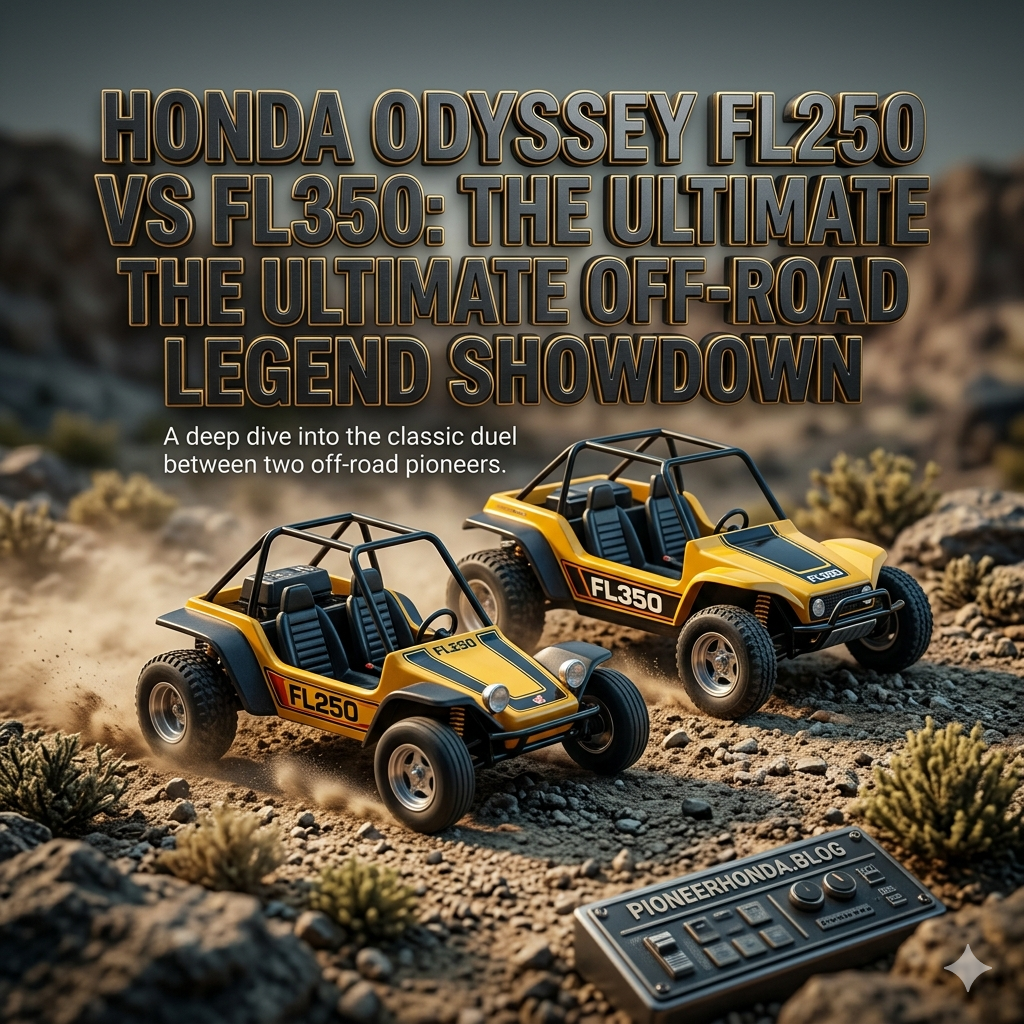
Long before the rise of modern UTVs and side-by-sides, Honda forged a legendary path with its Odyssey line of single-seat, off-road buggies. 💡
These three-wheeled marvels captured the hearts of desert racers and dune bashers in the late 70s and 80s, creating a cult following that remains incredibly strong today.
The two most iconic models in this historic series are the original FL250 and its highly evolved successor, the FL350.
While they share a common lineage and the beloved “Odyssey” badge, they represent a significant evolutionary leap in design, comfort, and performance. 🚀
Understanding their differences is absolutely key for collectors, restorers, and off-road enthusiasts looking to own a piece of powersports history. Whether you are hunting down a FL350 Honda Odyssey for your vintage garage or restoring a classic 250, this guide breaks down everything you need to know.
https://youtube.com/watch?v=g-tE20-2pCo
The Original Pioneer: Honda Odyssey FL250
Introduced in 1977, the Honda FL250 was a simple, rugged, and incredibly fun machine that essentially created the recreational off-road buggy category.
Its design was purely minimalist: a single seat, a strong steel roll cage, skid plates, and a dependable 248cc two-stroke engine.
A key characteristic of the FL250 was its lack of front suspension. Utilizing a solid front axle, it made for a bone-rattling but thrilling ride that demanded constant rider input!
Check out our off-road collection Amazon products
Drivers learned to navigate rough terrain by actively shifting their body weight, standing on the pegs, and mastering the machine’s unique, raw handling characteristics.
It was all about the visceral connection between driver, machine, and trail. When discussing the Honda Odyssey FL250 top speed, stock models generally pushed around 45 to 50 mph. While that might not sound incredibly fast on paper, without front suspension, hitting 45 mph on a whooped-out desert trail took serious nerve.
“The FL250 is the purest form of off-roading. It’s just you and the machine, reading the terrain in a way modern vehicles simply can’t replicate.”
Despite its mechanical simplicity, it was a highly capable performer and laid the groundwork for an entire category of vehicles. 📌
Key Features of the FL250
Check out our off-road collection Amazon products
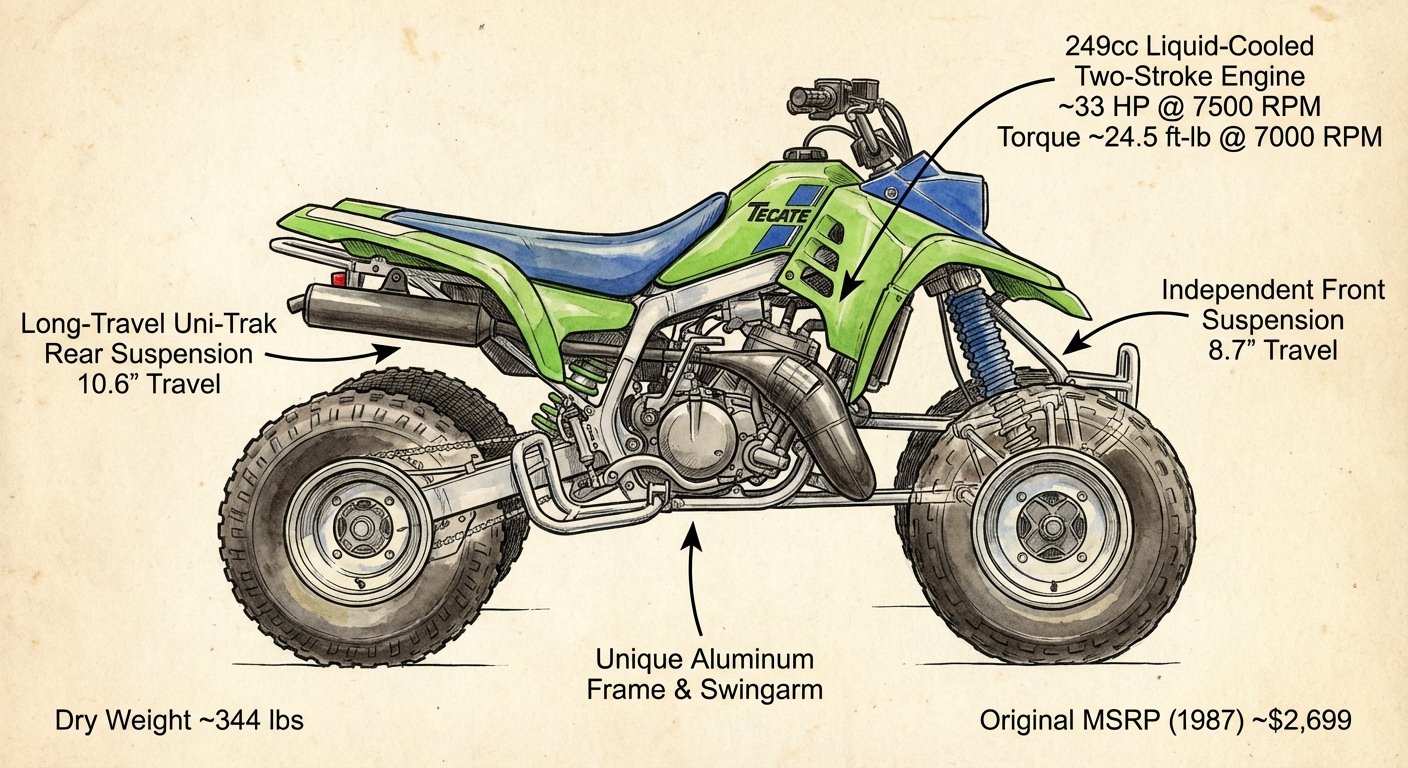
SHOP THE COLLECTION- Engine: Air-cooled 248cc two-stroke single-cylinder.
- Starting: Manual pull-start (requiring a bit of muscle and patience).
- Suspension: Solid front axle with coil-over shocks in the rear only.
- Braking: Rear mechanical drum brake and an integrated parking brake.
https://youtube.com/watch?v=eJg12R-nALo
The Next Generation: Honda Odyssey FL350
In 1985, Honda released the FL350 Odyssey, a machine that was a complete ground-up redesign and a massive leap forward in every aspect of off-road performance.
The FL350 was bigger, faster, and far more sophisticated than its predecessor, bridging the gap between vintage buggies and modern ATVs.
It featured a much more powerful 342cc two-stroke engine and, most importantly, a full suspension system with double-trailing arms up front and a swingarm in the rear.
This addition completely transformed the ride, making it significantly more stable, comfortable, and capable of handling rougher terrain at much higher speeds. The Honda Odyssey FL350 engine provided a punchy powerband that dune racers absolutely loved.
Because the 1985 model year was the only year the FL350 was produced before transitioning to the liquid-cooled FL400 Pilot, it remains a highly sought-after model for serious collectors.
Convenience was also a major theme of the upgrade, with the inclusion of an electric start and a forward/reverse gearbox. No more exhausting pull-starts or getting out to physically turn the machine around in tight trails! 💡
Recommended Insights From Our Guide Library:
Enthusiast forums frequently highlight that stock FL350s are actually quicker than the later FL400 Pilot in a drag race. The Honda Odyssey FL350 top speed reached an exhilarating 55 to 60 mph in stock form. Because of its aggressive power delivery and racing pedigree, many dune enthusiasts affectionately refer to modified versions as the Honda Odyssey FL350R.
“The FL350 took everything great about the 250 and made it better. The full suspension and electric start were absolute game-changers.”
Detailed Honda Odyssey ATV Specs Comparison
| Feature | Honda Odyssey FL250 | Honda Odyssey FL350 |
|---|---|---|
| Engine Displacement | 248cc | 342cc |
| Cooling | Air-Cooled | Air-Cooled |
| Suspension | Rear Only (Solid Front) | Full Front & Rear |
| Starting System | Pull-Start | Electric Start |
| Transmission | Automatic V-belt | Automatic V-belt with Forward/Reverse |
| Top Speed (Stock) | Approx. 45-50 mph | Approx. 55-60 mph |
Collector’s Market & The Future in 2026
The market for these vintage machines remains incredibly hot as we move further into the decade. 🔥
Check out our off-road collection Amazon products
Analysis of 2024 and 2025 auction results shows a steady and aggressive increase in value for well-maintained Odysseys.
Looking ahead to 2026, market experts predict a 15-20% rise in value for pristine, all-original FL350 models due to their extreme rarity and one-year-only production run.
The FL250, while slightly more common, is seeing a massive surge in interest from new enthusiasts and younger collectors, with values for fully restored models expected to climb by at least 10%.
One of the most critical maintenance points for both models is the vintage fuel pump; a diaphragm failure can instantly lean out the two-stroke engine and cause catastrophic piston damage.
Restorers and owners are strongly advised to perform thorough flow tests, rebuild the carburetors, and conduct pressure tests on the engines before any serious riding.
https://youtube.com/watch?v=Yt57o4a_3yY
Which Odyssey is Right for You?
Choosing between the FL250 and the FL350 depends entirely on what you seek from your off-road experience and your restoration goals.
The FL250 offers a raw, unfiltered, and nostalgic off-road challenge. It demands physical skill and rewards the driver with a visceral connection to the trail. It’s the perfect machine for purists who love mechanical simplicity and a classic driving challenge. 💪
The FL350, on the other hand, is tailored for the enthusiast who wants more comfort, speed, and trail capability. Its full suspension makes it significantly more forgiving on the body and able to tackle much more aggressive terrain, while the electric start and reverse gear add a layer of convenience that is hard to ignore on long rides.
Check out our off-road collection Amazon products
SHOP THE COLLECTIONUltimately, both are incredible machines that represent a golden era of off-roading. Owning either is owning a tangible piece of Honda’s legendary engineering and innovative spirit.
For more information on these classic machines, visit the official Honda Powersports website or check out dedicated communities like PilotOdyssey.com. You can also find great resources, build threads, and discussions on forums like ATVConnection.com. For OEM parts and detailed diagrams for your restoration, consider trusted suppliers like Partzilla or Babbitt’s Online.
🔍 Explore More: See all Wild Testing guides for honda odyssey fl250 vs fl350.
Check out our off-road collection Amazon products
Community Reference & Authority Resources:

- 52% polyamide nylon, 20% neoprene, 9% polyvinyl chloride, 9% polyurethane, 6% elastane, 4% polyester
- Made in the USA or Imported
- Direct-inject TPR knuckle guards shield your hands from branches, rocks, and debris without restricting natural hand mov…

- 55% polyester/45% nylon
- Imported
- These Bike gloves with effective shock-absorbing padding protection ,relieve hand fatigue and reduce road vibration

- Synthetic Leather
- Imported
- Comfort Fit Work Gloves: The Freedom-Flex cuff design of the Mechanix Wear Original Tactial Glove eliminates bunching, e…
🔍 Explore More: See all guides for Honda Pioneer.