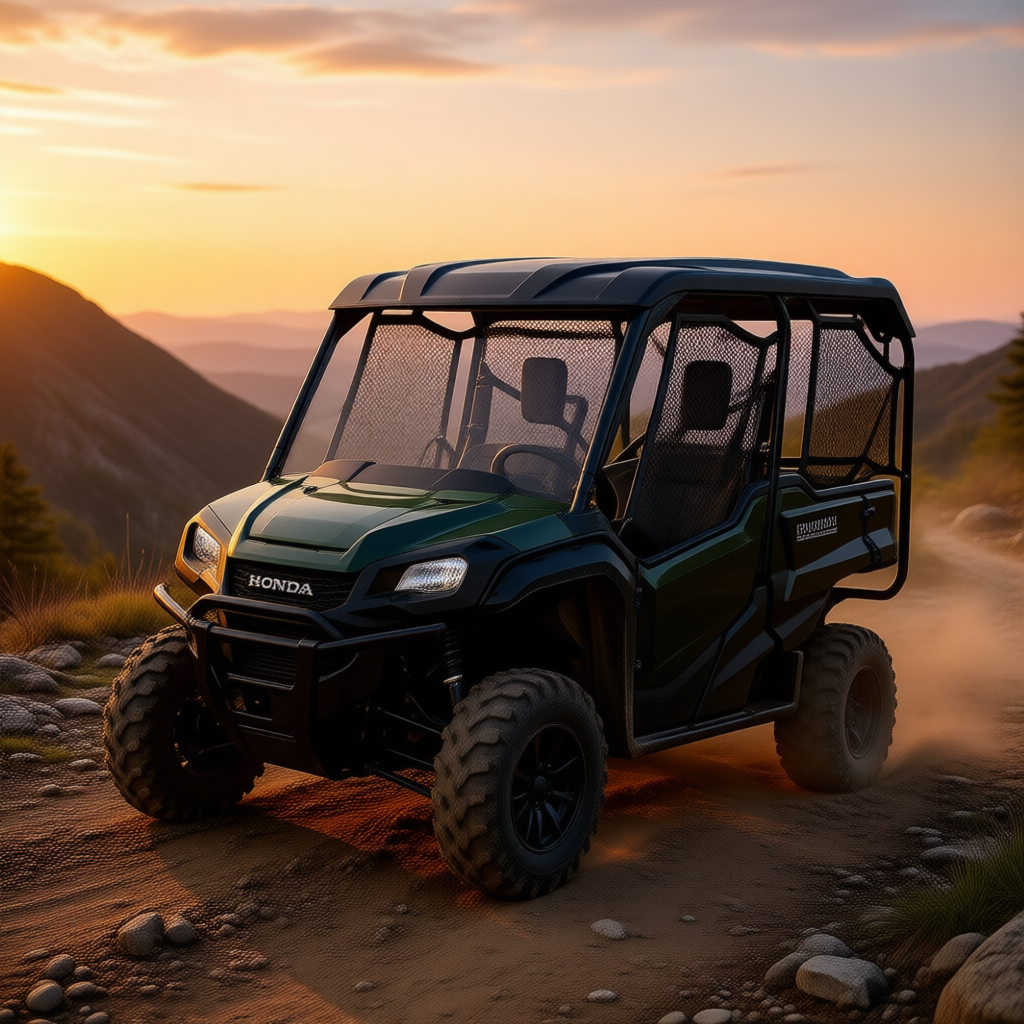
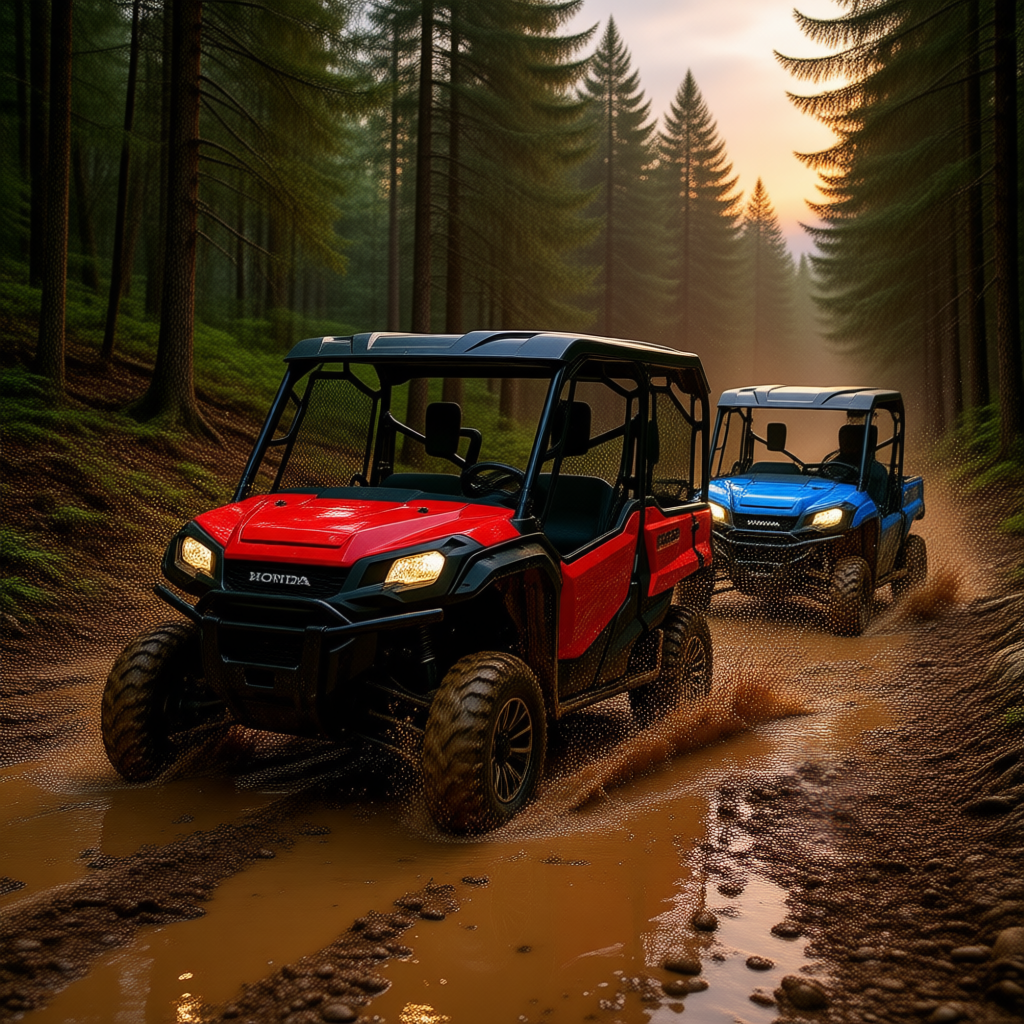
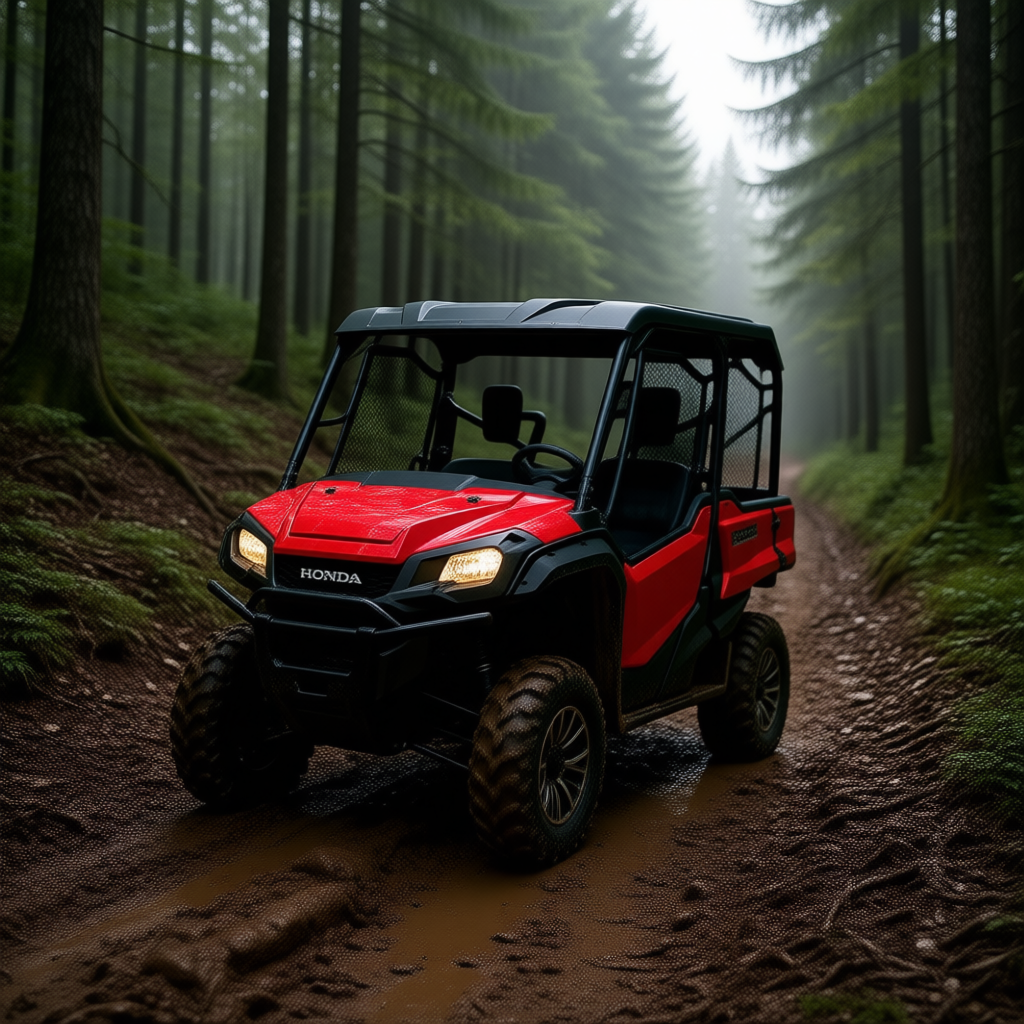
Honda Pioneer 1000: Unleashing Power and Performance in 2026
When it comes to dominating off-road adventures and conquering demanding utility tasks in 2026, the Honda Pioneer 1000 remains an undisputed heavyweight champion in the side-by-side market. Packaged with raw power and unmatched performance, this versatile vehicle is engineered to tackle any terrain with absolute ease. Whether you are a weekend trail warrior, a ranch manager, a farmer, or a dedicated hunting enthusiast, the 1000 Honda Pioneer offers a blend of legendary Honda reliability and serious brawn that few competitors can match.
The side-by-side market has become incredibly crowded over the last few years, with manufacturers constantly pushing the envelope in terms of displacement, massive suspension travel, and complex technology. Yet, the Pioneer 1000 continues to stand out from the crowd. It doesn’t just rely on flashy gimmicks or fragile over-powered engines; instead, it focuses on proven mechanical engineering, rider comfort, and long-term durability. Understanding the core Honda Pioneer 1000 specs is crucial for anyone looking to invest in a utility vehicle that can seamlessly handle both grueling weekday chores and adrenaline-pumping weekend thrills.
In this comprehensive guide, we will break down every single aspect of this incredible machine. From its revolutionary transmission and exact horsepower output to its maximum towing capabilities and chassis geometry, we leave no stone unturned. If you are in the market for the ultimate do-it-all UTV, this deep dive will show you exactly why the Honda Pioneer 1000 belongs at the top of your shortlist.
Honda Pioneer 1000 Specs: A Deep Dive into the 2026 Model
To truly appreciate this machine, we must look at the foundational Honda Pioneer 1000 specs. Honda has continuously refined the platform since its inception, ensuring it stays at the cutting edge of utility vehicle technology without sacrificing the bulletproof reliability the brand is globally known for. The 2026 model year continues to build upon this legacy, offering a perfectly balanced chassis, an optimized powertrain, and ergonomic improvements that make long days in the saddle much more enjoyable.
Below is a detailed breakdown of the standard Honda 1000 Pioneer specs that define its capabilities:
| Feature | Specification |
|---|---|
| Engine Type | 999cc liquid-cooled four-stroke longitudinally mounted twin-cylinder Unicam® |
| Bore and Stroke | 92.0mm x 75.15mm |
| Compression Ratio | 8.5:1 |
| Fuel Delivery | Electronic Fuel Injection (PGM-FI), 38mm throttle body |
| Transmission | Six-speed Dual-Clutch Transmission (DCT) with paddle shifters (Three-speed manual on base) |
| Final Drive | Direct front and rear driveshafts with selectable 2WD/4WD and front differential lock |
| Front Suspension | Independent double wishbone with stabilizer bar; 10.5 inches of travel |
| Rear Suspension | Rigid axle with independent trailing arms and stabilizer bar; 9.5 inches of travel |
| Brakes | Dual hydraulic discs (Front and Rear) |
| Tires | 26 x 9-12 (Front) / 26 x 11-12 (Rear) on standard models |
| Dimensions (L x W x H) | 117.4″ x 62.9″ x 77.4″ (Standard EPS model) |
| Ground Clearance | 11.2 inches |
| Wheelbase | 81.4 inches |
| Dry Weight | Approx. 1,717 lbs (varies by trim) |
These Honda 1000 Pioneer specs highlight a machine designed for ultimate versatility. The relatively narrow 62.9-inch width allows it to fit through tight wooded trails that larger, wider UTVs simply cannot navigate. Meanwhile, the 11.2 inches of ground clearance ensures that rocks, stumps, and deep ruts are cleared smoothly without damaging the vital undercarriage components.
How Much Horsepower Does a Honda Pioneer 1000 Have?
One of the most frequently asked questions by prospective buyers revolves around the Honda Pioneer 1000 hp. At the heart of this beast lies a robust 999cc liquid-cooled, longitudinally mounted twin-cylinder Unicam® engine. This powerhouse is capable of generating up to 72 horsepower. When evaluating Honda Pioneer 1000 horsepower, it is important to understand that peak numbers only tell half the story. The true magic of this engine lies in its power delivery and how that power is transferred to the ground.
The Unicam valvetrain design is borrowed directly from Honda’s championship-winning motocross and CRF dirt bikes. This advanced engineering allows for a highly compact combustion chamber and a significantly lighter engine compared to traditional dual-overhead-cam designs. By reducing the weight high up in the engine, it drastically improves mass centralization. The result is a lower center of gravity, making the UTV feel incredibly agile in corners and stable on side-hills.
Furthermore, the Honda Pioneer 1000 hp and torque curve is tuned specifically for low-end grunt and mid-range punch. Producing roughly 65 lb-ft of torque, this ample amount of power allows the Honda Pioneer 1000 to conquer challenging landscapes, tow heavy loads, and carry passengers effortlessly. Unlike highly-strung sport engines that require high RPMs to make power, the Honda Pioneer 1000 motor delivers its strength right off idle. This is essential for technical rock crawling, pulling stumps, and navigating deep mud pits.
Whether you are navigating rocky trails, climbing steep hills, or traversing through deep mud and water, the engine’s output ensures that you have the necessary strength to tackle any obstacle. Its high-performance engine provides the acceleration and torque needed to conquer even the most demanding off-road conditions. For those wondering exactly how much horsepower does a Honda Pioneer 1000 have compared to its smaller siblings, the jump from the 700 series is massive, providing the extra passing power and heavy-load capability that serious users demand. You can learn more about the differences in our breakdown of Honda horsepower.
Honda Pioneer Towing Capacity and Payload Limits
Power is nothing without the ability to put it to work, which brings us to the Honda Pioneer towing capacity. For farmers, hunters, and property managers, a UTV is essentially a compact tractor that needs to perform under immense strain. The Honda Pioneer 1000 towing capacity is officially rated at an impressive 2,000 pounds. This means you can easily hook up a loaded trailer full of firewood, hay bales, gravel, or even another stuck UTV and pull it out of the mud without straining the drivetrain or overheating the transmission.
In addition to its trailering abilities, the composite tilting dump bed boasts a payload capacity of 1,000 pounds. The bed is constructed from a high-strength, rugged composite material that will not rust, dent, or corrode like traditional steel beds. It also features heavy-duty latches and a user-friendly tailgate that can be removed entirely without the use of tools. When you combine the 1,000-pound bed capacity with the 2,000-pound towing limit and the 600-pound passenger capacity, the 1000 Pioneer Honda becomes an absolute workhorse capable of moving over 3,600 pounds of total material.
Check out our off-road collection Amazon products
To maximize the Honda Pioneer 1000 towing capacity, the vehicle is equipped with a standard heavy-duty 2-inch receiver hitch on most trims. The transmission also features a dedicated Turf mode and a low-range gear specifically designed to provide maximum torque at crawling speeds while hauling heavy loads. This mechanical gearing prevents the clutch slippage and belt-glazing overheating issues that are incredibly common in belt-driven competitors when they are subjected to heavy trailering on steep inclines.
The Revolutionary Dual-Clutch Transmission (DCT)
Not only does the Honda Pioneer 1000 offer impressive horsepower, but it also boasts a range of features that enhance its overall performance. The crown jewel of this drivetrain is Honda’s exclusive six-speed Dual-Clutch Transmission (DCT). Unlike traditional Continuously Variable Transmissions (CVTs) that rely on rubber belts and variable pulleys, the DCT uses actual mechanical gears, shafts, and hydraulic clutches, very similar to a modern automotive transmission.
The vehicle’s advanced transmission system allows for smooth and seamless gear changes, ensuring optimal power delivery at all times. Because it uses physical gears, there is virtually zero power loss between the engine and the wheels. You can operate the DCT in fully automatic mode, where the onboard computer shifts for you based on throttle input, vehicle speed, and load. Alternatively, you can switch to manual mode and use the paddle shifters mounted on the steering wheel to change gears instantly with the pull of a finger.
Inside the transmission, one clutch pack controls the odd gears (1, 3, 5) while the second clutch pack controls the even gears (2, 4, 6). As you accelerate, the next gear is pre-selected by the computer. When the shift occurs, the clutches swap in milliseconds, resulting in a seamless, uninterrupted flow of power. Furthermore, the DCT features a Sport mode and a sophisticated traction management system. In Sport mode, shifts are held longer for aggressive driving and rapid acceleration.
The traction management system allows the driver to select between 2WD, 4WD, and 4WD with a locked front differential. This, combined with its selectable modes, provides enhanced traction and control, allowing you to confidently navigate any terrain. The ability to engine brake in manual mode is also a massive advantage when descending steep hills with a heavy load, saving your mechanical brakes from premature wear.
Suspension, Chassis, and Off-Road Capabilities
In addition to its powerful engine, the Honda Pioneer 1000 is built to withstand the rigors of off-road adventures. Its durable construction, including a robust high-tensile steel frame and advanced suspension system, ensures stability and durability even in the toughest conditions. The front suspension utilizes independent double wishbones with a stabilizer bar, providing 10.5 inches of travel. The rear suspension features a rigid axle with independent trailing arms and a stabilizer bar, offering 9.5 inches of travel.
Recommended Insights From Our Guide Library:
- Is the Honda Pioneer 1000-6 Deluxe Crew Finally in Stock? (Latest Updates)
- CFMOTO UForce 1000 vs Honda Pioneer 1000: The Ultimate Utility UTV Comparison
- Honda Pioneer History & Evolution Guide
- Honda Pioneer 1000 vs Can Am Defender HD10: Which UTV Wins?
- How Fast Does a Honda Pioneer 1000 Go and What Are Its Limits?
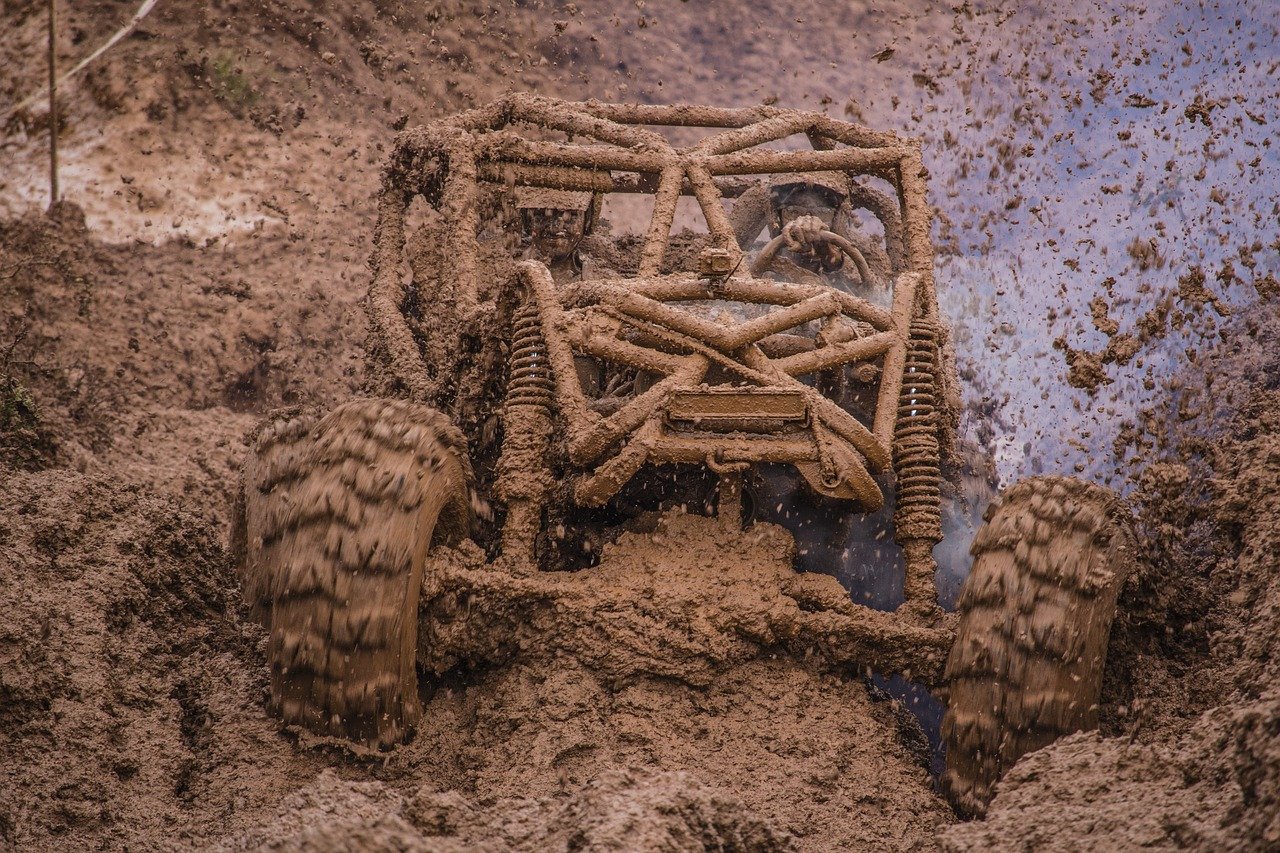
This means you can push the limits of your off-road adventures, without worrying about the vehicle’s performance or reliability. The heavy-duty shocks are valved specifically to handle heavy payloads in the bed without bottoming out, yet they remain compliant enough to absorb high-speed chatter on washboard dirt roads. The inclusion of front and rear sway bars drastically reduces body roll, giving the driver immense confidence when traversing off-camber trails.
Stopping power is just as important as horsepower. The Honda UTV 1000 is equipped with dual hydraulic disc brakes on both the front and rear axles. These brakes provide incredible bite and fade-free performance, even when the vehicle is fully loaded with gear, tools, and three passengers. The integration of the braking system with the DCT allows for incredibly precise speed control on technical descents, making it a favorite among mountain riders.
Trim Levels: Finding the Right Pioneer 1000 Honda
Honda offers the Pioneer 1000 in several distinct configurations to suit different budgets, terrains, and use cases. Understanding these trims will help you choose the perfect machine for your specific lifestyle.
- Pioneer 1000-5 Base: The foundational model offering the core 999cc engine, a three-speed manual transmission (with reverse), and standard 500-pound bed capacity. It is a no-nonsense, bare-bones work machine.
- Pioneer 1000-5 EPS: The most popular model, which adds Electric Power Steering (EPS). The EPS drastically reduces steering effort and deflects kickback from the trail, along with the inclusion of the six-speed DCT and an upgraded 1,000-pound bed capacity.
- Pioneer 1000-5 Limited: The premium work-and-play model. It features everything in the EPS trim but adds a factory-installed 4,500-pound winch, rugged alloy wheels, premium graphics, and enhanced styling components.
- Pioneer 1000-5 Trail: Designed specifically for tight woods and aggressive trail riding. It features upgraded FOX QS3 shocks with 12.5 inches of travel, 27-inch Maxxis Bighorn tires, and a slightly wider, more aggressive stance.
- Pioneer 1000-5 Forest: Similar to the Trail edition but equipped for all-weather operation. It comes with a factory-installed hard cab, heavy-duty skid plates, a winch, and aggressive mud-ready tires.
Pioneer 1000 vs. The Competition (Comparison Points)
How does the 1000 Pioneer stack up against the heavy hitters from other brands? Let’s look at some key comparison points for the 2026 landscape to see where Honda excels.
Polaris Ranger 1000: The Ranger is a direct competitor, offering similar horsepower and a matching 2,000-pound towing capacity. However, the Ranger relies on a traditional CVT belt system. While it provides smooth acceleration and an enclosed cab feel, Honda’s DCT offers superior engine braking, better long-term durability under heavy loads, and a more direct, connected feel to the trail without the fear of snapping a belt miles from home.
Can-Am Defender HD10: The Defender is globally known for its brute strength and class-leading payload capacities. It features a powerful V-Twin Rotax engine. While the Can-Am might edge out the Honda in sheer raw displacement and maximum payload on specific heavy-duty trims, the Honda Pioneer 1000 wins in overall chassis refinement, a significantly lower center of gravity, and the unmatched reliability of its gear-driven transmission.
Kawasaki Mule Pro-FX: The Mule Pro is a fantastic, highly durable workhorse. However, it generally produces less horsepower than the Pioneer 1000 and utilizes a standard CVT system. The Honda offers a much more sporty driving dynamic and advanced technological features like the paddle-shifter DCT, making it a better hybrid of serious work and recreational play.
Maintenance and Reliability of the Honda UTV 1000
Furthermore, the Honda Pioneer 1000 offers a range of utility features that make it a versatile work companion. With its impressive towing capacity and payload capacity, you can confidently tackle any task, whether it’s hauling equipment, transporting supplies, or assisting in agricultural work. However, maintaining that legendary reliability requires adhering to a strict maintenance schedule.
Because the Pioneer 1000 motor uses a Unicam cylinder head, valve clearance checks are a vital part of long-term maintenance. Unlike standard OHV engines, the Unicam design uses a single camshaft acting on both intake and exhaust valves via a specialized rocker arm. Checking these clearances at the manufacturer-recommended intervals (usually every 100 hours or annually for severe use) ensures the engine continues to produce its full 72 horsepower and prevents premature valvetrain wear.
Routine oil changes, differential fluid swaps, and air filter cleanings are straightforward, with Honda designing the service points to be easily accessible without removing half the body panels. The vehicle’s power steering and comfortable seating also contribute to a smooth and enjoyable ride, even during long hours of work. When it comes to accessorizing your rig for maximum efficiency, checking out guides on utility tasks. can provide excellent cross-brand inspiration for outfitting your Pioneer with the best aftermarket gear.
Frequently Asked Questions (FAQ)
How much horsepower does a Honda Pioneer 1000 have?
The Honda Pioneer 1000 produces approximately 72 horsepower from its 999cc liquid-cooled twin-cylinder engine. This Honda Pioneer HP rating provides the perfect balance of trail-riding agility and heavy-duty towing power without sacrificing engine longevity.
Check out our off-road collection Amazon products
What is the Honda Pioneer towing capacity?
The official Honda Pioneer towing capacity is 2,000 pounds. This allows owners to pull heavily loaded trailers, small campers, or landscaping equipment with ease, making it a top-tier choice for agricultural and property management work.
What kind of motor does the Pioneer 1000 Honda have?
It is powered by a 999cc liquid-cooled, four-stroke, longitudinally mounted twin-cylinder Unicam® engine. This Honda Pioneer 1000 motor uses advanced electronic fuel injection (PGM-FI) with a 38mm throttle body for optimal performance in varying altitudes and extreme temperatures.
Does the Honda Pioneer 1000 have a CVT transmission?
No, unlike almost all of its competitors, the Honda Pioneer 1000 features an exclusive six-speed Dual-Clutch Transmission (DCT) with paddle shifters, or a three-speed manual transmission on base models. The DCT completely eliminates the need for rubber drive belts and provides seamless, gear-driven power.
What is the top speed of the Honda Pioneer 1000?
Depending on the specific trim, tire size, and payload, the top speed of a stock Honda Pioneer 1000 is generally electronically governed to around 65 mph. This ensures the engine and drivetrain are not over-revved beyond their safe operating limits.
How much does a Honda Pioneer 1000 weigh?
The dry weight of the Pioneer 1000 ranges from approximately 1,717 lbs for the EPS model to over 1,850 lbs for the fully equipped Forest edition with a cab and winch. This substantial weight contributes to its planted, stable feel on the trails.
Conclusion: Unleashing Power and Performance
Community Reference & Authority Resources:
When it comes to horsepower, the Honda Pioneer 1000 delivers in spades. Its powerful engine, combined with its advanced transmission system and durable construction, ensures that you have the necessary strength and performance to conquer any off-road challenge. The 2026 lineup proves that Honda is still fiercely dedicated to building machines that prioritize the rider’s experience, long-term mechanical longevity, and engineering superiority over fleeting industry trends.
Whether you’re seeking thrilling adventures on technical single-track trails or tackling demanding work tasks on a sprawling cattle ranch, the Honda Pioneer 1000 is a reliable and capable companion that simply won’t disappoint. Experience the power and performance of the Honda Pioneer 1000 today and unleash the full potential of your outdoor lifestyle.
🔍 Explore More: See all guides for Honda Pioneer.