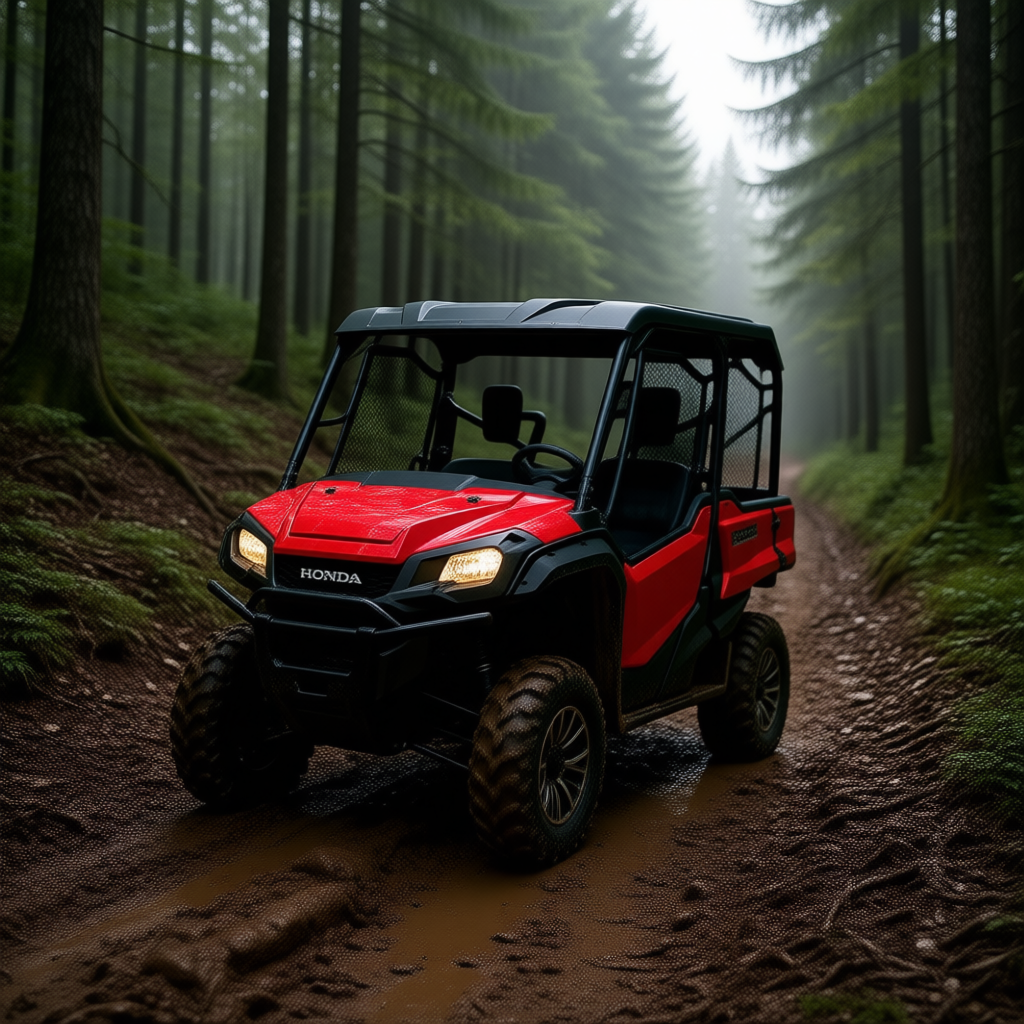
Introduction to the Honda FL250 Odyssey
When discussing the genesis of the modern side-by-side and recreational off-road vehicle, one name consistently rises to the top of the conversation: the Honda FL250 Odyssey. Introduced in 1977 and produced through 1984, the FL250 was a revolutionary machine that bridged the gap between traditional straddle-rider motorcycles and the fully enclosed utility vehicles we see on trails today. Unlike the three-wheeled ATCs of the same era, the Odyssey featured a steering wheel, a robust roll cage, and a single-seat bucket configuration that prioritized safety, stability, and pure off-road enjoyment.
For vintage off-road enthusiasts and collectors in 2026, the FL250 represents a golden era of Honda engineering. It was a time when the manufacturer was actively experimenting with new formats, ultimately laying the groundwork for the modern Honda Pioneer 1000 and the entire contemporary UTV market. The Odyssey wasn’t just a dune buggy; it was a meticulously designed powersports vehicle that utilized a torque-converter drivetrain and a punchy two-stroke engine to conquer sand dunes, forest trails, and muddy bogs with equal aplomb.
Understanding the legacy of the FL250 requires a deep dive into its mechanical DNA. From its unique air-cooled powerplant to its continuously variable transmission, every component was chosen to deliver a specific riding experience. In this comprehensive guide, we will explore the complete Honda FL250 specs, dissect its engineering marvels, and provide actionable restoration and maintenance advice to keep these legendary machines running flawlessly for decades to come.
Complete Honda FL250 Specs and Technical Data
To truly appreciate the engineering prowess behind the FL250, one must examine the raw numbers that defined its performance envelope. Honda designed the Odyssey to be lightweight yet durable enough to withstand the rigors of aggressive off-road use. Weighing in at a dry weight of approximately 180 kg (397 lbs), the FL250 was remarkably agile, allowing riders to navigate tight wooded trails and steep dune faces without the overwhelming mass of modern multi-passenger UTVs.
Below is a detailed breakdown of the factory Honda FL250 specifications. These numbers reflect the baseline engineering that made the Odyssey a benchmark in the late 1970s and early 1980s recreational vehicle market.
| Specification | Honda FL250 Odyssey Data |
|---|---|
| Production Years | 1977 – 1984 |
| Engine Type | 248cc, Air-Cooled, Single-Cylinder, 2-Stroke |
| Bore x Stroke | 70.0 mm x 64.8 mm |
| Carburetion | Single Keihin Slide Carburetor |
| Transmission | V-Belt Torque Converter (CVT) with Forward/Neutral/Reverse |
| Front Suspension | Trailing Arm with Coil-Over Shocks |
| Rear Suspension | Solid Axle with Swingarm and Single Shock |
| Front Brakes | Dual Drum Brakes |
| Rear Brakes | Single Mechanical Drum Brake |
| Dry Weight | 180 kg (397 lbs) |
| Fuel Capacity | 9.5 Liters (2.5 US Gallons) |
These specifications highlight a machine built for torque and low-end tractability rather than outright top speed. The 9.5-liter fuel tank, while seemingly small by today’s standards, provided ample range for the highly efficient 248cc two-stroke engine during trail rides and dune sessions. The inclusion of a reverse gear via the gearbox was a massive selling point at the time, offering utility and convenience that competing open-frame buggies simply could not match. When comparing these vintage specs to modern machines, it becomes clear how Honda prioritized mechanical simplicity and driver engagement over electronic nannies.
Engine and Performance: The 248cc Two-Stroke Powerhouse
At the heart of the Honda FL250 Odyssey lies its legendary 248cc air-cooled, single-cylinder two-stroke engine. This powerplant is a masterpiece of vintage thermodynamics, utilizing a reed-valve induction system to optimize the air-fuel mixture entering the crankcase. Unlike the liquid-cooled systems found on later models like the Honda FL350 Odyssey, the FL250 relied on strategic finning and a carefully routed airflow path to manage cylinder head temperatures, even during grueling summer dune runs.
The power delivery of the FL250 is distinctly two-stroke in character. Off idle, the engine provides a linear, manageable torque curve that makes technical trail riding a breeze. However, as the RPMs climb and the engine hits its powerband, the Odyssey surges forward with an addictive, raspy exhaust note that is music to any vintage enthusiast’s ears. The stock expansion chamber exhaust is a work of art, specifically tuned to maximize mid-range torque while keeping noise levels within acceptable limits for trail riding. Tuning this engine requires a keen understanding of jetting, as the single Keihin carburetor must be meticulously adjusted to account for ambient temperature, humidity, and elevation changes to prevent lean conditions that could lead to piston seizure.
Maintenance of the 248cc two-stroke is straightforward but demands strict adherence to service intervals. Because it is a two-stroke, lubrication is achieved either through a premix of high-quality 2T oil and gasoline or via Honda’s early oil-injection systems, depending on the specific model year and configuration. Ensuring the correct oil-to-gas ratio (typically 32:1 or 40:1 for premix setups) is critical for the longevity of the top end, crankshaft bearings, and connecting rod. For those looking to understand the broader lineage of Honda’s two-stroke performance engines, comparing the FL250 to the iconic Honda ATC250R reveals shared engineering philosophies focused on lightweight, high-revving power.
Furthermore, the airbox and intake tract design on the FL250 were engineered to keep dust and debris out of the carburetor, a vital feature for off-road survival. Replacing the original foam air filter with a modern, high-flow, oiled foam element is one of the best upgrades a restorer can make in 2026 to ensure optimal airflow while maintaining superior filtration.
Check out our off-road collection Amazon products
Transmission and Drivetrain: The CVT Belt-Drive System
One of the most defining and innovative features of the Honda FL250 is its continuously variable transmission (CVT), specifically the V-belt torque converter system. Unlike manual clutch setups that require constant rider input, the FL250’s automatic centrifugal clutch and variable-diameter pulleys allow the engine to stay in its optimal powerband regardless of terrain or vehicle speed. This “twist-and-go” operation was revolutionary for recreational buggies and made the Odyssey incredibly accessible to riders of all skill levels.
The drivetrain routes power from the engine’s drive clutch through a heavy-duty rubber drive belt to the driven pulley, which then feeds into a mechanical gearbox offering Forward, Neutral, and Reverse ranges. From the gearbox, a heavy-duty O-ring chain transfers the final drive to the solid rear axle. The drive belt is a critical wear item; measuring approximately 41.5 inches in length and just under an inch in width, it must be inspected regularly for cracking, glazing, or fraying. Sourcing high-quality replacement belts from reputable aftermarket manufacturers or specialists like Comet Clutches is essential for maintaining the FL250’s signature smooth acceleration.
Over time, the aluminum sheaves of the torque converter can develop wear grooves, or the internal grease can dry out, leading to belt slippage, erratic shifting, or a complete failure to engage. A complete teardown, cleaning, and re-greasing of the clutch components using high-temperature molybdenum disulfide grease is a mandatory step during any comprehensive FL250 restoration. Additionally, ensuring the engine-to-transmission alignment is perfectly true will prevent premature belt wear and drivetrain vibration.
The solid rear axle, while lacking the independent articulation of modern UTVs, provides immense durability and simplifies the drivetrain layout. It ensures that both rear wheels receive equal torque, which, combined with the lightweight chassis, allows the FL250 to claw its way up steep, loose inclines with surprising tenacity.
Chassis, Suspension, and Handling Characteristics
Recommended Insights From Our Guide Library:
The chassis of the Honda FL250 Odyssey is a study in tubular steel pragmatism. Honda engineered a robust perimeter frame that not only supported the engine and drivetrain but also integrated a heavy-duty roll cage to protect the driver in the event of a rollover. This focus on safety was a major differentiator in the late 1970s, a time when many off-road buggies were little more than welded tubing and a lawnmower engine. The steering wheel setup, connected via a direct mechanical linkage to the front spindles, provides raw, unassisted feedback from the terrain, demanding physical effort but rewarding the driver with precise cornering control.
Up front, the FL250 utilizes a trailing arm suspension design paired with coil-over shock absorbers. This setup provides a respectable amount of wheel travel for absorbing whoops, roots, and rocks, while maintaining a stable steering geometry. The rear suspension, however, is where the FL250 shows its vintage roots. It employs a solid rear axle housed within a swingarm, damped by a single, centrally mounted shock absorber. While this solid axle design limits independent wheel articulation over highly uneven terrain, it offers exceptional strength and predictable handling when sliding through sandy berms or carving up dune faces.
Handling the FL250 is an exercise in momentum management. Because it lacks the long-travel, multi-link suspension of contemporary side-by-sides, the driver must actively read the trail, using the steering wheel and throttle to dance the buggy over obstacles rather than plowing through them. The relatively narrow track width and low center of gravity make it incredibly nimble in tight woods, allowing it to slip between trees where wider modern machines would become hopelessly stuck. The ergonomic bucket seat holds the driver firmly in place during aggressive cornering, completing the visceral connection between man and machine. For those interested in the evolution of Honda’s off-road handling dynamics, exploring the archives of classic Honda ATV restoration provides fascinating insights into how chassis geometry has evolved over the decades.
Common Issues and Troubleshooting the FL250
Despite Honda’s legendary reputation for reliability, the FL250 Odyssey is now over four decades old, and time, use, and neglect have taken their toll on surviving examples. One of the most well-documented issues with the FL250 is frame stress cracking. The immense torque generated by the two-stroke engine, combined with the harsh impacts of off-road riding, frequently leads to micro-fractures in the tubular steel frame, particularly around the rear engine mounts and the rear swingarm pivot points. Any prospective buyer or restorer must thoroughly inspect these high-stress areas with a wire brush and a bright light, looking for telltale signs of rust weeping from hidden cracks.
Another frequent headache for FL250 owners revolves around the fuel system and carburetion. Modern ethanol-blended pump gas is highly detrimental to the vintage rubber fuel lines, petcock diaphragms, and carburetor floats found on the Odyssey. Ethanol attracts moisture, leading to internal corrosion of the steel fuel tank and the formation of varnish that clogs the tiny pilot and main jets in the Keihin carburetor. Symptoms of a failing fuel system include hard starting, erratic idling, and a bogging sensation when the throttle is applied. A complete fuel system overhaul, including an inline fuel filter and the use of ethanol-free recreation fuel or a high-quality lead substitute and fuel stabilizer, is non-negotiable for reliable operation.
Electrical gremlins also plague many surviving FL250s. The stator and CDI (Capacitor Discharge Ignition) units are critical for generating the spark required to ignite the dense two-stroke air-fuel mixture. Over time, the insulation on the stator windings can break down due to heat and vibration, resulting in a weak spark or a complete loss of ignition. If your FL250 is experiencing misfires or refuses to start despite having fresh fuel and a clean carburetor, testing the stator output and CDI resistance with a multimeter is the next logical step. For a deeper dive into diagnosing these vintage electrical systems, our comprehensive guide on vintage Honda troubleshooting offers step-by-step multimeter testing procedures.
Finally, the CVT drive clutch can become “sticky” if the machine has sat dormant for extended periods. The movable sheave can seize on the central shaft due to corrosion and dried grease, preventing the transmission from shifting ratios. This results in a machine that either bogs down horribly off the line or over-revs without transferring power to the wheels. Disassembly, polishing the shaft with fine emery cloth, and applying fresh specialty grease will usually cure this ailment.
Restoration and Maintenance Tips for 2026
Embarking on an FL250 Odyssey restoration in 2026 is a labor of love that requires patience, a well-organized workspace, and a commitment to sourcing the correct parts. The first and most critical step is a complete teardown. Strip the buggy down to its bare frame, removing the engine, suspension components, wiring harness, and steering linkage. Once bare, the frame should be media blasted to remove decades of caked mud, rust, and flaking paint. This is the perfect opportunity to have the frame professionally powder-coated in the factory Honda red or a custom color that reflects your personal style, ensuring a durable, chip-resistant finish that will last for years.
Sourcing New Old Stock (NOS) and high-quality aftermarket parts is the biggest challenge in modern FL250 restorations. While engine gaskets, piston rings, and basic bearings are still readily available through Honda dealerships and specialized vintage powersports suppliers, cosmetic trim pieces, specific dashboard decals, and original seat upholstery are becoming increasingly scarce. Engaging with dedicated online communities, such as the Pilot Odyssey Forums, is invaluable for tracking down rare parts, trading spares, and getting advice from master builders who have navigated the exact same restoration hurdles.
When reassembling the suspension, consider upgrading the original, worn-out shock absorbers with modern, gas-charged replacements that match the factory dimensions. While purists may argue for keeping everything strictly OEM, modern shock technology offers vastly improved damping and heat dissipation without altering the external appearance or mounting points of the FL250. Additionally, replacing all the original zinc-plated hardware with high-grade stainless steel bolts and nyloc nuts will not only make future maintenance easier but will also prevent the unsightly rust streaks that plague neglected restorations.
Maintenance of a freshly restored FL250 requires a proactive approach. After every ride, the air filter should be inspected, cleaned, and re-oiled. The drive belt tension must be checked, and the entire chassis should be washed with a mild detergent to remove corrosive mud and trail debris. Lubricating the steering linkage, swingarm pivot, and rear axle bearings with a high-quality, water-resistant marine grease will keep the suspension cycling smoothly and prevent premature wear. By treating the FL250 not just as a toy, but as a piece of mechanical history, you ensure it will be ready to hit the trails whenever the urge strikes.
Why the FL250 Remains a Collector’s Dream
Check out our off-road collection Amazon products
In the current vintage powersports market, the Honda FL250 Odyssey has transcended its status as a mere used off-road vehicle to become a highly sought-after collector’s item. The nostalgia factor is immense; for many enthusiasts, the Odyssey represents their first taste of off-road freedom, a machine that defined family dune trips and weekend forest adventures in the 1980s. As the generation that grew up with these machines enters their peak earning years, the demand for pristine, fully restored examples has skyrocketed, driving auction prices to unprecedented levels on platforms like Bring a Trailer and Barrett-Jackson.
Beyond the emotional connection, the FL250 is celebrated for its pure, analog driving experience. In an era where modern UTVs are equipped with power steering, traction control, and computer-managed fuel injection, the FL250 offers a raw, visceral connection between the driver and the terrain. The smell of burning premix, the mechanical whine of the CVT belt, and the physical effort required to turn the unassisted steering wheel combine to create a sensory experience that modern machines simply cannot replicate. It is a masterclass in mechanical simplicity, where every input yields an immediate, predictable reaction.
Furthermore, the FL250 represents the genesis of Honda’s off-road utility lineage. Without the experimental success of the FL250, Honda may never have developed the larger, more powerful FL350 and FL400 Pilot models, nor would they have eventually pivoted to create the multi-passenger Pioneer and Talon lines that dominate today’s market. Owning an FL250 is akin to owning a piece of automotive and powersports history, a tangible link to the innovative spirit that drove Honda to conquer the off-road world. Whether displayed in a climate-controlled garage or driven aggressively through the backwoods, the FL250 Odyssey commands respect and admiration wherever it goes.
Conclusion
Community Reference & Authority Resources:
The Honda FL250 Odyssey is far more than a relic of the 1970s and 1980s; it is a testament to Honda’s willingness to innovate and redefine what an off-road vehicle could be. From its peppy 248cc two-stroke engine and revolutionary CVT transmission to its rugged tubular chassis and steering-wheel control, the FL250 laid the foundational DNA for the entire modern side-by-side industry. While maintaining and restoring these vintage buggies presents unique challenges in 2026, the reward of piloting a piece of off-road history is immeasurable.
Whether you are actively wrenching on a barn-find FL250, hunting for that elusive NOS trim piece, or simply admiring the engineering brilliance of Honda’s early Odyssey line, the legacy of this incredible machine continues to inspire. We encourage all FL250 owners and enthusiasts to document their builds, share their trail stories, and keep the two-stroke flame burning bright. If you have a unique FL250 restoration project or a favorite memory of riding the dunes, drop a comment below and join the conversation. The trail ahead is long, and the Odyssey is just getting started.
🔍 Explore More: See all guides for Honda Pioneer.