




When it comes to how to keep choking trail silt out of UTV luggage, getting the right details matters. Pelican Air 1535 (2026 Refresh) | Milwaukee PACKOUT Rigid Organizer Box (Gen 3, 2026 Spec) | Overland Vehicle Systems (OVS) UTV Cargo Management Tie-Down Kit (2026)
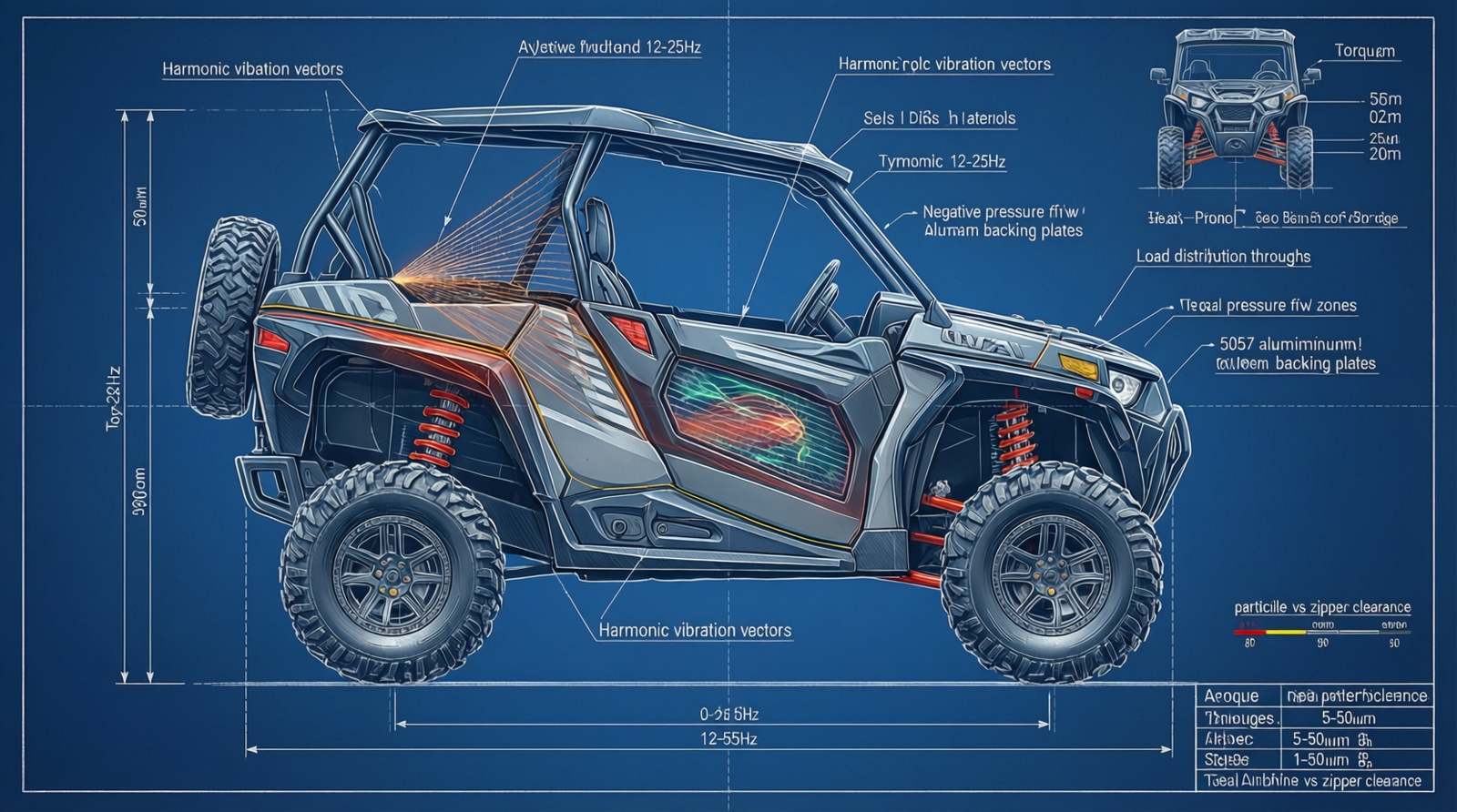
The Mechanical Failure Matrix: Why Standard UTV Cargo Systems Ingest Fine Particulates
Vibration-Induced Micro-Gap Formation & Roll-Top Creep
UTV chassis endure cyclic 12–25Hz harmonic vertical/lateral vibration combined with 18″ suspension articulation forces, forcing 0.5–2.0mm of flex at every seam interface and latch on soft-sided bags.
Friction-fold roll-top bags unroll 1–2mm per trail hour under harmonic loading, causing supposedly sealed dry bags to slowly peel open and create a direct ingress channel for abrasive dust to coat your gear. OEM single-point plastic latches warp under thermal cycling, with forum-verified gap expansion exceeding 1mm after 500 miles. Heat and trail vibration permanently deform factory plastic catches, turning a tight closure into a wide-open dust trap.
Venturi Effect & Negative Pressure Infiltration
Cruising at 15–45 mph over the cargo bed generates localized low-pressure zones and localized vacuum effects that actively pull unfiltered air out of your cargo area. Suspension rebound amplifies this pressure differential (ΔP ≈ 0.5–1.2 kPa), turning every bump into a mechanical piston that vacuums unsealed enclosures.
Standard soft-sided luggage lacks pressure-equalization, causing seal blowout during rapid elevation and temperature shifts. Without a dedicated vent, atmospheric pressure swings force your bag to puff or collapse, breaking the friction seal and dumping microscopic silt directly inside your dry bags.
Particulate Size vs. Seal Tolerance Mismatch
Trail caliche and silica silt ranges from 5–50μm, while standard #5/#7 nylon coil zippers feature 150–200μm tooth clearances that guarantee direct particulate bypass. Charged dust adheres to hydrophobic TPU and nylon via tire friction and aerodynamic shear, then capillary-wicks into micro-seams.
Your zipper teeth are three times wider than the dust, guaranteeing a permanent jam after a few miles of trail use. Static electricity glues dust to your bag’s exterior, and capillary action pulls it straight through fabric weaves and into your gear.
Material Fatigue, Gasket Compression Set & Strap Harmonic Stretch
Bed-surface temperatures of 120–150°F combined with UV exposure drop standard EVA and low-durometer rubber Shore A hardness by 15–25% over 200 trail hours. Cheap 1″ nylon straps elongate 8–12% under 15Hz vibration, causing cargo shift, lid separation, and case-to-bed impact.
Sun and engine heat bake your foam seals until they turn brittle and permanently lose their spring, eliminating static sealing force and turning “dust-proof” claims into dust traps. Flimsy straps stretch out mid-trail, letting heavy cases slide, bang against the bed, and compromise your tie-downs. Once a gasket flattens permanently, it stops pushing back against the lid, rendering the seal useless.
The Hard-Seal Enclosure Stack: Validated IP-Rated Hardware Architecture
Check out our off-road collection Amazon products
Primary Dust-Tight Enclosure
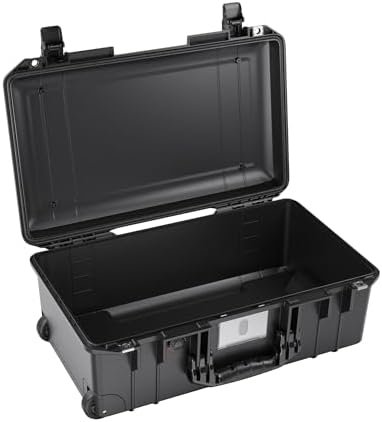
The Pelican Air 1535 (2026 Refresh) features an HPX2 auto-pressure equalization valve that directly counters Venturi-effect vacuum lock, while the 1/4″ EPDM O-ring blocks the 5–50μm silt that bypasses standard zippers. Rated IP67 for dust-tight and 1m immersion protection, the shell is molded from ASTM D4101 polypropylene copolymer resin.
This rigid polymer eliminates the 0.5–2.0mm flex that ruins soft bags, maintaining a 130 lbs static crush rating at just 8.5 lbs empty. The internal volume measures exactly 19.75″ L × 14.06″ W × 7.69″ H. The HPX2 valve vents pressure differentials during altitude and temperature shifts without letting dust in, while the compression-molded 1/4″ EPDM O-ring creates a physical barrier that standard friction folds cannot match.
Modular Impact-Resistant Alternative
The Milwaukee PACKOUT Rigid Organizer Box (Gen 3, 2026 Spec) utilizes dual-overcenter metal latches with integrated silicone gasket channels to eliminate the 1mm+ thermal gap expansion that ruins OEM plastic boxes. Rated IP65 for dust protection and low-pressure water jets, the box features 5052 aluminum corner impact guards that absorb bed-to-case impacts which crack standard polymer.
The 22″ model provides 1,200 in³ of organized internal volume and features integrated anchor loops rated at 500 lbs WLL. You secure heavy modules directly to your chassis without relying on flimsy plastic catches, while the silicone channels maintain consistent sealing force even after 200+ trail hours.
Anti-Vibration Securement Foundation
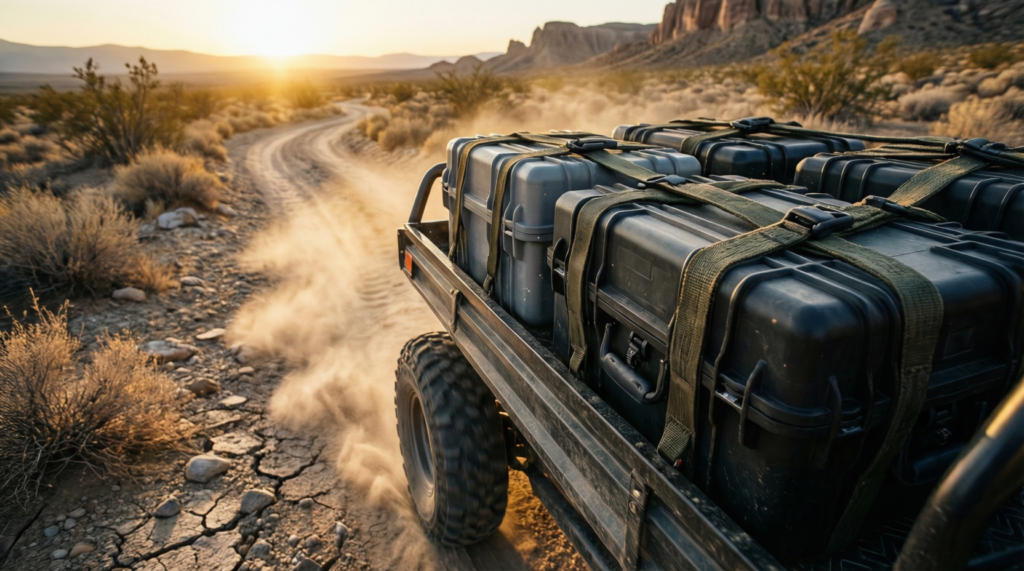
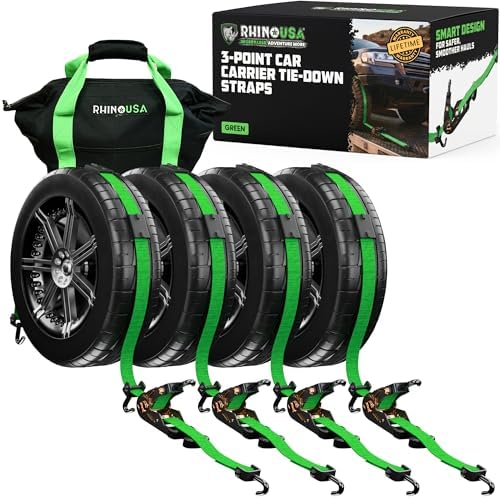
The Overland Vehicle Systems (OVS) UTV Cargo Management Tie-Down Kit (2026) uses 2″ UV-stabilized polyester webbing to eliminate the 8–12% harmonic stretch of cheap nylon straps under 15Hz vibration. 3/8″ Grade 8 steel cam buckles with anti-vibration lock pins hold tension without backing off over washboard trails, delivering a 5,000 lbs WLL rating.
The 3″ × 3″ × 1/8″ 5052 aluminum backing plates distribute dynamic loads across bed flex zones, preventing anchor pull-through and micro-cracking. You lock cases to the chassis with zero lateral drift, transforming loose cargo into a rigid, vibration-dampened extension of the vehicle frame.
The Technical Setup Blueprint: Chassis Anchoring, Torque Protocols & Transmission Clearance
CVT vs. DCT Architecture Constraints & Trailside Service Clearance
CVT platforms require T30 Torx (Polaris) or 10mm hex (Can-Am) sockets plus a clutch spreader to safely remove the primary/secondary without damaging splines, with cover bolts torqued to 18–22 ft-lbs in a strict cross-pattern.
When you drop a CVT cover for a belt swap, loose dust ruins clutch splines and scores housing surfaces. Hard-sealed cases prevent silt migration into the open CVT housing during trailside service, keeping your workspace sterile. DCT platforms require no belt or CVT tools, shifting trailside focus to 12V relay access and shifting solenoid inspection. Max safe torque for 1/4″-20 UNC factory threaded inserts is strictly 12–15 ft-lbs to prevent instant thread stripping.
Recommended Insights From Our Guide Library:
- Trail-Ready Gear That Actually Survives the Mud and Rocks – Pioneer Honda Lovers
- How to Prevent Trail Dust Intrusion in UTV Cargo – Pioneer Honda Lovers
- UTV luggage alternatives Archives – Pioneer Honda Lovers
- why standard zippered luggage fails on UTV trails Archives – Pioneer Honda Lovers
- Conquer the Elements: Your Guide to Weatherproof UTV Storage – Pioneer Honda Lovers
Bed Flex Mitigation & Anchor Load Distribution Matrix
| Component | Hardware Spec | Safe Torque Protocol | Failure Consequence | Steel Chassis Anchors | 3/8″ Grade 8 bolts + 1/4″ split lock washers + Nyloc nuts | 25–30 ft-lbs | Anchor pull-through under dynamic load | Reinforced Plastic Beds | 3″ × 3″ × 1/8″ 5052 aluminum backing plates | 12–15 ft-lbs | Polymer tearing at wheel arches | Cargo Case Latches | Compression-molded EPDM/silicone gaskets | 5–8 in-lbs (hand-tight + 1/4 turn) | Over-compression and gasket blowout |
|---|
Factory plastic beds flex ~3/8″ at the centerline under 300 lbs. Without a backing plate, your anchor bolts will tear through the polymer at the wheel arches. You distribute impact loads across the subframe rather than concentrating stress on weak plastic mounting points.
Dynamic Load Zoning & Center of Gravity Management
Forum-verified rule dictates that 70% of cargo weight must sit forward of the rear axle centerline to maintain optimal traction and handling dynamics. Heavy hard cases placed at the tailgate induce rear-end squat, reduce front traction, and elevate rollover risk during rapid suspension articulation.
Stacking heavy gear at the back lifts your front tires and kills steering control on technical climbs. Route OVS webbing at 45° angles across anchor loops to counteract lateral 12–25Hz harmonic shift, locking cases against side-to-side trail vibration to prevent cargo migration that alters handling dynamics mid-corner.
Universal Trail-Ready Tooling Specification
Stage your socket and Torx set outside the cargo bed perimeter before case access to prevent cross-contamination during trailside diagnostics. Map your tools precisely: T25 for GPS/roof, T30 for CVT covers, T40 for rack, 10mm for battery/fuses, 12mm for access panels/solenoids, 13mm for tie-down anchors, and 15mm for recovery/wheels.
Check out our off-road collection Amazon products
Dropping a T30 Torx into a dusty cargo zone guarantees you will track that grit directly into your CVT housing or relay box. Keep your diagnostic tools isolated from the silt zone, and your mechanical interventions remain clean and repeatable.
Field Verdict & Operational ROI: Eliminating Contamination Costs & Maximizing Trail Uptime
Preventing CVT Housing Contamination & Solenoid Failure
Hard-seal architecture eliminates silt ingress during open-transmission trailside service, directly protecting critical drivetrain components from environmental degradation. A single grain of silica in a CVT housing shreds a $200 belt, scores clutch splines, and triggers hydraulic solenoid short-circuits.
Sealed cargo turns a 2-hour trailside repair into a 20-minute belt swap. You stop paying for premature drivetrain failures caused by environmental contamination during routine maintenance.
Extending Gear Lifespan & Eliminating Replacement Cycles
IP67/IP65 enclosures with EPDM and silicone gaskets paired with pressure valves outperform OEM plastic and soft bags by maintaining consistent sealing force under extreme thermal cycling. The system stops permanent zipper jamming, electronics corrosion, and textile degradation.
You stop buying replacement dry bags every season. Your GPS, radios, and recovery gear stay dry and functional, regardless of trail conditions or elevation shifts.
The Procurement Imperative: Why Hard-Seal Architecture is Non-Negotiable
Community Reference & Authority Resources:
Upfront investment in ASTM D4101 polypropylene, 5052 aluminum reinforcement, and Grade 8 securement offsets repeated soft-gear replacement, OEM latch failures, and costly drivetrain contamination repairs. Validated torque protocols and load zoning transform cargo management from a liability into a repeatable, trail-proven operational standard.
Treat your cargo system as a critical drivetrain component, not an accessory. Proper sealing and anchoring pays for itself by eliminating trail abandonment, electrical failures, and premature gear replacement.
🔍 Explore More: See all Wild Testing guides for how to keep choking trail silt out of UTV luggage.
Check out our off-road collection Amazon products