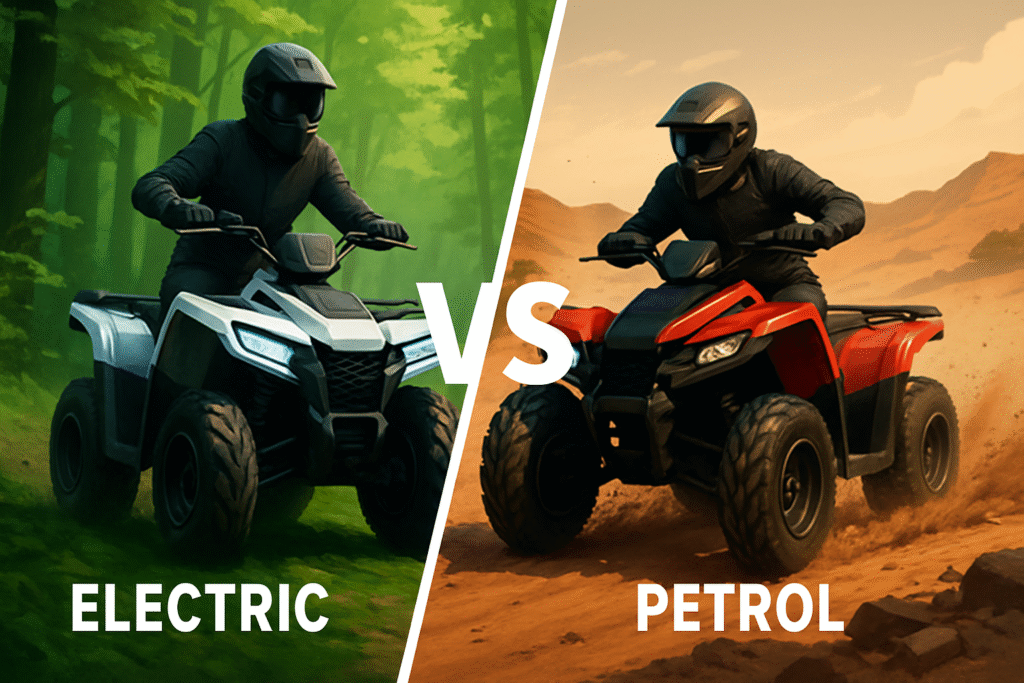
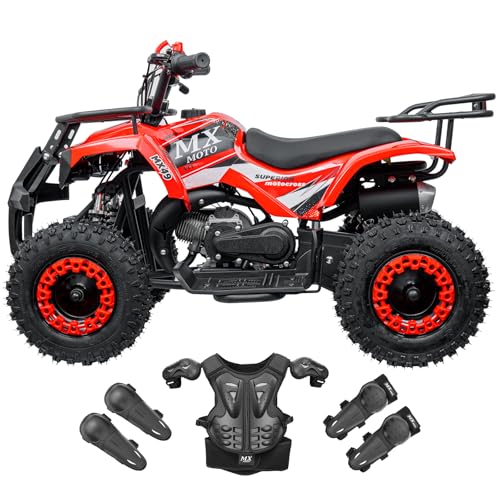
The world of off-roading is evolving rapidly, and one of the biggest debates among enthusiasts right now is the choice in the electric ATV vs gas showdown. As battery technology improves, more riders are wondering if it is time to ditch the combustion engine.
As a long-time rider, I’ve experienced the thrill of both, and I can tell you that each has its own unique set of advantages and disadvantages. From raw horsepower and torque curves to trail etiquette and garage maintenance, the differences are stark.
In this blog post, we’re going to put these two types of ATVs head-to-head in an ultimate off-road showdown. We will dive deep into updated technical specs, battery ranges, and engine outputs.
We’ll explore everything from power and performance to maintenance, cost, and environmental impact. Whether you’re a seasoned pro, looking for a youth quad, or a newcomer to the sport, this guide will help you understand the key differences and decide which type of ATV is the perfect fit for your off-road adventures.
So, let’s get started!
Power and Performance: A Tale of Two Torques
When it comes to off-road performance, both electric and petrol ATVs have a lot to offer, but they deliver their power in very different ways. Understanding these delivery methods is crucial for the electric ATV vs gas debate.
The Instant Torque of Electric
Electric ATVs are famous for their instant torque. Because they do not rely on a continuously variable transmission (CVT) or engine RPMs to build power, the moment you touch the throttle, you get 100% of the available power delivered straight to the wheels.
This can be a huge advantage on the trail, especially when you need to navigate tricky obstacles, crawl over rocks, or climb steep hills without losing momentum. Modern electric quads utilize high-efficiency brushless DC (BLDC) motors and advanced controllers that allow for incredibly smooth, linear power delivery. This makes for a highly controlled and predictable ride, even in slippery mud.
As the folks at SuperATV note, “Electric motors have a huge torque advantage compared to internal combustion engines.” [1]
The Roaring Power of Petrol
Petrol-powered ATVs, on the other hand, deliver their power with a roar. The sound, smell, and vibration of a 4-stroke internal combustion engine are a big part of the traditional off-road experience for many riders.
While they may not have the same instantaneous 0-RPM torque as their electric counterparts, petrol ATVs offer a much wider powerband and generally boast a significantly higher top speed. A modern 850cc or 1000cc petrol ATV can easily push past 70 mph, whereas most electric ATVs are governed to preserve battery life.
The ability to refuel in minutes at any gas station or from a spare jug in the back of your truck also gives them an unbeatable advantage in terms of sustained high-speed range.
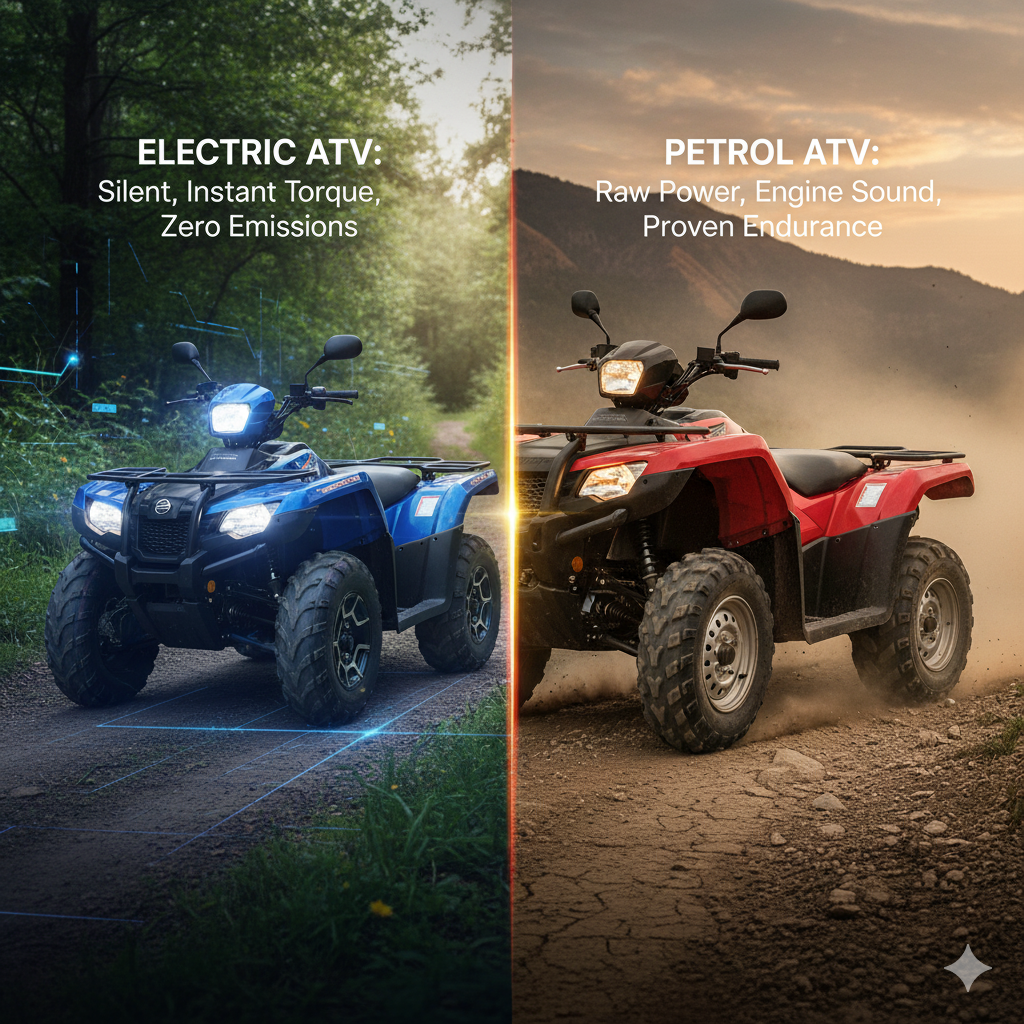
Electric ATV for Adults vs Gas ATV: Technical Specs Compared
When comparing an electric ATV for adults vs gas ATV options, the technical specifications highlight two entirely different engineering philosophies. Adult gas ATVs typically feature 500cc to 1000cc liquid-cooled engines, producing anywhere from 30 to 90+ horsepower, paired with heavy-duty CVTs and fuel injection systems.
Conversely, adult electric ATVs (like the Segway Snarler or Polaris Ranger XP Kinetic platform) utilize massive 56V to 400V lithium-ion battery packs powering electric motors that produce 5kW to 15kW of continuous power, with peak outputs mimicking a 600cc gas engine. While gas ATVs win on top-end speed and all-day range, electric ATVs dominate in low-end pulling power and mechanical simplicity.
Maintenance and Cost: The Price of Power
When it comes to the long-term cost of ownership, there are some significant differences between electric and petrol ATVs. The initial purchase price is only half the battle.
The Low-Maintenance Electric
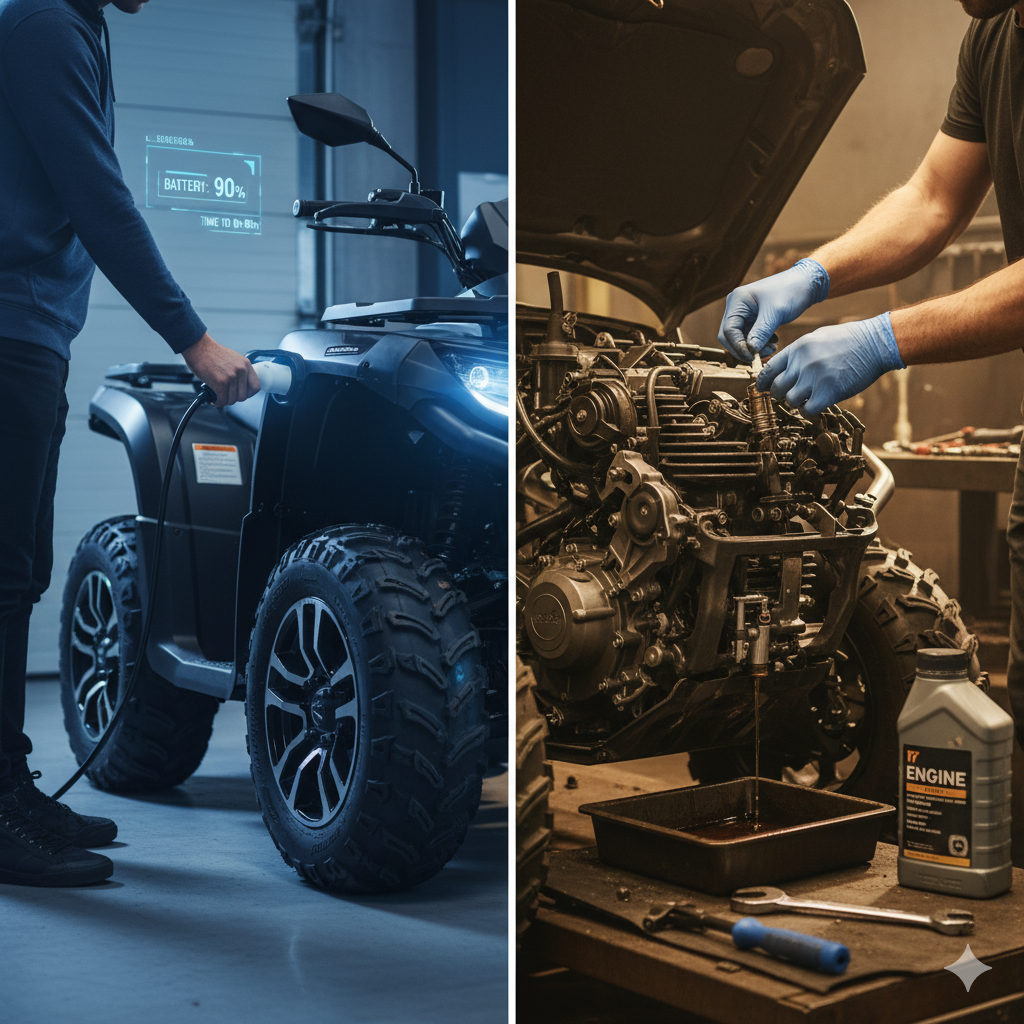
Electric ATVs have drastically fewer moving parts than their petrol-powered counterparts. An electric drivetrain might have fewer than 20 moving parts, compared to hundreds in a combustion engine.
There is no engine oil to change, no oil filters to replace, no spark plugs to foul, no carburetors to clean out, and no exhaust valves to adjust. You simply maintain the suspension, check the brake fluid, and lube the chassis. This translates to significantly lower maintenance costs and much less time spent wrenching in the garage.
As one source points out, “Electric ATVs have fewer moving parts. There’s no oil to change, no spark plugs, and no emissions systems to worry about.” [2] The main long-term cost for an electric ATV is the eventual replacement of the battery pack, though modern Lithium Iron Phosphate (LFP) batteries are rated for over 3,000 charge cycles before significant degradation occurs.
Check out our off-road collection Amazon products
SHOP THE COLLECTION
The Familiar Maintenance of a Petrol ATV
A petrol ATV requires strict, regular maintenance to keep it running smoothly. Neglect a gas quad, and it will leave you stranded on the trail.
This routine maintenance includes regular oil and filter changes, replacing air filters (especially in dusty conditions), cleaning or rebuilding the CVT clutch, checking coolant levels, and ensuring the fuel system is free of varnish. While these tasks are familiar to most off-road enthusiasts and parts are widely available, they definitely add to the overall cost and time of ownership.
However, petrol ATVs are generally much cheaper to purchase upfront than their electric counterparts, making them more accessible for beginners on a budget.
Range and Refueling: How Far Can You Go?
For any off-road adventure, range anxiety is a real concern. Here is how electric and petrol ATVs stack up when it comes to going the distance.
The Limited Range of Electric
One of the biggest drawbacks of electric ATVs is their limited range. Most electric models can travel between 20 and 50 miles on a single charge, depending on the terrain, rider weight, and throttle usage. [3] Aggressive riding in steep mountains will drain a battery much faster than flat trail cruising.
Recharging can also be a time-consuming process. A standard Level 1 (110V) outlet might take 8 to 10 hours to fully charge a depleted ATV battery. While some premium models offer Level 2 (240V) or DC Fast Charging that cuts this down to 1-4 hours, finding a place to plug in deep in the woods is nearly impossible without a gas generator.
Recommended Insights From Our Guide Library:
- Electric ATV vs. Petrol ATV: The Ultimate Off-Road Showdown – Pioneer Honda Lovers
- 10 Reasons why to buy a Electric ATVs – Pioneer Honda Lovers
- The Ultimate Guide to Electric ATVs: Everything You Need to Know – Pioneer Honda Lovers
- The Silent Revolution: Decoding the ATV Electric Drive Conversion Kit – Pioneer Honda Lovers
- The Electric ATV Showdown: 2025 vs. 2026 Models – Pioneer Honda Lovers
The Go-Anywhere Petrol
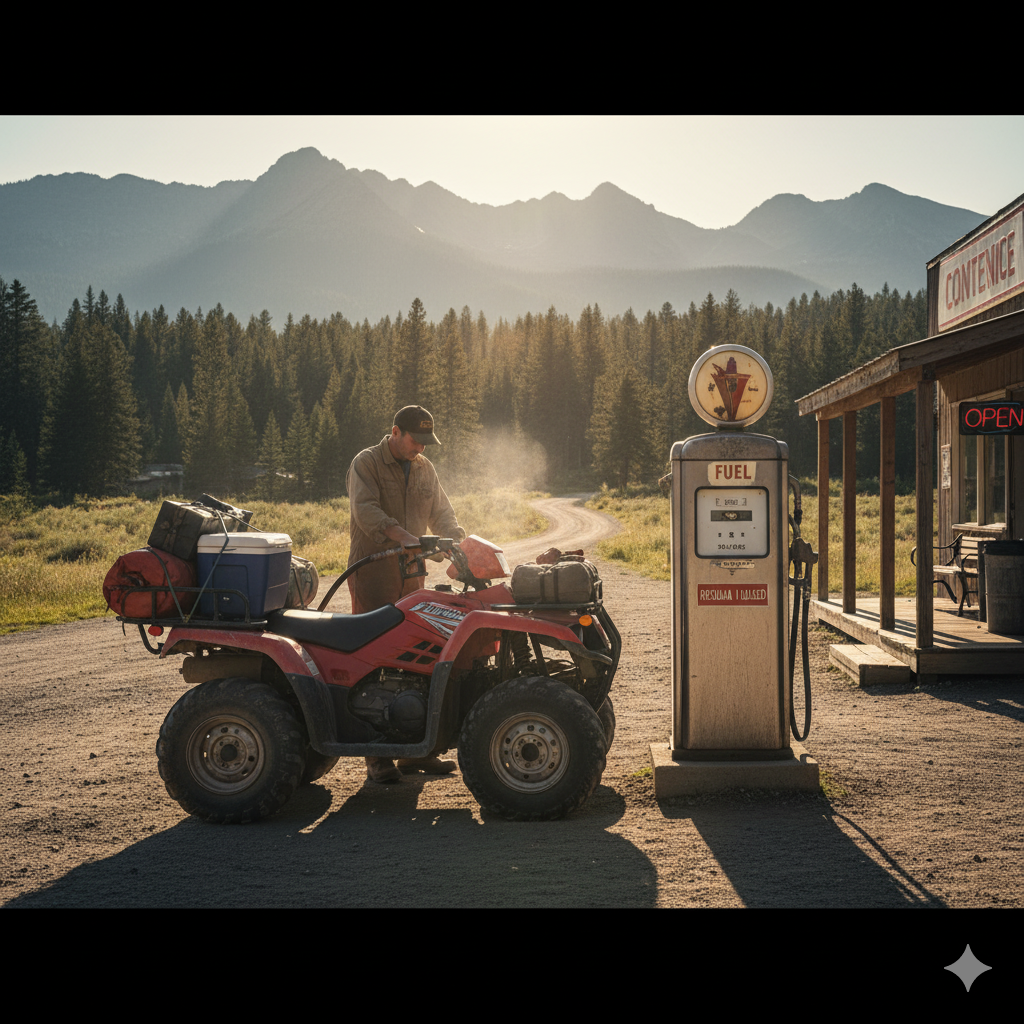
Petrol ATVs have a massive, undeniable advantage when it comes to range. With a full tank of gas, most mid-size to large petrol models can travel 80-100 miles or more. [3]
And when you do run out of fuel, the fix is instantaneous. You can simply refuel at the nearest gas station or pour from a spare can in your truck, getting you back on the trail in less than five minutes. For deep-woods boondocking or multi-day camping trips, gas is still king.
The Environmental Impact: A Quieter, Cleaner Ride
For many riders, the environmental impact and trail access rules regarding their off-road activities are incredibly important considerations.
The Eco-Friendly Electric
Electric ATVs are the clear winner when it comes to environmental friendliness. They produce zero tailpipe emissions and are incredibly quiet, often operating at under 60 decibels. This means you can enjoy the sounds of nature without disturbing wildlife or annoying neighbors.
This stealthy operation also makes them a premier choice for hunters who need to get close to game without spooking it, or for riding in sensitive ecological areas and private lands where strict noise restrictions are in place.
As one source notes, “Electric ATVs are highly recommended because they don’t produce toxic gases, in comparison with the gas ATVs.” [4] Furthermore, you can safely store and charge an electric ATV inside a closed garage without the risk of carbon monoxide poisoning or fuel spills.
The Traditional Petrol
Petrol ATVs, with their internal combustion engines, inherently have a larger environmental footprint. They produce noise pollution, exhaust emissions, and carry the risk of leaking oil or fuel onto the trail.
However, it is worth noting that modern petrol ATVs are much cleaner and quieter than their predecessors from the 1990s and early 2000s. Thanks to strict EPA regulations, advancements in electronic fuel injection (EFI), and sophisticated exhaust catalytic systems, today’s gas quads are highly efficient machines.

How Do Electric Side-by-Side UTVs Compare to Gas-Powered Ones?
The electric revolution isn’t just limited to quad bikes; side-by-sides are getting the battery treatment too. So, how do electric side-by-side UTVs compare to gas-powered ones?
Electric UTVs (like the Polaris Ranger XP Kinetic) excel at heavy-duty work tasks that require low-speed, high-torque pulling, such as dragging logs, pulling stumps, or climbing steep grades with a heavy payload. They do this without the engine straining, overheating, or burning out a CVT belt.
However, just like electric ATVs, their weakness is sustained range under heavy load. Towing a 2,000 lb load will drain an electric UTV battery in a fraction of the time it would take a gas UTV to empty its fuel tank. For all-day ranch work or long trail rides, gas side-by-sides still hold the crown for convenience.
Frequently Asked Questions (Electric ATV vs Gas)
How do electric ATVs differ from gas-powered ones?
At a fundamental level, how do electric ATVs differ from gas-powered ones? Gas ATVs use an internal combustion engine burning petrol to create controlled explosions that turn a crankshaft, requiring complex transmissions, exhaust, and cooling systems. Electric ATVs draw stored chemical energy from a battery pack, sending it through a controller to an electric motor that uses magnetic fields to spin the axles. This makes electric ATVs vastly simpler, quieter, and torque-heavy, while gas ATVs offer longer ranges and faster refueling.
What are the benefits of electric ATVs compared to gas-powered ones for kids?
If you are shopping for your little one, what are the benefits of electric ATVs compared to gas-powered ones for kids? The benefits are massive. First is safety: electric ATVs do not have a scorching hot exhaust pipe that can burn a child’s leg. Second is control: most electric youth ATVs feature Bluetooth connectivity, allowing parents to limit the top speed (e.g., from 15 mph down to 5 mph) and even shut off the vehicle remotely. Finally, they are much easier to maintain—no mixing oil and gas, no changing spark plugs, and no yanking a heavy pull-start cord. You just plug it into a wall outlet.
Check out our off-road collection Amazon products
SHOP THE COLLECTION
Conclusion: The Choice is Yours
So, which is better in the electric ATV vs gas debate? The truth is, there’s no single right answer for every rider.
The best choice for you depends entirely on your individual needs, riding style, and priorities. If you value instant torque, ultra-low maintenance, the ability to ride on private property quietly, and an eco-friendly machine, an electric ATV might be the perfect choice.
If you need a longer range for deep-woods exploration, a higher top speed for open desert runs, and the familiar, mechanical roar of a petrol engine, then a traditional gas ATV is undoubtedly the way to go.
Ultimately, the best way to decide is to test ride both and see which one you prefer. No matter which you choose, you’re sure to have a blast on the trails. Happy riding!
References
[1] The Problem with Electric UTVs (and Why You Should Get One Anyway) – SuperATV
[2] Electric ATV Scooter vs Gas-Powered: Which Is Better? – Mia Dynamics
[3] Gas vs. Electric ATVs: Which One Should You Choose? – Hypergogo
[4] Gas ATV vs Electric ATV: Which Is Better? – Westshore Marine
Community Reference & Authority Resources:


🔍 Explore More: See all guides for Honda Pioneer.