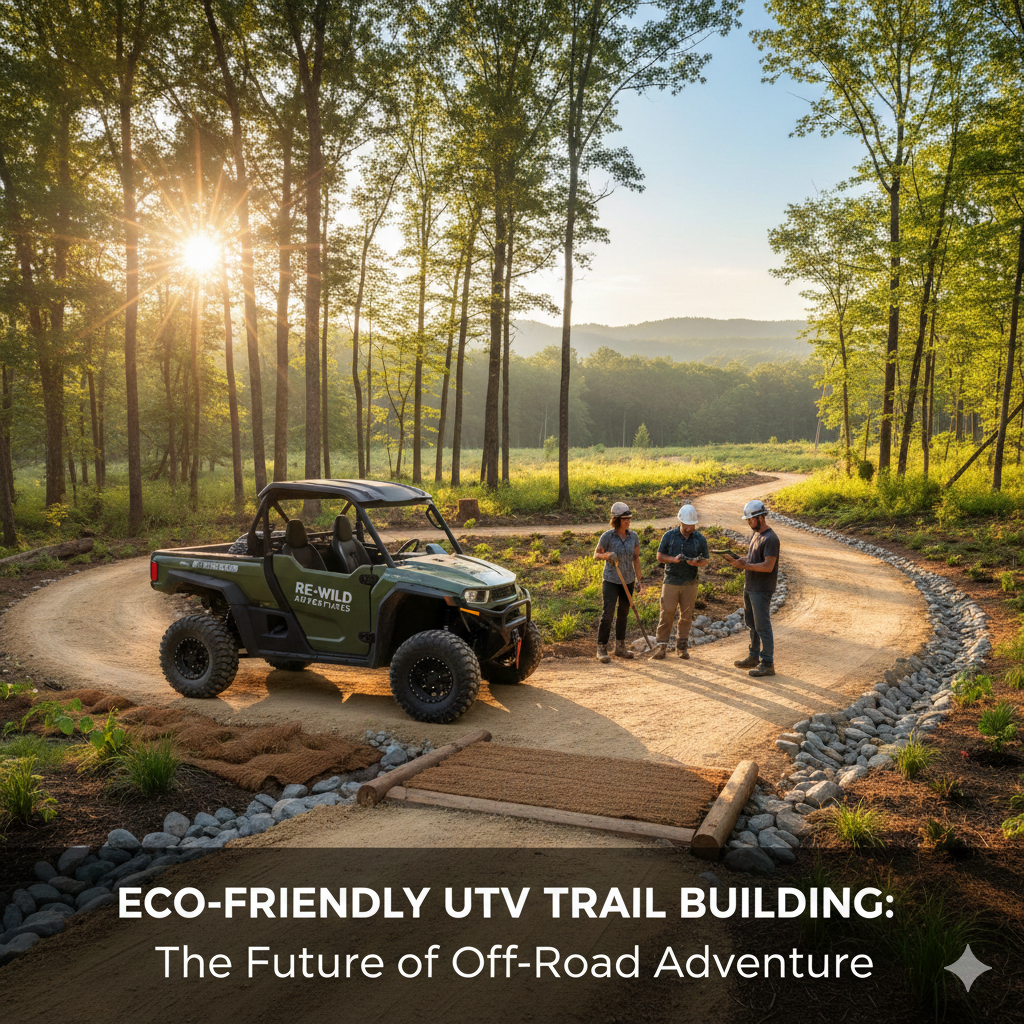




The spirit of off-roading is one of adventure, freedom, and connection with the wild.
Yet, this pursuit of the untamed often comes with a hidden cost to the very landscapes we seek to explore.
The challenge before the modern UTV enthusiast and trail manager is to reconcile the thrill of the ride with the imperative of environmental stewardship.
This is the essence of eco-friendly UTV trail building, a discipline that is rapidly evolving from a niche concern into a foundational best practice.
It is a philosophy that recognizes the trail itself as a living part of the ecosystem, not merely a path cut through it, but a carefully integrated feature.
The Foundation of Sustainable Trail Design
The journey toward a truly sustainable trail begins long before the first shovel breaks ground; it starts with meticulous planning and an unwavering commitment to the principles of minimal impact.
The goal is to create a trail that is not only fun and challenging to ride but one that is also inherently resilient to the forces of nature, requiring minimal long-term intervention.
A poorly designed trail is a magnet for erosion, a conduit for sediment runoff, and a scar on the landscape that requires constant, costly maintenance.
Conversely, a well-designed, eco-friendly trail works with the topography, not against it, utilizing natural features to its advantage.
This involves a deep understanding of hydrology, soil science, and local ecology, ensuring the trail is a natural fit for its environment [1].
Hydrology: The Master of Trail Longevity
Water is the single greatest enemy of a sustainable trail, as it is the primary agent of erosion, capable of turning a smooth path into a deeply rutted, impassable wash in a single heavy rain event.
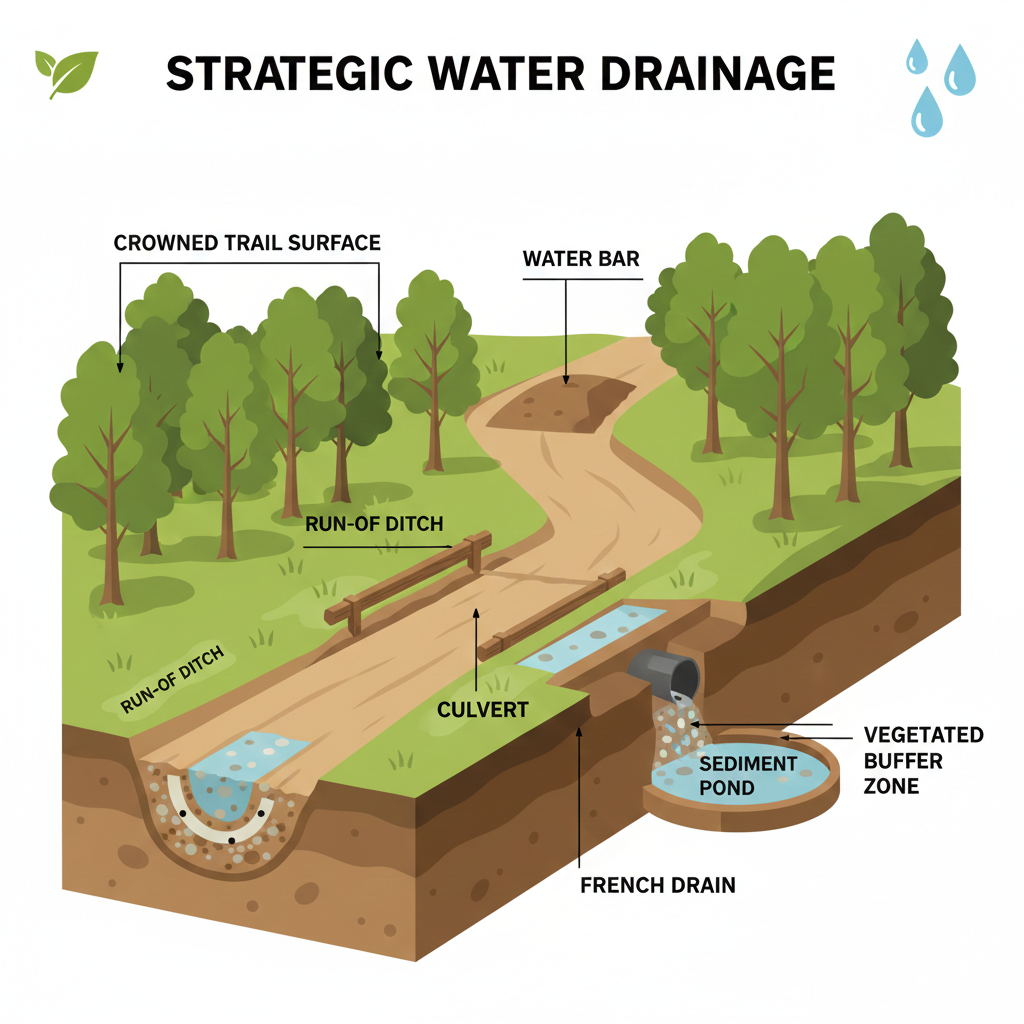
Therefore, the most critical aspect of eco-friendly trail building is effective water management, which is achieved through a series of subtle, yet highly effective, engineering techniques.
Outsloping the trail surface is a fundamental technique, gently tilting the tread so that water flows off the outside edge rather than down the center, preventing the accumulation of water and the formation of a destructive channel [2].
For steeper sections, water bars and grade dips are employed, which are strategically placed obstacles or depressions that divert water off the trail.
The key is to keep the water moving across the trail, not down it, minimizing its erosive power and preserving the trail surface [3].
Another crucial technique is the use of rolling dips, which are gentle, concave sections of the trail that allow water to cross without causing a jarring ride, effectively blending water management with ride quality.
These dips are designed to be self-cleaning, preventing the buildup of sediment that can compromise their function over time.
The Art of the Half-Bench Cut and Full-Bench Cut Considerations
Trail construction often involves cutting into a hillside, a technique known as bench cutting, but for eco-friendly trails, the half-bench cut is the preferred method.
This technique involves excavating only half of the trail width from the hillside, with the remaining half built up using the excavated material, minimizing the disturbance to the natural slope.
This reduces the amount of unstable fill material that could wash away, resulting in a trail that is inherently more stable and blends more seamlessly into the surrounding terrain [4].
The excavated material, or ‘spoil,’ must be carefully managed and dispersed to avoid creating unsightly and erosive piles, further adhering to the minimal impact philosophy.
In extremely steep or unstable terrain, a full-bench cut may be necessary, where the entire trail width is excavated from the hillside, but this is reserved for areas where stability is paramount and the environmental cost of a full cut is outweighed by the risk of catastrophic trail failure.
In these cases, the cut slope must be immediately stabilized with bioengineering techniques, such as planting native vegetation or installing erosion control blankets, to prevent long-term scarring of the landscape.
Materials and Reinforcement: Building to Last with Minimal Impact
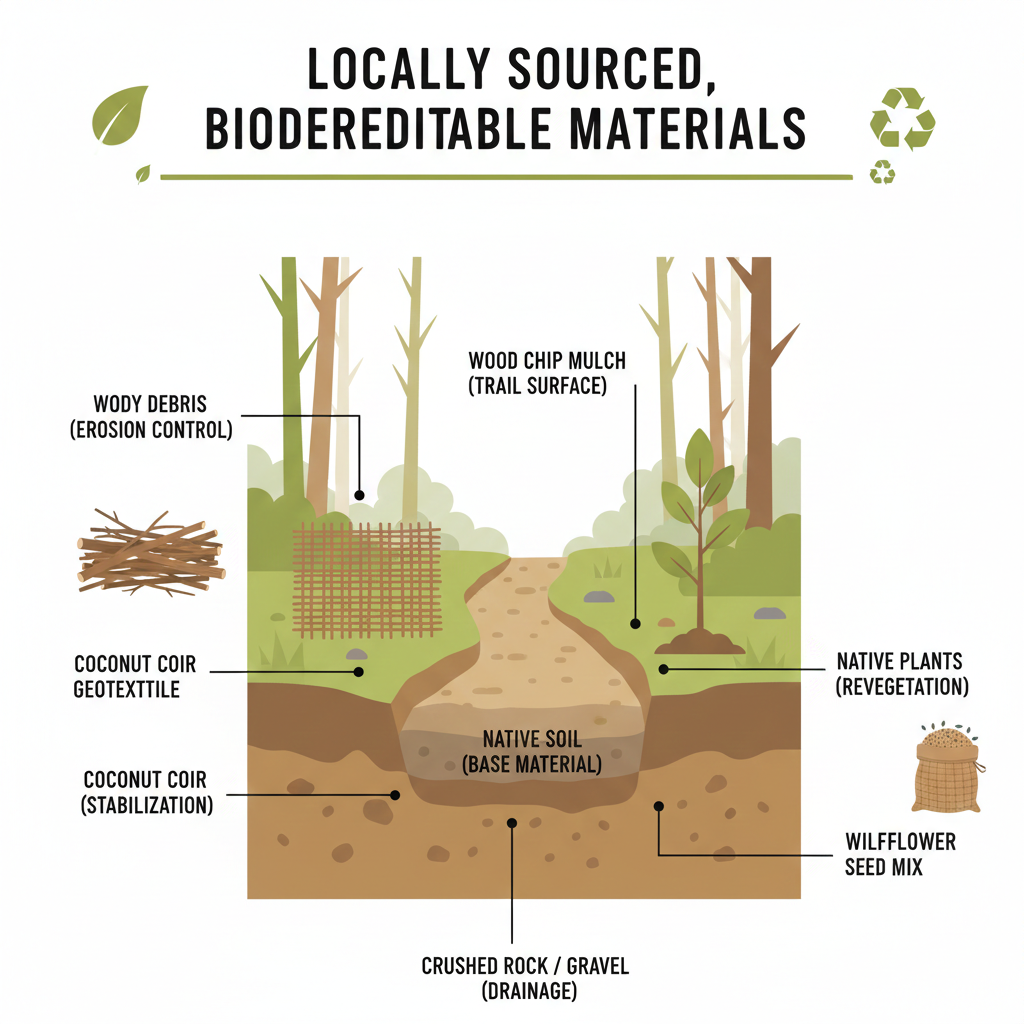
The choice of materials is another cornerstone of sustainable trail building, where the best material is almost always the native soil and rock, utilized in a way that maximizes its natural strength and stability.
However, there are times when reinforcement is necessary to protect sensitive areas or to bridge challenging terrain, requiring the use of modern, durable, and responsible materials.
Geotextiles and Geogrids: The Invisible Reinforcement
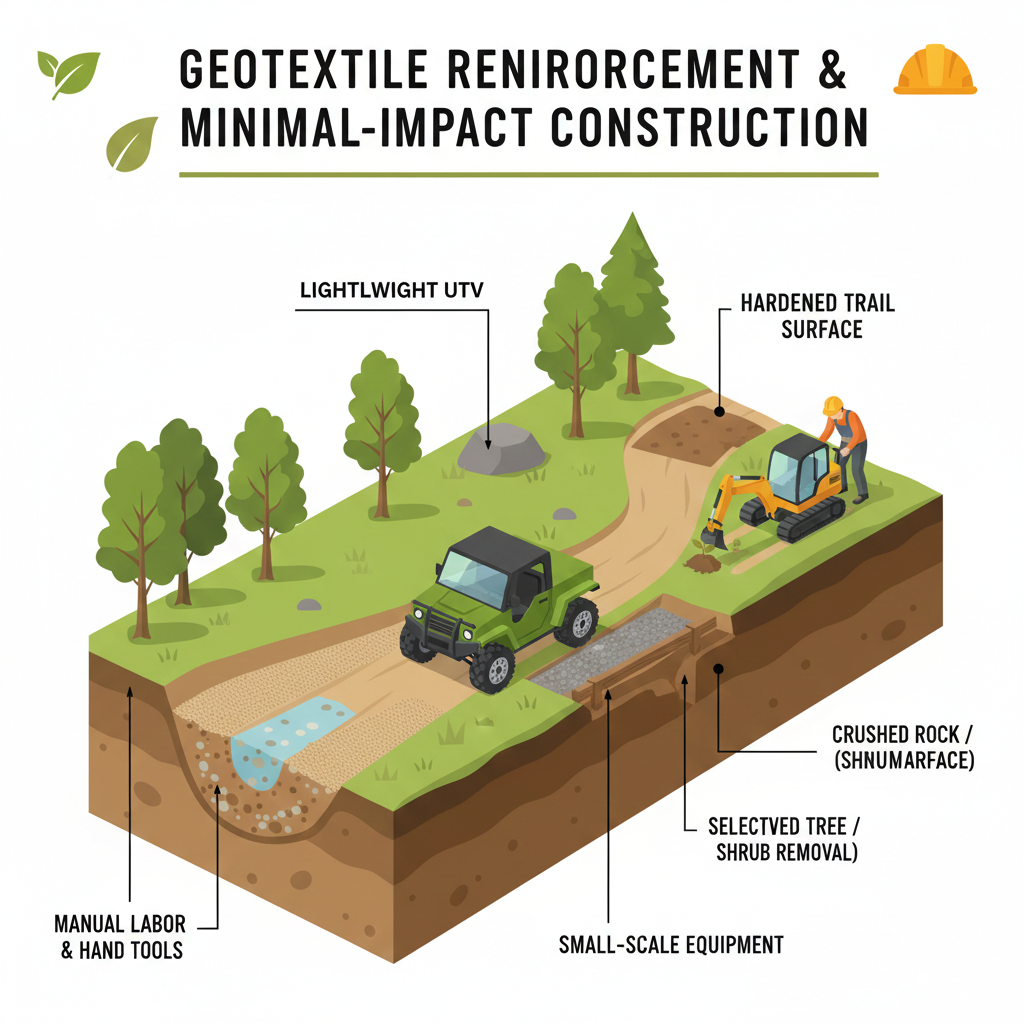
In areas with soft, saturated, or highly erodible soil, geotextiles and geogrids offer a modern, durable solution for trail reinforcement.
These synthetic fabrics and meshes are laid down beneath the trail surface to separate the subgrade from the base material, effectively distributing the load of the UTV and preventing rutting.
A geotextile acts as a filter, allowing water to pass through while holding the soil particles in place, while a geogrid provides structural reinforcement, interlocking with the aggregate to create a much stronger base [5].
While synthetic, their long lifespan and effectiveness in preventing major erosion events make them a net positive for environmental protection and trail longevity.
The proper installation of these materials is crucial, requiring careful preparation of the subgrade to ensure maximum contact and load distribution, which prevents premature failure and the need for disruptive repairs.
Locally Sourced and Biodegradable Options for Structures
Where possible, the use of locally sourced materials dramatically reduces the carbon footprint associated with transportation, making the trail more sustainable from a logistical perspective.
Crushed local rock, or ‘crusher run,’ is often the ideal material for surfacing, providing excellent drainage and a durable tread that blends naturally with the environment.
For bridging small streams or wet areas, crib walls and puncheon made from locally harvested, untreated timber can be used, which, when properly designed, can last for decades and eventually decompose naturally [6].
The use of recycled materials, such as reclaimed plastic lumber for boardwalks, is also gaining traction, turning waste into durable trail infrastructure and supporting the circular economy.
These structures must be designed to allow for natural water flow and to accommodate potential flooding, ensuring they do not act as dams or barriers to aquatic life, a key consideration in riparian zone protection.
Ecosystem Protection: Minimizing the Footprint and Maximizing Restoration
A truly eco-friendly trail is one that respects the boundaries of the surrounding ecosystem, requiring careful attention to wildlife corridors, riparian zones, and sensitive plant communities.
Protecting Riparian Zones and Water Quality
Riparian zones, the areas adjacent to streams and rivers, are among the most ecologically sensitive areas, vital for water quality, bank stability, and providing habitat for a vast array of species.
Eco-friendly trail design dictates that stream crossings should be minimized and, when necessary, engineered to the highest standard to prevent environmental damage.
The preferred method is a well-designed bridge or a hardened, low-water crossing that prevents UTV tires from directly contacting the streambed or banks, preventing the introduction of sediment and pollutants into the water system [7].
When constructing bridges, the use of clear-span designs is preferred, as they eliminate the need for in-stream supports, minimizing disturbance to the streambed and bank stability, which is crucial for fish spawning and aquatic insect habitat.
Furthermore, all construction activities near water must adhere to strict sediment control protocols, such as the use of silt fences and sediment traps, to prevent runoff during construction.
Wildlife Corridors and Trail Placement
The placement of the trail must consider the movement patterns of local wildlife, avoiding known migration routes or critical breeding and nesting habitats.
The trail corridor itself should be kept to the minimum necessary width to reduce habitat fragmentation, ensuring that the trail is a shared space where recreation and nature can coexist [8].
Seasonal closures may also be implemented to protect sensitive species during critical times, such as nesting or calving seasons, demonstrating a commitment to ecological timing.
The use of trail camouflage, such as planting native, low-growing vegetation along the edges, can help the trail blend into the landscape, reducing its visual impact and making it less of a barrier to wildlife movement.
Restoration and Reclamation of Unnecessary Trails
An essential part of eco-friendly trail building is the restoration and reclamation of old, unsustainable, or redundant trails that are no longer needed.
This involves physically closing the trail, often by placing natural barriers like logs or rocks, and then actively restoring the area by decompacting the soil, spreading native seed mixes, and transplanting local vegetation [9].
This process not only heals the scars on the landscape but also reinforces the commitment to the designated trail system, ensuring that UTV use is concentrated in the most sustainable areas.
The Role of the Rider: Leave No Trace Principles in Action
Even the most perfectly engineered trail requires responsible use to remain sustainable, making the rider the final, and perhaps most important, component of the eco-friendly equation.
The principles of Leave No Trace (LNT) are the guiding philosophy for responsible off-roading, translating environmental ethics into actionable behavior.
Stay on the Designated Trail and Respect the Tread
The single most important LNT principle for UTV riders is to stay on the designated trail, as going off-trail, or ‘trail blazing,’ bypasses the careful engineering designed to manage water and protect the environment.
It leads to the creation of illegal, unsustainable trails that quickly erode and damage sensitive vegetation, and respecting the boundaries of the trail is a non-negotiable aspect of eco-friendly riding [10].
Riders must also be mindful of the tread, the actual surface of the trail, and avoid unnecessary spinning of tires, which causes rutting and loosens the surface material, accelerating erosion.
Tread Lightly and Respect Wet Conditions
Riding on wet or muddy trails causes significantly more damage than riding on dry, firm surfaces, as deep ruts created in mud can harden into permanent channels, accelerating erosion and making the trail unpleasant for future users.
The mantra of Tread Lightly encourages riders to avoid riding when trails are saturated, and if a trail is too muddy, the most responsible action is to turn around and return another day [11].
This simple act of restraint is a powerful tool for trail preservation, demonstrating a commitment to the long-term health of the trail system.
The Future: Innovation in Trail Maintenance and Management
The future of eco-friendly UTV trail building is moving toward smarter, more proactive maintenance, utilizing new technologies to monitor conditions remotely and intervene before minor issues become major problems.
Remote Sensing and Predictive Modeling for Proactive Maintenance
The use of drones and satellite imagery for remote sensing is revolutionizing trail monitoring, allowing managers to quickly identify areas of high erosion risk, track changes in vegetation, and assess the effectiveness of water management structures [12].
Predictive modeling uses weather data and topographical information to forecast where and when erosion is most likely to occur, allowing for targeted, efficient maintenance, reducing the need for extensive, reactive repairs.
This proactive approach, often referred to as precision trail management, ensures that maintenance resources are deployed exactly where and when they are needed most, maximizing their impact and minimizing the overall cost of trail upkeep.
The Economic Case for Sustainability and Community Involvement
While eco-friendly construction may sometimes require a higher initial investment, it consistently proves to be more cost-effective in the long run, as a sustainable trail requires significantly less maintenance, saving thousands of dollars in labor and materials over its lifespan [13].
Furthermore, a well-maintained, environmentally responsible trail system attracts more riders, boosting local economies and supporting the recreation industry, making the investment in sustainability an investment in the longevity and prosperity of the entire off-road community.
The involvement of the UTV community in volunteer trail work is also a critical component of sustainability, fostering a sense of ownership and stewardship among the users who benefit most from the trails.
The path to sustainable UTV recreation is paved with thoughtful design, responsible materials, and a commitment from every rider.
By embracing eco-friendly trail building, we ensure that the thrill of the ride will endure, leaving behind only tracks of adventure, not scars of neglect.