




The conversation around off-road vehicles often centers on power, performance, and rugged capability.
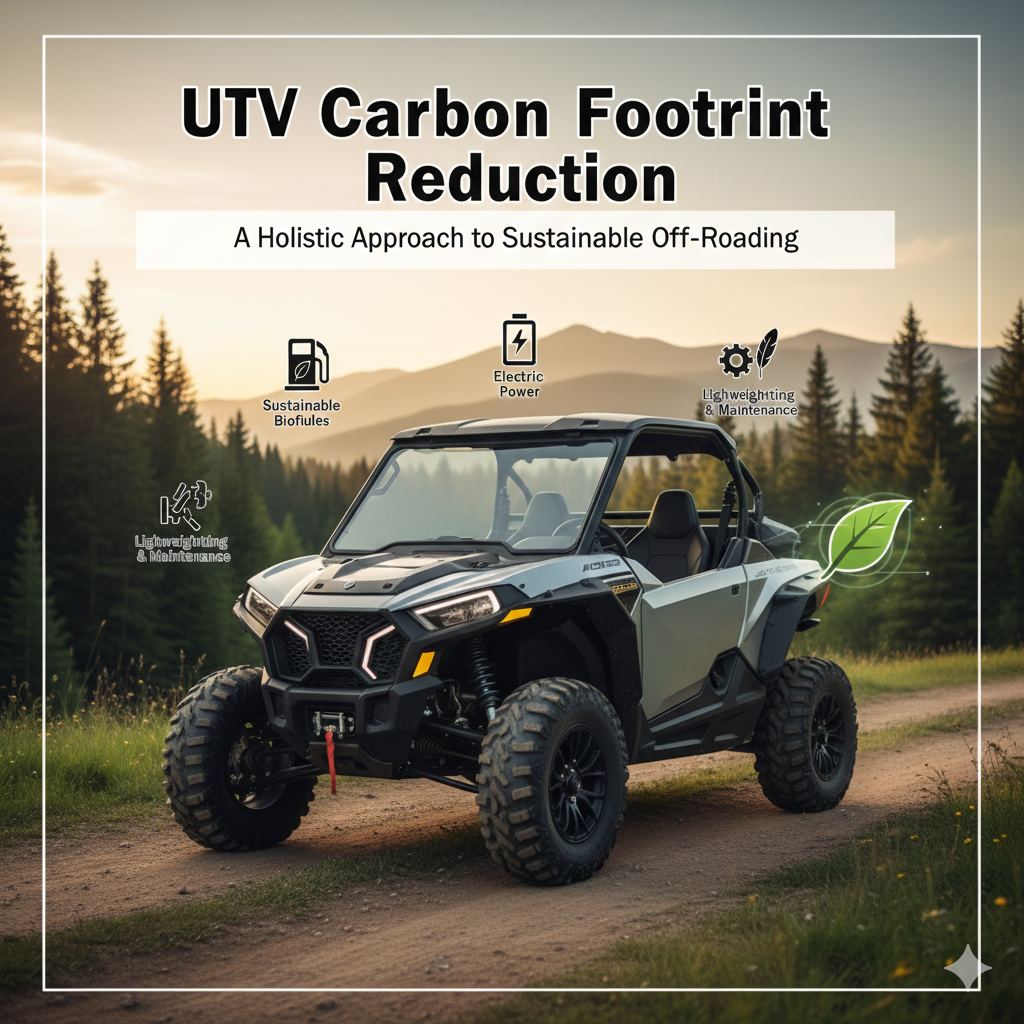
However, a new, critical dimension has entered the discussion: the UTV carbon footprint reduction.
This is not just about the exhaust fumes released on the trail; it is a far more complex challenge that encompasses the entire lifecycle of the vehicle, from raw material extraction to end-of-life disposal.
Reducing this footprint requires a multi-faceted approach, involving manufacturers, component suppliers, and, most importantly, the riders themselves.
It is a commitment to ensuring that the pursuit of adventure does not come at the expense of the planet, but rather becomes a testament to responsible stewardship.
The Lifecycle of Carbon: A Well-to-Wheel Analysis
To effectively reduce the carbon footprint of a UTV, one must first understand where the emissions originate, adopting a holistic perspective that goes beyond the tailpipe.
The industry is increasingly adopting a “well-to-wheel” perspective, which accounts for all greenhouse gas emissions associated with the vehicle’s operation, from the source of the energy to its final use [1].
Manufacturing and Material Sourcing: The Embodied Carbon
The initial carbon debt of a UTV is incurred during its manufacturing, primarily through the energy-intensive production of steel, aluminum, and plastics.
This “embodied carbon” can represent a significant portion of the vehicle’s lifetime emissions.
Manufacturers are beginning to address this by sourcing materials from suppliers who use renewable energy and by incorporating a higher percentage of recycled content, which drastically reduces the energy required for production [2].
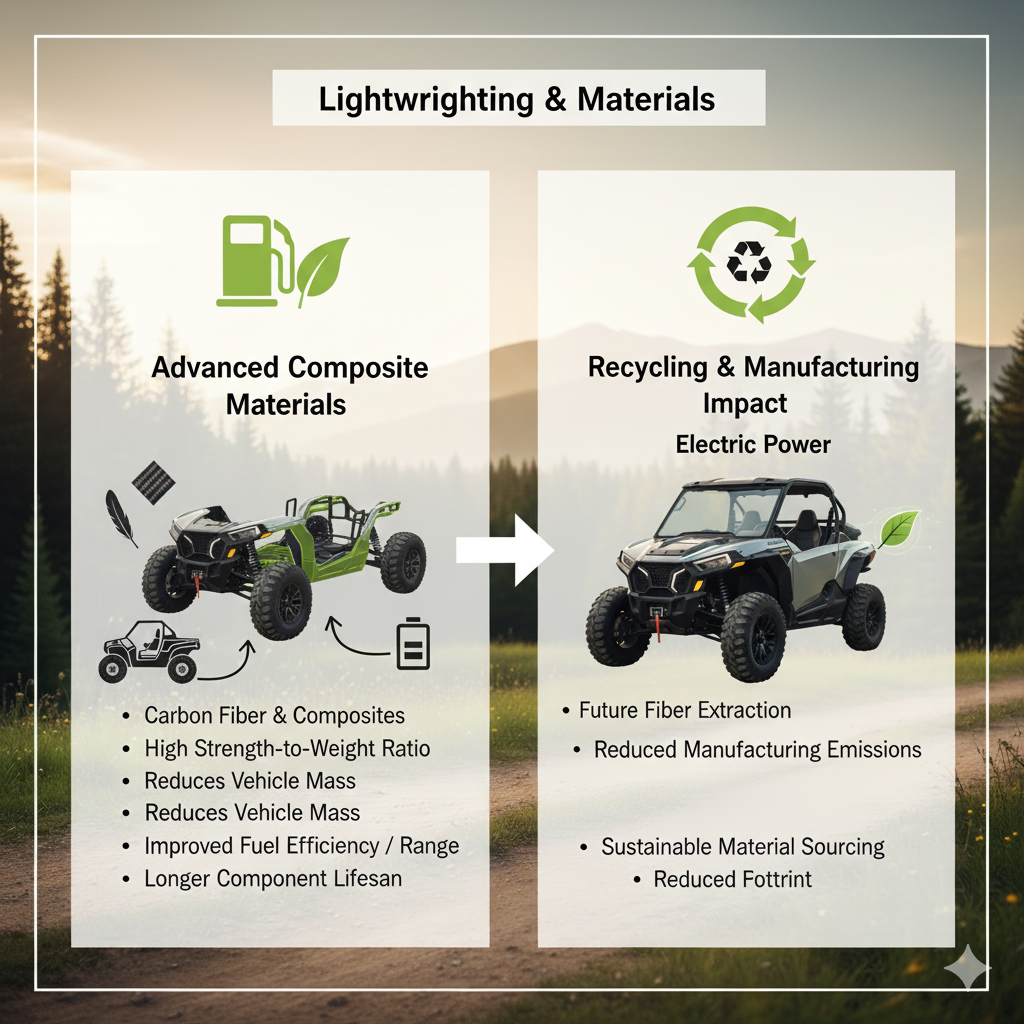
The shift toward lightweight, sustainable composites is a key strategy here, as lighter materials require less energy to produce and less fuel to move.
The focus is also shifting to low-carbon concrete and steel alternatives in manufacturing facilities, further reducing the carbon intensity of the production process itself.
By optimizing the supply chain to source materials closer to the assembly plant, manufacturers can also significantly reduce the transportation-related emissions, which are a hidden component of embodied carbon.
Fuel and Energy Production: The Well-to-Tank Phase
For gasoline-powered UTVs, the carbon footprint is heavily influenced by the extraction, refining, and transportation of fossil fuels, known as the “well-to-tank” phase.
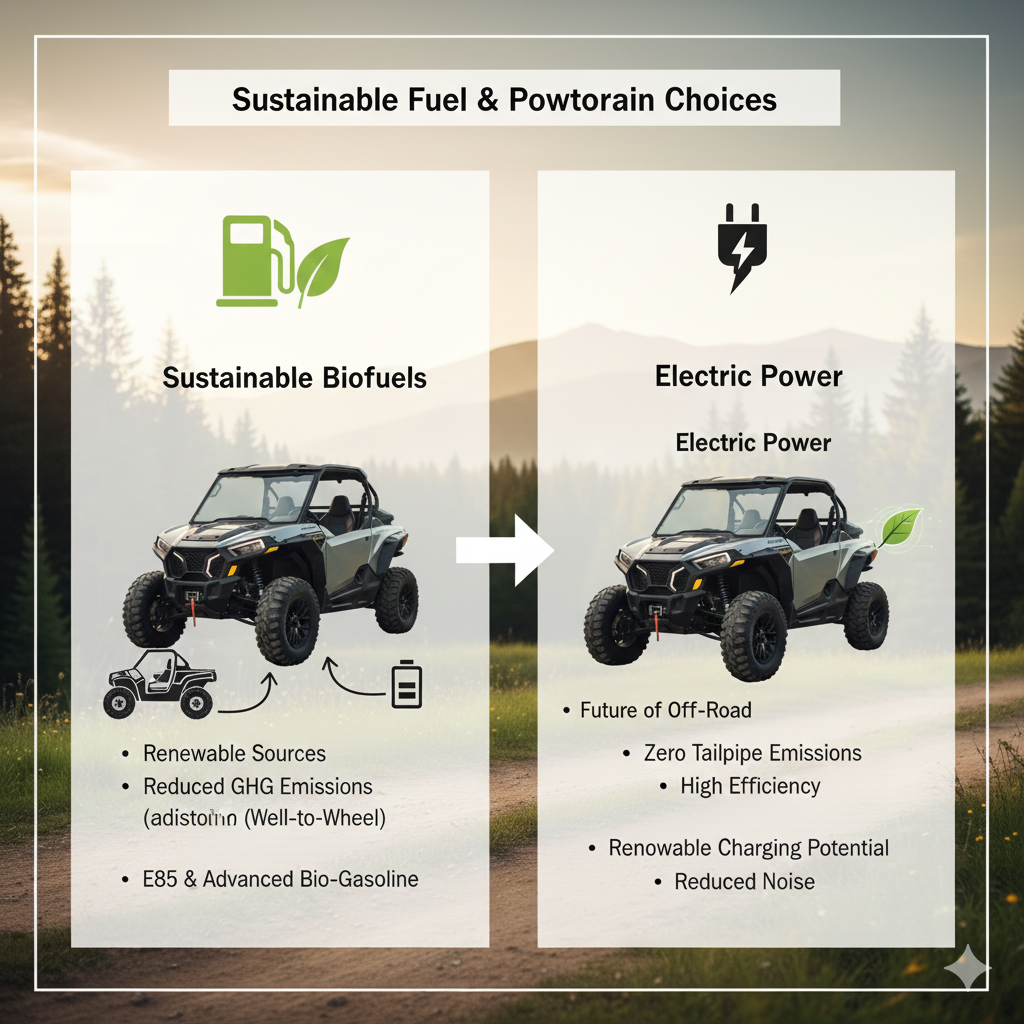
The adoption of sustainable biofuels, such as those derived from non-food crops or waste products, offers a pathway to significantly reduce these upstream emissions, creating a more carbon-neutral fuel source.
For electric UTVs, the well-to-wheel footprint is determined by the source of the electricity used for charging, emphasizing the importance of renewable energy sources like solar and wind power [3].
The concept of “green hydrogen”, produced via electrolysis powered by renewable energy, is also emerging as a potential game-changer for FCEV UTVs, offering a truly zero-emission fuel source from well-to-wheel.
Riders can actively reduce this phase’s impact by choosing fuel suppliers who prioritize sustainable sourcing or by installing home solar systems to power their e-UTV charging.
Technological Advancements in UTV Design
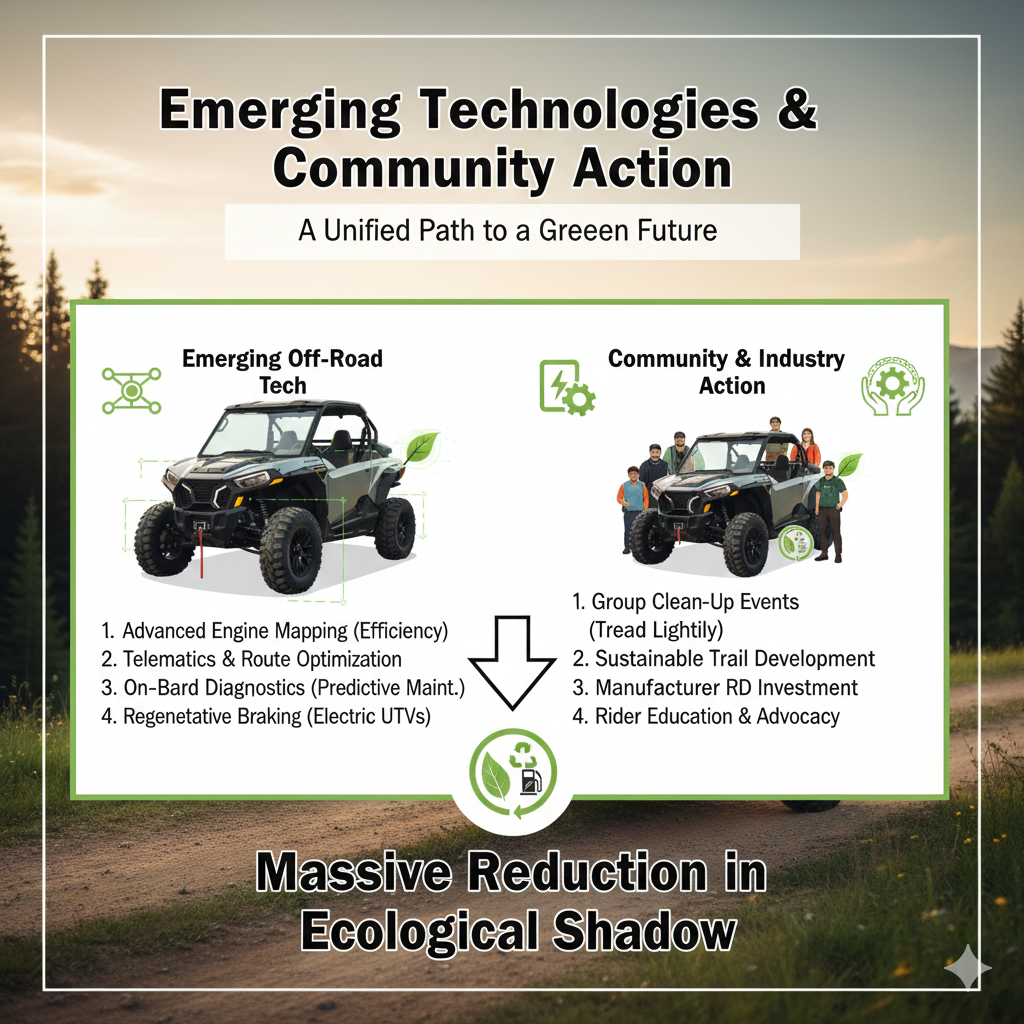
Manufacturers are implementing a range of technologies to minimize the “tank-to-wheel” emissions and improve overall efficiency, ensuring that modern UTVs are cleaner and more powerful than ever before.
Engine Efficiency and Advanced Mapping
Modern UTV engines utilize sophisticated electronic fuel injection (EFI) and advanced engine control units (ECUs) to optimize the air-fuel mixture for maximum efficiency and minimal emissions.
The use of precision engine mapping allows the engine to operate in its most efficient range across a wider variety of speeds and loads, which is crucial for the constantly changing demands of off-road driving [4].
This precision reduces fuel consumption and, consequently, the carbon output, while also enhancing performance.
Further advancements include the use of variable valve timing (VVT), which optimizes the engine’s breathing for different operating conditions, leading to better fuel economy and lower emissions across the entire power band.
The integration of turbocharging and supercharging, when properly managed by the ECU, can also allow for smaller, more efficient engines to produce the power of larger, less efficient naturally aspirated units.
Lightweighting and Aerodynamics
Every pound of weight saved translates directly into less energy required to move the vehicle, which in turn reduces the carbon footprint.
Manufacturers are increasingly using high-strength, low-weight materials like advanced polymers and carbon fiber composites for body panels, chassis components, and accessories.
While aerodynamics might seem less critical for a low-speed off-road vehicle, subtle design changes to the cab and windshield can reduce drag at higher trail speeds, contributing to fuel savings and a quieter ride [5].
The use of hollow-cast components in the suspension and frame, where structurally feasible, is another lightweighting strategy that reduces mass without compromising strength, a technique borrowed from high-performance racing.
This focus on mass reduction is a continuous engineering effort that pays dividends in both performance and environmental responsibility.
The Rider’s Role: Operational Efficiency and Stewardship
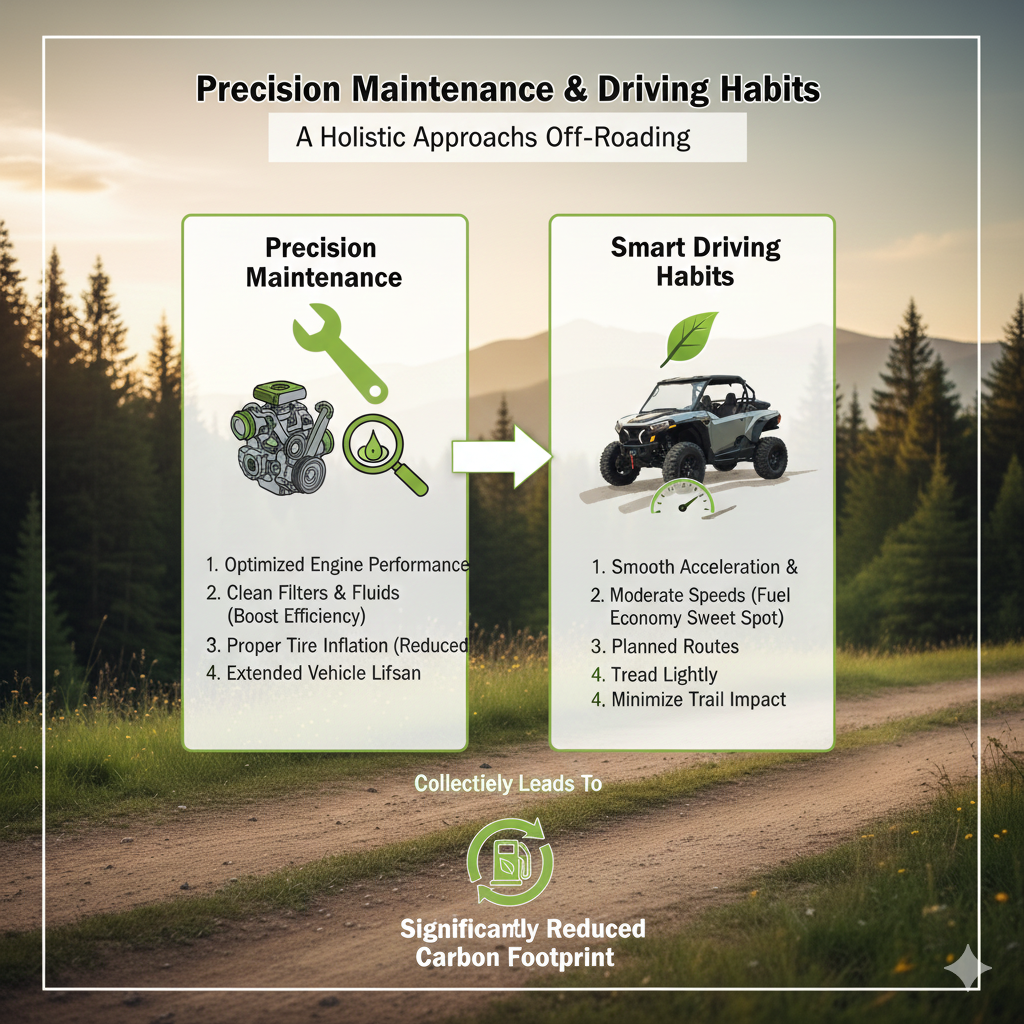
The most immediate and impactful changes can be made by the UTV operator through conscious riding and maintenance practices, representing the low-hanging fruit of carbon footprint reduction.
Eco-Conscious Driving Techniques
Aggressive driving, characterized by rapid acceleration and hard braking, is inherently inefficient and increases fuel consumption.
Adopting a smoother, more deliberate driving style—often referred to as eco-driving—can significantly reduce fuel consumption and wear on components [6].
Maintaining a steady speed, anticipating terrain changes, and minimizing unnecessary idling are simple yet powerful ways to reduce the tank-to-wheel emissions.
For electric UTVs, maximizing the use of regenerative braking is a key eco-driving technique.
Riders should also utilize the UTV’s drive modes, if available, selecting an “Eco” or “Trail” mode that limits throttle response and optimizes the transmission for efficiency rather than pure power, especially when traversing non-technical terrain.
Precision Maintenance and Tire Management
A well-maintained UTV is an efficient UTV, ensuring that the engine is operating at peak efficiency with clean air filters, properly functioning spark plugs, and fresh oil.
Furthermore, tire pressure management is critical, as under-inflated tires increase rolling resistance, forcing the engine to work harder and consume more fuel [7].
While off-road conditions often require lower pressures for traction, ensuring the correct pressure for the specific terrain is a balance between performance and efficiency that every rider must master.
The use of synthetic lubricants is also a key maintenance practice, as they reduce internal engine friction more effectively than conventional oils, leading to marginal but measurable gains in fuel efficiency and a reduction in engine wear.
The Electric Revolution and Battery Sustainability
The shift to electric UTVs (e-UTVs) is the most direct path to eliminating tailpipe carbon emissions, but it introduces new challenges related to battery production and disposal that must be addressed for true sustainability.
Sustainable Battery Sourcing and Recycling
The production of lithium-ion batteries is a significant source of the e-UTV’s initial carbon footprint, primarily due to the mining of raw materials like lithium, cobalt, and nickel.
The industry is actively working on closed-loop recycling programs to recover these valuable materials, drastically reducing the need for virgin mining and the associated environmental impact [8].
Furthermore, research into solid-state batteries and alternative chemistries promises to reduce the reliance on rare and environmentally sensitive materials.
The development of battery passports, which track the origin and composition of the battery’s materials, is an emerging regulatory trend that will ensure greater transparency and accountability in the supply chain, further driving sustainable sourcing practices.
Second-Life Battery Applications and Energy Storage
When a UTV battery reaches the end of its useful life for vehicle propulsion, it often still retains 70-80% of its capacity.
These batteries can be repurposed for “second-life” applications, such as stationary energy storage for homes or businesses, or as portable power banks for off-grid charging stations [9].
This extends the economic and environmental value of the battery, delaying the need for recycling and further reducing the overall carbon footprint of the e-UTV.
The use of these second-life batteries in remote trailside charging stations, powered by solar or wind, creates a truly circular energy system for the off-road community.
Policy and Industry Standards for a Greener Future
The drive for carbon footprint reduction is also being shaped by evolving government regulations and industry-wide commitments, which accelerate the adoption of cleaner technologies.
Global Emissions Standards and Compliance
Regulatory bodies like the Environmental Protection Agency (EPA) and the California Air Resources Board (CARB) continue to tighten emissions standards for off-road vehicles [10].
These standards push manufacturers to invest in advanced emissions control technologies, such as catalytic converters and sophisticated engine management systems, which indirectly lead to better fuel efficiency and lower carbon output.
The focus is increasingly shifting from tailpipe emissions to evaporative emissions, which are the hydrocarbons that escape from the fuel system, requiring manufacturers to implement more robust EVAP systems to capture these fugitive emissions.
Industry Collaboration and Transparency
The UTV industry is increasingly engaging in collaborative efforts to share best practices for sustainable manufacturing and supply chain management.
Transparency in reporting the environmental impact of materials and processes allows consumers to make more informed, eco-conscious purchasing decisions.
The development of industry-wide metrics for measuring and reporting the carbon footprint of a UTV is a crucial step toward accountability and continuous improvement, ensuring a sustainable path forward [11].
The adoption of ISO 14064 standards for greenhouse gas accounting is a key trend, providing a globally recognized framework for measuring, managing, and reporting the carbon footprint across the entire value chain.
The Role of Carbon Offsetting and Insetting
While the primary focus must be on reducing emissions at the source, carbon offsetting and insetting programs offer a complementary strategy for achieving carbon neutrality in the off-road community.
Carbon Offsetting for UTV Use
Carbon offsetting involves investing in projects that reduce greenhouse gas emissions elsewhere to compensate for the emissions generated by UTV use.
This could include funding reforestation projects, supporting renewable energy development, or investing in methane capture from landfills [12].
While not a substitute for direct reduction, offsetting allows riders to take immediate responsibility for their carbon footprint, supporting conservation efforts that benefit the environment.
Carbon Insetting in the Supply Chain
Carbon insetting focuses on reducing emissions within the UTV industry’s own value chain, such as funding the development of sustainable biofuels or investing in energy efficiency upgrades at component manufacturing plants.
This approach is often preferred as it directly supports the transition to a lower-carbon economy within the sector itself, creating a more resilient and sustainable supply chain for the future of UTVs.
The journey to a truly low-carbon UTV is a marathon, not a sprint, requiring continuous innovation and a collective shift in mindset.
By embracing efficiency, supporting sustainable technologies, and practicing responsible riding, the UTV community can ensure that the trails remain open and the air remains clean for generations of adventurers to come.
References
[1] International Council on Clean Transportation (ICCT). (n.d.). Well-to-Wheel Analysis of Vehicle Emissions. Retrieved from [URL for ICCT resource]
[2] World Steel Association. (n.d.). Sustainability in Steel Production. Retrieved from [URL for World Steel Association resource]
[3] U.S. Energy Information Administration (EIA). (n.d.). Sources of Electricity Generation. Retrieved from [URL for EIA data]
[4] Society of Automotive Engineers (SAE). (n.d.). Advanced Engine Mapping for Off-Road Vehicles. Retrieved from [URL for SAE technical paper]
(Content truncated due to size limit. Use page ranges or line ranges to read remaining content)