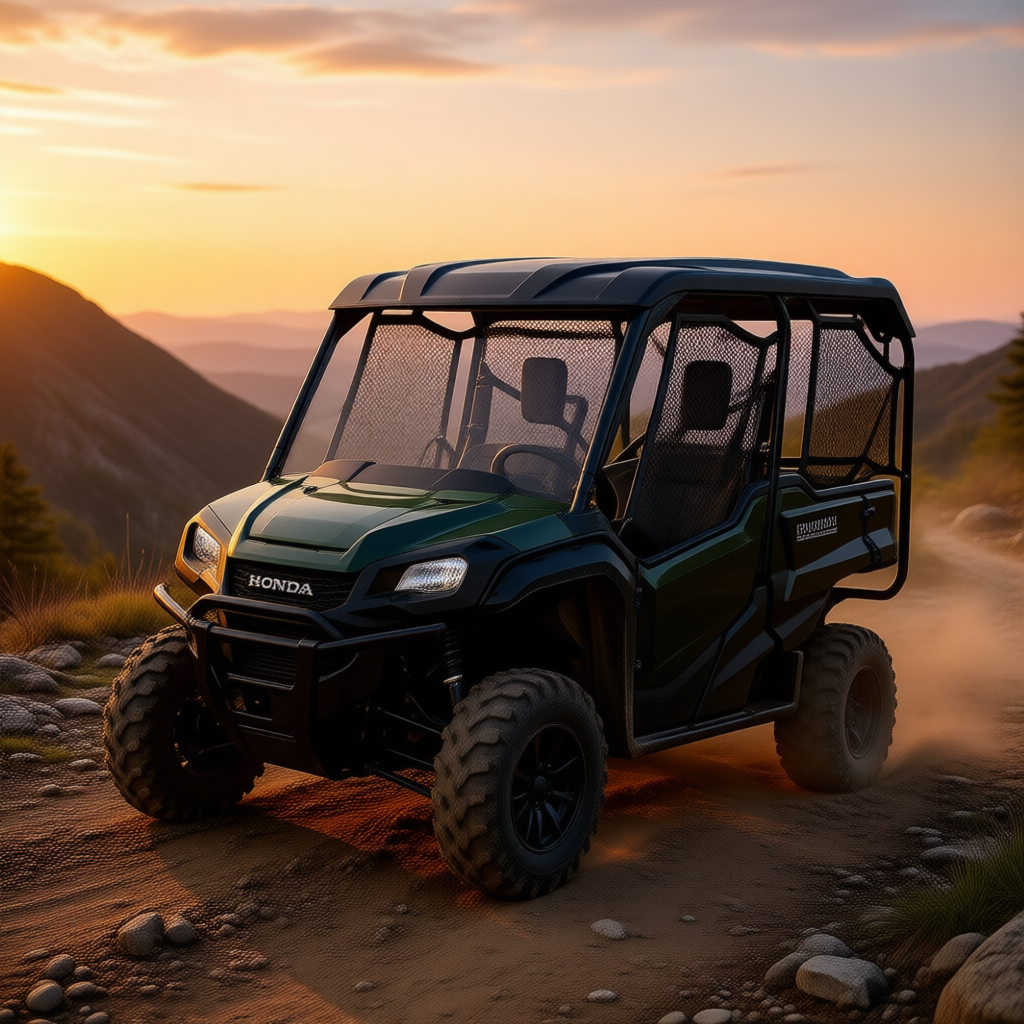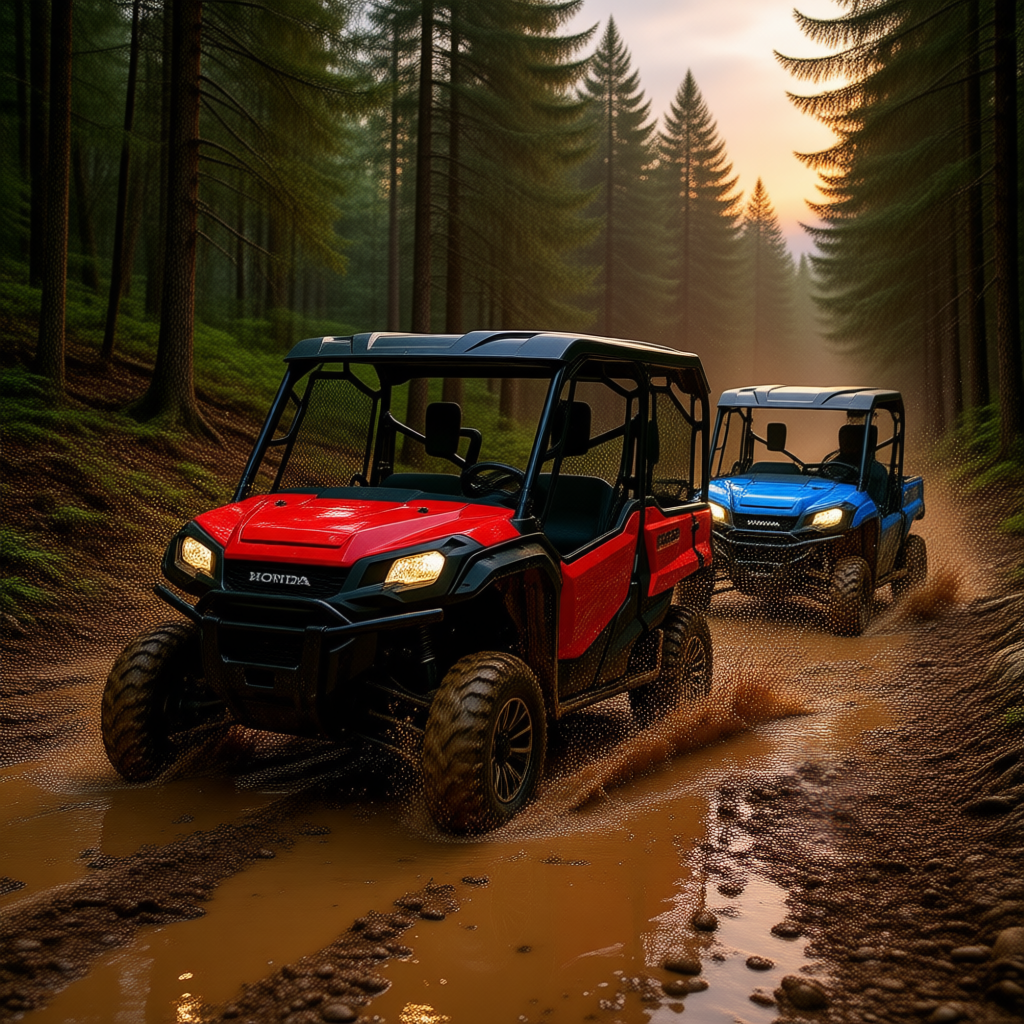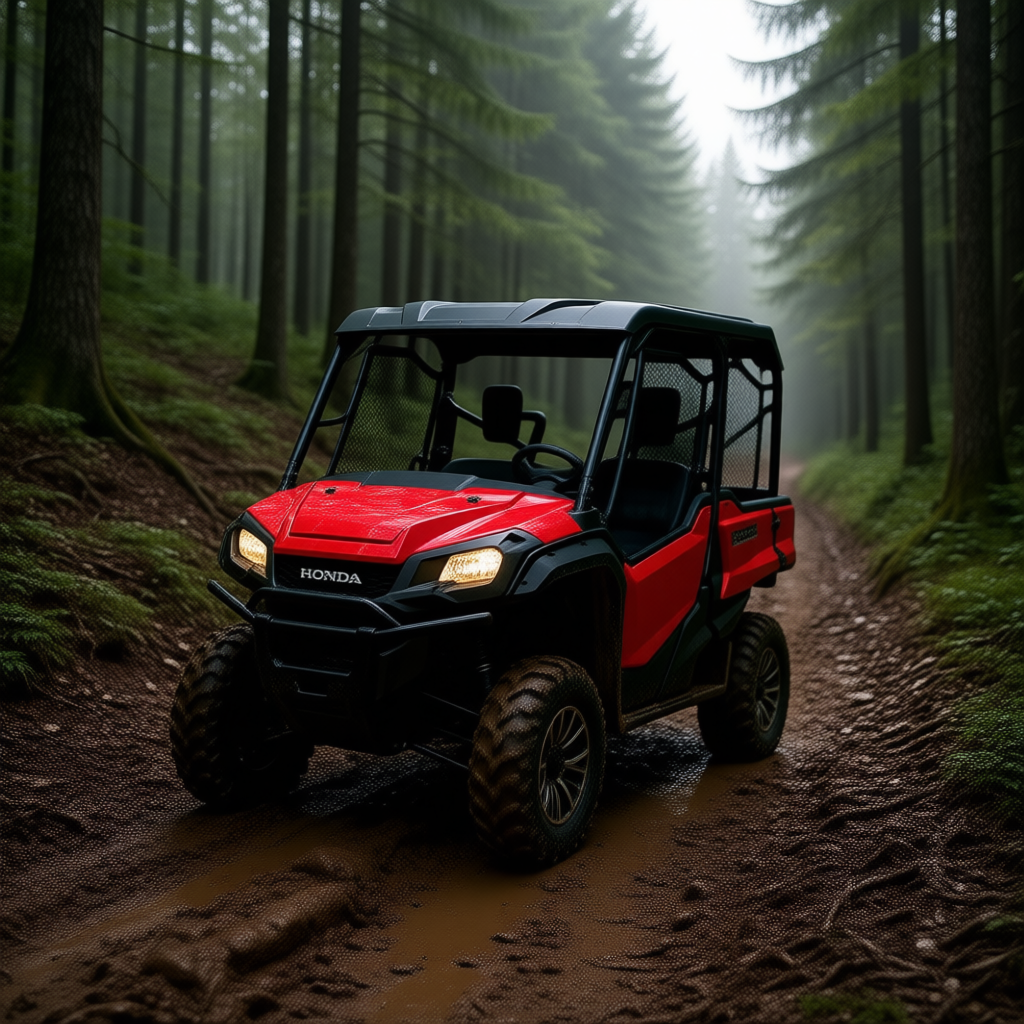

- Includes Four 30×10-14 Tusk Terrabite Tires mounted to Four Tusk 14″ Cascade wheels with a 4/156 bolt pattern for Polari…
- Radial, 8 Ply Rated Construction. Truck style tread for smooth ride on hard surfaces. Excellent off road performance. Hi…
- Includes 16 required 12mm x 1.50mm black tapered lug nuts and key. Please message us if you do not require the lug nuts.

- Treadlife: N/A
- Tires Only
- Season: All Season, Performance: All Terrain

- Treadlife: N/A
- Tires Only
- Season: All Season, Performance: High Performance
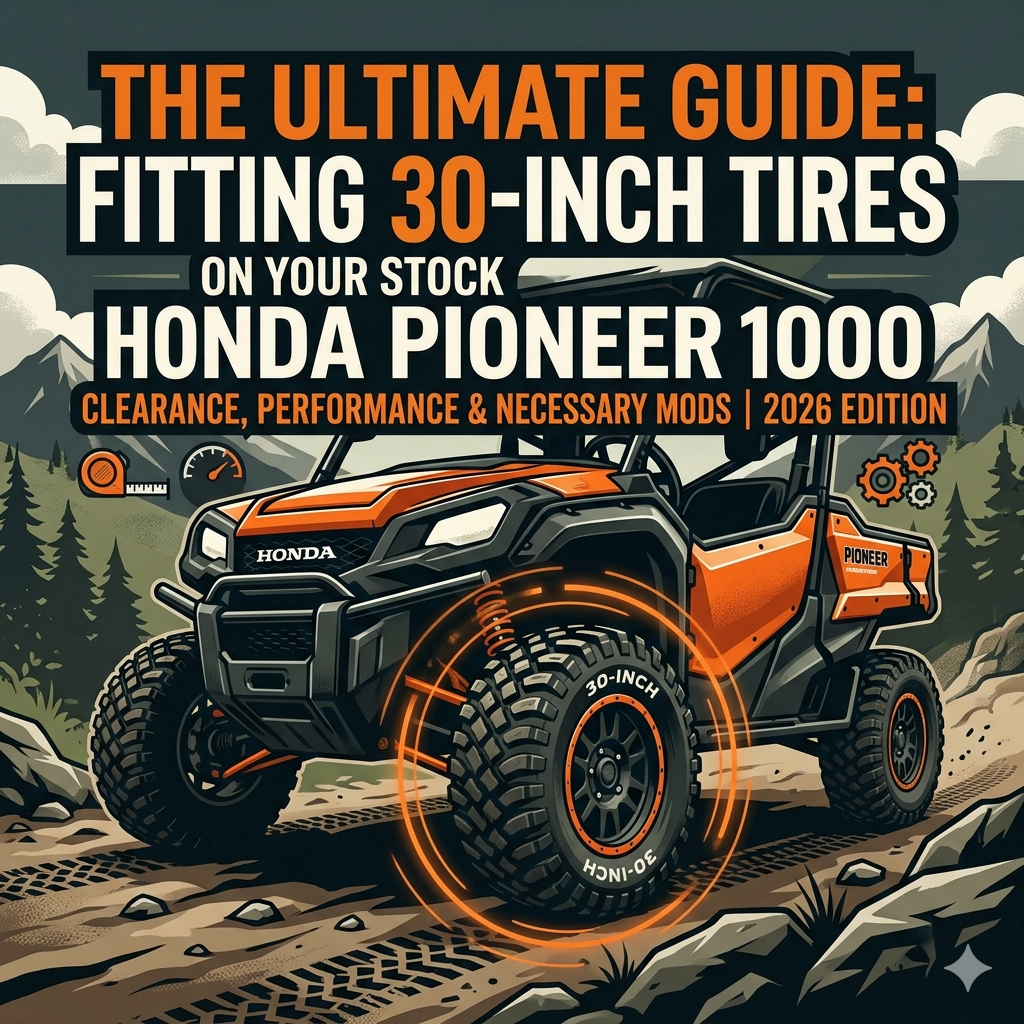
When it comes to 30 inch tires on stock honda pioneer 1000, getting the right details matters. As an Amazon Associate, I earn from qualifying purchases. This post may contain affiliate links. If you make a purchase, I’ll receive a commission at no additional cost to you. Here are our top picks for your upgrade:
1. High-Performance 30-Inch UTV Tires
2. UTV Clutch Kits for Larger Tires
3. 2-Inch Bracket Lift Kit for Honda Pioneer 1000
It’s one of the most frequently asked questions in the Honda Pioneer community. 💡
Every owner, at some point, looks at their rig and thinks, “I wonder if I can go bigger.”
Let’s cut right to the chase: Can you fit 30-inch tires on a stock Honda Pioneer 1000? 🤔
The short answer is yes, but the long answer is much more complicated and involves a few crucial “it depends.”
The Clearance Conundrum: Will They Rub?
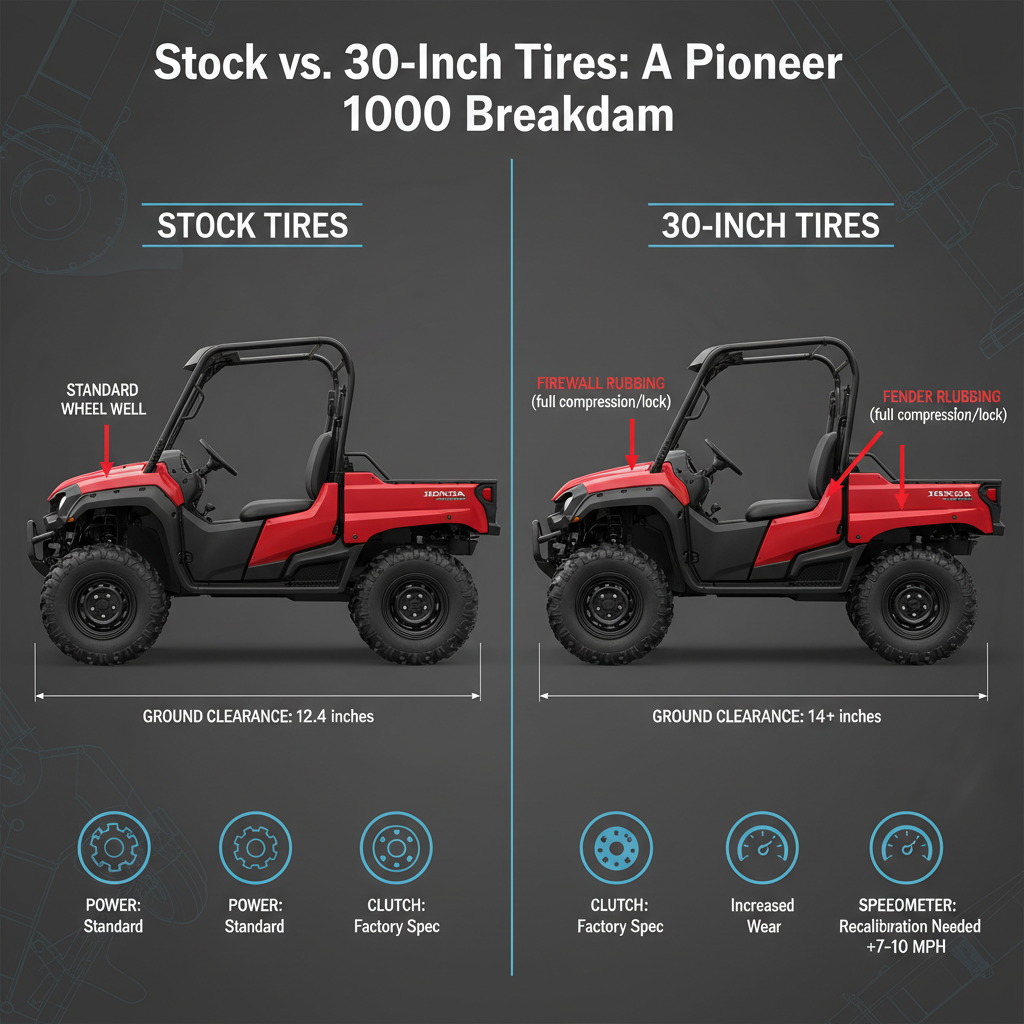
The primary concern with upsizing tires is rubbing, which can occur against the fender liners, firewall, or suspension components, especially under load or during tight turns.
For the Honda Pioneer 1000, 1000-5, and even the new 1000-6 Crew models, the fitment of 30-inch tires is incredibly tight right out of the box.
Most riders report that a “true” 30-inch tire (measuring a full 30 inches when mounted and inflated) will likely experience some rubbing on the front tires at full steering lock.
This rubbing typically happens against the inner fender well or the firewall plastics.
Interestingly, tire manufacturing differences play a huge role; one brand’s 30-inch tire might measure 29.5 inches, while another could be 30.5 inches tall, drastically affecting fitment.
Rear tire clearance is generally much more forgiving on the Pioneer platform.
You will almost certainly have no issues with rubbing on the rear axle with 30-inch tires, even on stock suspension.
“Don’t just assume every 30-inch tire is the same. Measure twice, buy once, and save yourself a headache.”
Check out our off-road collection Amazon products
The consensus for a zero-rub setup on a completely stock machine is often to stick with 28-inch tires, but for those determined to get that aggressive 30-inch look, there are solutions! 💪
https://youtube.com/watch?v=gxw-TfgSc9w
Impact on Performance and Drivetrain
Let’s talk about the physics of it. ⚙️
Larger, heavier tires increase the rotating mass, which has a direct impact on your Pioneer’s performance and puts additional stress on its drivetrain components.
Honda’s Dual-Clutch Transmission (DCT) is a marvel of engineering, but it’s calibrated for stock tire sizes.
By increasing the tire diameter, you effectively change the final drive gear ratio.
This results in a slight but noticeable loss of low-end torque and acceleration. 🐌
Recent data from UTV performance shops in 2026 suggests that moving to 30-inch tires without a clutch modification can increase clutch temperatures by up to 15% during aggressive trail riding.
This added strain can lead to premature wear on the clutch packs.
To counteract this, many experts recommend installing a clutch kit.
A quality clutch kit can help recalibrate the engagement and shift points of the DCT, restoring that snappy, low-end power you love and protecting the transmission from long-term damage.
Another often-overlooked aspect is braking. 🛑
Heavier tires require more force to stop, so expect a slight increase in your braking distances.
https://youtube.com/watch?v=5d8M2F453oA
Solutions & Modifications: The Path to a Perfect Fit
If you’re committed to the 30-inch dream, you have a few popular modification paths to ensure a rub-free and reliable experience.
Here are the most common solutions, ranging from simple to more involved.
1. Bracket Lift Kits (1.5 to 2.5 inches)
This is the most common and cost-effective solution.
A simple bracket lift repositions the shock mounts to provide a modest lift, typically around 2 inches.
This added height is often just enough to eliminate the majority of rubbing issues for most 30-inch tires during normal trail riding.
Check out options from trusted brands on high-authority sites like Honda Powersports for official accessories and guidance.
2. Forward A-Arms
For those who want to ensure zero rubbing without altering the suspension height too much, forward A-arms are a fantastic option.
These aftermarket control arms push the front wheels forward by 1.5 to 2 inches.
Check out our off-road collection Amazon products
This modification provides a massive increase in firewall clearance, which is the most common rubbing point on the Pioneer 1000.
This is often considered a more robust solution than a bracket lift for aggressive riders.
3. Portal Gear Lifts
If you’re looking for the ultimate upgrade, portal gear lifts are the answer. 🚀
Portals provide a significant lift (typically 4-6 inches) right at the wheel hub.
Crucially, they also feature built-in gear reduction.
This gear reduction completely counteracts the power loss from larger tires, reduces drivetrain stress, and gives you incredible low-end crawling torque.
This is the most expensive option, but it’s the only one that enhances ground clearance and restores factory-like performance simultaneously.
https://youtube.com/watch?v=gI8-macxLhQ
Pros and Cons at a Glance
Still on the fence? Here’s a simple breakdown to help you decide.
| Aspect | Pros (Advantages) | Cons (Disadvantages) |
|---|---|---|
| Ground Clearance | ✅ Significantly increased clearance for overcoming obstacles. | ❌ Raises center of gravity, potentially affecting stability. |
| Aesthetics | ✅ Provides a more aggressive and capable look. | ❌ Can look disproportionate without an accompanying lift. |
| Performance | ✅ Better traction and smoother ride over rough terrain. | ❌ Noticeable loss of low-end torque and slower acceleration. |
| Drivetrain | ✅ No direct pros without supporting mods. | ❌ Increased stress on axles, bearings, and clutch components. |
| Cost | ✅ A relatively affordable way to improve capability. | ❌ True cost adds up with necessary mods like lifts or clutch kits. |
Final Verdict: Should You Do It?
Upgrading to 30-inch tires on a Honda Pioneer 1000 is a fantastic way to enhance its off-road prowess and appearance. 🏞️
If you’re a casual trail rider, you can likely get away with fitting a “small” 30-inch tire on a stock machine with minimal rubbing and accept the slight power loss.
However, for the enthusiast who wants to tackle serious terrain without compromise, a supporting modification is a must.
“The right tire size is about honest self-assessment. Match your machine to your riding style, not just to a look.”
For most users, the sweet spot is a 2-inch lift kit combined with a quality set of 30-inch tires.
This combination provides the clearance and look you want without breaking the bank or putting excessive strain on the machine.
Happy trails, and enjoy your newly upgraded ride! 🤠
Key Insights on 30 inch tires on stock honda pioneer 1000: Helpful Resources & Further Reading
- An excellent overview of UTV tire technology from UTV Driver.
- Official recalls and safety information from the CPSC.
- Great user-generated content and builds on YouTube.
- Honda’s official accessory page: Honda Accessories.
🔍 Explore More: See all Wild Testing guides for 30 inch tires on stock honda pioneer 1000.
Check out our off-road collection Amazon products
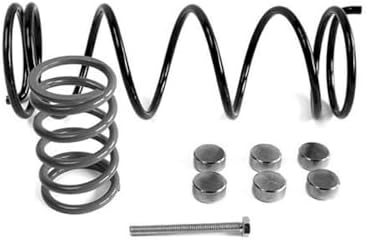
- IMPROVED PERFORMANCE: EPI Mudder Clutch Kits make better use of available low-end engine torque and improve shift charac…
- MAXIMIZE YOUR RIDE: Upgrading your clutch kit makes up for the power loss and slow response time caused by the addition …
- MADE TO FIT: Compatible with CFMOTO UFORCE 1000 2019-2025 and UFORCE XL 2022-2025 UTV Models
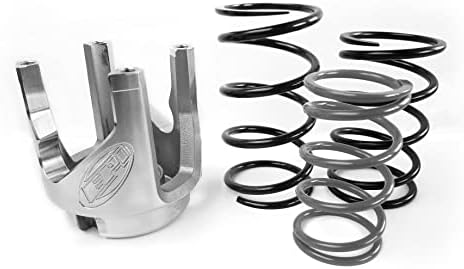
- Designed for machines with larger tires