


Rally racing, particularly the grueling Rally Raid format exemplified by the Dakar Rally, is a unique challenge where speed is secondary to precision navigation.
In these events, the course is not marked with tape or arrows; it is defined by a series of waypoints and a detailed, cryptic document known as a roadbook.
For UTV teams, the difference between a stage win and getting hopelessly lost in the desert often comes down to the quality and integration of their UTV rally racing navigation systems.
This is a world where a simple GPS is not enough. It requires a complex, redundant,
and highly specialized suite of tools that must work seamlessly between the driver and co-driver at triple-digit speeds.
The navigation system is the brain of the rally machine, guiding the crew across thousands of miles of unmarked terrain.
I’ve studied the setups of top UTV rally teams, and the technology they employ is fascinating.
This guide will break down the essential components of a competition-grade UTV rally navigation system,
focusing on the tools that keep you on course and, more importantly, safe.
Phase 1: The Core—Roadbooks and GPS
The foundation of rally navigation is the roadbook,
which is now increasingly supported and sometimes replaced by advanced GPS technology.
1. The Roadbook Reader
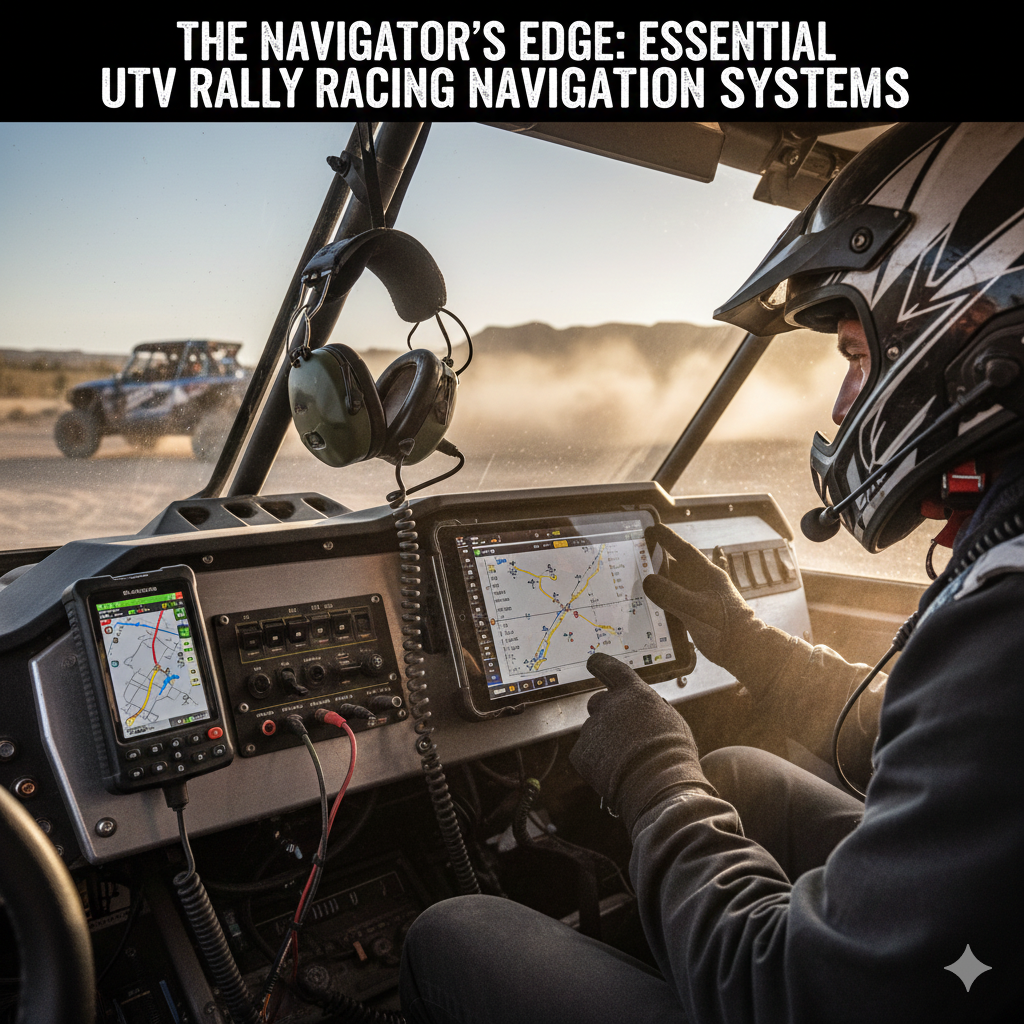
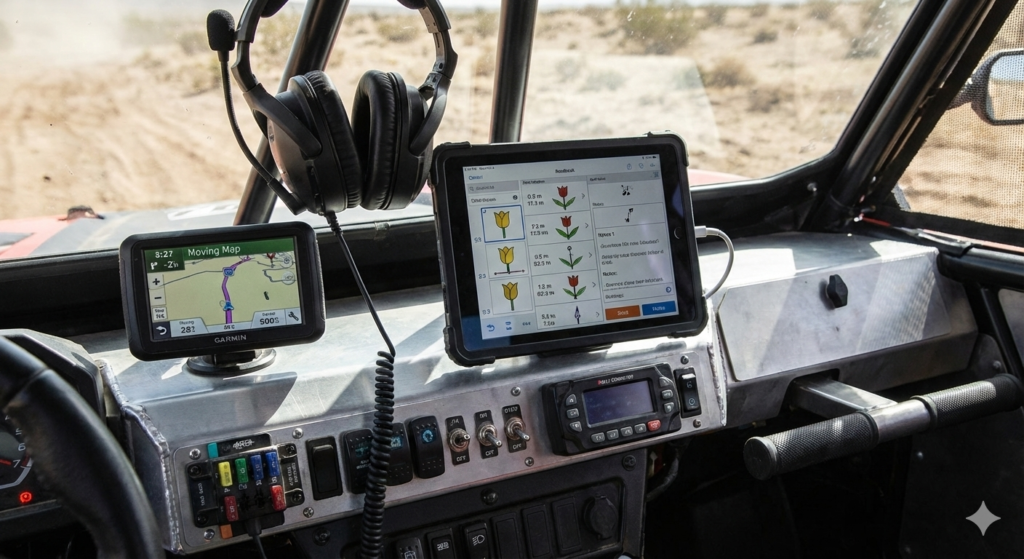
- The Traditional Guide: The roadbook is a scroll of paper (or a digital screen) containing a series of “tulip” diagrams, distances, and cryptic notes that describe the route. The co-driver’s primary job is to read and interpret this information in real-time.
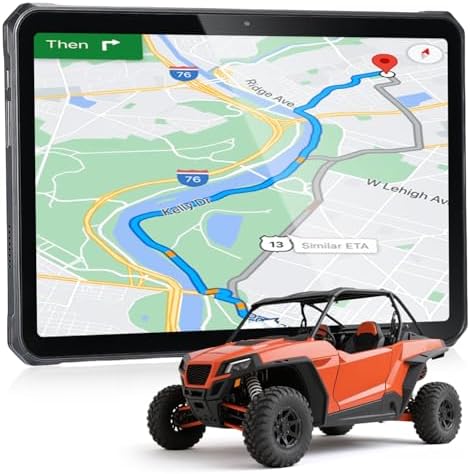
- Digital Roadbooks: Modern rally racing is rapidly adopting digital roadbook readers, which use a tablet or dedicated screen to display the route. Apps like RoadbookRally and Rally Navigator allow teams to load and navigate digital roadbooks, reducing the physical bulk and complexity of paper scrolls [1] [2].
2. High-Speed GPS Units
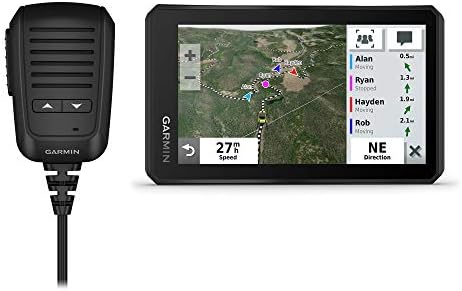
- Waypoint Validation: While the roadbook defines the route, a competition-grade GPS unit is essential for confirming waypoints and tracking speed and distance. Units like the Garmin Tread XL Baja Race Edition are built specifically for this environment, offering real-time tracking and team connectivity [3].
- Odometer Accuracy: Rally racing relies on an extremely accurate odometer, often a dedicated unit separate from the UTV’s stock gauge, to measure the distance between roadbook instructions.
Phase 2: Communication and Safety Systems
In the chaos of a rally stage, clear communication and immediate safety alerts are non-negotiable.
1. Intercom and Radio Systems
- Co-Driver Communication: The co-driver’s instructions must be heard clearly over the roar of the engine, the wind, and the pounding of the terrain. A high-quality intercom system, often integrated into the helmets, is vital for the driver and co-driver to communicate effectively.
- Race Radio: A separate race radio system (often a VHF or UHF unit) is used for communication with the support crew and other race vehicles. PCI Race Radios are a common choice, offering robust and reliable communication in harsh environments [4].
2. The Sentinel Safety System
- Mandatory Safety: In major international rally raids, the Sentinel system is a mandatory safety device fitted to every vehicle [5]. It serves two critical functions:
- Collision Avoidance: It alerts a competitor when another vehicle is approaching from behind and attempting to overtake, which is crucial in dusty conditions with limited visibility.
- Emergency Alert: It allows a competitor to trigger an emergency alert to race control in the event of a serious accident, providing immediate GPS coordinates for rescue.
| Navigation Component | Primary Function | Rally Application |
|---|---|---|
| Digital Roadbook | Route guidance and instruction display. | Replaces paper scrolls, providing clear, scrollable route notes. |
| High-Speed GPS | Waypoint confirmation and speed/distance tracking. | Ensures compliance with route and speed zone regulations. |
| Intercom System | Driver-Co-driver communication. | Critical for relaying roadbook instructions over engine noise. |
| Sentinel System | Collision avoidance and emergency tracking. | Mandatory safety feature for high-speed, low-visibility racing. |
Phase 3: Mounting and Redundancy
The desert is a brutal environment. Navigation equipment must be mounted securely and have built-in redundancy to survive the extreme vibration and impact.
1. Secure Mounting
- Vibration Dampening: All screens, GPS units, and roadbook readers must be mounted using heavy-duty, vibration-dampening mounts. A screen coming loose at 80 mph can be a race-ending disaster.
- Ergonomics: The co-driver’s station must be ergonomically designed so they can easily access and operate all navigation and communication equipment without excessive strain.
2. Power and Redundancy
- Dedicated Power: Navigation and communication systems should run off a dedicated power source or a robust auxiliary battery to prevent electrical spikes or failures from the main UTV system.
- Backup Systems: Top teams often carry a backup GPS unit and, in some cases, a printed section of the roadbook for emergency use. Redundancy is key when you are hundreds of miles from the nearest support.
Conclusion: The Ultimate Co-Driver
The suite of UTV rally racing navigation systems is a testament to the complexity and excitement of rally raid.
It transforms the co-driver from a passenger into a highly skilled navigator, responsible for the team’s speed, safety, and ultimate success.
If you are planning to enter the world of rally racing, remember that your navigation setup is just as important as your engine and suspension.
Invest in quality, ensure redundancy, and practice until the roadbook becomes second nature.
Stay on course, stay safe, and chase that horizon!
References
[1] RoadbookRally: Navigation event management platform
[2] Rally Navigator – Rally Roadbook System
[3] SuperATV Offroad Atlas – The GPS Rundown: All You Need to Know About Off-Road Navigation
[4] PCI Race Radios – Install PCI GPS in Polaris RZR | Off-Road Navigation Setup
[5] UTV Sports Mag – ON THE TRACK | Unpacking the Dakar Rally