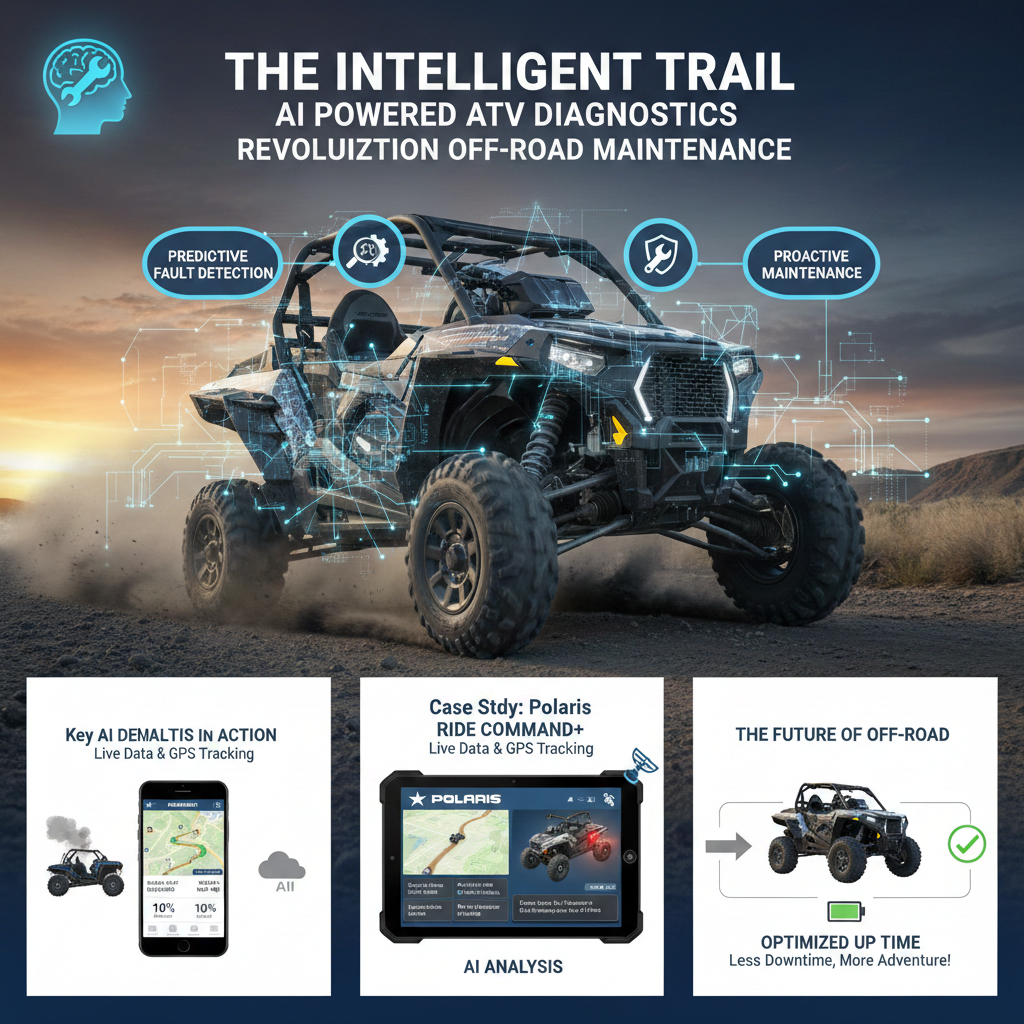

The modern All-Terrain Vehicle (ATV) is a sophisticated machine, blending rugged mechanical components with complex electronic systems. For years, maintenance has been a reactive process: waiting for a failure, diagnosing the issue, and then repairing it. However, a technological revolution is underway, driven by Artificial Intelligence (AI), that is transforming ATV ownership from reactive repair to AI-Powered ATV Diagnostics and proactive, predictive maintenance.
This comprehensive guide delves into the emerging world of intelligent off-road vehicle care, explaining how telematics, machine learning, and advanced sensor data are converging to predict failures before they happen, drastically reducing downtime, and ensuring your machine is always trail-ready.
Pillar 1: The Shift from Reactive to Predictive Maintenance
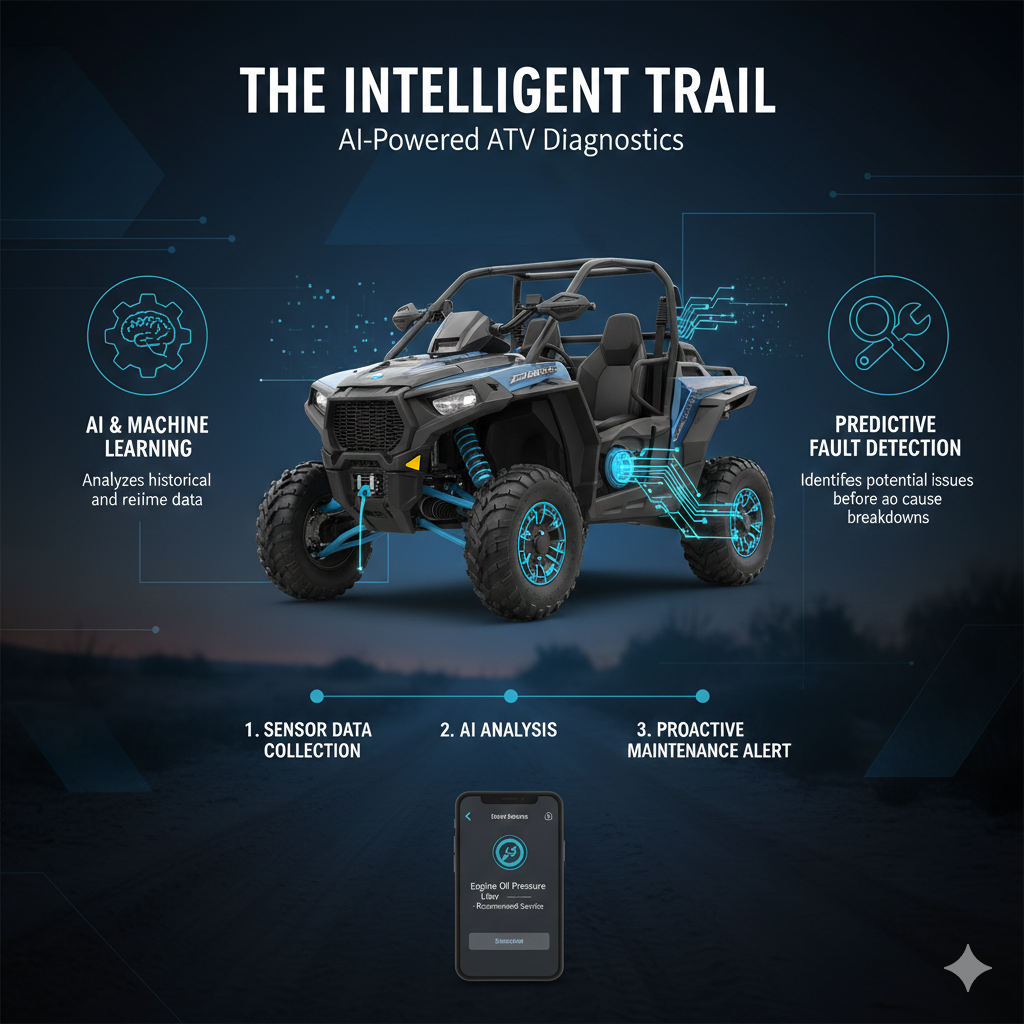
Traditional ATV diagnostics rely on error codes (DTCs) that are triggered after a component has failed or reached a critical state. This is reactive maintenance. AI, however, enables a shift to predictive maintenance, which is the ability to forecast a failure based on subtle changes in the vehicle’s operational data [1].
1. The Foundation: Telematics and Data Collection
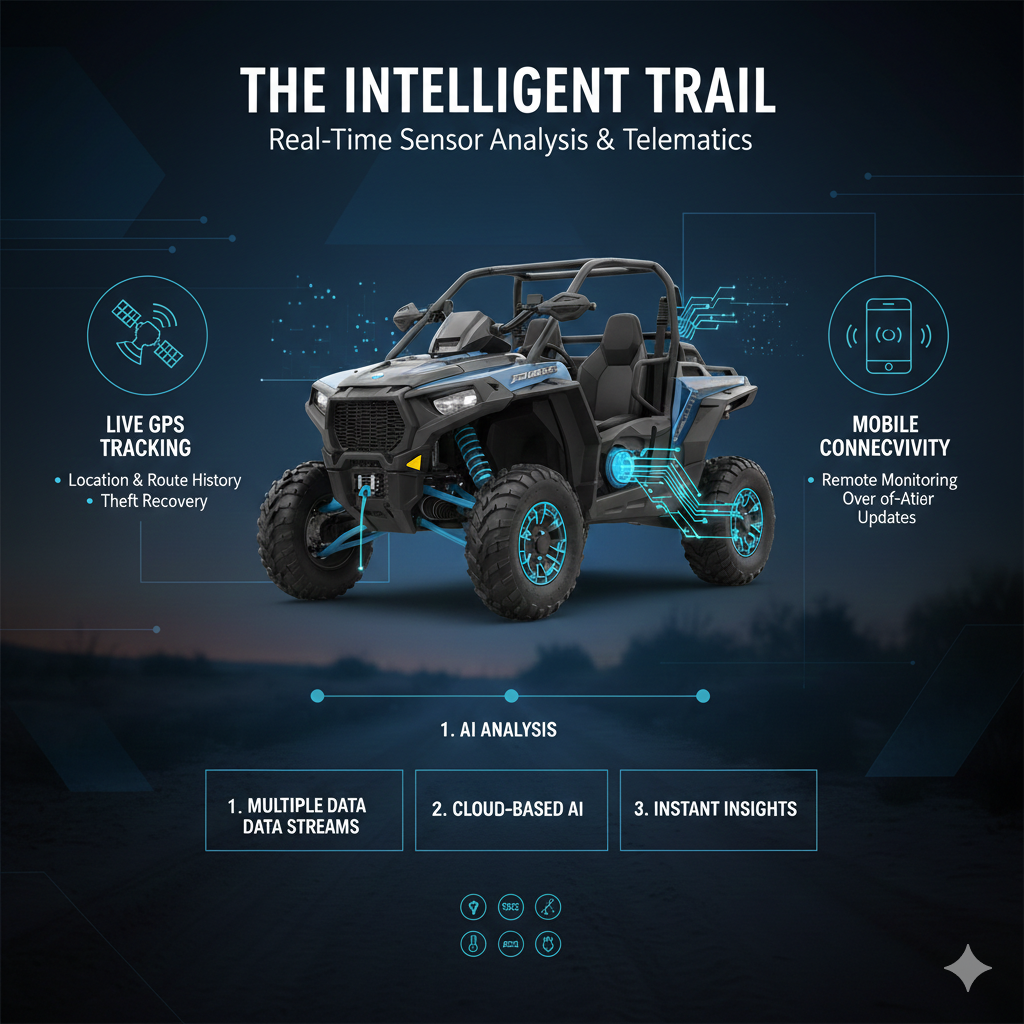
The backbone of any AI diagnostic system is telematics—the technology that collects and transmits data from the vehicle. Modern ATVs and UTVs, particularly those with integrated systems like Polaris RIDE COMMAND+, are equipped with sophisticated sensors that continuously monitor critical parameters [2]:
- Engine Data: RPM, oil pressure, coolant temperature, and engine hours.
- Drivetrain Data: Belt temperature, clutch engagement cycles, and differential temperatures.
- Vehicle Dynamics: GPS location, speed, and vibration levels.
This real-time data is collected by an on-board module and transmitted via cellular or satellite networks to a cloud-based platform.
2. The Role of Machine Learning
Once the data is in the cloud, Machine Learning (ML) algorithms take over. These algorithms are trained on massive datasets of both healthy and failed vehicles.
- Anomaly Detection: The AI establishes a “baseline” of normal operation for your specific ATV model and driving style. It then constantly monitors the incoming data for anomalies—subtle deviations that a human or a simple error code system would miss. For example, a slight, consistent increase in engine vibration or a gradual rise in belt temperature over a period of weeks could signal an impending failure [3].
- Fault Classification: When an anomaly is detected, the ML model classifies the type of potential fault (e.g., “early stage bearing wear,” “clutch misalignment,” or “sensor malfunction”) and estimates the time until failure [4].
Pillar 2: Real-World Applications in Powersports
The theoretical power of AI diagnostics is already being implemented in commercial off-road vehicles, demonstrating tangible benefits for riders.
3. Predictive Maintenance in Practice (Polaris RIDE COMMAND+)
Polaris’s RIDE COMMAND+ is a prime example of a telematics system laying the groundwork for advanced AI diagnostics. While currently focused on automated maintenance reminders based on mileage and engine hours, the system’s ability to log and transmit vehicle health data is the key enabler for future predictive features [5].
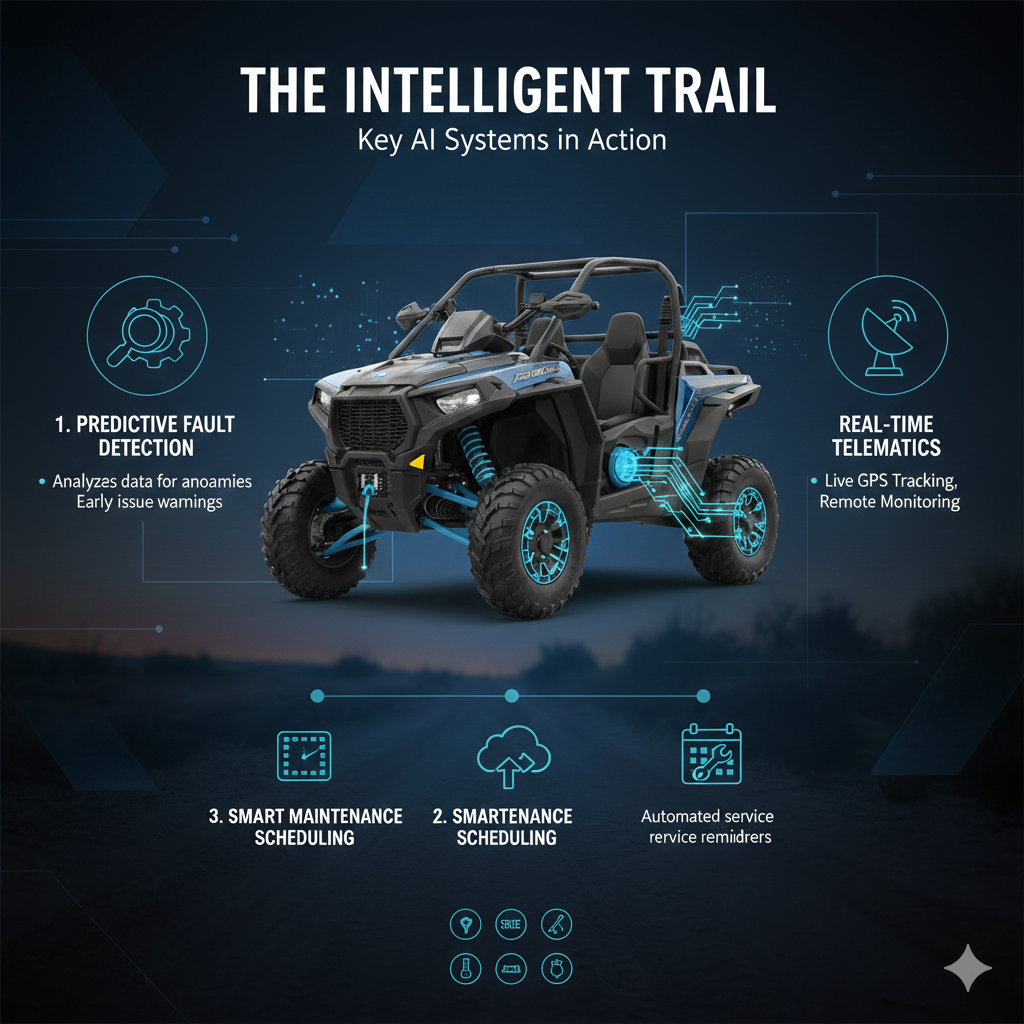
- Automated Alerts: The system tracks usage and alerts the owner to upcoming maintenance intervals, such as oil changes or belt replacements, taking the guesswork out of the service schedule.
- Remote Vehicle Health: Owners can check their vehicle’s health status, location, and maintenance schedule remotely via a smartphone app, ensuring the machine is ready before a trip [6].
4. Advanced Sensor Analysis
The next generation of AI-Powered ATV Diagnostics will leverage more specialized sensors to achieve higher prediction accuracy:
| Sensor Type | Data Monitored | Predictive Failure Example |
|---|---|---|
| Vibration Sensors | Frequency and amplitude of machine vibration. | Early detection of failing wheel bearings, loose driveline components, or engine imbalance. |
| Acoustic Sensors | Sound signatures of the engine and transmission. | Detection of abnormal noises indicative of gear wear, valve train issues, or failing pumps. |
| Oil Quality Sensors | Contamination, viscosity, and temperature of engine oil. | Prediction of excessive engine wear or coolant leaks before catastrophic failure. |
| Thermal Cameras | Heat distribution across the engine and clutch. | Identification of clutch overheating or localized cooling system blockages. |
By analyzing the combined data from these sensors, AI can provide a highly accurate and localized diagnosis, often weeks or months before a component actually fails.
Pillar 3: Benefits for the ATV Owner
The integration of AI into ATV diagnostics translates directly into significant advantages for the off-road enthusiast and professional user.
5. Reduced Downtime and Cost Savings
Predictive maintenance eliminates the need for emergency repairs. By knowing exactly which part is about to fail, owners can schedule a repair during a planned downtime, order the correct part in advance, and avoid the costly, time-consuming process of trailside recovery or unexpected shop visits [7].
6. Enhanced Safety and Reliability
A machine that is constantly monitored for health is a safer machine. AI diagnostics can flag critical issues like brake wear or steering component stress, which are vital for safety on challenging terrain. This proactive approach ensures maximum reliability, which is essential when operating far from civilization.
7. Optimized Performance
AI can also be used to optimize performance. By analyzing how the vehicle performs under different loads, terrains, and temperatures, the system can provide recommendations for tuning, suspension adjustments, or even driving style to maximize efficiency and longevity.
The Future of the Intelligent ATV
The trajectory of AI-Powered ATV Diagnostics is clear: the machines will become increasingly self-aware. We are moving toward a future where ATVs and UTVs will not only tell you what is wrong but why it is wrong and how to fix it, potentially even ordering the replacement parts automatically.
As telematics becomes standard across all powersports segments, AI will become the ultimate co-pilot, ensuring that the only surprises you encounter on the trail are the beautiful views, not a broken belt or a seized engine.