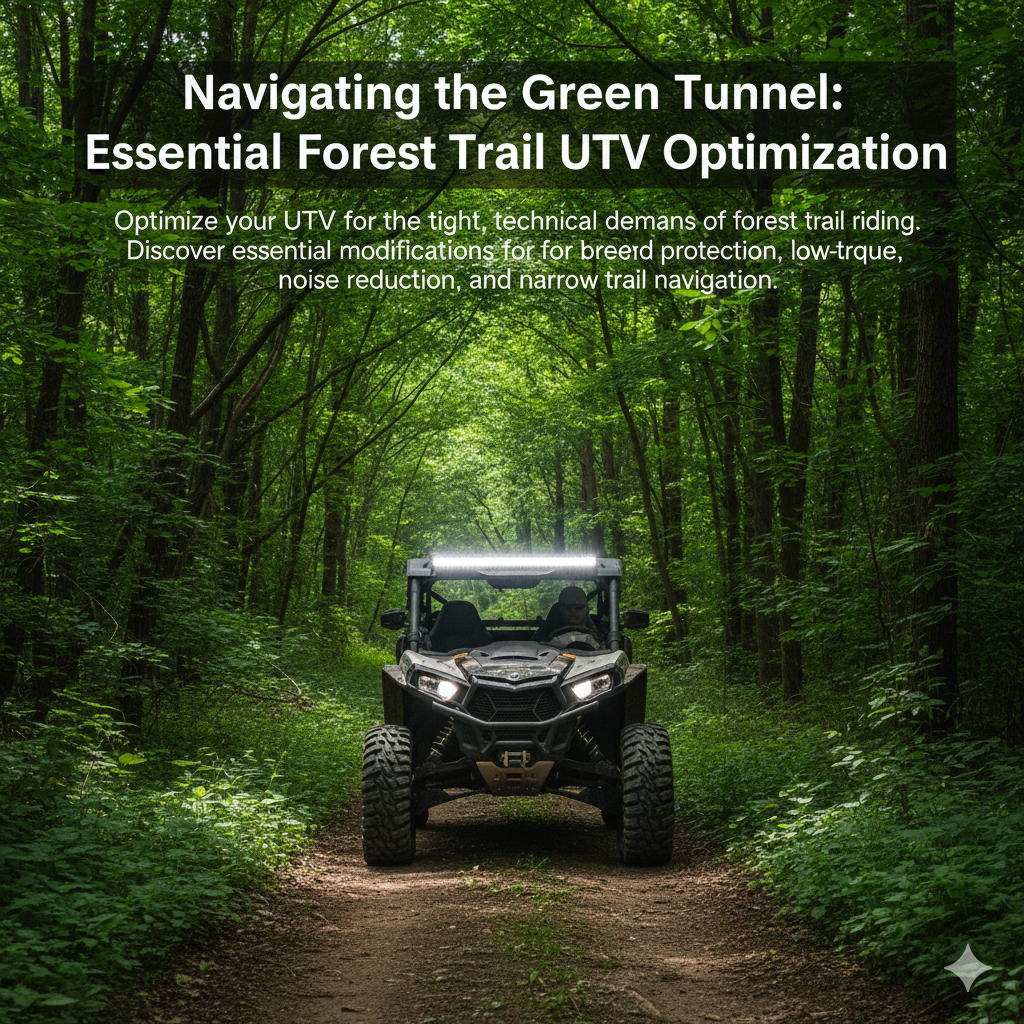



Forest trails, often referred to as the “green tunnel,” offer a unique and intimate off-roading experience. Unlike the wide-open spaces of the desert or the sheer vertical challenges of the mountains, forest riding is defined by tight turns, narrow clearances, low-hanging branches, and a constant need for precise, low-speed control. To truly master this environment, your UTV requires a specific set of modifications focused on protection, agility, and environmental courtesy.
This comprehensive guide delves into the essential strategies and Forest Trail UTV Optimization modifications that will transform your side-by-side into the ultimate woods machine. We will cover everything from safeguarding your vehicle against trail hazards to enhancing low-speed performance and minimizing your environmental footprint.
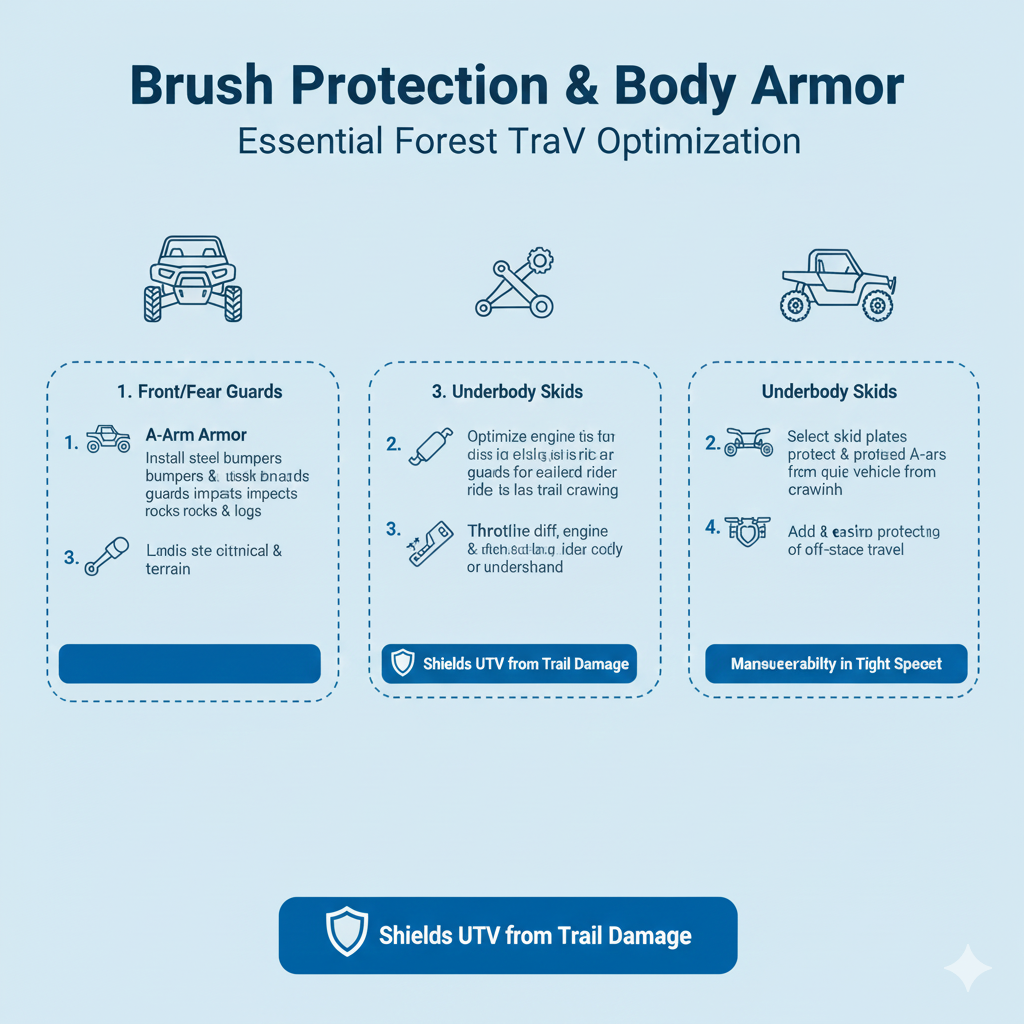
Pillar 1: Protection from the Brush and Debris
The most immediate threat on a forest trail is the constant barrage of brush, low-hanging limbs, and hidden obstacles. Protection is paramount to prevent costly damage and ensure a safe ride.
1. Full Underbody Skid Plates: UHMW vs. Aluminum
The underside of your UTV is constantly exposed to rocks, stumps, and debris. A robust skid plate system is non-negotiable. The choice often comes down to two materials:
- Ultra-High Molecular Weight (UHMW) Plastic: This is the preferred material for many serious trail riders. UHMW is incredibly durable, lightweight, and, crucially, has a low coefficient of friction. When you hit an obstacle, the UHMW allows your UTV to slide over it rather than getting hung up [1]. It also absorbs impacts better than aluminum and is significantly quieter.
- Aluminum: Aluminum skid plates (typically 3/16″ or 1/4″ thick) offer excellent protection and are repairable, but they can be noisier and tend to “grab” onto obstacles, potentially slowing you down or causing you to get stuck [2].
For forest trails, a full UHMW skid plate system that covers the entire undercarriage, including the A-arms and trailing arms, is the optimal choice for maximum protection and smooth gliding over obstacles.
2. Brush Guards, Bumpers, and Tree Kickers
Protecting the front, rear, and sides of your UTV is essential for navigating tight spaces.
- Front and Rear Bumpers: Heavy-duty bumpers provide a first line of defense against trees and rocks. Look for bumpers with integrated winch mounts and a design that wraps around the headlights and taillights.
- Tree Kickers (Rock Sliders): These side-mounted bars protect the vulnerable rocker panels and lower doors. In a tight spot, a tree kicker allows you to “kick” the side of your UTV away from a tree or rock, preventing body damage and keeping you moving [3].
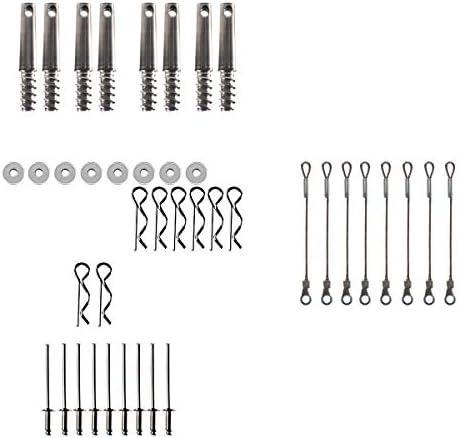
- Limb Risers: These are steel cables that run from the front bumper or hood up to the top of the roll cage. Their purpose is to deflect low-hanging branches and limbs up and over the roof, preventing them from striking the windshield, lights, or occupants [4]. This is a simple, highly effective modification for heavily wooded areas.
Pillar 2: Enhancing Low-Speed Agility and Control
Forest trails demand precision. You are rarely at high speed, meaning low-end torque, smooth engagement, and tight turning are more important than top-end horsepower.
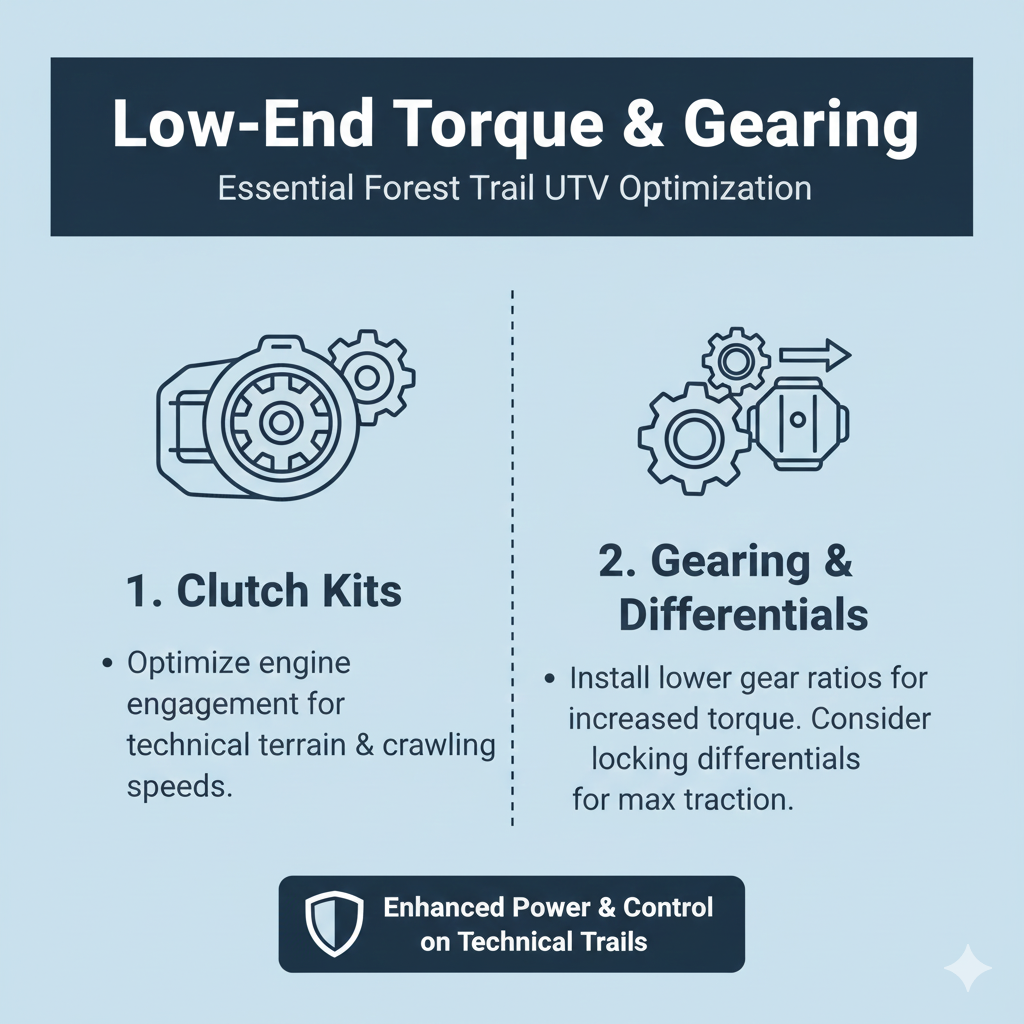
3. Low-End Torque Clutch Kits
Stock clutches are often tuned for a balance of low-end and high-end performance. For the forest, you need to prioritize low-end grunt.
- Improved Engagement: A sport utility or trail-specific clutch kit is tuned to engage at a lower RPM, providing smoother, more immediate power delivery right off the line [5]. This is critical for creeping over logs, navigating rock gardens, and maintaining momentum without spinning the tires.
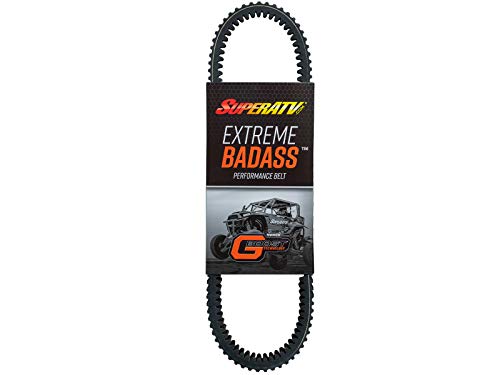
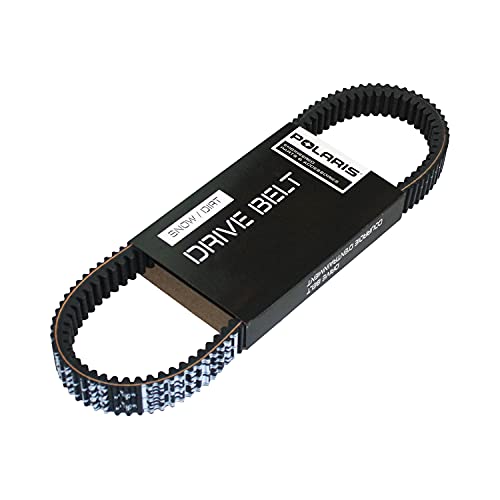
- Better Belt Life: By optimizing the clutch for the lower speeds and higher loads of technical trail riding, you reduce belt slippage and heat, significantly extending the life of your drive belt.
4. Narrower Tire and Wheel Setup
While wide tires are great for flotation in sand or mud, they can be a liability on narrow forest trails.
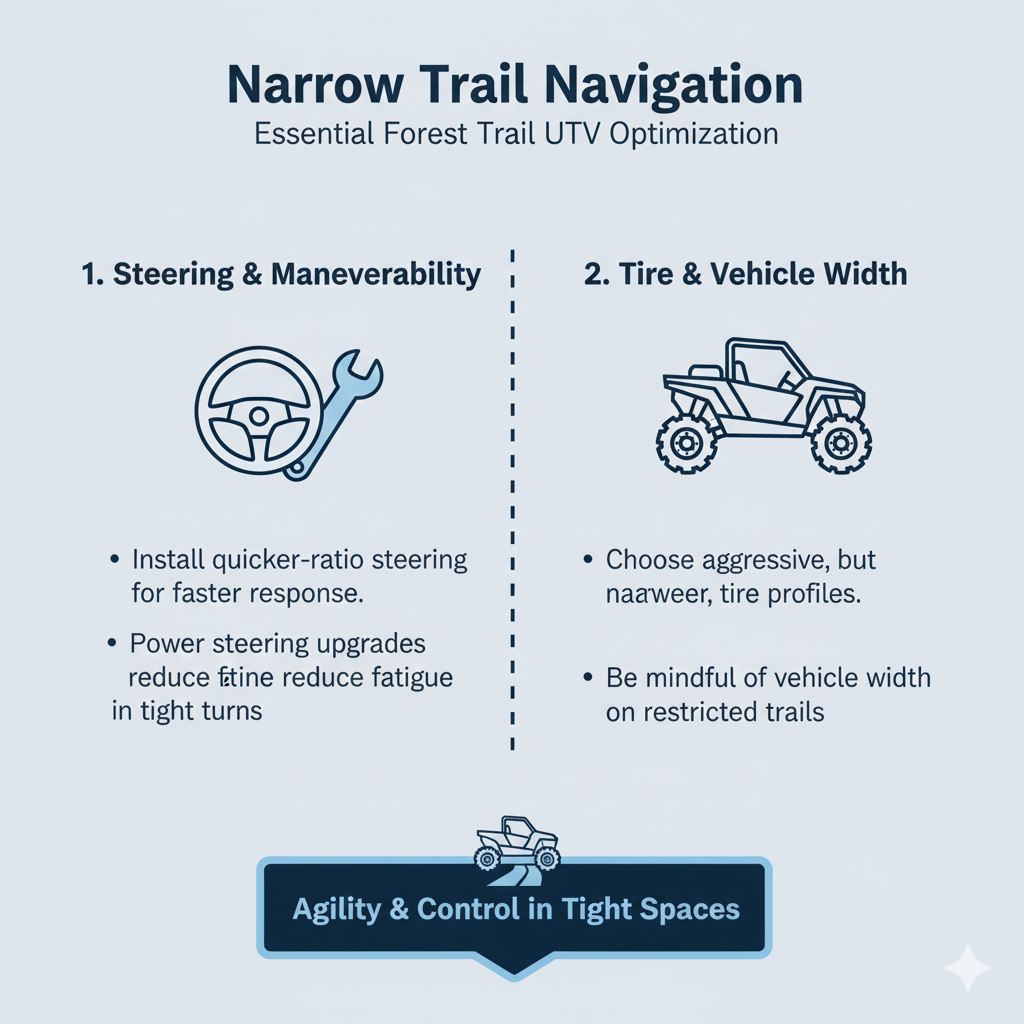
- Maintain Factory Width (or Less): Many forest trails are restricted to 50-inch or 60-inch widths. If your UTV is wider, you risk constant rubbing and damage. Even if the trail is wider, a narrower stance can make navigating between trees easier.
- Tire Choice: Opt for a durable, 8-ply or 10-ply rated All-Terrain (AT) radial tire with a non-directional tread pattern. The focus should be on puncture resistance and sidewall strength to handle sharp rocks and roots, rather than aggressive mud-clearing lugs [6]. A tire that performs well on hard-packed dirt and rocks is ideal.
5. Power Steering and Steering Wheel Upgrades
Tight, technical trails require constant steering input.
- Electronic Power Steering (EPS): If your UTV didn’t come with EPS, adding an aftermarket kit is a game-changer. It reduces driver fatigue and makes low-speed maneuvering through tight obstacles effortless.
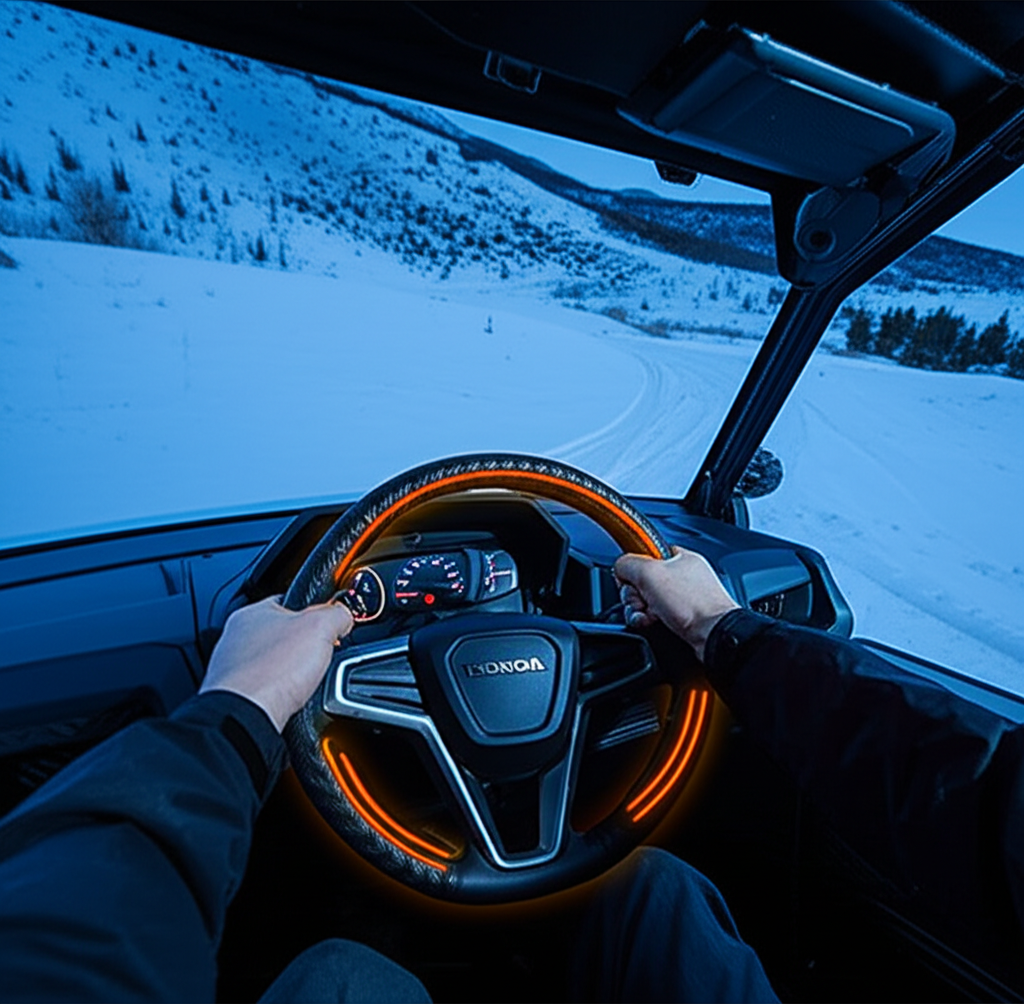
- Smaller Diameter Steering Wheel: A smaller, aftermarket steering wheel can increase the responsiveness of your steering, giving you quicker, more precise control in technical sections.
Pillar 3: Environmental Courtesy and Noise Reduction
As more trails face closure due to noise complaints, being a responsible rider means minimizing your UTV’s sound output. A quieter UTV is also more enjoyable, allowing you to hear your passengers, spotters, and the sounds of nature.
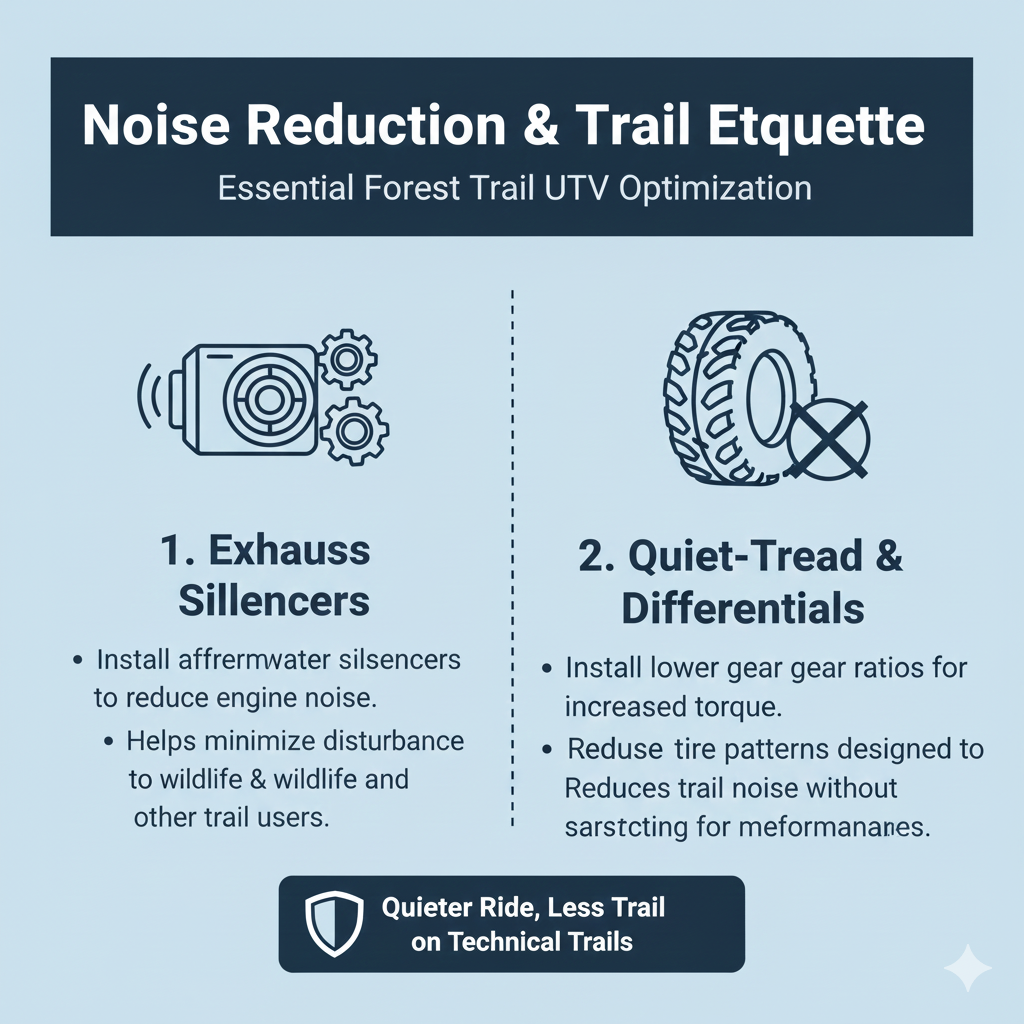
6. Exhaust Silencers and Muffler Upgrades
The primary source of excessive noise is the exhaust system.
- Aftermarket Silencers: These are secondary mufflers or resonators that can be added to the existing exhaust system to significantly dampen the sound without drastically affecting performance [7]. Look for “DB Killer” or “Quiet Core” inserts.
- Stock Muffler Modification: Some riders opt for a larger, high-flow aftermarket muffler designed for noise reduction. The goal is to maintain exhaust flow while increasing the volume of the muffler to absorb sound waves.
7. Sound Deadening and Heat Insulation
Noise and heat often travel together. Reducing one can help reduce the other, leading to a more comfortable ride.
- Acoustic Insulation: Applying sound deadening mats (like butyl rubber with a foil layer) to the floorboards, firewall, and under the seats can dramatically reduce engine and drivetrain noise transmitted into the cabin [8].
- Heat Shields: Installing heat shields around the exhaust and engine bay not only protects the sound deadening material but also keeps the cabin cooler, which is especially important during slow, technical crawling.
Pillar 4: Lighting and Visibility
The forest canopy can create deep shadows and low-light conditions, even in the middle of the day.
8. Auxiliary LED Lighting
While your factory headlights are adequate, auxiliary lighting is crucial for spotting obstacles and navigating at dusk or in dense woods.
- LED Light Bars: A low-profile LED light bar mounted on the roof or front bumper provides a wide flood of light, illuminating the entire trail and the surrounding brush.
- A-Pillar Spot Lights: Small, powerful LED spot lights mounted on the A-pillars are excellent for “seeing around corners.” By aiming them slightly outward, you can illuminate the trail where your headlights cannot reach during a tight turn.
- Rock Lights: Small LED pods mounted underneath the UTV are invaluable for low-speed rock crawling and technical sections, allowing you to clearly see the placement of your tires and the obstacles beneath the vehicle.
Summary of Forest Trail Optimization
The optimized forest trail UTV is a machine built for precision, protection, and stealth. It prioritizes low-speed control and durability over high-speed performance.
| Optimization Area | Key Modification | Primary Benefit |
|---|---|---|
| Protection | Full UHMW Skid Plates | Slides over obstacles, quiet, durable. |
| Protection | Limb Risers & Tree Kickers | Deflects branches, prevents body damage. |
| Performance | Low-End Torque Clutch Kit | Smooth, precise power delivery at low speeds. |
| Agility | Narrower Tire/Wheel Setup | Easier navigation on restricted trails. |
| Agility | EPS and Smaller Steering Wheel | Reduced fatigue, quicker steering response. |
| Courtesy | Exhaust Silencer/Muffler | Reduces noise for a better experience and trail preservation. |
| Visibility | A-Pillar Spot Lights | Illuminates around tight corners and dense brush. |
By implementing these Forest Trail UTV Optimization strategies, you will not only protect your investment but also enhance your riding experience, allowing you to focus on the beauty of the “green tunnel” rather than the hazards it contains. Remember to always ride responsibly and respect the trail systems to ensure they remain open for generations of riders to come.