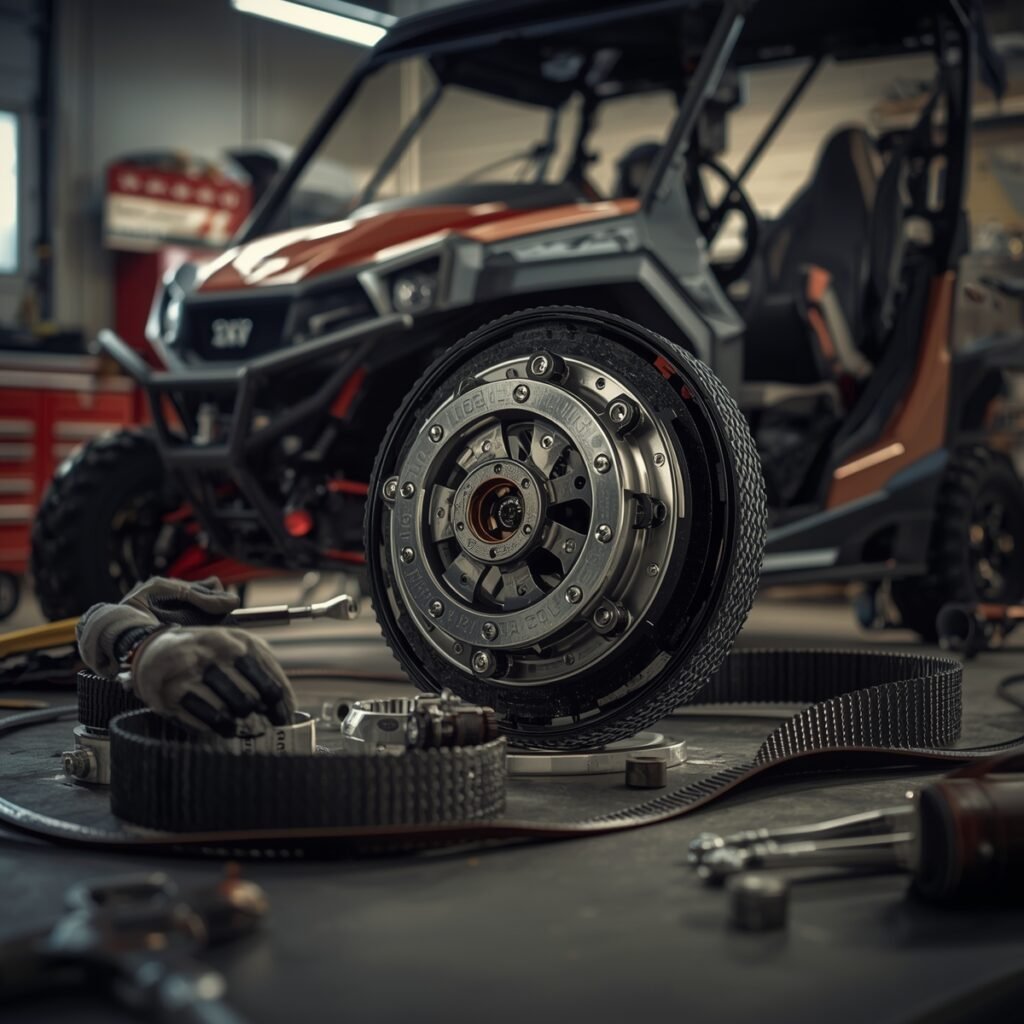
Understanding the Basics of CVT and Clutch Systems
Continuously Variable Transmissions (CVTs) represent a significant advancement in automotive engineering, providing a method of transmitting power from the engine to the drivetrain without the discrete gear ratios typical of traditional automatic transmissions.Unlike conventional systems that rely on a fixed number of gears, a CVT offers infinite variability within a range, which enables the engine to operate at its most efficient RPM regardless of the vehicle’s speed.
At the heart of a CVT is its clutch system, which plays a crucial role in managing the connection between the engine and the transmission.Clutches in CVTs are typically designed to engage and disengage the transmission as required based on the driving conditions and load.
This dynamic function allows for smoother acceleration, as the engine can maintain optimal power output while the vehicle speeds up or slows down.
In essence, the clutch ensures seamless transitions in power delivery by modulating the connection between the engine and the drive wheels.
The mechanics involved in variable gear ratios within a CVT are primarily facilitated through a series of pulleys and a belt or chain.
As the input pulley adjusts its diameter, which can widen or narrow, the drive belt’s position changes accordingly.
This action allows the CVT to offer an endless variety of gear ratios, adapting to the demands of driving without the jarring shift points found in traditional transmissions.
As a result, a CVT enhances overall engine performance and optimizes fuel efficiency by keeping the engine running at the most effective RPM.
In conclusion, the understanding of CVTs and their clutch systems lays a strong foundation for exploring subsequent optimization techniques.
By grasping how these systems function and their benefits concerning engine performance and fuel efficiency, readers will be better equipped to delve into effective strategies for CVT clutch optimization.
Common Issues Affecting CVT Clutch Performance
Continuously Variable Transmissions (CVTs) offer seamless acceleration and enhanced fuel efficiency.
However, they are not immune to several common issues that can impede their clutch performance.
Understanding these issues is vital for maintaining optimal vehicle functionality.
One significant problem is wear and tear. Over time, the components of a CVT clutch can degrade due to constant friction.
As the clutch plates wear down, they may not engage or disengage properly, leading to slippage.
This condition can cause a drop in power transfer efficiency, ultimately affecting the vehicle’s acceleration and responsiveness.
Improper fluid levels are another critical factor impacting CVT performance.
The transmission fluid in CVTs serves as both a lubricant and a hydraulic fluid, essential for the clutch’s operation.
Low fluid levels can lead to inadequate lubrication, resulting in increased wear and overheating.
Conversely, overfilling can cause foaming, which disrupts fluid flow and leads to inefficient clutch performance.
Regular checks and maintenance of the transmission fluid can prevent these complications.
Overheating is a prevalent issue that can severely affect CVT clutches.
Excessive heat can result from prolonged use, aggressive driving styles, or excessive load on the vehicle.
Overheating can cause the clutch materials to degrade, impacting functionality and responsiveness.
Consequently, it is essential to monitor the temperature and ensure the vehicle operates within the manufacturer-recommended limits to sustain clutch performance.
Moreover, electrical failures can disrupt the performance of CVT clutches.
Modern CVTs rely heavily on electronic controls for optimal functioning.
Any malfunction in these electronic systems—such as sensor failures or wiring issues—can lead to erratic clutch behavior.
Identifying and addressing these electrical faults is crucial in maintaining the performance of CVTs.
Techniques for Optimizing CVT Clutch Performance
To optimize the performance of continuously variable transmission (CVT) clutches, several practical techniques and maintenance practices should be implemented.
One fundamental method is the regular maintenance of the CVT system, which includes routine inspections and servicing.
This can prevent the wear and tear of components and ensure that the transmission operates efficiently.
Keeping the CVT fluid clean and at the correct levels is also essential, as contaminated or low fluid can hinder clutch engagement and overall performance.
Regular fluid changes, based on the manufacturer’s recommendations, can significantly affect how well the CVT performs.
Tuning options represent another method for enhancing CVT clutch performance.
By making adjustments to the CVT’s control parameters, such as shift points and engine load considerations, drivers can achieve improved responsiveness from their vehicle.
These tuning options may involve recalibrating the transmission control module (TCM) to better match the vehicle’s power band, which can lead to a more dynamic driving experience.
Aftermarket parts, including high-performance clutches and pulleys, can provide significant upgrades to CVT systems.
These components are specifically designed to increase clutch engagement speed and enhance overall responsiveness, resulting in a more engaging driving experience.
Additionally, modifying the clutch and pulley system can lessen the effects of heat, which is often detrimental to the longevity of a CVT.
Timing adjustments are crucial for optimizing the performance of CVT clutches as well.
Adjusting timing can enable the CVT to synchronize more effectively with the engine’s output, cementing a harmonious relationship between engine power and transmission response.
Furthermore, performing software updates on the vehicle’s onboard computer can help in ensuring that the CVT operates efficiently, adapting to any changes made to the vehicle’s engine specifications.
Future Trends in CVT and Clutch Technologies
The evolution of continuously variable transmissions (CVTs) and clutch technologies is rapidly shaping the future of automotive performance.
As the automotive industry embraces modernization, several key innovations are expected to redefine how CVTs function, enhancing efficiency and user experience.
One notable advancement involves the development of lightweight, high-strength materials.
These new materials not only improve the overall durability of CVT systems but also contribute to reduced weight, leading to improved fuel efficiency and vehicle dynamics.
In addition to material advancements, the integration of computer-controlled clutches is set to revolutionize the functionality of CVTs.
Traditional mechanical systems are increasingly being replaced by sophisticated electronic controls.
This transition allows for more precise and responsive engagement of the clutch,
which can greatly enhance acceleration and shift smoothness.
By leveraging advanced algorithms and data analytics,
manufacturers can optimize clutch performance in real time,
adapting to driving conditions and individual driver preferences.
Another significant trend is the incorporation of hybrid technology within CVT systems.
With the growing emphasis on sustainability and reduced emissions,
hybrid powertrains are becoming more prevalent.
CVTs equipped with hybrid technology can seamlessly transition between electric and gasoline power,
maximizing efficiency during various driving conditions.
This evolution not only contributes to environmental goals but also offers drivers a refined and responsive driving experience.
As the automotive sector prepares for these advancements,
it is essential for industry stakeholders to remain informed and adaptable.
Continuous education on emerging technologies will play a crucial role in leveraging the full potential of CVT systems and enhancing clutch performance.
The combination of advanced materials, sophisticated electronic control,
and hybrid integration is poised to alter the landscape of CVTs significantly,
paving the way for a new era of automotive innovation.

- ☞【Function of 30 Series Torque Converter Clutch】- Torque Converter is produced by complex technology. The role of a torq…
- ☞【Widely Used】- 30 series 6.5 hp go kart/mini bike torque converter clutch driver, Compatible with Comet, Manco Go Karts…
- ☞【Specification】3/4″ bore designed for 6.5hp 212CC engines. This is a brand new aftermarket 30 series 6.5 hp go kart tor…

- This 3/4″ Torque Converter is a direct replacement that fits all models of Comet TAV2 Torq-A-Verters 218353A, 219552A, 2…
- Quality Ensurance for More Power: This go-kart torque converter is made of high-quality iron and aluminum material which…
- This torque converter fits a 3/4″ shaft,and comes with your choice of a 10 tooth sprocket for a 40/41/420 chain and 12 t…
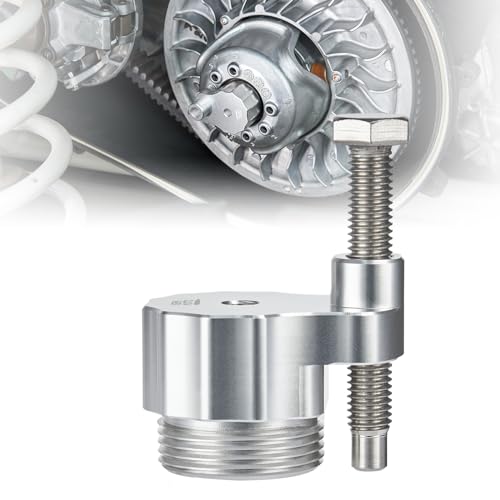
- Easy Belt Changes: The KEMIMOTO x3 belt tool makes clutch adjustments a breeze, enabling fast and effortless CVT belt sw…
- T30 Torx Wrench Included: Simplify your clutch maintenance with the KEMIMOTO x3 belt toolkit. Our package includes a clu…
- Durable Aluminum Build: Upgrade your toolkit with the KEMIMOTO x3 clutch spreader set, crafted from high-quality aluminu…
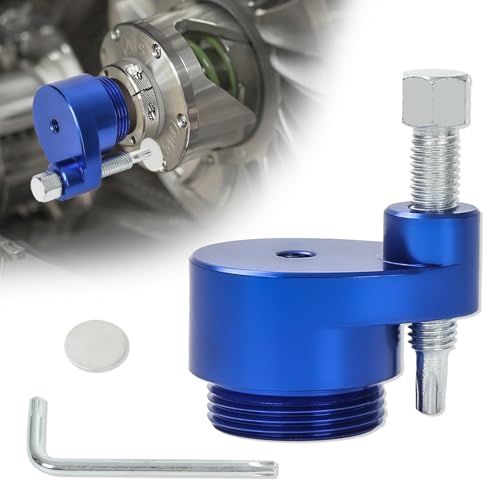
- Part Number: Suitable for OEM708200720, 529000088, 708200686, 08200720
- Model: This clutch belt replacement is suitable for 2017-2023 Can-Am Mavenrick X3/X3 MAX/X3 MAX R/X3 RR, 2018-2019 Can-A…
- Multi-function: Can-Am belt removal tool is designed for ATV and UTV, easy to remove and install belts, essential clutch…

- Replace The Belt Quickly: Kemimoto x3 belt changing tool enables you to change your belt more easier to go back to your …
- Must-have tool– With this X3 belt removal kit, you just need to screw the tool into the secondary clutch and tighten it…
- High-quality Material– X3 clutch removal kit is made of excellent aluminum alloy CNC machined and rust-resistant makes …