

Honda Pioneer 700 vs 520 for Farming: Which UTV is Right for Your Farm?
If you’re a farmer or property owner looking for a reliable utility vehicle to handle daily chores, you’ve probably considered both the Honda Pioneer 700 and the Honda Pioneer 520. Both machines are legendary for their durability and work ethic, but they’re designed for different farming scenarios. I’ve spent considerable time researching these two workhorses, and I’m excited to help you understand which one might be the better fit for your operation. Whether you’re managing a small homestead or a larger agricultural property, this honda pioneer 700 vs 520 for farming comparison will guide you toward the right choice.
The Honda Pioneer line has earned a stellar reputation among farmers and ranchers for good reason. These machines are built to last, designed to work hard, and engineered to handle the demands of farm life. However, choosing between the 700 and 520 requires understanding your specific needs, property size, and the types of tasks you’ll be tackling regularly.
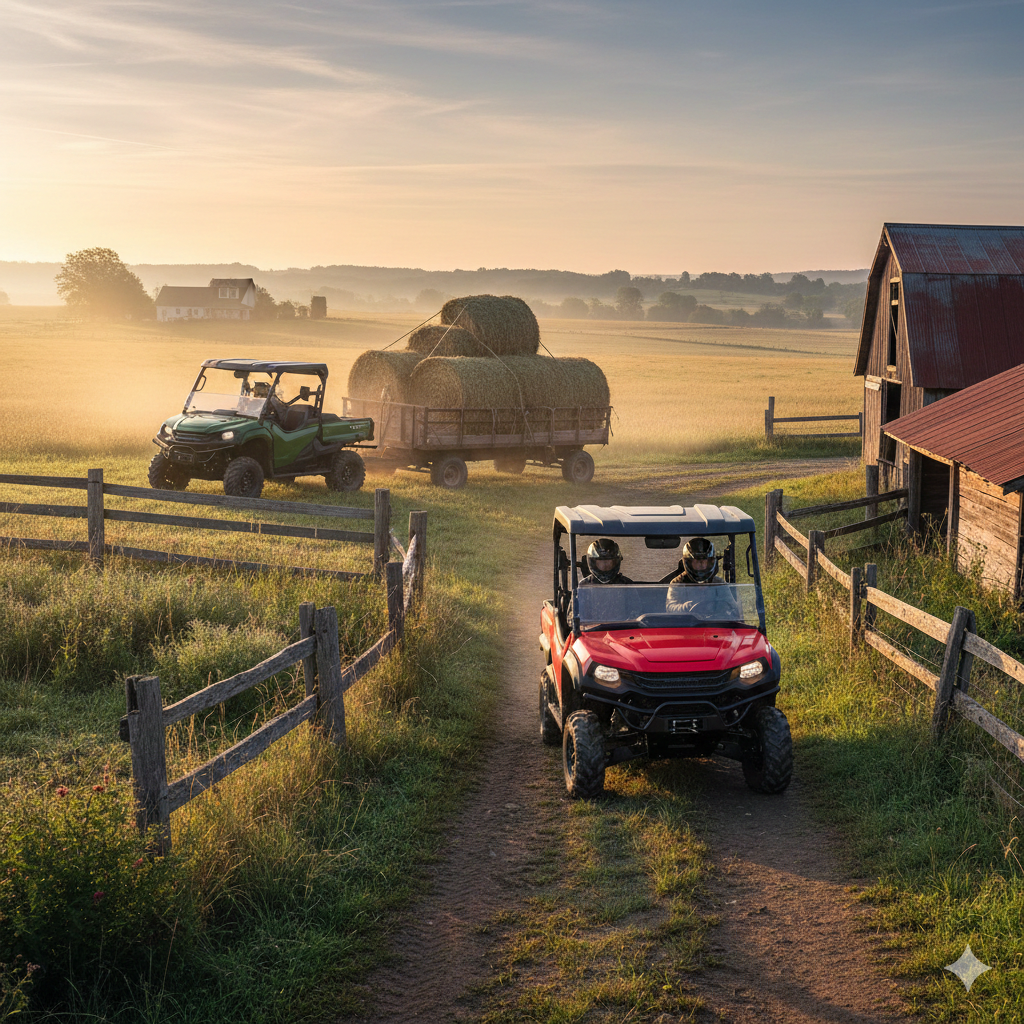
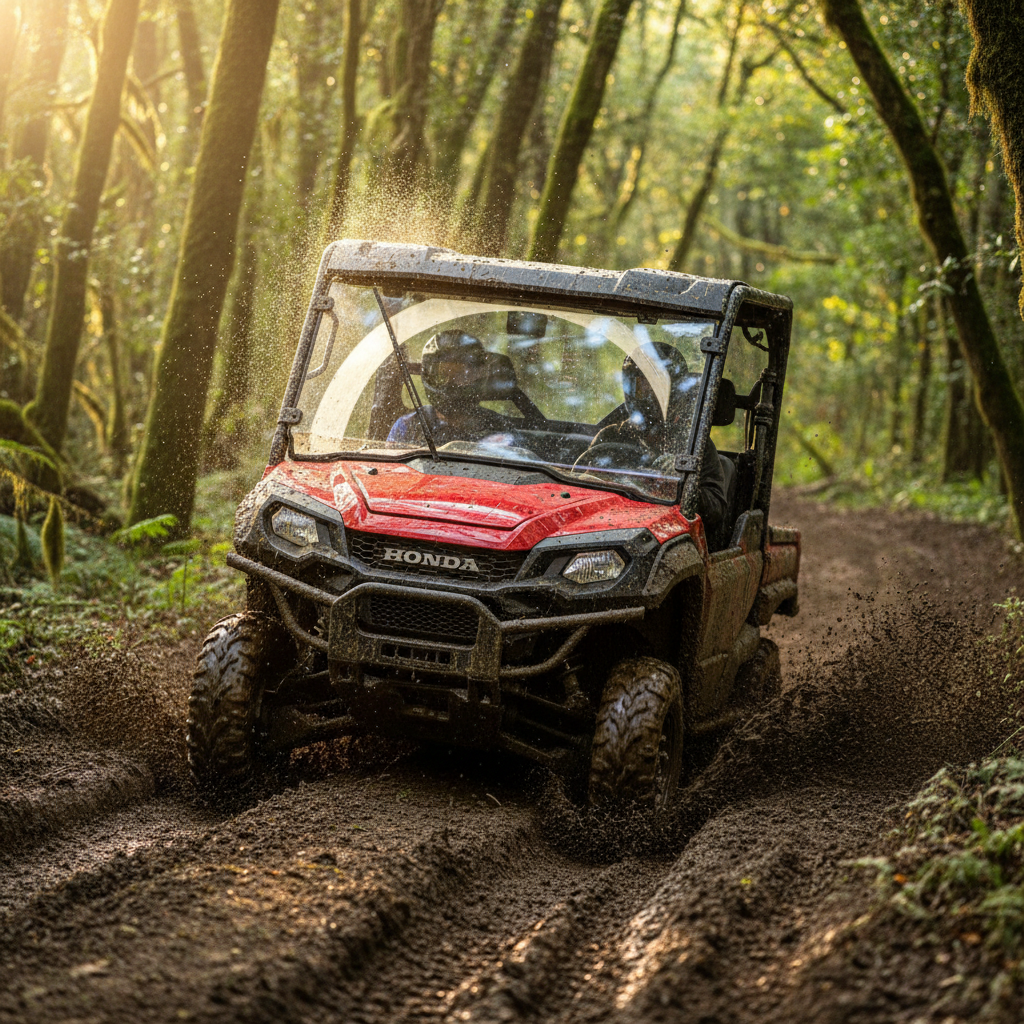
The Pioneer 700 and 520 working hard on the farm.
Engine Power and Performance: Comparing the Workhorses
When it comes to farm work, engine power matters. The Honda Pioneer 700 is powered by a robust 675cc liquid-cooled, four-stroke single-cylinder engine that delivers reliable power for hauling and towing. This engine is fuel-injected, which means it starts reliably in cold weather and performs consistently across different altitudes and temperatures. The Pioneer 700’s engine is rubber-mounted to reduce cabin vibration, making long workdays more comfortable.
The Honda Pioneer 520, on the other hand, features a more compact 518cc liquid-cooled engine that’s optimized for low-RPM torque. This smaller engine is also fuel-injected and provides excellent pulling power for its size. For 2026, Honda refined the transmission gear ratios on the 520, resulting in a 23-percent increase in top speed while maintaining the torquey character that makes it perfect for farm work. The 520’s engine is lighter and more compact, which contributes to the machine’s overall agility and maneuverability.
In terms of raw horsepower, the Pioneer 700 has a clear advantage. However, the Pioneer 520’s focus on low-RPM torque makes it surprisingly capable for many farming tasks. The choice between these engines depends on the types of work you’ll be doing. If you’re regularly hauling heavy loads or towing large trailers, the 700’s extra power is valuable. If you’re doing lighter work and prioritize maneuverability, the 520’s compact engine is more than adequate.
Towing and Hauling Capacity: The Heavy-Lifting Difference
This is where the honda pioneer 700 vs 520 for farming comparison really matters for serious farm work. The Honda Pioneer 700 can tow up to 1,500 pounds, which is 50 percent more than the Pioneer 520’s 1,000-pound towing capacity. For farmers who regularly haul trailers filled with hay, feed, equipment, or supplies, this extra capacity is significant. The Pioneer 700 can handle larger utility trailers, equipment trailers, and even small livestock trailers without straining.
The bed capacity tells a similar story. The Pioneer 700 offers a 1,000-pound bed capacity, allowing you to haul substantial loads of feed, tools, supplies, or materials. The Pioneer 520’s bed capacity is 450 pounds, which is still respectable for lighter loads but limits what you can carry in a single trip. If you’re frequently moving heavy items around your property, the Pioneer 700’s larger bed and towing capacity will reduce the number of trips and save you time.
That said, the Pioneer 520’s 1,000-pound towing capacity is still quite capable for many farming operations. If you’re working with smaller trailers or lighter loads, the 520 will handle the job without any issues. The key is understanding your typical workload and choosing accordingly.
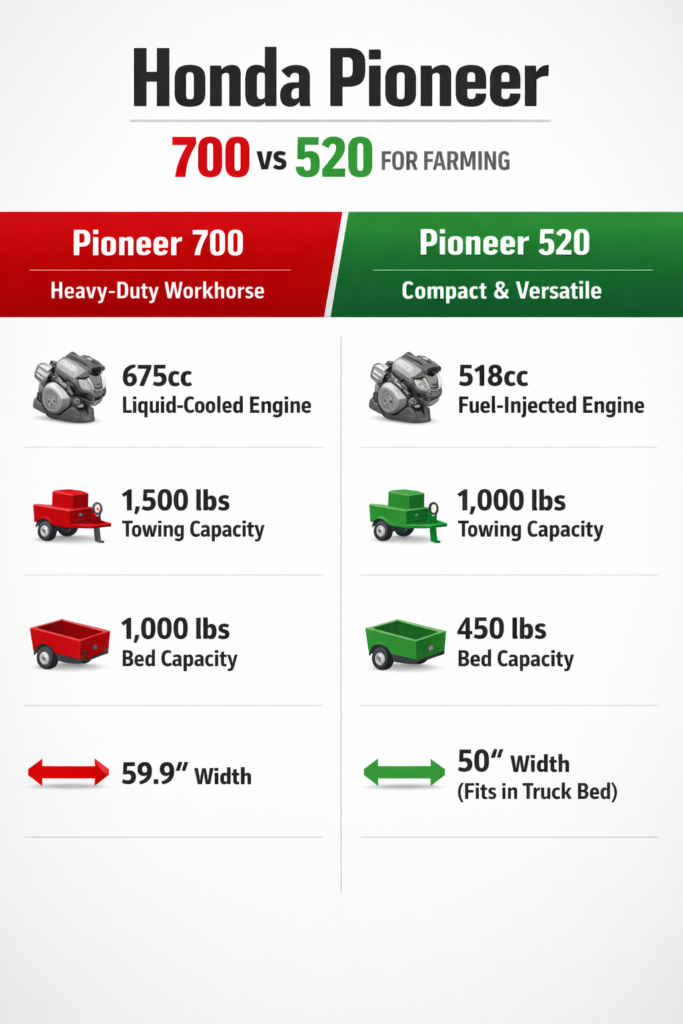
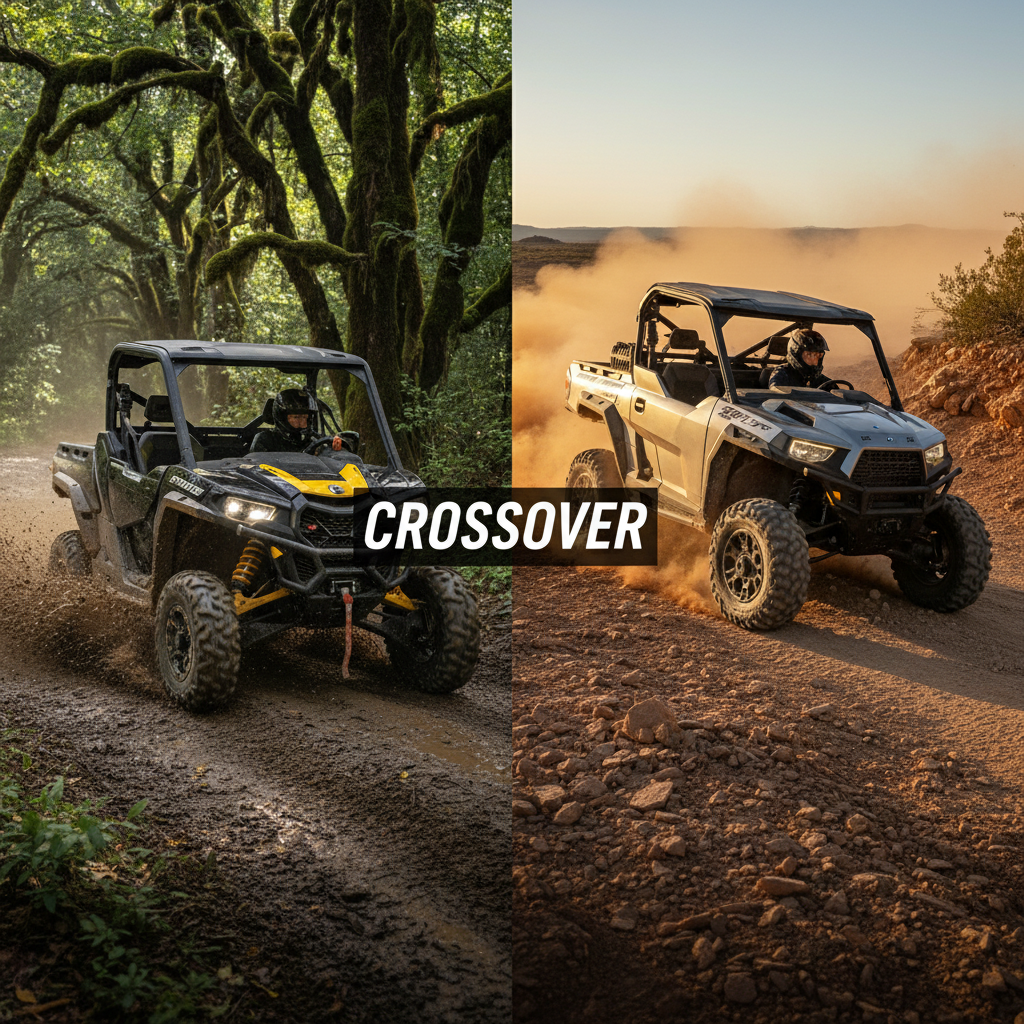
Key specifications and farming capabilities at a glance.
Size and Maneuverability: Navigating Your Property
One of the most important considerations for farm use is how easily your UTV can navigate tight spaces. The Pioneer 520 has a significant advantage here. With a width of just 50 inches, the Pioneer 520 is narrow enough to fit through most standard gates and even fits in the bed of a full-sized pickup truck. This makes it incredibly versatile for farmers who need to transport their UTV to different properties or navigate narrow farm lanes.
The Pioneer 700, by contrast, is 59.9 inches wide. While this extra width provides a more spacious cabin and better stability when hauling heavy loads, it can be limiting if you have narrow passages, tight gates, or confined work areas. The Pioneer 700 won’t fit in most pickup truck beds, which means you’ll need a trailer if you want to transport it off your property.
For farmers with large, open properties where maneuverability isn’t a major concern, the Pioneer 700’s extra width is a non-issue. However, if you’re working on a smaller property with tight spaces, or if you need to transport your UTV frequently, the Pioneer 520’s compact size is a major advantage. Many farmers appreciate the 520’s ability to squeeze through gates and navigate between buildings and equipment.
Comfort and Control: Long Days in the Saddle
Farm work often means long days in your UTV, so comfort matters. The Honda Pioneer 700 offers a more spacious cabin with a wider stance, which provides better stability when hauling heavy loads. The larger frame also means more room for the driver and passenger, making it more comfortable for extended work sessions. The Pioneer 700 comes with a tilting steering wheel and available Electric Power Steering (EPS) on Deluxe and Forest models, which reduces fatigue during long days of driving.
The Pioneer 520 is more compact, but Honda has designed it with comfort in mind. The spacious bench-style seat with individual backrests and seatbelts provides good support for both driver and passenger. The 520’s lighter weight and more nimble handling characteristics make it feel more responsive and engaging to drive, which some farmers actually prefer. The 520 also features a tilting steering wheel for easier entry and exit.
Both machines feature independent suspension systems that provide a smooth, comfortable ride over rough terrain. The Pioneer 700’s larger size and longer wheelbase provide slightly better stability when loaded, while the Pioneer 520’s independent rear suspension delivers a plush ride despite its compact size. For comfort, the choice depends on whether you prefer the spacious feel of the 700 or the nimble handling of the 520.
Specifications Comparison Table
| Feature | Honda Pioneer 700 | Honda Pioneer 520 |
|---|---|---|
| Engine | 675cc Liquid-Cooled Single | 518cc Liquid-Cooled Single |
| Towing Capacity | 1,500 lbs | 1,000 lbs |
| Bed Capacity | 1,000 lbs | 450 lbs |
| Width | 59.9 inches | 50 inches |
| Transmission | Automatic | Automatic with AT/MT Mode |
| Starting Price | $12,899 | $10,999 |
Reliability and Durability: Built to Last
Both the Honda Pioneer 700 and 520 are built on Honda’s proven platform, which means you’re getting legendary reliability in either case. Honda’s reputation for durability is well-earned, and both of these machines are designed to withstand years of hard farm work. The liquid-cooled engines in both models are proven performers, and the fuel injection systems ensure reliable starts in cold weather and consistent performance in any condition.
The Pioneer 700’s larger engine and heavier-duty components make it particularly well-suited for sustained heavy work. If you’re regularly pushing the machine to its limits with maximum loads, the 700’s more robust design will likely have a longer service life. However, the Pioneer 520 is also built to last, and many farmers have successfully used them for years of consistent farm work without major issues.
Honda’s dealer network is extensive, and parts are readily available for both models. This is crucial for farm equipment, as downtime can be costly. Whether you choose the 700 or 520, you’ll have access to genuine Honda parts and qualified service technicians wherever you are.
“The choice between these two machines comes down to your specific farming needs. The 700 is the right choice if you regularly haul heavy loads, while the 520 is perfect for farmers who value maneuverability and don’t need maximum towing capacity.” – My perspective as a farm equipment enthusiast.
Price and Value: Getting the Most for Your Money
The Honda Pioneer 520 starts at $10,999, while the Pioneer 700 starts at $12,899. That’s a difference of nearly $2,000, which is significant for many farm operations. The Pioneer 520 offers excellent value for farmers who don’t need the extra towing and bed capacity. You’re getting a reliable, durable Honda machine at a more accessible price point.
The Pioneer 700’s higher price reflects its increased capabilities. If you regularly need to tow 1,500 pounds or haul 1,000-pound loads, the extra investment in the 700 will pay for itself through increased efficiency and fewer trips. However, if you’re doing lighter work, the 520’s lower price and lower fuel consumption make it the more economical choice.
Consider your long-term farming plans when making this decision. If you think you’ll need the extra capacity in the future, investing in the 700 now might be the smarter choice. If you’re confident that the 520’s capabilities will meet your needs for years to come, the savings are substantial.
Final Verdict: Making Your Decision
The honda pioneer 700 vs 520 for farming decision ultimately depends on your specific farming operation. Choose the Honda Pioneer 700 if you regularly haul heavy loads, tow large trailers, or work on a large property where you need maximum hauling capacity. The 700’s extra power and larger bed capacity will reduce the number of trips and increase your efficiency, making it the right choice for demanding farm work.
Choose the Honda Pioneer 520 if you’re working on a smaller property, have tight spaces to navigate, need to transport your UTV frequently, or simply don’t require maximum towing capacity. The 520’s compact size, lower price, and excellent fuel efficiency make it an outstanding value for farmers who don’t need the 700’s extra capacity.
Both machines are built on Honda’s proven platform and will serve you reliably for years to come. The key is understanding your specific needs and choosing the machine that matches your operation. Either way, you’re investing in a legendary workhorse that will earn its keep on your farm.
What’s your farming operation like? Are you leaning toward the 700 or the 520? Share your thoughts and experiences in the comments below!
Best regards,
Recommended Resources
- Video: Honda Pioneer 700 & Foreman 520 Compared: ATV vs Side-by-Side (18:30) – A detailed comparison of these two Honda workhorses.
- Video: We Ordered a Honda Pioneer 520 but Purchased a 700 (24:15) – Real owner experience and comparison after using both machines.
- Outbound Link: Official Honda Pioneer 700 Features Page – Complete specifications and features from Honda.
- Outbound Link: Official Honda Pioneer 520 Features Page – Detailed specs and capabilities for the 520.
- Outbound Link: Honda SxS Forum: Pioneer 700 vs 520 Discussion – Real owner experiences and insights from the community.
References
- Honda Powersports: Pioneer 700 Features and Specifications
- Honda Powersports: Pioneer 520 Features and Specifications
- YouTube: Honda Pioneer 700 & Foreman 520 Compared
- YouTube: We Ordered a Honda Pioneer 520 but Purchased a 700
- Honda SxS Forum: Pioneer 700 vs 520 Size Difference Discussion