


Hey there, fellow trail riders and workhorses! If you’re in the market for a heavy-duty UTV, you’ve likely narrowed your choices down to two titans: the Honda Pioneer 1000 and the Polaris Ranger XP 1000. I’ve spent countless hours behind the wheel of both, and I know that when you’re deep in the woods or hauling a massive load, the only thing that matters is whether your machine will get you back home. Reliability isn’t just a spec; it’s peace of mind. In this deep dive, we’re going to settle the honda pioneer 1000 vs polaris ranger xp 1000 reliability debate once and for all.
Choosing between these two isn’t just about horsepower or suspension travel; it’s about the fundamental engineering philosophy behind each machine. Honda brings its legendary automotive-style reliability to the table, while Polaris offers a refined, comfort-focused experience that has dominated the market for years. But which one holds up better under pressure? We’ll look at everything from transmission designs to common trail-side headaches. Let’s get into the nitty-grey of what makes these machines tick—and what makes them break.
The Heart of the Matter: Transmission Reliability
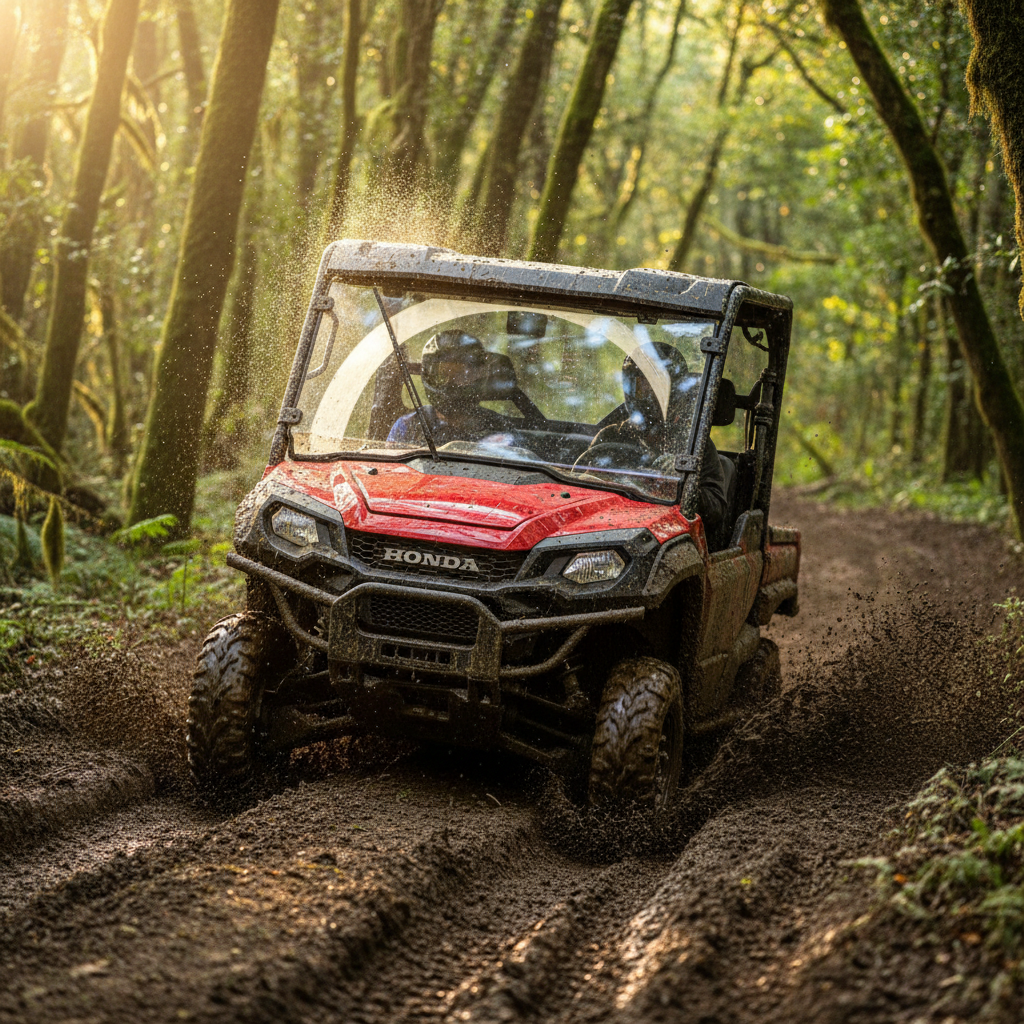
When we talk about honda pioneer 1000 vs polaris ranger xp 1000 reliability, the conversation always starts with the transmission. This is the single biggest difference between the two. The Honda Pioneer 1000 uses a sophisticated 6-speed Dual-Clutch Transmission (DCT). This means there are no belts to slip, burn, or break. It feels like a real truck, shifting through gears with precision. I’ve always loved the direct connection you feel with a DCT, especially when climbing steep, technical terrain where you need consistent power delivery.
On the other side, the Polaris Ranger XP 1000 utilizes a Continuously Variable Transmission (CVT). This is the industry standard for a reason: it’s smooth, easy to operate, and keeps the engine in its powerband. However, CVTs rely on a rubber belt. While modern belts are incredibly tough, they are still a wear item. If you’re heavy on the throttle in high gear when you should be in low, you can smoke a belt in minutes. For many riders, the “belt-less” design of the Honda is the ultimate reliability win.
| Feature | Honda Pioneer 1000 | Polaris Ranger XP 1000 |
|---|---|---|
| Transmission Type | 6-Speed DCT (No Belts) | CVT (Belt-Driven) |
| Common Issue | DCT Error Codes (P1890) | Belt Slippage/Failure |
| Maintenance | Oil Changes (Engine & Sub-trans) | Belt Inspection/Replacement |
However, the Honda’s DCT isn’t without its quirks. Some owners have reported error codes like P1890, which often points to clutch pressure issues. These are usually caused by dirty oil or sensor malfunctions. In contrast, a Polaris belt is a $150 fix you can do on the trail if you’re prepared. If a DCT has a major internal failure, you’re looking at a much more complex and expensive repair. It’s a classic trade-off: the Honda is less likely to fail, but the Polaris is often easier to fix when it does.
Engine Longevity and Performance
Both of these machines pack 1000cc-class engines that are more than capable of handling any task. The Honda features a 999cc liquid-cooled twin-cylinder engine that is essentially an automotive-grade powerplant. It’s built for the long haul. I’ve seen Pioneers with thousands of miles on them still purring like new. The lack of a CVT means the engine doesn’t have to scream at high RPMs just to get moving, which theoretically extends its lifespan.
The Polaris Ranger XP 1000 is powered by the ProStar 1000 engine, which is a masterpiece of UTV engineering. It’s incredibly smooth and offers a level of refinement that the Honda sometimes lacks. However, the honda pioneer 1000 vs polaris ranger xp 1000 reliability comparison shows that the Polaris engine can be more sensitive to overheating if the radiator gets clogged with mud. Polaris has made great strides in cooling, but it’s still something you need to watch closely during those hot summer workdays.
“Mechanically you can’t beat the Pioneer 1000. It’s a 10/10 for durability, though it can be loud and hot in the cab compared to the Ranger.” — Real-world enthusiast feedback from HuntTalk.
One thing I’ve noticed is that the Polaris fuel system can be a bit finicky. Dirt in the fuel injectors or a failing fuel pump are common complaints among high-mileage Ranger owners. Honda’s fuel system seems a bit more robust, though they did have some early issues with water getting into the fuel due to a poor breather design. Most of these “first-year” bugs have been ironed out in the 2024 and 2025 models, making both machines more reliable than ever.
Common Mechanical Headaches: What to Watch For
No machine is perfect, and both the Pioneer and the Ranger have their “known issues.” For the Honda Pioneer 1000, the most common complaint is cab heat. Because the engine sits right under the seat, it can get incredibly toasty in the summer. While this isn’t a mechanical failure per se, it can lead to premature wear on plastic components and discomfort for the rider. There have also been recalls for clutch failures and sub-transmission issues in earlier models.
The Polaris Ranger XP 1000 often faces issues with its steering rack and pinion. Many owners report that the tie rods are a weak point, especially if you’re running larger tires or hitting rocks hard. I’ve had to replace a few tie rod ends on Rangers over the years. Additionally, the CVT intake can suck in dust and debris if you’re not careful, which accelerates belt wear. It’s vital to keep those filters clean if you want your Ranger to stay reliable.
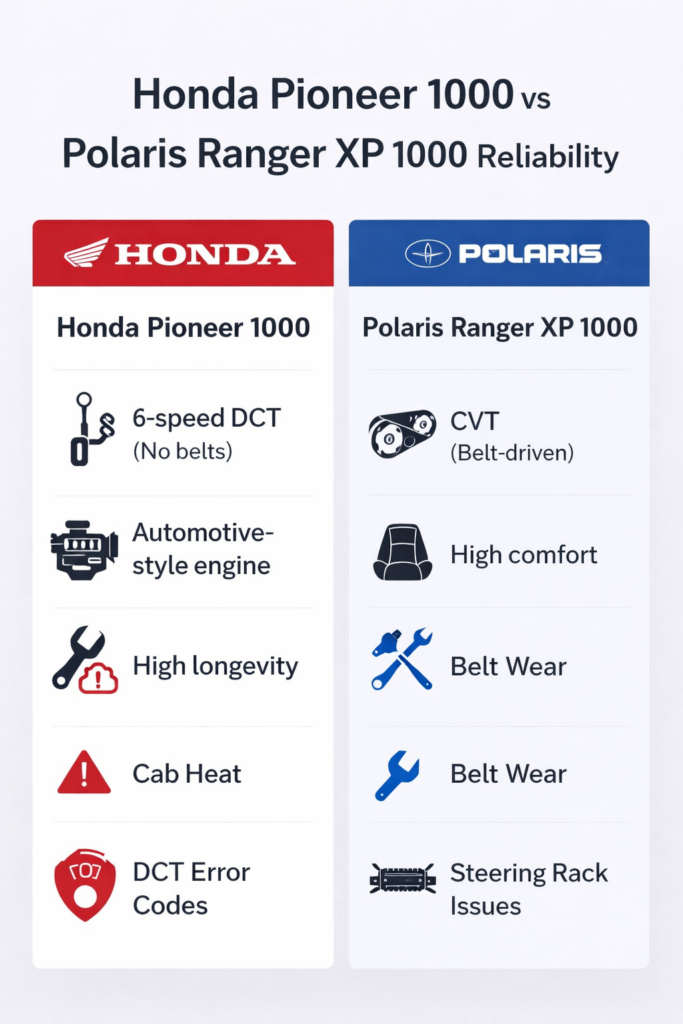
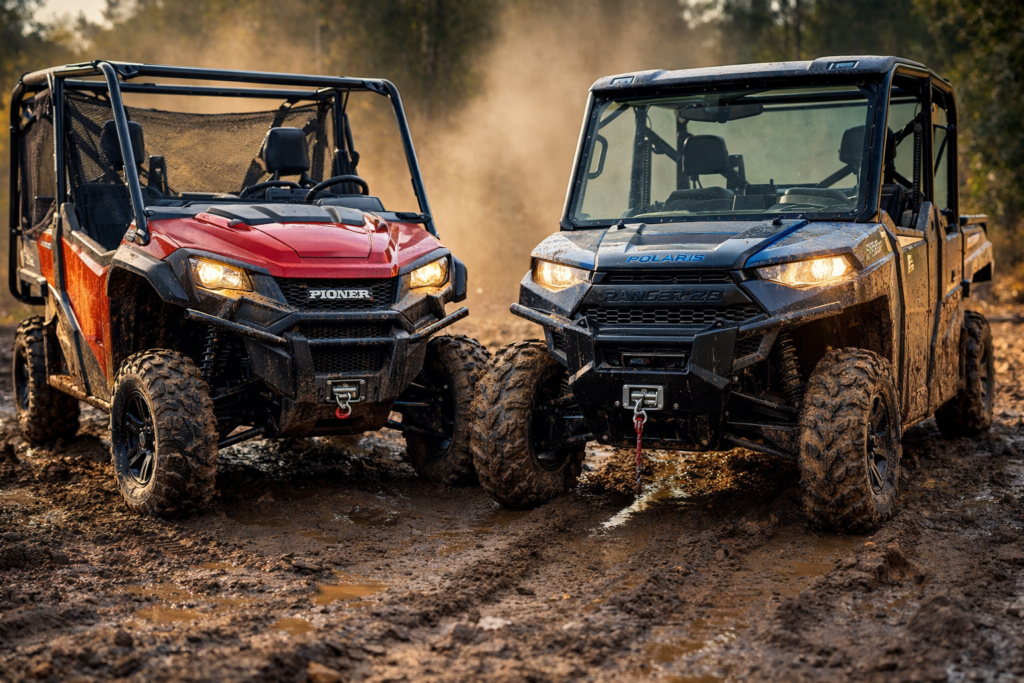
Comparison of key reliability factors between the Honda Pioneer and Polaris Ranger.
Another area where the honda pioneer 1000 vs polaris ranger xp 1000 reliability differs is in the electrical system. Honda’s wiring harnesses are generally very well-protected, but they can be sensitive to water intrusion in the sensors, leading to those dreaded ABS or DCT codes. Polaris has improved their electrical connectors significantly, but a weak battery can still cause all sorts of “ghost” issues, from power steering failure to engine misfires. Always keep your battery on a tender if you’re not riding regularly!
Maintenance: The Key to Long-Term Reliability
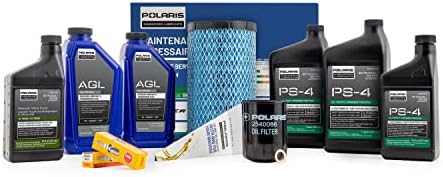
If you want your UTV to last, you have to take care of it. The Honda Pioneer 1000 has a slightly more complex oil change procedure because you have to deal with both the engine and the sub-transmission. However, because there’s no belt to worry about, your “trail-side” maintenance is virtually zero. Just check your fluids and go. I always recommend using high-quality Honda GN4 oil to keep that DCT happy.
The Polaris Ranger XP 1000 requires regular belt inspections. If you’re using your machine for heavy towing or plowing snow, you should be checking that belt every few hundred miles. It’s also a good idea to blow out the CVT housing with compressed air to remove any rubber dust. While it’s an extra step, it’s a small price to pay for the incredible smoothness and ease of use that the Ranger provides. Both machines benefit greatly from regular grease intervals on the suspension bushings and pivot points.
Real-World Trail Tips and Expert Advice
After years of testing these machines, here’s my take: if you’re a “set it and forget it” kind of person who wants a machine that feels like a tank, the Honda Pioneer 1000 is your best bet. Its automotive-style drivetrain is built for decades of use. However, if you prioritize ride quality, cab comfort, and ease of operation, the Polaris Ranger XP 1000 is hard to beat. Just be prepared to do a little more proactive maintenance on the belt and steering components.
For those of you looking to push your machines to the limit, I highly recommend checking out some of these great resources for more detailed technical breakdowns:
- Honda Pioneer 1000 Common Problems Guide – A great breakdown of what to look out for.
- Polaris Ranger Common Issues and Fixes – Essential reading for any Ranger owner.
- ATV/UTV Tire Buyers Guide – Because reliability starts where the rubber meets the dirt.
- Honda Pioneer Model-Specific Reliability – Deep dive into different year models.
- Extreme Terrain Reliability Tips – How to prep your machine for the toughest trails.
Also, if you’re a visual learner, check out these awesome videos that compare these two machines in action. They really help highlight the differences in how they handle the rough stuff:
Honda Pioneer 1000 vs. Polaris Ranger 1000: A detailed walk-around and comparison.
Honda Pioneer 1000-5 Four Year Review: Recalls, problems, and long-term reliability.
2025 Polaris Ranger XP 1000 Review: Did Polaris fix the reliability gripes?
Conclusion: Which One Wins the Reliability Crown?
So, where do we stand on the honda pioneer 1000 vs polaris ranger xp 1000 reliability debate? If we’re talking pure mechanical durability and the likelihood of reaching 10,000 miles without a major failure, the Honda Pioneer 1000 takes the crown. Its belt-less DCT and automotive-style engine are simply built to a higher standard of longevity. It’s the machine I’d want if I were heading into the wilderness for a week with no cell service.
However, the Polaris Ranger XP 1000 is far from unreliable. It’s a highly refined machine that, with proper maintenance, will serve you faithfully for years. Its “failures” are often simpler and cheaper to fix than the Honda’s. Ultimately, the best machine is the one that fits your needs and that you’re willing to maintain. Whether you choose the red or the blue, get out there, stay safe, and enjoy the trails!
What’s your experience been? Have you had better luck with a Honda or a Polaris? Drop a comment below and let’s keep the conversation going. I’d love to hear your real-world reliability stories!
Ride on
References
- Honda Pioneer 1000 Common Problems – StarknightMT
- Common Polaris Ranger Problems – StarknightMT
- Honda Pioneer Common Problems (By Model) and How to Fix Them – Vessel Powersports
- Debating Honda 1000-5p vs Polaris 1000 xp trail boss crew – Reddit
- Polaris Ranger/Honda Pioneer what is enough? – HuntTalk