
- USA FAMILY-OWNED COMPANY: Master Appliance has manufacturing high quality industrial heat guns since 1958. Located in Ra…
- PROFESSIONAL HEAT GUN, PROHEAT A-SERIES: The PH-1400A is a professional electric powered heat gun that features a progra…
- EASY TO REPAIR: The difference between a low-end heat gun and a true professional heat gun is professional heat guns are…
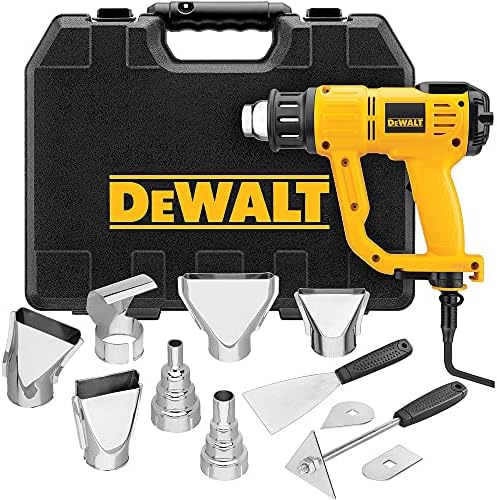
- LCD display of DEWALT heat gun allows user to adjust temperature within 50-degree increments
- Built-in overload protection shuts the heating element down and prevents burn up
- Built-in hang ring adds a convenient storage feature

- Versatile Use – 1,350 W heat gun is useful for a variety of applications, such as stripping paint, loosening rusted nuts…
- Dual Temperature Settings – Switch between 750°F and 1,000°F temperature settings.
- Built-In Stand – Makes cooldown easier and safer.
Welcome, fellow off-road warriors! 🤘
It’s a familiar story for anyone who truly uses their machine.
The sun, mud, and trail-side scrapes eventually take their toll, leaving our beloved ATV’s plastic looking tired, chalky, and faded.
Before you consider spending a fortune on new plastics, what if I told you there’s a powerful, effective, and incredibly satisfying solution sitting in your toolbox?
That’s right, we’re talking about the magic of using a heat gun.
This technique is a game-changer, and with a little patience, you can bring that factory shine back to your ride.
“Bringing faded plastic back to life is one of the most rewarding DIY jobs for any ATV owner.”
Why Does Plastic Fade and How Does Heat Help? 🤔
ATV plastics are typically made from polyethylene, a durable and flexible polymer.
Over time, exposure to ultraviolet (UV) radiation from the sun breaks down the polymer chains and degrades the color pigments within the plastic.
This process, called photo-degradation, is what causes that unsightly, chalky appearance.
Recent material studies show that UV degradation can reduce the surface integrity of ATV plastics by up to 60% over a 5-year period in high-exposure climates.
A heat gun works by carefully melting the very top surface of the plastic.
This process allows the polymer chains and the original, undamaged color pigments from just below the surface to rise and re-bond, effectively creating a renewed, vibrant finish.
It’s like hitting a reset button on the plastic’s surface! 💡
Check out our off-road collection Amazon products
https://youtube.com/watch?v=S9__gz3w1sA
The Step-by-Step Heat Gun Restoration Guide
Ready to get started?
Follow these steps carefully for a professional-looking result.
Patience is your best friend here! 📌
Step 1: The All-Important Preparation
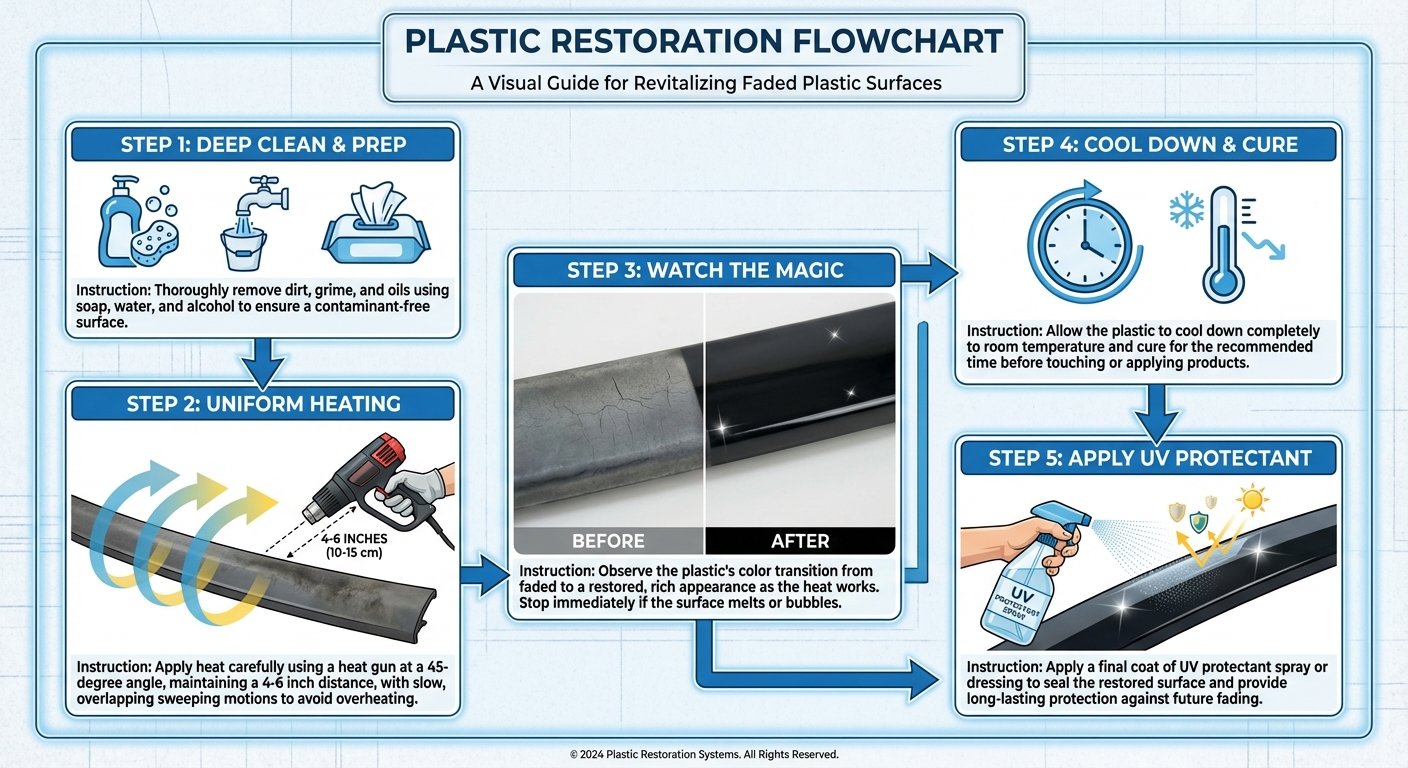
You can’t build a great house on a weak foundation, and you can’t get a great finish on dirty plastic.
Start by giving your ATV an incredibly thorough wash with a strong degreasing soap.
You need to remove every trace of dirt, mud, wax, and oil.
Pay special attention to the nooks and crannies where grime loves to hide.
Once it’s clean and completely dry, wipe the entire plastic surface down with isopropyl alcohol to ensure it’s free of any remaining contaminants.
It’s also a great idea to remove any decals or graphics, as the heat will destroy them.
Step 2: The Art of the Heat Application 🔥
This is where the magic happens, but it demands your full attention.
Set your heat gun to a medium-low setting (around 400-600°F is a good starting point).
Hold the gun 4-6 inches away from the plastic surface.
NEVER hold it in one spot!
Use a continuous, slow, and steady sweeping motion, overlapping each pass slightly.
You will literally see the color change and the faded, chalky look “melt” away into a deep, rich shine as the oils in the plastic rise to the surface.
If the plastic starts to get too shiny or looks wet, back off immediately – you’re on the verge of melting it too much.
Consistency is key for a uniform, non-blotchy finish.
https://youtube.com/watch?v=5a4s25cl48M
Step 3: Cooling, Curing, and Protecting
After you’ve restored a section, let it cool down completely without touching it.
The plastic will be soft and vulnerable to fingerprints or smudges while hot.
Check out our off-road collection Amazon products
The full curing process can take up to 24 hours as the plastic settles.
To make your hard work last, the final step is absolutely crucial: apply a high-quality UV protectant spray.
This will act as a sunscreen for your newly restored plastics, shielding them from the harmful rays that caused the fading in the first place.
Think of it as locking in the shine for future adventures. 🛡️
| Stage | Key Action | Critical Tip |
|---|---|---|
| Preparation | Deep clean with degreaser and wipe with alcohol. | Surface must be 100% dry and free of contaminants. |
| Heating | Apply indirect heat in slow, sweeping motions. | Keep the gun moving and 4-6 inches away from the surface. |
| Protection | Let cool completely, then apply UV protectant spray. | Do not skip this step! It is essential for longevity. |
Safety First, Always! 👷♂️
Working with a heat gun requires respect and caution.
- Always wear heat-resistant gloves and safety glasses.
- Work in a well-ventilated area, preferably outdoors, as heating plastic can release fumes.
- Keep the heat gun away from flammable materials like fuel lines, the gas tank, and electrical wires. It’s often best to remove the plastics from the machine. Check out the official Honda Powersports site for schematics if needed.
- Never touch the nozzle of the heat gun. It gets extremely hot!
“The difference between a great result and a melted mess is just a few seconds of lost concentration.”
https://youtube.com/watch?v=zQl4sTw7gVQ
Alternative Methods & When to Use Them
While the heat gun method is fantastic, it’s not the only option.
For light fading or for those nervous about using intense heat, other products can work well.
Plastic restorer polishes and wipes can temporarily bring back shine but often require frequent reapplication.
For a more permanent solution similar to the heat gun, specialized chemical wipes are available that use a solvent to achieve a similar surface-renewal effect.
And of course, for heavily damaged or cracked plastics, replacement is often the best route. Reputable retailers like Rocky Mountain ATV/MC or Dennis Kirk are excellent sources for OEM and aftermarket plastics.
For those looking for maximum durability, products from companies like Maier Manufacturing offer robust aftermarket options.
Ultimately, the heat gun method provides the most dramatic and long-lasting results for heavily faded but otherwise intact plastics, making it a top choice for serious enthusiasts. Happy riding! 🤠
For more maintenance tips check out a trusted source like ATV Man.
🔍 Explore More: See all Wild Testing guides for restoring faded atv plastic heat gun.
Check out our off-road collection Amazon products

- Cleanses plastic and metal surfaces: Eliminates wax, grease, silicone, tar, stickers, and other contaminants
- User-friendly application: Spray on, wipe off with a clean, lint-free cloth


- PBW is an alkaline, non-caustic, environmentally and user friendly cleaner
- Cleaner is very effective in removing thick, difficult, and caked-on organic soils
- Effective substitute for caustic soda cleaners and household cleaners