







When it comes to ZOLEO Messenger trail testing for side by side emergency tracking, getting the right details matters.
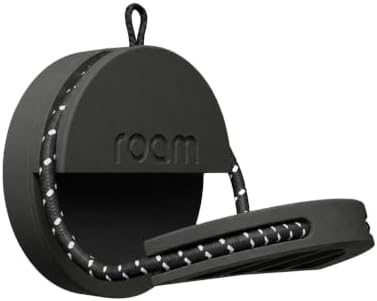
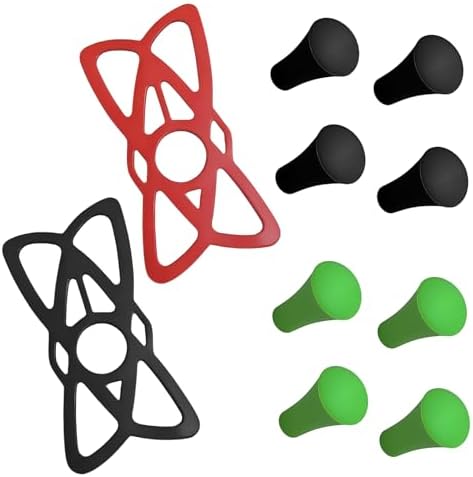
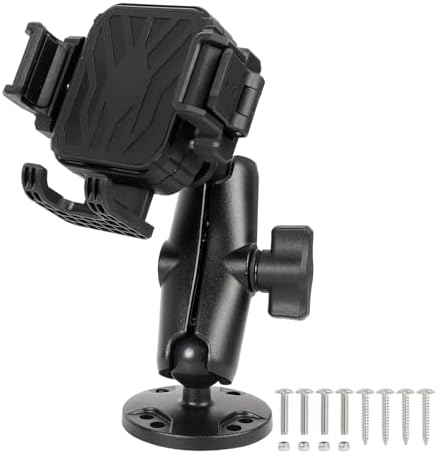
- RAM Mounts X-Grip with RAM-VIB-2 Vibration Dampener
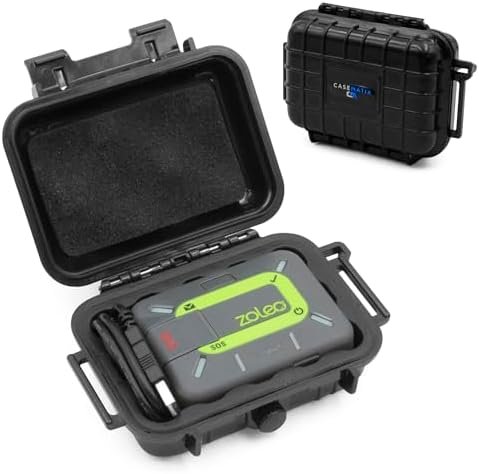
- ZOLEO Satellite Communicator
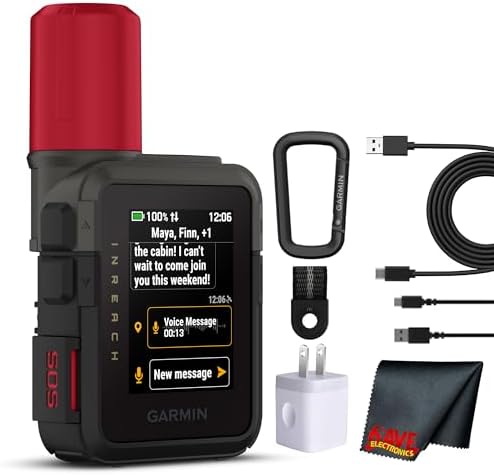
- goTele Off-Grid Tracker
When your CVT belt snaps 40 miles off-grid, a satellite communicator is only as good as its mounting hardware. Most UTV owners throw their ZOLEO Messenger in the glovebox or stick it to the dash with a cheap suction cup, completely unaware that high-frequency trail chatter and metal roll cages silently disable the device. This guide eliminates the guesswork. You will learn the exact physics of UTV signal attenuation, the precise mechanical specs for trailside CVT and DCT repairs, and the validated mounting architecture required to keep your emergency tracker online when a catastrophic failure strikes.
The Technical Reality: UTV Environmental & Mechanical Failure Sequences
The Faraday Cage Effect & L-Band Signal Attenuation
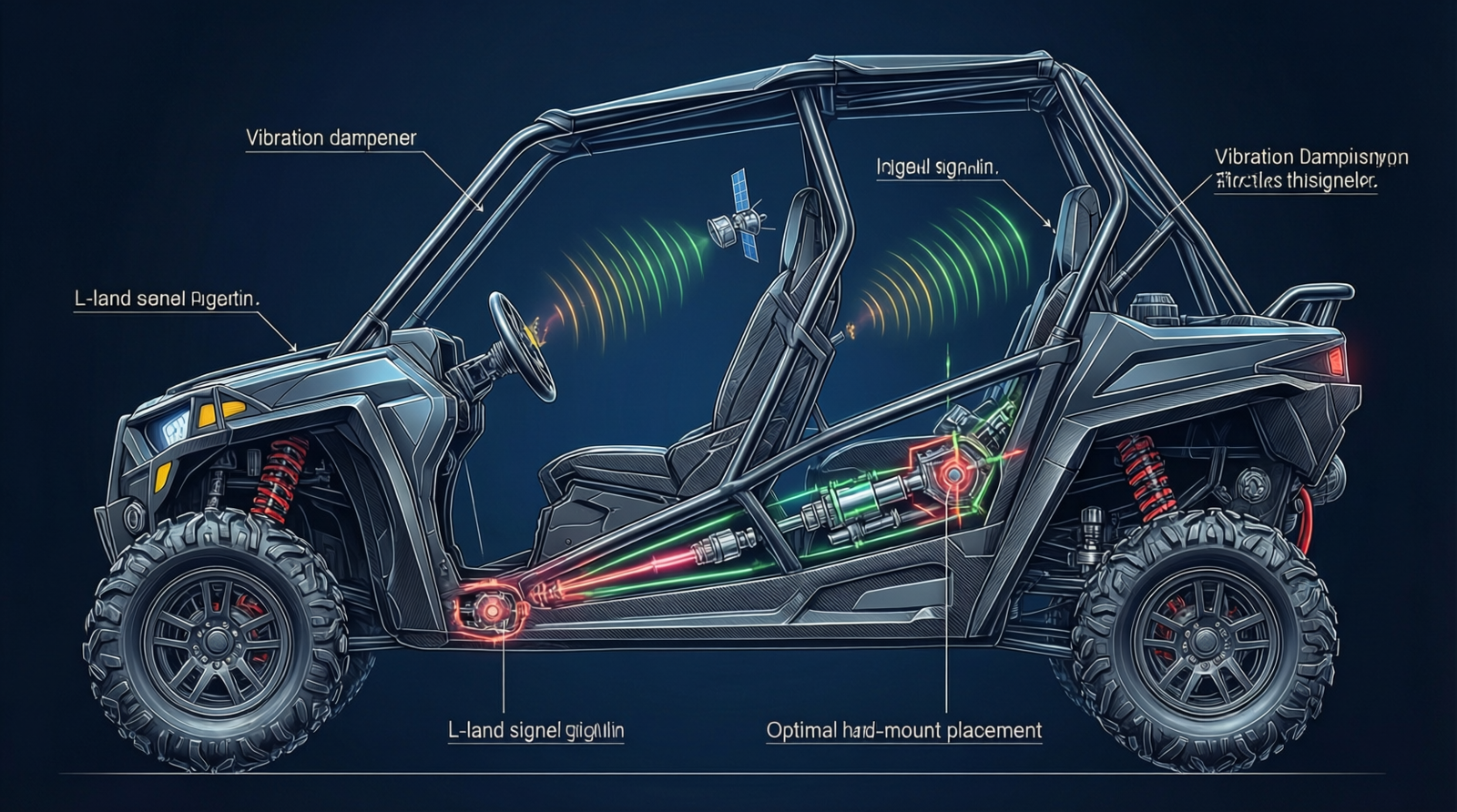
UTV Roll-Over Protective Structures (ROPS) combined with aluminum, polycarbonate, or mesh roofs create a partial Faraday cage that traps electromagnetic waves. The ZOLEO Messenger relies on the Iridium satellite network operating in the L-band frequency (~1616–1626.5 MHz, ~18.5 cm wavelength). When metal roof supports and mesh cause multipath interference, the system suffers up to -20dB signal loss.
For the driver, this means your tracking pings will drop and your SOS transmission will completely fail if the device is mounted inside the cabin or low on the dash.
15Hz–40Hz Harmonic Vibration & PCB Micro-Fractures
Side-by-sides generate high-frequency, low-amplitude vibrations (15Hz to 40Hz+) from unsprung mass, trail chatter, and engine harmonics. Standard plastic suction mounts and rigid zip-ties transfer this resonance directly to the ZOLEO’s internal PCB.
On the trail, this violent shaking causes micro-fractures in patch antenna solder joints and momentary battery contact disconnects, resulting in “ghost” SOS triggers or a completely bricked device when you need it most.
Silt Ingress, IP67 Bypass, & USB-C Contact Shear
Fine trail silt, like Moab red dust or alkali lake bed powder, bypasses standard IP67 seals over time to infiltrate the USB-C charging port. When combined with 15Hz vibrations, the charging cable experiences micro-movements.
For the rider, this mechanical shear destroys internal charging pins or causes a dead short when connected to a 12V auxiliary power source, permanently frying the unit’s power delivery system.
The “Glovebox Fallacy” & Suction Cup Catastrophes (Forum Consensus)
Throwing your device in the center console or glovebox for “safekeeping” yields zero tracking data due to chassis metal and wiring harness blockages. Furthermore, cheap dashboard suction cups routinely fail at mile 30 on washboard roads like the Rubicon or Moab trails.
The inevitable result is the device falling, wedging under the brake pedal, and getting crushed by the driver’s foot during a panic stop.
Check out our off-road collection Amazon products
The Core Gear Architecture: The Validated High-Ticket Solution Stack
Primary Sat-Com: ZOLEO Messenger Hardware Iteration
| Specification | Rating | Network Protocol | Iridium SBD / L-Band (1616-1626.5 MHz) | Connectivity | Bluetooth 5.2 | Ingress Protection | IP68 (1.5m for 30 mins) | Military Certification | MIL-STD-810H | Battery Capacity | 2000 mAh Li-ion (up to 200 hrs tracking) |
|---|
Crucially, the physical, glove-friendly SOS button on the device itself bypasses Bluetooth pairing drops in dusty pockets, ensuring you can trigger a life-saving emergency alert directly from the hardware.
Secondary Local Mesh: goTele Off-Grid Tracker (DS-SS Technology)
The goTele Off-Grid Tracker operates as a localized, subscription-free team tracker for 30-person convoys. It utilizes DS-SS technology on 1W power (equivalent to 5W UHF) to deliver 5x the range of standard Mesh networks, bypassing line-of-sight limitations in deep canyons.
For the convoy leader, this provides instant, zero-latency local SOS and telemetry, reserving the ZOLEO strictly for external medevac and bypassing the 2-3 minute GEOS routing latency.
Recommended Insights From Our Guide Library:
The Mandatory Vibration-Isolated Mounting Stack
The forum-mandated hardware stack consists of the RAM Mounts X-Grip (RAM-HOL-UN7BU) paired with the RAM-VIB-2 Vibration Dampener and a 1-inch Diamond Base (RAM-B-202U). The elastomer isolator in the RAM-VIB-2 specifically neutralizes the 15Hz-40Hz harmonic trail chatter that destroys internal PCB solder joints.
For the driver, this means your device stays physically secure and electronically intact, even after 50 miles of brutal whoops.
Ruggedized Power & Ingress Routing Protocol
The mandatory power solution requires dielectric grease application on the USB-C port. You must use a ruggedized, right-angle USB-C cable routed through a gasket-sealed Milwaukee Packout or RotoKAP cargo box.
This specific routing protocol completely prevents silt ingress and contact shear, ensuring your 12V auxiliary power connection never shorts out in deep dust.
The Technical Setup Blueprint: Installation, Zoning, & UTV Mechanical Specs
Universal ROPS Hard-Mounting Protocol & Torque Specs
Never use self-tapping screws on your roll cage. You must drill 1/4″ or 5/16″ holes and install 1/4″-20 or M6 stainless steel rivet nuts (nutserts) using a proper nutsert tool. Tighten the RAM mount base to the rivet nuts at exactly 8-10 ft-lbs. You must apply Blue Loctite (243) on all mount hardware to prevent vibration backing. Red Loctite (271) is explicitly prohibited because it requires heat to remove, making trailside adjustments impossible.
This ensures your mount remains rock-solid without requiring a blowtorch to fix it in the backcountry.
CVT Architecture Trailside Recovery (Polaris RZR / Can-Am Maverick X3)
Blown or glazed CVT drive belts are the primary trigger for backcountry SOS tracking. The exact mechanical requirements for clutch replacement are outlined below.
Check out our off-road collection Amazon products
| Platform | Tool Requirements | Torque Spec | Can-Am Maverick X3 | T30 Torx bits, puller/spreader tool, 1 1/2″ wrench | 74 ft-lbs (Loctite 242) | Polaris RZR | 8mm & 10mm hex sockets, OEM spreading tool, 1 1/2″ wrench | 70-75 ft-lbs |
|---|
Knowing these exact specs allows you to swap a shredded belt and drive out under your own power instead of waiting hours for a rescue.
DCT Architecture Electrical Resets & Bed Mounting (Honda Pioneer 1000 / Talon)
Honda DCT systems suffer from overheating, shift solenoid failure, or electrical relay trips, and no drive belt or CVT clutch tools apply here. Trailside electrical fixes require checking the main 30A/40A fuse block and resetting the ECU by disconnecting the 12V battery negative terminal with a 10mm socket. You must also clean shift actuator motor connectors with electrical contact cleaner to remove mud and water ingress. When hard-mounting gear to the Honda Pioneer composite bed floors, you must use M6 or M8 stainless steel well nuts (nutserts) and seal them with marine-grade silicone.
This prevents bed floor rot and stops water intrusion into the under-bed exhaust tunnel.
Field Verdict & Operational ROI: Securing the Backcountry Investment
Eliminating the Latency Gap & Ensuring GEOS Routing
Running a dual-system architecture provides a massive tactical advantage. The goTele mesh delivers instant, zero-latency convoy telemetry for local recovery, while the hard-mounted ZOLEO guarantees unattenuated, reliable external medevac routing when a situation escalates beyond your group’s capabilities.
The ROI of Bolted, Dampened Hardware
Community Reference & Authority Resources:
The upfront cost of the RAM-VIB-2 stack, stainless nutserts, and right-angle USB routing is a mandatory insurance policy. Preventing PCB micro-fractures, USB-C shearing, and Faraday cage signal blocking is the only way to ensure the ZOLEO actually functions when a CVT belt snaps or a DCT solenoid fails 40 miles off-grid.
The exact moment your drive belt shreds on a jagged rock shelf and your engine bogs down, the reality of your setup becomes instantly clear. You aren’t fumbling with a dead phone in a dusty pocket or staring at a suction cup stuck to the floorboards. You simply reach up to your vibration-dampened, hard-mounted ZOLEO, press the physical SOS button with your gloved hand, and watch the confirmation light blink green. This blueprint isn’t just about buying gear; it’s about engineering a fail-safe lifeline that guarantees when the trail breaks your machine, the rescue signal always gets out.
🔍 Explore More: See all Wild Testing guides for ZOLEO Messenger trail testing for side by side emergency tracking.
Check out our off-road collection Amazon products