




The call of the mountains is irresistible to many off-road enthusiasts. The breathtaking views, challenging trails, and cooler temperatures offer a unique riding experience. However, as you climb above 5,000 feet, the air thins, and your UTV’s performance begins to suffer. This power loss is a direct result of the reduced oxygen density, which starves the engine and throws off the delicate balance of the drivetrain.
To ensure your machine performs reliably and powerfully on those high-alpine trails, you need to make specific high-altitude performance adjustments. These modifications are not just about regaining lost horsepower; they are about optimizing your UTV’s entire system to operate efficiently in thin air.
I’ve seen countless riders frustrated by their UTVs struggling on steep climbs at elevation. The good news is that modern UTVs, especially fuel-injected models, are much easier to tune for altitude than their carbureted predecessors. This guide will focus on the three critical areas for high-altitude optimization: the engine, the clutch, and forced induction.
Phase 1: The Engine’s Struggle—Compensating for Thin Air
The fundamental problem at high altitude is a lack of oxygen. A naturally aspirated engine loses approximately 3% of its horsepower for every 1,000 feet gained above sea level [1].
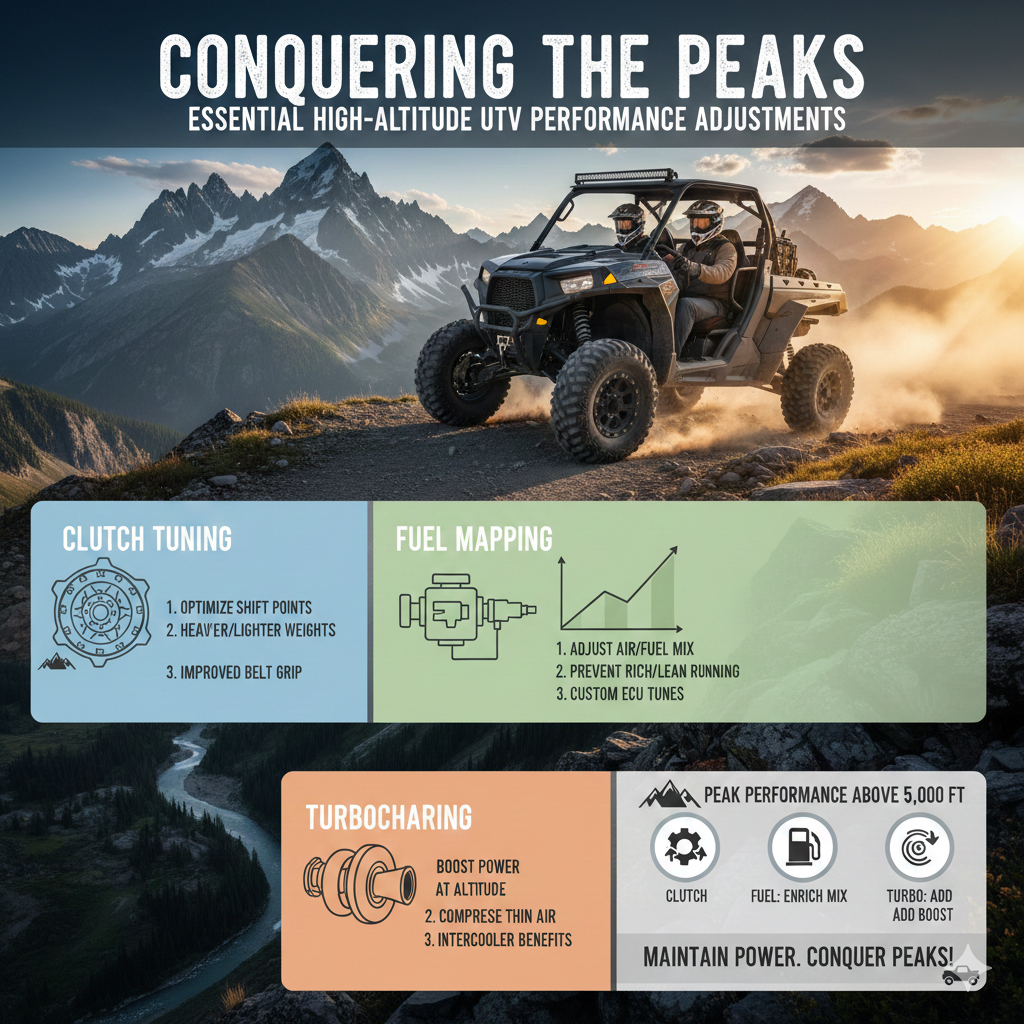
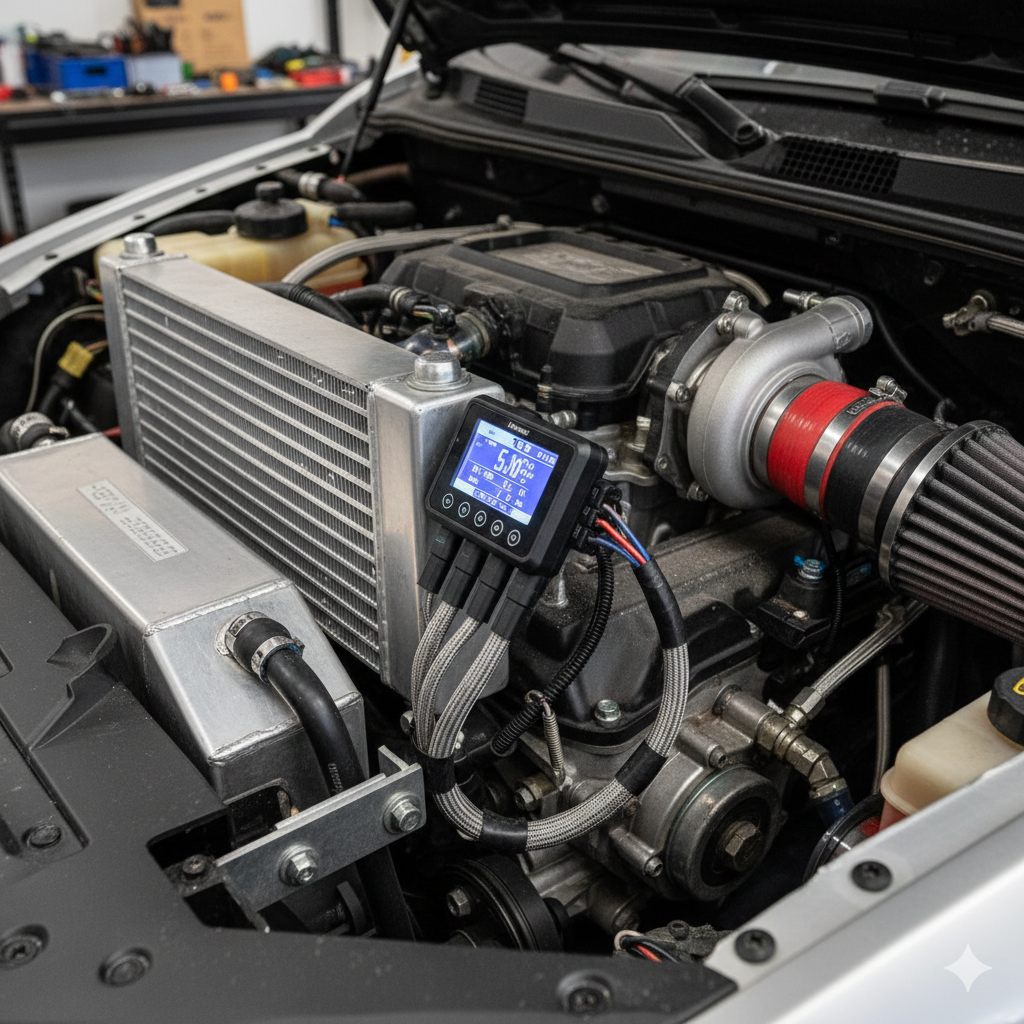
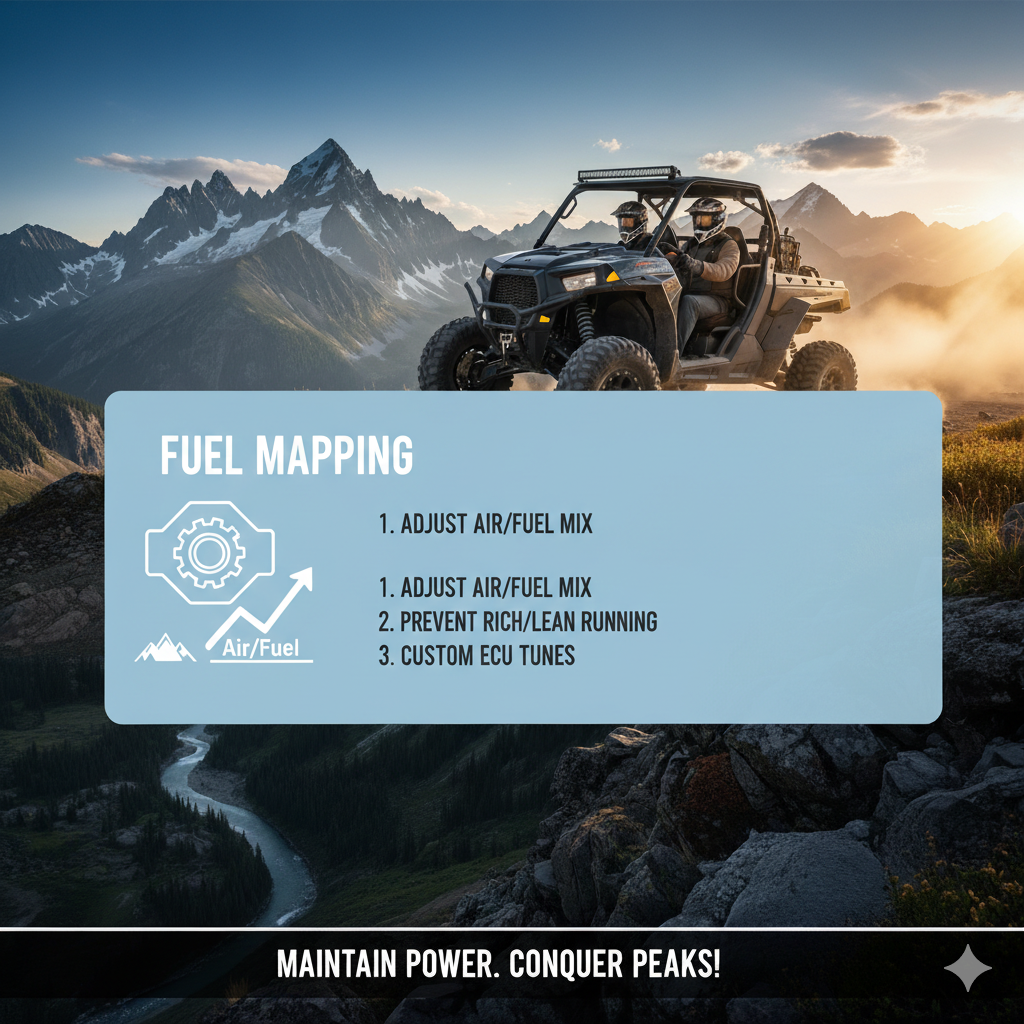
1. Fuel Mapping (Air-Fuel Ratio)
- The Problem: Modern UTVs use Electronic Control Units (ECUs) and oxygen sensors to automatically adjust the air-fuel ratio (AFR). However, this compensation is often conservative and can still result in a rich mixture (too much fuel for the available air), leading to sluggish performance and fouled spark plugs.
- The Solution: For optimal performance, a dedicated fuel tuner or an ECU reflash is the best approach.
- Fuel Tuners: Devices like Dynojet Power Commanders allow you to manually adjust the fuel delivery to lean out the mixture, bringing the AFR back into the optimal range for the current altitude.
- ECU Reflash: Sending your ECU to a specialist for a high-altitude-specific reflash can provide a more permanent and precise solution, optimizing ignition timing and fuel delivery for a specific elevation range [2].
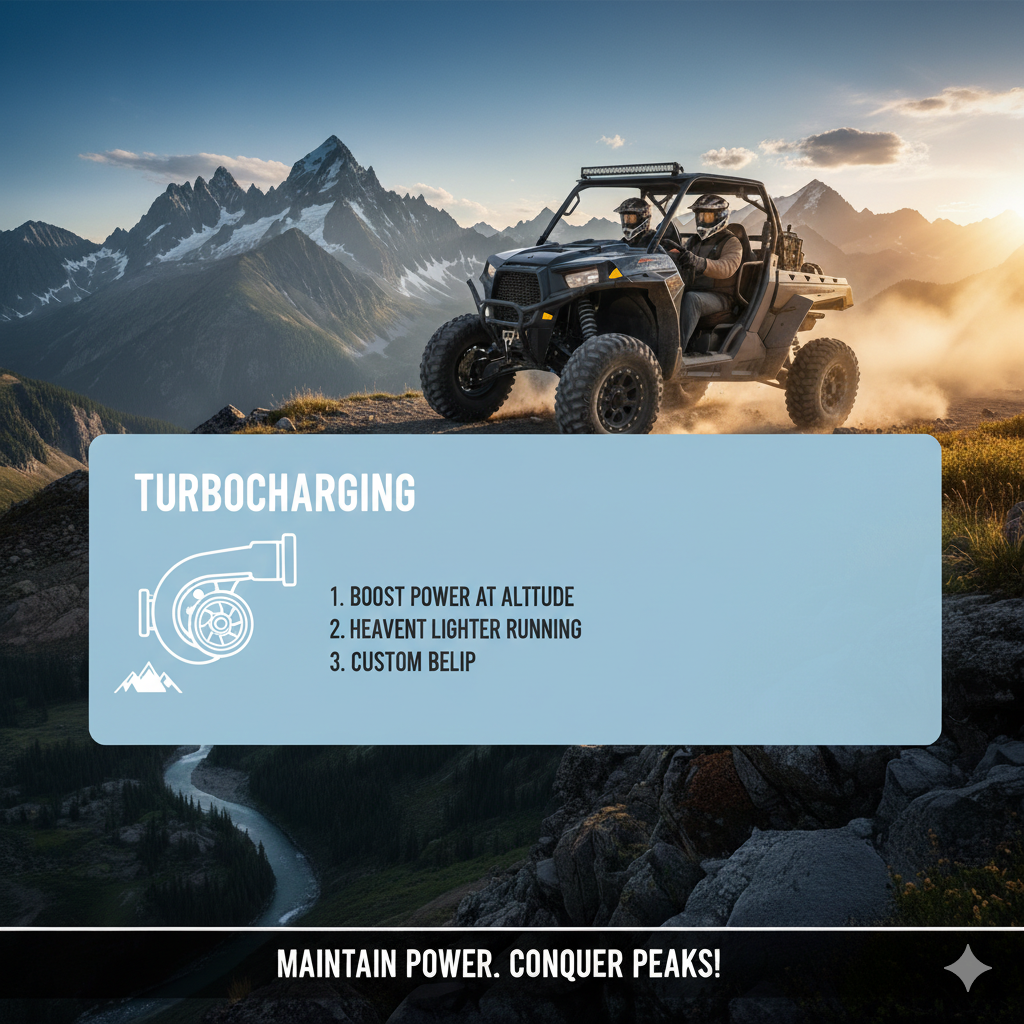
2. Forced Induction (Turbocharging/Supercharging)
- The Ultimate Fix: The most effective way to eliminate high-altitude power loss is to install a turbocharger or supercharger. These systems force compressed air into the engine, effectively increasing the air density and restoring the engine’s power output to near sea-level performance.
- Considerations: Forced induction is a significant and costly modification that requires careful tuning and often other supporting mods (like intercoolers and stronger internal components) to ensure reliability.
Phase 2: The Drivetrain’s Response—Clutch Tuning
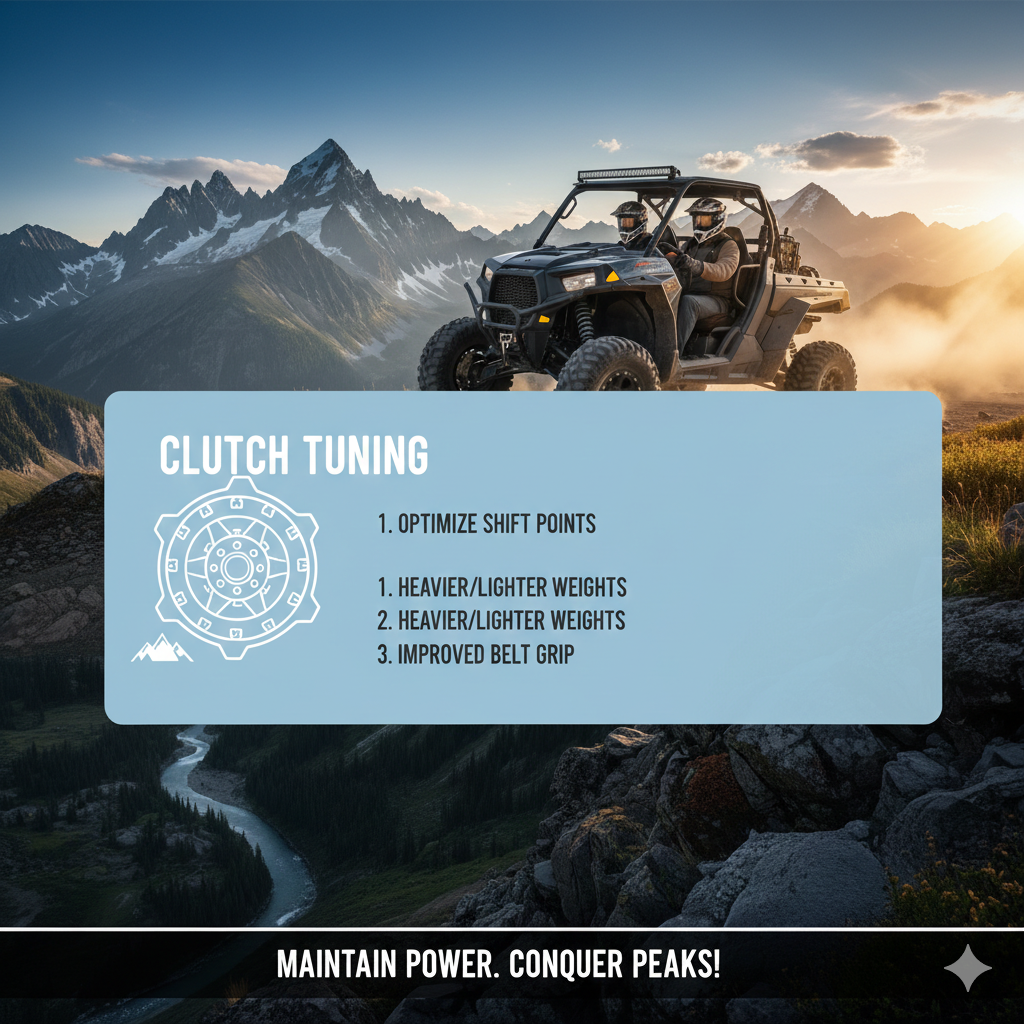
The Continuously Variable Transmission (CVT) clutch system is designed to keep the engine operating in its peak power band. When the engine loses power at altitude, the clutch needs to be adjusted to compensate.
1. Lightening Clutch Weights
- The Principle: Since the engine is producing less power, it struggles to spin the primary clutch weights (flyweights) at the same rate as it would at sea level. This causes the clutch to shift too early, bogging down the engine.
- The Adjustment: The solution is to install lighter clutch weights or adjust the existing weights (if possible) [3]. Lighter weights require less engine power to achieve the same RPM, allowing the engine to rev higher and stay in its narrower, high-altitude power band.
- Clutch Kits: Many aftermarket clutch kits are available that include springs and weights specifically designed for high-altitude riding, offering a balanced solution for both the primary and secondary clutches.
2. Spring Tension
- Primary Spring: A stiffer primary spring can also help the engine rev higher before the clutch engages, which is beneficial at altitude.
- Secondary Spring: Adjusting the secondary spring tension affects the back-shift (how quickly the clutch downshifts), which is crucial for maintaining momentum on steep climbs.
| Adjustment Area | Component | High-Altitude Solution | Effect |
|---|---|---|---|
| Engine | Air-Fuel Ratio | Fuel Tuner or ECU Reflash | Corrects rich mixture, restores power. |
| Drivetrain | Primary Clutch Weights | Install Lighter Weights | Allows engine to rev higher, preventing bogging. |
| Power | Air Density | Turbocharger/Supercharger | Forces air into engine, restoring sea-level power. |
Phase 3: Safety and Preparation for High-Altitude Riding
High-altitude riding presents unique safety challenges beyond just performance loss.
1. Cooling System
- Boiling Point: Water boils at a lower temperature at high altitudes. Ensure your cooling system is in top condition and that you are using the correct coolant mixture to raise the boiling point and prevent overheating.
- Fan Operation: Monitor your cooling fan’s operation, as the thinner air is less effective at cooling the radiator.
2. Rider Health
- Altitude Sickness: Riders and passengers are susceptible to altitude sickness. Stay hydrated, avoid alcohol, and allow time for acclimatization before attempting strenuous rides.
- Oxygen: For very high altitudes (above 10,000 feet), carrying supplemental oxygen for emergency use is a wise precaution.
Conclusion: Optimized for the Summit
Riding your UTV at high altitudes is an incredible experience, but it requires respect for the physics of thin air. By implementing these high-altitude performance adjustments—specifically optimizing your fuel map and tuning your clutch—you can effectively mitigate the power loss and ensure your UTV is ready to tackle the steepest trails and highest peaks.
Don’t let a sluggish machine ruin your mountain adventure. Invest the time in these adjustments, and your UTV will reward you with reliable, exhilarating performance, no matter how high you climb.
See you at the summit!
References
[1] Can-Am Talk – High Altitude
[2] L1fe Outdoors ATV – Demystifying ATV and Side x Side Performance Tuning
[3] Maverick Forums – High Altitude clutching- noob question
[4] PRC Forum – Sea Level to High Altitude – Anything Needed Adjusted?
[5] Fleet Rabbit – How Altitude Impacts Fuel Mixture and Engine Performance