


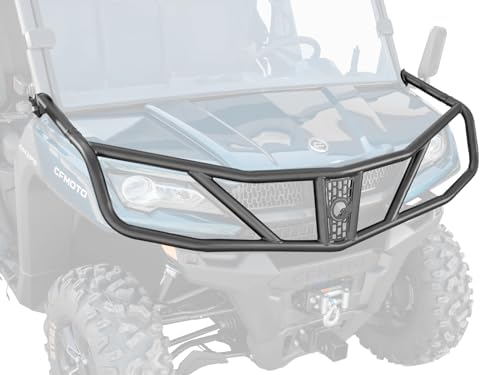
If you’re shopping for a utility side-by-side that can handle work, play, and everything in between, you’ve probably narrowed your choices down to two heavy hitters: the CFMOTO UForce 1000 and the Honda Pioneer 1000. Both machines deliver impressive performance and capability, but they approach the market from different angles. I’ve spent considerable time researching these two UTVs, and I’m excited to break down the key differences so you can make an informed decision. Whether you’re prioritizing value, reliability, or cutting-edge features, this cfmoto uforce 1000 vs honda pioneer 1000 comparison will help you find your perfect match.
The utility UTV market has become incredibly competitive, and that’s great news for buyers like us. The CFMOTO UForce 1000 brings aggressive pricing and impressive power, while the Honda Pioneer 1000 offers legendary reliability and advanced technology. Let’s dive into the specifics and see how these two machines stack up against each other.
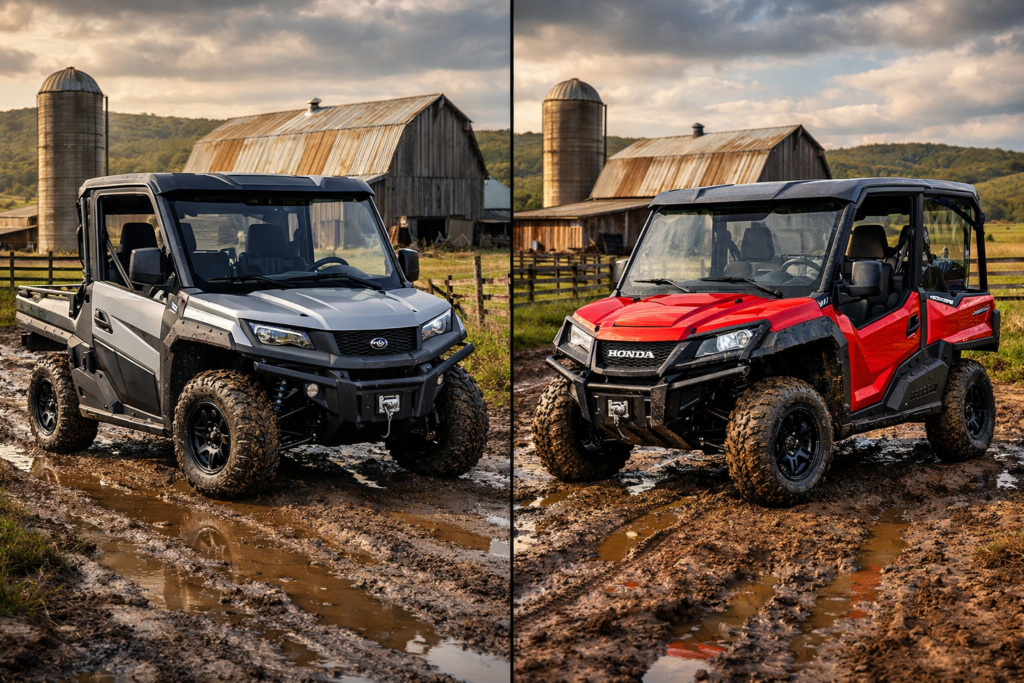
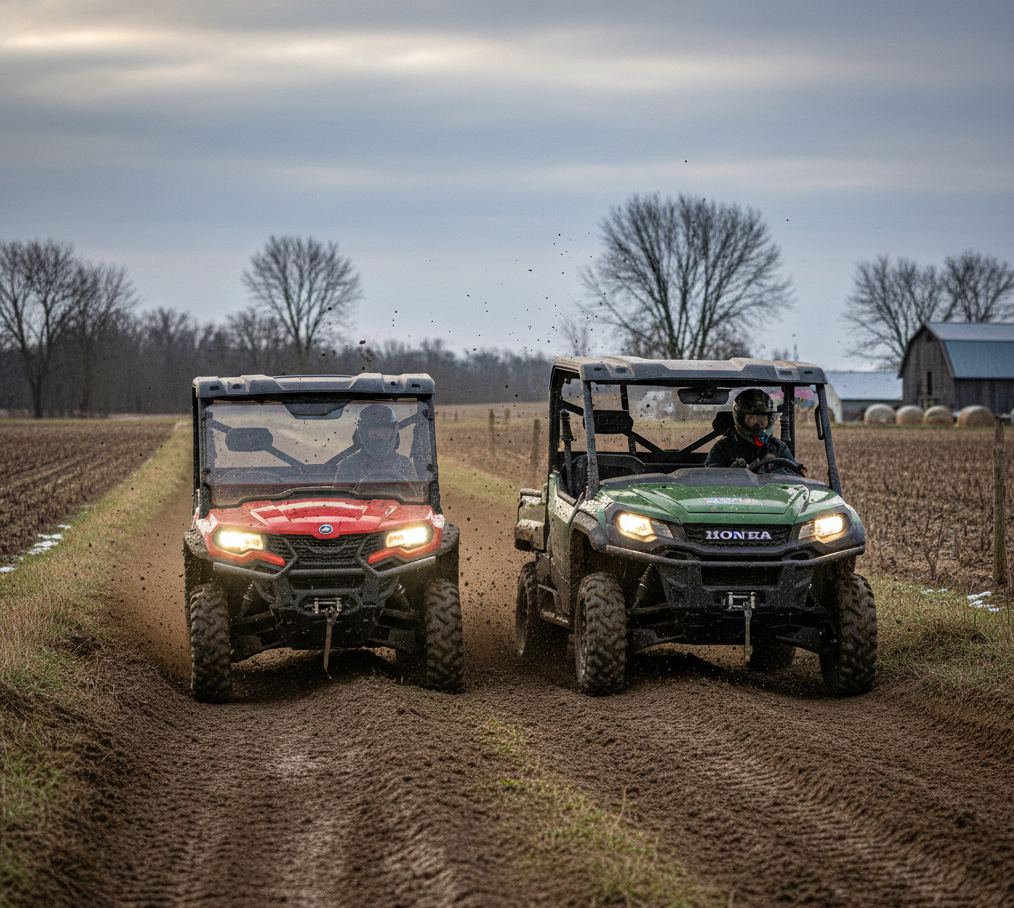 The CFMOTO UForce 1000 and Honda Pioneer 1000 ready for action on the farm.
Engine Performance: Power and Efficiency
When comparing the cfmoto uforce 1000 vs honda pioneer 1000, engine performance is one of the first things that catches your attention. The CFMOTO UForce 1000 features a robust 963cc V-twin engine that delivers 79 horsepower and 54 pounds of torque. This is genuinely impressive for a utility machine, and it gives the UForce 1000 a noticeable power advantage over its competitor. The engine feels responsive and eager, making it a joy to drive through trails and across open terrain.
The Honda Pioneer 1000, on the other hand, houses a 999cc liquid-cooled twin-cylinder engine that produces 72 horsepower and 61 pounds of torque. While the horsepower figure is slightly lower, Honda’s engineering philosophy emphasizes reliability and longevity over raw power. The Pioneer 1000’s engine is renowned for its durability, and many owners report getting thousands of miles without major issues. Honda’s Unicam design is a proven platform that has earned the trust of off-road enthusiasts worldwide.
In terms of fuel capacity, the CFMOTO UForce 1000 holds a significant advantage with 10.5 gallons compared to the Pioneer 1000’s 7.9 gallons. This means longer range between fill-ups, which is particularly valuable if you’re exploring remote areas or working on large properties. For extended hunting trips or multi-day adventures, the UForce 1000’s larger fuel tank is a real practical benefit.
Transmission Technology: CVT vs. Dual-Clutch
The transmission choice is where the cfmoto uforce 1000 vs honda pioneer 1000 comparison becomes really interesting. The CFMOTO UForce 1000 uses a CVTech CVT (continuously variable transmission), which provides smooth, seamless power delivery. CVTs are excellent for utility work because they automatically adjust to the terrain and load, offering optimal efficiency. The transmission feels refined and responsive, making it easy to navigate through challenging terrain without constant gear shifting.
Honda chose a different path with the Pioneer 1000, equipping it with a 6-speed dual-clutch transmission (DCT). This is a more sophisticated system that offers manual control via paddle shifters. The DCT provides a more direct, engaging driving experience, and many enthusiasts prefer the control it offers. However, DCTs can be more complex and potentially more expensive to repair if something goes wrong. That said, Honda’s DCT has proven reliable over many years of use in the Pioneer lineup.
For pure utility work, the CVT in the UForce 1000 has a slight edge because it requires less driver input and automatically optimizes performance. However, if you enjoy a more hands-on driving experience and want maximum control, the Pioneer 1000’s DCT is the better choice. Both transmissions are proven performers, and the decision ultimately comes down to personal preference and driving style.
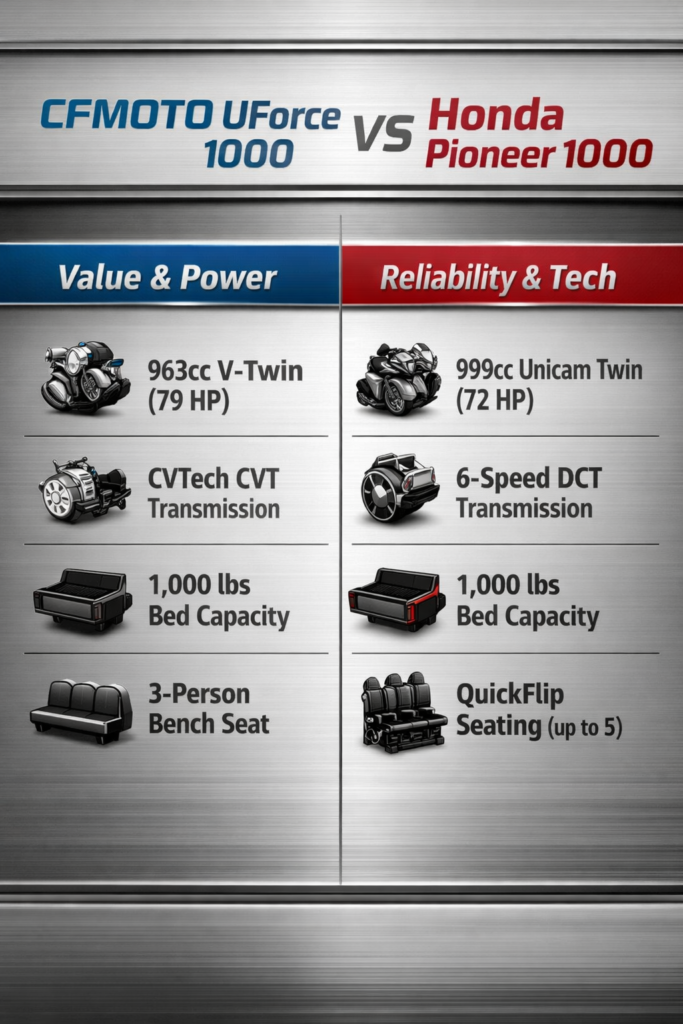 Key specifications and features at a glance.
Comfort and Seating: Space for Your Crew
Both the CFMOTO UForce 1000 and Honda Pioneer 1000 are designed to carry multiple passengers, but they approach comfort differently. The UForce 1000 features a spacious 3-person bench seat with generous padding and good support for long days in the saddle. The cab layout is intuitive, with controls positioned within easy reach. The adjustable steering wheel is a nice touch, allowing drivers of different heights to find their ideal position.
The Honda Pioneer 1000 also seats three passengers comfortably, but it offers something unique: the QuickFlip seating system. This innovative design allows the rear seat to flip up and forward, creating a large cargo area when you don’t need the extra seats. This versatility is fantastic if you want a machine that can switch between passenger transport and cargo hauling without modification. The Pioneer 1000 can accommodate up to five people with the optional jump seats, though the extra seats are admittedly tight.
For pure comfort during long rides, both machines are competitive. The UForce 1000 might have a slight edge in rear-seat comfort due to its spacious bench, while the Pioneer 1000 wins on versatility thanks to the QuickFlip system. Your choice here depends on whether you prioritize passenger comfort or cargo flexibility.
Suspension and Handling: Smooth Rides Over Rough Terrain
When tackling rough trails, suspension quality makes all the difference. The CFMOTO UForce 1000 is equipped with independent double A-arm suspension on both front and rear, providing 10.3 inches of travel. This setup delivers excellent bump absorption and a smooth ride over most terrain. The EPS (electric power steering) makes maneuvering through tight spots effortless, and the turning radius is relatively tight for a utility machine.
The Honda Pioneer 1000 features an independent double-wishbone suspension with 10.6 inches of travel front and rear. The key differentiator is Honda’s optional Fox Live Valve suspension system, which automatically adjusts damping based on terrain and speed. This advanced technology provides superior comfort and performance on varied terrain. The Pioneer 1000 also includes EPS, and combined with its solid build quality, it delivers a responsive and agile ride.
Both machines handle well, but the Honda’s optional Fox Live Valve system gives it an edge in technical terrain. However, the CFMOTO’s suspension is no slouch, and for most users, the difference will be minimal. The UForce 1000’s slightly tighter turning radius makes it better suited for tight forest trails, while the Pioneer 1000’s longer wheelbase provides more stability on open terrain.
Specifications Comparison Table
| Feature | CFMOTO UForce 1000 | Honda Pioneer 1000 |
|---|---|---|
| Engine | 963cc V-Twin | 999cc Unicam Twin |
| Horsepower | 79 HP | 72 HP |
| Transmission | CVTech CVT | 6-Speed DCT |
| Fuel Capacity | 10.5 gallons | 7.9 gallons |
| Suspension Travel | 10.3 inches | 10.6 inches |
| Seating | 3-Person Bench | QuickFlip (3-5) |
| Bed Capacity | 1,000 lbs | 1,000 lbs |
Reliability and Warranty: Peace of Mind
When investing in a utility UTV, reliability is paramount. Honda has built a legendary reputation for durability, and the Pioneer 1000 continues that tradition. The machine is engineered with high-quality materials and proven components. Honda’s widespread dealer network and parts availability add to the peace of mind. Many Pioneer 1000 owners report running their machines for thousands of miles with minimal maintenance issues.
CFMOTO has made impressive strides in recent years, and the UForce 1000 is a well-constructed machine. The brand offers a generous 5-year warranty, which demonstrates confidence in their product. However, as a relative newcomer to the North American market, CFMOTO doesn’t have the long-term track record that Honda enjoys. That said, early reports from UForce 1000 owners are largely positive, with many praising the machine’s durability and reliability.
“The choice between these two machines often comes down to whether you prioritize proven reliability or cutting-edge value. Both are solid choices, but they serve different buyer profiles.” – My perspective as an off-road enthusiast.
Price and Value: Getting the Best Deal
This is where the cfmoto uforce 1000 vs honda pioneer 1000 comparison gets really interesting for budget-conscious buyers. The CFMOTO UForce 1000 typically retails for $12,000 to $15,500, depending on the trim level and options. The Honda Pioneer 1000 ranges from $16,000 to $20,400 for comparable models. That’s a significant price difference—potentially $4,000 to $5,000 or more.
For many buyers, the UForce 1000 represents exceptional value. You’re getting a powerful, capable machine with a generous warranty at a price point that’s hard to beat. If you’re budget-conscious and want maximum capability for your dollar, the UForce 1000 is compelling. However, Honda’s higher resale value and reputation for longevity mean the Pioneer 1000 might be a better long-term investment despite the higher initial cost.
Consider your priorities carefully. If you’re looking for the best value upfront and plan to keep your machine for several years, the UForce 1000 is the clear winner. If you value proven reliability, advanced features, and strong resale value, the Pioneer 1000’s premium price may be justified.
Final Verdict: Which Should You Choose?
The cfmoto uforce 1000 vs honda pioneer 1000 decision ultimately depends on your priorities and budget. Choose the CFMOTO UForce 1000 if you want a powerful, feature-rich utility UTV that offers exceptional value for money. It’s perfect for buyers who prioritize performance and affordability without wanting to compromise on capability. The generous fuel tank, impressive horsepower, and smooth CVT transmission make it an excellent all-around machine.
Choose the Honda Pioneer 1000 if you prioritize proven reliability, advanced technology, and long-term value. It’s the machine for buyers who want peace of mind knowing they’re investing in a brand with a stellar reputation. The QuickFlip seating, optional Fox Live Valve suspension, and Honda’s legendary durability make it worth the premium investment.
Both machines are genuinely excellent, and you really can’t go wrong with either choice. I encourage you to test drive both if possible, and talk to current owners about their experiences. Your perfect UTV is out there waiting for you!
What’s your take? Are you team CFMOTO or team Honda? Share your thoughts and experiences in the comments below!
Best regards,
Recommended Resources
- Video: 1 Year Owning CFMOTO UForce 1000XL – Honest Review (18:45) – A real owner shares his experience after a year of ownership.
- Video: Can The CFMOTO UFORCE 1000 EPS XL Hold Its Own Against Competition? (22:10) – Detailed trail performance review and comparison.
- Outbound Link: Official CFMOTO UForce 1000 Page – Complete specifications and features from the manufacturer.
- Outbound Link: Official Honda Pioneer 1000 Page – Honda’s official product information and specifications.
- Outbound Link: Detailed Comparison at Kemimoto – In-depth specs and owner insights from a trusted retailer.
References
- CFMOTO USA: UForce 1000 Official Specifications
- Honda Powersports: Pioneer 1000 Official Product Page
- Kemimoto: CFMOTO UForce 1000 vs Honda Pioneer 1000 Comparison
- YouTube: 1 Year Owning CFMOTO UForce 1000XL – Honest Review
- YouTube: Can The CFMOTO UFORCE 1000 EPS XL Hold Its Own Against Competition
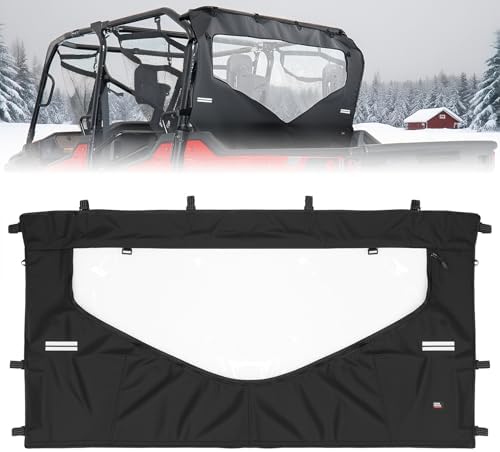
- Perfect Fit for Your Ride: Compatible with 2016 2017 2018 2019 2020 2021 2022 2023 2024 2025 2026 Pioneer 1000 | 2023 …
- Dustproof Window with Zipper Design: Adjust with the upgrade easy-pull zipper on the KEMIMOTO UTV rear window: unzip to …
- Reflective Strip, Boosts Visibility, Safer Rides: The UTV 1000 dust panel with reflective strips make it easy to spot a…
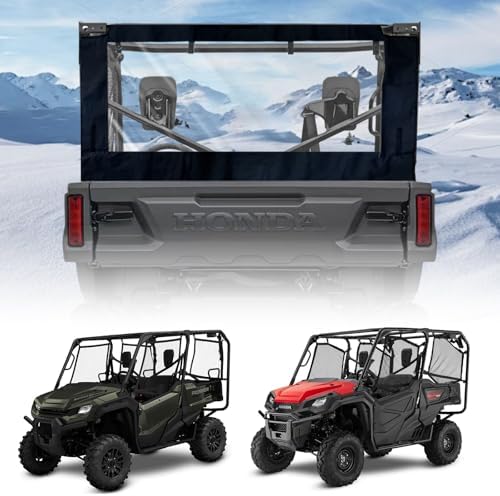
- Fitment:The Rear Soft Windscreen is compatible with Honda Pioneer 1000-5,2016-2025
- Strong Durability:Rear windshield is made of high quality transparent PVC to ensure a clear view,tear-resistant Two-laye…
- All-Weather Protection:This rear windshield will keep the wind, sand, rain, ultraviolet rays,dust for you, The most impo…
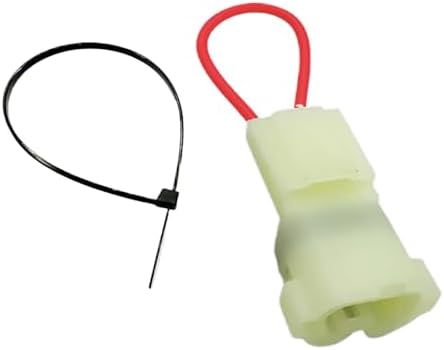
- Compatible with all 2017 and Newer Honda Pioneer 700 and 1000 models that come standard with the seat belt safety featur…
- Must be used when installing the four and five point wiring harnesses in the aftermarket.
- Only 1 required per vehicle.