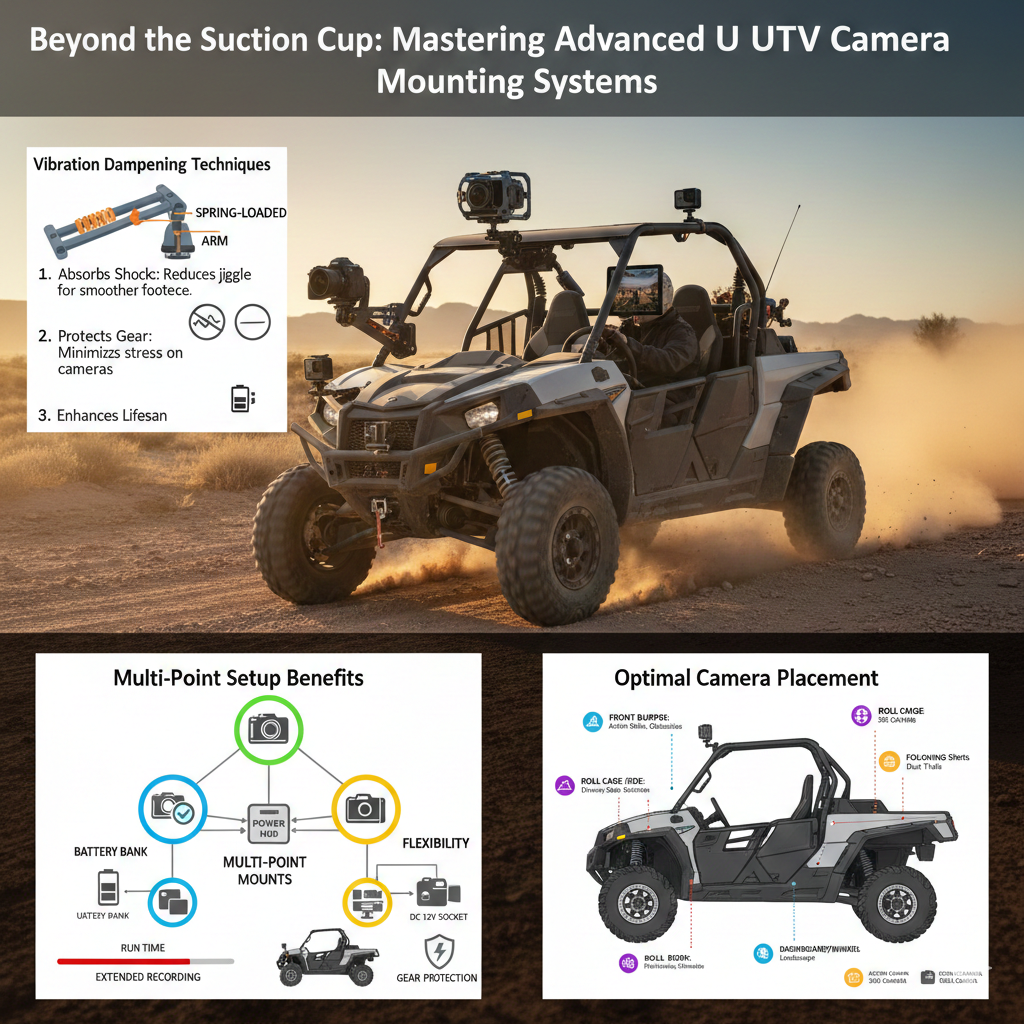




The UTV is the ultimate adventure machine, and capturing that adventure requires more than just a simple clamp mount. The extreme vibration, dust, and dynamic movement of off-road riding are the enemies of high-quality video. To achieve cinematic, stable, and unique footage, enthusiasts must move to UTV Camera Mounting Systems that prioritize stability, isolation, and power management.
This comprehensive guide will explore the advanced techniques and specialized gear required to transform your UTV into a professional-grade mobile film rig. We will focus on defeating vibration, choosing the right mount for different camera types, and ensuring your cameras stay powered for the entire journey.
Pillar 1: Defeating Vibration – The Key to Cinematic Footage
Vibration is the single biggest obstacle to clear, stable UTV footage. It causes “jello” effect in action cameras and can even damage the delicate internal components of high-end cameras like DSLRs.
1. Wire Rope Isolators (The Professional Solution)
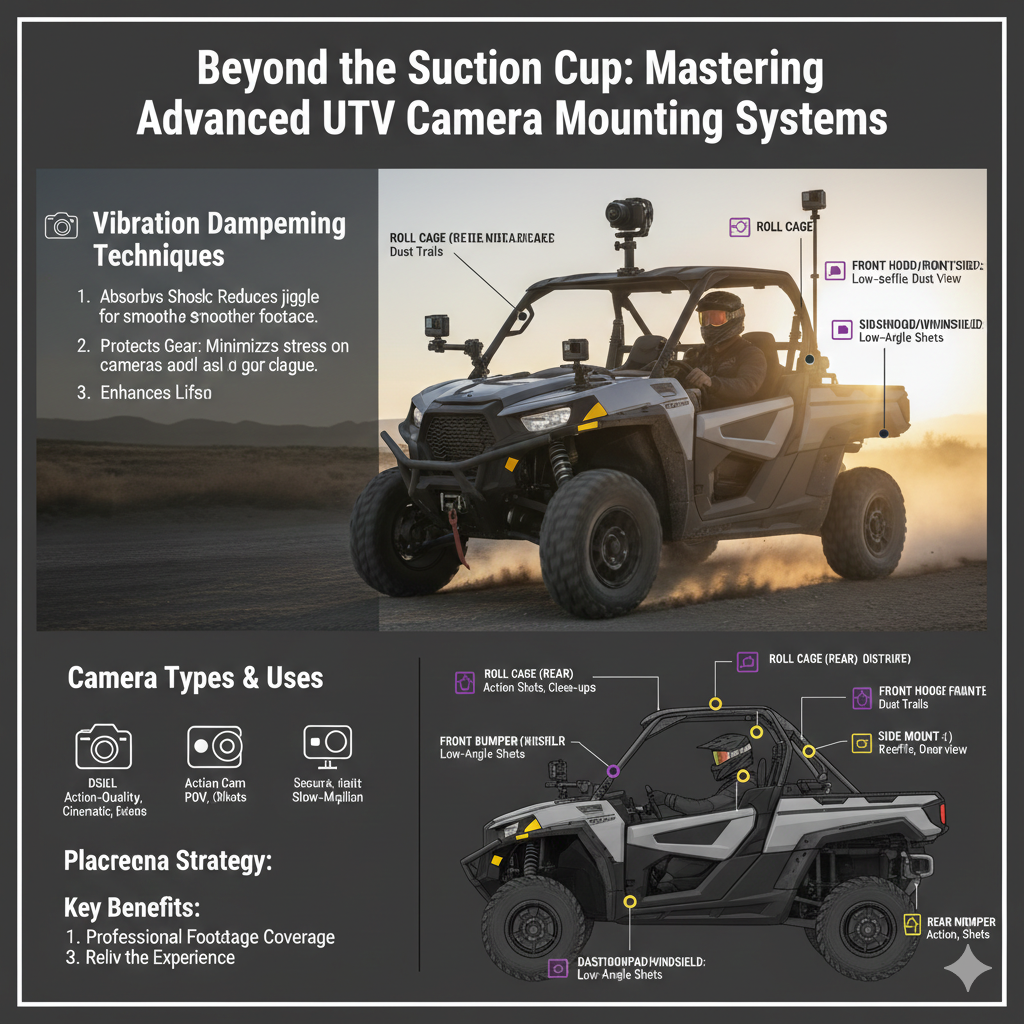
For heavy cameras (DSLRs, mirrorless, or professional cinema cameras) and gimbals, a wire rope isolator is the gold standard for vibration dampening.
- How They Work: These mounts use a series of braided stainless steel wire ropes threaded through aluminum bars. The wire ropes act as a highly effective, multi-axis shock absorber, dissipating vibration energy before it reaches the camera [1].
- Application: They are typically mounted between the UTV’s roll cage and a secondary mounting plate (often a cheese plate) that holds the camera or gimbal. This two-stage mounting system ensures the camera is isolated from the chassis’s high-frequency vibrations.
2. Fluid and Elastomer Dampening
For lighter action cameras (GoPro, Insta360), simpler, more compact dampening solutions are effective.
- Elastomer Mounts: These mounts use specialized rubber or silicone compounds to absorb vibration. Products like RAM Mount’s Vibe-Safe™ or similar elastomer-based adapters are designed to fit between the camera and the mounting arm, providing a crucial layer of isolation [2].
- Silicone Pads: Even a simple, thick silicone pad placed between a camera’s adhesive mount and the UTV’s body panel can significantly reduce vibration transfer, leading to smoother footage.
3. The Importance of Camera Stabilization
While mounting systems isolate the camera, modern camera stabilization technology works in tandem to perfect the shot.
- Action Camera Hypersmooth/FlowState: Always use the highest level of in-camera electronic image stabilization (EIS) available. This software-based stabilization corrects for the minor movements that even the best physical mounts cannot eliminate.
- Gimbals: For the smoothest possible footage, a 3-axis motorized gimbal is necessary. When paired with a wire rope isolator, the gimbal’s motors only have to correct for large, slow movements, rather than fighting constant, high-frequency vibration.

Pillar 2: Strategic Mounting Locations for Every Shot
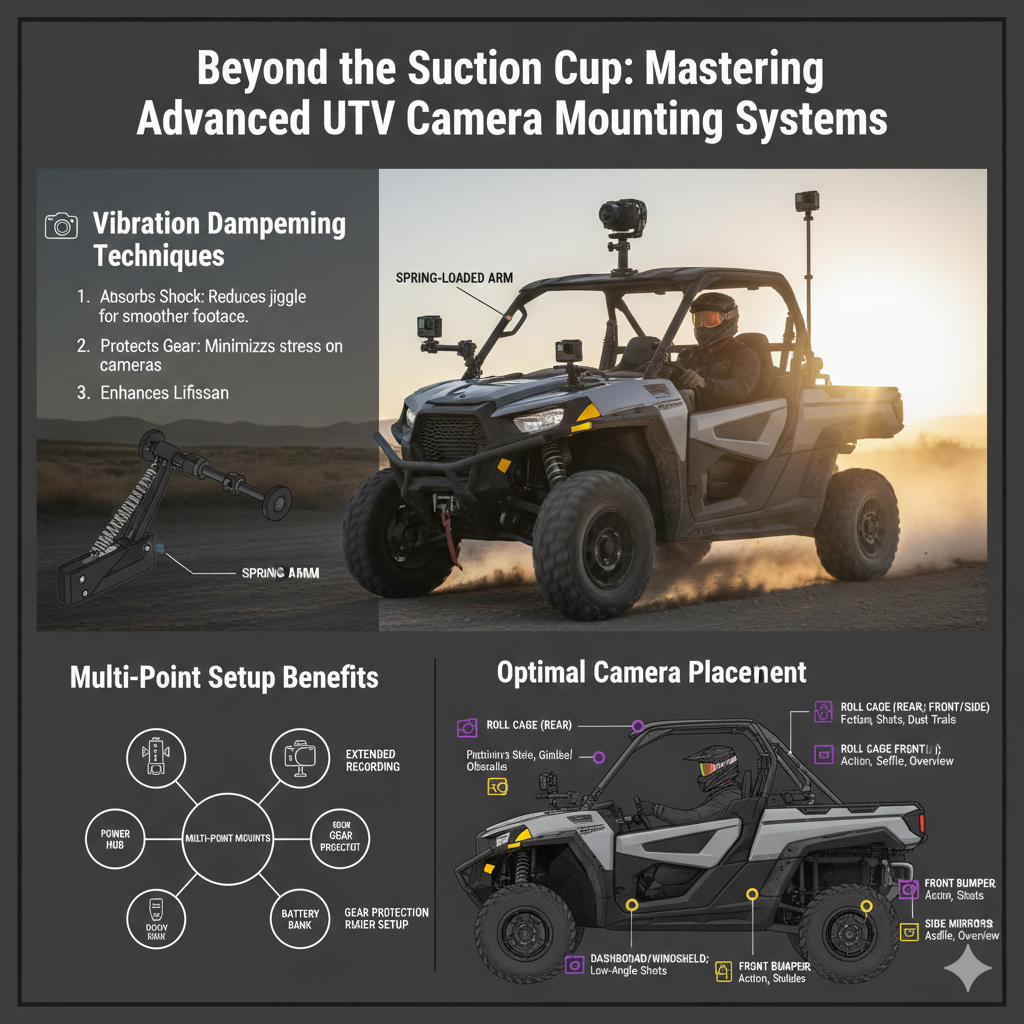
The best location for your camera depends entirely on the shot you want to capture. Advanced videography involves using multiple cameras simultaneously to capture a dynamic range of perspectives.
4. Roll Cage Mounts (The Versatile Standard)
The roll cage is the most common and secure mounting point on a UTV.
- Claw/Mega Clamps: Heavy-duty aluminum clamps are essential for securing cameras to the roll cage tubing (1.75″ to 2″ diameter). Look for clamps with a rubberized interior to prevent slippage and protect the cage finish [3].
- Interior vs. Exterior: Interior mounts (e.g., behind the driver’s headrest) capture the driver’s reaction and cabin action. Exterior mounts (e.g., on the rear cage) capture the trail behind the UTV and the vehicle’s articulation.
5. The Invisible Selfie Stick (360 Cameras)
360-degree cameras (like the Insta360 series) have revolutionized UTV videography by allowing the camera to be digitally removed from the footage, creating a “drone-like” third-person perspective.
- High-Point Mounting: The best location for a 360 camera is on a long, rigid pole (the “invisible selfie stick”) mounted to the highest point of the roll cage or the front bumper [4]. This maximizes the distance between the camera and the UTV, making the camera easier to “stitch out” in post-production.
- Front Bumper/Hood: Mounting a 360 camera on the front bumper provides a unique “chase” perspective that shows the UTV conquering the terrain without the camera rig being visible.
6. Low-Angle and Wheel Well Shots
Low-angle shots are crucial for conveying speed and the intensity of the terrain.
- Suction Cups (with Tether): High-quality suction cup mounts can be used on smooth body panels (hood, doors) but must be paired with a safety tether to the roll cage.
- Magnetic Mounts: Powerful magnetic mounts are excellent for securing cameras to steel components like the frame or rock sliders, providing a unique perspective of the suspension working and the tires gripping the ground.
Pillar 3: Power and Data Management
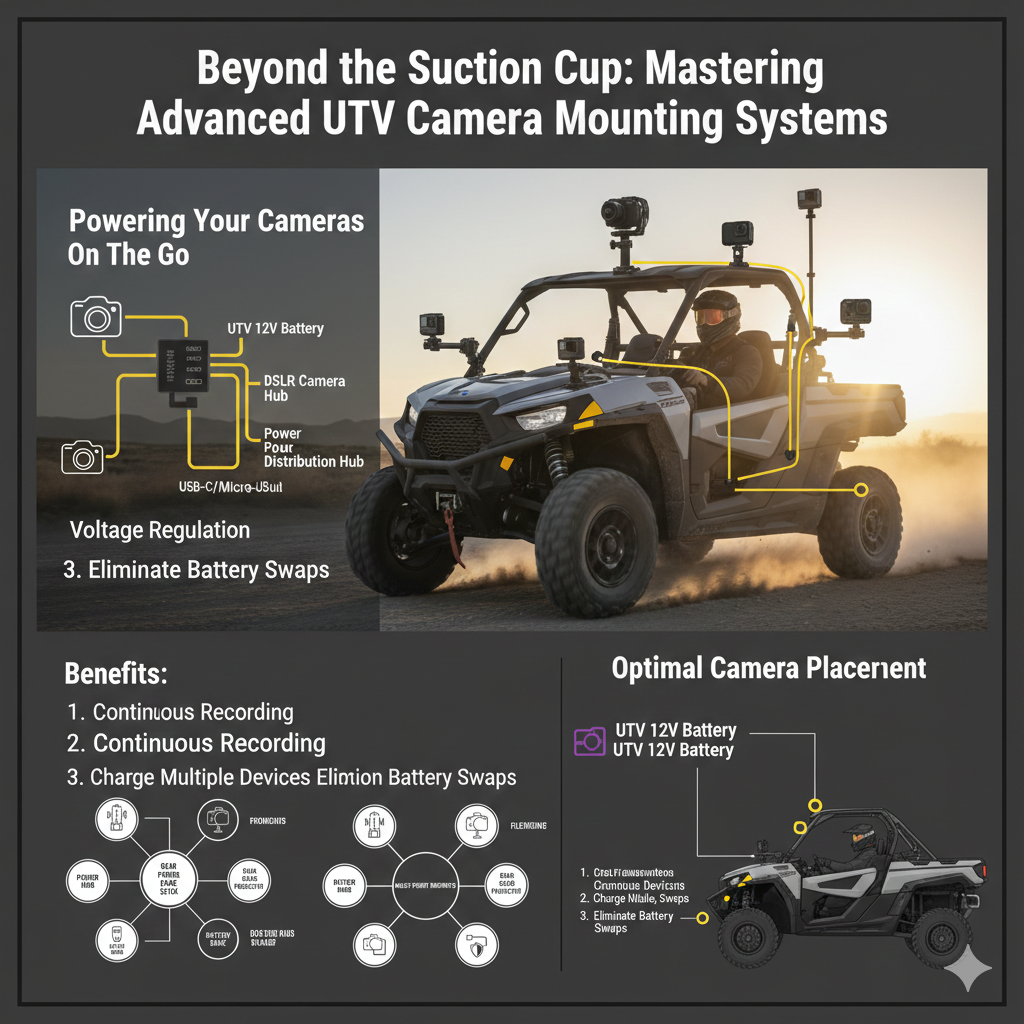
Long days on the trail require a reliable power source. Swapping batteries is inconvenient and risks missing a crucial shot.
7. USB-C and Battery Eliminators
Modern action cameras and even some mirrorless cameras can be powered directly from a 5V USB source, but they require a stable connection.
- Battery Eliminators: These are dummy batteries that plug into the camera’s battery compartment and have a cable that connects to a USB-C or 12V power source [5]. This allows the camera to run indefinitely without battery changes.
- Dedicated Power Hubs: Install a weatherproof 12V-to-USB-C power hub (with a high-amperage output) in the UTV cabin. Run dedicated, securely zip-tied power cables from this hub to each camera mounting location.
8. Data Offload and Storage
A full day of 4K or 5K footage can quickly fill up memory cards.
- Large Capacity Cards: Invest in high-speed, high-capacity (e.g., 256GB or 512GB) V30 or V60-rated SD cards to minimize the need for mid-day swaps.
- Portable SSD: Carry a rugged, portable Solid State Drive (SSD) and a laptop or tablet to offload footage during lunch breaks or at the end of the day. This frees up memory cards and provides an immediate backup of your footage.
Summary of Advanced Camera Mounting Systems
| Component/System | Purpose | Key Feature | Best For |
|---|---|---|---|
| Wire Rope Isolator | Vibration Dampening | Multi-axis shock absorption | Heavy cameras (DSLR, Gimbal) |
| Elastomer Mounts | Vibration Dampening | Compact isolation layer | Action Cameras (GoPro, Insta360) |
| Mega Clamp Mounts | Secure Attachment | High-strength aluminum clamp | Roll Cage Mounting |
| 360 Camera Pole | Unique Perspective | Digitally removes the mount from the shot | Third-person, “drone-like” footage |
| Battery Eliminator | Power Management | Allows camera to run indefinitely from 12V/USB | Long-form recording, time-lapses |
| Dedicated Power Hub | Power Management | Provides stable, high-amperage USB-C power | Multi-camera setups |
By moving beyond basic suction cups and embracing these UTV Camera Mounting Systems, you are ensuring that the incredible moments you experience on the trail are captured with the stability and quality they deserve. Invest in your mounts, manage your power, and start creating truly unforgettable off-road content.
[1] Proaim. (n.d.). Proaim Vibration Isolator Wire Mount for Camera Gimbals. [URL to be inserted]
[2] RAM Mount. (n.d.).RAM® Vibe-Safe™ with NPT Adapter for 2-Hole Holders. [URL to be inserted]
[3] Tackform. (n.d.).SXS/UTV Action Camera Mounts. [URL to be inserted]
[4] YouTube. (n.d.).INSANE 360 Camera ATV Mount | Insta360 One R. [URL to be inserted]
[5] Battery Eliminator Store. (n.d.).USB-Powered Battery Eliminators. [URL to be inserted]
[6] UTV Driver. (2021).Apple: Don’t Attach Your iPhone to Your Handlebar or Chassis Causes Damage. [URL to be inserted]
[7] RZR Forums. (2023).Go Pro Ideas. [URL to be inserted]
[8] Amazon. (n.d.).ZIDIYORUO UTV Camera Mount for GoPro & More. [URL to be inserted]