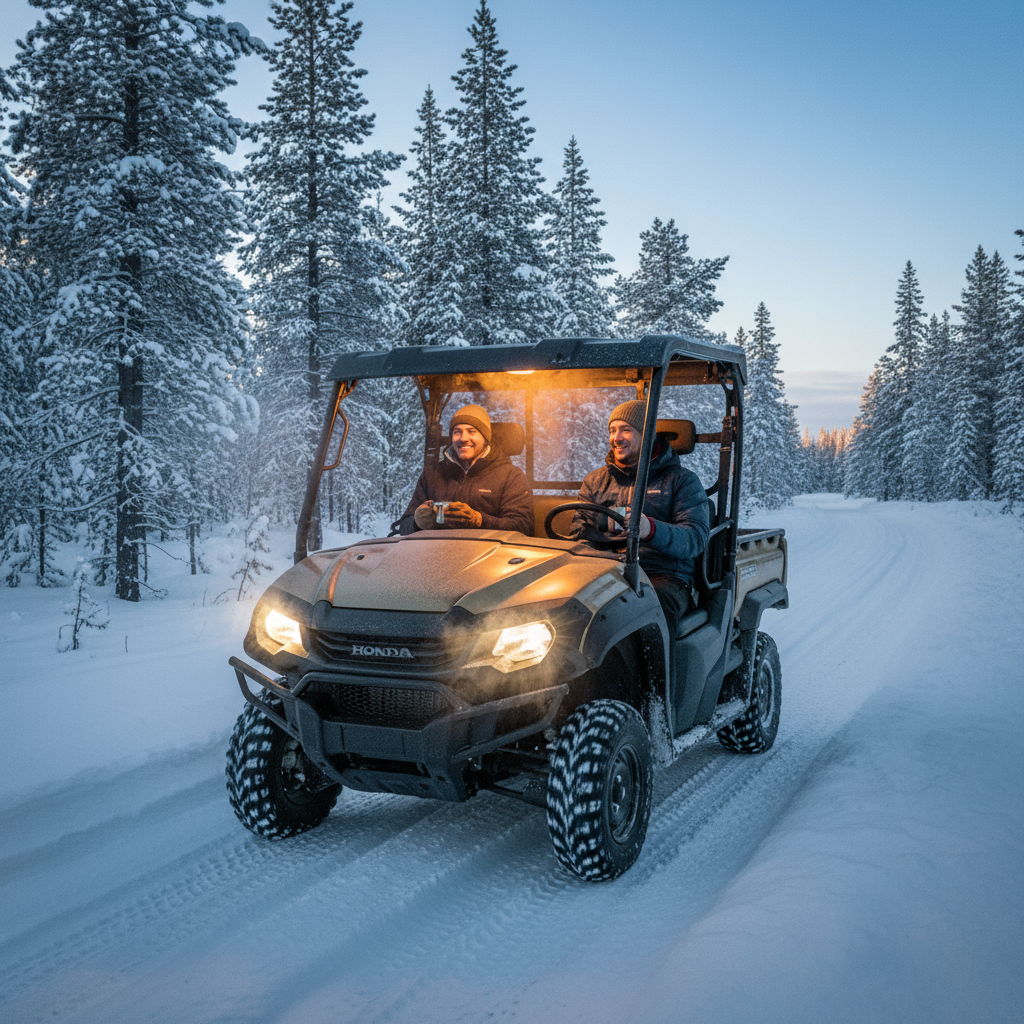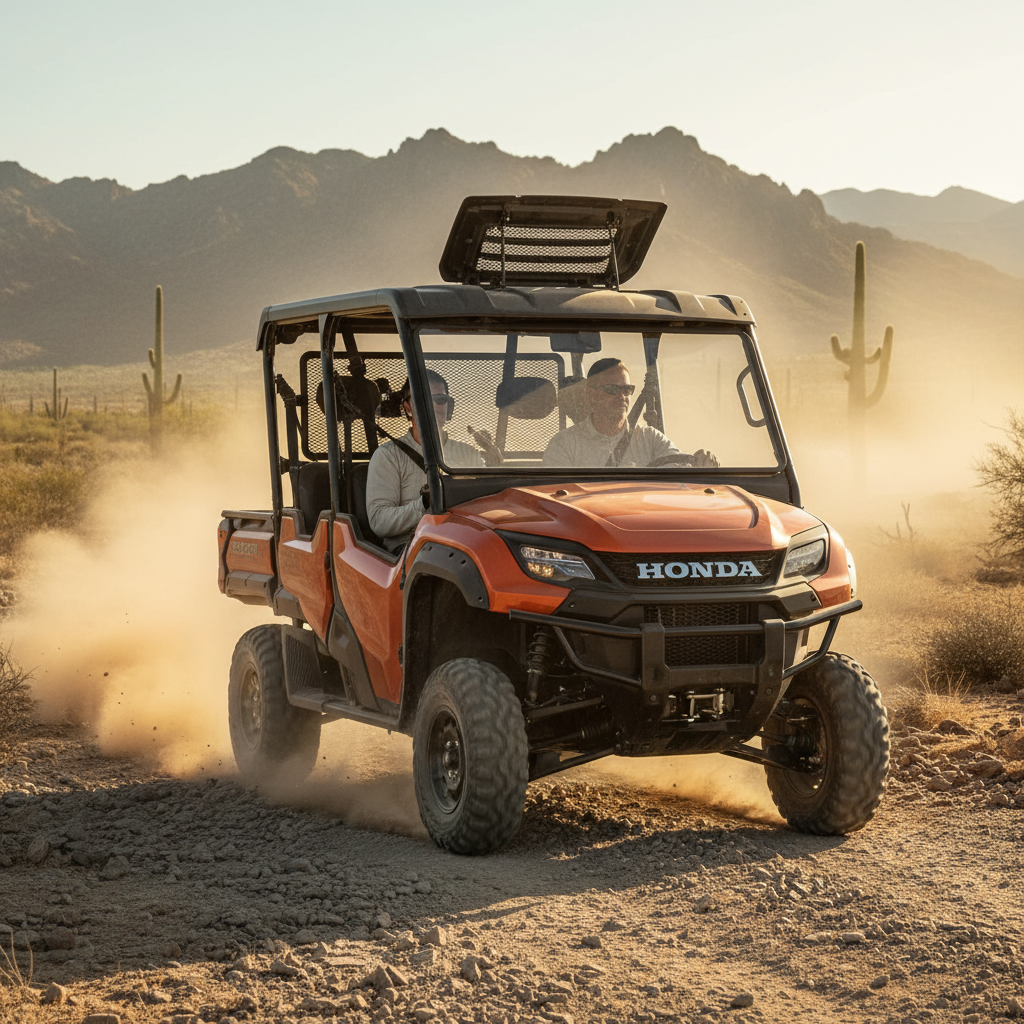


As the mercury rises and the desert sun blazes across Arizona, Honda Pioneer owners face a unique challenge: protecting their beloved UTVs from the harsh summer. While the trails call year-round for some, many choose to give their machines a well-deserved summer break from the extreme heat. But proper storage in Arizona isn’t just about parking it and walking away; it’s a critical process to ensure your Honda Pioneer emerges ready for adventure when cooler weather returns. 🏜️
This comprehensive 2026 guide will equip you with the latest strategies and expert tips to meticulously prepare your Honda Pioneer for the scorching Arizona summer, safeguarding its performance, longevity, and resale value. Let’s dive into making your UTV’s summer vacation as restorative as yours!
Why Arizona Summers Demand Special Care for Your Pioneer ☀️
Arizona’s summer climate is unlike almost anywhere else, presenting extreme conditions that can quickly degrade an unprepared UTV. From May to October, average daily temperatures often soar above 105°F, with ground temperatures reaching even higher. The intense UV radiation relentlessly attacks plastics, rubber, and paint, while the pervasive dust and occasional monsoon humidity can wreak havoc on mechanical and electrical components.
Leaving a UTV exposed or improperly stored can lead to premature wear, fluid degradation, battery issues, and even pest infestations. Ensuring your Honda Pioneer is meticulously prepared for this seasonal hiatus is an investment in countless future trail rides. 💡
The Essential Pre-Storage Deep Clean ✨
Before your Pioneer settles in for its long summer nap, a thorough cleaning is non-negotiable. This isn’t just about aesthetics; it’s about preventing corrosion and preserving finishes. Dirt, mud, and grime left on the vehicle can trap moisture, accelerating rust and paint damage over time.
Start with a high-pressure wash, paying close attention to the undercarriage, suspension components, and wheel wells where dirt loves to hide. Use a reputable UTV-specific cleaner to remove all traces of trail dust, bugs, and caked-on mud. Once clean, ensure your Pioneer is completely dry to prevent any moisture from becoming trapped.
“A clean machine is a happy machine, especially before a long rest in the desert heat.”
After washing, consider applying a protectant to plastics and rubber components to shield them from the intense UV rays that Arizona is famous for. Products designed for marine or automotive exterior protection work well here. Don’t forget to clean the interior too, removing any debris or food particles that might attract unwanted guests. 🕷️
Fuel System Preservation: A Critical Step ⛽
One of the most vital steps in summer storage, particularly in a hot climate like Arizona, is addressing the fuel system. Gasoline can degrade rapidly, especially when exposed to high temperatures, leading to gumming and varnish that can clog carburetors and fuel injectors.
There are two primary approaches: either drain the fuel completely or stabilize it. Draining the fuel tank and running the engine until it dies ensures no stale fuel remains in the lines or carburetor.
However, for most Honda Pioneer owners, stabilizing the fuel is a more practical approach. Fill the fuel tank with fresh, ethanol-free gasoline if possible, and add a high-quality fuel stabilizer according to the manufacturer’s instructions.
Run the engine for 10-15 minutes to ensure the stabilized fuel circulates throughout the entire system, including the fuel lines and injectors. A full tank, especially with ethanol-free gas, helps to minimize condensation buildup inside the tank, which is crucial in fluctuating temperatures.
Check out our off-road collection Amazon products
https://www.youtube.com/watch?v=Fj-B9m3XwBw
Battery Maintenance for Peak Performance 🔋
Arizona’s heat is notoriously harsh on UTV batteries. High temperatures accelerate battery discharge and can lead to sulfation if the battery is left unmaintained.
The best practice is to remove the battery from your Honda Pioneer entirely. Clean the battery terminals, then store the battery in a cool, dry place – ideally not directly on a concrete floor as it can accelerate discharge (though modern batteries are less susceptible).
Connect the battery to a smart battery tender or trickle charger that maintains a full charge without overcharging. These devices are designed to monitor the battery and provide only the necessary charge, preventing damage.
In hot climates, a battery can lose half its charge in a six-month period if not maintained, leading to cell sulfation which reduces its lifespan.
Tire and Suspension Care: Preventing Flat Spots and Wear ⚙️
Your Pioneer’s tires and suspension bear the brunt of its weight, even in storage. Leaving them unattended for months can result in flat spots on tires and unnecessary stress on suspension components.
Inflate your tires to the maximum recommended pressure listed on the tire’s sidewall, not the vehicle’s placard, for long-term storage. This helps prevent flat spots.
For optimal protection, especially during extended storage periods, consider jacking up your Honda Pioneer to get the tires completely off the ground. This relieves pressure on both the tires and the suspension system. If jacking it up isn’t feasible, rotate the tires monthly or at least once during the summer to prevent constant pressure on one section.
Lubricate all suspension pivot points, bushings, and other moving parts. This prevents rust and ensures smooth operation when you’re ready to hit the trails again. [cite: 5 in initial search]
https://www.youtube.com/watch?v=yWcW47p0xS0
Fluid Checks and Changes: The Lifeblood of Your Machine 🧪
Old fluids can become acidic and less effective over time, especially in extreme heat. Changing them before storage is a preventative measure that pays dividends.
Perform an oil and oil filter change. Dirty oil contains contaminants that can corrode internal engine components during storage. Running the engine for a few minutes after the change will circulate the new, clean oil.
Check your coolant levels and condition. Ensure your cooling system is filled with a proper mix of coolant and distilled water to prevent corrosion and protect against the high temperatures, even when stored. Inspect brake fluid and power steering fluid (if applicable) for proper levels and color; if they look dark or contaminated, consider having them flushed and replaced by a certified Honda technician. 🧑🔧
Using fresh fluids before storage is like giving your Honda Pioneer a clean bill of health, ensuring every internal component is protected. This is particularly important for 2024-2026 models with advanced engine systems.
Protecting from Pests and Elements 🛡️
Arizona’s desert environment is home to various critters and pervasive dust that can find their way into your UTV. Preventing their entry is key to a hassle-free reactivation.
Plug the exhaust outlet and air intake with a clean rag or suitable cap to prevent rodents, insects, and dust from entering. Dryer sheets or bounce sheets placed strategically around the engine bay and cabin can deter pests due to their strong scent.
Dust is an omnipresent threat in Arizona; it will find its way into almost everything if not properly sealed. [cite: 5 in second search]
Check out our off-road collection Amazon products
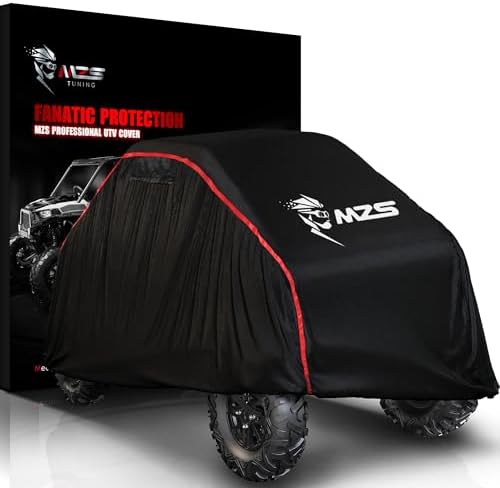
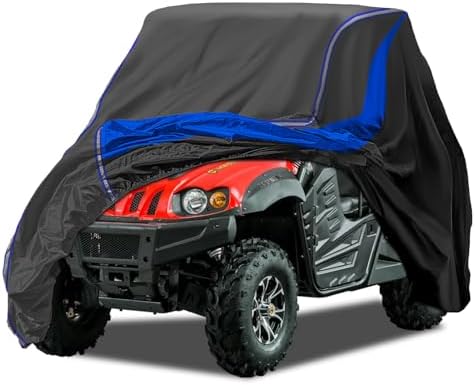
Invest in a high-quality, breathable UTV cover. A porous cover will protect against dust and minor impacts while allowing air circulation to prevent moisture buildup. If storing outdoors, a UV-resistant cover is essential to combat sun damage, though even the best covers may degrade in Arizona’s sun over a couple of years. [cite: 1, 5 in second search]
https://www.youtube.com/watch?v=n8rFv5952s4
Storage Location: Garage, Covered, or Climate-Controlled? 🏡
Where you store your Honda Pioneer makes a significant difference in Arizona. The goal is to minimize exposure to direct sunlight, extreme heat, and dust.
| Storage Option | Pros (Arizona Summer) | Cons (Arizona Summer) |
|---|---|---|
| Enclosed Garage | Best protection from sun, dust, and pests. Relatively stable temperatures. | Still gets very hot unless insulated/cooled. Limited space. |
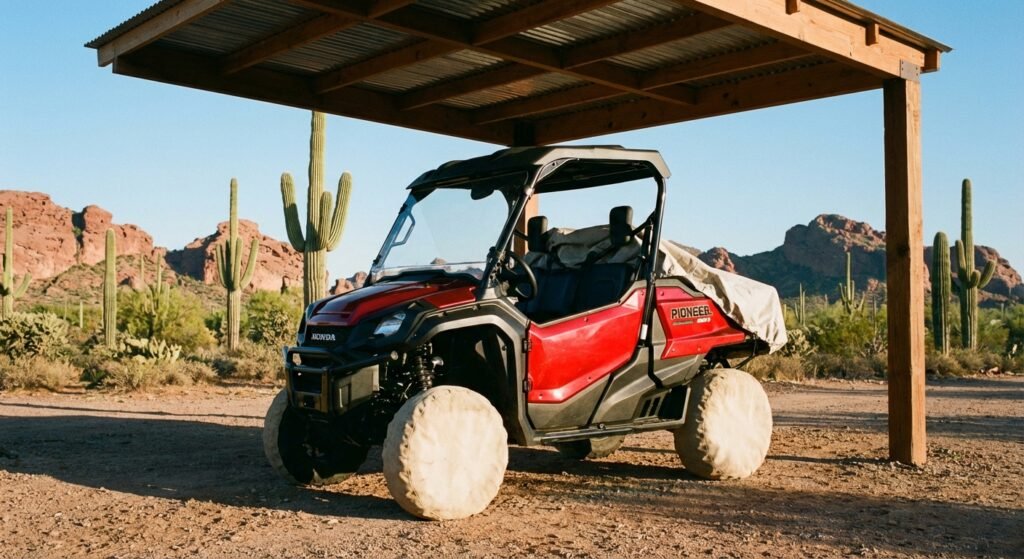
| Covered Carport/Shed | Excellent shade, reduces UV exposure significantly. Good airflow. | Open to dust ingress. Potential for theft if not secured. [cite: 3 in second search] |
| Outdoor (with cover) | Most accessible, lowest cost. | Full exposure to extreme heat, UV, and dust. Cover degradation. |
| Climate-Controlled Storage | Optimal temperature and humidity control. Best for long-term preservation. | Highest cost. Less convenient access. |
Shade is your best friend in Arizona. Whether it’s a dedicated garage or a robust carport, minimizing direct sunlight is paramount to prevent fading, cracking, and component degradation. [cite: 5 in second search]
“In Arizona, shade isn’t a luxury; it’s a necessity for anything you value outdoors.”
Consider a storage facility if you don’t have adequate at-home covered space. Some facilities offer covered or even enclosed, climate-controlled options, which are ideal for extreme conditions. [cite: 5 in second search]
Regular Check-ins: A Quick Peek Does Wonders 👀
Even when your Honda Pioneer is tucked away for the summer, occasional check-ins are beneficial. Aim for a quick inspection every 4-6 weeks.
- Check tire pressure and inflate if needed.
- Ensure battery tender is functioning (if applicable) and battery is charged.
- Look for any signs of pest activity or unwelcome guests.
- Verify the cover is secure and hasn’t shifted or been damaged by wind.
Reactivating Your Pioneer for Fall Adventures 🍁
When the cooler fall weather finally arrives, bringing your Honda Pioneer back to life is straightforward if you’ve followed these steps. Here’s a quick reactivation checklist:
- Remove any exhaust or intake plugs and dryer sheets.
- Reinstall the battery (if removed) and ensure connections are clean and tight.
- Check all fluid levels (oil, coolant, brake fluid) and top off if necessary.
- Inspect air filter for dust and replace if needed.
- Check tire pressure and adjust to riding specifications.
- Do a quick visual inspection for any leaks, loose connections, or rodent damage.
- Start the engine and let it idle for a few minutes to circulate fluids before riding.
- Take a short, slow test ride to ensure brakes, steering, and all systems are functioning correctly.
This systematic approach minimizes surprises and ensures you can quickly get back to enjoying Arizona’s stunning trails. 🚀
Conclusion: Ready for the Next Ride! 🎉
Preparing your Honda Pioneer for summer storage in Arizona is a crucial ritual that every enthusiast should embrace. By diligently following these steps—from a thorough cleaning and fuel stabilization to proper battery and tire care—you’re not just storing a vehicle; you’re preserving an investment and ensuring countless future adventures.
With proper care, your Honda Pioneer, whether a 2024, 2025, or even a future 2026 model, will endure the intense desert summer and be ready to roar back to life when the trails beckon once more. Happy trails, and see you when the heat breaks! 👋
🛠️ Pioneer Enthusiast Resources
🔍 Explore More: See all Wild Testing guides for storing utv for summer in arizona.
Check out our off-road collection Amazon products