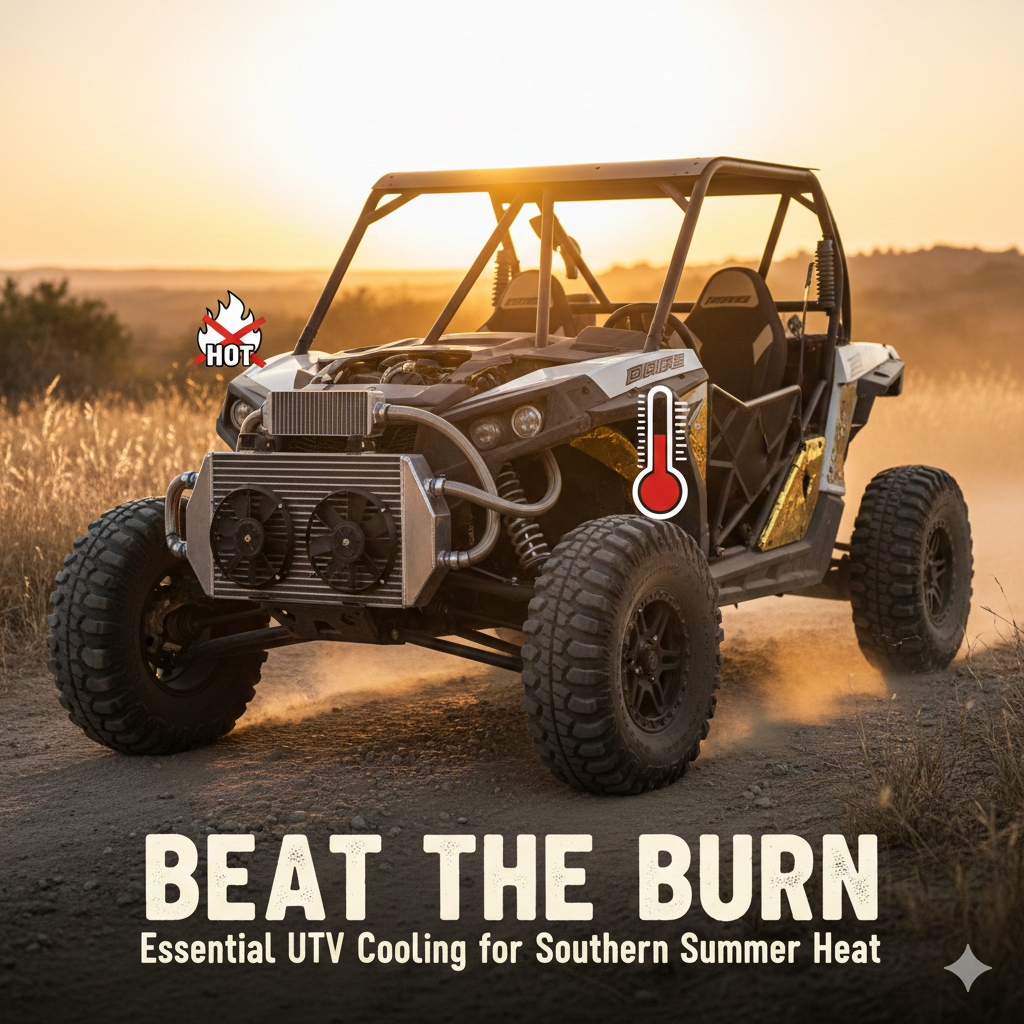




The Southern summer is a formidable adversary for any UTV. With ambient temperatures soaring into the triple digits and humidity levels pushing the limits, the risk of overheating is constant. Engine temperatures climb, horsepower drops, and the cabin becomes an oven. For riders in the deep South, the focus shifts from conquering terrain to conquering the heat. Proper UTV Cooling Southern Summer modifications are not just about performance; they are about protecting your engine from catastrophic failure and ensuring a comfortable, safe ride.
This comprehensive guide will detail the essential strategies and modifications needed to keep your UTV running cool and strong, even on the hottest days. We will explore upgrades to the engine’s cooling system, methods for managing oil temperature, and critical steps for insulating the cabin from radiant heat.
Pillar 1: Optimizing the Engine’s Primary Cooling System
The engine’s liquid cooling system is the first line of defense. In extreme heat, the stock system is often pushed beyond its capacity, especially during low-speed, high-load riding.
1. High-Performance Radiator Upgrades
The radiator is responsible for dissipating heat from the coolant. A stock radiator may not have enough surface area or efficiency for extreme heat.
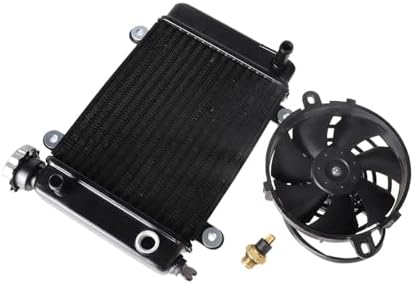
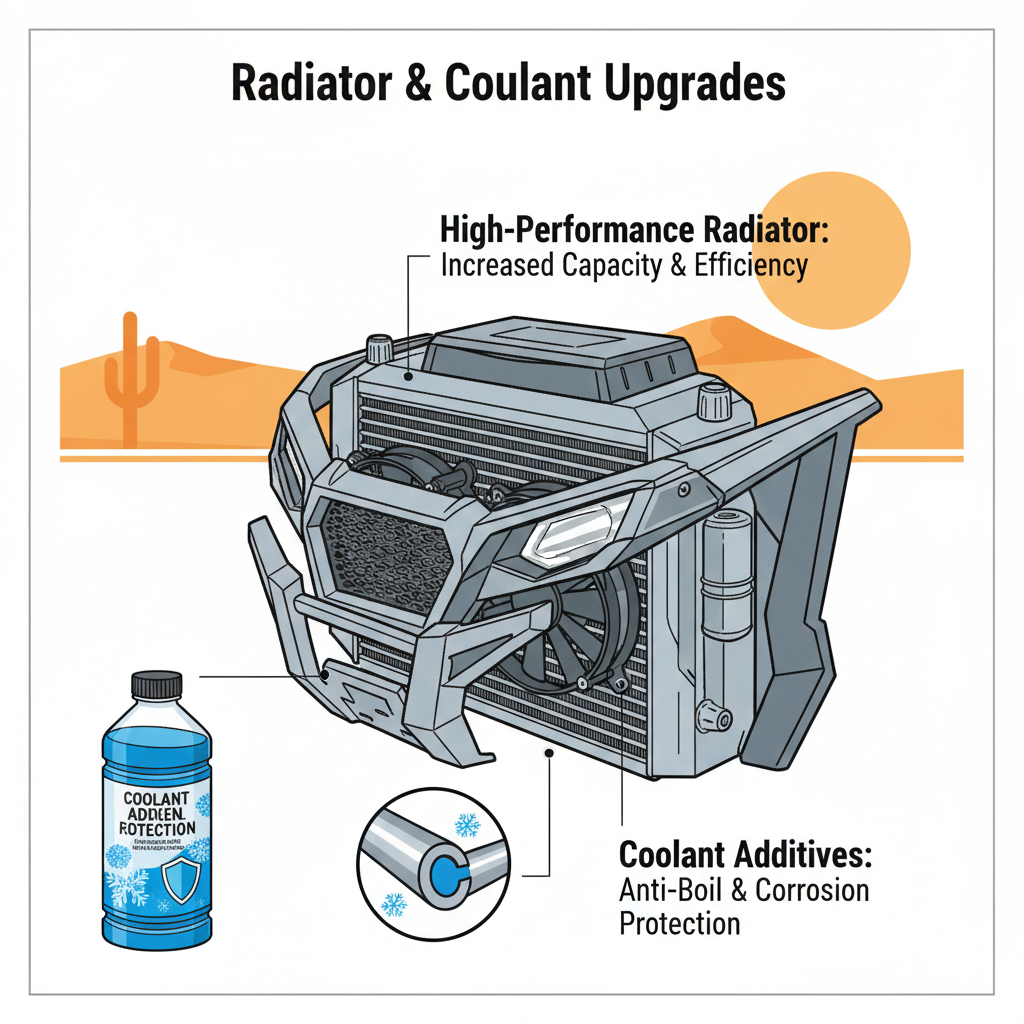
- Increased Core Volume: Upgrade to a high-performance, aftermarket radiator with a thicker core and more efficient fin design. These radiators hold more coolant and offer a significantly larger surface area for heat exchange, dramatically improving the system’s ability to shed heat [1].
- Dual-Pass Design: Some high-end radiators feature a dual-pass design, forcing the coolant to travel across the core twice before exiting. This increases the time the coolant spends in the radiator, maximizing heat transfer.
2. High-Flow Cooling Fans
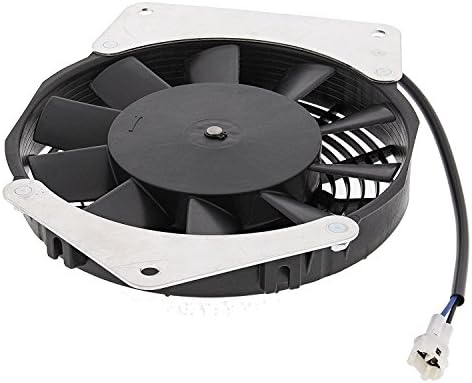
A radiator is only as effective as the airflow passing through it. When riding at low speeds or idling, the cooling fan is solely responsible for this airflow.
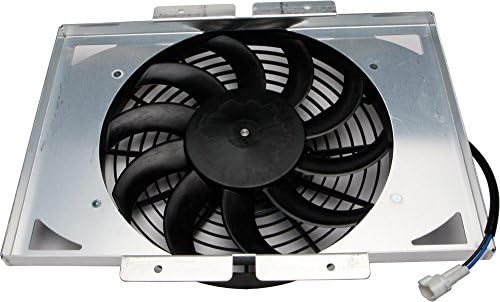
- Aftermarket Fan Kits: Replace the factory fan with a high-flow, high-CFM (Cubic Feet per Minute) aftermarket fan kit. Many modern UTVs benefit from brushless fan technology, which provides higher airflow, lower amperage draw, and greater durability than standard brushed fans [2].
- Fan Override Switch: Install a manual fan override switch. This allows the driver to manually engage the fan before the engine reaches the factory-set activation temperature, providing proactive cooling during slow, technical sections or long climbs.
3. Coolant Additives and Water Wetter
Coolant additives are a cost-effective way to boost the efficiency of your existing cooling system.
- Water Wetter Technology: Products like Red Line’s Water Wetter or similar performance additives are designed to reduce the surface tension of the coolant [3]. This “wetting ability” allows the coolant to make better contact with the metal surfaces inside the engine, improving heat transfer and reducing the formation of hot spots and steam bubbles.
- Distilled Water Mix: In the hottest climates, some riders opt for a higher ratio of distilled water (up to 70%) mixed with a performance additive, as water is a more efficient heat conductor than traditional antifreeze. However, this should only be done if freezing is not a concern and the additive provides the necessary corrosion protection.
Pillar 2: Managing Secondary Heat Sources
The engine is not the only component that generates heat. The oil, the clutch belt, and the exhaust system all contribute to the overall thermal load.
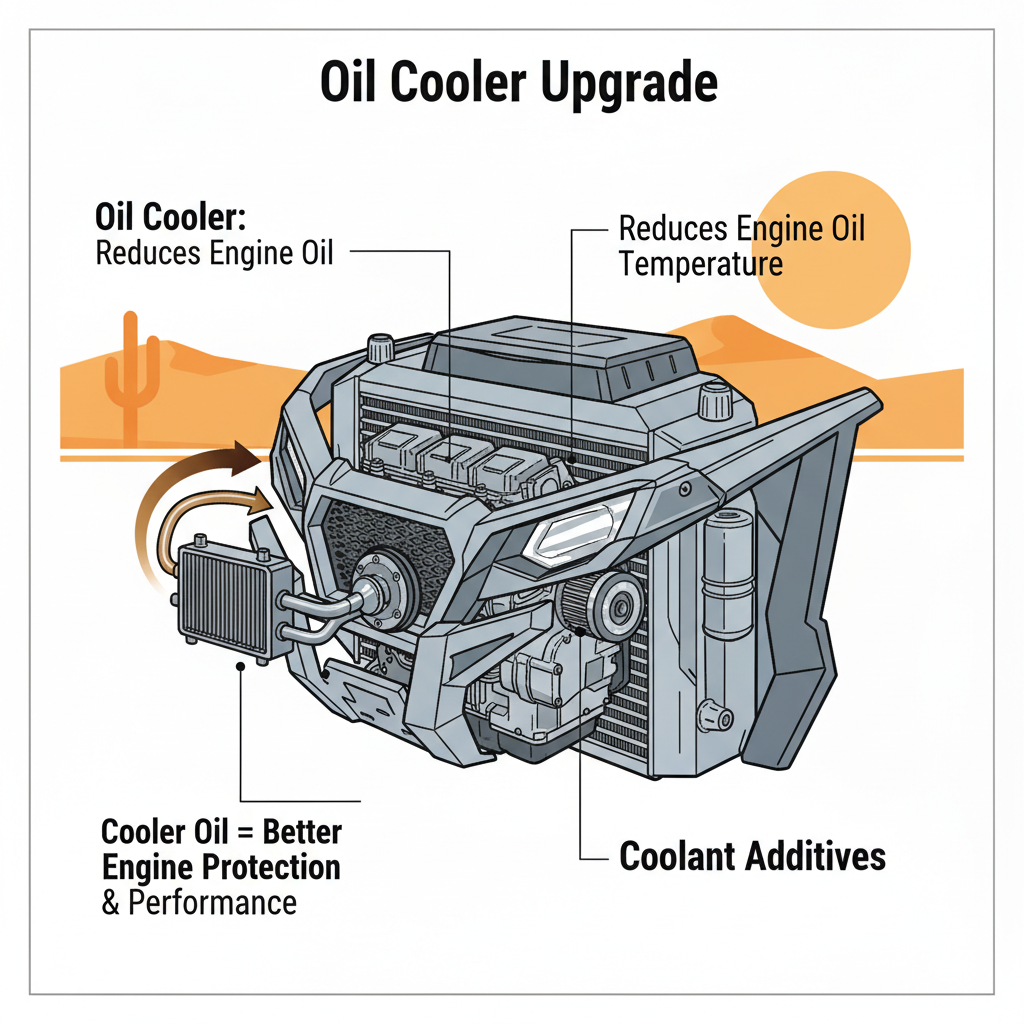
4. Engine Oil Coolers
Oil plays a critical role in cooling the engine, lubricating components, and carrying heat away from internal parts. In high heat, oil temperature can skyrocket, leading to thermal breakdown and reduced lubrication effectiveness.
- Benefits of an Oil Cooler: An external oil cooler kit acts like a secondary radiator for the engine oil. It can reduce oil temperatures by as much as 20-50 degrees Fahrenheit, which is a massive benefit in Southern summer heat [4]. Cooler oil maintains its viscosity and lubricating properties, significantly extending engine life.
- Installation: The cooler is typically mounted in a location with good airflow, such as behind the front bumper or on the roof, and plumbed into the engine’s oil system.
5. CVT Clutch Belt Cooling
The Continuously Variable Transmission (CVT) belt is a major source of heat, and excessive belt temperature is the number one cause of belt failure. In the summer, the ambient heat exacerbates this issue.
- Belt Temperature Gauge: Installing a belt temperature gauge is the single most important step for managing clutch heat. It provides real-time data, allowing the driver to back off the throttle before the belt reaches its critical temperature (typically around 250-300°F) [5].
- Forced Air Cooling Kits: Aftermarket belt cooling kits use a dedicated fan to force a high volume of cool, filtered air directly into the clutch housing. This active cooling is essential for low-speed, high-load riding in the heat, where natural airflow is minimal.
- Clutch Venting: Ensure the clutch intake and exhaust vents are clean and unobstructed. Some riders modify the venting to draw air from a cooler location, such as the roof or higher on the roll cage.
Pillar 3: Cabin and Rider Comfort
A hot UTV is an uncomfortable UTV. Managing the heat that radiates into the cabin is crucial for rider endurance and enjoyment.
6. Heat Shielding and Insulation
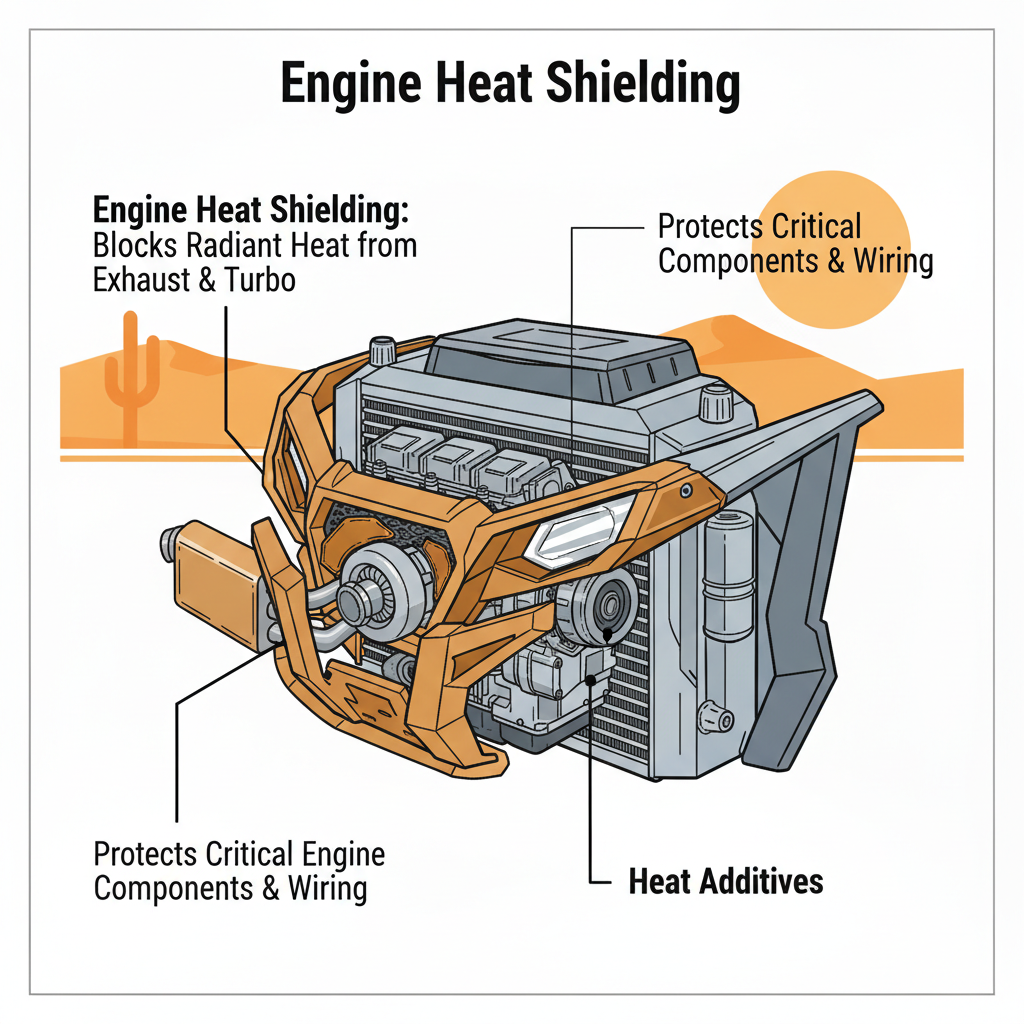
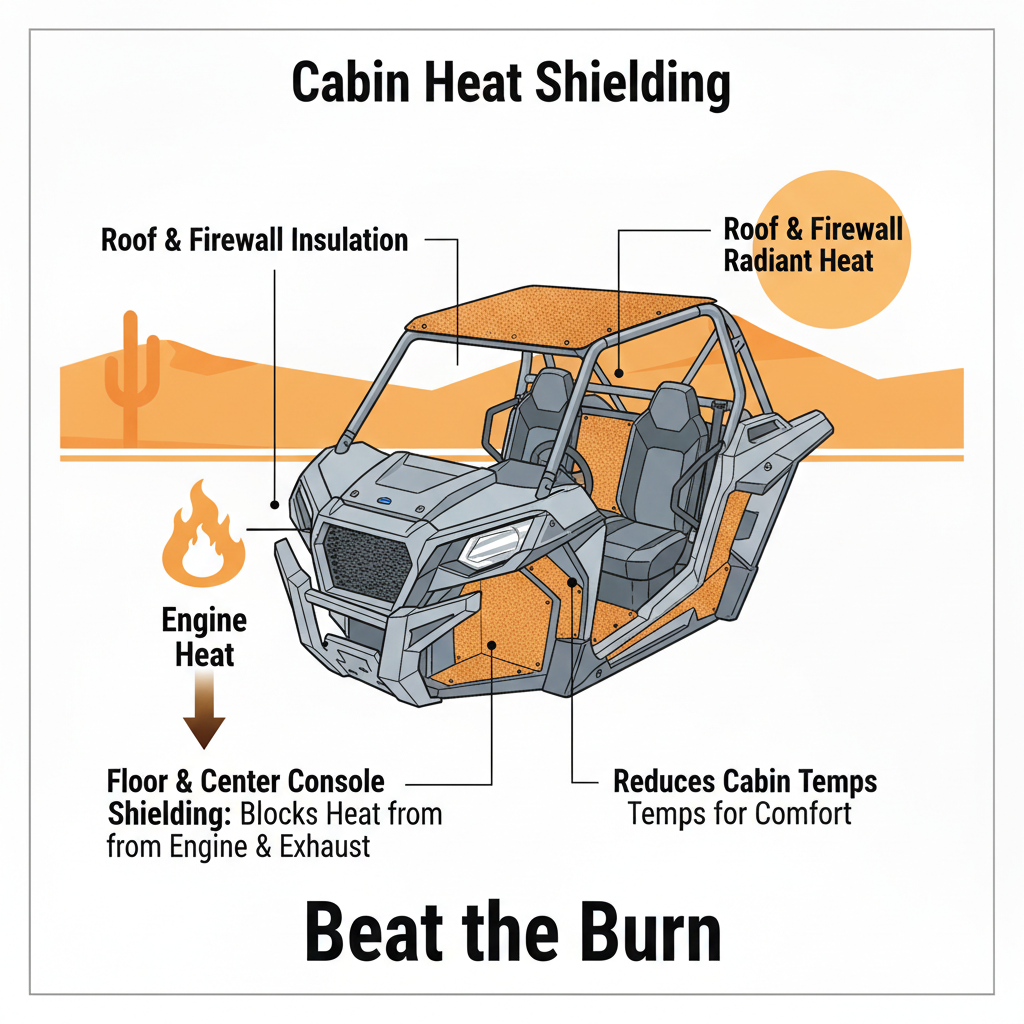
The exhaust system and the engine bay are major sources of radiant heat that soak into the floorboards, seats, and firewall.
- Thermal Barrier Materials: Apply high-quality thermal barrier materials (like aluminum-backed heat shields or ceramic coatings) to the underside of the floorboards, the firewall, and the plastic panels surrounding the engine and exhaust [6]. These materials reflect radiant heat away from the cabin.
- Exhaust Wrap: Wrapping the exhaust headers and muffler with a high-temperature exhaust wrap can significantly reduce the amount of heat escaping into the engine bay, which in turn reduces the heat transferred to the cabin.
7. Cabin Airflow and Cooling Accessories
Once the radiant heat is managed, focus on cooling the occupants.
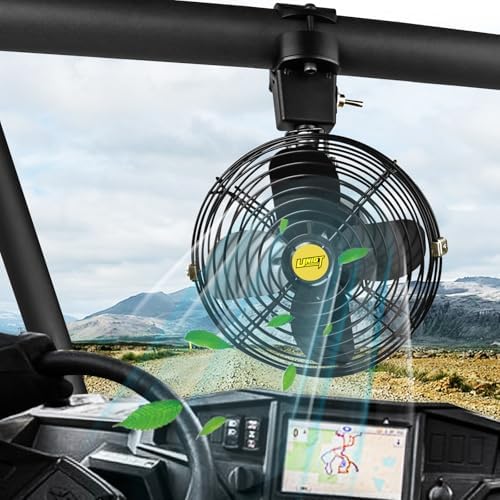
- Overhead Cab Fans: Simple, high-CFM overhead fans mounted to the roll cage can create a surprising amount of airflow, which is essential for evaporative cooling (sweat) [7].
- Roof Insulation: Insulating the roof with a thin layer of thermal material can prevent the sun’s intense heat from turning the cabin into a solar oven.
- Windshield Management: While a full windshield offers protection, it can trap heat. Consider a half-windshield or a flip-up windshield to maximize airflow on the hottest days.
Summary of Southern Summer Cooling Strategies
| Cooling Area | Modification/Strategy | Primary Benefit |
|---|---|---|
| Engine Cooling | High-Performance Radiator | Increased heat dissipation capacity. |
| Engine Cooling | High-Flow Fan Kit w/ Override | Maximizes airflow at low speeds/idle. |
| Engine Cooling | Coolant Additives (Water Wetter) | Improves coolant’s heat transfer efficiency. |
| Oil Management | External Oil Cooler Kit | Reduces oil temperature, preventing thermal breakdown. |
| Drivetrain | Belt Temperature Gauge | Allows proactive management of clutch heat to prevent belt failure. |
| Drivetrain | Forced Air Belt Cooling Kit | Actively cools the CVT belt during high-load operation. |
| Cabin Comfort | Thermal Heat Shielding | Blocks radiant heat from the engine and exhaust. |
| Cabin Comfort | Overhead Cab Fans | Increases airflow for rider comfort and evaporative cooling. |
By implementing these comprehensive UTV Cooling Southern Summer strategies, you can ensure your UTV remains a reliable, high-performing machine, even when the mercury climbs. Don’t let the heat sideline your summer adventures; prepare your UTV to beat the burn and enjoy the ride.