

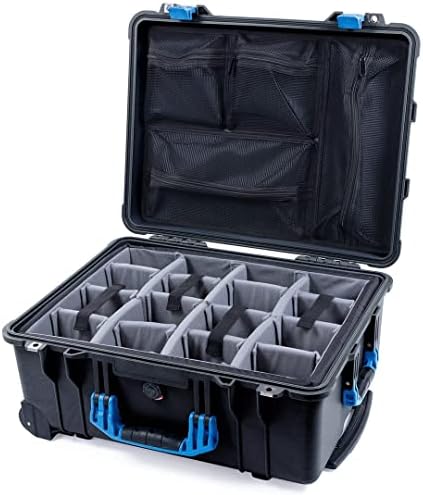

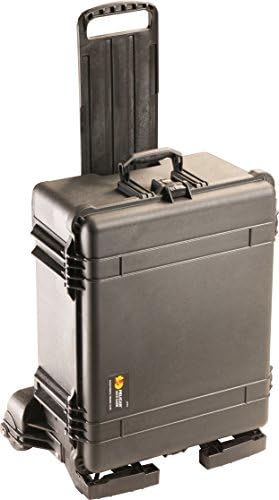


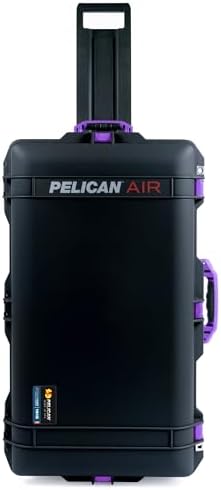


When it comes to Pelican boxes vs standard zippered luggage on muddy trails, getting the right details matters. Pelican 1615TRVL Travel Case | Pelican 1610M Protector Mobility Case | Shock-Mitigating Tie-Down Anchors (500 lbs WLL)
Pelican Boxes vs. Standard Zippered Luggage on Muddy Trails: The UTV Engineering & Survival Blueprint
When your rig is buried to the axles in a mud bog and you need your recovery gear or spare drivetrain parts, a fused zipper on a soft bag turns a minor delay into a catastrophic stranding. Standard zippered luggage fundamentally fails in deep mud and silt due to mechanical ingress and structural collapse, while hard-shell enclosures provide absolute environmental sealing. In this blueprint, you will learn the exact mechanical failure points of soft luggage, the precise hardware specifications required to counter them, and how to zone your tools and mount your cases based on your UTV’s specific drivetrain architecture.
The Technical Reality: Catastrophic Failure Sequences of Soft Luggage in Silt and Mud
Particulate Ingress & “Zipper Death”: 0.05mm Silt vs. YKK Coil Zippers under 12Hz-18Hz Vibration
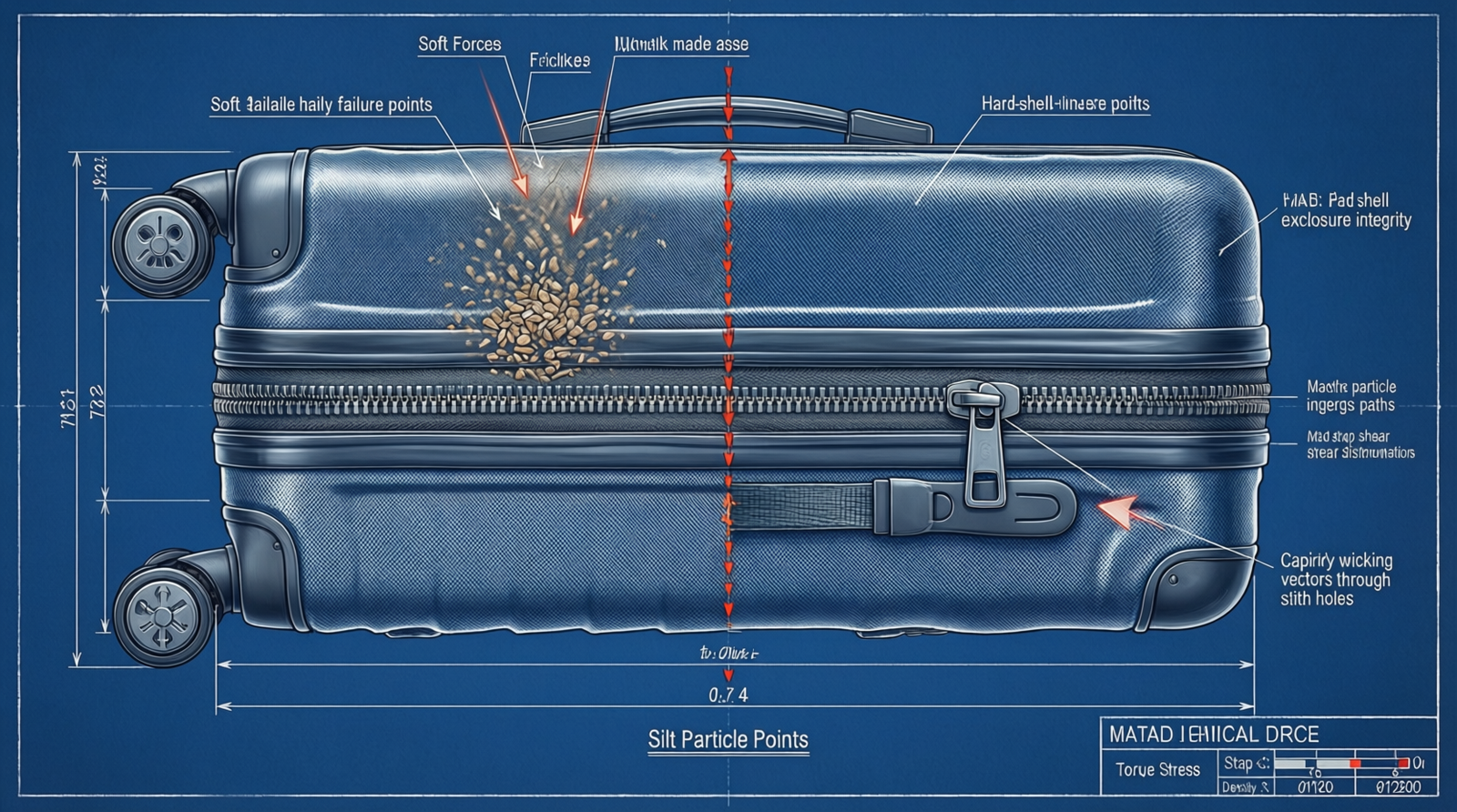
Mud dries into alkaline silt and fine dust with a particulate size between 0.05mm and 0.2mm. Standard soft bags rely on YKK #8 and #10 coil zippers, which possess physical tooth gaps significantly larger than these microscopic particles.
For the driver, this dimensional mismatch allows dust to slip effortlessly past the zipper track. Once inside, the 12Hz to 18Hz high-frequency vibration from your UTV’s idle and trail bouncing grinds that silt into an abrasive paste that jams the slider completely. When you panic and yank the zipper pull on the trail, the sudden mechanical stress causes catastrophic zipper tooth shearing, leaving your gear entirely exposed to the elements.
Capillary Action Failure: 3-Minute Mudwater Wicking Through Stitch Holes
Soft luggage relies on continuous threaded seams that create microscopic capillary channels when fully submerged in alkaline mudwater.
On the trail, this physics-driven wicking actively pulls fluid through the bottom stitching in under three minutes, instantly shorting sensitive electronics and corroding drivetrain spares before the driver realizes the interior is flooded.
The “Cheese-Cutter Effect”: >150 lbs Strap Tension and Fabric Shearing on Rigidless Frames
Applying over 150 lbs of ratchet tension to a rigidless fabric shell concentrates extreme mechanical stress along narrow strap contact lines.
As the chassis twists over rocky terrain, those concentrated stress points act as cutting blades that progressively slice through the outer nylon weave, leading to sudden structural failure and complete gear loss.
The Core Gear Architecture: Validated Hardware & Mechanical Specs
The Primary Enclosures: Dimensions & Crush Ratings
Check out our off-road collection Amazon products
To defeat trail abuse, you need structural vaults, not just plastic boxes. The two validated enclosures for modern overlanding are the Pelican 1615TRVL Travel Case and the Pelican 1610M Protector Mobility Case.
Both cases are injection-molded from Copolymer Polypropylene and high-density HPX2 resin. This material science provides a verified 500 lbs crush resistance and anti-dent structural integrity, ensuring your gear survives even if the rig rolls over on a steep incline.
| Model | Outer Dimensions | Inner Dimensions | Capacity | Empty Weight | Pelican 1615TRVL Travel Case | 82.8 x 46.7 x 28 cm | 75.2 x 39.4 x 23.8 cm | 63L | 7.6 kg | Pelican 1610M Protector Mobility Case | 624 x 490 x 303 mm | 563 x 435 x 269 mm | N/A | 12.03 kg |
|---|
Sealing Dynamics: IP67 O-Rings, 440 lbs Latches, and High-Altitude Vacuum Lock Prevention
Waterproofing is only as effective as the compression force holding the seal together. These cases utilize a Polymer O-Ring Seal that is crushed tight by Double-Throw Latches rated for 440 lbs of pressure, achieving full IP67 and MIL-STD-810F certification.
More importantly, they feature an Automatic Pressure Equalization Valve. When you drive from a hot valley up to a cold, high-altitude mountain pass, the air inside the case contracts. Without this valve, the pressure drop creates a vacuum lock that makes the lid impossible to open with one hand. The valve automatically equalizes the pressure, ensuring instant trailside access when you need your gear immediately.
Mandatory Tie-Down Stack: 500 lbs WLL Shock-Mitigating Anchors & 1.5″ Soft-Loop Straps
Hard cases require specialized anchor points to survive high-frequency bouncing. The mandatory upgrade is the Shock-Mitigating Tie-Down Anchors (500 lbs WLL) system, boasting a 500 lbs Working Load Limit and a 1500 lbs Breaking Strength.
Recommended Insights From Our Guide Library:
On the trail, you must pair these anchors with 1.5-inch soft-loop ratchet straps. This completely eliminates the catastrophic failure mode of cheap metal S-hooks, which can snap off under vibrational load, become dangerous projectiles, or gouge deep scratches into your resin case.
The Technical Setup Blueprint: Drivetrain-Specific Zoning & Poly-Bed Mounting Torque
CVT Architecture Zoning: Flat-Storing Belts & Spreading Tools
If you are running a CVT system, mud and water are your biggest enemies. Your trailside repair kit must include T30 and T40 Torx bits, 8mm, 10mm, and 13mm sockets, and the mandatory CVT Clutch Spreading Tool. Without this specific spreading tool, you cannot compress the primary spring to remove a snapped belt on the trail.
Because the Pelican 1615TRVL Travel Case offers a 75.2cm inner length, it perfectly accommodates flat-storing spare EPI or High Lifter CVT belts. Never fold a CVT belt, as it will kink and fail. Furthermore, you must pack silica gel desiccants inside the case to prevent “Wet CVT Belt Syndrome.” If a spare belt absorbs ambient moisture, the rubber swells, causing immediate clutch burnout and slippage the moment you install it and hit the throttle.
DCT Architecture Zoning: TrekPak Isolation for Solenoids & Fluids
Honda’s Dual Clutch Transmission eliminates the CVT belt but introduces highly sensitive shift solenoids and relays that will short out if exposed to deep mud. Your DCT trail kit requires 10mm, 12mm, and 14mm sockets, a Digital Multimeter, spare fuses and relays, and backup Honda DCT fluid bottles.
Because these electronic components and fluid bottles are fragile, you must use a TrekPak divider kit or custom-cut Pick N Pluck foam inside your Pelican. This isolation prevents the constant 15Hz trail vibrations from smashing your delicate multimeter and fluid bottles together, preventing cracks, leaks, and shattered screens.
Defeating Factory Bed Flex: M8/M10 Anchor Torque Specs to Prevent Poly-Bed Cracking
UTV plastic beds flex and twist heavily under chassis load. If you bolt a hard case directly to the bare plastic bed, the vibration will cause the bed’s plastic reinforcing ribs to grind right through the floor of your case. You must use rubber-padded anchor bases to absorb this friction.
Check out our off-road collection Amazon products
| Component | Specification | Torque / Rating | Application Note | Shock-Mitigating Tie-Down Anchors (500 lbs WLL) | 500 lbs WLL | 1500 lbs Breaking Strength | Pair with 1.5″ soft-loop straps | M8 Thread Bolts | 1.25 Pitch | 18-22 ft-lbs | Prevent poly-bed cracking | M10 Thread Bolts | 1.5 Pitch | 30-35 ft-lbs | Secure anchor bases firmly |
|---|
Field Verdict & Operational ROI: Payload Penalty vs. Trailside Peace of Mind
Calculating the True Cost of Gear Exposure: Ruined Satcoms and Drivetrain Stranding
Critics often point out the “Payload Penalty” of hauling a 7.6 kg or 12.03 kg empty hard case. However, this weight must be calculated against the true cost of gear exposure.
For the driver, saving a few pounds of payload means nothing when you are stranded without cell service because your inReach satellite communicator is water-logged, your DCT relays are shorted, or your spare drivetrain parts are caked in rust. The weight of the Pelican system is not a penalty; it is a calculated, mandatory insurance policy against catastrophic trail failures.
The Procurement Directive: Why Hard-Shell Sealing is a Non-Negotiable Operational Asset
The consensus across major off-road forums is absolute. For high-stakes overlanding, deep mud bogging, and technical trail riding, soft luggage is a liability. The absolute environmental sealing, vibration isolation, and roll-over crush protection provided by the hard-shell stack is the only mathematically sound investment for serious off-road drivers.
Community Reference & Authority Resources:
Conclusion
The true value of this hardware setup reveals itself in one exact moment. You are knee-deep in a freezing mud bog, the rain is pouring down, and your rig is dead in the water with a snapped belt or a shorted relay. You reach into the back of your UTV. Instead of fighting a fused, silt-choked zipper or pulling out a soaked, useless spare part from a collapsed soft bag, you simply pop the 440 lbs latches on your case. The pressure valve hisses, the lid opens effortlessly, and you pull out your bone-dry tools and factory-curvature spare belt. You make the repair, fire up the engine, and get back on the trail. That is the exact moment the engineering pays off, and why hard-shell sealing remains the ultimate standard for muddy trail survival.
🔍 Explore More: See all Wild Testing guides for Pelican boxes vs standard zippered luggage on muddy trails.
Check out our off-road collection Amazon products