

As Honda Pioneer enthusiasts, we pride ourselves on reliability. We turn the key, the engine purrs, and we hit the trails knowing our machine will get us back home. However, we often ride in mixed groups, and let’s be honest: our buddies in their Polaris RZRs sometimes run into electrical gremlins that can halt the whole convoy.
One of the most notorious issues plaguing the RZR XP 1000 platform is the charging system. Specifically, the voltage regulator is a known weak point that can leave your group stranded miles from the trailhead.
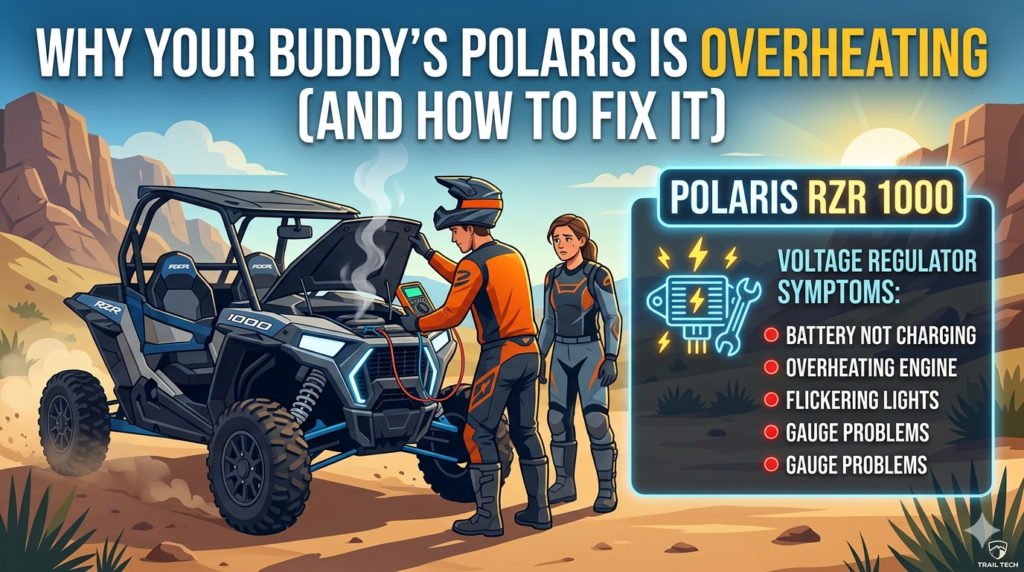
Whether you are helping a friend troubleshoot or you have a “mixed fleet” in your garage, understanding the rzr 1000 voltage regulator symptoms is crucial for saving the weekend ride.
Identifying the Warning Signs
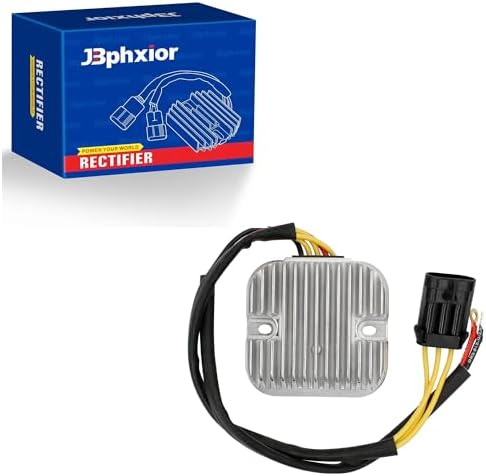
The voltage regulator (VR) acts as the gatekeeper between the stator (which generates power) and the battery. When it fails, it either blocks power completely or opens the floodgates, sending dangerous voltage spikes through the system. If you ignore the early warning signs, you risk cooking the ECU, melting the wiring harness, or boiling the battery.
Check out our off-road collection Amazon products
Here are the primary symptoms to watch for on the 2024 and older models:
1. The Dreaded “OV” or “LO” Codes
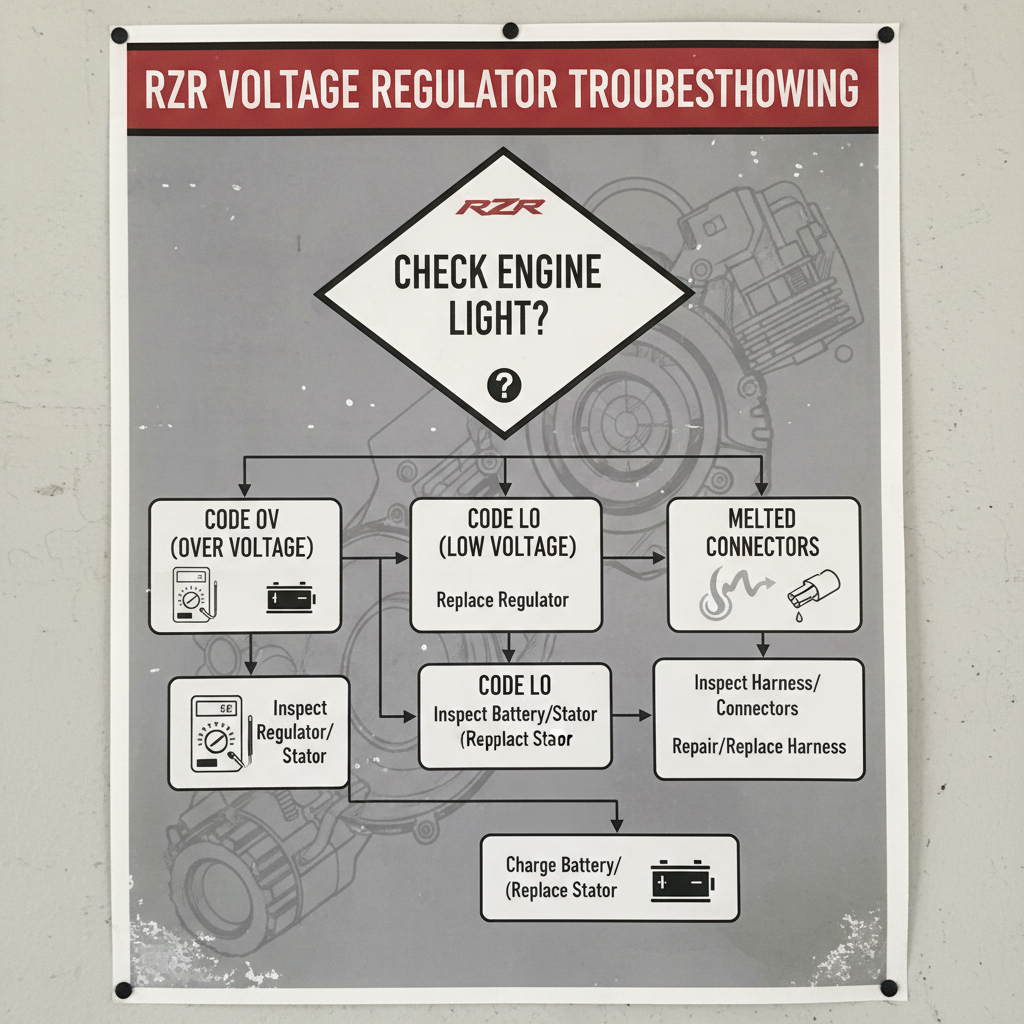
The RZR’s instrument cluster is your first line of defense. If the regulator fails to cap the voltage, you will see an “OV” (Over Voltage) error code displayed, often accompanied by a check engine light. This means the system is pushing more than 16+ volts, which is dangerous for electronics.
Conversely, a “LO” (Low Voltage) code indicates the battery isn’t getting charged, and the machine is running solely on battery reserve. Once the voltage drops below 11.0V, the power steering will shut off to save energy—a dead giveaway that the charging system has failed.
2. Overheating and Melted Plastics
On many RZR 1000 models, the stock voltage regulator is mounted in a location with poor airflow, often behind the driver’s seat or near the rear wheel well where mud accumulates. A failing regulator generates immense heat, often becoming hot enough to melt the plastic electrical connectors or even the body panel it is mounted to.
If you smell burning plastic during a ride, stop immediately and check the VR unit.
https://www.youtube.com/watch?v=voltage-regulator-melt-fix
3. Flickering Lights and Accessories
Erratic voltage delivery often manifests as pulsing headlights or light bars. If the lights dim significantly when the cooling fan kicks on, or if they get brighter as you rev the engine past 4000 RPM, the regulator is struggling to stabilize the current.
“Electronics run on smoke; if you let the smoke out, they stop working.”
Comparing Stock vs. Aftermarket Solutions
The 2026 aftermarket scene has shifted heavily towards MOSFET technology, which runs significantly cooler than the old shunt-style OEM regulators. Here is a breakdown of why an upgrade is usually the best fix.
| Feature | Stock OEM Regulator (Shunt) | Aftermarket MOSFET Upgrade |
|---|---|---|
| Operating Temp | Extremely Hot (180°F+) | Cool / Warm (100°F) |
| Efficiency | Dumps excess energy as heat | Switches off excess energy efficiently |
| Reliability | Prone to thermal shutdown | High durability for accessories |
| Cost | $150 – $200 | $180 – $250 (Worth the investment) |
Diagnostic Steps for the Trail
Before you order parts, you need to confirm the issue isn’t just a loose ground wire. A digital multimeter is the single most valuable tool you can carry in your trail box.
Check out our off-road collection Amazon products
- Step 1: Check Battery Voltage at Rest. A healthy battery should read 12.6V to 12.8V with the engine off. Anything below 12.2V indicates a battery that has been drained or damaged.
- Step 2: Check Voltage at Idle. Start the engine. The voltage should jump to roughly 13.5V – 14.5V. If it stays at 12.6V or drops, the charging system is not outputting power.
- Step 3: The Rev Test. Rev the engine to 3000 RPM. If the voltage spikes above 15V, the regulator has failed “open” and is overcharging the system. This is critical—stop running the engine to prevent ECU damage.
https://www.youtube.com/watch?v=stator-testing-rzr
The Relocation Fix
Even if you buy a new regulator, putting it back in the stock location is a recipe for repeat failure. The mud and heat from the engine block airflow.
Many 2025 updates and forum discussions now recommend a Relocation Kit. This moves the VR unit to the front of the vehicle, under the hood, or higher up on the roll cage where it gets fresh, cool air.
“Heat is the enemy of all electronics. Move it, cool it, or lose it.”
Installing a relocation harness is plug-and-play on most models. It involves routing a new extension harness from the stator plugs near the engine up to the front firewall.
https://www.youtube.com/watch?v=relocation-kit-install
Final Thoughts
While we love our Honda Pioneers for their shaft-drive durability and lack of belt anxiety, helping a Polaris owner fix their rig ensures the whole group gets home for the BBQ. Recognizing the rzr 1000 voltage regulator symptoms early—like that faint burning smell or the flickering dash light—can save thousands of dollars in repairs.
For more deep dives into UTV maintenance, check out the official resources from Polaris or visit the RMSTATOR tech library for wiring diagrams.
🔍 Explore More: See all Wild Testing guides for rzr 1000 voltage regulator symptoms.
Check out our off-road collection Amazon products