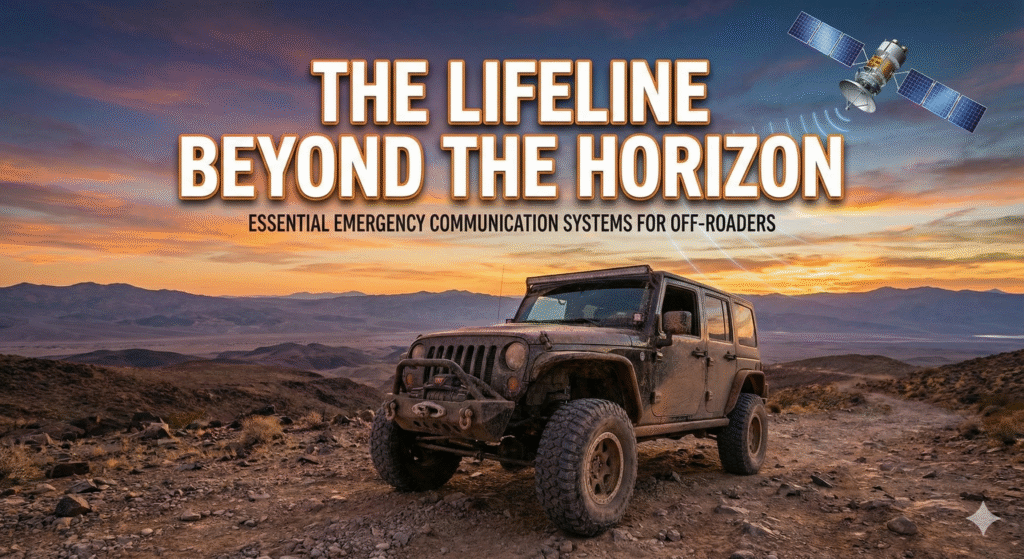



The allure of off-roading is the escape—the ability to leave the paved world and the constant noise of civilization behind. But with that freedom comes a profound responsibility: self-sufficiency. When you are miles from the nearest cell tower, a minor mechanical issue or a medical emergency can quickly escalate into a crisis. In these moments, your ability to call for help rests entirely on your emergency communication systems.
A standard cell phone is simply not an emergency communication system in the backcountry. It is a convenience that fails precisely when you need it most. True off-road preparedness requires a layered approach, combining devices for group communication, long-range contact, and, most critically, a dedicated lifeline to search and rescue (SAR).
I’ve been on rides where a simple broken axle turned into an overnight survival situation because the group relied solely on cell service. This guide will break down the essential categories of off-road communication gear, compare their strengths and weaknesses, and help you build a robust, reliable system that ensures you are never truly alone, no matter how far you venture.
Phase 1: The Last Resort—Dedicated Emergency Devices
These devices are your direct link to emergency services, designed to function globally and independently of terrestrial networks.
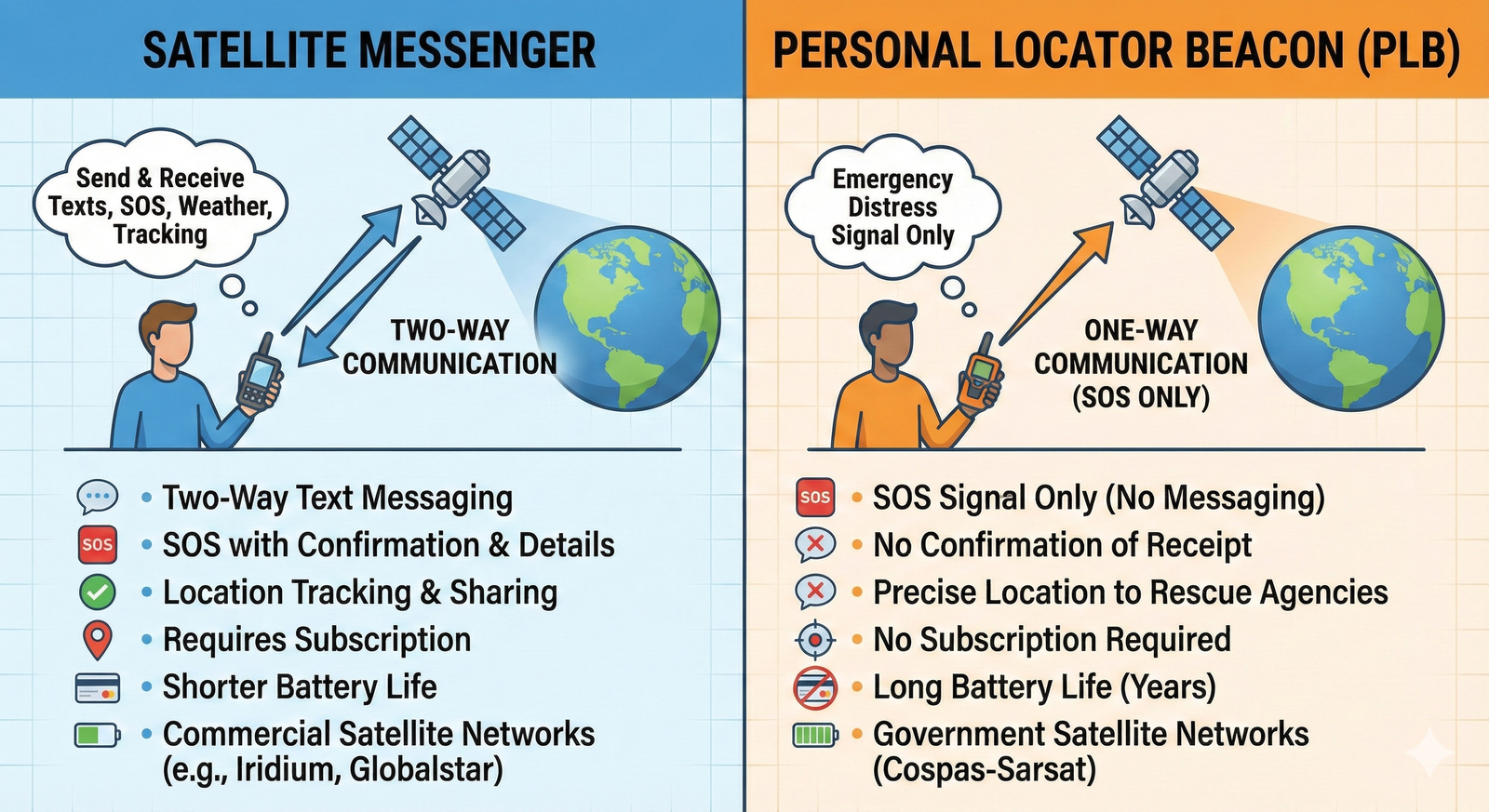
1. Satellite Messengers (Two-Way Lifeline)
Satellite messengers are the most popular choice for serious off-roaders due to their versatility.
- Function: They use commercial satellite networks (like Iridium or Globalstar) to send and receive text messages and, crucially, transmit an SOS signal to a 24/7 emergency response center.
- Key Advantage: The two-way communication allows the user to describe the nature of the emergency and receive confirmation that help is on the way, which is a massive psychological and practical benefit.
- Examples: Garmin inReach, Zoleo.
2. Personal Locator Beacons (PLBs) (One-Way Distress)
PLBs are the ultimate, no-frills, last-resort emergency device.
- Function: PLBs transmit a distress signal on the 406 MHz frequency to the Cospas-Sarsat satellite system, which is monitored by government-funded SAR agencies worldwide.
- Key Advantage: They are highly reliable, often waterproof, and have a long battery life. They are registered to an individual, and once activated, they initiate a full-scale SAR response.
- Key Difference from Messengers: PLBs are one-way only; they cannot send or receive text messages. They are strictly for life-threatening emergencies.
| Device Type | Communication | SOS Response | Subscription Required | Best Use Case |
|---|---|---|---|---|
| Satellite Messenger | Two-way text | Private 24/7 center | Yes (Monthly/Annual) | Communication, tracking, and SOS. |
| PLB | One-way signal | Government SAR | No (Only registration) | Life-threatening, last-resort emergency. |
Phase 2: Group and Convoy Communication Systems
While satellite devices are for emergencies, these systems are essential for day-to-day communication within a group of riders.
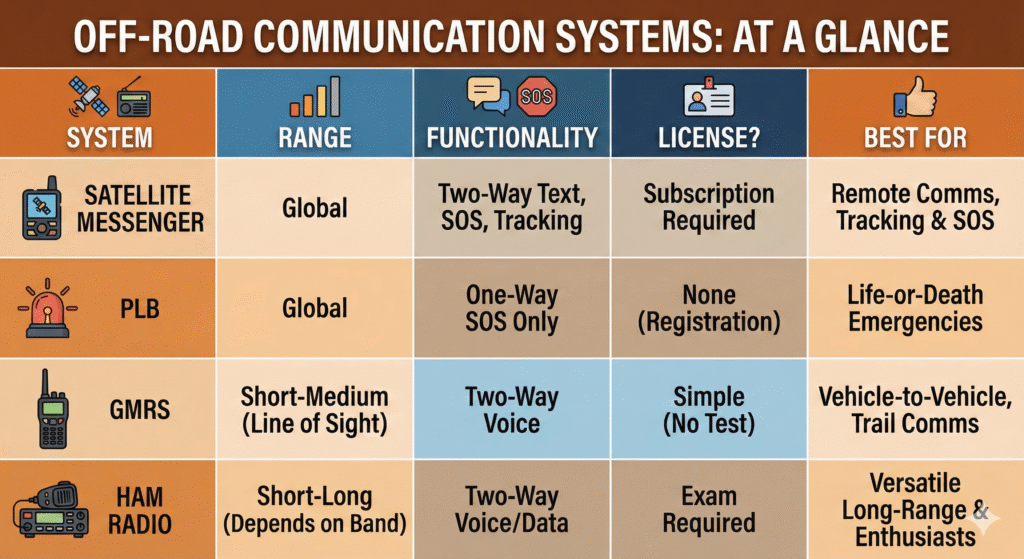
1. GMRS Radios (General Mobile Radio Service)
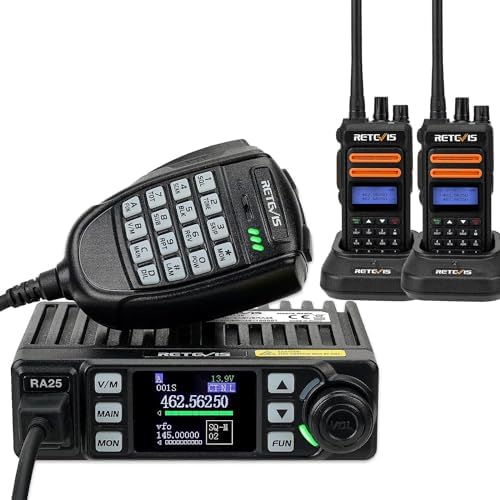
GMRS has become the de facto standard for off-road group communication in North America.
- Function: GMRS operates on UHF frequencies, providing excellent line-of-sight communication. With a proper antenna and repeater access, the range can be significant.
- Licensing: A single, inexpensive license from the FCC covers the entire family for ten years, making it highly accessible.
- Off-Road Integration: UTVs are easily equipped with powerful GMRS mobile units and external antennas mounted on the roll cage for maximum range.
2. Ham Radios (Amateur Radio)
Ham radio offers the longest range and most versatility but requires a greater commitment.
- Function: Ham radios operate on a vast range of frequencies, allowing for local, regional, and even global communication. They are often used by volunteer emergency communication groups.
- Licensing: Requires passing a technical exam to obtain a license (Technician Class is the entry level).
- Key Advantage: In a true disaster scenario, Ham radio operators are often the only ones capable of communicating over long distances.
3. CB Radios (Citizen’s Band)
CB radios are the classic off-road communication tool, still popular for their simplicity and lack of licensing requirements.
- Function: CB operates on 40 channels in the 27 MHz band.
- Key Limitation: The range is very limited (often only a few miles) and is highly susceptible to interference and terrain. They are best for short-range communication with truckers or other nearby vehicles.
Phase 3: Building a Layered Communication Strategy
The most prepared off-roaders use a layered approach, ensuring they have a communication solution for every scenario.
Layer 1: Local (Group) Communication
This is your day-to-day communication for coordinating with your convoy.
- Primary Tool: GMRS or CB Radio.
- Best Practice: Use a dedicated intercom system (often integrated with helmets) to communicate clearly with passengers over engine noise, and use the GMRS/CB to talk to other vehicles.
Layer 2: Regional (Emergency Contact)
This is for reaching help or family when you are out of cell range but the situation is not life-threatening.
- Primary Tool: Satellite Messenger (two-way text).
- Best Practice: Pre-load emergency contacts and check-in messages. Always keep the battery charged and the subscription active.
Layer 3: Global (Life-Threatening SOS)
This is the ultimate, non-negotiable lifeline for a true emergency.
- Primary Tool: Satellite Messenger SOS or PLB.
- Best Practice: Mount the device where it is easily accessible in a crash. Ensure all riders know how to activate the SOS function.
Conclusion: Your Communication is Your Safety Net
Investing in emergency communication systems is an investment in your safety and the safety of your entire group. The days of hoping for a single bar of cell service are over. By understanding the differences between satellite, GMRS, and Ham radio, you can build a robust, multi-layered system that provides a lifeline beyond the horizon.
Don’t let a remote location turn a manageable problem into a tragedy. Equip your UTV with the right gear, know how to use it, and ride with the confidence that comes from being truly prepared.
Stay connected, stay safe, and explore further.
References
[1] Side By Side Fury – Choosing The Best Communication Systems For Off-Roading
[2] Trail4Runner – Top 7 Emergency Communication Devices for Overlanding
[3] ACR Artex – PLBs and Satellite Messaging Devices: A Primer
[4] MotorTrend – GMRS Radio: The Best Way to Communicate Off-Road in North America
[5] REI – How to Choose Between a PLB and a Satellite Messenger