



The modern ATV engine is a marvel of engineering, capable of producing immense power in a compact, rugged package. 🚀
However, pushing these machines to their limits—whether through aggressive trail riding, deep mudding, or heavy utility work—generates tremendous heat. 🔥
In the world of off-roading, heat is the silent killer of performance and engine longevity. 💀
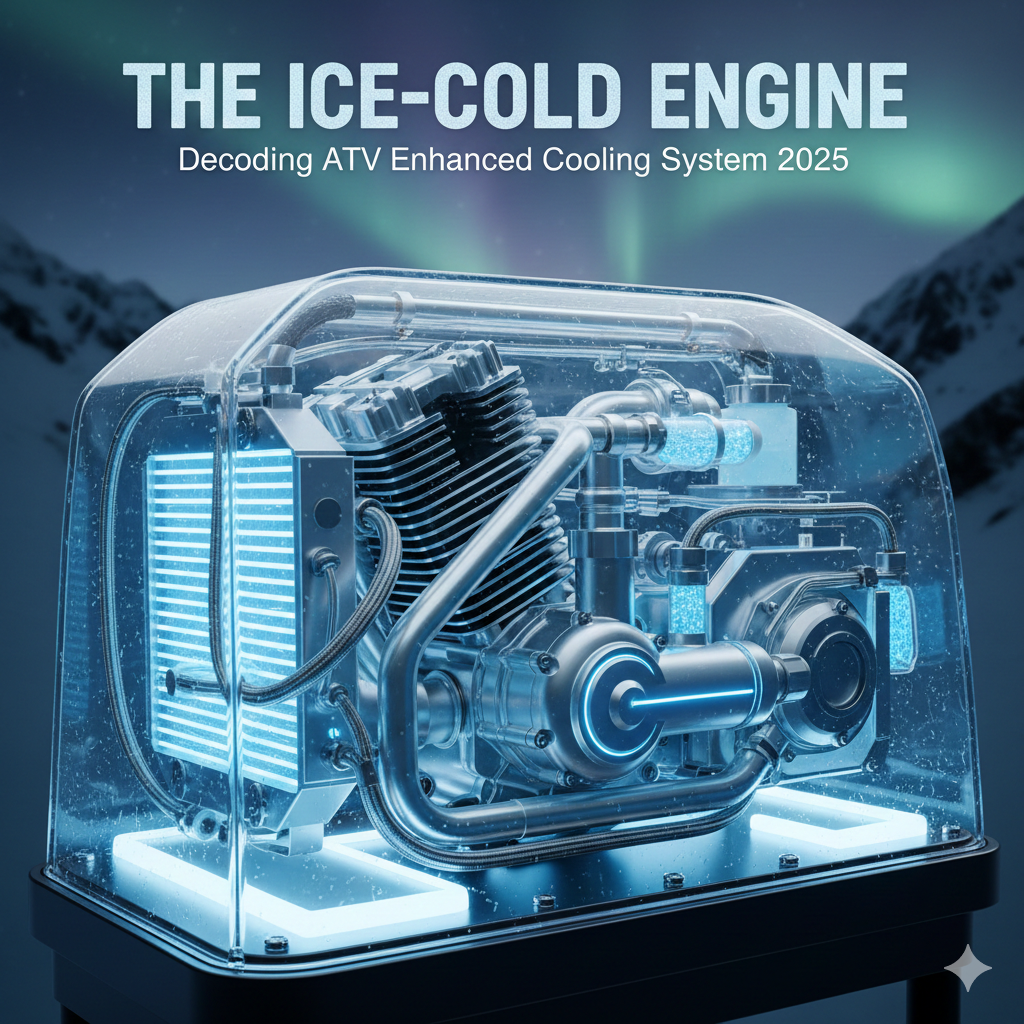
The ATV Enhanced Cooling System 2025 represents a critical evolution in thermal management, moving beyond basic stock components to a fully integrated, high-performance solution. 💡
This is not just about preventing a boil-over; it is about maintaining the optimal operating temperature for peak horsepower and long-term engine health. 💯
This comprehensive guide will break down the four pillars of modern ATV cooling: high-flow radiators, advanced water pumps, performance coolant additives, and intelligent fan control. 🤓
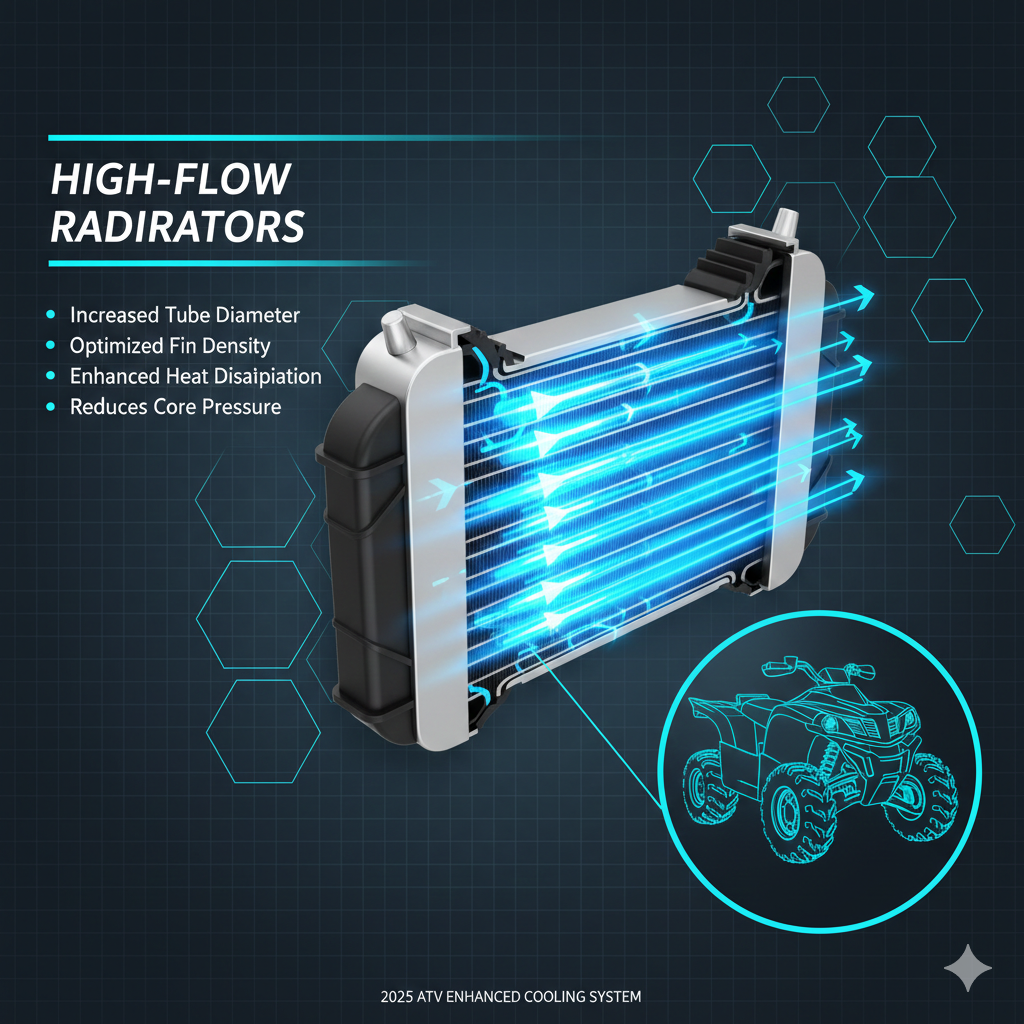
Pillar 1: The High-Flow Radiator Revolution
The radiator is the primary heat exchanger, and its efficiency is paramount to the entire cooling system. 🌬️
For 2025, enhanced radiator designs focus on maximizing surface area and improving coolant flow dynamics. 📈
Design and Material Upgrades
High-performance radiators typically feature a larger core volume and a more efficient fin design than their stock counterparts. 📐
They are often constructed from high-grade aluminum, which offers superior heat dissipation compared to older materials. 💎
The key is the number of cooling tubes and the density of the fins, which directly impacts the radiator’s ability to transfer heat from the coolant to the ambient air. 💨
Example –
“An engine is only as powerful as its cooling system allows it to be.”
The Radiator Relocation Solution
For riders who frequently tackle deep mud or water, the radiator’s location is a major vulnerability. 💧
Mud and debris can quickly clog the fins, drastically reducing cooling efficiency and leading to overheating. 🥵
Radiator relocation kits, which move the radiator from the front of the ATV to a position on the front rack or hood, are a popular and effective solution for extreme applications. 🛠️
This modification ensures the radiator receives clean, unobstructed airflow, even when the rest of the machine is submerged. Why You Should Upgrade to a Radiator Relocation Kit is a must-read for mud enthusiasts. 📌
Pillar 2: High-Flow Water Pumps – The Heart of the System
The water pump is responsible for circulating the coolant through the engine and radiator. ❤️
A high-flow water pump ensures that hot coolant is moved away from the engine’s critical components faster, maximizing the radiator’s heat exchange time. ⏱️
Mechanical vs. Electric Water Pumps
The debate between mechanical and electric water pumps is a key discussion in **ATV Enhanced Cooling System 2025** design. 🧐
| Pump Type | Key Benefit | Performance Trade-off |
|---|---|---|
| Mechanical (High-Flow) | Reliable, simple design; flows better at high RPM. | Flow rate is tied to engine RPM; less effective at idle/low speed. |
| Electric (EWP) | Constant, high flow rate regardless of engine RPM; can run after engine shutdown. | Adds electrical complexity; requires a controller; higher initial cost. |
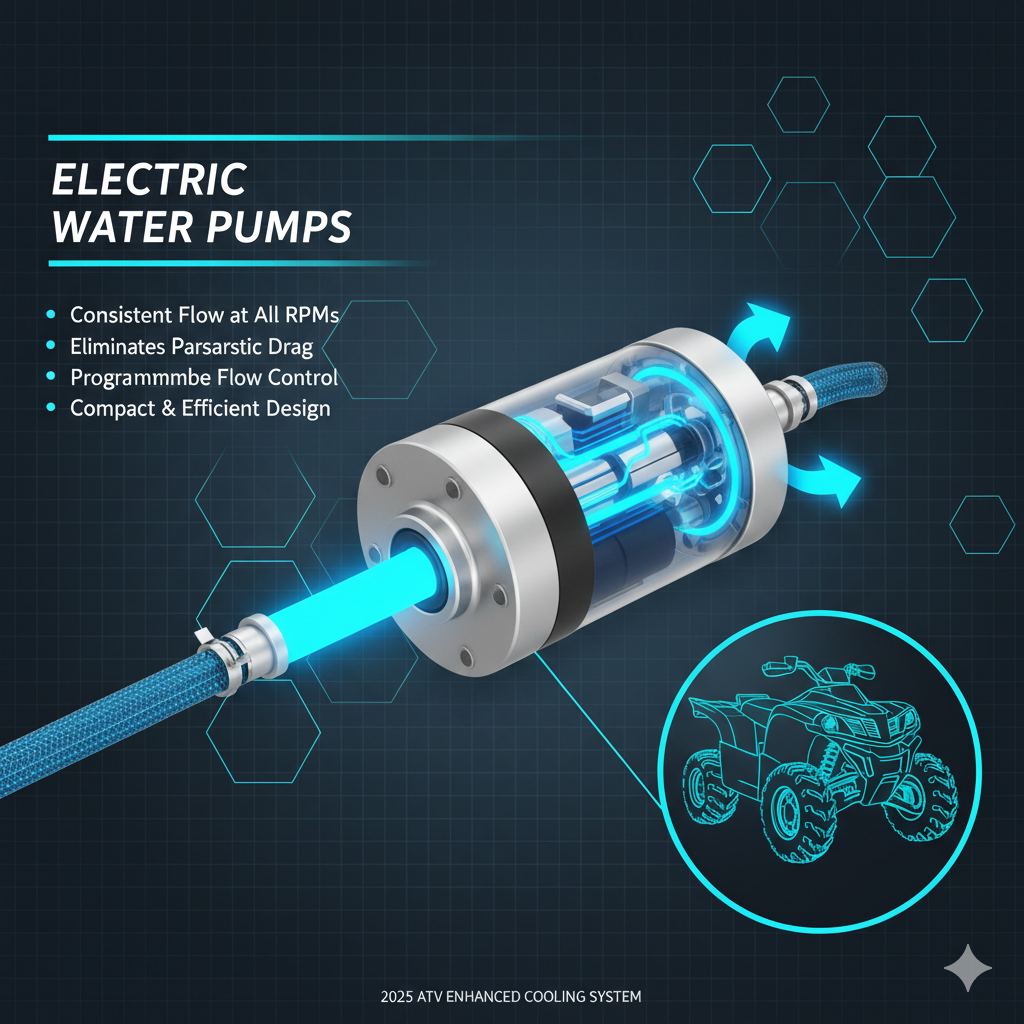
Electric water pumps (EWPs) are gaining popularity because they can maintain a high flow rate even at idle or low-speed crawling, where mechanical pumps are at their weakest. This constant flow is crucial for preventing hot spots during technical, low-speed riding. ⛰️
Pillar 3: Coolant Additives – The Chemical Edge
The fluid itself is a critical component of the cooling system, and modern additives are engineered to enhance its thermal properties. 🧪
Beyond the traditional 50/50 mix of water and glycol, performance coolant additives play a vital role. 💧
Wetter Water and Heat Transfer
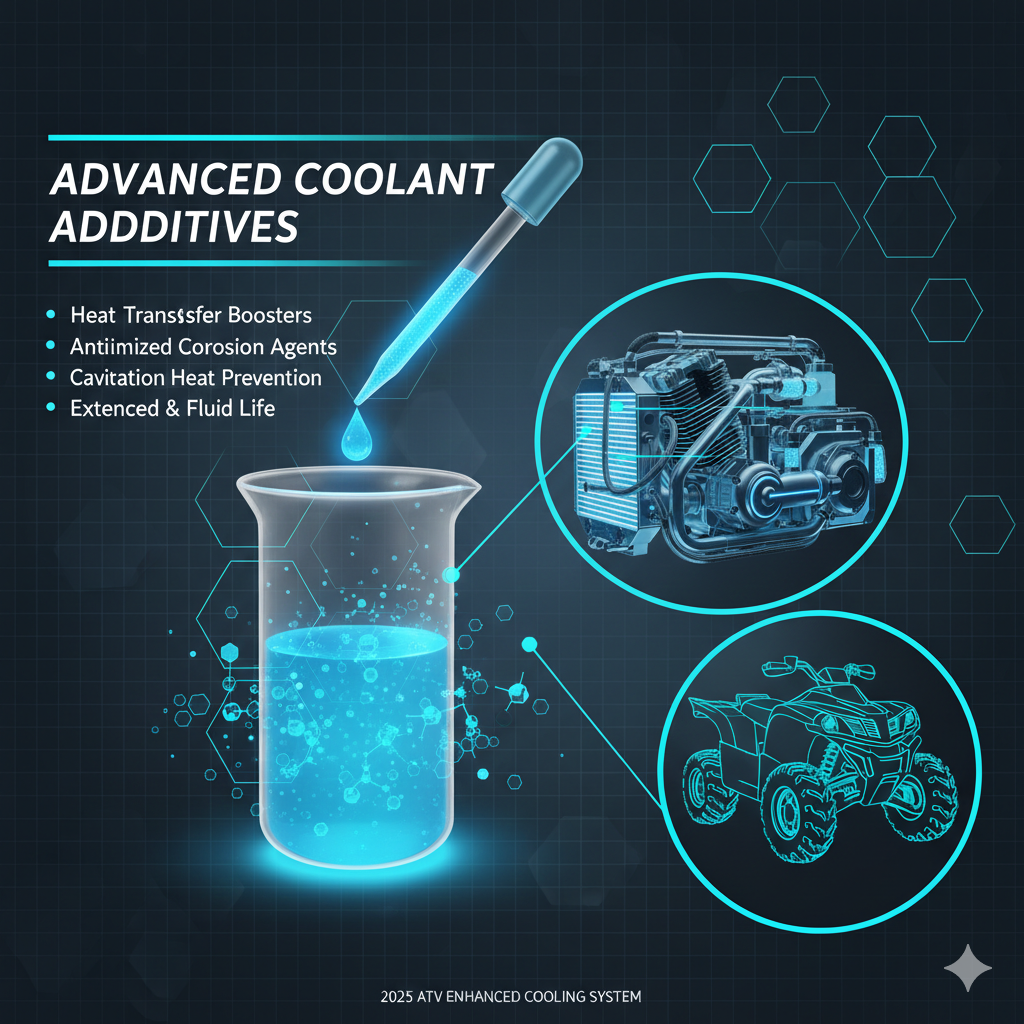
Coolant additives, often called “water wetter” or “super coolants,” contain surfactants that reduce the surface tension of the coolant. 💦
This allows the fluid to make better contact with the metal surfaces inside the engine, eliminating microscopic steam bubbles that act as insulators. ♨️
By improving the heat transfer efficiency, these additives can lower engine temperatures by up to 20°F, a significant margin in extreme conditions. Red Line Oil’s SuperCool Extreme is an example of this technology. 🌡️
Example –
“Coolant is the lifeblood of your engine; treat it with the respect it deserves.”
Corrosion Protection
High-performance coolants also contain advanced anti-corrosion agents, such as silicates and carboxylates, which protect the aluminum and other metal components from degradation. 🛡️
This is especially important in powersports, where the engine is frequently exposed to moisture and extreme temperature cycles. Engine Ice Hi-Performance Coolant is a popular pre-mixed solution designed specifically for the demands of UTVs and ATVs. 🧊
Pillar 4: Intelligent Fan Control
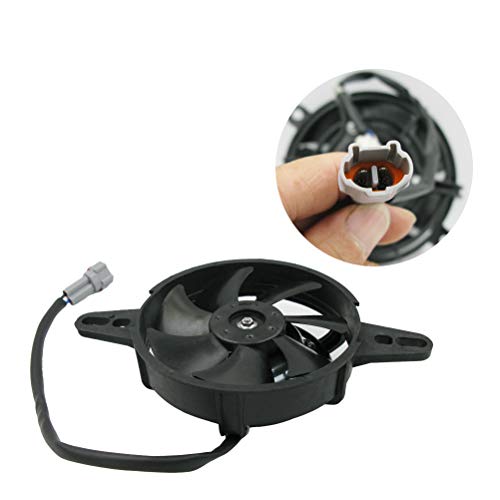
The electric cooling fan is the final line of defense against overheating, particularly when the ATV is moving slowly or idling. 🚦
Enhanced cooling systems utilize intelligent fan control to optimize its operation. 🧠
Electronic Fan Controllers
Aftermarket fan controllers replace the stock thermal switch with a digital unit that allows the rider or mechanic to precisely set the fan’s activation temperature. 🌡️
This allows the fan to kick on earlier, preventing the engine temperature from spiking into the danger zone. 🚨
Some advanced controllers can even vary the fan speed based on the temperature, providing a more gradual and efficient cooling process. 🌀
The Synergy of an Enhanced System
The true power of the ATV Enhanced Cooling System 2025 is realized when all four pillars work in harmony. 🤝
A high-flow pump pushes chemically enhanced coolant through a high-surface-area radiator, while an intelligent fan ensures optimal airflow, all to maintain a consistent, low operating temperature. 🌡️
This synergy results in: consistent engine performance, reduced risk of head gasket failure, and extended component life. 💯
For the serious off-roader, upgrading the cooling system is not an option; it is a necessity for reliability and performance. 🛠️
Ignoring the cooling system is like trying to run a marathon without water—eventually, you will break down. 🏃
Invest in an enhanced cooling system, and your ATV will reward you with years of reliable, peak performance on the toughest trails. UTV Cooling Solutions are widely available for all major models. 🛒
Summary of Enhanced Cooling Components
The table below summarizes the key components and their primary function in the **ATV Enhanced Cooling System 2025**. 📌
| Component | Primary Function | Benefit to Performance |
|---|---|---|
| High-Flow Radiator | Maximize heat transfer surface area. | Rapidly drops coolant temperature. |
| High-Flow Water Pump | Increase coolant circulation rate. | Prevents engine hot spots, especially at low RPM. |
| Coolant Additives | Reduce surface tension of the fluid. | Improves heat transfer efficiency by up to 20°F. |
| Radiator Relocation Kit | Moves radiator to a clean, high-airflow location. | Eliminates overheating in mud and debris. |
The investment in an enhanced cooling system is an investment in the life and performance of your ATV. Don’t let heat be the limiting factor in your next adventure. 🏞️
References and Further Reading
For those who wish to delve deeper into the technical aspects of ATV cooling, the following resources are highly recommended. 📚
- How to Change the Coolant in a 2025 Polaris Sportsman … – MotoSport.
- AMSOIL DOMINATOR® Coolant Boost Helps Vehicles … – AMSOIL Blog.
- What is the difference between electric and mechanical … – Idolz.
- Should You Relocate Your Radiator On Your ATV? Is It … – Mud Bandit.
- The Definitive Guide Motorcycle Coolant Systems And … – Valvoline Global.
Stay cool, ride hard, and keep the engine in its sweet spot! 🥳