🔥 WELCOME
When it comes to tire beads vs wheel weights utv, getting the right details matters. It starts as a subtle vibration in the steering wheel at 35 MPH. By 50 MPH, your coffee is splashing out of the cup holder, and your Honda Pioneer feels like it’s about to rattle its own bolts loose. Welcome to the “UTV Death Wobble.”
For years, the debate has raged in off-road forums: do you stick with traditional lead weights, or do you pour a bag of magic beads inside your tires? As we roll through 2026, the technology behind balancing has evolved, and the answer isn’t as simple as it used to be.
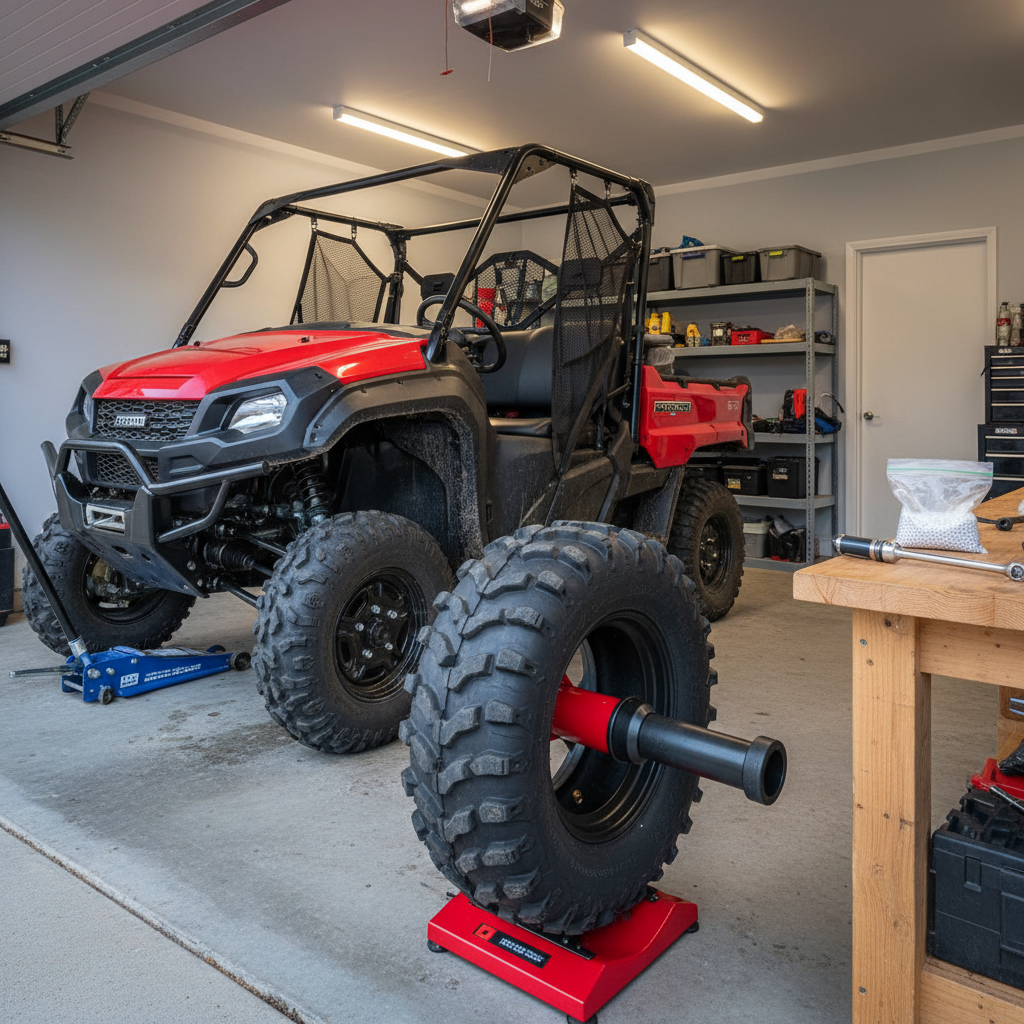
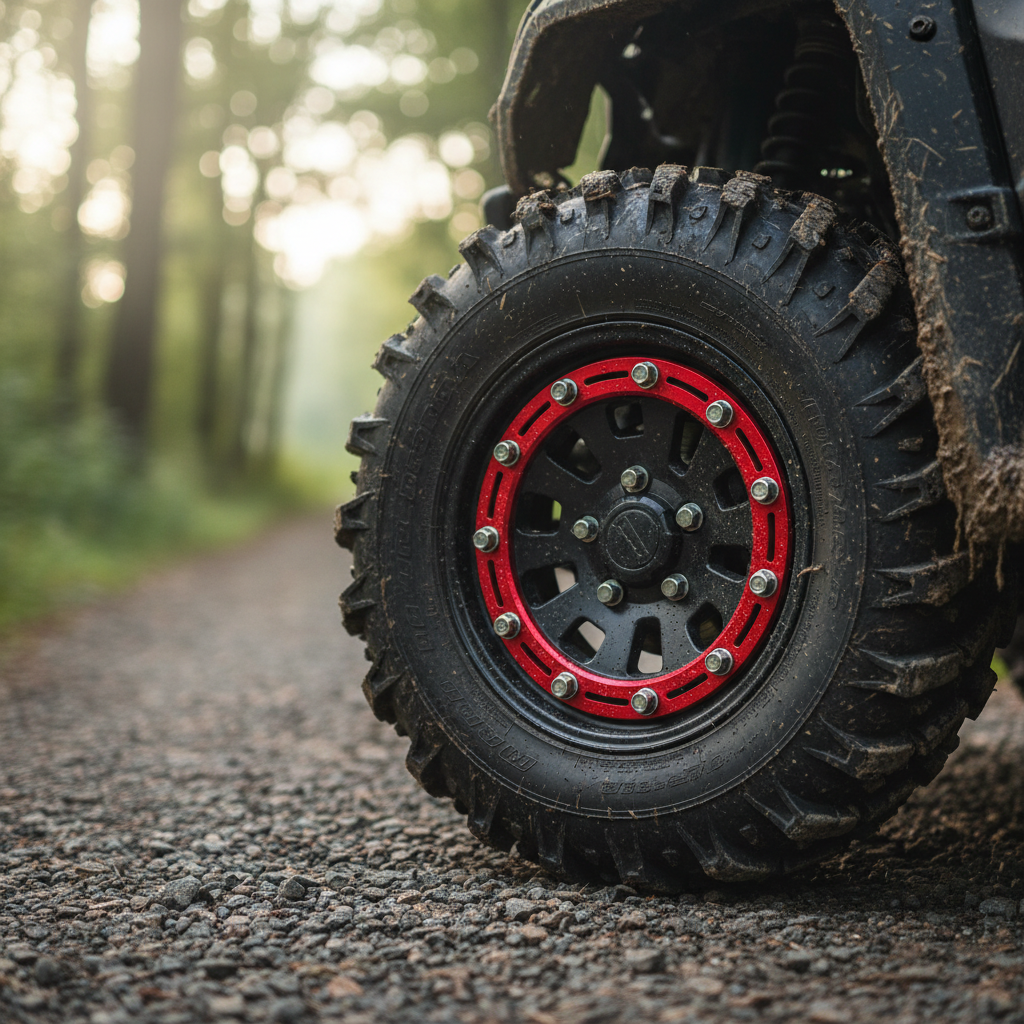
Whether you are rocking 32-inch mud terrains on a Pioneer 1000-6 or stock rubber on a 700, balancing is the difference between a smooth cruise and a suspension-destroying nightmare. Today, we are settling the score on tire beads vs wheel weights utv setups once and for all.
The Physics of the Shake: Why UTVs Are Different
Before we pick a winner, we have to understand the battlefield. Unlike your daily driver (Civic or CR-V), your Honda Pioneer operates in a hostile environment. Mud, rocks, and sand are constantly altering the weight distribution of your wheels.
Here is the kicker: A balanced wheel in the garage is rarely balanced on the trail.
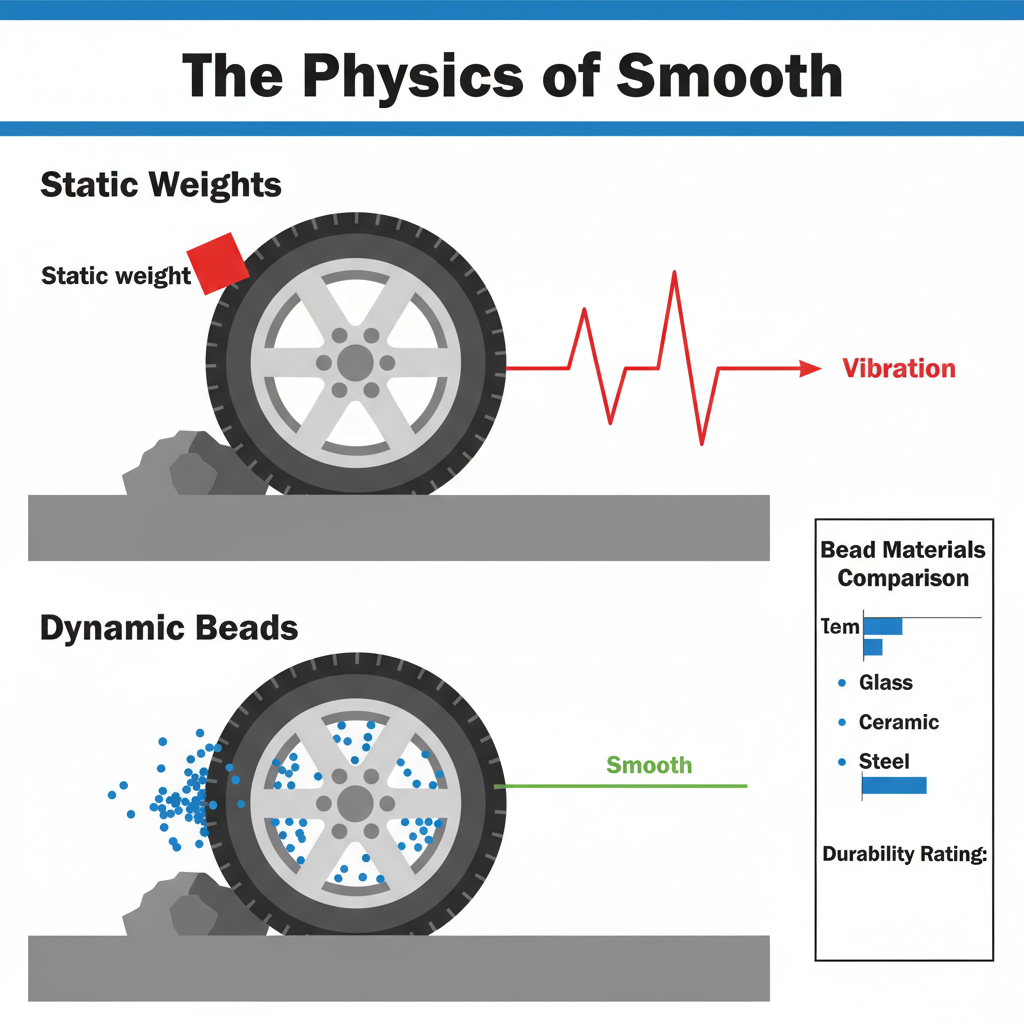
If you hit a mud hole and pack 4 ounces of clay into your inner rim, a static wheel weight cannot adjust for that. It just sits there, while your wheel is now 4 ounces heavier on one side. This is where the fundamental difference between static (weights) and dynamic (beads) balancing becomes critical.
Wheel Weights: The Traditional “Road Force” Approach
Wheel weights have been the industry standard since the Model T. A shop spins your tire on a machine, identifies the light spot, and sticks a lead or zinc square on the opposite side to even it out. In 2026, “Road Force” balancing has made this incredibly precise, simulating the weight of the vehicle on the tire during the spin.
The Pros:
Check out our off-road collection Amazon products
- Precision on Pavement: For high-speed runs on tarmac, nothing beats a perfectly placed static weight. It provides immediate stability from 0 to 65 MPH.
- Cost: If you do it yourself, a box of stick-on weights costs less than lunch.
- No Internal Friction: There is nothing rolling around inside your tire to potentially clog a valve core.
The Cons:
- The “Trail Tax”: Sticky weights hate mud, water, and pressure washing. It is common to rip them off when scraping against a rock or deep rut.
- Aesthetics: If you spent $1,500 on custom beadlocks, do you really want ugly silver squares glued to the barrel?
- Static Limitation: As your tire wears down or lugs get torn off, the balance changes. The weight stays the same, meaning your tire slowly goes out of balance over time.
“I used to run weights until I lost three of them on a single trip to Windrock. Now I need something that can take a beating.” — Forum User ‘PioneerCrawler26’
Tire Beads: The Dynamic 2026 Solution
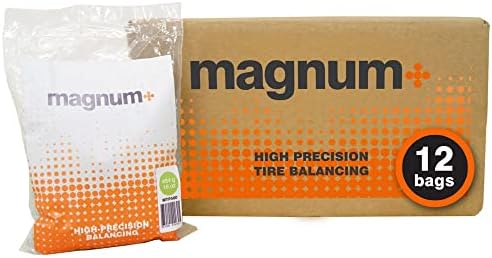
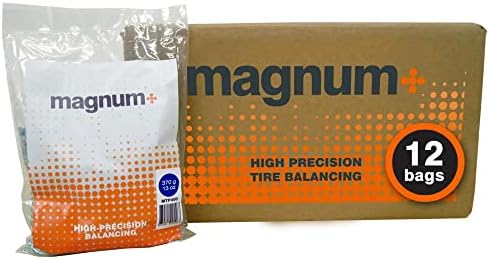
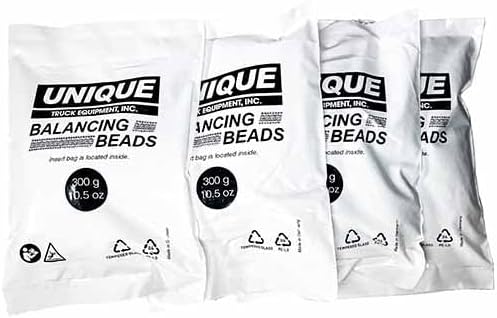
Enter the challenger. Balancing beads are tiny spheres (made of tempered glass, ceramic, or steel) that you pour inside the tire. As the wheel spins, centrifugal force pushes the beads outward. If the tire has a heavy spot, the suspension vibrates up and down; the beads naturally migrate away from the heavy spot to counteract it.
Think of it as an active suspension system for your rubber.
In 2025, we saw a shift from cheap glass beads (which used to turn to powder) to high-density ceramic compounds that resist moisture clumping—a massive upgrade for UTVs that see water crossings.
The Pros:
- Lifetime Balance: As your tread wears or you chip a lug, the beads reposition themselves every time you drive. You are balanced at mile 1 and mile 5,000.
- Mud Correction: If you pick up mud on the rim, the beads will shift to the opposite side to help cancel out the vibration (to a limit).
- Invisible: No ugly weights on your rims.
The Cons:
- The Low-Speed Wobble: Physics takes time to work. Beads usually don’t “activate” fully until about 25-30 MPH. You might feel a slight shimmy pulling out of the driveway.
- Moisture is the Enemy: If your air compressor pumps water into the tire, or you don’t seat the bead properly, the beads can clump into a “wet sand” ball, causing massive vibration.
https://www.youtube.com/watch?v=JmYqW_x7ZtE
Head-to-Head Comparison Table
| Feature | Adhesive Weights | Ceramic Tire Beads |
|---|---|---|
| Installation Difficulty | High (Needs machine/spinner) | Low (Pour in valve stem) |
| Durability (Off-Road) | Low (Can be scraped off) | High (Protected inside tire) |
| Low Speed Smoothness | Excellent (0-30 MPH) | Fair (Needs speed to work) |
| Adaptability | None (Static) | Dynamic (Adjusts to wear) |
| Cost (DIY) | $10 – $20 | $30 – $50 |
The Hybrid Strategy: Best of Both Worlds?
Here is a secret that many pro shops are using in 2026: The Hybrid Method.
Some enthusiasts perform a rough static balance using weights to get the tire “close,” and then add a half-dose of beads to handle the fine-tuning and dynamic changes. This gives you the smooth low-speed roll of weights with the high-speed adaptability of beads.
If you run massive 35-inch tires on your Pioneer, beads are almost mandatory because these tires often have manufacturing imbalances that require too much lead weight to correct externally.
Check out our off-road collection Amazon products
Installation Guide: Don’t Mess This Up
If you choose beads, do not just dump them in and hope for the best. Follow these rules:
- Dry Air Only: Use an inline moisture filter on your compressor when seating the bead. Moisture causes beads to clump.
- Remove the Valve Core: Most kits come with a bottle and tube. You must remove the valve core to pour them in.
- Valve Stem Position: Rotate the wheel so the valve stem is at the 6 o’clock position (bottom). This helps the beads fall in without fighting gravity.
- Filtered Valves: Buy “filtered” valve cores. Standard cores can get jammed if a bead gets stuck in the mechanism, causing a slow leak.
https://www.youtube.com/watch?v=pMvbK07u12c
Final Verdict: Which One for Your Pioneer?
Choose Wheel Weights If: You primarily drive your Pioneer on pavement or hard-packed dirt roads, you stay under 40 MPH, or you are running stock-sized tires (27-28 inch).
Choose Tire Beads If: You ride in mud, rocks, and aggressive terrain where weights might get ripped off. You run oversized tires (30-inch+), or you want a “set it and forget it” solution that balances the tire for its entire lifespan.
For the majority of Honda Pioneer owners who actually use their machine for work and play, high-quality ceramic beads have proven to be the superior choice in 2026.
https://www.youtube.com/watch?v=HuWJHI8ZXXk
“Balance isn’t just about comfort; it’s about saving your wheel bearings and suspension bushings from early retirement.”
Ready to upgrade your ride? Check out our other guides linked below to keep your Honda Pioneer running better than factory.
Official Honda Pioneer Lineup |
SuperATV Parts & Accessories |
HondaSXS Owner Community |
Rocky Mountain ATV/MC Tire Finder |
Counteract Balancing Beads Info
🔍 Explore More: See all Wild Testing guides for tire beads vs wheel weights utv.
Check out our off-road collection Amazon products

- Quality – Professional level of fit, form and function, meeting and/or exceeding all manufacturing wheel weight toleranc…
- Resistance to Corrosion – Silver dacromet coating provides premium corrosion resistance
- Adhesive Tape -Easy peel tape backing means no fumbling when peeling off the tape, with excellent holding strength, in a…
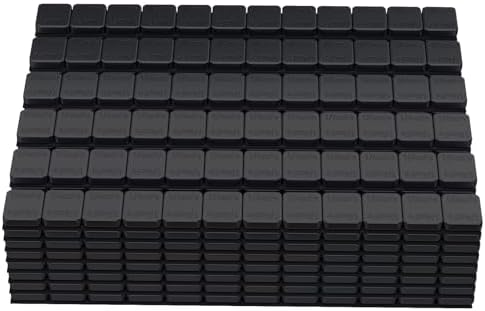
- Specification: 1 segment: 1/4 oz 1 strip=12 segments 1 box=48 strips=576segments=144oz in total
- Anti-Corrosion: The tire weights’ surface layer applys a electrogalvanization and a multilayer and omnidirectional plast…
- High Performance: Weights of the products are precise and flexible and strong adhesive makes products firmly adhered to …

- Superior Quality – High-quality material is guaranteed; close tolerances ensure the weight of the products is accurate.
- Anti-Corrosion – The surface layer of the wheel weights is first electrogalvanized, then a multilayer and omnidirectiona…
- Eco-Friendly – The material of the products is lead-free and suitable for all 50 states.