

The Hidden Dangers in Your Roll Cage Material
When you are tearing through the trails in your Honda Pioneer, the last thing on your mind should be the structural integrity of the steel cage surrounding you.
However, for off-road enthusiasts who decide to fabricate their own cages or upgrade to aftermarket kits, the choice of material is literally a life-or-death decision.
The debate of welding roll cage dom vs hrew has raged on forums for a decade, but as we move into late 2025 and 2026, the industry standards have shifted dramatically toward higher safety protocols.
Understanding the metallurgy and manufacturing processes behind these tubes isn’t just for engineers; it is essential knowledge for anyone holding a welding torch.
“You can buy a new chassis, but you cannot buy a new spine. Don’t cheap out on safety.”
In this guide, we will break down the real-time data regarding steel strength, welding compatibility, and why the “cheaper” option might cost you everything.
https://www.youtube.com/watch?v=IcF_uFuoV2Y
DOM vs. HREW: The Technical Breakdown
To the untrained eye, a stick of HREW and a stick of DOM look remarkably similar, but their internal structures are worlds apart.
HREW (Hot Rolled Electric Welded) tubing begins as a flat strip of heated steel that is rolled into a tube and welded down the seam.
This process leaves a physical ridge or “flash” on the inside of the tube, creating a stress riser that can be a weak point during bending or impact.
Because HREW is hot-rolled, its dimensional tolerances are looser, meaning the wall thickness can vary slightly throughout the length of the tube.
Check out our off-road collection Amazon products
DOM (Drawn Over Mandrel) technically starts as HREW, but it undergoes a rigorous secondary process where it is cold-drawn through a die and over a mandrel.
This cold-working process removes the internal weld flash, making the tube seamless to the eye, and significantly aligns the grain structure of the steel.
The drawing process work-hardens the steel, increasing its tensile and yield strength by a substantial margin compared to its original hot-rolled state.
| Feature | HREW (Hot Rolled) | DOM (Drawn Over Mandrel) |
|---|---|---|
| Yield Strength | ~45,000 PSI | ~72,000 PSI |
| Internal Finish | Visible Weld Seam | Smooth / Seamless |
| Consistency | Variable Wall Thickness | Precise Tolerances |
| Cost (2025 Avg) | $3.50 – $5.00 / ft | $9.00 – $12.00 / ft |
Welding Considerations for the DIY Fabricator
When you are welding roll cage dom vs hrew, the preparation and technique must be flawless to ensure the welds don’t become the failure point.
For HREW, the presence of the scale (from the hot rolling process) means you must spend extra time grinding and cleaning the weld zones to prevent porosity.
DOM usually arrives with a cleaner finish, but the higher carbon content (often 1020 or 1026 steel) requires careful heat management.
While MIG welding is perfectly acceptable for both materials in recreational applications, TIG welding is preferred for DOM cages to minimize the heat-affected zone (HAZ).
If you are using a MIG welder, ensure you are using ER70S-6 wire and C25 gas to get adequate penetration without burning through the tubing.
https://www.youtube.com/watch?v=S37FhH8C33Y
Key Welding Tips for 2026
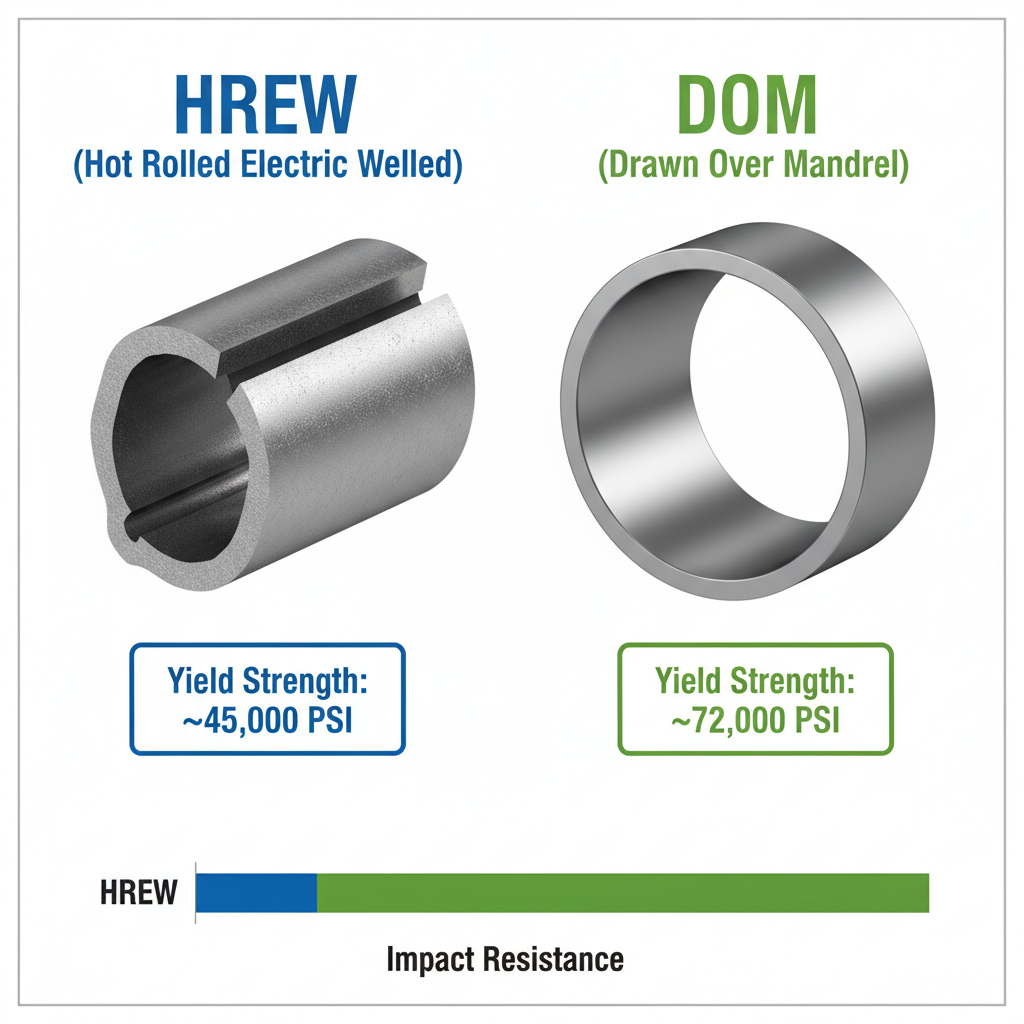
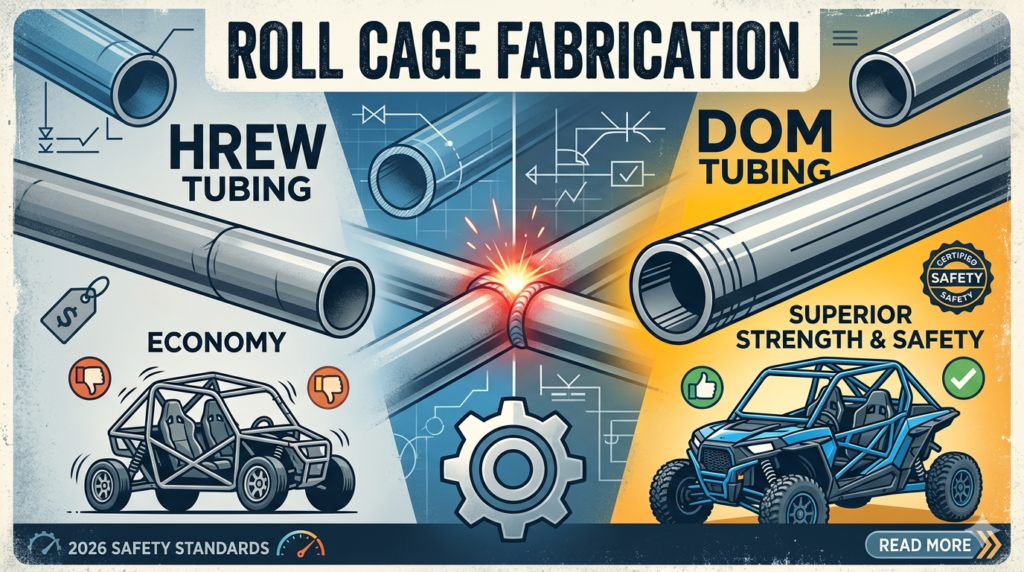
Infographic: Roll Cage Fabrication: The Truth About Steel Tubing Safety & Strength
- Always notch your tubes tight; gaps larger than the thickness of the filler wire will significantly weaken the joint structure.
- If you are welding HREW, position the internal seam inwards toward the center of the cage loop to avoid splitting on the outside radius of a bend.
- Pre-heating is generally not required for mild steel DOM, but ensure your workshop temperature is above 50°F to prevent thermal shock.
- Invest in a quality digital angle finder to ensure your bends are symmetrical, as pre-loading a welded cage can lead to stress cracks over time.
- Inspect every weld for “undercut,” which is a groove melted into the base metal near the weld toe, a common cause of fatigue failure.
Safety Standards and Future Proofing
The regulatory landscape for UTV and off-road racing is tightening significantly as vehicles like the Honda Pioneer get faster and more capable.
In 2025, organizations like SCORE and BITD (Best In The Desert) have reinforced rules that strictly prohibit HREW for vehicles exceeding certain weight or speed classes.
Even if you are just a recreational trail rider, these racing standards act as a litmus test for what is considered “safe” in a rollover.
Market analysis from 2024 indicates that the resale value of a Pioneer with a certified DOM cage is roughly 15% higher than one with a standard HREW setup.
If you plan to sell your rig in the future, a buyer who knows their stuff will walk away if they see the characteristic seam of HREW on a “custom” cage.
“Safety isn’t expensive, it’s priceless. A roll cage is the one part you hope to never use, but it must work perfectly once.”
https://www.youtube.com/watch?v=HuWuv4tTEwk
Is the Cost Difference Worth It?
The elephant in the room is always the price tag, with DOM costing nearly double that of HREW in the current steel market.
Check out our off-road collection Amazon products
For a standard 4-seat Honda Pioneer cage, you might use approximately 60 to 80 feet of tubing.
Calculated out, the material cost difference might be around $400 to $600 total for the entire project.
When you compare that $600 to the cost of the vehicle—or more importantly, the cost of medical bills—the argument for HREW evaporates.
Additionally, because DOM is dimensionally perfect, it is easier to mandrel bend without kinking or wrinkling, saving you money on wasted material.
We highly recommend sticking to DOM 1.75″ x .120″ wall thickness for the main hoop and A-pillars of any Honda Pioneer build.
For cross-bracing or intrusion bars that are not structural roll-over protection, you could technically use thinner wall DOM, but mixing materials is rarely worth the hassle.
Check out these resources for more technical specs and fabrication guides:
Lincoln Electric Welding Projects
Best In The Desert Regulations
🔍 Explore More: See all Wild Testing guides for welding roll cage dom vs hrew.
Check out our off-road collection Amazon products

- Premier Construction: The tube notcher kit fabricated from high-quality iron and stainless steel, our pipe and tube notc…
- Versatile Angle Settings: The pipe & tube notcher designed for flexibility, it facilitates round cuts on pipes and tubes…
- Portable Design: The tubing notcher weighing merely 21.16 pounds, this notcher is effortlessly portable, allowing you to…
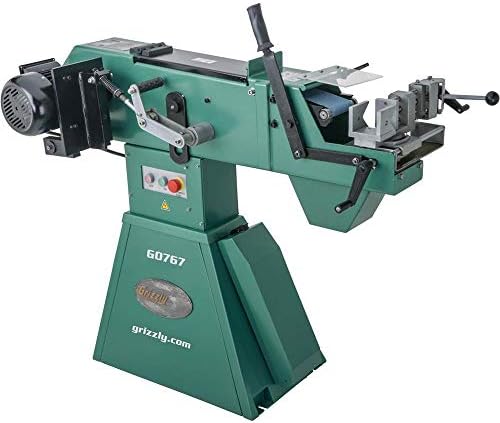
- Motor: 3 HP, 220V, single-phase, 14.8A
- Quick-release belt system
- Quick-release tube vise

- Soft touch, non slip handle insert.
- Unique one-hand operation latch.
- Ergonomically contoured handles.