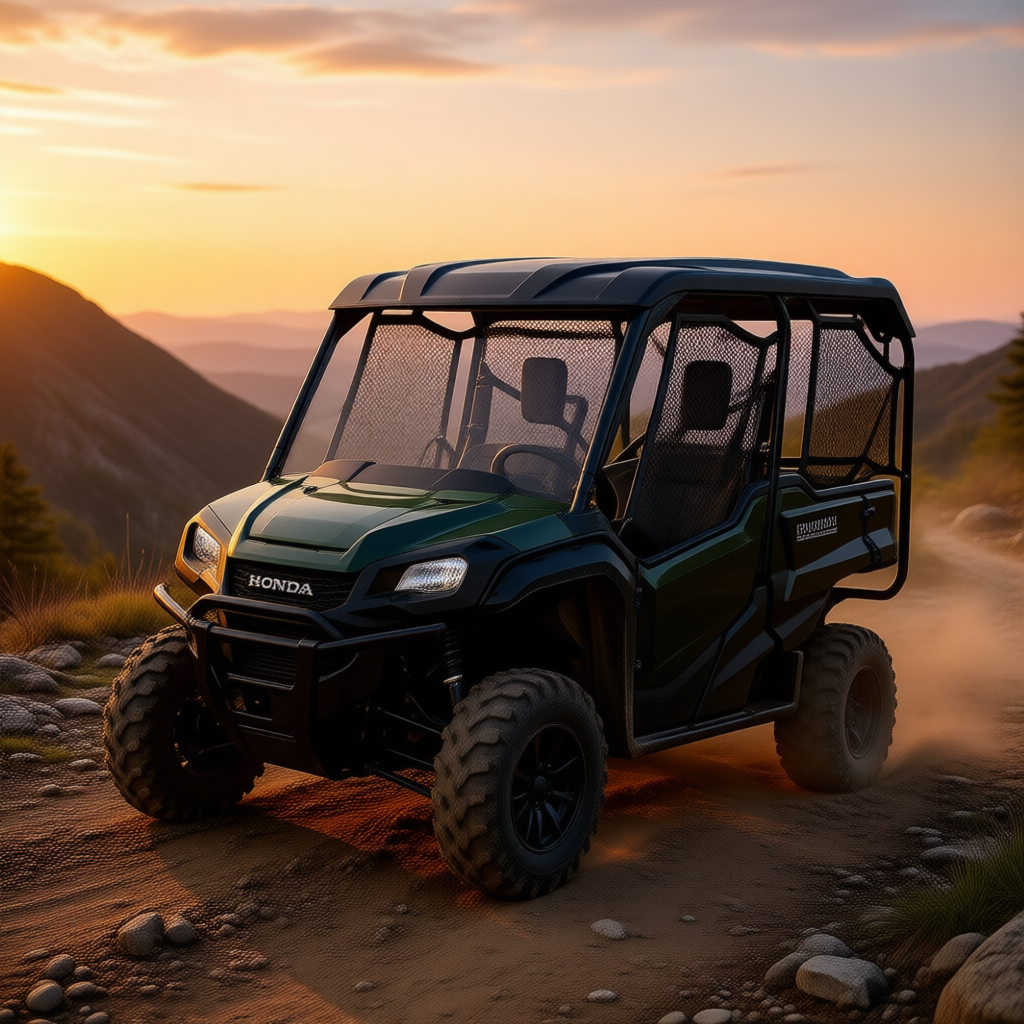




When it comes to Helinox Chair One vs Tusk camp chair space saving comparison for SxS, getting the right details matters. Helinox Chair One (2026 Tactical Edition)
Tusk Camp Chair (Baseline Comparison Model)
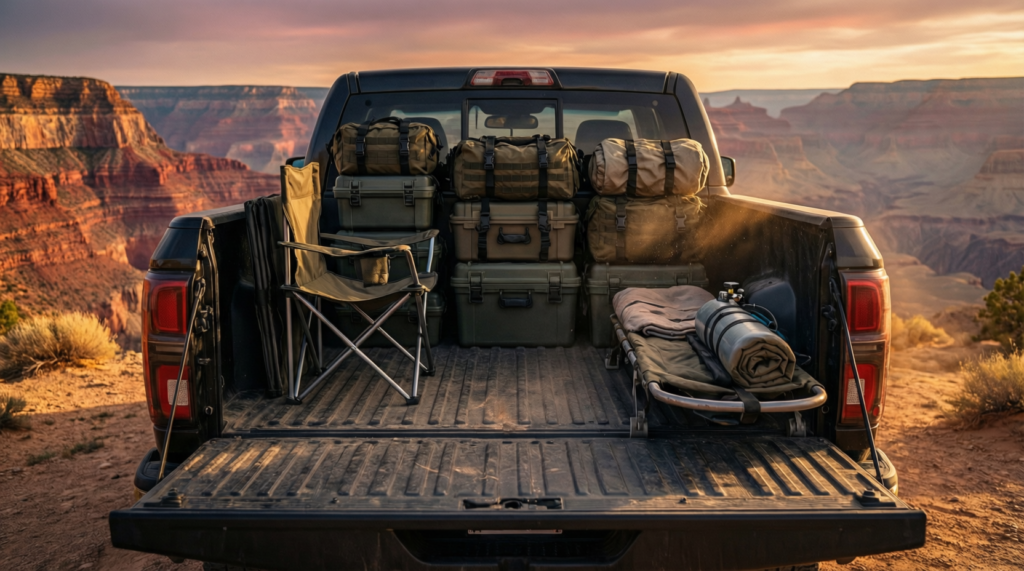
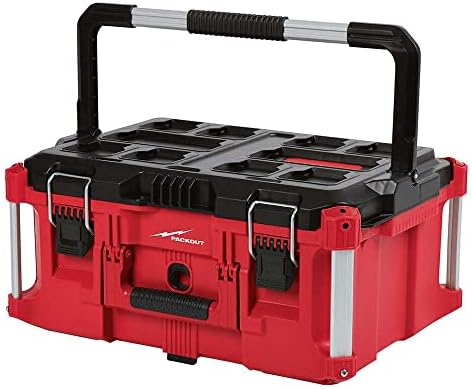
Milwaukee Packout Modular Storage System
Helinox Chair One vs Tusk Camp Chair: The Definitive Space-Saving Comparison for SxS Bed Packing and Trail Survival
Packing a Side-by-Side for a brutal trail run requires strict payload management where every cubic inch dictates operational success. Traditional high-volume camp chairs compromise vehicle handling, shatter under trail vibrations, and seize up in dusty environments. Transitioning to high-density, low-volume gear architecture eliminates these risks. This guide details the physics of cargo failure, a spec-for-spec teardown of the Helinox Chair One versus the Tusk Camp Chair, and the precise torque specs required to integrate gear safely into your UTV’s drivetrain layout.
The Technical Reality: Mechanical and Environmental Failure Sequences in SxS Cargo
Center of Gravity Breach and Lateral Load Transfer Compromise
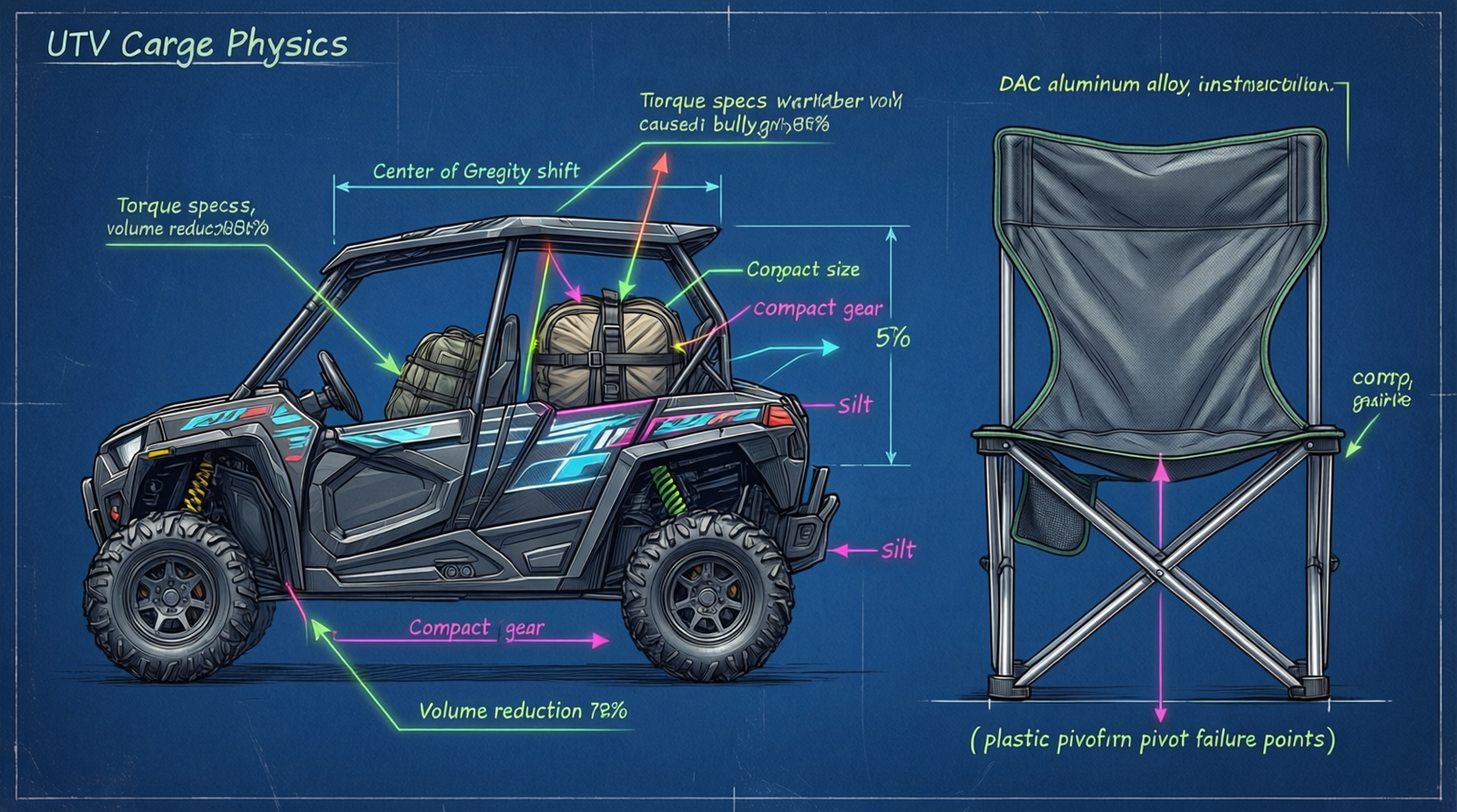
Traditional Tusk Camp Chair models command a packed volume of 1,500–2,000 cubic inches. When stacked in a SxS bed or roof rack, this bulk forces the cargo Center of Gravity upward. During high-speed cornering, lateral G-forces exceeding 0.8G multiply the rollover moment, directly compromising the UTV’s static stability factor.
When you hit an off-camber rut or take a fast corner, that heavy, high-mounted chair acts like a pendulum. It makes your rig feel dangerously tippy and drastically increases your risk of rolling over because the heavy cargo is pulling the vehicle’s weight outward.
High-Frequency Vibrational Fatigue and Abrasive Shear Failure
SxS trails generate 15Hz–25Hz high-frequency micro-vibrations combined with low-frequency macro-shocks. Fine silica trail dust with a Mohs hardness of 7 infiltrates cheap plastic pivot joints and single-layer nylon stitching. This dust acts as a lapping compound, while the vibration causes fretting wear on plastic pivots. This combination reduces structural seam tensile strength by up to 40%, culminating in catastrophic shear failure under a 200+ lb rider.
The constant shaking of the trail grinds microscopic, glass-hard dust into the chair’s plastic joints. This silently weakens the frame until the chair violently snaps and collapses the exact moment you sit down after a long, exhausting ride.
The “Silt Zipper Jam” and Mechanical Binding Seizure
Consensus from off-road communities highlights day-two gear failure in silt-heavy environments like Moab and Glamis. Sub-100-micron dust particles wedge into standard nylon toothed zippers, causing mechanical binding and permanent seizure.
In deep dust, fine silt turns your chair’s carry-bag zipper into a solid block of concrete. When you finally reach camp and want to sit down, you physically cannot unzip the bag to get your chair out.
Bed Rattle, Plastic Shatter, and Strap Stretch Failures
Users report severe washboard road degradation on hard-plastic armrests and cup holders found on baseline models. These components create deafening bed rattles and become brittle in cold high-desert nights, snapping under 15Hz vibration. Furthermore, cheap bungee tie-downs stretch and snap under sustained 60mph dirt road vibrations due to the bulky profile of standard chairs.
Rigid plastic parts rattle annoyingly all day and shatter into sharp pieces when the temperature drops at night. Because the chair is so massive, standard bungee cords stretch to their absolute limit and snap, sending your gear flying out of the bed at highway dirt-road speeds.
The Core Gear Architecture: Specifications and Comparison
Check out our off-road collection Amazon products
| Specification | Helinox Chair One (2026 Tactical Edition) | Tusk Camp Chair (Baseline Comparison Model) | Packed Dimensions | 14 x 4 x 4 inches | ~30 x 7 x 7 inches | Packed Volume | ~224 cubic inches | ~1,470 cubic inches | Space Efficiency | Baseline Reference | 75-85% larger footprint | Frame Material | DAC Aluminum Alloy (Anodized) | Steel Tubing with Plastic Joints | Joint Architecture | Internal elastic shock-cord; zero exposed plastic | Exposed plastic pivots and hinges | Fabric Rating | High-tenacity polyester or 600D Ripstop w/ DWR | Standard Nylon/Polyester Blend | Storage Closure | Roll-top or drawstring (Silt-proof seal) | Standard nylon toothed zipper | Weight | 2.1 lbs (960g) | 5.5 – 7.0 lbs | Load Capacity | 320 lbs (145 kg) | 250 – 300 lbs |
|---|
Dimensional Dominance and “Space Tetris” Solutions
The Helinox Chair One packs down to 14 x 4 x 4 inches, yielding a massive 75-85% space savings compared to the baseline model. This allows the chair to be stuffed into dead spaces such as under seats, inside door pockets, or wedged inside cargo covers. This frees up main bed space for high-priority overland gear like the Milwaukee Packout Modular Storage System, Dometic fridges, and recovery jacks.
The compact footprint completely solves space optimization challenges. You can utilize hidden cavities for storage while reserving the primary bed for essential mission-critical equipment.
Frame Material and Joint Architecture Engineering
The Helinox Chair One utilizes a DAC Aluminum Alloy frame with an internal elastic shock-cord tension system. It features zero exposed plastic hinges or pivots. By entirely eliminating plastic joints, there is nowhere for dust to hide and grind away the material. The chair remains completely silent when strapped down and structurally bulletproof against micro-vibration fretting wear and bed-rattle.
The absence of plastic contact points ensures long-term durability. The frame absorbs trail shocks through the cord system rather than relying on fragile plastic bushings that crack under thermal cycling.
Fabric Tenacity and Silt-Proof Storage Integration
Fabric options include high-tenacity polyester or 600D Ripstop with DWR coating. The critical 2026 update introduces a roll-top or drawstring closure bag that entirely eliminates zippers. The new closures provide a universally praised silt-proof seal. This directly solves the sub-100-micron silt zipper jam documented on off-road forums, guaranteeing your chair will actually open when you need it.
The roll-top design creates a watertight and dust-tight barrier. Even in extreme silt conditions, the bag remains functional and protects the internal mechanism from abrasive contamination.
Weight-to-Capacity Ratios and Load Ratings
The Helinox Chair One weighs just 2.1 lbs with a 320 lbs weight capacity. The baseline model weighs 5.5 – 7.0 lbs with a 250 – 300 lbs capacity. The superior strength-to-weight ratio means you can bypass external tie-downs entirely by simply tossing the compact chair inside a hard-sided, gasket-sealed case.
You gain nearly 100 lbs of extra load capacity across multiple units while reducing total system weight. This efficiency allows for rapid deployment without sacrificing structural integrity or rider comfort.
The Technical Setup Blueprint: UTV Architecture Constraints and Gear Integration
CVT Architecture Storage Constraints and Airflow Zoning
For CVT-equipped vehicles like the Polaris RZR, Can-Am X3, and Segway Fugleman, bulky chairs or storage boxes must never block rear or side panel CVT intake and exhaust airflow. If you stack massive camp chairs over the side panels, you choke the CVT cooling system. Your drive belt will overheat, glaze, and slip right when you are trying to climb a steep, technical rock ledge.
Proper airflow management is non-negotiable for transmission longevity. Always verify clearance zones around the airbox and clutch housing before securing cargo.
DCT Architecture Routing and Relay Protection
For DCT-equipped vehicles like the Honda Pioneer 1000 and Talon, ratchet straps must not be routed over the cab or bed junction. Straps must not crush the DCT shift actuator, wiring harness, or main relays routed beneath the bed. Gear must utilize specific stamped bed recesses. Cranking down a heavy ratchet strap across the middle of the bed will crush the hidden transmission wiring and relays. You will be left stranded on the trail with a dead transmission simply because a strap pinched a wire.
Strap routing requires precise planning to avoid sensitive electronics. Use designated anchor points and inspect harness paths before applying tension to any tie-down hardware.
Trailside Drivetrain Recovery Tool Manifest
Can-Am CVT systems require a T30 Torx driver for the outer cover, 13mm and 15mm sockets for inner components, and a specialized CVT clutch spreading tool. The spreading tool is necessary to physically relieve tension on the secondary sheave so you can swap a blown belt.
Polaris CVT systems require 8mm and 10mm sockets for the outer cover, an OEM or aftermarket clutch compression tool, and a 19mm or 21mm wrench. The large wrench holds the primary clutch steady while you remove the center bolt to access the belt.
Honda DCT systems do not require belt tools. Carry a spare DCT Shift Relay and fuses. Access requires 10mm and 12mm sockets for the center console and seat base, plus a T30 Torx driver for chassis skid plates. Since there is no belt, you are fixing electrical faults; these exact tools let you pull the seat and skid plates to swap a dead relay.
Bed Anchor Installation and Torque Specifications
Check out our off-road collection Amazon products
| Component | Fastener Size | Torque Spec | Critical Installation Notes | Bed Tie-Down Anchors | 13mm / 15mm / 17mm Socket | 25–35 ft-lbs | Use oversized 2-inch fender washers on the underside to spread load and prevent bed floor pull-through. | Roll Cage / Roof Rack Clamps | 5/16″ / 3/8″ Hex Bolt | 15–20 ft-lbs | Apply blue Loctite (242) to resist washboard vibration loosening and prevent gear drop. |
|---|
Use the specified socket sizes for installing heavy-duty bed tie-down anchors. Torque anchor bolts to 25–35 ft-lbs. You must use oversized 2-inch fender washers on the underside. UTV beds are made of thin plastic or stamped steel. The oversized fender washers spread the physical load so the bolts don’t rip straight through the bed floor when your heavy gear shifts under hard cornering.
Roll Cage and Roof Rack Mount Fasteners
For P-clamps or T-bolts, use 5/16″ or 3/8″ hex bolts. Torque to 15–20 ft-lbs and apply blue Loctite (242). The blue Loctite acts as a chemical lock, preventing the relentless washboard road vibrations from shaking your roof rack bolts loose and dropping your gear onto the trail.
Threadlocker application is mandatory for all exterior mount points. Regular inspection of torque values is recommended after the first five trail runs to account for initial settling.
Field Verdict & Operational ROI: The True Cost of SxS Bed Space and Gear Longevity
Eliminating the “Space Tetris” tax and reclaiming payload is achieved by shedding 1,200+ cubic inches of dead space per chair. This directly translates to optimized payload management. When you stop fighting for bed space, you can finally pack the critical overland and recovery gear that actually keeps your vehicle moving when things go wrong.
The financial and operational ROI of the Helinox Chair One is easily justified by the hidden costs of baseline failures. When you calculate the cost of replacing shattered UV-degraded plastics, cutting open seized silt-locked zippers, and recovering from compromised vehicle stability due to poorly distributed cargo, the Helinox Chair One pays for itself on trip one. It is not a luxury upgrade; it is a mandatory operational investment for serious trail survival.
Community Reference & Authority Resources:
The Final Moment
Picture this: The sun dips below the canyon rim, the temperature drops, and the dust finally settles. You walk to the back of your SxS, pull the drawstring on your silt-proof Helinox Chair One bag, and snap the DAC aluminum frame together in three seconds. There are no shattered plastic cup holders, no jammed zippers, and no deafening bed rattle echoing in your ears. You sit down, the 320 lb capacity frame holding you perfectly, and look at the open bed space where your recovery gear sits securely. This comparison was about more than just two camp chairs; it was about mastering the physics of your payload, protecting your drivetrain architecture, and engineering a camp setup that survives the brutal reality of the trail. Pack smart, torque to spec, and keep the rubber side down.
🔍 Explore More: See all Wild Testing guides for Helinox Chair One vs Tusk camp chair space saving comparison for SxS.
Check out our off-road collection Amazon products