

When it comes to marine amplifier class d vs class ab, getting the right details matters. If you are decking out your Honda Pioneer for the trails in 2026, you likely know that stock audio just doesn’t cut it against the roar of a 1000cc engine and the crunch of gravel.
When upgrading, the biggest technical debate you will face is choosing between a marine amplifier class d vs class ab.
For decades, audiophiles swore by Class AB for its “warm” sound quality, dismissing Class D as noisy and digital.
However, 2025 and 2026 have been watershed years for marine audio technology, shifting the landscape entirely in favor of efficiency.
In this guide, we are diving deep into real-time data, heat efficiency tests, and why your UTV’s charging system might make the decision for you.
The Core Differences: Efficiency vs. Fidelity
To understand which amp belongs in your rig, you first need to understand how they handle power.
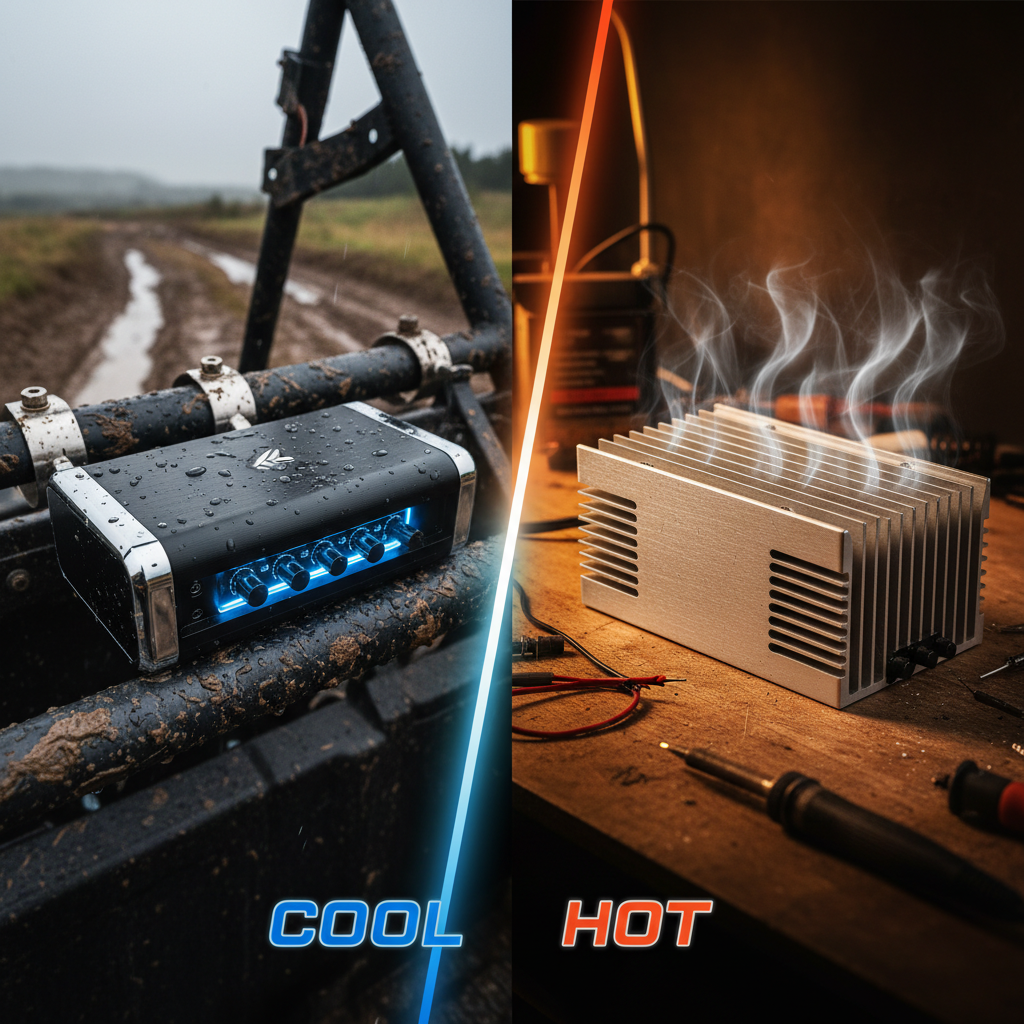
A Class AB amplifier operates by keeping its transistors “on” even when there is no signal, or only partially off, which reduces distortion but generates a significant amount of waste heat.
Think of Class AB like a gas engine idling at a stoplight; it’s ready to go instantly, but it’s burning fuel (battery power) just sitting there.
In contrast, a Class D amplifier uses “switching” technology, rapidly turning transistors on and off millions of times per second.
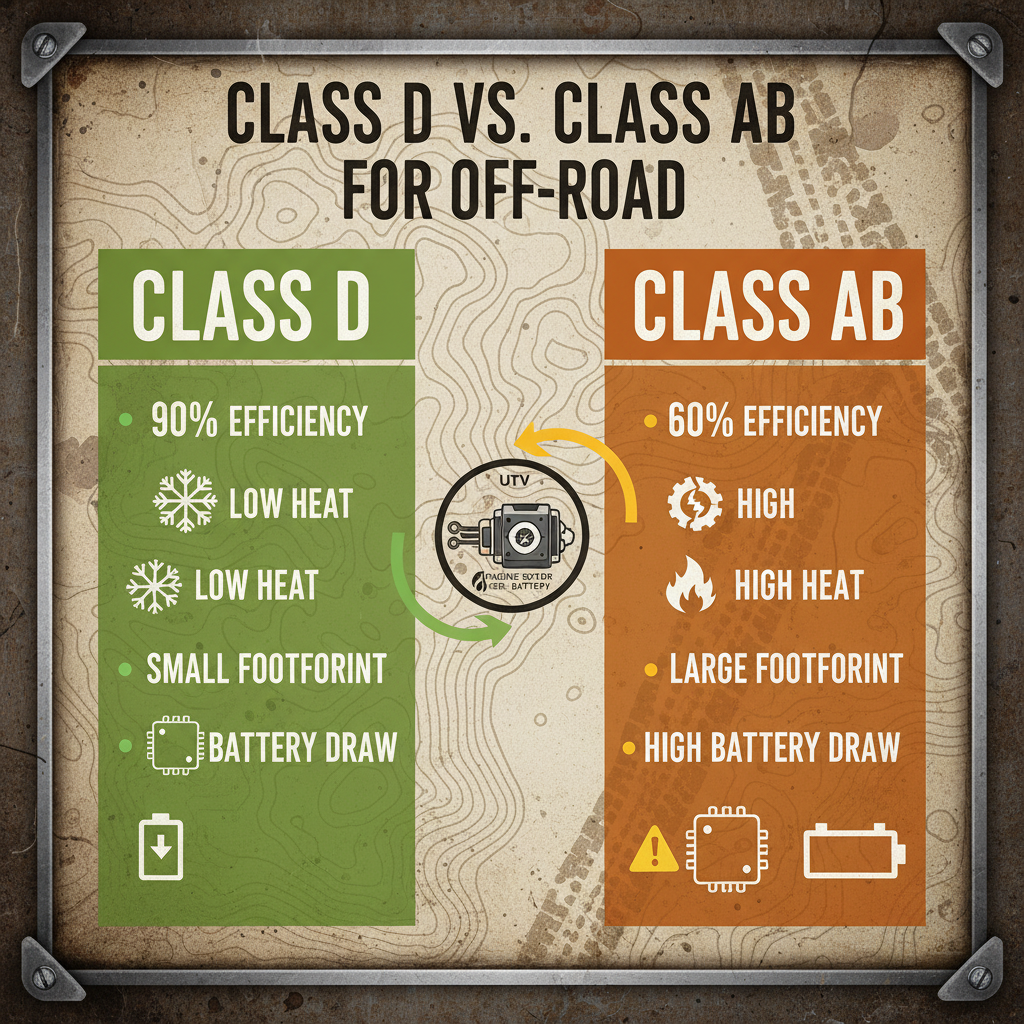
This switching method allows modern Class D marine amps to achieve efficiency ratings of 90% or higher, compared to the 50-60% typical of Class AB.
For a Honda Pioneer with a limited stator output, this efficiency is not just a luxury; it is practically a requirement.
| Feature | Class D Marine Amp | Class AB Marine Amp |
|---|---|---|
| Efficiency | 90% – 95% | 50% – 60% |
| Heat Generation | Very Low (Cool Running) | High (Requires Airflow) |
| Size / Footprint | Compact / Micro-Chassis | Bulky / Large Heatsinks |
| Battery Draw | Low (Stator Friendly) | High (Needs Aux Battery) |
| Best Use Case | UTVs, ATVs, Wake Boats | Yachts, enclosed cabins |
Why Class D Wins for the Honda Pioneer in 2026
The Honda Pioneer, while a beast on the trail, has a finite amount of electrical overhead.
Check out our off-road collection Amazon products
When you start adding light bars, winches, and GPS units, your electrical budget shrinks rapidly.
Running a Class AB amplifier that wastes 40% of its energy as heat is essentially throwing away amp-hours that your winch might need later.
Furthermore, the physical installation space in a Pioneer—usually under a seat or high up under the dash—is often enclosed and lacks airflow.
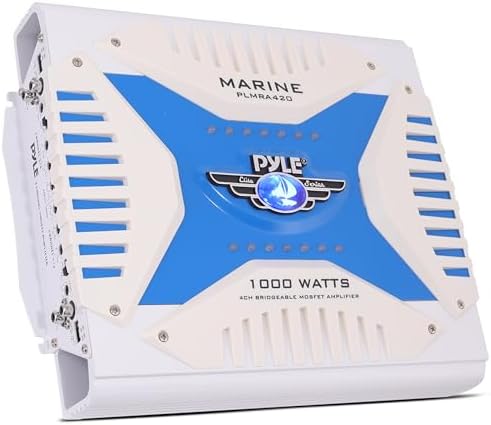
Class AB amps rely on massive aluminum heatsinks to dissipate heat; if you stuff one in a glove box or a dry box, you risk thermal shutdown within minutes of hard use.
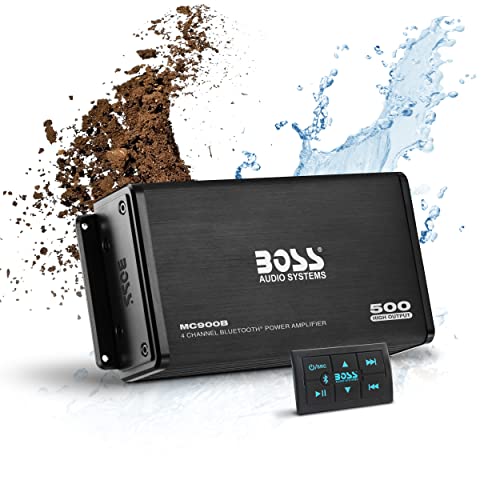
Class D amps, running significantly cooler, can be mounted in tight, water-resistant enclosures without overheating.
https://www.youtube.com/watch?v=Oa9S-DWsxdV
The Myth of “Sound Quality”
Infographic: Marine Amplifier Class D vs Class AB: The 2026 Off-Road Audio Guide
Five years ago, the argument against Class D was that the high-frequency switching created “noise” or a harsh digital sound.
In 2026, this is largely a relic of the past.
Modern marine amps like the JL Audio MVi series or Rockford Fosgate M5 utilize high-speed switching frequencies (often above 400kHz) and advanced feedback loops that push distortion way beyond the range of human hearing.
“In an open-air environment like a UTV doing 30mph, the subtle warmth of a Class AB amp is completely lost to wind noise and tire roar. You need clean, efficient power, not studio-grade nuance.”
Unless you are parking your Pioneer in a sound-deadened garage to listen to classical vinyl rips, Class D fidelity is indistinguishable from Class AB for powersports applications.
2026 Market Trends: The Rise of “Smart” Amps
The latest trend we are seeing this year is the integration of DSP (Digital Signal Processing) directly into Class D amplifiers.
Manufacturers know that UTV speaker placement is often less than ideal—kick panels that aim at your ankles or roof speakers that blast over your head.
New Class D amps from brands like Kicker and JL Audio now come with built-in DSP that allows you to time-align the sound, ensuring the bass from the rear and the vocals from the front hit your ears at the exact same moment.
This level of control was previously only available with expensive external processors, but the efficiency of Class D architecture has allowed engineers to pack it all into one chassis.
Check out our off-road collection Amazon products
- Integrated Tuning: Adjust EQ curves via smartphone apps via Bluetooth.
- Power Management: New “Eco” modes on some 2026 models reduce draw when the engine is off.
- Hybrid Designs: Some brands are marketing “Class AD” or “Class FD” which claim the best of both worlds, though they are fundamentally efficient switching designs.
https://www.youtube.com/watch?v=GevcD7kPVhw
Installation Tips for Your Pioneer
When installing your new Class D marine amplifier, placement is still key despite the lower heat.
We recommend mounting the amp as high as possible under the dash or roof to protect it from deep water crossings, even if it is IP67 rated.
Always use marine-grade, tinned copper wiring; standard car audio copper wire will corrode and turn green within six months of exposure to humidity and mud.
Ensure your ground connection is to the battery negative post or a dedicated chassis ground point that has been sanded to bare metal and then sealed over.
https://www.youtube.com/watch?v=RNel8_MoPQT
Final Verdict
For the Honda Pioneer owner, the battle of marine amplifier class d vs class ab has a clear winner in 2026.
Class D technology offers the efficiency you need to keep your battery happy, the compact size to fit in your dash, and the power to be heard over the trail.
Save the Class AB amps for your living room; out here in the mud, efficiency is king.
Check out the official Honda Pioneer Accessories page for compatible mounting brackets, or visit Crutchfield’s Marine Audio section for the latest 2026 models.
For more technical deep dives, resources like The Hull Truth Marine Electronics Forum are invaluable.
You can also find great wiring diagrams at Rockford Fosgate’s Wiring Wizard and system inspiration on the JL Audio Marine Showcase.
🔍 Explore More: See all Wild Testing guides for marine amplifier class d vs class ab.
Check out our off-road collection Amazon products