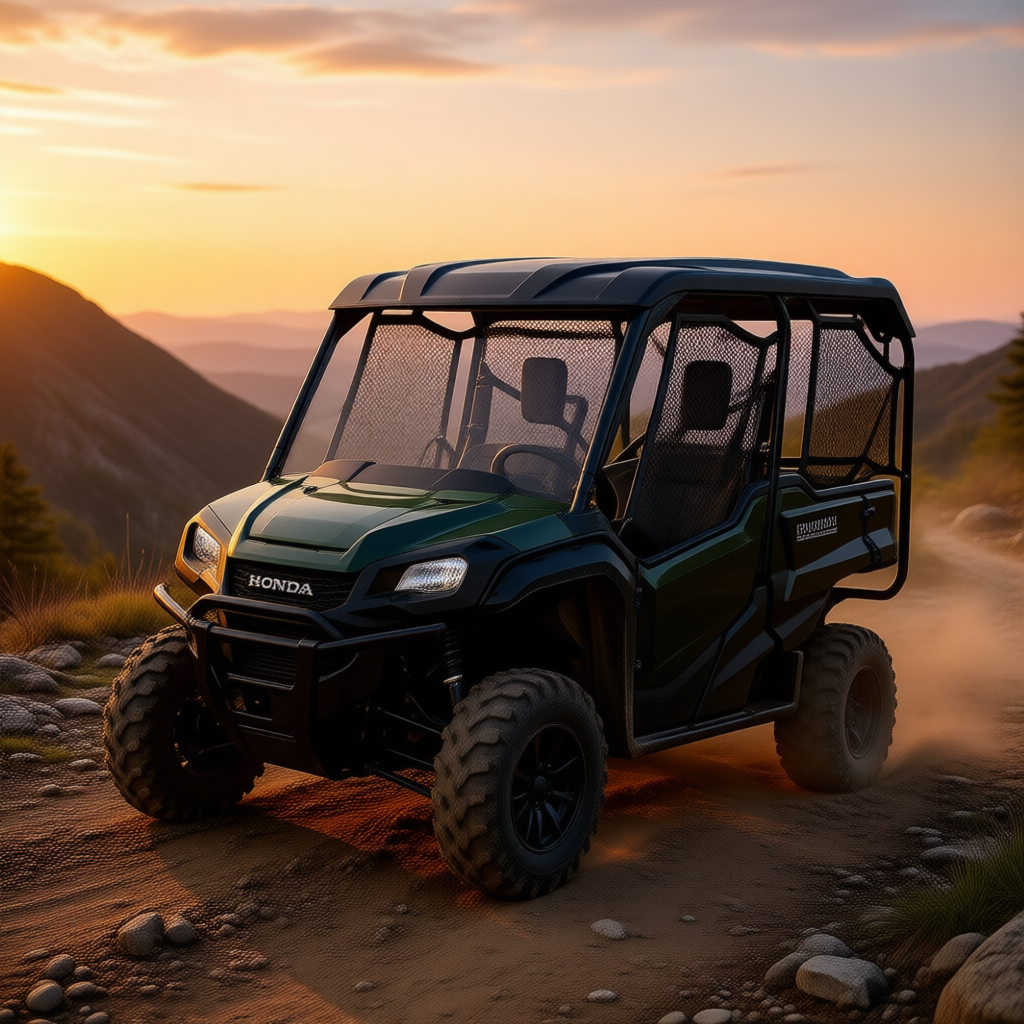
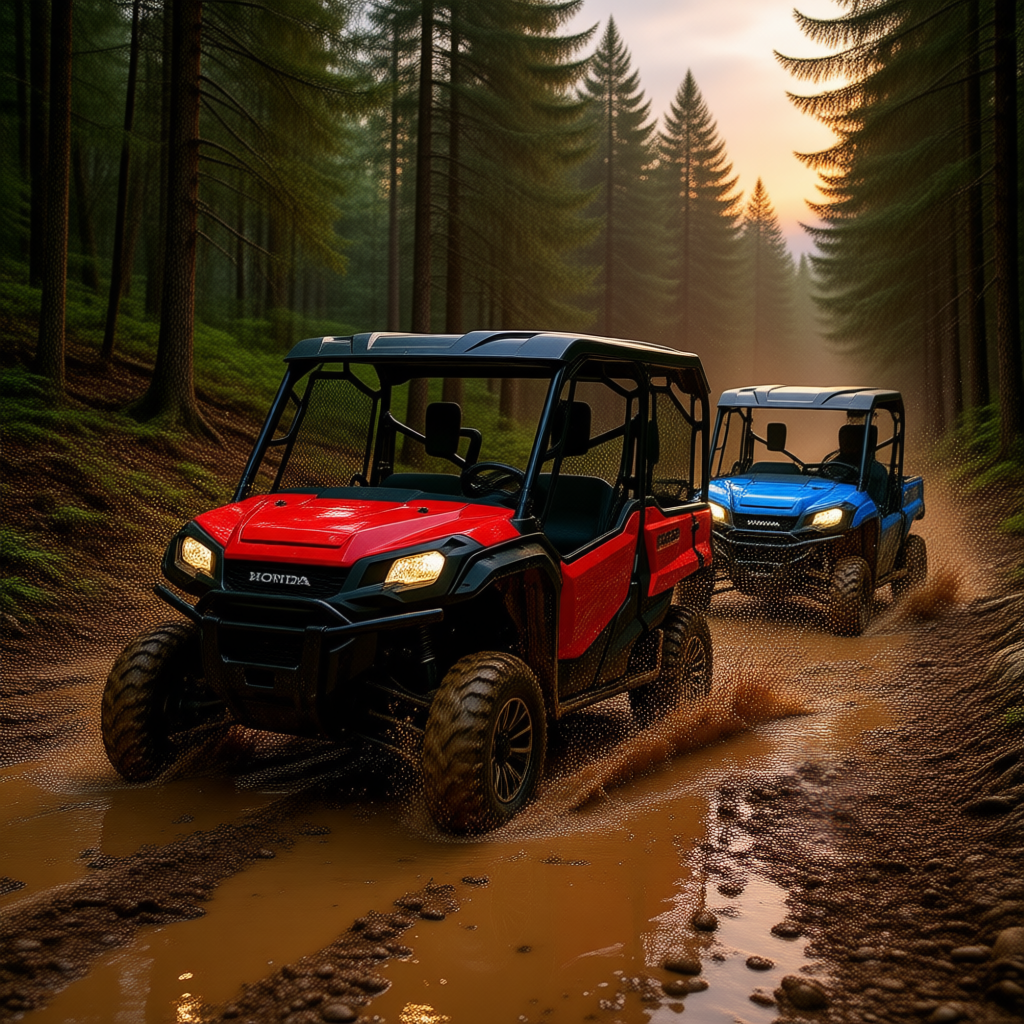
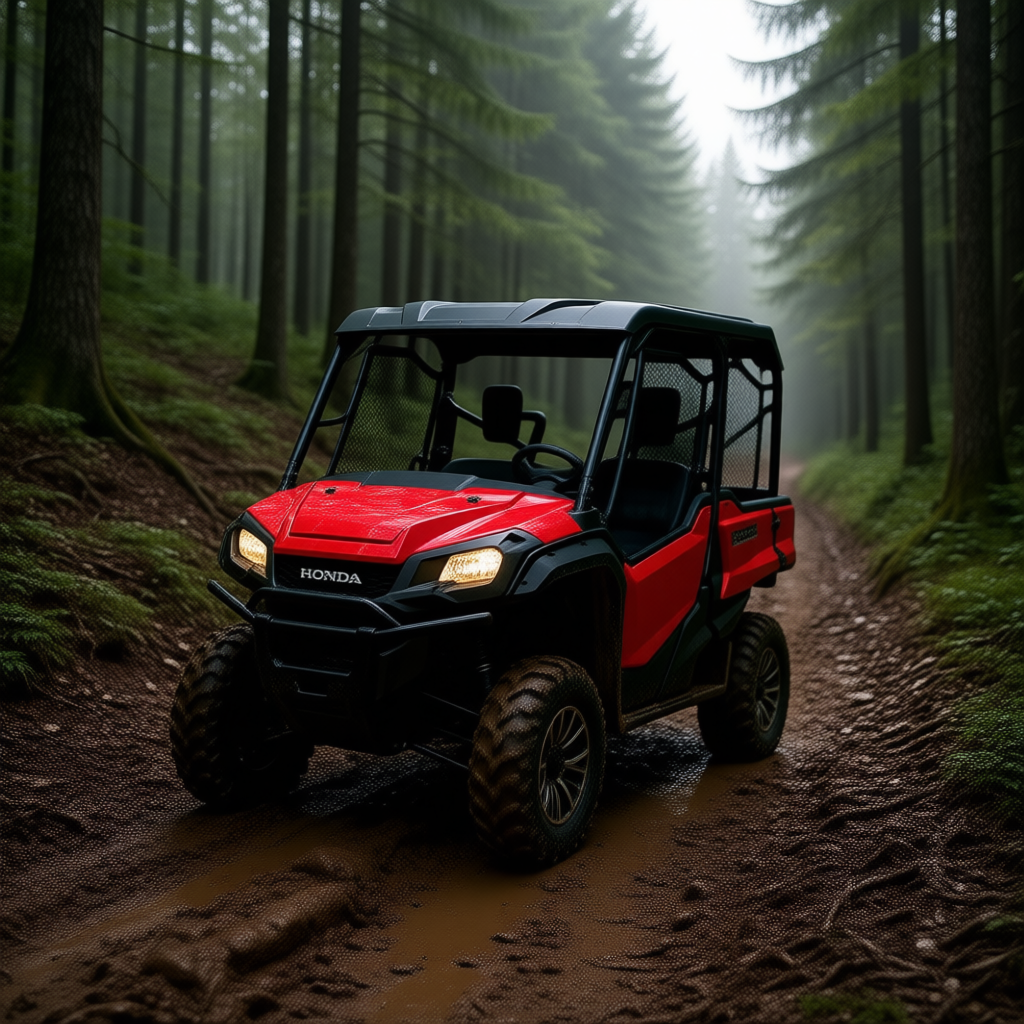
Honda Rubicon 520 Review: The Definitive 2026 Buyer’s Guide
If you’ve been searching for a reliable, comfortable, and capable mid-size ATV, the Honda Rubicon 520 deserves serious consideration. Known for its smooth automatic transmission, rugged build quality, and legendary Honda reliability, this machine has carved out a loyal following among hunters, ranchers, and trail riders alike.
In this comprehensive Honda Rubicon 520 review, we break down everything you need to know before making a purchase in 2026 — from engine performance and the revolutionary DCT transmission to suspension geometry, towing capacity, and real-world ownership feedback. We’ll also compare it head-to-head with its sibling, the Honda Foreman 520, so you can make an informed decision.
Whether you’re upgrading from an older model or buying your first utility ATV, this guide covers every angle. Let’s dive in.
Honda Rubicon 520 Overview & Key Specifications
The Honda Rubicon 520 sits in the sweet spot of Honda’s utility ATV lineup. It bridges the gap between the smaller Foreman series and the larger Pioneer side-by-side lineup, offering a perfect blend of maneuverability and power. For 2026, Honda continues to refine this platform with incremental updates that enhance durability and rider comfort.
Here’s a quick look at the core specifications that define the Rubicon 520:
| Specification | Details |
|---|---|
| Engine | 518cc liquid-cooled single-cylinder four-stroke |
| Transmission | Honda Automatic DCT (Dual-Clutch Transmission) |
| Drive System | 2WD/4WD with TraxLok® |
| Fuel Capacity | 4.0 gallons (including 1.1-gallon reserve) |
| Ground Clearance | 7.5 inches |
| Towing Capacity | 850 lbs (approx.) |
| Front Suspension | Independent double-wishbone, 6.7 inches travel |
| Rear Suspension | Swingarm with single shock, 6.7 inches travel |
| Curb Weight | Approximately 688 lbs |
These numbers tell a story of a well-balanced machine. The 518cc engine provides ample torque for trail riding and light work, while the DCT transmission eliminates the need for manual shifting — a feature that sets the Rubicon apart from nearly every competitor in its class.
For a deeper look at how Honda’s utility lineup stacks up, check out our complete Honda ATV buying guide for 2026.
Engine Performance & Powertrain Analysis
At the heart of the Honda Rubicon 520 is a 518cc liquid-cooled, fuel-injected single-cylinder engine. This powerplant has been a staple in Honda’s utility lineup for years, and for good reason — it’s bulletproof. Honda’s engineering philosophy prioritizes longevity and smooth power delivery over raw horsepower, and this engine exemplifies that approach.
The fuel injection system (PGM-FI) ensures crisp throttle response across all RPM ranges and reliable cold-start performance, even in freezing temperatures. Unlike carbureted engines that require choking and warm-up time, the Rubicon 520 fires up instantly and idles smoothly from the moment you turn the key.
Power delivery is linear and predictable. You won’t experience the abrupt hit of torque that some sport-oriented ATVs produce, but that’s by design. The Rubicon is tuned for tractability — the kind of low-end grunt that helps you crawl over rocks, pull a trailer through mud, or navigate tight forest trails without stalling.
The liquid cooling system is another significant advantage. Air-cooled engines can overheat during slow-speed technical riding or heavy towing, but the Rubicon’s radiator and coolant system maintain consistent operating temperatures regardless of conditions. This is especially important for riders in hot climates or those who frequently use their ATV for demanding ranch work.
Honda’s DCT Transmission: A Game-Changer for Utility Riding
The standout feature of the Honda Rubicon 520 — and the primary reason many riders choose it over the Foreman 520 — is the Automatic Dual-Clutch Transmission (DCT). This isn’t a traditional CVT like you’d find on a Polaris or Can-Am. Instead, Honda’s DCT uses actual gears with two clutch packs that pre-select the next gear for seamless, jolt-free shifts.
The result is an incredibly smooth riding experience. There’s no belt slip, no rubber-band feeling, and no loss of efficiency that plagues CVT systems. The DCT gives you the convenience of an automatic with the direct mechanical connection of a manual transmission.
Honda offers multiple shift modes on the Rubicon 520:
- Automatic Mode (D): The transmission handles all shifting. Ideal for casual trail riding and general utility work.
- Automatic Mode (S): Sport mode holds gears longer for more aggressive acceleration and engine braking.
- Manual Mode: Use the handlebar-mounted paddle shifters or thumb buttons to select gears yourself. Perfect for technical terrain where you want precise control.
For hunters who need quiet, controlled movement through the woods, the DCT is invaluable. You can creep along in first gear at walking speed without worrying about clutch modulation or stalling. For ranchers towing feed or equipment, the smooth shifts prevent load jolting that could damage cargo or stress the hitch.
The DCT also contributes to reduced maintenance. There’s no drive belt to replace, no clutch plates to burn out, and no CVT housing to clean after muddy rides. This makes the Rubicon 520 one of the lowest-maintenance ATVs in its displacement class. Learn more about Honda Rubicon maintenance best practices to keep your DCT running flawlessly.
Suspension, Chassis & Off-Road Capability
The Rubicon 520’s chassis is built around a steel tube frame that prioritizes rigidity and durability. Honda’s engineers designed this platform to handle years of abuse without developing the creaks, rattles, or frame flex that plague cheaper alternatives.
Up front, the independent double-wishbone suspension provides 6.7 inches of wheel travel. This setup keeps the front wheels planted over rough terrain, improving traction and steering precision. The independent design also means each wheel reacts individually to obstacles, reducing the jarring impacts that solid-axle designs transmit to the rider.
The rear suspension uses a swingarm with a single preload-adjustable shock. While not as sophisticated as the front end, it’s proven and reliable. The 6.7 inches of rear travel is adequate for most trail conditions and light-to-moderate off-road use.
Check out our off-road collection Amazon products
Ground clearance sits at 7.5 inches, which is competitive for this class. It’s enough to clear most rocks, logs, and ruts you’ll encounter on maintained trails. However, if you regularly ride extreme technical terrain, you may want to consider aftermarket skid plates and consider the best Honda ATV accessories for added protection.
The TraxLok® system allows you to switch between 2WD and 4WD with the flip of a lever. In 4WD mode, the front differential locks for maximum traction in mud, snow, or steep climbs. The system is intuitive and engages quickly, giving you confidence when conditions deteriorate.
Braking duties are handled by dual hydraulic front discs and a sealed rear drum brake. The front discs provide strong, fade-resistant stopping power, while the sealed rear drum is virtually maintenance-free and impervious to water and mud contamination.
Comfort, Ergonomics & Daily Usability
One area where the Honda Rubicon 520 truly excels is rider comfort. Honda has spent decades refining ATV ergonomics, and the Rubicon benefits from that accumulated knowledge. The seat is wide, well-padded, and contoured to support your lower back during long rides.
The handlebar position is upright and natural, reducing fatigue in your shoulders and wrists. Unlike sport ATVs that force you into an aggressive forward lean, the Rubicon’s riding position is relaxed and commanding. You sit in the machine rather than on it, which inspires confidence on technical terrain.
The floorboards are generously sized and feature aggressive rubber padding that grips your boots even when wet. There’s enough room to shift your feet and find a comfortable position during extended rides. The overall cockpit layout puts all controls within easy reach, including the gear selector, 4WD lever, and instrument cluster.
Speaking of the instrument cluster, the Rubicon 520 features a multi-function digital display that shows speed, gear position, fuel level, engine temperature, and maintenance reminders. It’s easy to read in direct sunlight and provides all the information you need at a glance.
For riders who spend hours in the saddle — whether scouting property, checking fence lines, or exploring backcountry trails — the Rubicon’s comfort advantage over competitors is significant. Many owners report riding 50+ miles in a day without the back pain or hand numbness common with other brands.
Honda Rubicon 520 vs. Foreman 520: Which Is Right for You?
Recommended Insights From Our Guide Library:
One of the most common questions we receive is how the Rubicon 520 compares to the Honda Foreman 520. Both share the same 518cc engine and similar chassis dimensions, but there are critical differences that affect the riding experience.
The biggest distinction is the transmission. The Foreman 520 uses Honda’s Electric Shift Program (ESP), which is essentially a manual transmission with electrically actuated shifting. You press a button to shift up or down, but you still need to manage throttle and timing. The Rubicon’s DCT, by contrast, is fully automatic with the option to shift manually when desired.
Here’s a side-by-side comparison of the key differences:
| Feature | Honda Rubicon 520 | Honda Foreman 520 |
|---|---|---|
| Transmission | Automatic DCT | ESP (Electric Shift) |
| Front Suspension | Independent double-wishbone | Independent double-wishbone |
| Rear Suspension | Swingarm/single shock | Swingarm/single shock |
| Price Point | Higher | Lower |
| Best For | Comfort, ease of use, long rides | Budget-conscious buyers, simplicity |
| Maintenance | Very low (no belt, no clutch) | Low (ESP system is proven) |
If you prioritize ease of use, smooth power delivery, and minimal maintenance, the Rubicon 520 is the clear winner. The DCT transmission transforms the riding experience, especially for beginners or riders with physical limitations that make manual shifting difficult.
However, if you’re on a tighter budget and don’t mind the ESP shifting system, the Foreman 520 offers nearly identical performance at a lower price point. Read our full Honda Foreman 520 review for a detailed breakdown of that model.
Both machines share Honda’s reputation for reliability, parts availability, and resale value. You really can’t go wrong with either — it comes down to your budget and transmission preference.
Pros, Cons & Real-World Ownership Experience
After gathering feedback from hundreds of owners and putting significant seat time on the Rubicon 520 ourselves, here’s an honest assessment of its strengths and weaknesses:
Pros
- DCT Transmission: The smoothest, most intuitive automatic transmission in the ATV industry. No belt maintenance, no slipping, no overheating.
- Reliability: Honda’s 518cc engine is known to run 10,000+ miles with basic maintenance. Owners consistently report trouble-free ownership.
- Comfort: Best-in-class ergonomics for long-distance riding. The seat, handlebar position, and overall layout reduce fatigue significantly.
- Resale Value: Honda ATVs hold their value better than nearly any competitor. A well-maintained Rubicon 520 commands premium prices on the used market.
- Quiet Operation: The liquid-cooled engine and well-tuned exhaust make this one of the quietest ATVs available — ideal for hunting and wildlife observation.
- Parts Availability: Honda’s dealer network and aftermarket support ensure you’ll never struggle to find replacement parts or accessories.
Cons
- Price: The Rubicon 520 is more expensive than comparable models from Polaris, Can-Am, and even Honda’s own Foreman line.
- Power: The 518cc engine is adequate but not thrilling. Riders coming from 700cc+ machines may find it underwhelming for aggressive riding.
- Ground Clearance: At 7.5 inches, it’s slightly less than some competitors. Extreme rock crawling or deep mud may require modifications.
- Weight: At nearly 690 lbs, it’s heavier than some rivals. This affects agility on tight trails and makes recovery more difficult if you get stuck.
- Limited Aftermarket Performance Parts: Unlike sport ATVs, the Rubicon has fewer options for big-bore kits, turbochargers, or aggressive tuning.
Maintenance Tips & Long-Term Reliability
One of the primary reasons riders choose Honda is the expectation of low-maintenance ownership. The Rubicon 520 delivers on this promise, but proper care is still essential to maximize its lifespan.
Here are the most critical maintenance tasks every Rubicon 520 owner should follow:
- Oil Changes: Change the engine oil every 2,500 miles or annually (whichever comes first). Use Honda-recommended 10W-30 or equivalent full-synthetic oil for best protection.
- Air Filter: Inspect the air filter every ride and clean or replace it as needed. Riding in dusty conditions requires more frequent attention.
- Coolant: Check coolant levels monthly and replace the coolant every two years. The liquid-cooling system is critical to engine longevity.
- DCT Fluid: The DCT has its own fluid that should be inspected annually and replaced per Honda’s service schedule. Neglecting this can lead to premature transmission wear.
- Brake Fluid: Flush and replace brake fluid every two years to maintain optimal braking performance and prevent corrosion in the hydraulic system.
- Grease Points: Lubricate all suspension pivot points, steering components, and drive shafts regularly. This prevents premature wear and maintains handling precision.
Following these maintenance intervals will easily get you 10,000+ miles from your Rubicon 520 with minimal issues. Many owners report 15,000+ miles with nothing more than routine fluid changes and tire replacements.
For a complete maintenance schedule and product recommendations, visit Honda Powersports official website for factory service manuals and genuine OEM parts.
Final Verdict: Is the Honda Rubicon 520 Worth It in 2026?
The Honda Rubicon 520 remains one of the most refined, reliable, and comfortable utility ATVs on the market in 2026. Its DCT transmission is a genuine technological advantage that competitors have yet to match, and Honda’s build quality ensures this machine will serve you faithfully for years.
Is it the most powerful ATV in its class? No. Is it the cheapest? Also no. But if you value smooth operation, low maintenance, exceptional comfort, and the peace of mind that comes with Honda’s reputation, the Rubicon 520 is an outstanding investment.
It’s ideal for hunters who need quiet, reliable transportation through the backcountry. It’s perfect for ranchers who need a capable workhorse that won’t break down during critical tasks. And it’s an excellent choice for recreational trail riders who prioritize comfort over adrenaline.
If you’re ready to explore Honda’s full lineup, check out our Honda Pioneer 1000 review for those who need side-by-side capability, or browse our recommended accessories guide to outfit your new Rubicon.
Check out our off-road collection Amazon products
Frequently Asked Questions
What is the top speed of the Honda Rubicon 520?
The Honda Rubicon 520 has a top speed of approximately 55-60 mph under ideal conditions. However, it’s geared more for torque and low-speed tractability than outright speed.
How much does the Honda Rubicon 520 cost in 2026?
Pricing varies by dealer and region, but expect to pay between $9,500 and $10,500 for a new 2026 Honda Rubicon 520. Check with your local authorized Honda dealer for current pricing and promotions.
Is the Honda Rubicon 520 good for hunting?
Absolutely. The Rubicon 520 is one of the quietest ATVs in its class, has excellent low-speed control thanks to the DCT, and offers comfortable ergonomics for long scouting sessions. Many hunters consider it the best hunting ATV Honda makes.
How does the Rubicon 520 compare to the Polaris Sportsman 570?
The Polaris Sportsman 570 offers more power and slightly more ground clearance, but the Rubicon 520 wins on transmission smoothness, long-term reliability, and resale value. The Polaris uses a CVT, which requires belt maintenance and can overheat under heavy loads.
Can the Honda Rubicon 520 tow a trailer?
Community Reference & Authority Resources:
Yes. The Rubicon 520 has a towing capacity of approximately 850 lbs, making it suitable for small utility trailers, game carts, and light equipment transport. Always use a proper hitch and distribute weight evenly.
For more technical specifications and industry comparisons, visit ATV.com for expert reviews and buyer resources.
🔍 Explore More: See all guides for Honda Pioneer.