WELCOME 💥
When it comes to honda rancher 420 vs foreman 520, getting the right details matters. When you bleed Honda Red, the choice often isn’t about brand—it’s about which legendary machine fits your lifestyle.
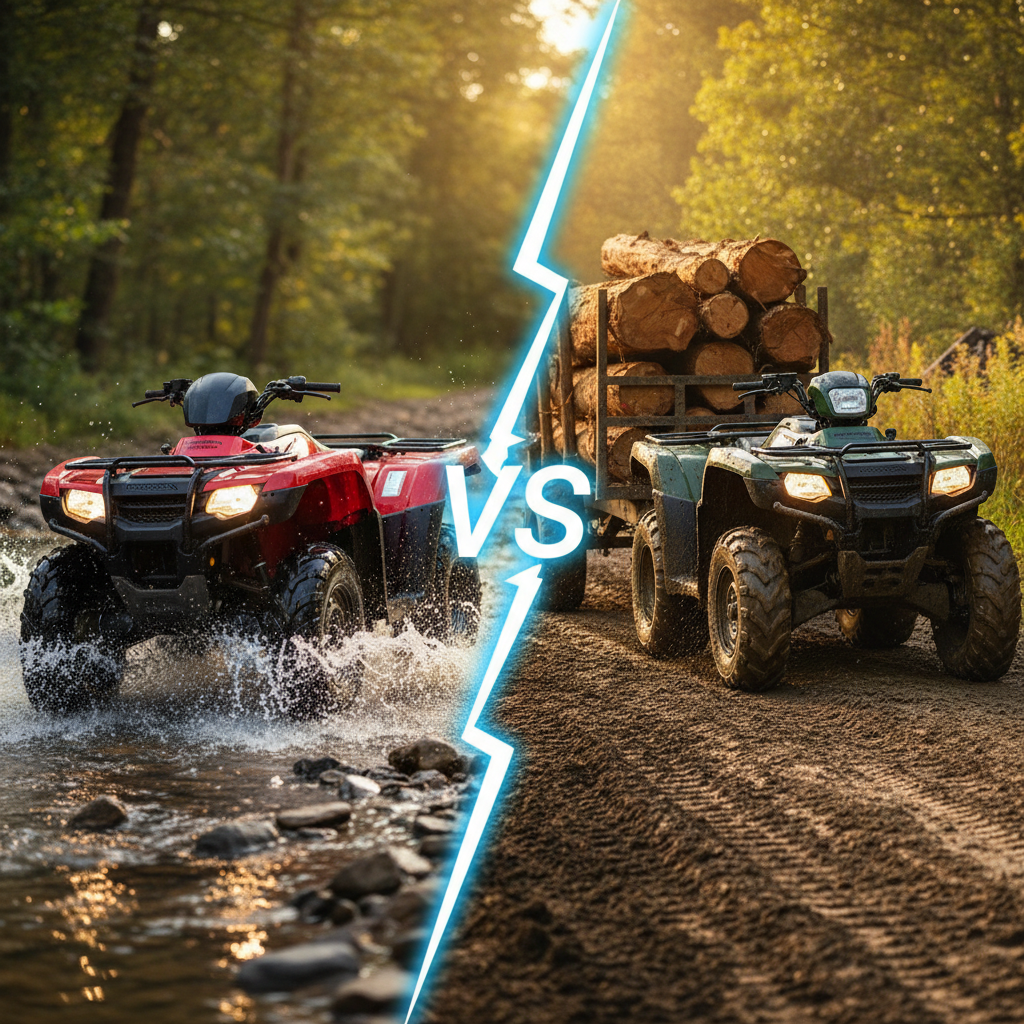
For decades, the debate of honda rancher 420 vs foreman 520 has split the off-road community down the middle.
On one side, you have the Rancher: the nimble, do-it-all mid-size ATV that dominates trails and light chores with agility.
On the other, the Foreman: a torque-heavy brute built to pull stumps, haul massive loads, and survive the harshest farm conditions.
For the 2025-2026 model years, Honda has kept the mechanicals largely consistent, proving the old adage: “If it ain’t broke, don’t fix it.”
However, subtle changes in pricing, trim availability, and the confusing towing specs between the standard Foreman and the Rubicon have made the buying decision trickier than ever.
In this guide, we are cutting through the brochure noise to give you the real-world data you need.
The Engine Battle: 420cc Agility vs 518cc Torque
The heart of the difference lies in the displacement, but the numbers only tell half the story.
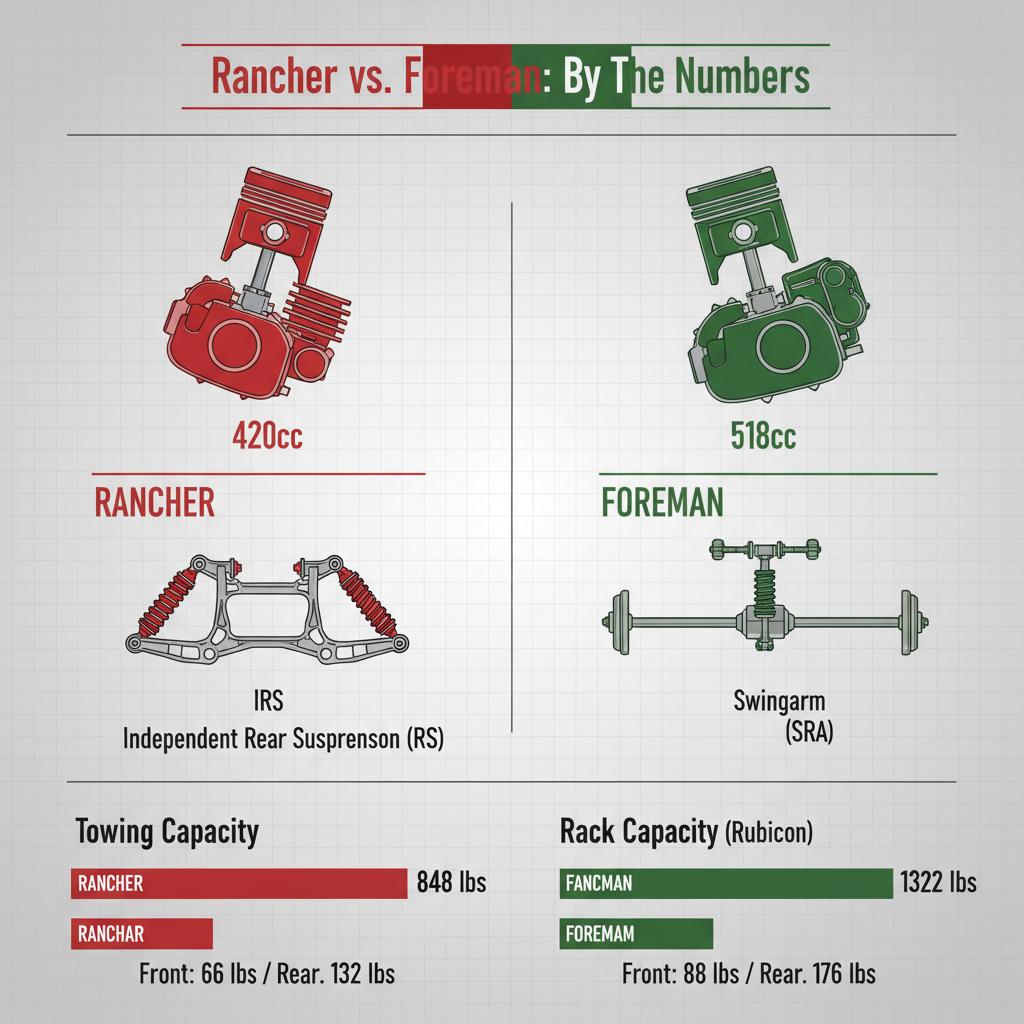
The Rancher utilizes a 420cc liquid-cooled, fuel-injected single-cylinder engine.
This power plant is snappy, revs quickly, and feels incredibly sporty on tight trails.
If your weekends involve dodging trees and whipping around corners, the Rancher’s lighter flywheel effect makes it the funner ride.
The Foreman, conversely, boasts a 518cc engine.
While 98cc might not sound like a massive gap, the difference in bottom-end torque is night and day.
The Foreman is tuned for “grunt”—that immediate power you need when you are stuck in deep mud or towing a trailer uphill from a dead stop.
Check out our off-road collection Amazon products
It doesn’t rev as freely as the Rancher, but it pulls significantly harder in the low RPM range.
https://www.youtube.com/watch?v=AUZIYQGfj03
Chassis and Suspension: Comfort vs. Capability
This is where your intended use must dictate your purchase.
The standard Honda Foreman 520 is built on a heavy-duty chassis typically paired with a Swingarm Solid Rear Axle (SRA).
Why use old-school solid axles?
Because under a heavy load (like a sprayer tank or a deer), a solid axle doesn’t squat, keeping your ground clearance consistent.
However, the trade-off is a stiffer ride that will let you feel every rock and root on the trail.
The Rancher 420 offers more variety.
You can buy a base model Rancher with a solid axle for work, but the premium trims come with Independent Rear Suspension (IRS).
IRS allows each rear wheel to move independently, soaking up bumps and providing a plush, “Cadillac-like” ride over rough terrain.
If you plan to ride for 6+ hours a day recreationally, your back will thank you for choosing a Rancher with IRS.
The Towing Capacity Trap
Here is a statistic that catches many buyers off guard.
On paper, the standard 2025 Honda Rancher 420 and the standard Honda Foreman 520 both list a towing capacity of roughly 848 lbs.
You might ask, “Why buy the bigger engine if it tows the same?”
The answer is the Foreman Rubicon.
Stepping up to the Foreman Rubicon trim unlocks a massive 1,322 lb towing capacity, thanks to its beefier frame and suspension tuning.
Furthermore, even with the standard 848 lb rating, the Foreman’s larger engine moves that weight with much less strain than the Rancher.
https://www.youtube.com/watch?v=AUZIYQFDC1O
2025-2026 Feature Breakdown
Honda has consolidated trims for the new model years, making availability tighter.
Here is a professional breakdown of the specs you need to compare side-by-side.
| Feature | Honda Rancher 420 | Honda Foreman 520 |
|---|---|---|
| Engine Displacement | 420cc | 518cc |
| Front Differential | TraxLok (Limited Slip) | TraxLok + Diff Lock |
| Lighting | Dual Fender Lights | Dual Fender + Handlebar Light |
| Rack Capacity (F/R) | 66 lbs / 133 lbs | 88 lbs / 176 lbs |
| Towing Capacity | 848 lbs | 848 lbs (1322 lbs on Rubicon) |
| Transmission Options | Foot Shift, ES, DCT Auto | Foot Shift, ES (Rubicon has DCT) |
One specific advantage of the Foreman is the locking front differential.
Check out our off-road collection Amazon products
If you ride in deep mud or snow, the Rancher’s limited-slip 4WD is good, but the Foreman’s true diff-lock is unstoppable.
The addition of the third headlight on the handlebars of the Foreman is also a game-changer for early morning hunters or late-night farmers.
Real Owner Feedback & Reliability
We scoured the forums and owner groups to see what long-term users are saying about these 2024-2025 models.
The consensus is clear: Reliability is flawless on both, but “Buyer’s Remorse” happens when you pick the wrong suspension.
- Rancher Owners: Often praise the “fun factor” and agility. A common complaint is the lack of storage space compared to the Foreman’s fender compartments.
- Foreman Owners: Love the low-end grunt. However, some complain about the stiffer ride on washboard gravel roads if they didn’t opt for the Rubicon trim.
- Maintenance: Both machines are incredibly easy to service, with oil changes and air filter access being straightforward.
“I bought the Rancher for my property, but I wish I had the Foreman’s diff lock for the winter snow plowing. The torque difference is real.” — Senior Member, HondaATVForums
https://www.youtube.com/watch?v=AUZIYQH6vxd
Final Verdict: Which One Should You Buy?
The battle of honda rancher 420 vs foreman 520 comes down to a simple question: Do you value speed or strength?
Choose the Honda Rancher 420 if:
You are a recreational rider who hits the trails 70% of the time and does light yard work 30% of the time. You want a lighter, sportier feel and a smoother ride (especially with IRS).
Choose the Honda Foreman 520 if:
You are using the machine as a tool first and a toy second. You need the locking front differential for deep mud, the handlebar light for work, and the heavy-duty racks for hauling gear.
Both machines uphold Honda’s legendary reputation for bulletproof engineering.
Whichever you choose, you are getting a machine that will likely outlast the warranty by decades.
For more detailed specs, check out the official Honda Rancher Page or the Honda Foreman Page.
Also, consider reading market comparisons on ATV Trader or reviews on Kelley Blue Book Motorcycles for resale values.
Finally, for deep technical dives, Partzilla’s Blog is an excellent resource for DIY mechanics.
🔍 Explore More: See all Wild Testing guides for honda rancher 420 vs foreman 520.
Check out our off-road collection Amazon products
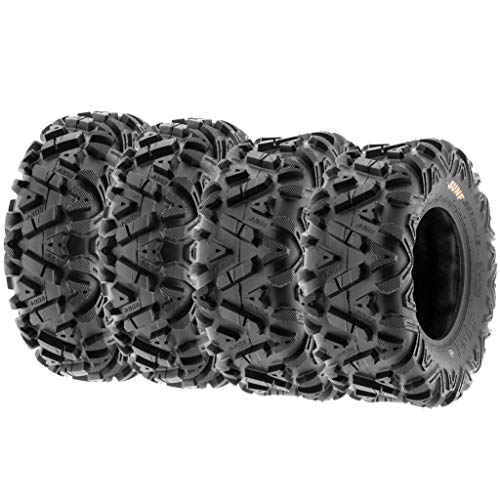
- Front Size: 25×8-12 – Rear Size: 25×10-12 | Wheel (Rim) Diameter: Front 12 in – Rear 12 in
- Directional angled knobby tread design great in most terrain with high performance on trails and suitable for desert, mu…
- Heavy 6 ply rated construction resists punctures and abrasions.
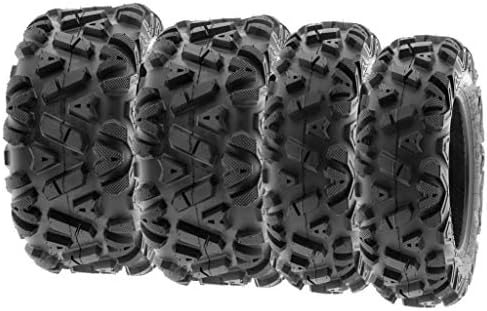
- ✔️Tire Size [ 25×8-12 ] designed to mount on 12 (in) RIM. Tire Size [ 25×10-12 ] designed to mount on 12 (in) RIM.
- ✔️Directional angled knobby tread design great in most terrain with high performance on trails and suitable for desert, …
- ✔️Heavy 6 ply rated construction resists punctures and abrasions.
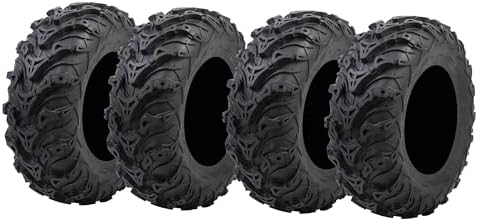
- Complete Tire Set of 4 – Includes two 25×8‑12 front and two 25×10‑12 rear tires for full ATV tire replacement.
- 6‑Ply Rated Construction – Heavy‑duty bias ply design offers durable performance and enhanced load capacity.
- Wide Tread Voids – Large voids support reliable traction in mud, dirt, and soft surfaces while aiding tread clean‑out.