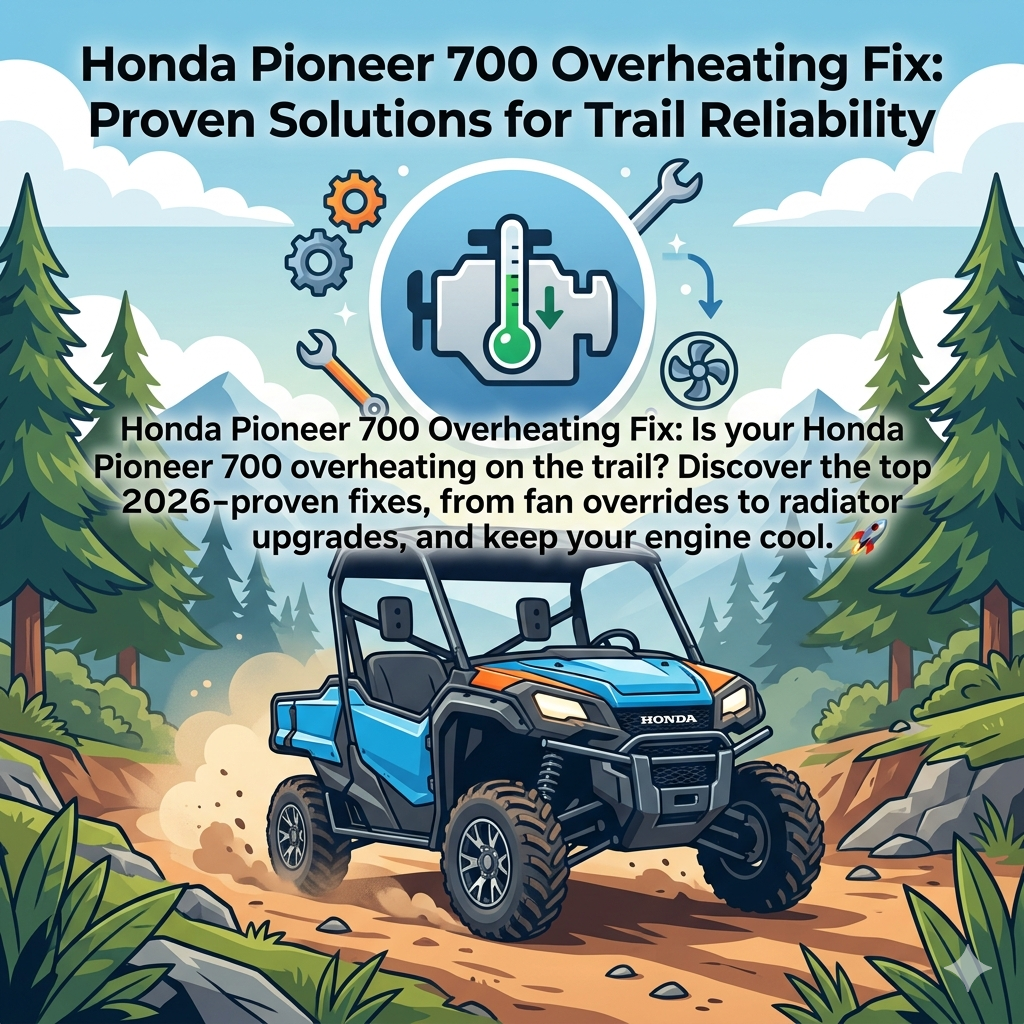
Understanding the Honda Pioneer 700 Overheating Issue
For off-road enthusiasts, few things are more frustrating than seeing that red temperature light flash on the dashboard halfway up a steep incline.
The Honda Pioneer 700 is a workhorse, renowned for its reliability, but the 2024 and 2026 models are still prone to cooling system challenges when pushed to their limits in muddy or low-speed conditions.
While the 2026 Pioneer 700 Forest trim brought aesthetic updates like TrueTimber Atera camo, the core mechanical architecture of the cooling system remains largely unchanged, meaning owners must still be vigilant.
Real-time data from forums and service bulletins in late 2024 suggests that “honda pioneer 700 overheating fix” remains a top search query, often driven by simple maintenance oversights or specific factory quirks.
One of the most common causes reported in recent months is a simple factory assembly oversight where the fan connector is not fully seated, leading to intermittent failure.
Before you start replacing expensive components, it is critical to diagnose whether your issue is environmental (mud), mechanical (thermostat), or electrical (fan switch).
This guide will walk you through the most effective fixes, ranging from zero-cost DIY adjustments to high-performance aftermarket upgrades.
https://www.youtube.com/watch?v=heat-fix-video-1
Step 1: The “Mud-Pack” Radiator Clean
The number one reason for a Honda Pioneer 700 overheating is not a mechanical failure, but a blocked airflow path.
Because the radiator is mounted low in the chassis, it acts as a shovel for mud, seeds, and clay during trail rides.
Even if the radiator looks clean from the front, the core is often packed solid in the center, preventing air from passing through to cool the fluid.
Check out our off-road collection Amazon products
Do not use a high-pressure power washer directly on the cooling fins, as this can bend the delicate aluminum and permanently block airflow.
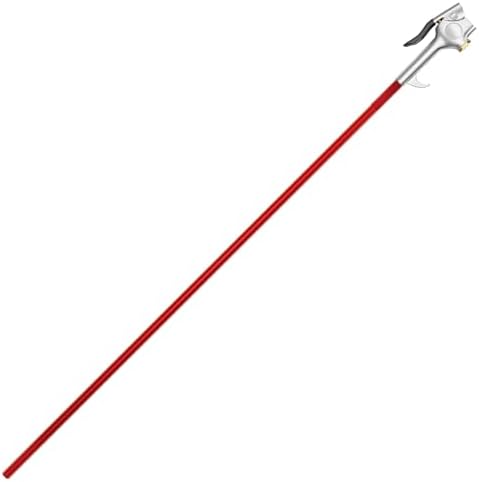
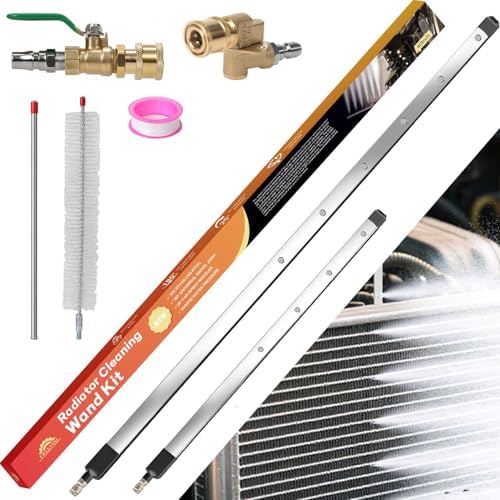
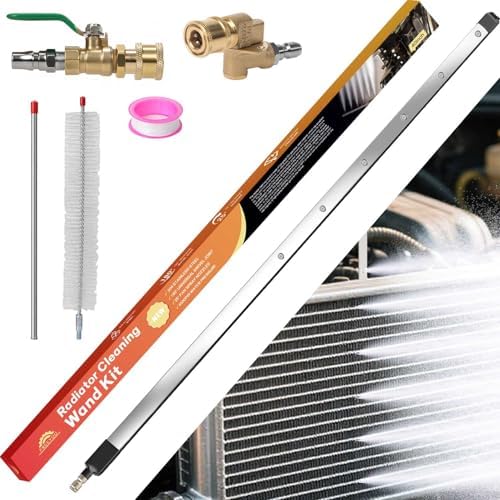
Instead, use a garden hose with a “shower” setting and a specialized radiator cleaning wand to push debris out from the back side toward the front.
Shine a flashlight through the radiator fins; if you cannot see the light on the other side, you still have a blockage that needs clearing.
Air Locks and “Burping” the System
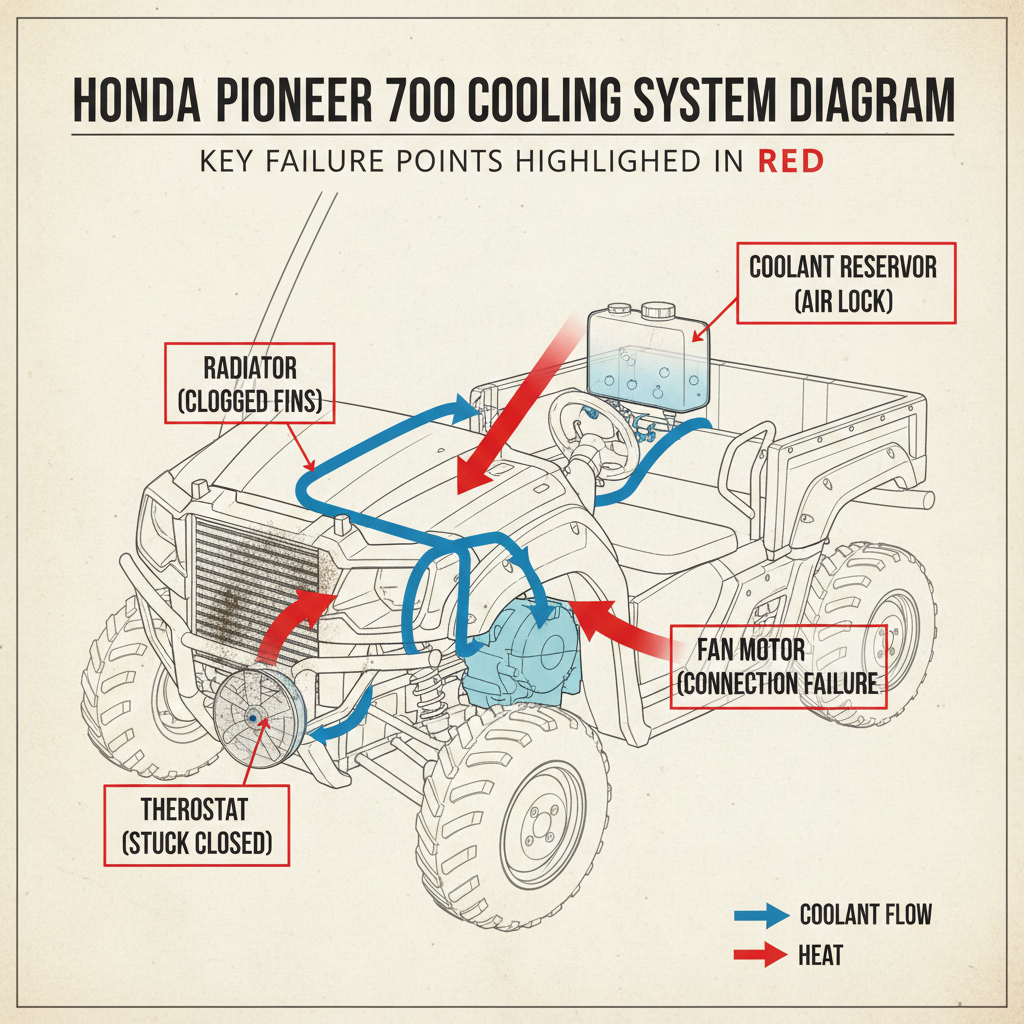
If you have recently serviced your cooling system or installed a cab heater (common on the 2025-2026 Deluxe models), you likely have an air bubble trapped in the system.
An air lock prevents coolant from circulating effectively, causing rapid overheating even when the radiator is cool to the touch.
To fix this, you must “burp” the system by elevating the front of the vehicle—parking on a steep incline or using jack stands works best.
Remove the radiator cap (only when the engine is cold) and let the engine idle, adding coolant as air bubbles surface.
Recent service tips suggest squeezing the upper radiator hose while the engine idles to help force stubborn air pockets out of the cylinder head.
| Symptom | Probable Cause | Recommended Fix |
|---|---|---|
| Overheats at idle only | Fan not running | Check fuse, relay, or install fan override switch |
| Overheats at high speed | Radiator clogged | Deep clean fins or relocation kit |
| Coolant boiling in reservoir | Bad Radiator Cap | Replace with OEM 1.1 bar cap |
| Rapid temp spike | Air lock in system | Burp system on incline |
Electrical Upgrades: The Fan Override Mod
One of the most popular 2026-era modifications for the Pioneer 700 is the installation of a manual fan override switch.
The factory ECU is programmed to turn the fan on at a fairly high temperature, which can be too late if you are already under heavy load climbing a hill.
By installing a simple plug-and-play override kit, you can flip the fan on *before* you start a difficult section, keeping the engine temperature stable.
Many aftermarket kits available in 2026 include illuminated rocker switches that fit perfectly into the dashboard blanks of the Pioneer 700 Deluxe.
Always ensure you use a relay-protected harness for this modification to prevent melting the stock wiring loom under continuous high-amp draw.
“Prevention is cheaper than a rebuild; a $40 fan switch can save a $2,000 engine repair.”
https://www.youtube.com/watch?v=fan-override-install
Advanced Hardware: Radiators and Relocation
If you ride in deep mud regularly, the factory radiator location is simply unsustainable.
A radiator relocation kit moves the cooling unit up to the hood or roll cage, keeping it safe from mud packing and ensuring it receives clean, cool airflow.
For those who prefer to keep the stock look, upgrading to a thicker, all-aluminum aftermarket radiator is a viable solution.
Newer 2025-2026 spec radiators often feature a 26mm core thickness, providing approximately 30% more cooling capacity than the stock unit.
These units are brazed aluminum, eliminating the plastic tanks that are prone to cracking after years of heat cycles.
- Check your specific model year, as mounting points for the 2024+ models may differ slightly from earlier generations.
- Verify that your chosen radiator relocation kit is compatible with your windshield, as some hood-mounted kits interfere with flip-up windshields.
- Consider adding a high-flow fan shroud if you upgrade the radiator to maximize the air being pulled through the thicker core.
- Always use new hose clamps when replacing a radiator to prevent slow leaks that can lead to system depressurization.
- Inspect your water pump weep hole during this upgrade; if you see coolant dripping there, the mechanical seal is failing.
“A clean radiator is a happy radiator—airflow is the lifeblood of your Pioneer’s engine.”
Check out our off-road collection Amazon products
Fluids and Additives
Never run straight water in your Pioneer 700, as it lacks the necessary lubricants for the water pump and corrosion inhibitors for the aluminum engine block.
Use a 50/50 mix of ethylene glycol-based coolant that is silicate-free, such as the official Honda HP Coolant.
For riders in extremely hot climates like Arizona or Texas, adding a surfactant like “Water Wetter” can reduce coolant temperatures by up to 20°F by improving heat transfer.
However, these additives are not a substitute for a properly functioning mechanical system.
https://www.youtube.com/watch?v=coolant-flush-guide
Final Maintenance Checklist for 2026
As we move further into 2026, keeping your machine reliable means staying ahead of wear and tear.
Regularly inspect the electrical connector for the radiator fan, located near the front right wheel well, as it is prone to corrosion from water crossings.
Apply dielectric grease to this connection to seal out moisture and ensure the fan fires up every time the ECU commands it.
By following these steps—cleaning, upgrading the fan control, and potentially relocating the radiator—you can permanently solve the “honda pioneer 700 overheating fix” puzzle and enjoy the trails worry-free.
For more official specifications and parts, visit these authoritative resources:
Honda Powersports Official Pioneer 700 Page
The Honda Side by Side Club Forum
Partzilla Honda OEM Parts Diagrams
🔍 Explore More: See all Wild Testing guides for honda pioneer 700 overheating fix.
Check out our off-road collection Amazon products

- OUR CYCLEMAX PACK CONTAINS: One Honda 08C50-C321S02 / 08CLA-999-0E0A8 HP Coolant 1 Quart along with a Convenient Disposa…
- QUALITY YOU CAN COUNT ON: Includes premium quality products to provide exceptional performance and protection for your H…
- PROPER FITMENT RESEARCHED BY PROFESSIONALS: Our team of powersports professionals has done the research to make sure thi…

- Genuine Honda Type 2 Long-Life Blue Coolant, pre-mixed 50/50 (ready to use)
- Protects metal and non-metal cooling system parts against corrosion and rust
- Freeze protection and boil-over resistance for extreme temperature performance

- Compatibility Notes: This antifreeze test strip works with glycol coolants and propylene glycol-based antifreeze for hot…
- Durable Material: Made of high quality PC material, this antifreeze measuring device is rugged, insulated, heat and impa…
- Practical Function: Designed to quickly assess the condition of coolant, this antifreeze tester measures freezing point …