




When it comes to Torx and socket sizes for trailside UTV clutch cover removal, getting the right details matters.
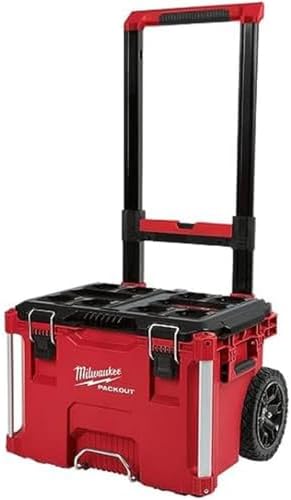
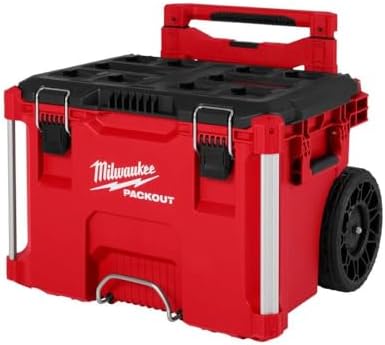
- Milwaukee PACKOUT 2.0 Sealed Crate
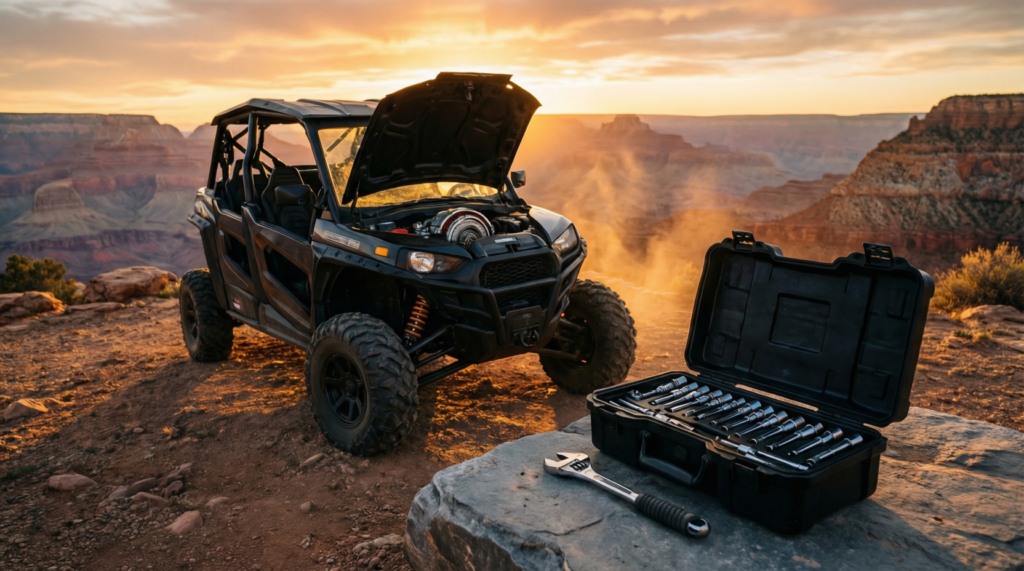
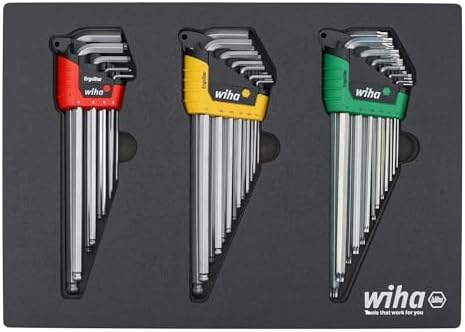
- Wiha Industrial Torx/Hex Master Set & Snap-on 6-Point Flank Drive Sockets
- EPI Professional CVT Clutch Spreader/Compressor
Trailside UTV Clutch Cover Removal: Exact Torx and Socket Sizes to Prevent Cam-Out and Stranding
You are miles from the trailhead, crawling up a steep, rocky incline, when your UTV suddenly loses all forward drive. The CVT belt has failed. You pull out your tool roll, grab a cheap Torx bit, and apply pressure to the clutch cover. The bit slips, the star pattern strips, and the bolt head rounds off. In that exact moment, a simple trailside belt swap turns into a catastrophic stranding. This guide eliminates that risk. You will learn the exact Torx and socket sizes for trailside UTV clutch cover removal, the precise torque specifications to prevent cracked housings, and the heavy-duty tool stack required to defeat factory threadlocker and micro-silt. The solution is not just about carrying the right sizes; it is about carrying the right metallurgy and using the correct mechanical techniques to get your machine moving again.
The Technical Reality: CVT Thermal Degradation and the Trailside Bottleneck
The 250°F Shear Stress Threshold: Belt Delamination and Secondary Seizure
Under extreme low-speed, high-load conditions like rock crawling or deep mud, your CVT belt experiences massive shear stress. Thermal degradation exceeding 250°F (121°C) at the sheave contact patch causes the belt’s internal Kevlar and Aramid cords to separate from the rubber matrix.
For the driver, this means the belt literally unzips and snaps right when you need maximum torque to clear an obstacle. Fine silt dust bypasses degraded CVT intake seals and infiltrates the secondary clutch. This dust causes the polymer sliders and rollers to bind in the closed position. When you finally get the cover off, you are not just replacing a belt; you are fighting a seized secondary clutch that refuses to open.
The “Cam-Out” Epidemic: Defeating Factory Threadlocker
Factory CVT cover bolts are heavily secured with medium-strength Loctite to prevent vibration loosening. When you use cheap, short-shank big-box store Torx bits on these bolts, the soft metal deforms and instantly strips the star pattern.
For the driver, this “cam-out” epidemic means you are now forced to drill out hardened steel bolts on the side of a dusty trail, turning a 20-minute repair into a multi-hour nightmare.
The C-Clamp Heresy: Warping Sheaves and Cracking Housings
Replacing the belt requires manually compressing the secondary clutch against a high-tension spring. Many novices use C-clamps, pry bars, or ratchet straps to force the sheave open. These methods apply uneven lateral loads that warp the movable sheave, crack the cast aluminum housing, or launch the high-tension spring into the brush.
For the driver, a cracked housing means your UTV is permanently immobile until a flatbed recovery arrives.
Tool Roll Dust Ingress: The Death of Precision Tolerances
Canvas tool rolls and zippered soft bags are completely useless in environments like Moab or Glamis. “Talcum powder” fine dust penetrates fabric and zippers, mixing with socket grease to create a lapping compound.
For the driver, this means your ratchets will seize, your precision torque wrenches will ruin, and your tools will fail exactly when you need them most.
The Core Gear Architecture: Validated High-Ticket Solution Stack
IP65 Micro-Silt Defense: Milwaukee PACKOUT 2.0 Sealed Crate
The Milwaukee PACKOUT 2.0 Sealed Crate features IP65 dust and water ingress protection, 15G impact resistance, and an integrated O-ring seal.
For the driver, this hard-case solution guarantees that micro-silt stays out of your gear, preserving the precision tolerances of your ratchets and torque wrenches no matter how dusty the trail gets.
S2 Tool Steel Precision: Wiha Industrial Torx/Hex & Snap-on 6-Point Flank Drive
Check out our off-road collection Amazon products
The Wiha Industrial Torx and Hex bits are forged from S2 Tool Steel and hardened to HRC 54-56. The 1/4-inch and 3/8-inch drive shafts are extended to 3 inches to reach recessed CVT cover bolts. Paired with Snap-on 6-Point Flank Drive sockets, this setup prevents the rounding of trail-beaten flange nuts.
For the driver, the 3-inch extended shaft and ultra-hard S2 steel mean you can apply massive breaking torque to Loctite-sealed bolts without the bit twisting, snapping, or camming out.
4140 Chromoly Lateral Force: EPI Professional CVT Clutch Spreader/Compressor
The EPI Professional CVT Clutch Spreader is machined from 4140 Chromoly steel and heat-treated to HRC 45-50. Its precision-machined threads apply perfectly even lateral force to compress the secondary clutch.
For the driver, this dedicated tool safely opens the clutch without binding the sheave, scoring the aluminum bell, or launching the spring into the dirt.
High-Ticket Comms & Routing: Garmin Tread 2 SxS & ZOLEO Satellite Handover
The Garmin Tread 2 SxS Edition features an upgraded processor, a 7-inch sunlight-readable display, and backup camera integration for tight trail spotting. When paired with the ZOLEO Satellite Communicator, it provides seamless LTE and Iridium satellite handover.
For the driver, if a mechanical failure exceeds your trailside repair capabilities, this comms stack allows you to instantly send an SOS and share exact GPS coordinates with recovery teams, even in deep canyons with zero cell service.
The Technical Setup Blueprint: Exact Fastener Sizes and Torque Specifications
Polaris RZR (Pro XP / Turbo R) CVT Architecture
| Component | Fastener Type | Torque Specification | Outer CVT Cover (Older Models) | 10mm Flange Bolt | 7-9 ft-lbs (10-12 Nm) | Outer CVT Cover (Newer Models) | T30 Torx | 7-9 ft-lbs (10-12 Nm) | Primary Clutch Center Bolt | 15mm or 18mm Socket | 40-45 ft-lbs |
|---|
For the driver, over-torquing these specific bolts will instantly crack the fragile magnesium or aluminum cover, so use a low-range torque wrench. The primary clutch center bolt requires a heavy-duty breaker bar or a trailside impact wrench to break it loose and secure it properly. The secondary clutch strictly requires an OEM or EPI spreader tool to compress safely.
Recommended Insights From Our Guide Library:
- Unleash Your UTV’s Power: A Comprehensive Clutch Kit Installation Guide – Pioneer Honda Lovers
- Trailside Saviors: Essential Pioneer-Specific Toolkits for UTV Repairs
- Can-Am Commander vs General XP: The 2026 Crossover Showdown (And Why Honda Owners Should Care)
- Mojave Off-Road Adventures: Desert Trails with Honda Power
- Trailside Saviors: Essential Pioneer-Specific Toolkits for UTV Repairs
Can-Am Maverick X3 CVT Architecture
| Component | Fastener Type | Torque Specification | Outer CVT Cover | T30 Torx / 8mm Hex Mix | 89 in-lbs (~7.4 ft-lbs) | Primary Clutch Center Bolt | 13mm or 15mm Socket | Factory Spec (Requires Holding Tool) |
|---|
For the driver, confusing inch-pounds with foot-pounds here is fatal; setting a foot-pound wrench to 89 will rip the threads completely out of the engine block. You must use the Can-Am specific holding tool to prevent the engine from rotating while you apply torque. Without this holding tool, the engine will just spin, making it impossible to break the center bolt loose.
Honda Pioneer/Talon DCT Architecture (The Critical Distinction)
| System Type | Fastener Requirements | Torque Specification | DCT Fluid Plugs | 10mm or 12mm Socket | 15-20 ft-lbs | Drivetrain U-Joints & Skid Plates | 10mm, 12mm, 14mm, 17mm, 19mm Hex | Standard Wheel Lug Specs |
|---|
NO CVT BELT OR CLUTCH TOOLS APPLY. Honda uses a 6-speed Dual Clutch Transmission and solid driveshafts. For the driver, carrying CVT belts and clutch spreaders in a Honda is dead weight that takes up valuable space. Trailside maintenance focuses on fluid plugs and drivetrain bolts. Drivetrain U-joints rely heavily on standard hex bolts. Trailside failures are usually electrical, involving mud or water in shift solenoid connectors, requiring dielectric grease and zip-ties rather than heavy wrenches. Honda relies on JIS Phillips and metric hex heads; carrying Torx bits for a Honda is completely unnecessary.
The Universal Trail Kit Baseline: Mandatory Sizing
Check out our off-road collection Amazon products
| Category | Mandatory Sizes/Specs | Application Purpose | Torx Bits | T20, T25, T30, T40 (1/4″ & 3/8″ drive, 2.5″+ length) | Recessed cover bolts | Sockets | 8mm, 10mm, 12mm, 13mm, 14mm, 15mm, 17mm (Deep/Shallow, 6-point ONLY) | Flange nuts & suspension | Torque Wrenches | 1/4″ drive (20-200 in-lbs) & 3/8″ drive (10-50 ft-lbs) | Covers/plastics vs clutch/suspension |
|---|
Every UTV trail kit must contain this exact baseline to ensure survival. Carrying both torque wrench sizes ensures you never accidentally snap a small plastic tab or under-torque a critical suspension arm.
Field Verdict & Operational ROI: Securing Expedition Readiness
Calculating the Cost of Trailside Stranding vs. Precision Tool Investment
| Failure Scenario | Financial Impact | Mitigation Strategy | Stranded UTV Recovery | $300-$800+ Flatbed Fee | Premium Tool Stack Investment | Cracked Housing (C-Clamp Abuse) | $400-$900 Replacement Part | EPI Dedicated Spreader Tool | Stripped Fasteners | $150-$300 Machine Shop Extraction | S2 Steel Torx & Flank Drive Sockets |
|---|
The cost of the Milwaukee, Wiha, and EPI tool stack is a fraction of the cost of a heavy-duty flatbed recovery from a remote trail. When you factor in the cost of replacing snapped CVT housings from C-clamp abuse, or paying a machine shop to extract stripped fasteners, the premium tool investment pays for itself on the very first trip. For the driver, this gear is not an expense; it is a mandatory insurance policy against the catastrophic financial and logistical costs of being stranded in the backcountry.
Community Reference & Authority Resources:
Final Loadout Directives for the Season
The exact moment your CVT belt delaminates on a steep grade is the exact moment your preparation is tested. This post was about eliminating the guesswork from that high-stress scenario by arming you with the exact Torx and socket sizes, precise torque specifications, and heavy-duty metallurgy required to execute a flawless trailside repair. Audit your current tool roll today. Ditch the soft canvas bags for IP65 sealed crates, verify your Torx shaft lengths, and ensure your torque wrenches are calibrated. Pair this mechanical readiness with the Garmin Tread 2 and ZOLEO comms stack, and you will step into the season with absolute, uncompromising self-reliance.
🔍 Explore More: See all Wild Testing guides for Torx and socket sizes for trailside UTV clutch cover removal.
Check out our off-road collection Amazon products