


When it comes to pros and cons of owning a naked bike vs sport bike, getting the right details matters. Before we dive into the mechanical breakdown, check out these top-rated Amazon products to keep your machine running perfectly and yourself protected on the road.
📌 Best motorcycle chain lube for high-mileage canyon carving.
📌 Premium armored riding jacket for ultimate street and trailhead protection.
📌 Heavy-duty digital tire inflator to keep your rubber dialed in for any twisty road.
Look, I spend most of my life wrenching on UTVs, tuning bypass shocks, and crawling deep backcountry trails.
But when I need to carve canyon roads to reach those remote trailheads, I am strictly on two wheels.
Choosing between a streetfighter and a fully-faired supersport is exactly like picking between a nimble short-wheelbase side-by-side and a long-travel desert runner.
You have to understand the mechanical realities before you throw your hard-earned cash at the dealership.
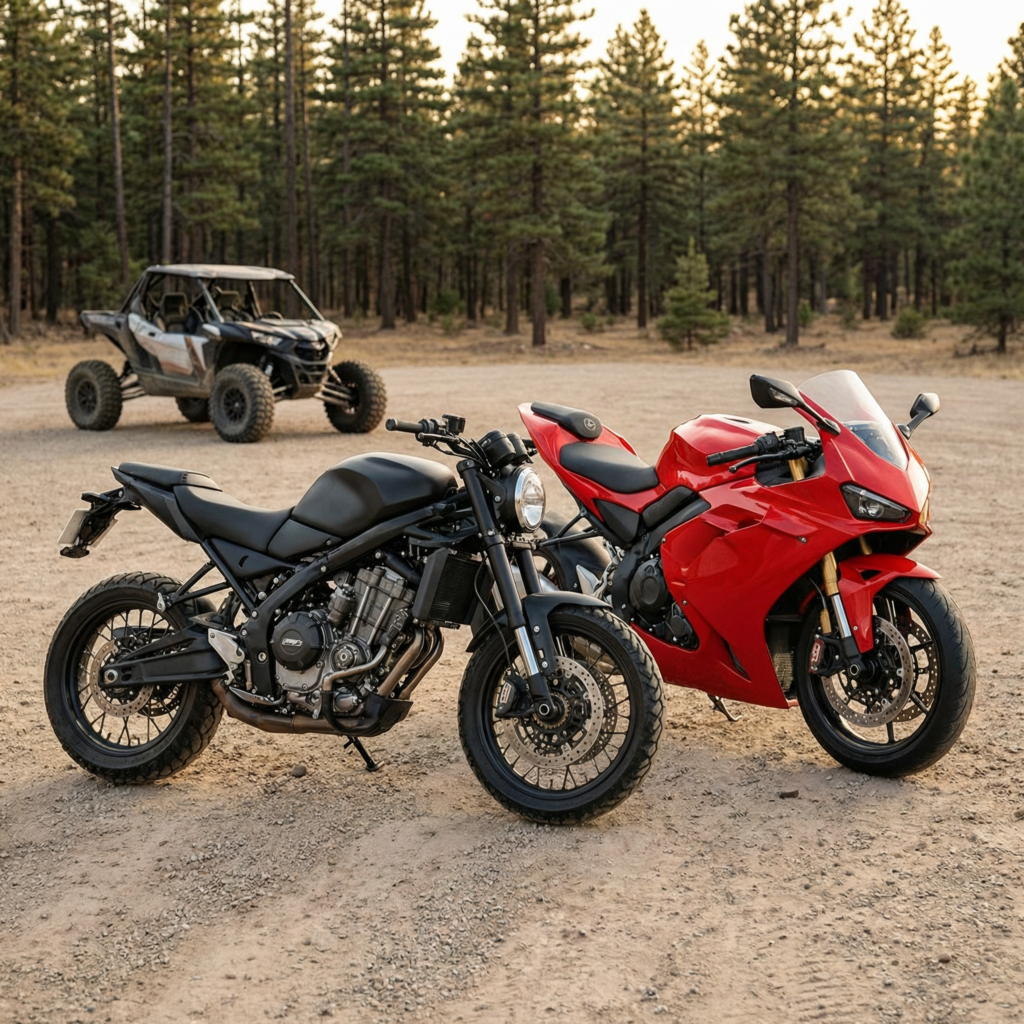
Let us break down the raw physics, the chassis dynamics, and the pros and cons of owning a naked bike vs sport bike.
The Ergonomics and Rider Triangle
When I am tuning the compression clicks on a Fox 2.5 shock for a Polaris RZR, I am thinking about damping and geometry.
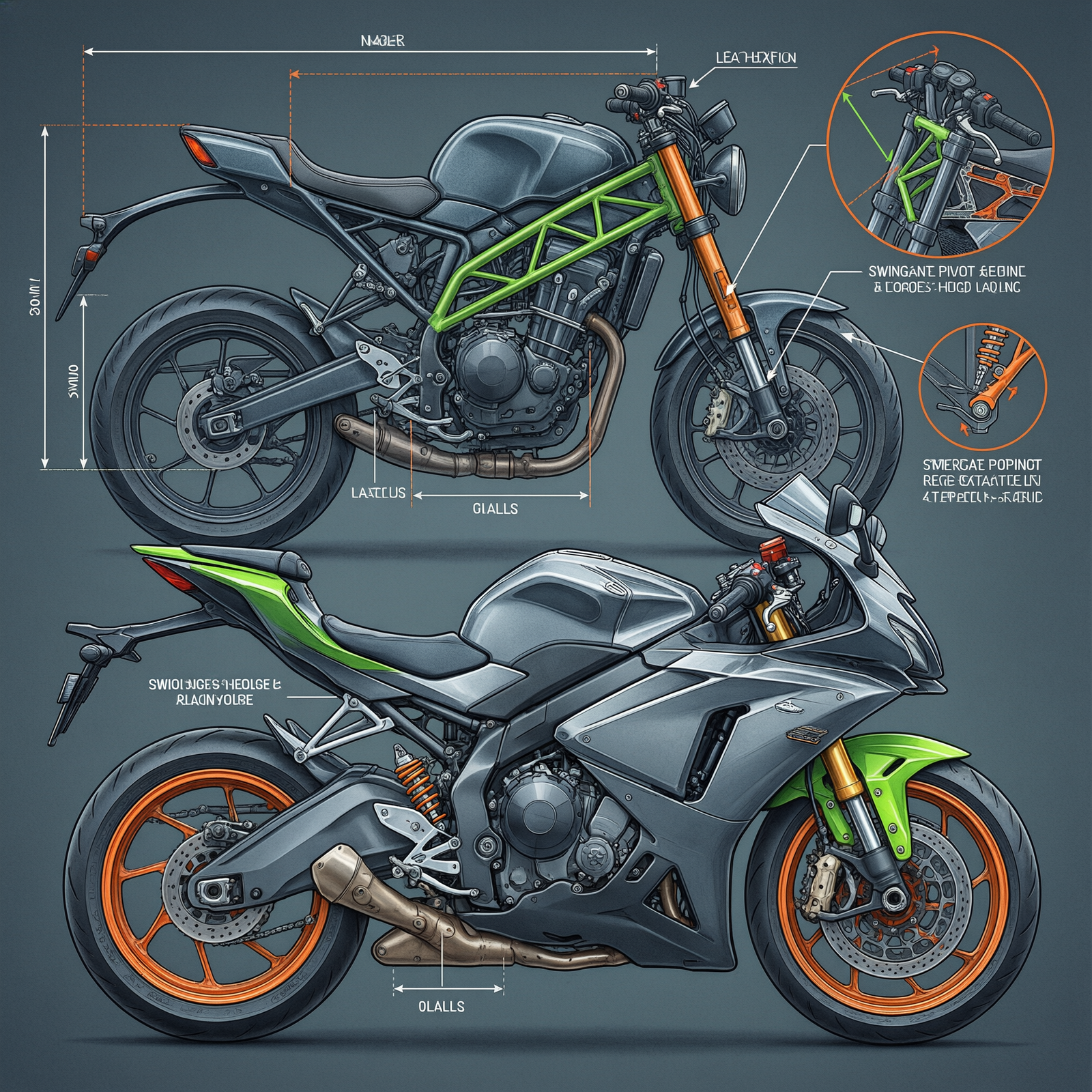
The exact same physics apply when you are comparing the steering head angle of a Ducati Monster to a Yamaha R1.
Naked bikes give you that wide, flat handlebar leverage, much like the steering wheel of a nimble Can-Am Maverick.
This upright seating position keeps your center of gravity directly over the bottom bracket.
You get incredible leverage for flicking the bike into tight, technical corners at lower speeds.
On the flip side, sport bikes tuck you in, reducing the frontal area just like adding a windshield to a UTV for high-speed desert running.
The clip-on handlebars force your wrists forward and drop your shoulders.
This shifts your body weight directly over the front tire, maximizing the contact patch under heavy braking.
However, this aggressive posture will absolutely destroy your lower back on a long ride to the campsite.
The naked bike offers superior low-speed maneuverability and comfort, making it the ultimate tool for navigating tight technical sections and daily commuting.
Chassis Geometry and Suspension Dynamics
Let us talk about the actual metal bending under you.
Sport bikes utilize a much steeper rake and shorter trail to induce lightning-fast steering response.
Think of it like installing a wider A-arm kit on your ATV to tighten up the turning radius.
The swingarm on a sport bike is also significantly longer, which helps plant the rear tire under massive acceleration.
Naked bikes usually share the same engine but feature a shorter swingarm and more relaxed steering geometry.
This makes them feel incredibly agile and playful, but they can get twitchy at triple-digit highway speeds.
The suspension linkage on a sport bike is designed to handle extreme weight transfer during hard cornering.
Naked bikes have a more linear suspension curve, prioritizing compliance over rough, broken pavement.
When you hit a unexpected pothole on the way to the trailhead, the naked bike will absorb it much better.
Sport bikes feature aggressive geometry and long swingarms for maximum track stability, while naked bikes use relaxed steering angles for superior low-speed agility and compliance.
Aerodynamics and High-Speed Stability
If you are blasting down the highway at eighty miles per hour, wind deflection is your biggest enemy.
A sport bike is essentially a wind tunnel masterpiece wrapped in plastic.
The fairings channel high-pressure air over your helmet, reducing fatigue and buffeting.
On a naked bike, your chest acts as a massive parachute.
You will feel the wind pressure pushing you back into the seat, which requires constant core engagement.
This aerodynamic drag also severely impacts your fuel economy at highway speeds.
However, that lack of fairings means you get incredible engine cooling in stop-and-go traffic.
Sport bikes can cook your legs in heavy traffic because the fairings trap the radiant heat from the radiator.
The fully-faired sport bike dominates at high speeds by slicing through the air, whereas the naked bike sacrifices aerodynamic efficiency for superior airflow and engine cooling in tight spaces.
Check out our off-road collection Amazon products
Engine Character and Power Delivery
Both bikes might share the exact same inline-four or V-twin powerplant, but the ECU mapping tells a completely different story.
Sport bikes are tuned for peak horsepower at the absolute redline.
The throttle response is razor-sharp, almost like a finely tuned fuel-injected dirt bike.
This makes them incredibly rewarding on a smooth canyon road, but jerky in parking lot maneuvers.
Naked bikes receive a much softer throttle map, prioritizing low-end and mid-range torque.
This gives you a predictable, linear power delivery that is perfect for rolling out of tight corners.
Many modern naked bikes also feature taller gearing in the lower gears to smooth out that torque.
If you are carrying a heavy backpack and camping gear, that low-end grunt is an absolute lifesaver.
Naked engines are mapped for accessible low-end torque and smooth low-speed control, while sport bike engines are tuned for explosive top-end horsepower and razor-sharp track performance.
Maintenance and Trailhead Durability
As a mechanic, I look at how these machines survive when things go wrong.
Dropping a sport bike means replacing expensive carbon fiber or plastic fairings, and potentially cracking the windscreen.
A naked bike just gets a few cosmetic scuffs on the bar ends and engine covers.
When you are parking at a rocky, uneven trailhead, a naked bike is vastly more forgiving.
Furthermore, valve adjustments and chain maintenance are significantly easier on a naked bike.
You do not have to remove a dozen plastic panels just to access the air filter or the spark plugs.
Sport bikes require a much higher level of mechanical patience for basic servicing.
- Naked bikes offer vastly superior accessibility for routine mechanical maintenance and trailside repairs.
- Sport bikes require extensive fairing removal to perform basic tasks like chain lubrication and valve checks.
- The exposed components of a streetfighter are much more resilient to the minor drops common at rough campsite parking areas.
The Electronics and Rider Aids
Modern motorcycles are basically computers on wheels, much like the CAN-bus systems in a modern Polaris General.
Sport bikes come packed with cornering ABS, wheelie control, and launch control.
These systems are calibrated for maximum track performance and preventing high-side crashes.
Naked bikes feature traction control, but it is tuned to allow a bit more rear wheel slip for fun.
The quickshifters on sport bikes are usually bidirectional and incredibly fast for seamless track shifting.
Naked bike quickshifters are great, but they can feel a bit clunky at very low RPMs.
If you are riding in the rain on a muddy forest road, the sport bike’s advanced IMU will keep you upright.
But the naked bike’s simpler electronics are less intrusive when you just want to feel the machine.
“A naked bike is a scalpel for the canyons, while a sport bike is a missile for the highway.”
“You do not just buy a motorcycle, you buy the specific geometry that dictates how your body interacts with the pavement.”
Comparing the Core Specifications
Let us put all these mechanical differences into a clear, easy-to-read format.
This table breaks down the exact engineering priorities of both machine types.
Check out our off-road collection Amazon products
| Engineering Feature | Naked Streetfighter | Sport Supersport |
|---|---|---|
| Handlebar Type | Wide Flat Bar | Low Clip-ons |
| Fairing Coverage | Minimal to None | Full Aerodynamic |
| Suspension Tuning | Compliant and Linear | Stiff and Progressive |
| Power Delivery | Low and Mid-Range Torque | Peak Top-End Horsepower |
Making Your Final Decision
Ultimately, your choice comes down to exactly how you plan to use the machine.
If you are using your bike to commute, meet friends at the local dirt staging area, and blast through tight canyon roads, the naked bike is your best friend.
It offers the mechanical simplicity, the comfortable ergonomics, and the low-end torque you need for real-world riding.
But if your goal is to chase lap times at the track, or you just love the visceral thrill of tucking in and hitting a hundred and thirty miles per hour on the autobahn, you need a sport bike.
The aerodynamic stability and the aggressive chassis geometry of a sport bike are simply unmatched at high speeds.
Just remember to factor in the cost of replacing fairings when you inevitably drop it at the gas station.
Both machines are incredible feats of engineering, and both will get you to the trailhead with a massive smile on your face.
Now get out there, wrench on your ride, and tear up some dirt!
Search Helpful “pros and cons of owning a naked bike vs sport bike” Videos on YouTube
For more in-depth mechanical breakdowns and industry news, be sure to check out these authoritative resources.
Honda Motorcycles Official Site
🔍 Explore More: See all Wild Testing guides for pros and cons of owning a naked bike vs sport bike.
Check out our off-road collection Amazon products